Burger doneness
Check burger doneness with a thermometer in the patty’s center: ground beef needs 160°F (71°C), while turkey, chicken, or a mixture containing poultry needs 165°F (74°C). Color, clear juices, and steak-style doneness labels do not replace that check.
What burger doneness means for ground beef
Burgers play by different rules than steak. On steak, bacteria stay mostly on the outside. With ground beef, grinding can spread harmful bacteria through the meat, so the center matters as much as the surface.
For standard ground beef, the safe target is 160 degrees Fahrenheit in the center. Ask USDA says ground meat should reach that temperature. FoodSafety.gov’s food safety temperature chart says the same. That’s the best target for supermarket ground beef and most home-cooked burgers.
For regular ground beef, 160 degrees Fahrenheit is the safest call, and color alone can’t confirm it.
For home cooking, do not use rare, medium-rare, or medium labels as safety targets for ground beef. Ground beef should reach 160°F in the center before it leaves the heat. Fresh grinding and careful handling do not replace that measured minimum.
Culinary doneness labels can describe color and texture, but they do not change the safety rule for ground beef. Any reading below 160°F is below the recommended minimum; 160°F is the target for serving. Higher readings remain cooked through but may produce a firmer, drier patty.
This table gives you a quick reference:
| Thermometer reading | Safety meaning for a beef burger | Likely texture |
|---|---|---|
| Below 160°F | Below the safe minimum for ground beef; continue cooking | Can range from soft and pink to browned, so appearance is not a reliable guide |
| 160°F | Safe minimum for ground beef | Cooked through; moisture depends on patty thickness, fat and heat control |
| Above 160°F | Above the safe minimum | Progressively firmer and more likely to dry out |
Color and juices can trick you. Some burgers stay pink because of the meat itself or the grill’s smoke. Others turn brown early, even before they reach a safe temp. If you’re cooking for kids, older adults, pregnant guests, or anyone with a weaker immune system, sticking with 160 degrees Fahrenheit matters even more.
Do not remove a beef burger below 160°F expecting resting to finish the safety step. Check the center while cooking; any rise afterward varies with patty thickness and heat.
How to check burgers without losing the juice
The best tool for the job is a digital meat thermometer. It gives a fast answer and keeps you from cutting into the patty too soon. The same thermometer-first principle applies to other ground-meat dishes; see the meatloaf internal temperature guide for another example.
Check burgers in four easy steps:
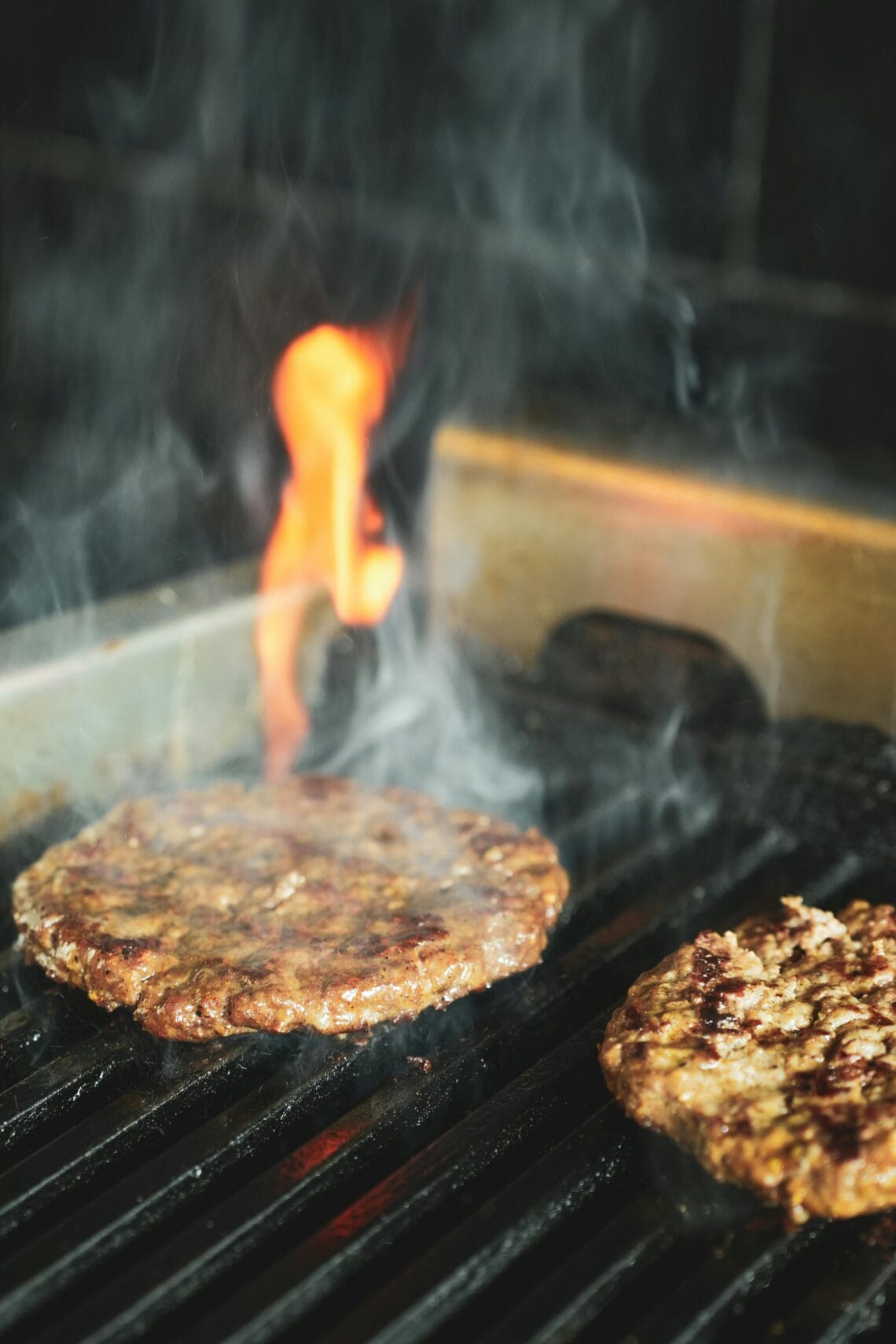
- Preheat the grill or pan to medium-high heat.
- Let the first side brown and release from the pan, then turn the patty. Turn again as needed for even cooking.
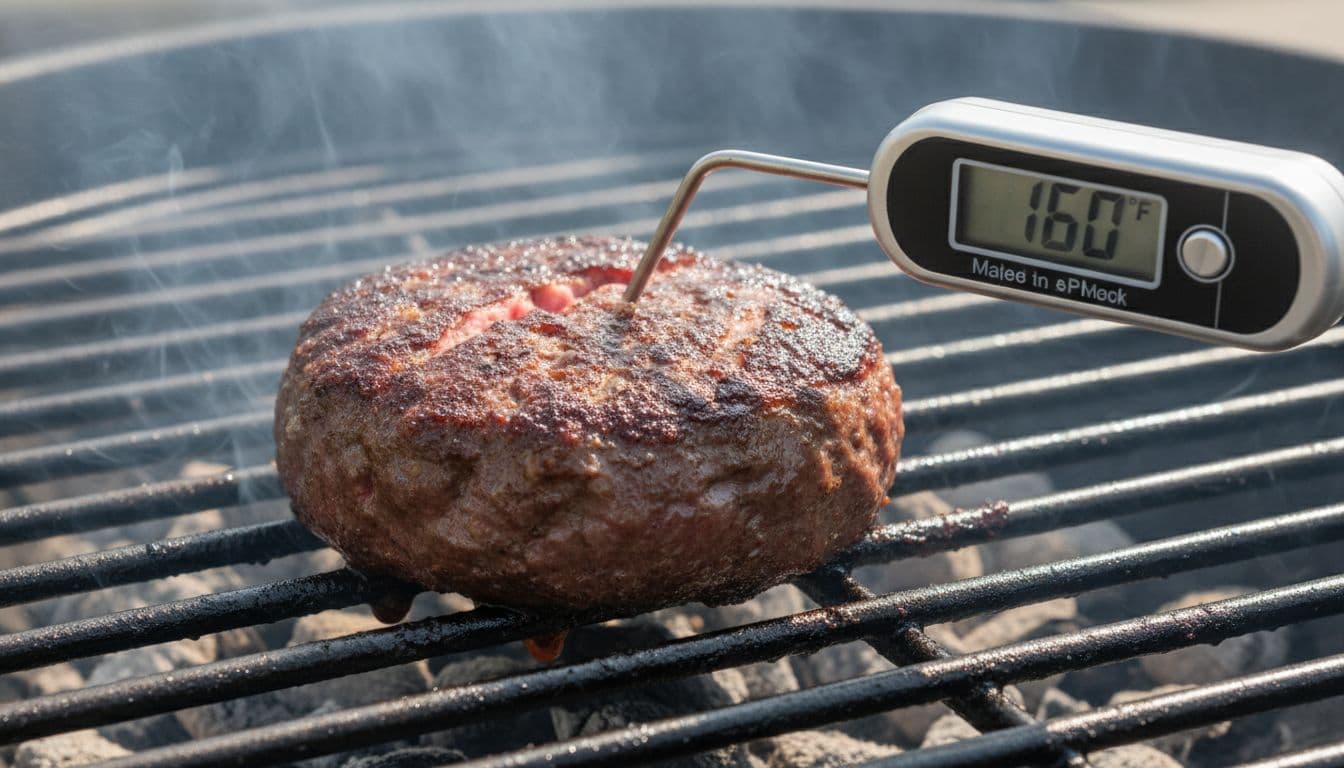
- Insert the thermometer horizontally from the side, with the sensing area in the thickest center. Check each patty separately.
- Remove ground beef burgers once their centers reach 160°F, then rest them for 3 to 5 minutes.
Inserting into the thickest part matters because burger patties are thin. Dropping the probe straight down can miss the center and yield a false internal temperature reading. Also, don’t rely on the finger test with burgers. It works poorly on thin patties and provides no information about safety.
Time still helps as a rough guide, especially for beginners. Think of it as a map, not a promise. Heat level, weather, grill hot spots, and starting meat temperature all change the result. Use cook time and internal temperature as guides with the table below.
| Patty thickness | Approx time per side | Start checking temp |
|---|---|---|
| 1/2-inch | 2 to 3 minutes | After 4 minutes total |
| 3/4-inch | 3 to 4 minutes | After 6 minutes total |
| 1-inch | 4 to 5 minutes | After 8 minutes total |
Start checking a little early. A 3/4-inch burger patty can jump from juicy to dry fast, like toast left one minute too long. If the burger reads under 160°F in the thickest part, keep cooking and check again in 30 to 60 seconds. For a thick pub-style burger, take two quick readings in different spots.
For skillet burgers, cast iron builds a great crust. On a grill, close the lid after the flip for thicker patties. That helps the center catch up without burning the outside. Use a meat thermometer for the most accurate internal temperature reading.
How to keep burgers juicy and spot overcooking
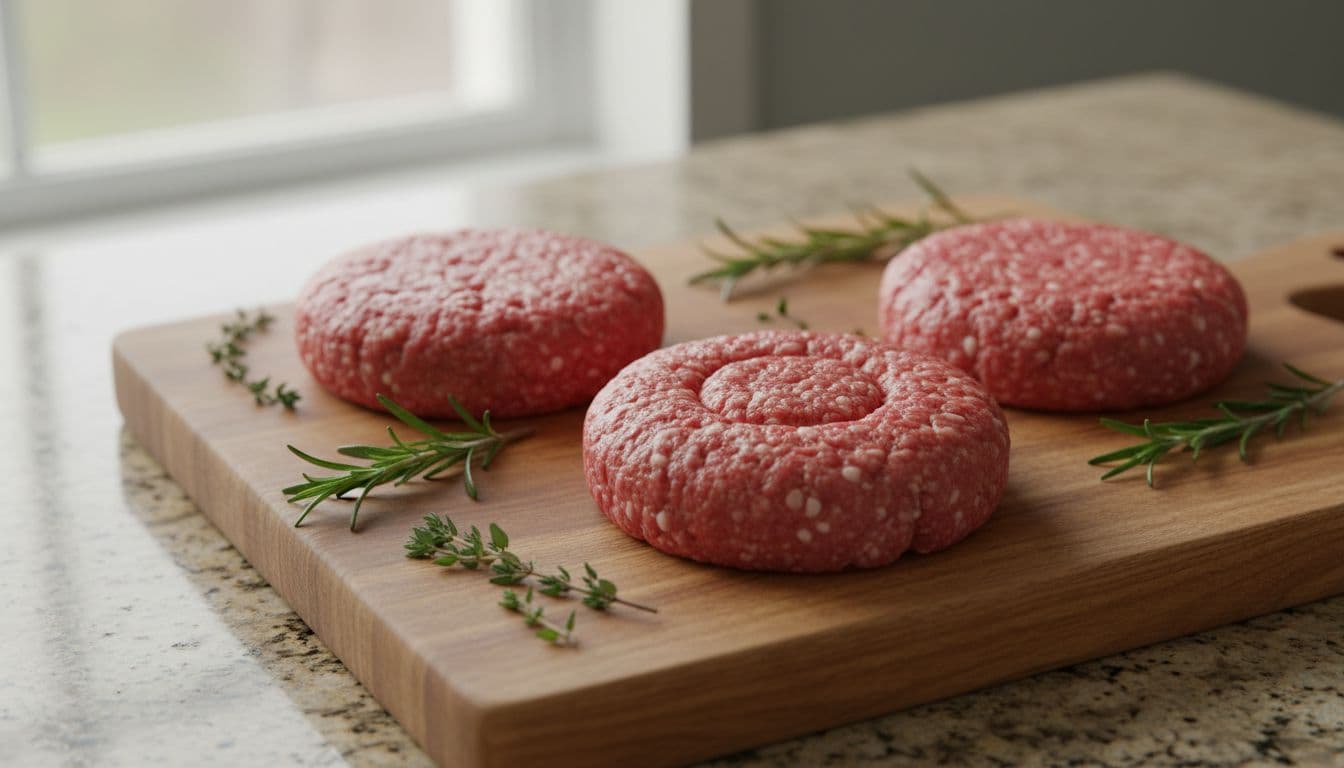
Juicy burgers start before the first sizzle. Choose 80/20 beef if you can. That mix has enough fat to lubricate the inside as it melts, basting the meat as it cooks. An 85/15 blend can still work, but a 90/10 blend dries out much faster.
Keep the meat cold, and handle it lightly. Warm ground beef can turn pasty, while overmixed beef cooks up tight and dense. Form loose patties, about 1/2 to 1 inch thick, and press a shallow dimple in the center so they stay flatter on the heat.
Season the outside right before cooking. Salt mixed into the beef too early can make the texture firmer. Then leave the burgers alone. Pressing them with a spatula sends flavorful juice straight into the fire or pan. Turn with a wide spatula once the surface releases easily. Further turns are fine when they help the patty cook evenly; the center temperature determines when it is done.
Space burgers out so heat can move around them for proper searing of the outside and a crisp crust. Crowding a pan traps steam and softens the crust. Wait until the meat releases easily before flipping. If it sticks hard, it usually needs another 20 to 30 seconds. If you’re adding cheese, place it on during the last minute so the meat doesn’t overcook while the cheese melts.
Watch for these signs that a burger has gone too far:
- The patty has shrunk hard and looks thick at the center.
- The center is dry and crumbly. Gray-brown color alone does not establish overcooking or safety.
- The texture feels springy or crumbly, not tender.
- Little juice stays in the bite, even after a short rest.
Resting matters, too. Rest the meat 3 to 5 minutes before serving. That short pause helps the juices settle back into the meat rather than run onto the plate.
A great juicy burger isn’t about luck. It’s the result of the right fat level, gentle prep, steady heat, and one accurate temperature check.
Dry burgers feel like a missed chance because they usually are. Trust the meat thermometer, stop at the right internal temperature, and let the meat rest.
Check what is in the patty before choosing the target
The 160°F guidance in this article is for ground beef. A burger’s shape does not determine its safe cooking temperature; the meat in the mixture does. Read the package or the complete recipe before using the beef timing table for another kind of patty.
| Patty ingredients | Center temperature for cooking |
|---|---|
| Ground beef | 160°F |
| Ground beef and pork blend | 160°F |
| Ground turkey or chicken | 165°F |
| A blend containing ground poultry | 165°F |
These targets follow the meat and poultry categories in the FoodSafety.gov minimum-temperature chart. Use the higher poultry target when the mixture contains chicken or turkey; adding beef does not lower that requirement.
Keep mixed batches identifiable
When cooking different patties for the same meal, keep track of which is which from the package to the clean serving plate. Do not rely on color to distinguish a seasoned turkey burger from beef once both are browned. Use separate preparation areas and clean utensils to avoid transferring raw-meat juices to finished food.
Check each patty’s center rather than borrowing a reading from its neighbor. Different thicknesses and positions on the grill can produce different finishing times even within one type of meat.
Frozen and previously cooked patties need their own instructions
The fresh-patty timing examples above are not a universal schedule for frozen burgers. Follow the product’s cooking directions and confirm the appropriate center temperature. Reheating a leftover burger is a separate task: use the 165°F leftover guidance below rather than treating the original 160°F beef cooking target as its reheating endpoint.
How to store and reheat cooked burgers safely
Refrigerate cooked burgers within two hours, or within one hour when the air temperature is above 90°F. Store them covered at 40°F or below and use within three to four days. Reheat leftovers to 165°F. For uncooked meat, follow the shorter limits in this ground beef refrigerator guide.
Next time burgers hit the grill or skillet, aim for a measured 160°F center, then rest briefly before serving. Pair them with homemade fry sauce if you want a simple finishing option.