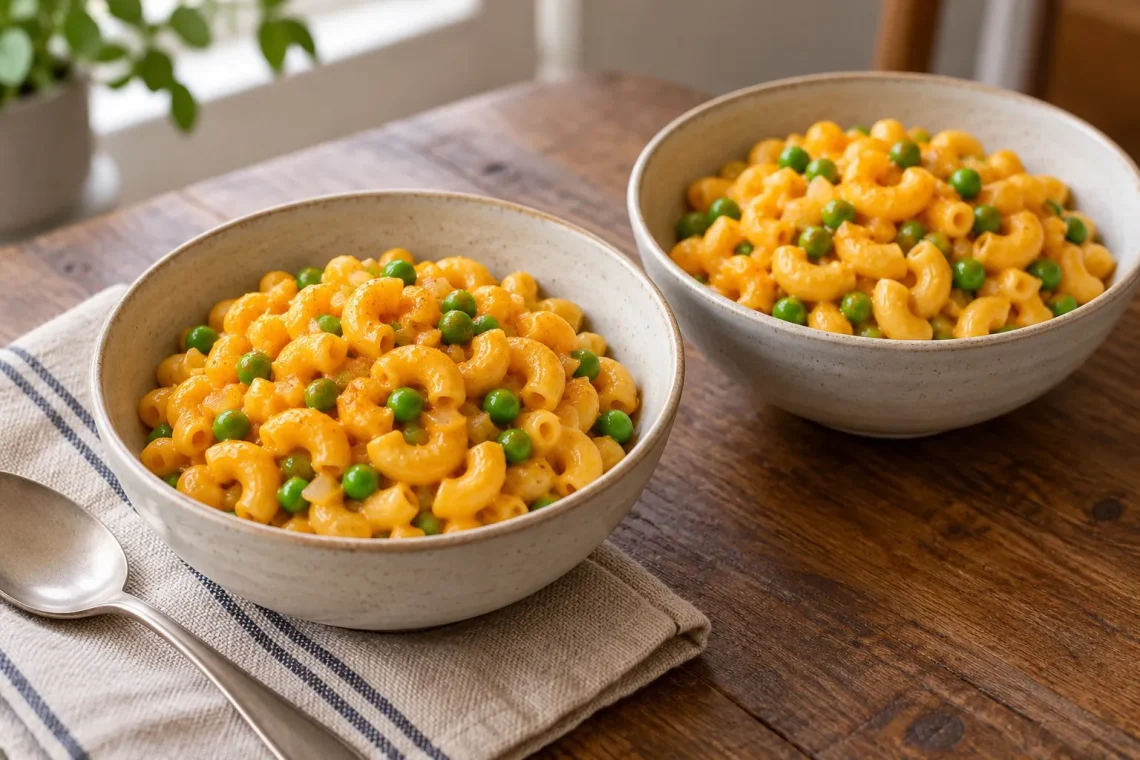
A small amount of plain pumpkin makes pumpkin pea macaroni without heavy cream a savory, lightly coated pasta. Green peas provide little sweet bites, while onion, Dijon, sweet paprika and lemon keep the orange sauce balanced. The macaroni should remain visible as individual elbows rather than disappear into a mound of thick purée.
Affiliate disclosure: As an Amazon Associate I earn from qualifying purchases. These paid links open Amazon search results for comparing equipment.
Place a heatproof measuring cup (paid link) beside the colander (paid link) before cooking so you remember to save pasta water for thinning the pumpkin sauce.
This recipe uses cooked canned pumpkin, so the sauce stage is short. The useful work is softening the onion fully, cooking the peas according to their package and thinning the pumpkin gradually with reserved pasta water. A second small pan lets the onion cook while the pasta boils, keeping the final fold brief.
Keep pumpkin sauce smooth rather than heavy
| Checkpoint | Best result |
|---|---|
| Pumpkin base | Whisk it with warm pasta water before adding macaroni so no dense spoonfuls remain. |
| Seasoning | Use savory spices and enough salt to balance pumpkin sweetness, then taste again after the pasta is coated. |
| Frozen peas | Cook the peas for their full package directions, then fold them in near the end so they stay tender. |
The sauce should flow slowly from a spoon while hot; it thickens quickly as it cools. If the macaroni looks dry before serving, fold in reserved pasta water one tablespoon at a time. Avoid boiling hard after the sauce is assembled, which can make the pumpkin spit and the pasta absorb too much liquid.
Make the sauce while the pasta cooks
Serves: approximately 2–3. Preparation: about 10–12 minutes. Cooking: about 15–25 minutes, depending on pasta and pea instructions. Estimated total: about 25–37 minutes. Use a pasta pot, colander, small skillet or saucepan, spoon, small whisk, heatproof measuring cup and measuring utensils.
Put the empty measuring cup beside the colander before cooking. That gives you a visible reminder to save water at the moment the macaroni is ready. Have the onion minced and the pumpkin measured before the pasta enters the pot so the sauce does not begin from scratch after draining.
Follow the coating: ingredients · product checks · method · FAQs.
What goes in
- 6 ounces elbow macaroni
- 1/2 cup plain pumpkin puree, not pie filling
- 3/4 cup frozen peas
- 1 tablespoon olive oil
- 1/2 small onion, minced
- 1/2 teaspoon Dijon mustard
- 1/4 teaspoon sweet paprika
- 1/3 cup reserved pasta water, more as needed
- 1 teaspoon lemon juice
- Salt and black pepper
Check the pumpkin and pea labels
Plain pumpkin is the measured ingredient
Use unsweetened pumpkin purée, not pumpkin pie filling. Spoon the half cup into a measure and level it so the reference amount is clear. A large heaped spoonful is difficult to reproduce and can make this small pasta quantity much thicker. Keep the rest of an opened can covered and refrigerated according to its label, rather than leaving it on the counter during dinner.
Plain pumpkin has its own vegetable sweetness, but it should not bring pie spices or added sweeteners into this sauce. The Dijon and lemon are modest flavor adjustments, not a way to turn a dessert filling back into the same ingredient.
Frozen peas need their full cooking
Read the pea package before deciding whether they can share the pasta pot. The Food Standards Agency’s frozen-vegetable guidance calls for thorough cooking. Add the peas to the pasta pot for its final two minutes only if the pea package specifies that cooking method and time. Otherwise, cook the measured peas separately according to the bag, drain them and fold them into the finished pasta.
A separate pea preparation is often easier to coordinate than extending a macaroni boil after the elbows are already tender. Keep the cooked peas ready for the short final fold. They should not need further tenderizing inside the pumpkin coating.
Use the onion as the savory base
Mince the half onion into small pieces so it spreads through the sauce rather than leaving large crunchy chunks. Give it the full softening stage before the pumpkin enters. Once the thick purée surrounds it, the onion is harder to inspect and cannot be hurried by a quick whisk.
Keep the measured mustard and paprika together for the sauce stage, with the lemon separate. Sweet paprika is mild rather than smoky. This reference version does not need cream or cheese, and adding those ingredients would change its quantity, salt balance and coating behavior.
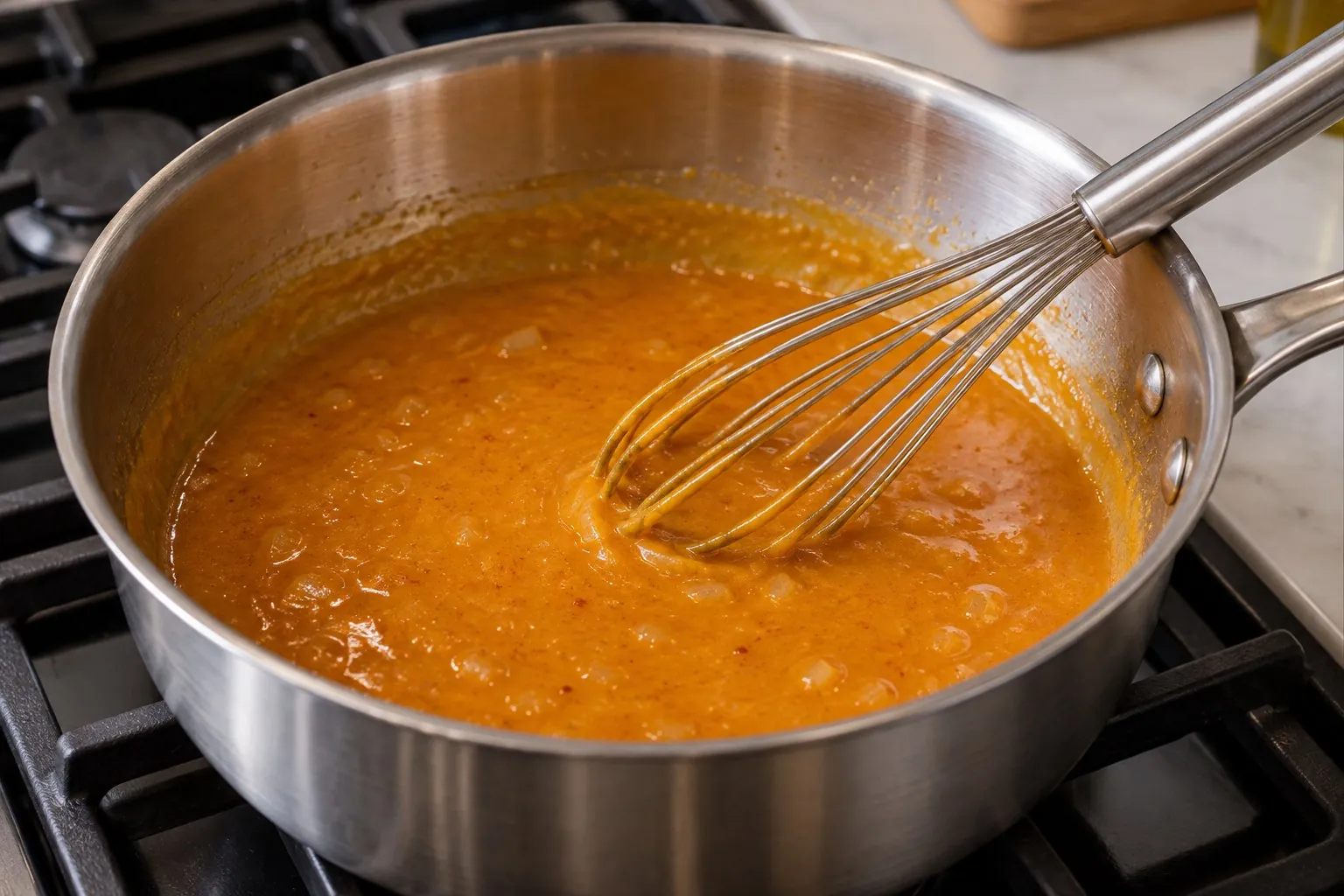
Cook pumpkin pea macaroni without heavy cream
- Prepare the parallel tasks. Mince the onion, measure the pumpkin and seasonings, and check the peas’ directions. Bring a pot of water to a boil and salt to preference. Have the colander and a heatproof cup ready.
- Cook the macaroni. Add the elbows to the boiling water and stir to separate them. Follow the package time, beginning to taste near the suggested finish. Add peas to that pot only when their full package method can be satisfied without overcooking the pasta; otherwise cook the peas separately as directed.
- Soften the onion alongside. While the pasta cooks, warm the oil in the small skillet or saucepan over medium heat. Cook the minced onion for about 4–5 minutes, stirring, until soft and translucent. Lower the heat if it begins to brown sharply.
- Reserve water before draining. Scoop out at least 1/2 cup of the hot cooking water, then drain the macaroni and any peas cooked with it. Keep separately cooked peas drained and ready. The reserved water is a supply for gradual use, not a direction to add it all.
- Loosen the pumpkin base. Add the pumpkin, Dijon and sweet paprika to the softened onion. Whisk in 1/4 cup of the reserved water over low heat until the mixture is evenly warm and no dense pumpkin lump remains. Keep the heat gentle so the small amount does not catch on the bottom.
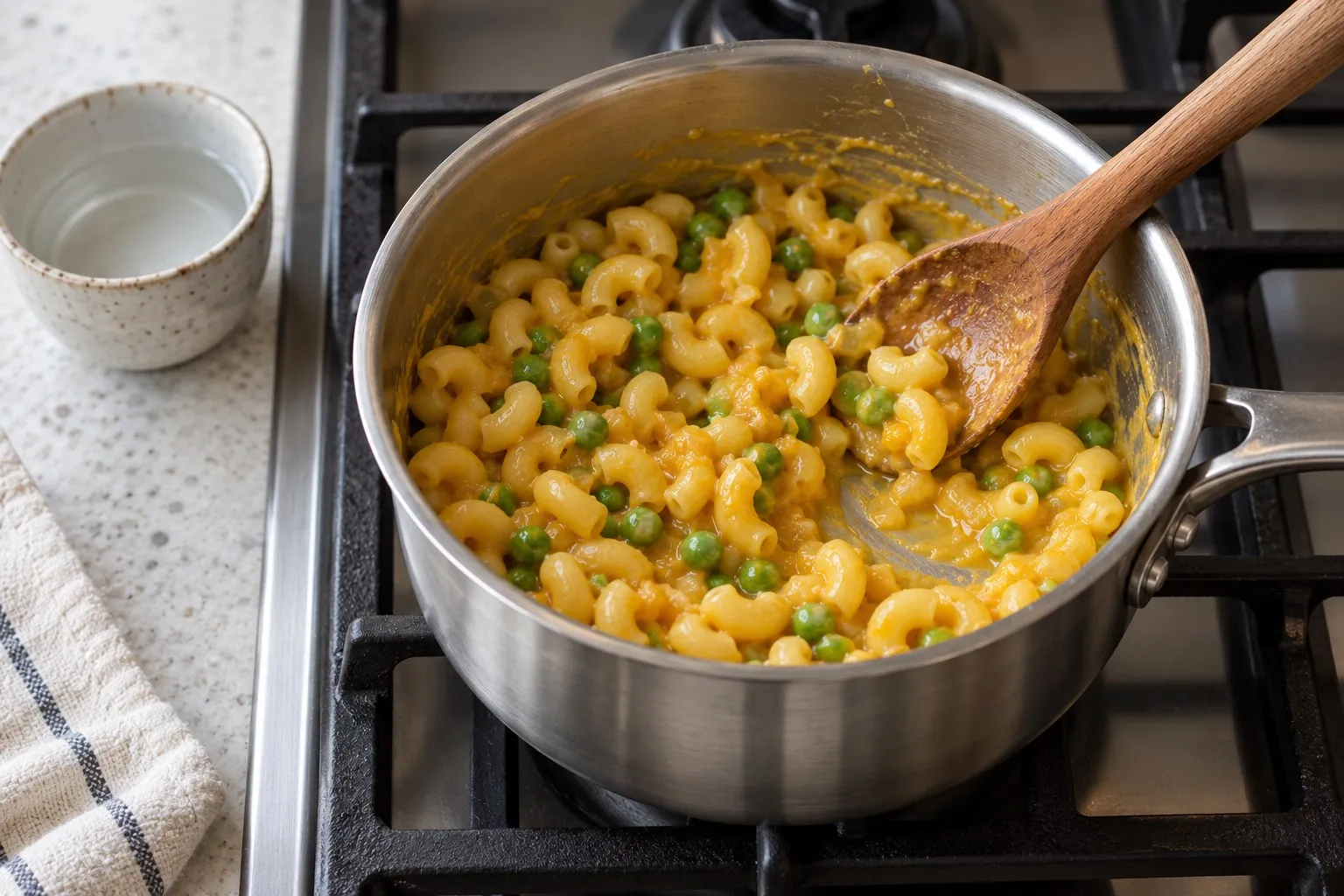
- Fold in macaroni and peas. Add the drained pasta and fully cooked peas. Stir gently, adding more water toward the listed 1/3-cup allowance as needed, then a little extra only if the coating remains too thick. Lift from the bottom so the sauce reaches the hollow elbows.
- Finish and taste. Remove from the heat and add the teaspoon of lemon juice. Taste a spoonful that includes a pea and an elbow before adding salt and black pepper. Serve promptly once the coating is even and the entire mixture is hot.
More simple meal ideas: Try pasta shells white beans broccoli with lemon without cheese or roasted carrot chickpea tray with dill without yogurt.
Think of a coating that moves
The pumpkin should spread through the pasta with the spoon, leaving distinct elbows and green peas visible. If the spoon moves a single stiff mass, more liquid is needed. If orange liquid runs freely into the bottom of the bowl, let the combined pasta stand briefly and reassess before extending the heat.
The first quarter cup of pasta water helps you blend the pumpkin. The ingredient list’s third cup allows more for the final consistency, and the extra reserve gives a small margin for differences in purée thickness or pasta absorption. Add by the spoonful after the initial amount so the change stays controlled.
Correct flavor after the texture is right
| What you notice | Consider this adjustment |
|---|---|
| Thick pumpkin clumps among dry elbows | Warm reserved water, added a spoonful at a time with gentle folding. |
| A loose coating after a large pour | A brief pause or gentle uncovered finish before adding anything else. |
| Sweetness dominates | A very small extra amount of mustard or a few drops of lemon, followed by another taste. |
| Flat overall flavor | Check salt and pepper after the measured lemon and mustard are fully distributed. |
Do not add dry flour to thicken the finished macaroni. It is not in the recipe and would need its own cooking and liquid plan. Likewise, more pumpkin is not the first fix for a sauce that only needs a short rest to settle around the pasta.
Plan two fuller bowls or three lighter plates
A green salad or separately cooked green beans makes a useful side. Keep the side ready before the final pasta fold so the elbows can reach the table while the coating is loose. A heavy topping can hide the simple pea-and-pumpkin contrast, so start with the measured version.
When portioning, lift from the bottom of the pan so the peas do not collect in the last bowl. If saving a portion, place it in its own shallow container before serving the rest. This is easier than trying to recover an even vegetable-to-pasta balance from a nearly empty pot afterward.
Pumpkin pasta questions
Will pumpkin pie filling work?
No. It contains a different seasoning and sweetness profile. Choose plain pumpkin purée for the half-cup measure. Mustard and lemon cannot reliably undo a sweetened pie filling, so that substitution would require a separate formula rather than a simple adjustment.
Can I use homemade pumpkin purée?
It can be tried, but water content and texture vary. Use a smooth cooked purée and the same measured starting amount, then add pasta water gradually. A watery purée may need separate reduction before it joins the onion. Judge the sauce by its consistency before combining it with the macaroni.
Can small shells replace macaroni?
Yes as a suggested change by the same six-ounce dry weight. Follow their own package cooking time and check how much water the final coating needs. Larger shells or very different pasta products can change both the portion appearance and cooking schedule.
Can I replace peas with frozen spinach?
Cook the spinach fully according to its package, then drain and loosen it before combining. A packed cooked measure is not automatically equivalent to the original frozen-pea volume, so the amount needs a separate development decision. Expect a softer green component with different moisture.
Why did the sauce become stiff after serving?
The pasta and pumpkin mixture continues to thicken while it stands. Finish it slightly loose and serve promptly. If it is still in the hot pan, fold in a spoonful of warm water before plating. A chilled leftover needs a fresh moisture adjustment after reheating.
Can pumpkin pea macaroni without heavy cream be reheated?
Yes after prompt refrigeration. Add water gradually and stir gently until the center reaches 165°F. The elbows will be softer and the coating thicker than when freshly made. Taste the hot portion before adding extra mustard or lemon.
Storage after the meal
Refrigerate shallow covered portions within 2 hours, or within 1 hour above 90°F. Keep at 40°F or colder and use within 3–4 days. Reheat to 165°F throughout, adding a spoonful of water as needed and stirring to remove cool pockets. Keep any crisp side or salad separate.
If the pumpkin can was opened earlier, its previous storage time still matters. Label leftovers with their cooking date and avoid interpreting a newly combined pasta dish as a reset for older ingredients. A smaller planned portion is easier to heat evenly without repeatedly working the tender peas.
Food handling references: USDA leftovers guidance, FDA refrigerated storage advice and FoodSafety.gov reheating temperatures.
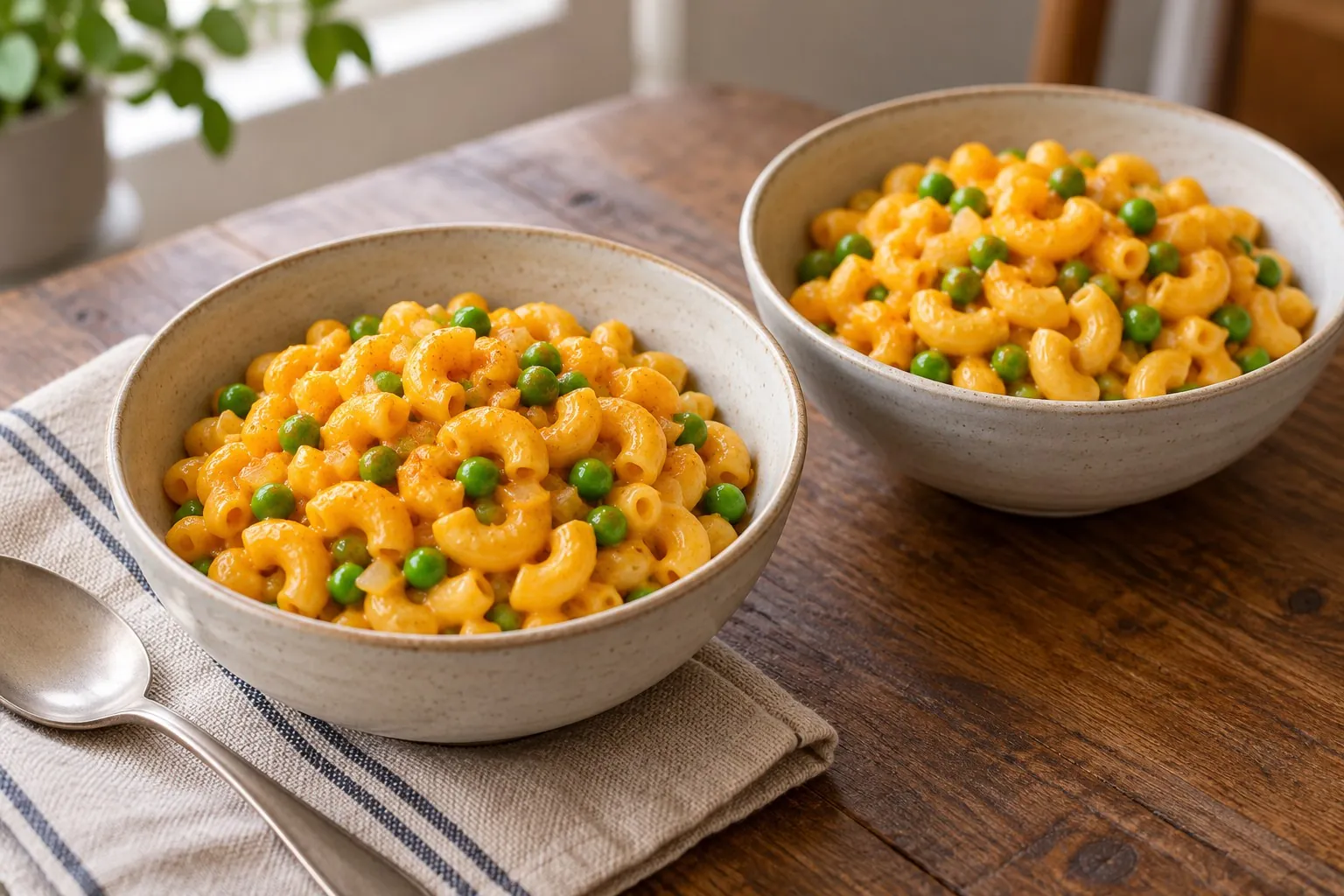
Pumpkin Pea Macaroni Without Heavy Cream
Ingredients
Equipment
Method
- Prepare the parallel tasks. Mince the onion, measure the pumpkin and seasonings, and check the peas' directions. Bring a pot of water to a boil and salt to preference. Have the colander and a heatproof cup ready.
- Cook the macaroni. Add the elbows to the boiling water and stir to separate them. Follow the package time, beginning to taste near the suggested finish. Add peas to that pot only when their full package method can be satisfied without overcooking the pasta; otherwise cook the peas separately as directed.
- Soften the onion alongside. While the pasta cooks, warm the oil in the small skillet or saucepan over medium heat. Cook the minced onion for about 4–5 minutes, stirring, until soft and translucent. Lower the heat if it begins to brown sharply.
- Reserve water before draining. Scoop out at least 1/2 cup of the hot cooking water, then drain the macaroni and any peas cooked with it. Keep separately cooked peas drained and ready. The reserved water is a supply for gradual use, not a direction to add it all.
- Loosen the pumpkin base. Add the pumpkin, Dijon and sweet paprika to the softened onion. Whisk in 1/4 cup of the reserved water over low heat until the mixture is evenly warm and no dense pumpkin lump remains. Keep the heat gentle so the small amount does not catch on the bottom.
- Fold in macaroni and peas. Add the drained pasta and fully cooked peas. Stir gently, adding more water toward the listed 1/3-cup allowance as needed, then a little extra only if the coating remains too thick. Lift from the bottom so the sauce reaches the hollow elbows.
- Finish and taste. Remove from the heat and add the teaspoon of lemon juice. Taste a spoonful that includes a pea and an elbow before adding salt and black pepper. Serve promptly once the coating is even and the entire mixture is hot.
Notes
- Yield and timing: One batch makes approximately 2–3 servings. Allow 10–12 minutes to prepare and 15–25 minutes to cook, for about 25–37 minutes total. Cook the sauce alongside the pasta.
- Pumpkin: Use the measured ½ cup of plain unsweetened pumpkin purée, not pumpkin pie filling. Mince the onion before starting so it can soften while the macaroni cooks.
- Peas: Complete their full package cooking instructions. They can share the pasta pot for its final two minutes only if the pea package specifies that method and time. Otherwise cook separately, drain and fold into the pasta. See the frozen-vegetable cooking guidance.
- Coating: Reserve at least ½ cup pasta water. Begin the sauce with ¼ cup, add gradually toward the listed ⅓ cup, and use extra only if needed. Finish with lemon off heat.
- Leftovers: Refrigerate shallow portions within 2 hours, or 1 hour above 90°F (32°C), at 40°F (4°C) or below. Use within 3–4 days and reheat to 165°F (74°C). FoodSafety.gov storage guidance.