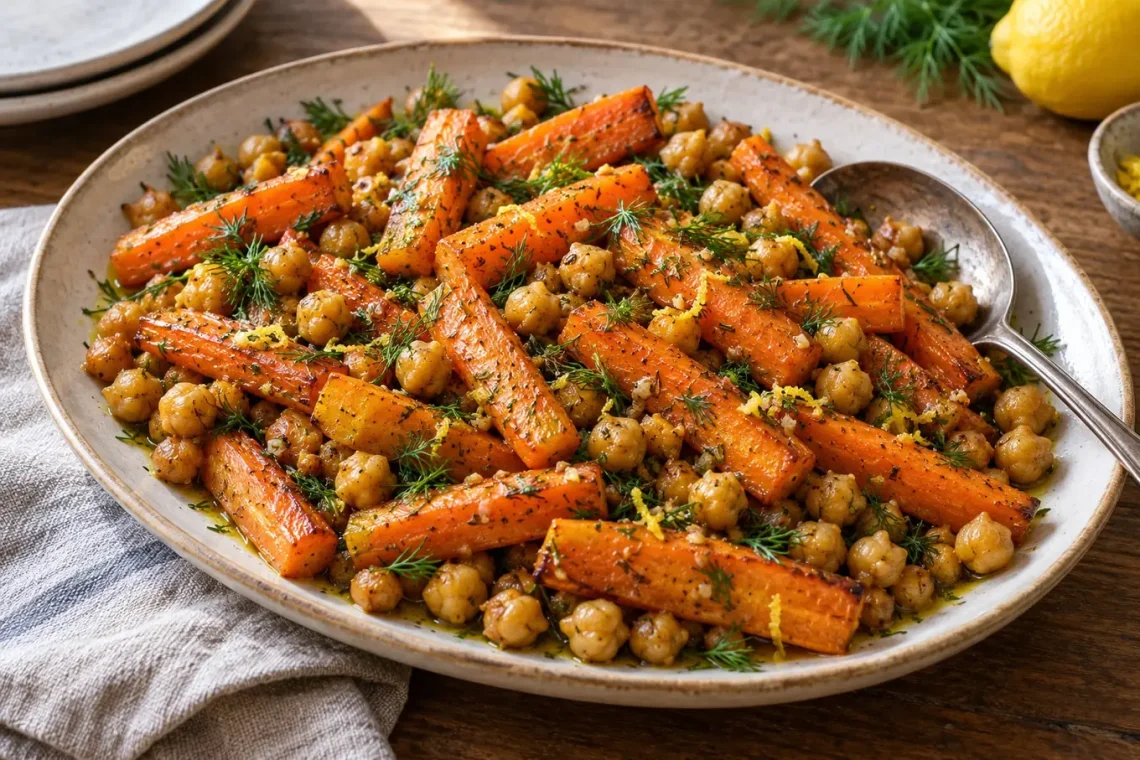
Roasted carrots bring sweetness, chickpeas add a firm bite, and chopped dill and lemon keep the finished tray bright. This roasted carrot chickpea tray with dill without yogurt has no creamy coating: the vegetables and beans receive a measured oil-and-spice layer, then the fresh finish is folded in after roasting.
Affiliate disclosure: As an Amazon Associate I earn from qualifying purchases. These paid links open Amazon search results for comparing equipment.
Prepare the carrots with a vegetable peeler (paid link), then spread them and the chickpeas across an 18-by-13-inch rimmed sheet pan (paid link); use a second pan if the food cannot fit in one layer.
The important preparation choice is the carrot cut. Half-inch sticks give the carrots a useful head start before the chickpeas join. That staggered schedule lets you soften a dense root without roasting the already cooked chickpeas until they become hard. Plan for lightly golden chickpeas with a tender center, rather than promising the crunch of a snack roasted on its own.
Make roasted carrot chickpea tray with dill without yogurt tender and bright
| Element | Best practice |
|---|---|
| Carrots | Cut thick ends smaller than narrow tips so the tray reaches tenderness at the same time. |
| Chickpeas | Drain and dry thoroughly; surface water turns to steam and softens both the beans and nearby carrots. |
| Dill | Add after roasting so its fresh aroma is not lost in prolonged oven heat. |
Use a generous pan with visible space between pieces. If the carrots are tender but pale, move the tray higher in the oven for the final minutes rather than extending the entire roast until the chickpeas become hard. Finish with the measured lemon juice, zest and fresh dill after roasting.
Carrot size sets the pace
Yield: about 2–3 light main portions with a grain, or 3–4 small sides. Prep: 10–15 minutes. Roast: usually about 27–30 minutes for the stated cut; allow up to about 40 minutes if the carrots need longer. Total: approximately 40–55 minutes. Oven: 425°F / 220°C.
Use a large 18-by-13-inch rimmed sheet pan, oven-safe parchment rated for the cooking temperature, a colander, a clean towel, a vegetable peeler and a broad spatula. A second sheet is useful when a tray cannot hold the sticks and chickpeas in one layer. Trim parchment to the pan so loose edges do not extend toward a heating element.
Ingredients
- 1 pound carrots, peeled and cut into even 1/2-inch sticks
- 1 can (15 ounces) chickpeas, drained and thoroughly dried
- 2 tablespoons olive oil
- 1/2 teaspoon ground cumin
- 1/4 teaspoon garlic powder
- 1/2 teaspoon lemon zest
- 1 tablespoon lemon juice
- 2 tablespoons chopped fresh dill
- 1/4 teaspoon fine salt
- Black pepper
The two tablespoons of oil are divided between the carrots and chickpeas during the method. Cumin and the measured salt season the carrots first; garlic powder goes with the chickpeas for their shorter roast. Reserve the lemon zest, juice and dill for the finish.
Rinse carrots before peeling and dry them after cutting. Rinse and dry the lemon before zesting as well. The FDA advises washing produce before peeling, so surface material is less likely to be carried inward by the knife or peeler. Grate only the colored lemon surface and stop before the bitter white pith.
A simple cutting lesson for tapered carrots
Lay a peeled carrot flat and compare its thick shoulder with its thin tip. Split the thick section lengthwise into sticks about half an inch across, then leave a naturally narrow tip whole or halve it only if needed. Matching thickness matters more than making every piece the same length. A long thick stick and a short thick stick both still have a dense center to cook.
Cut especially long sticks into manageable lengths so they lie flat on the tray. Collect very thin scraps separately rather than hiding them under larger pieces, where you cannot see if they are overbrowning. If your carrots are already cut thicker than specified, extend their first roast and inspect the centers before adding the chickpeas.
Roast the carrots first, then add chickpeas
- Prepare the oven and pan. Heat the oven to 425°F with a rack near the middle. Line the rimmed sheet pan with temperature-appropriate parchment. Have a clean mixing bowl and a broad spatula ready so the carrots can be turned gently during the second stage.
- Dry the chickpeas. Drain the can in a colander. Spread the chickpeas on a clean towel and blot them carefully. Loose skins can be discarded if they come away easily, but there is no need to peel each chickpea. Keep the beans separate from the carrots at this stage.
- Season the carrot sticks. Put the prepared pound of carrots in a bowl with 1 tablespoon olive oil, the cumin and the quarter teaspoon of salt. Toss until the seasoning is distributed over the sticks rather than concentrated on just the top layer.
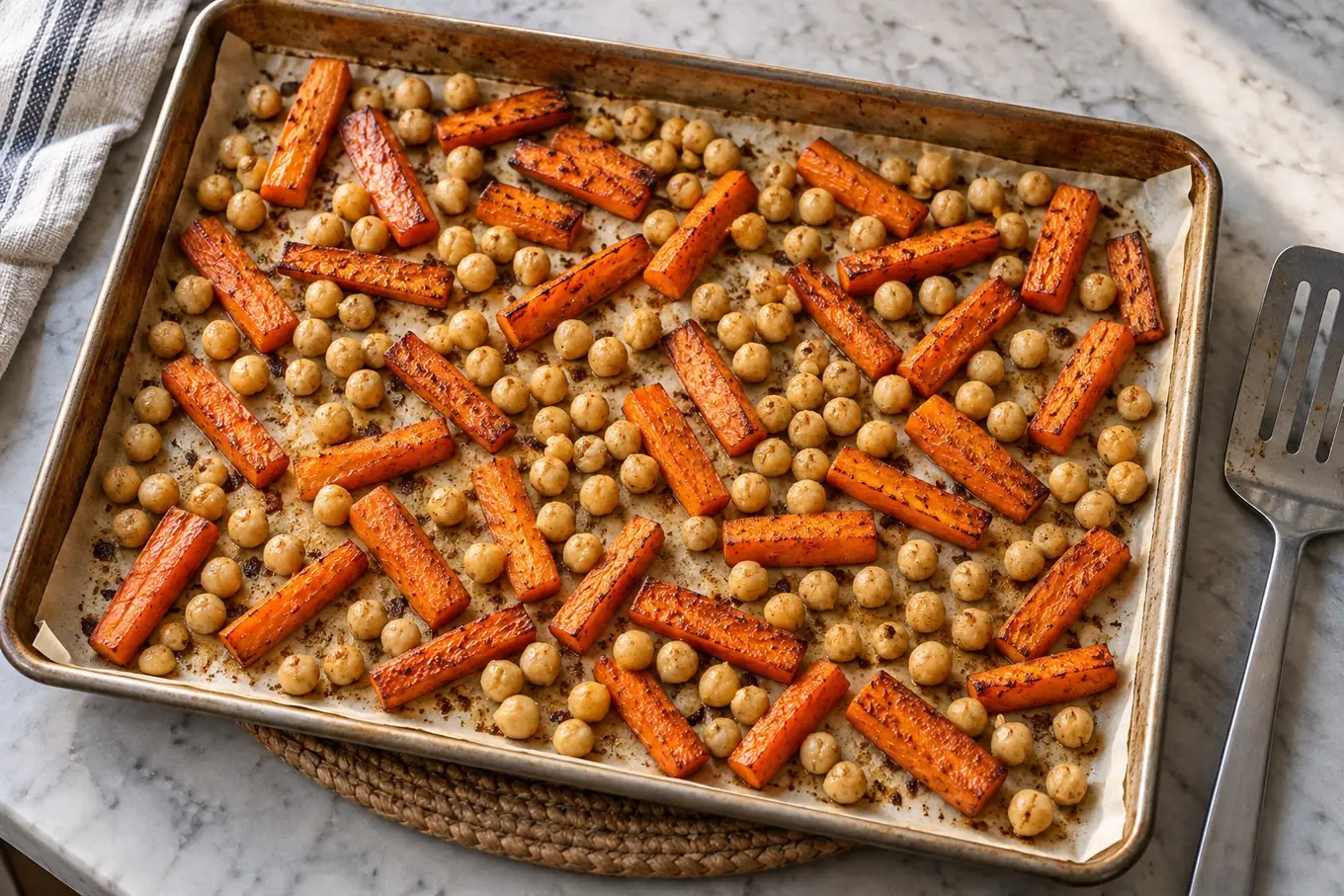
- Give carrots a head start. Spread them on the lined pan with gaps and broad surfaces facing down. Roast for 15 minutes without frequent stirring. At the check, a thick stick should be starting to soften, though it still has another stage of cooking ahead.
- Check before adding the beans. If thick carrot centers remain very hard, roast them a little longer before adding chickpeas. Meanwhile, coat the dry chickpeas with the remaining tablespoon of oil and the garlic powder. Keep the lemon and dill out of this mixture.
- Roast together. Add the chickpeas around the carrots, turn the sticks gently, and spread everything back into a shallow layer. Roast another 12–15 minutes. Begin checking near the earlier end and lift a thick carrot to test its center with a fork.
- Judge both ingredients. Carrots should yield to the fork while holding their shape, with some browned tips or faces. Chickpeas should be thoroughly hot and lightly golden. If a few carrots need longer, remove finished chickpeas and smaller sticks to a clean serving dish before continuing the larger pieces.
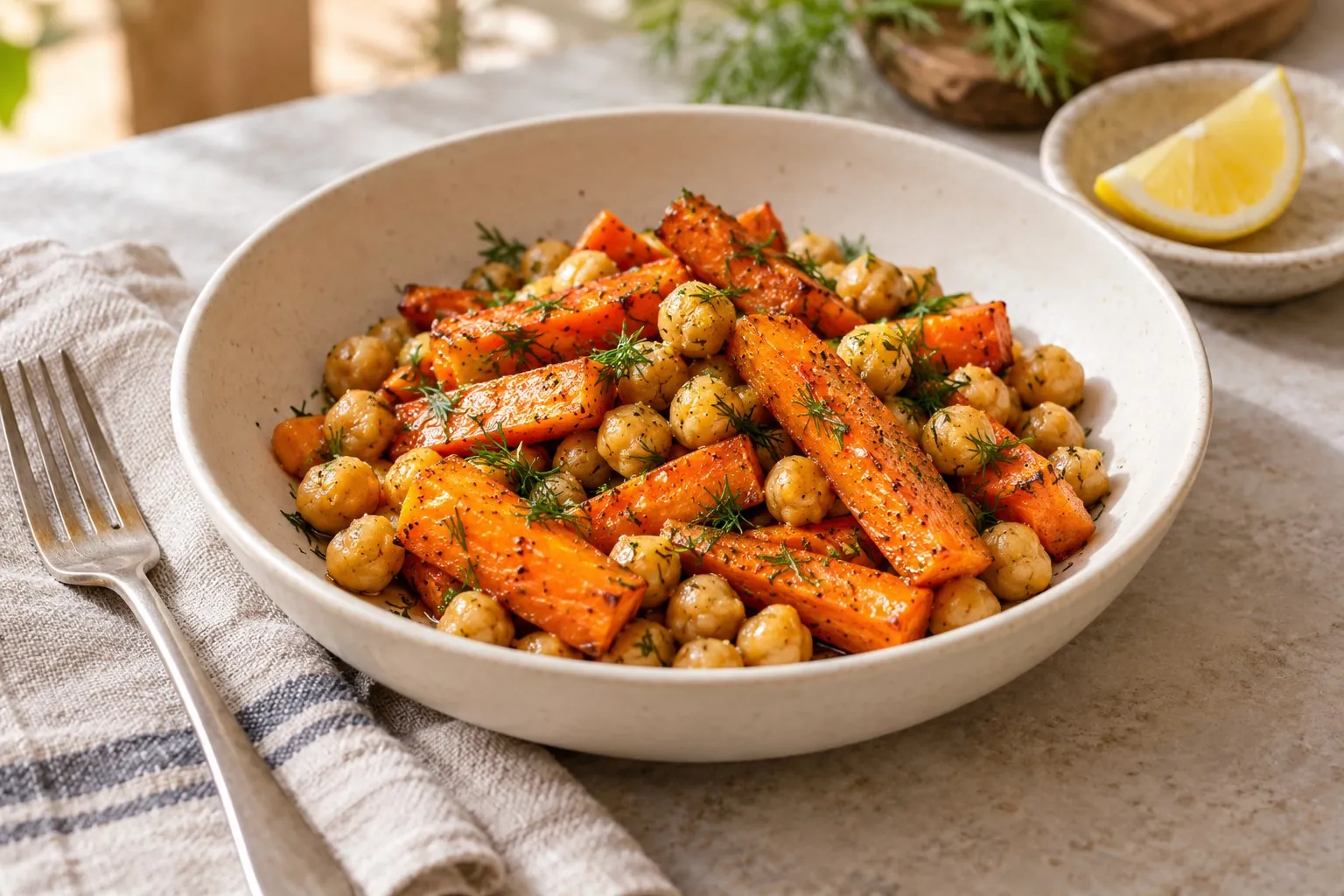
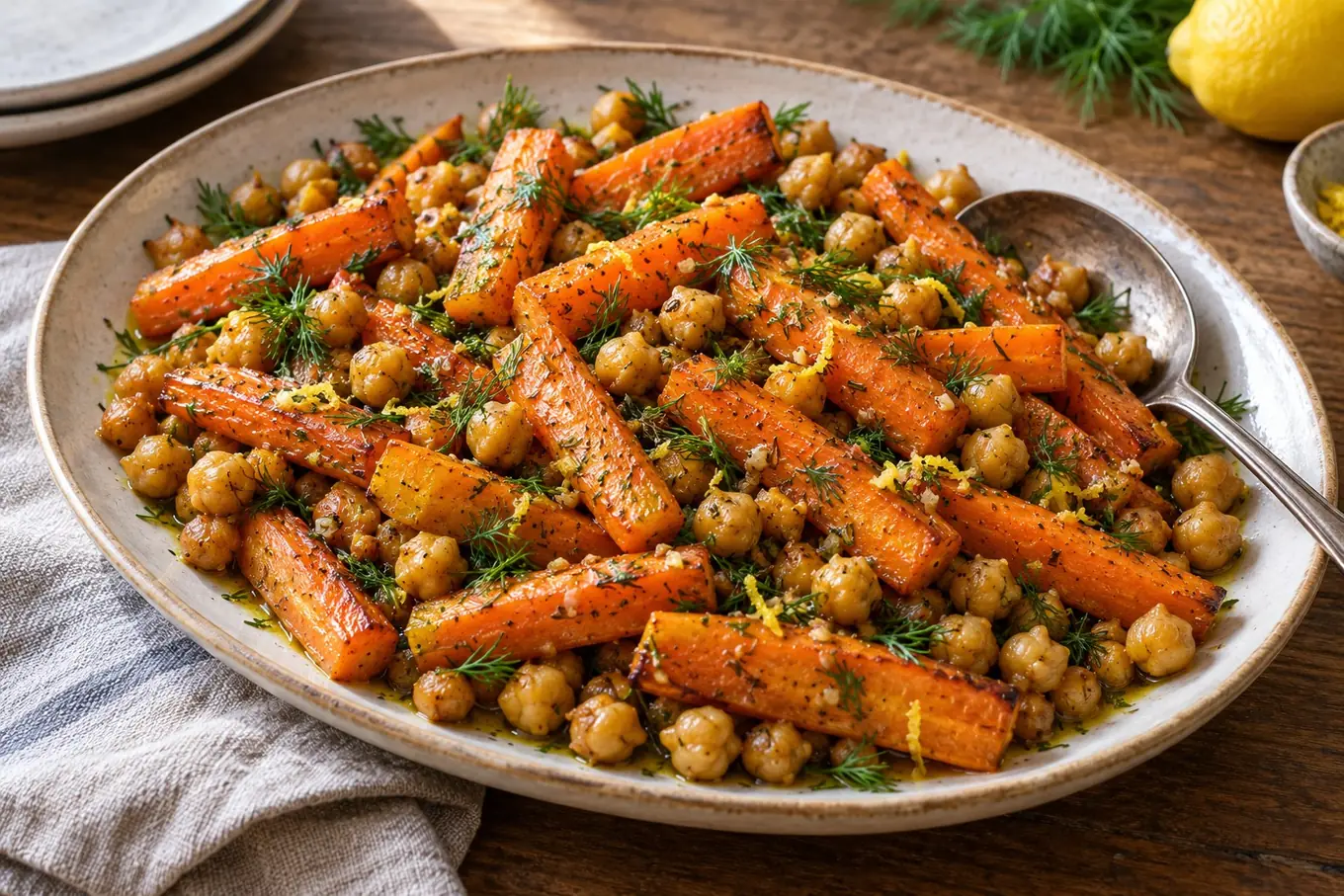
- Add the fresh finish. Take the pan from the oven and scatter over chopped dill and lemon zest. Drizzle with the tablespoon of lemon juice, season with black pepper to taste and fold gently. Taste carrot and chickpea together before deciding whether the finished portion needs an additional adjustment.
Finish roasted carrot chickpea tray with dill without yogurt
The dill should be chopped fine enough to cling to the oil-coated vegetables. Remove especially thick or tough stalks before measuring the two tablespoons; tender fine stems can be chopped with the leaves. Scatter the herb widely rather than dropping it in one clump, then use the spatula to lift and turn the food a few times.
Lemon zest supplies citrus aroma without adding much liquid, while the measured juice moistens and brightens the finished tray. Add both after roasting. If the tray will become a grain bowl, dress the carrots and chickpeas first and then spoon them over the grain so the modest dressing is not absorbed before it reaches the main ingredients.
A quick texture check
| What you notice | What to do now |
|---|---|
| Carrots still hard in the middle | Continue in short intervals at the same oven setting, keeping finished chickpeas from overcooking. |
| Moisture pooling between crowded sticks | Divide the food between two pans and leave spaces before continuing. |
| Chickpeas becoming very dry | Remove them once hot; more oven time will not restore a soft center. |
| Dill flavor hidden in one part of the tray | Use broad folds to redistribute the chopped herb without crushing the carrots. |
Browned tips are only one cue. A tapered carrot can look finished at the narrow end while its shoulder stays hard. Check a piece from the thickest group and another from a different part of the pan. Oven hot spots and uneven cutting make a single tiny stick a poor guide for the whole batch.
More simple meal ideas: Try garlic zucchini canned lentil spaghetti without tomatoes or cabbage butter bean rotini with garlic without tomato sauce.
Three ways to put the tray on the table
Serve as a small side beside baked fish or chicken, with the main cooked separately to its own safe endpoint. For a light lunch, spoon the warm mixture over cooked barley or rice and add a simple green salad. For a shared vegetable spread, offer it in a shallow bowl beside bread and another dish.
The recipe contains no yogurt, so it does not need a last-minute dairy topping to feel finished. Keep any optional sauces separate and let the lemon, dill and cumin remain recognizable. Do not double the food on one crowded tray when increasing the serving count; use additional pan space and check each pan individually.
Useful substitutions and their limits
Chopped parsley can replace the dill for a different herb finish. Canned white beans can replace chickpeas if a softer bean is preferred, but handle them more gently and inspect them early in the final roast. The stated chickpea texture should not be expected from a fragile white bean.
Baby carrots are convenient but vary in thickness. Split thick pieces to approximate the stated half-inch cut and test the centers. Frozen carrots release water differently and need their own package instructions and timing checks; the fresh-carrot schedule should not be presented as a tested frozen variation.
Frequently asked questions
Can I cut the carrots thicker?
Yes, but give them a longer head start and check a thick center before adding the chickpeas. Otherwise the beans may spend too long in the oven while the carrots remain firm. Matching the stated half-inch thickness makes the original schedule more useful.
Do the chickpeas have to be completely dry?
Blot away visible surface water so it does not collect on the tray. They do not need to become dehydrated or have every skin removed. A gentle towel blot is enough preparation before tossing with their tablespoon of oil and garlic powder.
Can I use dried dill?
Fresh dill is the measured version here. Dried dill has a more concentrated flavor and a different texture, so an equal two-tablespoon swap is not appropriate. Use a separate dried-herb variation cautiously rather than calling it an equivalent tested replacement.
Why does the lemon go on after roasting?
The recipe uses lemon as a fresh finish over the cooked food. Keeping it out of the first stage avoids adding that liquid while the carrots are trying to brown. Zest is also easier to distribute when it is scattered over the finished warm tray.
Can the carrots be prepared the night before?
Yes. Peel and cut them, then refrigerate covered. Blot any surface moisture before seasoning. Drain chickpeas separately and keep them refrigerated as well; combine each with its own oil and seasonings when you are ready to roast.
How should I reheat one portion?
Spread the portion in a skillet or on a small oven tray and heat until the center reaches 165°F. Check frequently so the chickpeas do not become hard. A microwave is also practical, but expect softer roasted surfaces and stir or rearrange for even reheating.
Keep leftovers safely
Refrigerate in shallow containers within 2 hours, or within 1 hour if the room or outdoor temperature exceeds 90°F. Keep leftovers at 40°F or below and use within 3–4 days under USDA leftovers guidance. Reheat to 165°F before serving hot.
Carrots may soften and the dill will lose some of its fresh aroma during storage. Keep any separately cooked grain in its own shallow container so portions can be reheated evenly. Freezing is possible, but the thawed carrots are likely to be softer; this tray is most appealing when its original roasted texture is still present.
Roasted Carrot Chickpea Tray With Dill Without Yogurt
Ingredients
Equipment
Method
- Prepare the oven and pan. Heat the oven to 425°F with a rack near the middle. Line the rimmed sheet pan with temperature-appropriate parchment. Have a clean mixing bowl and a broad spatula ready so the carrots can be turned gently during the second stage.
- Dry the chickpeas. Drain the can in a colander. Spread the chickpeas on a clean towel and blot them carefully. Loose skins can be discarded if they come away easily, but there is no need to peel each chickpea. Keep the beans separate from the carrots at this stage.
- Season the carrot sticks. Put the prepared pound of carrots in a bowl with 1 tablespoon olive oil, the cumin and the quarter teaspoon of salt. Toss until the seasoning is distributed over the sticks rather than concentrated on just the top layer.
- Give carrots a head start. Spread them on the lined pan with gaps and broad surfaces facing down. Roast for 15 minutes without frequent stirring. At the check, a thick stick should be starting to soften, though it still has another stage of cooking ahead.
- Check before adding the beans. If thick carrot centers remain very hard, roast them a little longer before adding chickpeas. Meanwhile, coat the dry chickpeas with the remaining tablespoon of oil and the garlic powder. Keep the lemon and dill out of this mixture.
- Roast together. Add the chickpeas around the carrots, turn the sticks gently, and spread everything back into a shallow layer. Roast another 12–15 minutes. Begin checking near the earlier end and lift a thick carrot to test its center with a fork.
- Judge both ingredients. Carrots should yield to the fork while holding their shape, with some browned tips or faces. Chickpeas should be thoroughly hot and lightly golden. If a few carrots need longer, remove finished chickpeas and smaller sticks to a clean serving dish before continuing the larger pieces.
- Add the fresh finish. Take the pan from the oven and scatter over chopped dill and lemon zest. Drizzle with the tablespoon of lemon juice, season with black pepper to taste and fold gently. Taste carrot and chickpea together before deciding whether the finished portion needs an additional adjustment.
Notes
- Yield and timing: One batch makes 2–3 light mains with a grain or 3–4 small sides. Allow 10–15 minutes to prepare and usually 27–30 minutes to roast, extending up to about 40 minutes if carrots need longer. Total: approximately 40–55 minutes.
- Pan: Roast at 425°F (220°C) on an 18-by-13-inch rimmed sheet. Use parchment rated for that temperature. If the food cannot fit in a shallow layer, use two pans.
- Cut and stage: Keep carrot sticks about ½ inch thick. The first tablespoon of oil, cumin and salt coat the carrots; the second tablespoon and garlic powder coat the chickpeas. Give carrots their head start before adding the beans.
- Finish: Test a thick carrot center, not just a browned tip. Remove finished chickpeas if carrots need extra time. Add dill, lemon zest and juice after roasting so the fresh finish remains distinct.
- Leftovers: Refrigerate shallow portions within 2 hours, or 1 hour above 90°F (32°C), at 40°F (4°C) or below. Use within 3–4 days and reheat to 165°F (74°C). FoodSafety.gov storage guidance.