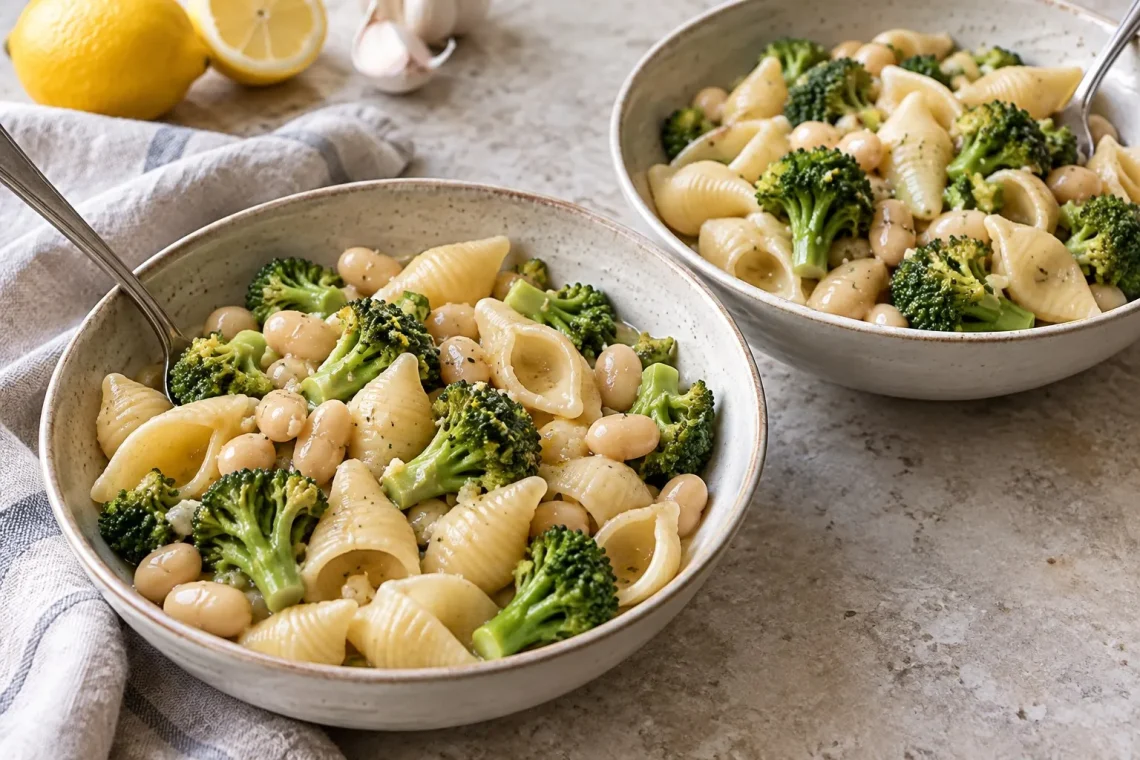
Hollow shells catch a light coating of mashed white beans in pasta shells white beans broccoli with lemon without cheese. Broccoli joins the boiling pasta near the end, then the emptied pot becomes the place to warm garlic and beans. A small portion of those beans is mashed before the shells return, giving the lemony coating body without cheese.
Affiliate disclosure: As an Amazon Associate I earn from qualifying purchases. These paid links open Amazon search results so you can compare suitable tools.
The two-stage method uses a pasta pot (paid link) for both boiling the shells and finishing the beans. Have a colander (paid link) ready for draining, and reserve the measured cooking water first.
The finished pasta should have distinct shells, mostly whole beans and small broccoli florets that are tender through their stems. The bean mash should sit inside and around the shells rather than become a thick paste hiding them. Reserving cooking water before draining gives you a way to adjust that coating gradually.
Build a glossy sauce without cheese
Cook broccoli to size
Split thick stems lengthwise and keep florets small. Add them for about the final three minutes of the shell cooking time, checking a stem and an intact shell before draining.
Save pasta water
Its starch joins lemon, garlic and oil into a light coating that clings to the shells instead of collecting at the bottom.
Fold beans gently
White beans need only a short final warm-through. Hard stirring breaks them and makes the sauce heavier than intended.
Finish cue: the shells should look moist and glossy, with a little sauce inside each curve. Add lemon after lowering the heat, then taste before adding more salt because the pasta water and canned beans may already contribute seasoning.
One pasta pot does two jobs
Serves: approximately 2–3. Preparation: about 10–12 minutes. Cooking: about 15–25 minutes, depending on the pasta. Estimated total: about 25–37 minutes. Use a pasta pot, colander, broad spoon, small bowl, knife, cutting board and measuring tools. Keep a fork ready for the broccoli check.
The first job is boiling the shells and broccoli. The second is warming the garlic and mashing some beans in the drained pot. Put the oil, garlic and drained beans beside the stove before the pasta timer ends so the transition is short and the cooked shells do not sit untouched while you prepare the next ingredients.
Jump to: printable recipe · quantities · timing · method · FAQs.
Ingredients
- 6 ounces medium pasta shells
- 2 cups small broccoli florets
- 1 can (15 ounces) great northern beans, rinsed and drained
- 1 tablespoon olive oil
- 1 garlic clove, minced
- 1 tablespoon lemon juice
- 1/4 teaspoon red pepper flakes, optional
- 1/2 cup reserved pasta water
- Salt and pepper
Use medium shells and small florets
The measured pasta is medium shells, not large shells intended for stuffing. Weigh six ounces dry and use the package time as the starting point for your timer. Shapes and brands vary, so begin tasting near the suggested endpoint rather than waiting for a shell to fall apart.
Rinse the broccoli and cut small florets that fit inside a spoonful with a shell. Split any unusually thick stem lengthwise. The crowns can soften before a large stem does, and the short final boil is easier to manage when the pieces are consistent. Measure two cups without packing several branches into one clump.
Prepare a bean base that stays partly whole
Use plain great northern beans, rinsed and drained. Their one-can quantity supplies both the mashed coating and the whole beans. Let excess water drain before the pot transition. Keep the optional red pepper flakes with the garlic so that seasoning is not forgotten during the brief aromatic stage.
Line up the three-minute broccoli stage
Read the shell package before boiling. Plan to add the small broccoli florets when the pasta has roughly three minutes left, then check a representative stem along with a shell. Adding a cold vegetable can quiet the boil briefly; maintain enough heat for steady cooking, and use the actual texture rather than only the original timer.
If you prefer broccoli softer than a short shared boil produces, prepare it separately to your preferred tenderness and combine it during the finishing stage. That is a useful variation for a different texture preference, not a reason to cook already tender shells until they become mushy. The reference method keeps the florets small and checks both components together.
Make pasta shells white beans broccoli with lemon without cheese
- Set up the finishing ingredients. Drain the beans, mince the garlic and measure the oil and lemon. Put a heatproof half-cup measure beside the colander. Keep the broad spoon and small bowl nearby for mashing if needed.
- Boil the shells. Bring a pot of water to a boil and salt to preference. Add the medium shells and stir so they do not settle together on the bottom. Cook according to the package, planning the broccoli addition during the final few minutes.
- Add and check the broccoli. Add the small florets for approximately the final 3 minutes. Test a shell for a tender bite and a broccoli stem for fork tenderness. If either needs longer, continue only as much as needed, checking again rather than extending the whole pot without looking.
- Reserve water and drain. Scoop out the measured 1/2 cup of cooking water before tipping the pasta and broccoli into the colander. Let the main flow drain away. Keep the shells and florets together while you use the empty pot for the brief sauce stage.
- Warm garlic and beans. Return the pot to low or medium-low heat. Add the oil, garlic and optional pepper flakes and stir for about 30 seconds. Add the drained beans and a small splash from the reserved pasta water. Warm gently, keeping the garlic pale.
- Mash a quarter of the beans. Press about one-quarter of the beans against the side with the spoon. Stir that mash through the small amount of liquid while leaving the rest whole. If pressing in the pot is awkward, lift a small portion into the bowl, mash it and return it.
- Coat the shells. Return pasta and broccoli to the pot. Fold gently and add enough of the remaining reserved water to create a loose coating. Check underneath as you fold so the mash spreads beyond the bottom layer. The shells should remain distinct.
- Finish with lemon. Remove from the heat and stir in the tablespoon of lemon juice. Taste a shell with a bean and broccoli before adding salt and pepper. Divide into bowls promptly while the coating still moves easily.
See what a quarter of mashed beans changes
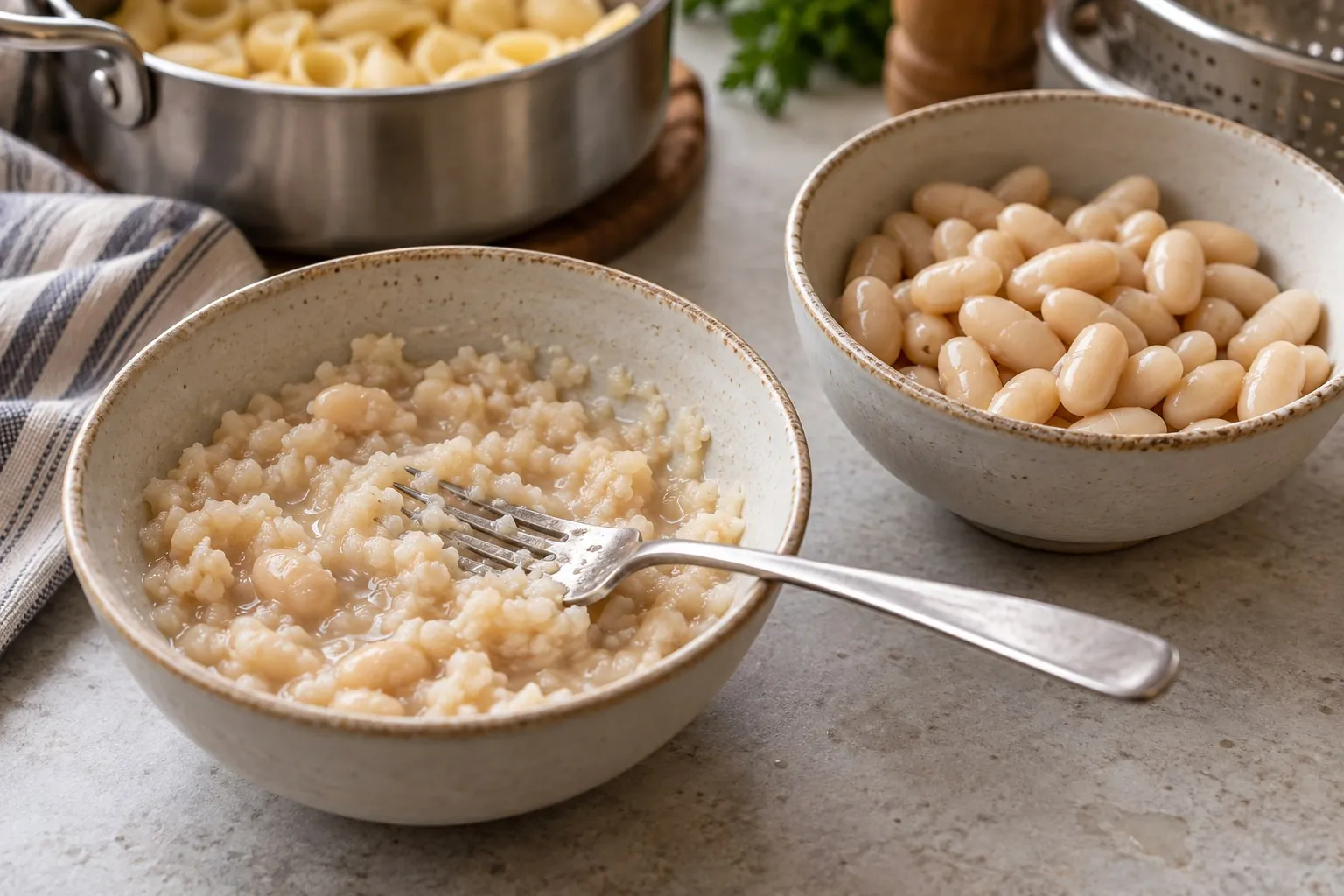
The mash provides a soft base that can enter the hollow shells, while the larger unmashed portion gives separate creamy bites. There is no need to mash exactly the same number of beans each time. Use a rough quarter of the drained can and stop before most of the pot becomes a paste.
If the coating is thick, add reserved water by the spoonful and fold again. If a little liquid gathers below the shells, allow a short gentle finish and then reassess. A brief pause can thicken the coating, so do not keep simmering until every trace of movement disappears.
A useful check in the serving spoon
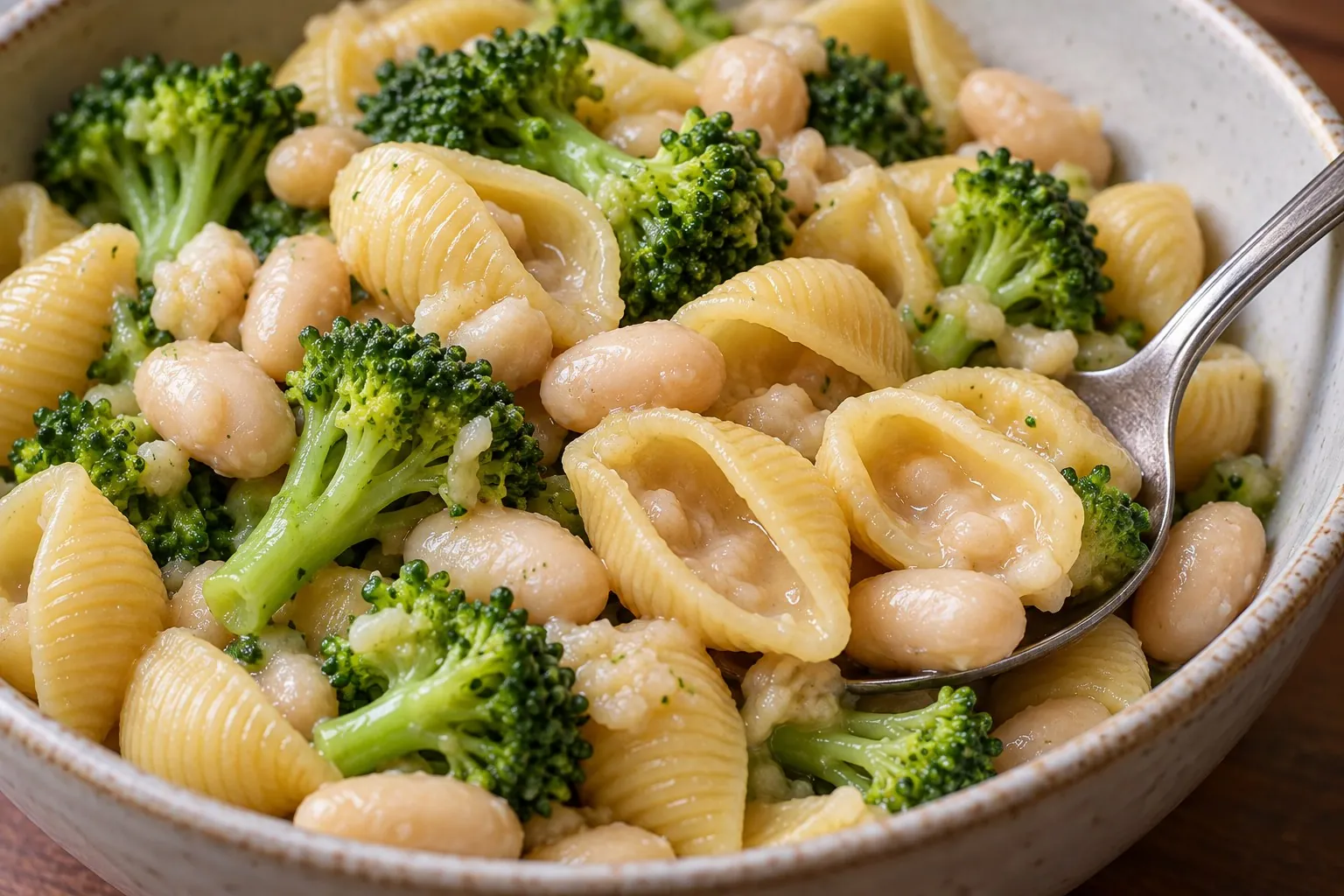
| Component | Desired finish |
|---|---|
| Shell | Tender with its shape and hollow center intact. |
| Broccoli | A stem that yields easily and a crown that remains recognizable. |
| Whole bean | Warm and creamy without being repeatedly crushed. |
| Coating | Light bean mash and lemony liquid reaching the shells without a heavy blanket. |
Lift from the bottom of the pot as well as the surface when portioning. The smaller beans can collect beneath the broccoli and shells. Alternate spoonfuls among bowls to keep the balance similar, especially when dividing the recipe into three lighter portions.
Serve simply and save a separate portion
Offer a lemon wedge and black pepper at the table. A crisp salad works alongside the soft beans and pasta. For another legume pasta on a different day, try the site’s pasta with canned chickpeas and frozen peas.
If one portion is for later, move it to a shallow container before sitting down. Refrigerate within 2 hours, or within 1 hour above 90°F, and keep at 40°F or below. Use within 3–4 days and reheat to 165°F, adding water a spoonful at a time and stirring carefully so the center heats evenly.
Shell pasta questions
Can I make it in advance?
Yes, with prompt chilling, though the shells and bean coating absorb moisture and become thicker. The freshest texture comes from the final fold near serving. For leftovers, add water during reheating and judge the coating once hot rather than from the chilled container.
Can I use cannellini beans?
They are a plausible alternative in the same one-can amount. Drain and rinse them, then mash a similar fraction. Their size and softness may change the coating, so keep the water gradual. This variation has not been kitchen validated against the great northern version.
Can broccolini replace broccoli?
Its stem thickness needs particular attention. Cut it into manageable pieces and cook until the stems reach the texture you want, rather than assuming every stalk fits the three-minute finish. Separate cooking is an option if its timing differs substantially from the shells.
Do I need to rinse the cooked pasta?
The reference method drains and returns it directly to the pot. Rinsing is unnecessary for this warm coating and would also cool the shells before the brief finish. Reserve water first, let the main flow drain and proceed with the prepared sauce ingredients.
Why did the broccoli become mushy?
The pieces may have been very small or stayed in boiling water too long while the pasta finished. On a future attempt, adjust the addition to the shell package and check both textures near the end. More stirring or frying will not restore an overcooked crown.
Does pasta shells white beans broccoli with lemon without cheese need another sauce?
No. The measured bean mash, oil, lemon and reserved water are intended to form the coating. Extra cheese, cream or a bottled sauce changes the formula. First make the small bean-coated version and use its texture checks before developing a different finish.
Food handling references: USDA leftovers guidance, FDA refrigerated storage advice and FoodSafety.gov reheating temperatures.
Troubleshooting the pasta and bean coating
Taste an intact shell
Medium shells can nest together during boiling. Separate joined shells gently, then taste an intact one near the package’s suggested finish time. Pay attention to its thicker curved edge: a broken sliver may soften sooner and give a misleading impression that the entire pot is ready. If that edge remains firm or floury, cook briefly and check again.
Check a broccoli stem separately. If one oversized stem is hard while the other florets and shells are ready, remove that piece for further cooking rather than overcooking everything else. Even cuts before boiling make this situation less likely.
Protect the short garlic stage
The emptied pasta pot stays hot after draining. Lower the burner before adding oil and garlic, and keep the drained beans and reserved water beside it. Stir along the bottom edge where small garlic pieces collect. If the garlic colors rapidly during its roughly 30-second aromatic stage, move the pot off the heat briefly before adding the beans and a little water.
Mash about a quarter of the beans, then leave the rest whole. Use the small bowl if pressing against the pot’s side is awkward. Return the mash before the pasta so it can disperse through the first small addition of water.
Redistribute before adding water
Lift from the bottom so the bean coating reaches the shells’ hollow centers. If the shells look dry but thick mash remains underneath, fold the mixture again before adding liquid. If everything is evenly coated yet sticky, add reserved water one spoonful at a time. If loose water collects, pause briefly and reassess; the coating continues to thicken as it stands.
Finish with lemon off the heat and taste a bite containing pasta, a bean and broccoli before adjusting salt. Serve promptly while the shells still move freely.
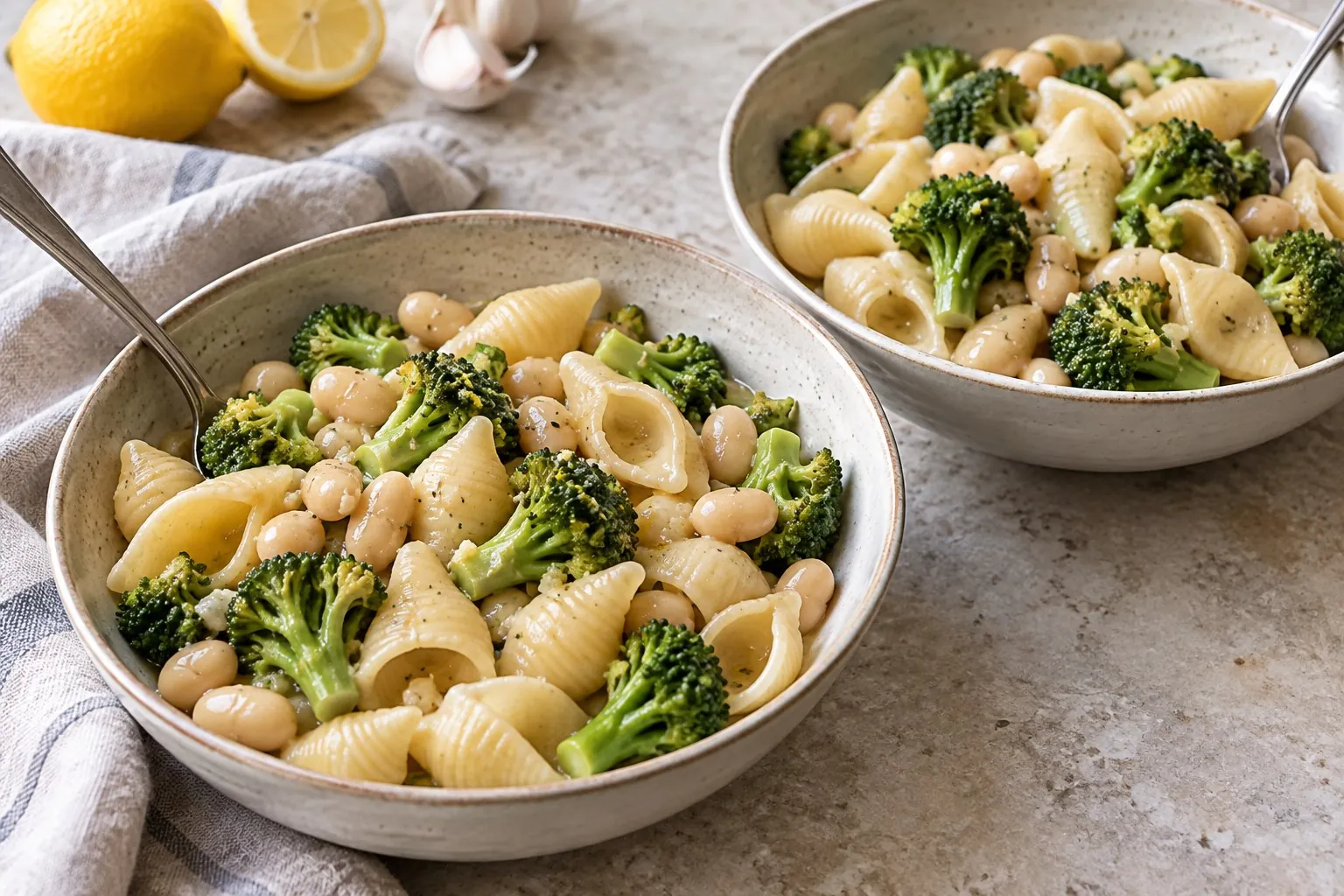
Pasta Shells White Beans Broccoli With Lemon Without Cheese
Ingredients
Equipment
Method
- Set up the finishing ingredients. Drain the beans, mince the garlic and measure the oil and lemon. Put a heatproof half-cup measure beside the colander. Keep the broad spoon and small bowl nearby for mashing if needed.
- Boil the shells. Bring a pot of water to a boil and salt to preference. Add the medium shells and stir so they do not settle together on the bottom. Cook according to the package, planning the broccoli addition during the final few minutes.
- Add and check the broccoli. Add the small florets for approximately the final 3 minutes. Test a shell for a tender bite and a broccoli stem for fork tenderness. If either needs longer, continue only as much as needed, checking again rather than extending the whole pot without looking.
- Reserve water and drain. Scoop out the measured 1/2 cup of cooking water before tipping the pasta and broccoli into the colander. Let the main flow drain away. Keep the shells and florets together while you use the empty pot for the brief sauce stage.
- Warm garlic and beans. Return the pot to low or medium-low heat. Add the oil, garlic and optional pepper flakes and stir for about 30 seconds. Add the drained beans and a small splash from the reserved pasta water. Warm gently, keeping the garlic pale.
- Mash a quarter of the beans. Press about one-quarter of the beans against the side with the spoon. Stir that mash through the small amount of liquid while leaving the rest whole. If pressing in the pot is awkward, lift a small portion into the bowl, mash it and return it.
- Coat the shells. Return pasta and broccoli to the pot. Fold gently and add enough of the remaining reserved water to create a loose coating. Check underneath as you fold so the mash spreads beyond the bottom layer. The shells should remain distinct.
- Finish with lemon. Remove from the heat and stir in the tablespoon of lemon juice. Taste a shell with a bean and broccoli before adding salt and pepper. Divide into bowls promptly while the coating still moves easily.
Notes
- Yield and timing: One batch makes 2 fuller portions or 3 smaller servings. Allow about 10–12 minutes to prepare and 15–25 minutes to cook, using the pasta package time and actual tenderness.
- Broccoli: Keep florets small and split thick stems lengthwise. Add for roughly the final 3 minutes of shell cooking, then check an intact shell and a broccoli stem before draining.
- Coating: Reserve ½ cup of cooking water. Lower the heat before garlic enters the empty pot. Mash about a quarter of the beans, leave the rest whole and add reserved water gradually. Finish with lemon off heat.
- Leftovers: Refrigerate in shallow containers within 2 hours, or 1 hour above 90°F (32°C), at 40°F (4°C) or below. Use within 3–4 days and reheat to 165°F (74°C). FoodSafety.gov storage guidance.