
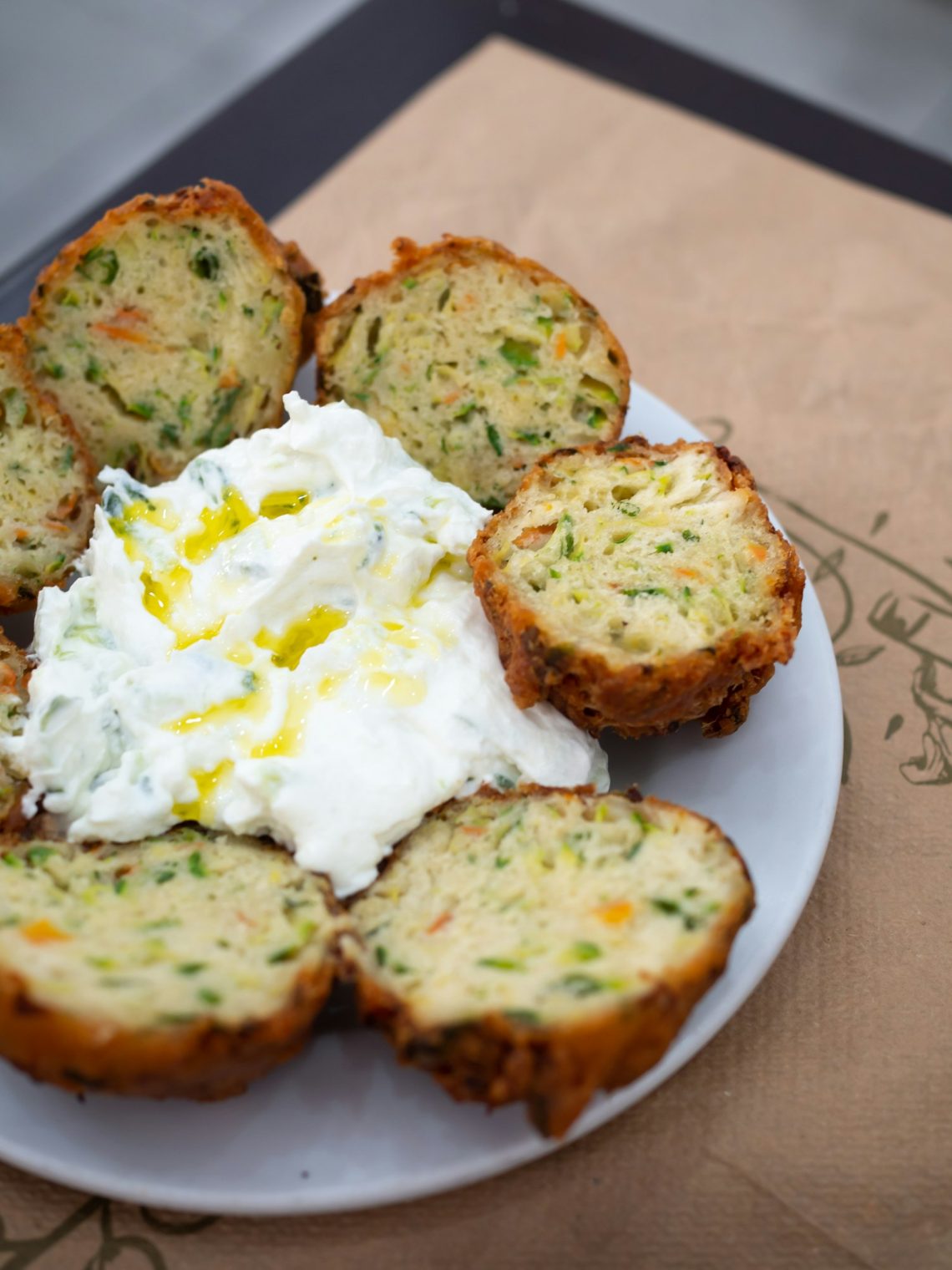
These cooked red lentil zucchini fritters without eggs have browned edges, a soft middle, and small strands of zucchini throughout. The lentils are simmered until tender before mixing, so there is no raw-lentil soaking or blending stage. A fork, grater, mixing bowl, and skillet are enough to bring the batter together.
Affiliate disclosure: As an Amazon Associate I earn from qualifying purchases. These paid links open Amazon search results for comparing equipment.
A coarse grater (paid link) prepares the zucchini for squeezing in the towel. Keep a thin spatula (paid link) beside the skillet to lift and turn the small fritters carefully. A fine mesh strainer (paid link) and a 12-inch nonstick skillet (paid link) also help with draining the lentils and frying evenly.
The most useful skill here is removing water before frying. Drained lentils and squeezed zucchini make a mixture that holds its shape with a measured amount of flour. Leaving either ingredient wet and then adding handfuls of flour can turn a vegetable fritter into a heavy dough. The guide below shows what to look for before the first spoonful reaches the pan.
Jump to the full fritter recipe
Remove zucchini water before judging the binder
- Squeeze shredded zucchini until no stream of liquid remains; wet vegetables make egg-free fritters spread.
- Mash only part of the cooked red lentils so some create structure while others provide texture.
- Let the mixture rest before adding more dry binder, giving it time to absorb moisture.
- Form a test fritter first and adjust only after seeing how it behaves in the pan.
Wait for a browned crust before turning. If the first fritter breaks, make the remaining portions smaller or chill the mixture rather than compressing them into dense cakes.
Three texture checkpoints
- The lentils: tender enough to crush with a fork, with no loose cooking liquid pooling underneath.
- The zucchini: reduced to a damp handful after squeezing, rather than dripping when lifted.
- The mixed batter: soft enough to scoop but firm enough to stay in a mound when set on a plate.
These are shallow-fried vegetable patties with a tender interior. They will not have the airy, irregular crust of fritters made from a blended raw-lentil batter. Keeping them small and fairly thin helps the middle cook before the outside becomes too dark. Serve them soon after frying for the best contrast between the center and the edges.
Cooked red lentil zucchini fritters without eggs
Yield: about 10 small fritters, serving 3 as a light main or 5 as a side. Prep: 20 minutes. Cooking: about 35 minutes. Cooling/resting: about 15 minutes. Total: about 70 minutes, with some preparation overlapping the lentil cooking.
Equipment: a small saucepan, fine strainer, coarse grater, clean thin kitchen towel, large bowl, fork, 12-inch nonstick skillet, and thin spatula.
Ingredients
- 1/2 cup dried split red lentils, about 95 grams, rinsed
- 1 1/2 cups water for cooking the lentils
- 1 medium zucchini, about 8 ounces or 225 grams, coarsely grated
- 1/2 teaspoon fine salt, divided
- 1/4 cup finely sliced scallions, white and green parts
- 1 small garlic clove, finely grated
- 1 teaspoon finely grated lemon zest
- 1/2 teaspoon ground cumin
- 1/4 teaspoon ground black pepper
- 1/2 cup all-purpose flour, about 60 grams, plus at most 1–2 tablespoons if required
- 3 tablespoons neutral oil, divided, for shallow frying
- 1 lemon, cut into wedges, for serving
Prepare the mixture and fry
- Cook the lentils gently. Put the rinsed lentils and water in the saucepan. Bring to a boil, lower to a gentle simmer, and cook for about 10–15 minutes, checking the package and tasting for a soft center. The lentils may partially break down. If the pan becomes dry before they are tender, add a small splash of water.
- Drain and cool. Tip the lentils into a fine strainer and leave for 5 minutes. Spread them on a plate in a thin layer for another 10 minutes, until no longer steaming. You want approximately 1 cup thick, drained cooked lentils. Do not mix hot, watery lentils straight into flour.
- Salt and squeeze the zucchini. While the lentils cook, toss the grated zucchini with 1/4 teaspoon salt. Leave in a bowl for 10 minutes. Transfer to the clean towel, gather the corners, and squeeze firmly over the sink until it releases only an occasional drop. Separate the compressed strands with your fingers.
- Mix the vegetables and seasoning. Put the cooled lentils in the bowl and crush any remaining whole pieces with a fork. Stir in the squeezed zucchini, scallions, garlic, lemon zest, cumin, pepper, and remaining 1/4 teaspoon salt.
- Add flour and rest briefly. Fold in 1/2 cup flour until no dry pockets remain. Rest for 5 minutes. Put a spoonful on a plate: it should stay mounded. If it spreads into a wet puddle, add 1 tablespoon flour, mix, and reassess before adding a second. Do not taste the uncooked flour mixture.
- Cook one small fritter first. Heat 1 tablespoon oil in the skillet over medium heat. Spoon in about 3 tablespoons mixture and flatten to a disc about 3 inches wide and 1/3 inch thick. Cook for 3–4 minutes per side, adjusting the heat so it browns gradually. The middle should be set and moist, without sticky raw batter. Let it cool enough to taste before adjusting the remaining mixture.
- Fry the remaining batches. Add another tablespoon oil as needed and cook three or four fritters at a time, leaving space for the spatula. Slide the spatula completely underneath before turning. Use the remaining oil for subsequent batches rather than pouring it all in at once.
- Drain briefly and serve. Transfer cooked fritters to a plate lined with paper towel or a rack over a tray. Keep them in one layer so steam does not soften the crust. Serve with lemon wedges and your chosen accompaniment.
Why draining matters more than extra flour
Split red lentils become soft quickly, and different packages absorb different amounts of water. NDSU’s guide to preparing pulses identifies lentils as a pulse that does not need soaking. For this recipe, tenderness is necessary, but loose water is not. A fine strainer catches the softened lentils without requiring them to remain whole.
After squeezing the zucchini, the original fluffy mound will shrink considerably. That is expected. The discarded liquid is the reason you can use a moderate amount of flour. If the towel is very thick, squeeze in two smaller portions or press the zucchini firmly in a fine sieve instead. Keep all equipment clean because the mixture will be handled several times.
The short flour rest allows the mixture to firm slightly. Judge the batter after this pause, not immediately after stirring. If you keep adding flour while the mixture is still settling, the cooked centers may become dense. A little tackiness is acceptable; use a spoon and spatula rather than trying to shape completely dry patties with your hands.
Control the heat through the batches
Start at medium heat and let the first fritter guide you. If the underside darkens in less than 2 minutes, lower the heat before continuing. A dark exterior does not prove the center is set. If there is no gentle sizzle and the fritter absorbs oil without browning, let the pan warm a little longer.
Small crumbs can burn between batches. Wipe out loose dark bits carefully with a paper towel held in tongs once the pan is safe to handle, then add the next measured portion of oil. A thin spatula is particularly useful because the crust can stick if you try to lift it with a thick wooden turner.
Ingredient changes that preserve the structure
Previously cooked lentils: Use about 1 cup plain, well-drained cooked red lentils. They should be fresh enough to use safely within their original storage period. Refrigerated lentils are convenient because they are already cool, but a thin leftover soup is not an equivalent ingredient.
Other lentils: Whole brown lentils do not create the same soft binding base. Mashing them only roughly can leave the mixture crumbly. Save them for a salad or sandwich filling and use split red lentils here.
Flour: The measured formula uses all-purpose flour. Chickpea flour or a particular gluten-free blend may absorb differently, so do not assume an identical amount will behave identically. If avoiding wheat is essential, develop a separate small test batch and check every packaged ingredient.
Seasoning: Chopped dill can replace the scallions, but use about 2 tablespoons because herbs occupy the mixture differently. Smoked paprika can replace cumin for a warmer flavor. Avoid adding several watery vegetables at once; the base is calibrated around squeezed zucchini.
Ways to make them a meal
Offer plain yogurt or an unsweetened dairy-free yogurt with lemon and herbs as a dip. A crisp cucumber salad provides a useful contrast to the soft fritter centers. They also fit into warm pita with lettuce, provided you add them just before eating so the bread does not trap too much steam.
For a larger plant-based spread, serve a small bowl of lemon-dill quinoa with peas and chickpeas alongside. If you need a different use for extra zucchini, lemon millet and zucchini bowls provide another grain-and-vegetable option.
Storage and reheating
Refrigerate cooked fritters in shallow containers within 2 hours, or within 1 hour when the surrounding temperature exceeds 90°F. Store at 40°F or below and use within 3–4 days, following USDA leftover guidance. Avoid piling steaming fritters into one deep container.
Reheat in a lightly oiled skillet over moderate heat, turning and briefly covering as needed, until the centers reach 165°F. Uncover at the end to help dry the surfaces. Microwave reheating is convenient but produces a softer crust. For freezing, separate cooled cooked fritters with parchment and pack airtight; aim to use within 2 months for quality and thaw in the refrigerator.
Frequently Asked Questions
Why are my fritters breaking when I turn them?
The first side may need more time to form a crust, or the mixture may be too wet. Slide the spatula fully underneath and turn in one movement. If the first sample fails repeatedly, correct the remaining batter with a small amount of flour.
Can I omit the flour?
Not from this formula. The cooked lentils give softness, but the flour helps bind the vegetables and set the center. Removing it creates a different mixture that needs separate development.
Do I need to peel the zucchini?
No. Wash it, trim the ends, and grate with the skin on. If a large zucchini has a spongy seed cavity, remove that center first and weigh the remaining firm flesh.
Can I make the mixture the night before?
It is better to refrigerate the cooked lentils and prepared zucchini separately, then mix shortly before frying. Zucchini can continue releasing moisture after mixing, changing the amount of flour needed.
Are cooked red lentil zucchini fritters without eggs suitable for lunch boxes?
They can be packed cold after proper cooling and refrigeration. Use an insulated bag with cold packs to keep them cold, and pack a dip separately. They will be softer than freshly fried fritters, so place them in a firm container rather than loose in a bag.
Cooked Red Lentil Zucchini Fritters Without Eggs
Ingredients
Equipment
Method
- Cook the lentils gently. Put the rinsed lentils and water in the saucepan. Bring to a boil, lower to a gentle simmer, and cook for about 10–15 minutes, checking the package and tasting for a soft center. The lentils may partially break down. If the pan becomes dry before they are tender, add a small splash of water.
- Drain and cool. Tip the lentils into a fine strainer and leave for 5 minutes. Spread them on a plate in a thin layer for another 10 minutes, until no longer steaming. You want approximately 1 cup thick, drained cooked lentils. Do not mix hot, watery lentils straight into flour.
- Salt and squeeze the zucchini. While the lentils cook, toss the grated zucchini with 1/4 teaspoon salt. Leave in a bowl for 10 minutes. Transfer to the clean towel, gather the corners, and squeeze firmly over the sink until it releases only an occasional drop. Separate the compressed strands with your fingers.
- Mix the vegetables and seasoning. Put the cooled lentils in the bowl and crush any remaining whole pieces with a fork. Stir in the squeezed zucchini, scallions, garlic, lemon zest, cumin, pepper, and remaining 1/4 teaspoon salt.
- Add flour and rest briefly. Fold in 1/2 cup flour until no dry pockets remain. Rest for 5 minutes. Put a spoonful on a plate: it should stay mounded. If it spreads into a wet puddle, add 1 tablespoon flour, mix, and reassess before adding a second. Do not taste the uncooked flour mixture.
- Cook one small fritter first. Heat 1 tablespoon oil in the skillet over medium heat. Spoon in about 3 tablespoons mixture and flatten to a disc about 3 inches wide and 1/3 inch thick. Cook for 3–4 minutes per side, adjusting the heat so it browns gradually. The middle should be set and moist, without sticky raw batter. Let it cool enough to taste before adjusting the remaining mixture.
- Fry the remaining batches. Add another tablespoon oil as needed and cook three or four fritters at a time, leaving space for the spatula. Slide the spatula completely underneath before turning. Use the remaining oil for subsequent batches rather than pouring it all in at once.
- Drain briefly and serve. Transfer cooked fritters to a plate lined with paper towel or a rack over a tray. Keep them in one layer so steam does not soften the crust. Serve with lemon wedges and your chosen accompaniment.




