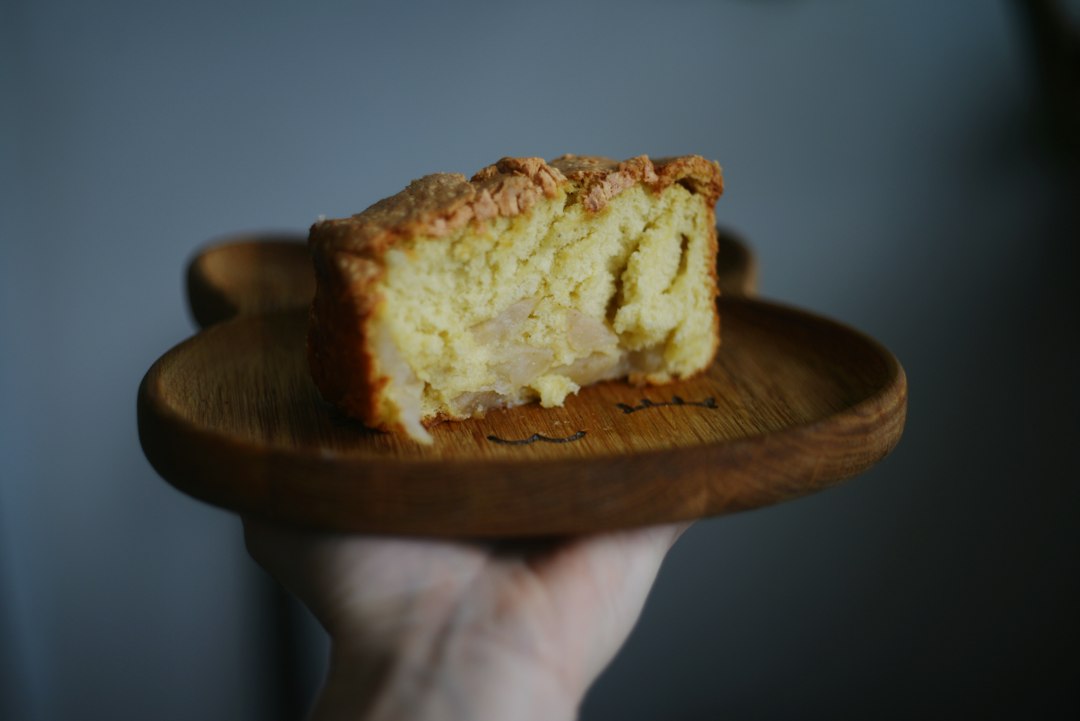
Apple butter yogurt breakfast cake uses a thick fruit spread to create ribbons through a simple yogurt batter. It bakes in an 8-inch square pan and cuts into nine modest squares. The cake is gently sweet, with a little cinnamon and a soft crumb that suits breakfast, brunch or an afternoon snack.
The apple butter is swirled through rather than mixed completely into the batter. That gives distinct fruit flavor without turning every part of the cake dark and dense. Small dollops and a few shallow passes with a knife are enough; repeatedly stirring in the pan can blur the layers and make the texture uneven.
Balance concentrated apple butter with yogurt moisture
Measure the pan
An 8-inch pan keeps the batter deep enough for a tender center without extending the bake excessively.
Mix gently
Apple butter and yogurt already make a moist batter; overmixing develops structure that can turn the crumb rubbery.
Test the center away from a dark fruit streak and cool before slicing. The cake continues setting as steam leaves, so a warm cut can look gummy even when the bake was adequate.
Apple butter is different from applesauce
Use thick, spreadable apple butter. It should mound on a spoon and slowly relax, without a watery layer around it. Applesauce is generally looser and is not a direct replacement for the swirl. Very stiff fruit paste is also different; it may remain in dense lumps instead of blending at the edges.
Apple butter brands vary in sweetness and spice. Taste a little before measuring. If yours is strongly spiced, omit the additional cinnamon from the cake batter. The base sugar quantity is moderate, but an especially sweet spread will make the finished cake sweeter.
Recipe details
- Makes: 9 modest squares.
- Prep: 15 minutes.
- Bake: approximately 30–36 minutes.
- Cool: at least 30 minutes; about 78 minutes total.
- Oven: 350°F / 175°C, conventional.
- Pan: 8-inch square light metal baking pan, at least 2 inches deep.
Affiliate disclosure: As an Amazon Associate I earn from qualifying purchases. Paid links open Amazon search results.
You will need two bowls, whisk (paid link), spatula (paid link), 8-inch square baking pan (paid link), parchment, small spoon and a thin knife for swirling. Line the pan with parchment over the bottom and two opposite sides so the cooled cake can be lifted out. Grease the remaining exposed sides lightly.
Ingredients
- 1½ cups (180 g) all-purpose flour
- 1½ teaspoons baking powder
- ¼ teaspoon baking soda
- ¼ teaspoon fine salt
- ¼ teaspoon ground cinnamon, optional if the apple butter is heavily spiced
- 2 large eggs
- ½ cup (100 g) granulated sugar
- ½ cup (120 g) plain whole-milk yogurt, regular rather than thick Greek-style
- ¼ cup (60 ml) neutral oil, plus 1 teaspoon for greasing the pan
- 1 teaspoon vanilla extract
- ½ cup (120 g) thick apple butter
Weighing flour keeps the batter tender and repeatable. The King Arthur Baking ingredient weight chart is a useful reference for flour and other baking ingredients. Yogurt should be plain and unsweetened; flavored products add sugar and can change the consistency.
Understand the batter before mixing
Regular whole-milk yogurt supplies moisture and acidity. Baking powder gives the main lift, while the small amount of baking soda works with acidic ingredients. Oil keeps the mixing simple and contributes tenderness. The two eggs help the cake hold the apple-butter ribbons without falling apart.
Greek yogurt is usually thicker than regular yogurt, so it is not the reference ingredient here. If that is what you have, a separately checked adjustment with a little milk may be possible, but do not assume every brand has the same thickness. Similarly, sweetened fruit yogurt is not a convenient substitute for plain yogurt in this measured formula.
Make apple butter yogurt breakfast cake
- Prepare the oven and pan. Heat the oven to 350°F / 175°C with a rack in the middle. Grease and line the 8-inch square pan.
- Whisk the dry mixture. Combine flour, baking powder, baking soda, salt and optional cinnamon. Break up any small leavening lumps so they do not leave bitter spots.
- Whisk the wet mixture. In another bowl, whisk eggs and sugar until blended. Add yogurt, oil and vanilla and whisk until smooth enough to combine evenly. There is no need to whip to a thick foam.
- Fold the batter. Add the flour mixture and fold gently with a spatula until no loose flour remains. Scrape the bottom of the bowl, then stop. Expect a thick but spreadable batter.
- Layer the apple butter. Spread about two-thirds of the batter in the pan. Drop half the apple butter over it in small spoonfuls. Add the remaining batter in dollops and spread gently, then add the remaining apple butter in small dots on top.
- Swirl lightly. Draw a thin knife through the upper batter in two or three loose passes. Keep the motion shallow and avoid scraping the pan’s bottom. You want ribbons, not a fully blended brown batter.
- Bake. Bake for 30–36 minutes. The cake should spring back gently near the center, and a skewer inserted into pale cake crumb should emerge without wet batter. Test away from an apple-butter ribbon if possible.
- Cool and slice. Rest in the pan for 10 minutes, then lift carefully onto a rack if stable enough. Cool at least another 20 minutes before cutting into nine squares.
Swirl control makes the texture clearer
Use several small dots rather than one large central mound. A thick pool of apple butter can keep the cake underneath from setting at the same pace as the edges. Thin ribbons offer a better balance of cake and fruit in each bite.
Do not worry if every square has a different pattern. The goal is an even distribution of small ribbons, not identical decoration. If the batter starts showing broad brown streaks everywhere, stop swirling; more movement will not bring back the contrast.
A cold, very stiff apple butter can tear the batter as you drag the knife. Let the measured portion soften briefly at room temperature while preparing the other ingredients. Do not heat it until hot, which could affect the batter where it lands.
Doneness and common problems
| What happens | Possible reason | Useful response |
|---|---|---|
| Wet-looking streak on the skewer | Skewer passed through apple butter | Test another spot in the cake crumb. |
| Gummy center | Large fruit pool, wrong pan or underbaking | Use small dollops and check the center carefully. |
| Dry edges | Overbaking or pan too broad | Use the specified pan and begin checking earlier. |
| Tough crumb | Overmixed batter or extra flour | Weigh flour and fold only until combined. |
If the surface browns before the middle sets, cover loosely with foil and continue in short increments. Do not lower the temperature drastically midway through baking without a reason; the center still needs heat to finish setting.
Serve it as part of breakfast or a snack
A square with coffee or tea makes a simple snack. For breakfast, pair it with plain yogurt, fruit or eggs according to appetite. The cake already has fruit spread running through it, so it does not need an additional glaze.
If you want a smaller individual bake, the site’s applesauce muffins without yogurt use applesauce in a different batter. For an overnight brunch preparation, see the apple cinnamon French toast casserole.
A dusting of confectioners’ sugar can be added immediately before serving, but it tends to dissolve on moist fruit ribbons during storage. Extra apple butter at the table is a better option for someone who wants a stronger apple flavor.
Storage and make-ahead planning
Cool the cake before covering so condensation does not dampen the surface. Refrigerate the moist fruit cake within two hours and use within 3–4 days. Slice only the portions you need if you want to reduce drying around cut edges.
Freeze individually wrapped squares for up to two months for best quality. Thaw in the refrigerator. Serve cool or warm gently in short intervals; prolonged reheating can toughen the edges. For baking ahead, measure the dry ingredients separately, but mix the full batter shortly before it goes into the oven.
Frequently Asked Questions
Does apple butter contain dairy butter?
Many products are fruit spreads without dairy, but read the label on yours. The recipe still contains yogurt and eggs regardless of the apple butter’s ingredients.
Can I use applesauce for the swirl?
Its looser texture changes the moisture balance. Use thick apple butter for the reference version rather than an equal volume of watery sauce.
Can I use Greek yogurt?
It is often thicker than regular yogurt. A thinned version may work, but the amount depends on the brand and needs a separate texture check.
Can I bake it in a loaf pan?
A loaf pan changes the batter depth substantially. It needs a different baking-time check and may hold the fruit ribbons differently.
Why did the apple butter sink?
Large dollops, thin batter or vigorous swirling can concentrate the fruit lower in the cake. Keep the dots small and follow the shallow passes.
Can I double the recipe?
Two separate 8-inch pans preserve the reference depth. Apple butter yogurt breakfast cake in one larger pan needs capacity and timing checks rather than an automatic conversion.
Apple Butter Yogurt Breakfast Cake in an 8-Inch Pan
Ingredients
Equipment
Method
- Prepare the oven and pan. Heat the oven to 350°F / 175°C with a rack in the middle. Grease and line the 8-inch square pan.
- Whisk the dry mixture. Combine flour, baking powder, baking soda, salt and optional cinnamon. Break up any small leavening lumps so they do not leave bitter spots.
- Whisk the wet mixture. In another bowl, whisk eggs and sugar until blended. Add yogurt, oil and vanilla and whisk until smooth enough to combine evenly. There is no need to whip to a thick foam.
- Fold the batter. Add the flour mixture and fold gently with a spatula until no loose flour remains. Scrape the bottom of the bowl, then stop. Expect a thick but spreadable batter.
- Layer the apple butter. Spread about two-thirds of the batter in the pan. Drop half the apple butter over it in small spoonfuls. Add the remaining batter in dollops and spread gently, then add the remaining apple butter in small dots on top.
- Swirl lightly. Draw a thin knife through the upper batter in two or three loose passes. Keep the motion shallow and avoid scraping the pan's bottom. You want ribbons, not a fully blended brown batter.
- Bake. Bake for 30–36 minutes. The cake should spring back gently near the center, and a skewer inserted into pale cake crumb should emerge without wet batter. Test away from an apple-butter ribbon if possible.
- Cool and slice. Rest in the pan for 10 minutes, then lift carefully onto a rack if stable enough. Cool at least another 20 minutes before cutting into nine squares.
Notes
| What happens | Possible reason | Useful response |
|---|---|---|
| Wet-looking streak on the skewer | Skewer passed through apple butter | Test another spot in the cake crumb. |
| Gummy center | Large fruit pool, wrong pan or underbaking | Use small dollops and check the center carefully. |
| Dry edges | Overbaking or pan too broad | Use the specified pan and begin checking earlier. |
| Tough crumb | Overmixed batter or extra flour | Weigh flour and fold only until combined. |