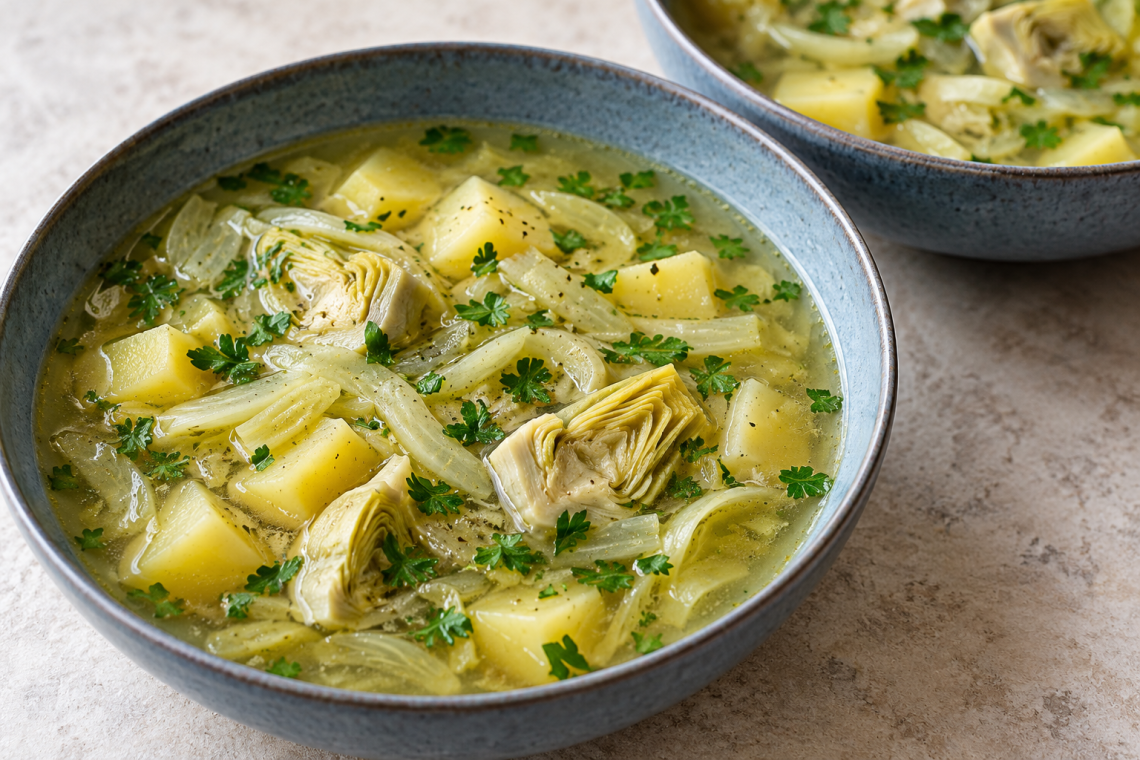
This fennel potato soup with canned artichoke hearts is a brothy vegetable meal with tender potato cubes, softened fennel and pieces of artichoke that stay recognizable in the bowl. Canned hearts keep the preparation manageable, while the fennel supplies a gentle aromatic flavor. A little lemon is added only after tasting, since the artichokes may already bring some tang.
The soup is deliberately chunky. A few potato pieces can be mashed to give the broth body, but there is no need to blend the whole pot. That keeps the fennel ribbons and artichoke quarters distinct and makes it easier to judge when each vegetable has reached the right texture.
Use potato for body and artichokes for the finish
| Fennel bulb | Slice evenly and soften with the aromatics to develop sweetness before adding broth. |
| Potato | Cook until fully tender; mash about 1/2 cup of the potato cubes for a little body while leaving the soup chunky. |
| Artichoke hearts | Drain and rinse as needed, then add late so their flavor remains distinct and the pieces do not disintegrate. |
Keep the artichokes in recognizable pieces while mashing a small portion of the potatoes. Taste for salt after adding the artichokes because brined products can contribute significant seasoning.
Use the right part of the fennel
| Part | Use in this recipe |
|---|---|
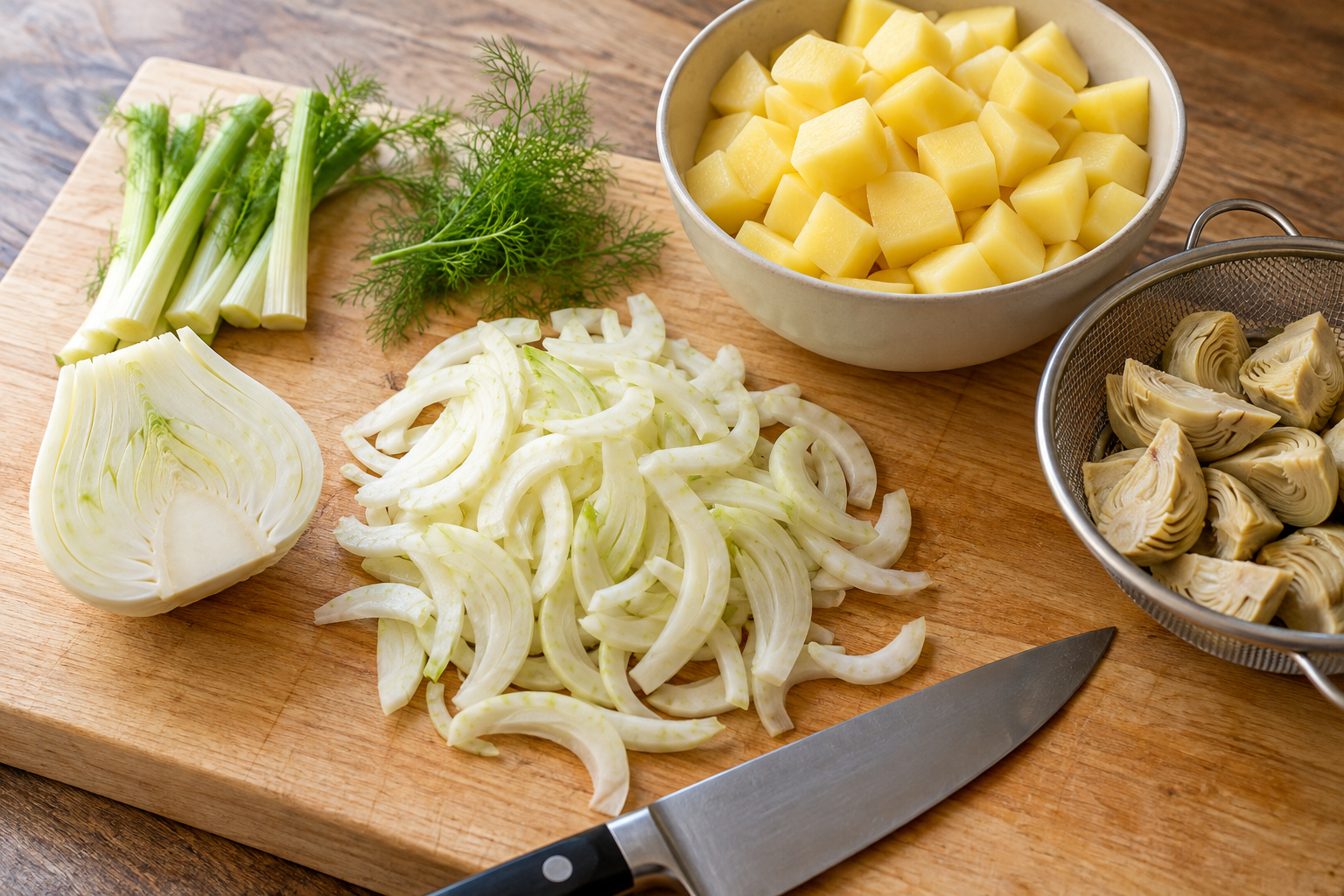
| White bulb | Trim, rinse and slice thinly for the soup base. |
| Dense base and tough core | Trim away any hard sections that will not soften easily. |
| Thick stalks | Reserve for a separate stock if desired; they are not included here. |
| Fine fronds | Chop a little for an optional garnish after washing. |
Halve the bulb lengthwise, trim the hard base and remove any damaged outer layer. Rinse between the layers if soil is trapped there, then cut across the bulb into slices about 1/4 inch thick. Thin slices soften more evenly than large wedges and fit comfortably on a soup spoon.
Recipe details
Yield: 4 generous bowls. Preparation: 20 minutes. Cooking: about 40 minutes. Total: about 1 hour. Use a 4-quart pot, knife, colander, ladle and a fork or potato masher.
Ingredients
- 2 tablespoons olive oil
- 1 small yellow onion, approximately 100 g, diced
- 1 large fennel bulb, approximately 300 g after trimming, thinly sliced
- 1 pound Yukon Gold potatoes, approximately 450 g, cut into 1/2-inch cubes
- 1 garlic clove, minced
- 1/4 teaspoon dried thyme
- 5 cups low-sodium vegetable broth
- 1 can artichoke hearts in water or brine, 14 ounces, drained and rinsed
- 1/2 teaspoon fine salt, divided, plus more if needed
- 1/4 teaspoon ground black pepper
- 1 to 2 teaspoons fresh lemon juice, added to taste
- 2 tablespoons chopped fresh parsley or a smaller amount of tender fennel fronds
Use plain canned artichoke hearts, not hearts in a strong oil marinade. Drain and rinse them, then cut whole hearts into quarters or large quarters in half. Inspect the outer leaves and remove any tough pieces. Their role is a tender vegetable with a little character, not a woody bite that needs chewing through.
Cook fennel potato soup with canned artichoke hearts
- Soften the aromatic base. Warm the olive oil over medium heat. Add the onion, fennel and 1/4 teaspoon salt. Cook for 9 to 11 minutes, stirring frequently, until the fennel begins to soften and the onion is translucent. Lower the heat if the edges color too quickly.
- Add garlic and potato. Stir in the garlic and thyme for 30 seconds. Add the potato cubes and turn them through the vegetables for about 1 minute. This distributes the seasoning before the broth goes in.
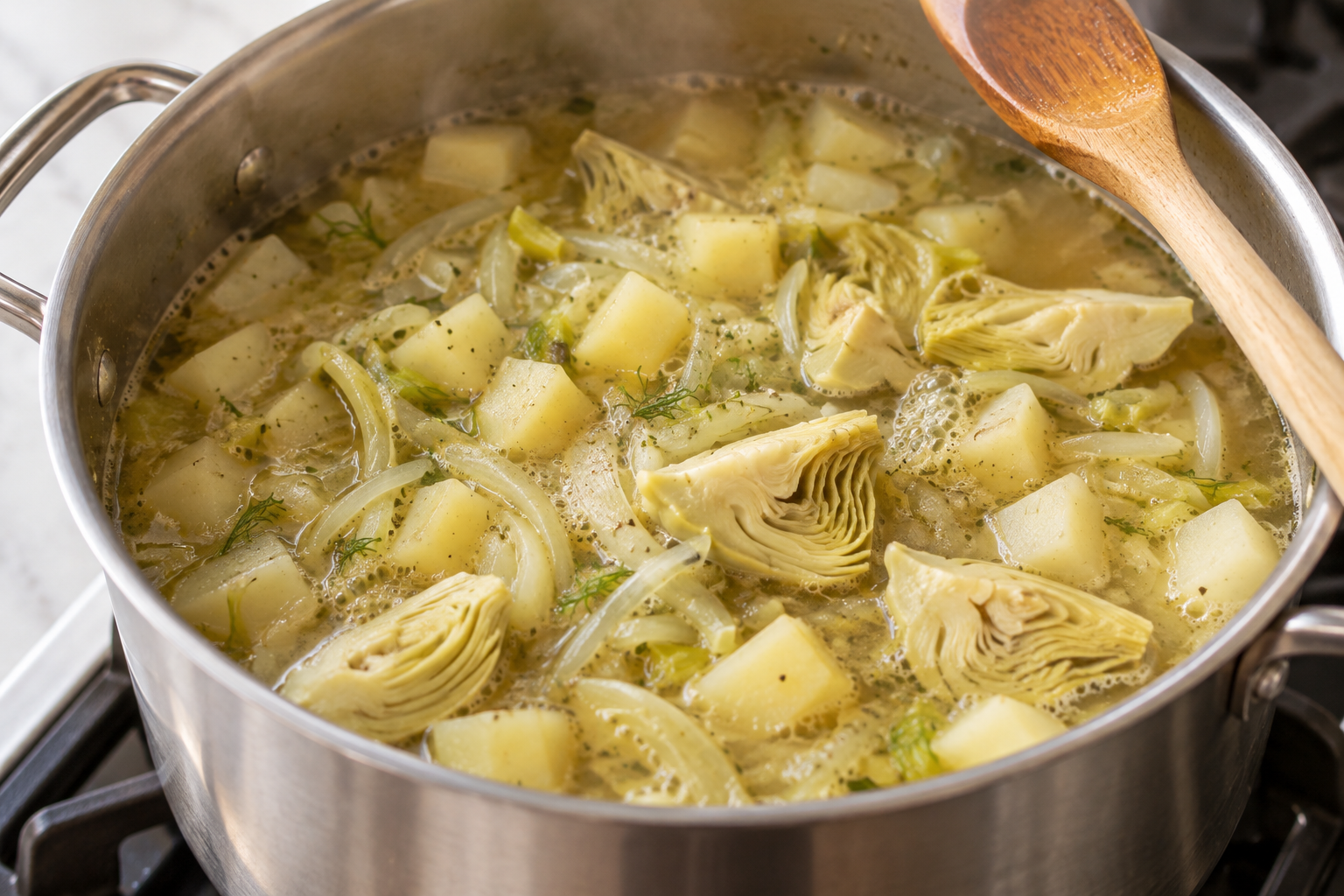
- Simmer the roots tender. Add the broth, remaining measured salt and pepper. Bring to a gentle boil, then reduce the heat and partially cover. Simmer for 15 to 20 minutes, until the potatoes are tender and the fennel offers little resistance when bitten.
- Add the artichokes late. Fold in the prepared artichoke hearts. Simmer gently for 5 to 7 minutes, until they are hot and tender. Avoid vigorous stirring, which can break the layers apart.
- Adjust the body. If you want a slightly fuller broth, press about 1/2 cup potato cubes against the side of the pot with a fork, then stir them back in. Keep most of the potato and all the artichokes in pieces. Add a little hot water if the soup has reduced too much.
- Finish carefully. Remove from the heat. Add 1 teaspoon lemon juice and the parsley, or a small amount of tender chopped fennel fronds if you are using those instead. Taste a spoonful that includes artichoke before adding more lemon or salt. Serve in warm bowls with a few tender fennel fronds if desired.
What to notice as it cooks
The fennel should soften before the artichokes are added. Canned hearts need warming and a short simmer, while fresh fennel and potatoes need actual tenderizing. If the fennel still feels crunchy when the potatoes are done, give the base a few extra minutes before proceeding. Thin, even slices reduce this mismatch.
The potatoes should hold their shape while yielding to a fork. If they begin to disintegrate, lower the simmer and handle the soup gently. A small amount of potato breakdown helps the broth, but a hard boil can make the entire pot cloudy and heavy. The intended result is a light soup with visible pieces.
Taste the broth before adding the lemon. Artichoke packing liquids often contain acidity, and rinsing does not remove every trace of flavor. The lemon is an adjustment, not an automatic full tablespoon. Start small and stop when the vegetable flavors taste clear and balanced.
Frequently asked questions
Can I use marinated artichoke hearts?
They create a different soup because oil, vinegar and herbs remain in the hearts even after draining. The main recipe uses plain water- or brine-packed hearts. If experimenting with marinated ones, omit the lemon at first and expect to change the seasoning.
Can I use frozen artichoke hearts?
Yes as a suggested variation, provided they are plain and cooked according to their package directions. Their tenderness and cooking time can differ from canned hearts. Prepare them as directed before the final combining stage rather than assuming a short warming is sufficient.
Should I peel the potatoes?
Either peeled or well-scrubbed thin-skinned Yukon Gold potatoes can work. Peeling gives a more uniform appearance. If leaving skins on, remove blemishes and cut the cubes evenly. Thick-skinned potatoes are less suitable for the delicate texture described here.
Does fennel make the soup taste strongly of licorice?
Fennel has an anise-like aroma, and cooking it with onion and potatoes softens its presence. If you dislike fennel’s flavor, this may not be the best soup for you. Extra lemon does not remove that characteristic flavor.
Can fennel potato soup with canned artichoke hearts be blended?
Blending would create a different texture, and some artichoke leaves can be fibrous. The chunky method avoids relying on a blender to smooth them. If you want more body, mash some potatoes instead of blending the whole pot.
Can I add beans?
A cup of drained, cooked white beans could make a heartier variation. Add them with the artichokes and increase broth if needed. This changes the ingredient balance and has not been kitchen validated; start with the main recipe before making several additions.
A simple meal around the bowl
Serve with crusty bread, toast or a small cheese sandwich. A crisp green salad with a mild dressing works well alongside the soft vegetables. Keep the salad dressing restrained if the soup already has a bright lemon finish. The fennel and artichokes should remain the main flavors.
For a dinner first course, use smaller bowls and reserve some broth so each portion looks light rather than crowded. For lunch, divide the solids evenly between containers before adding the broth. That prevents one lunch from becoming mostly liquid while another has all the potatoes.
Storage and reheating
Refrigerate portions in shallow containers within 2 hours, or within 1 hour above 90°F. Keep at 40°F or below and use within 3 to 4 days. Reheat gently, stirring carefully, until the center reaches 165°F. Add a little water if the potatoes have thickened the broth and fresh parsley after heating if available.
The soup can be frozen for up to about 2 months for quality, but the potatoes and artichokes may become softer after thawing. Thaw in the refrigerator, then reheat thoroughly. If texture matters most, plan a smaller batch for fresh and refrigerated servings rather than relying on long freezer storage.
For another artichoke preparation, try our air fryer artichoke hearts without breading; that separate recipe uses frozen hearts. For a different potato soup, see white bean potato soup without cream.
Food handling references: FDA storage guidance and FoodSafety.gov reheating temperatures.
Make two bowls of fennel potato soup with artichoke hearts
The main recipe makes four generous bowls. For a smaller pot, halve every ingredient while keeping the vegetable cuts the same. A two-bowl batch still needs time for the fennel and potatoes to soften; halving the amounts does not halve the simmering time. The list below is a calculated half batch of the written recipe, with the same chunky finish.
Vegetables and broth for two
- 1 tablespoon olive oil
- Half a small onion, about 50 g, diced
- 150 g trimmed fennel bulb, thinly sliced
- 225 g Yukon Gold potatoes, cut into 1/2-inch cubes
- Half a garlic clove, minced
- 1/8 teaspoon dried thyme
- 2 1/2 cups low-sodium vegetable broth
- Half the drained, rinsed contents of a 14-ounce can of plain artichoke hearts
Seasoning and finish for two
- 1/4 teaspoon fine salt, divided between the aromatic and broth stages
- 1/8 teaspoon ground black pepper
- 1/2 to 1 teaspoon lemon juice, added gradually
- 1 tablespoon chopped parsley, or a smaller amount of tender fennel fronds
Use a pot of about 2 quarts with enough space to stir comfortably. Keep the lid slightly ajar during the simmer, as directed for the larger batch.
Divide the can after draining
The can’s stated weight includes its packing liquid. Drain and rinse the whole can, then divide the artichokes into two similar portions; a scale makes this straightforward. Do not weigh out 7 ounces of drained hearts simply because the unopened can says 14 ounces. That would confuse the total packaged weight with the amount of vegetable. Keep the unused portion covered and refrigerated according to the product’s storage instructions.
Keep the cuts and checkpoints unchanged
Thin fennel slices and evenly cut potatoes matter more than using the smallest possible pot. Follow the same cooking order: soften onion and fennel, add garlic and potatoes, simmer with broth, and add the artichokes once the fresh vegetables are tender. Begin checking within the original timing windows. A smaller batch may reach a simmer sooner, but a 1/2-inch potato cube still needs to become tender through its center.
For a little extra body, mash about 1/4 cup of the cooked potato pieces against the side of the pot. This is half the optional amount in the four-serving version. Lift out potato pieces deliberately so the artichoke layers stay intact. If the smaller pot loses too much liquid, add a little hot water before judging the seasoning; concentrated broth can taste saltier than the intended soup.
Finish each bowl thoughtfully
Start with 1/2 teaspoon lemon juice for the whole smaller pot. Taste a cooled spoonful containing broth and an artichoke piece, then decide whether the remaining lemon is useful. Divide the vegetables between two bowls before ladling over the broth. Keep optional fresh fronds at the table so each person can choose how much fennel aroma to add. This fennel potato soup with artichoke hearts should remain a light, spoonable mixture with recognizable vegetables.
More recipes for your table
Choose a companion dish or another recipe for the ingredients you have. Each link opens its own instructions and printable recipe.
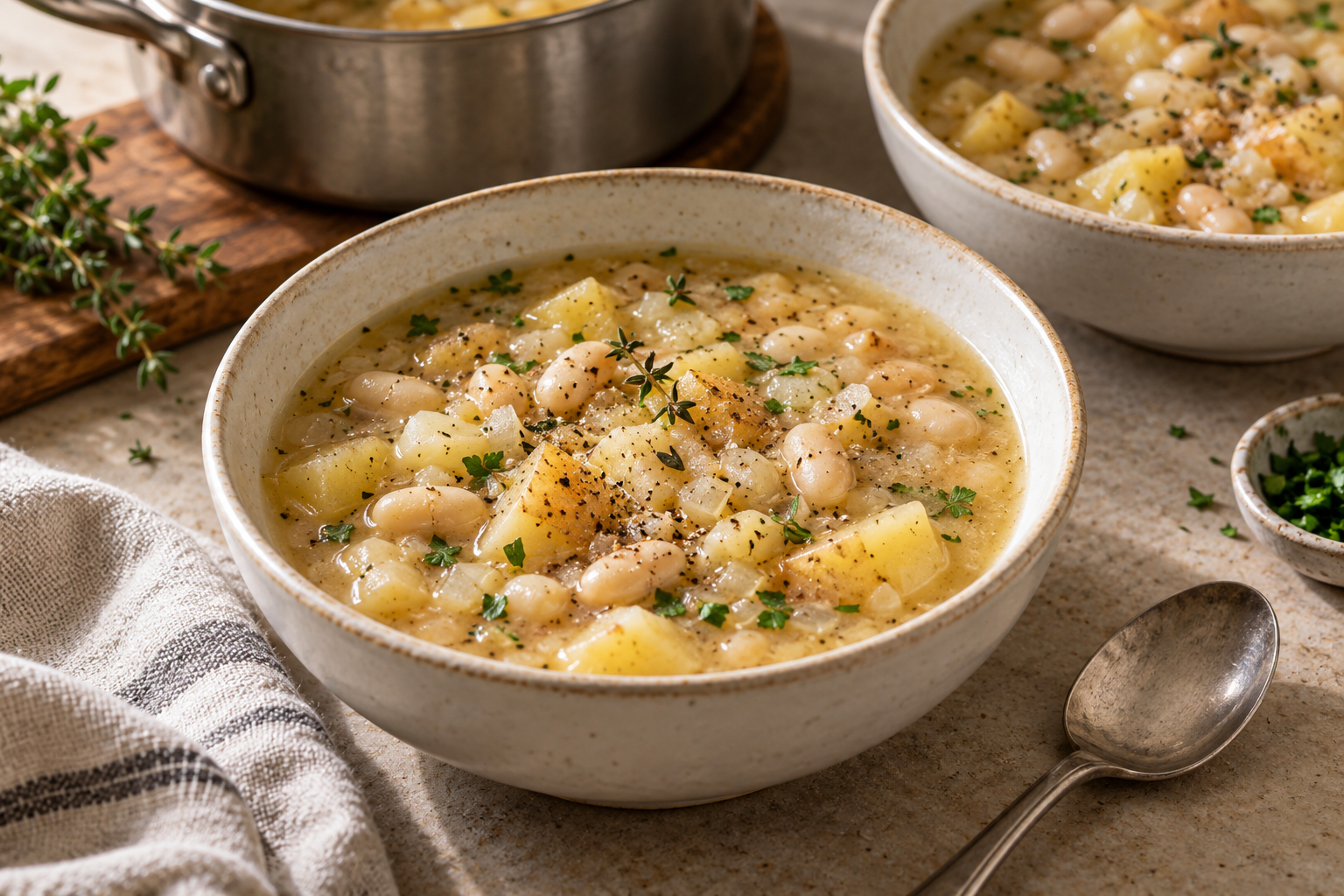
A second approach to building a creamy soup texture without cream.

A lentil-and-carrot soup with a different thickening method.
Equipment for this recipe
Affiliate disclosure: As an Amazon Associate I earn from qualifying purchases.
Use the tools you already have when they match the method. If you need an item, these links open matching Amazon search results.
- Medium saucepan with lid on Amazon — Leave enough room to stir the soup without splashing.
- Liquid measuring cup on Amazon — Measure broth, water, milk, or sauce ingredients before heating the pan.
Check the size, material, and manufacturer’s use instructions against the recipe before choosing.
Useful kitchen references
- FoodSafety.gov leftover guidance — A practical reference for chilling and reheating.
Printable recipe
Use the recipe card’s Print control for a kitchen copy. Follow the ingredient quantities and cooking checks in the card when preparing the dish.
Fennel Potato Soup With Canned Artichoke Hearts
Ingredients
Equipment
Method
- Soften the aromatic base. Warm the olive oil over medium heat. Add the onion, fennel and 1/4 teaspoon salt. Cook for 9 to 11 minutes, stirring frequently, until the fennel begins to soften and the onion is translucent. Lower the heat if the edges color too quickly.
- Add garlic and potato. Stir in the garlic and thyme for 30 seconds. Add the potato cubes and turn them through the vegetables for about 1 minute. This distributes the seasoning before the broth goes in.
- Simmer the roots tender. Add the broth, remaining measured salt and pepper. Bring to a gentle boil, then reduce the heat and partially cover. Simmer for 15 to 20 minutes, until the potatoes are tender and the fennel offers little resistance when bitten.
- Add the artichokes late. Fold in the prepared artichoke hearts. Simmer gently for 5 to 7 minutes, until they are hot and tender. Avoid vigorous stirring, which can break the layers apart.
- Adjust the body. If you want a slightly fuller broth, press about 1/2 cup potato cubes against the side of the pot with a fork, then stir them back in. Keep most of the potato and all the artichokes in pieces. Add a little hot water if the soup has reduced too much.
- Finish carefully. Remove from the heat. Add 1 teaspoon lemon juice and the parsley, or a small amount of tender chopped fennel fronds if you are using those instead. Taste a spoonful that includes artichoke before adding more lemon or salt. Serve in warm bowls with a few tender fennel fronds if desired.
Notes
| Part | Use in this recipe |
|---|---|
| White bulb | Trim, rinse and slice thinly for the soup base. |
| Dense base and tough core | Trim away any hard sections that will not soften easily. |
| Thick stalks | Reserve for a separate stock if desired; they are not included here. |
| Fine fronds | Chop a little for an optional garnish after washing. |