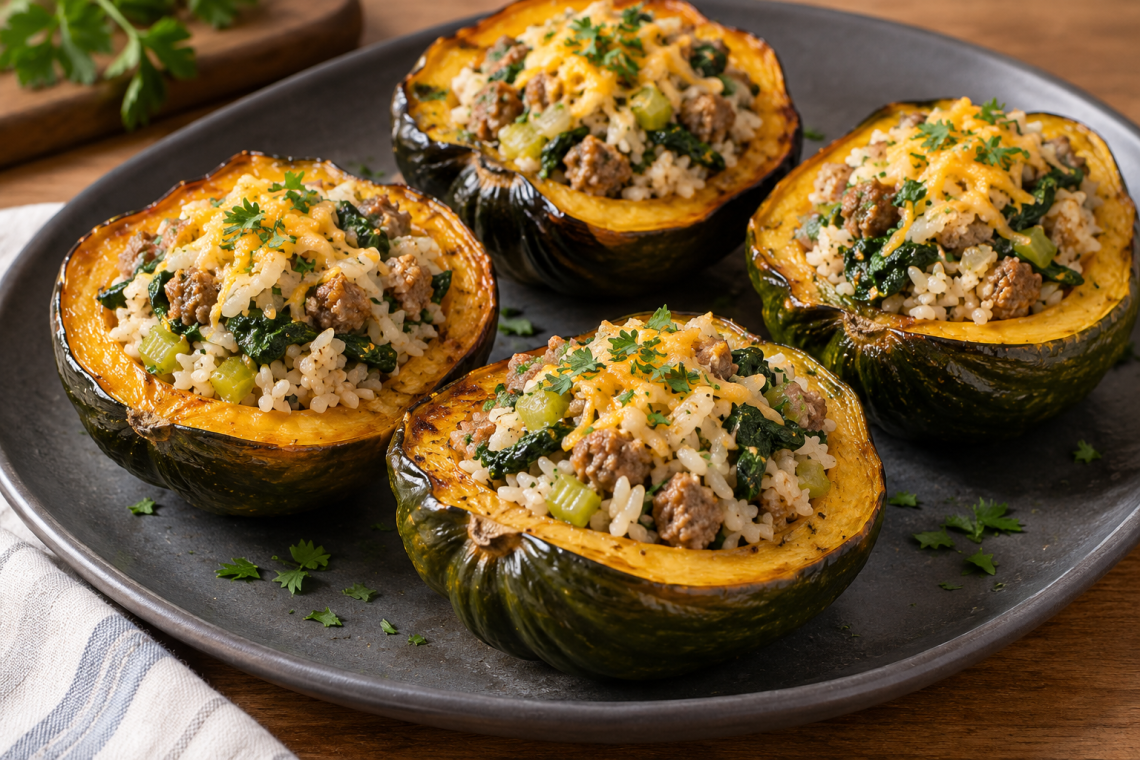
Acorn squash halves make a natural bowl for a savory rice filling. This baked acorn squash with turkey sausage and rice uses fully cooked turkey sausage, cooked rice, onion, celery, and spinach. The squash roasts first until nearly tender, then returns to the oven with the filling for a final heating stage.
The method avoids asking raw squash and a ready-cooked filling to finish on the same schedule. It also gives you time to prepare the filling while the squash softens. The finished plate has sweet squash flesh around a savory center, with no extra sugar required.
Cook the squash shell before packing the filling
Pre-roast
Give the acorn squash enough time to become almost tender before adding the cooked rice mixture.
Control moisture
Use fully cooked turkey sausage. Heat it with the cooked rice, broth and spinach until the filling is hot throughout and moist, with no broth pooling underneath. Follow the sausage package’s heating directions.
Pack lightly
Spoon the rice filling in without compressing it, leaving heat paths through the center.
Return the stuffed halves to the oven until the center of every filling reaches 165°F and the squash is fully tender. Let stand for 5 minutes before serving.
Choose squash that will hold a meal
Use two medium acorn squash weighing approximately 1½–2 pounds each. You will serve four halves. Look for firm shells without soft, leaking, or deeply damaged areas. A flat enough side is helpful for stable cutting, but you can make a small leveling cut on the outside later if a cooked half rocks on the pan.
How the timing fits together
Yield: 4 stuffed halves, 4 servings. Prep: 20 minutes. Cook: approximately 50–65 minutes. Stand before serving: 5 minutes. Total: about 90 minutes using the upper cooking estimate. Heat a conventional oven to 400°F / 200°C.
- Roast: 35–45 minutes. Prepare the hot sausage-and-rice filling in the skillet while the squash roasts.
- Fill and bake: 15–20 minutes. Check that the squash is tender and the center of every filling mound reaches 165°F / 74°C.
- Stand: 5 minutes. Add optional parsley and serve one stuffed half per person.
The rice is already cooked before this schedule starts. Skillet work overlaps the first roast; cooking rice separately or heating a cold assembled half adds time.
Coordinate the skillet with shell tenderness
The squash—not a rigid countdown—should decide when the filling moves forward. Check the thick flesh of all four halves before adding the short-cooking garlic and herbs.
| What the squash shows | What to do with the skillet |
|---|---|
| Still very firm at the first check | Remove the skillet from the heat after the onion and celery soften. Keep the cooked rice and fully cooked sausage refrigerated, then return the skillet to the heat when you are ready to continue. |
| Nearly tender in every half | Add the garlic and herbs, then finish the rice-and-sausage mixture so it reaches the shells hot. The final center of every stuffed half must still reach 165°F / 74°C. |
| One half lags behind the others | Rotate the tray and let that half roast longer. Do not raise the oven temperature for the whole batch. |
If serving is delayed after cooking, hold the food at a thermometer-verified 140°F / 60°C or above, following USDA hot-holding guidance. A switched-off oven is not automatically a safe holding space; for a longer delay, use the cooling and reheating instructions in the storage section below.
Have an 18-by-13-inch rimmed metal sheet, a sturdy board, a sharp large knife, a spoon, a 10-inch skillet, and a food thermometer ready. The rice must already be cooked before it goes into the filling; freshly cooked rice or a microwave-ready rice packet prepared by its label is convenient.
Ingredients for the shells and filling
- 2 acorn squash, approximately 1½–2 pounds each
- 2 tablespoons olive oil, divided
- ½ teaspoon fine salt, divided, plus more only after tasting
- ¼ teaspoon black pepper
- 10 ounces fully cooked turkey sausage, cut into ¼-inch pieces
- 1½ cups cooked brown or white rice
- 1 small yellow onion, finely chopped
- 1 celery rib, finely chopped
- 1 cup loosely packed baby spinach, roughly chopped
- 1 garlic clove, finely chopped
- ½ teaspoon dried sage
- ¼ teaspoon dried thyme
- ¼ cup low-sodium broth, plus 1–2 tablespoons only if needed
- 1 teaspoon apple cider vinegar
- 2 tablespoons chopped parsley, optional
- ¼ cup shredded cheddar, optional, for a light topping
The sausage package must say fully cooked. This recipe uses it as a seasoned filling ingredient, not as raw ground meat that needs browning from the beginning. Choose a savory variety; an apple-flavored sausage will make the filling sweeter. Check the label for its own heating instructions and follow them alongside the final temperature check below.
Cooked rice absorbs the small amount of broth and gives the filling body. Onion and celery add texture, while spinach wilts into the mixture without adding much bulk. Sage has a strong flavor, so keep to the measured quantity before deciding whether the filling needs more.
Make baked acorn squash with turkey sausage and rice in three stages
Stage one: roast the squash
- Heat the oven; wash, cut, and seed the squash. Heat the oven to 400°F / 200°C. Scrub each squash under running water with a clean produce brush, then dry it so it does not slip on the board. Cut from stem end toward the base, working carefully around the hard stem rather than forcing the knife through it. Separate the halves and scoop out seeds and stringy material. If cutting feels unsafe, use pre-halved squash or ask the produce counter for help.
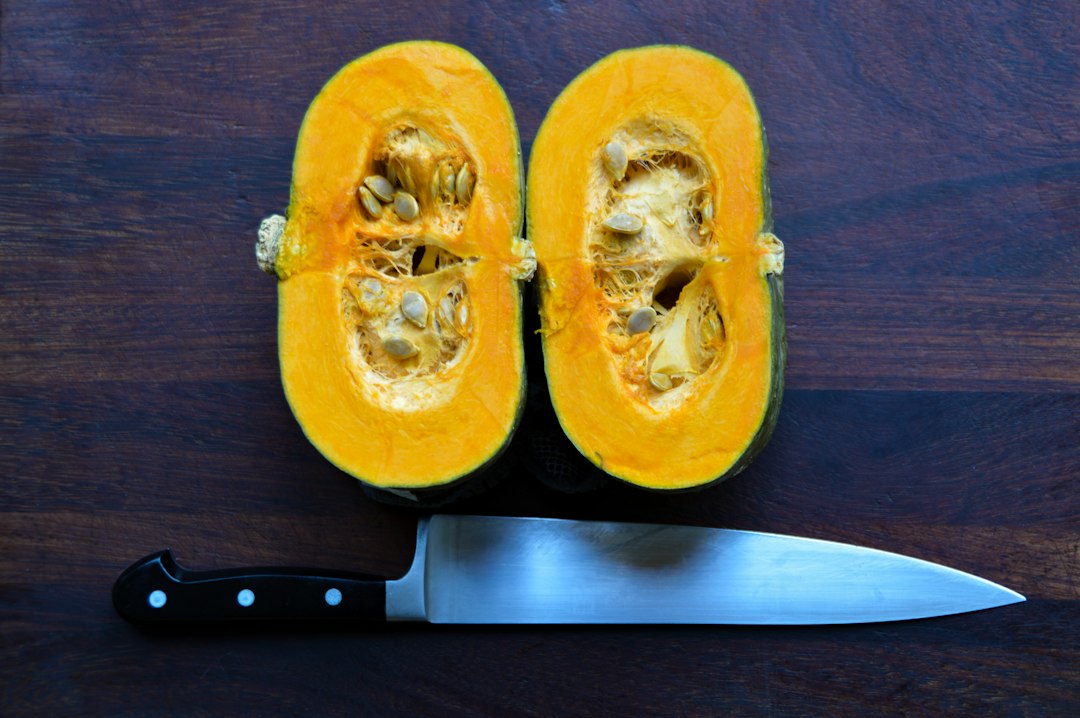
- Season and roast. Brush the cut flesh with 1 tablespoon oil and sprinkle with ¼ teaspoon salt and pepper. Set halves cut side down on the lightly greased rimmed sheet. Roast for 35–45 minutes, checking near 35 minutes. A small knife should enter the thick flesh with only slight resistance; very firm shells need more time before stuffing.
Stage two: prepare the filling
- Soften the vegetables. While the squash roasts, heat the remaining oil in the skillet over medium heat. Add onion and celery and cook for 6–8 minutes, stirring, until softened. Add garlic, sage, and thyme and stir for approximately 30 seconds, avoiding browned garlic.
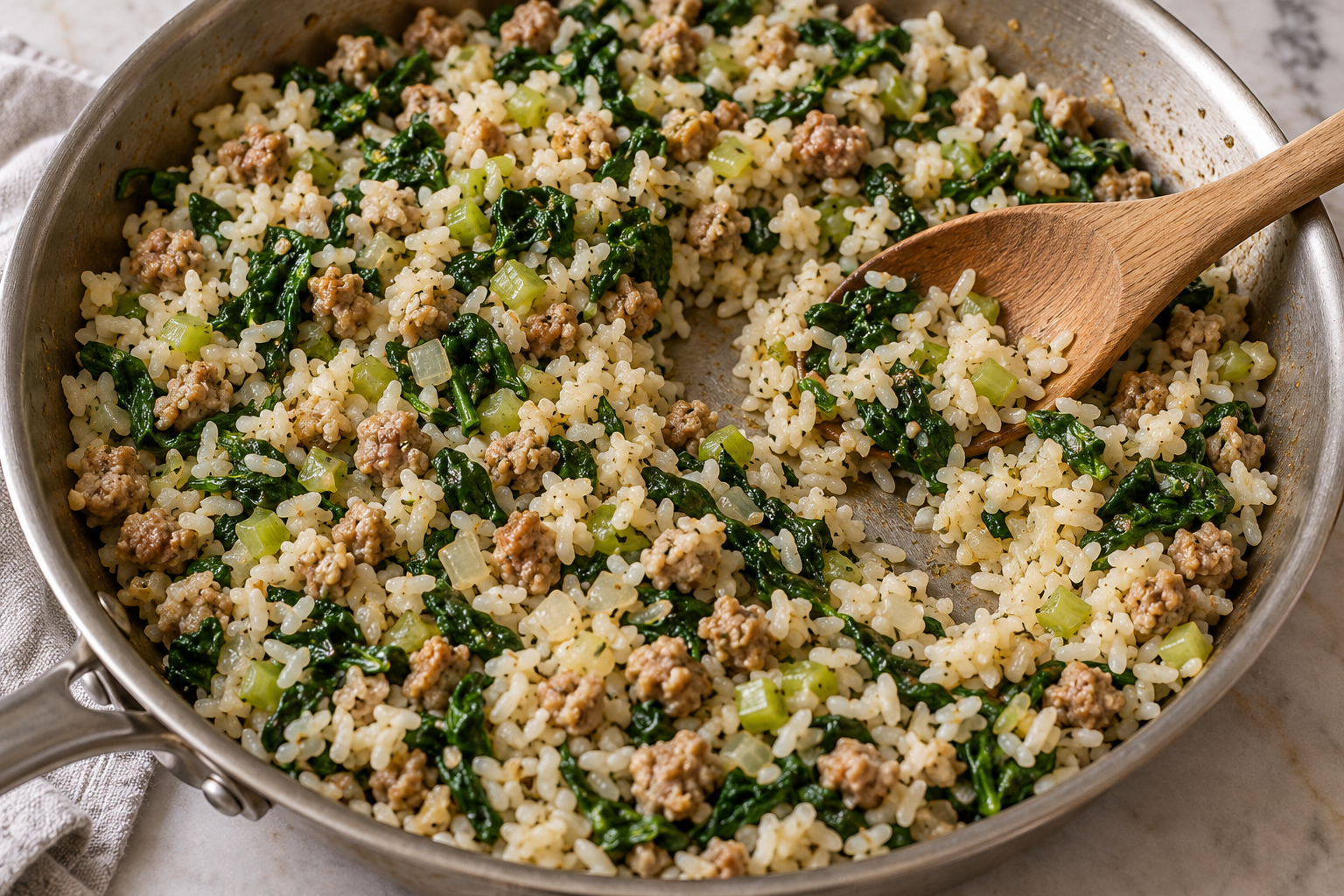
- Bring the filling together. Add chopped fully cooked sausage, cooked rice, broth, and spinach. Stir and heat until the spinach wilts and the mixture is hot throughout. Add vinegar, then taste a cooled spoonful before using the remaining ¼ teaspoon salt. The filling should be moist and spoonable, without broth pooling underneath. Follow the sausage package’s heating directions.
Stage three: fill and finish
- Fill the squash. Turn the roasted halves cut side up, using tongs and a spatula for support. If a half rocks badly, trim a very thin slice from the outside without cutting through the cavity. Divide the hot filling among the halves in modest mounds. If your squash cavities are small, bake excess filling in a small covered oven-safe dish beside them rather than forcing it into unstable piles.
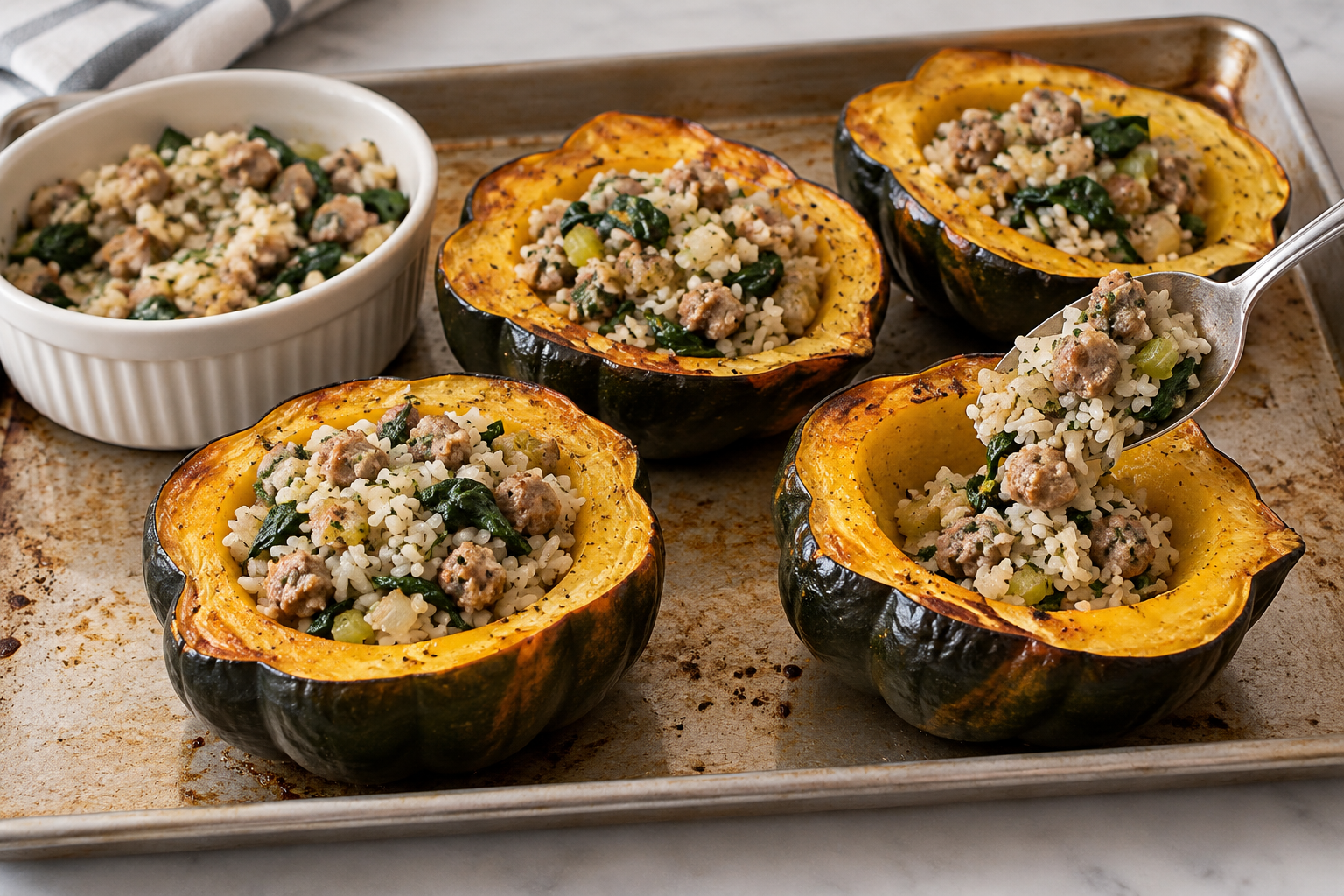
- Heat the centers fully. Sprinkle optional cheddar over the filling. Return to the oven for approximately 15–20 minutes, until the squash is tender and the center of each stuffed half reaches 165°F / 74°C. Insert the thermometer into the middle of the rice filling, not only into the hot squash flesh. Cover loosely if the tops darken before the centers are ready.
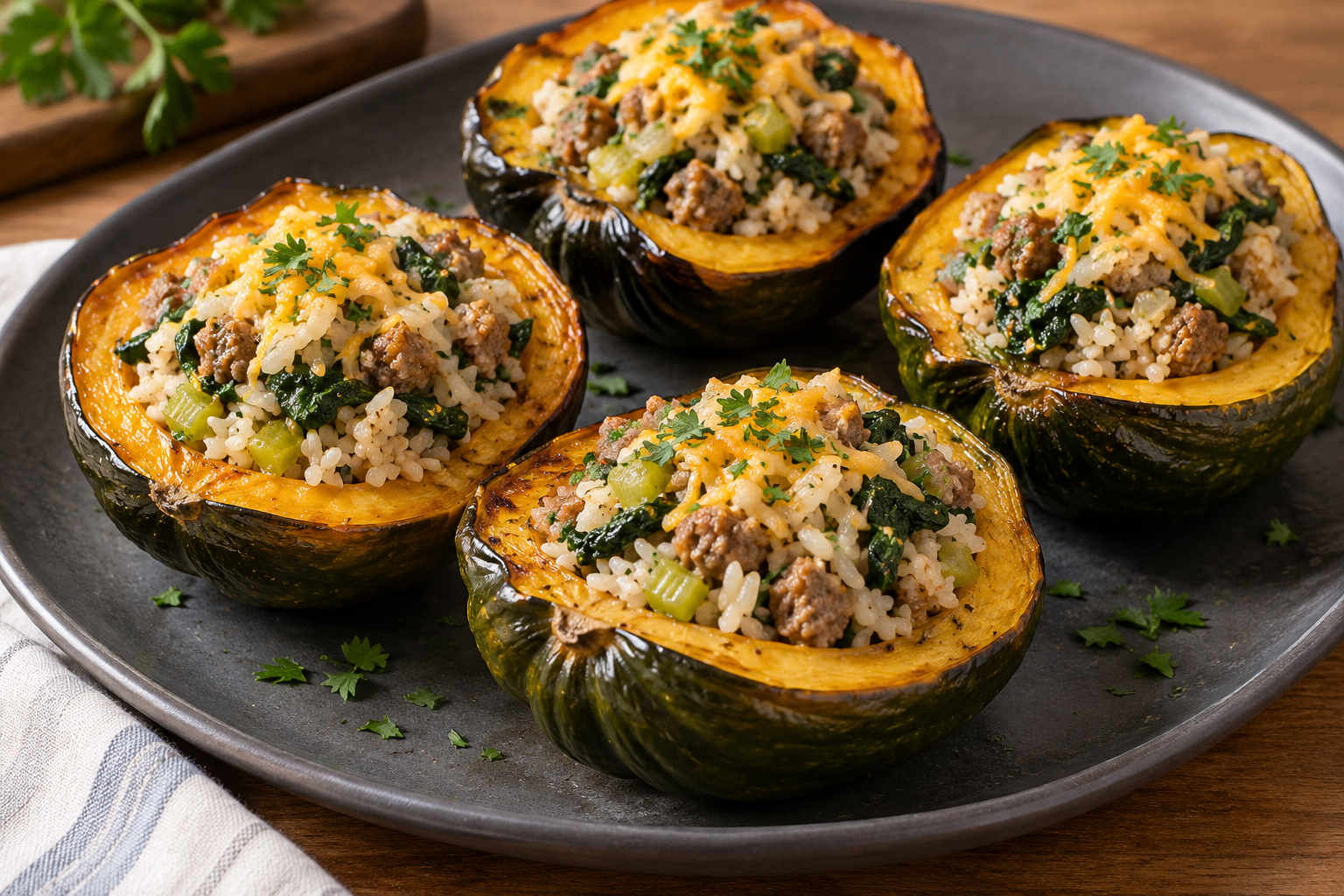
- Stand and serve. Let the halves stand for 5 minutes, then scatter with optional parsley. Serve each half on a plate with a spoon or fork for scooping the flesh into the filling. Treat the shell mainly as a serving bowl; diners can leave any skin they find tough.
Check the squash and filling separately
The squash is ready when its thick flesh is easy to scoop and there is no hard band beside the shell. The filling is ready when the center reaches 165°F, the FoodSafety.gov guideline for casseroles. One check does not replace the other: a hot rice center cannot make undercooked squash pleasant to eat.
If the filling reaches its endpoint before the squash becomes tender, cover the top loosely and continue baking. For the next batch, extend the first roast before stuffing. If the squash is tender but the rice center is still too cool, keep baking and recheck; starting with hot filling reduces that delay.
How to keep the filling moist without making it soggy
The measured broth is enough to loosen the mixture, but cooked rice varies in dryness. Add an extra tablespoon only if the rice remains stiff and the skillet looks dry. A puddle of liquid is unnecessary because the squash provides a moist surrounding surface.
Chop sausage into small pieces so it distributes through the rice and fits easily into the squash cavities. Large coins make filling and eating the halves awkward. Stir spinach in only until wilted, and do not pack in several extra cups without adjusting the filling volume.
Useful substitutions
Fully cooked chicken sausage can replace turkey sausage by weight. For raw turkey or chicken sausage, cook it separately to 165°F before adding it to the filling. For raw pork sausage without poultry, cook it separately to 160°F; a blend containing turkey or chicken must reach 165°F. Check with a food thermometer; the final center of every stuffed squash half must still reach 165°F. Do not put raw sausage into the rice mixture and assume the short final bake will cook it evenly.
Use cooked quinoa in place of rice for a different texture, keeping the measured cooked volume. Wild-rice blends vary in firmness and may need more broth. Uncooked rice is not a substitution: it will not absorb enough liquid or soften during the final stuffing stage.
For a meatless variation, replace sausage with about 1½ cups cooked beans, drained well, and adjust the herbs and salt after tasting. This changes the dish’s flavor and texture. Butternut squash halves are larger and have a different shape; they need a separate portion and timing plan rather than following the acorn-squash instructions unchanged.
Serving and planning ahead
A stuffed half is a substantial main course. Add a green salad, steamed green beans, or sliced apples for contrast. If a squash half is very large, divide it at the table or serve a smaller helping of filling and save the rest for lunch.
For another squash dinner using beans, see sheet pan butternut squash and white beans with sage. It uses a tray of cubes rather than edible bowls and has its own roasting schedule.
You can prepare the rice and chop the filling ingredients a day ahead. Cool cooked rice promptly in shallow portions and refrigerate it. Its original storage clock still applies; baking it again does not create a new refrigerated storage period. Reheating cannot rescue rice that has been left out too long, because some toxins can survive. The Food Standards Agency explains why cooked rice needs prompt chilling.
Leftover storage
Refrigerate leftovers within 2 hours, or within 1 hour above 90°F. Large stuffed halves cool more effectively if you separate the filling from the squash into shallow containers. Keep at 40°F or below and use within 3–4 days, limited by any older cooked ingredient, following USDA leftover guidance.
Reheat covered with a small splash of broth until the filling and squash reach 165°F. A whole refrigerated stuffed half can take longer than a shallow portion, so check the center. Remove the cover briefly at the end if you want the top less moist.
Frequently asked questions
Do I peel acorn squash first?
No. The shell supports the filling during baking. Scoop out the tender flesh while eating and leave skin that feels tough. Peeling before roasting would remove the structure that makes this presentation work.
Can I use microwave-ready rice?
Yes. Prepare it according to the package before measuring 1½ cups for the filling. Choose plain rice so you can control salt and seasoning, and keep it hot or refrigerate promptly until needed.
What if the squash will not sit flat?
Trim a very thin leveling slice from the outside after the first roast, or use a small ring of foil to steady it on the sheet. Avoid cutting through the cavity where filling could escape.
Can I assemble everything ahead?
You can refrigerate cooked components safely, but a cold assembled half takes longer to heat. Reheat the filling thoroughly before stuffing when possible, then verify the final center reaches 165°F. Do not use the hot-filling time as a guarantee for a cold dish.
Do I need cheese?
No. The filling stays together without it. Cheese provides a richer top and a little browning, but leaving it out does not require another binder or a different amount of rice.
What is the main timing rule?
For baked acorn squash with turkey sausage and rice, get the squash nearly tender before adding hot filling. That sequence makes the final stage about heating the center and finishing the shell, rather than trying to cook everything from the beginning.
Rate this recipe
Made this stuffed acorn squash? Choose a star rating in the comment form below and share which rice and sausage you used.
Baked acorn squash recipe
Baked Acorn Squash with Turkey Sausage and Rice
Ingredients
Equipment
Method
- Heat a conventional oven to 400°F / 200°C and have the rimmed metal sheet, cutting board, knife, spoon, skillet and thermometer ready. The rice must already be cooked before it goes into the filling. Freshly cooked rice or a microwave-ready packet prepared according to its label is convenient; separate rice-cooking time is not included in this card.
- Scrub each squash under running water with a clean produce brush, then dry it so it does not slip on the board. Set one squash on a stable board. Cut from stem end toward the base, working carefully around a hard stem rather than trying to force the knife directly through it. Separate the halves and scoop out seeds and stringy material. Repeat with the second squash. If cutting feels unsafe, stop and use pre-halved squash or ask the produce counter for help.
- Brush the cut flesh with 1 tablespoon oil and sprinkle with ¼ teaspoon salt and pepper. Set halves cut side down on the lightly greased rimmed sheet. Roast for 35–45 minutes, checking near 35 minutes. A small knife should enter the thick flesh with only slight resistance; very firm shells need more time before stuffing.
- While the squash roasts, heat the remaining oil in the skillet over medium heat. Add onion and celery and cook for 6–8 minutes, stirring, until softened. Add garlic, sage, and thyme and stir for approximately 30 seconds, avoiding browned garlic.
- Add chopped fully cooked sausage, cooked rice, broth, and spinach. Stir and heat until the spinach wilts and the mixture is hot throughout. Add vinegar, then taste a cooled spoonful before using the remaining ¼ teaspoon salt. The filling should be moist and spoonable, without broth pooling underneath. Follow the sausage package’s heating directions.
- Turn the roasted halves cut side up, using tongs and a spatula for support. If a half rocks badly, trim a very thin slice from the outside without cutting through the cavity. Divide the hot filling among the halves in modest mounds. If your squash cavities are small, bake excess filling in a small covered oven-safe dish beside them rather than forcing it into unstable piles.
- Sprinkle optional cheddar over the filling. Return to the oven for approximately 15–20 minutes, until the squash is tender and the center of each stuffed half reaches 165°F / 74°C. Insert the thermometer into the middle of the rice filling, not only into the hot squash flesh. Cover loosely if the tops darken before the centers are ready.
- Let the halves stand for 5 minutes, then scatter with optional parsley. Serve each half on a plate with a spoon or fork for scooping the flesh into the filling. Treat the shell mainly as a serving bowl; diners can leave any skin they find tough.