
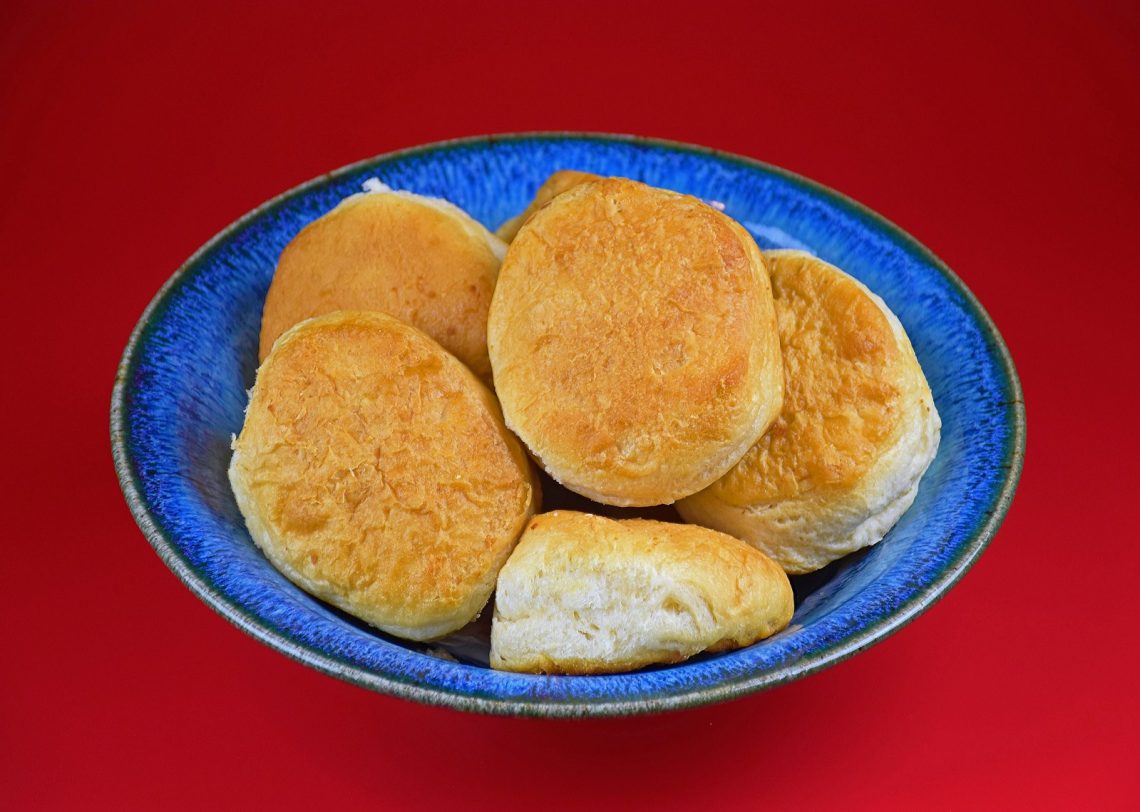
For a small basket of warm biscuits with a little crunch, make small batch orange cornmeal drop biscuits. Fine cornmeal adds texture, orange zest supplies fragrance, and buttermilk keeps the flavor gently tangy. The six biscuits are only lightly sweet, so they work with breakfast fruit or alongside a savory bowl of soup.
Affiliate disclosure: As an Amazon Associate I earn from qualifying purchases. These paid links open Amazon search results for comparing equipment.
Prepare a 9-by-13-inch quarter-sheet pan (paid link) with parchment rated for the oven temperature. Use a fork or pastry blender (paid link) for working the biscuit mixture before dropping the portions. A fine citrus zester (paid link) makes the orange zest easy to grate.
The method includes a short cornmeal soak while the oven heats. That helps the meal absorb some buttermilk before it reaches the flour, reducing the dry, gritty feel that can happen when cornmeal biscuits are mixed too quickly. Cold butter and restrained stirring do the rest.
Jump to the six-biscuit recipe
Tip: Hydrate cornmeal without losing biscuit lift
- Use fine cornmeal so the short bake can soften the grains.
- Rub orange zest into the sugar or dry ingredients to distribute its oils.
- Mix the liquid in just until a shaggy drop-biscuit dough forms.
- Portion immediately and leave the tops rough for crisp ridges.
If the dough is dry, add liquid by the teaspoon; if it spreads, chill briefly rather than adding a large amount of flour. Bake until the centers are set and the bottoms are lightly browned.
Use fine cornmeal, not a cornbread mix
Choose plain fine-ground yellow or white cornmeal. Coarse polenta and grits take longer to hydrate and create a rougher biscuit. Cornbread mix also contains other ingredients, including leavening and sometimes sugar, so it does not replace the measured cornmeal here.
The flour remains the larger part of the dry mixture. This gives the biscuit enough structure while allowing the cornmeal texture to come through. If you want a more cake-like pan of corn bread instead, the separate small batch skillet cornbread uses a different format and should be followed as its own recipe.
Orange zest is more useful than orange juice in this dough. It adds citrus flavor without extra moisture or a change to the measured buttermilk. Wash and dry the orange before grating, and take only the colored outer surface.
Small batch orange cornmeal drop biscuits
Makes: 6 medium biscuits. Preparation: 15 minutes, including a 10-minute cornmeal soak while the oven heats. Baking: 13–16 minutes. Cooling: 5 minutes. Total: about 35–40 minutes.
Equipment: a light-colored 9-by-13-inch rimmed quarter-sheet pan or larger baking sheet, parchment suitable for 425°F, two bowls, a fork or pastry blender, and two spoons.
Ingredients
- 1/4 cup fine cornmeal, about 35 g
- 1/2 cup buttermilk, 120 ml, cold
- 3/4 cup all-purpose flour, spooned and leveled, 90 g
- 1 tablespoon granulated sugar, about 12 g
- 1 1/4 teaspoons baking powder
- 1/4 teaspoon fine salt
- 1 teaspoon finely grated orange zest
- 3 tablespoons unsalted butter, 42 g, cold and cubed
- 1–2 teaspoons additional cold buttermilk, only if needed

Detailed baking steps
- Start the cornmeal soak. Stir the cornmeal and measured 1/2 cup buttermilk together in a small bowl. Refrigerate for 10 minutes while preparing the other ingredients. The mixture may thicken, but it should still be easy to scrape from the bowl.
- Prepare the oven. Heat a conventional oven to 425°F (220°C) with a rack in the middle. Line the pan with suitable parchment. Keep the cubed butter refrigerated until you are ready to mix it into the dry ingredients.
- Blend flour and flavorings. Put the flour, sugar, baking powder, and salt in the larger bowl and whisk thoroughly. Add the zest and rub it lightly through the dry mixture with your fingertips so it does not remain in one damp clump.
- Work in the butter. Add the cold butter and cut it through the flour using a fork or pastry blender. Leave a mixture of small crumbs and pieces no larger than peas. Stop before the butter melts or the mixture becomes greasy.
- Combine gently. Scrape the soaked cornmeal mixture into the flour bowl. Fold with a spatula, reaching underneath the dough, until no loose flour remains. If there are persistent dry patches, add extra buttermilk 1 teaspoon at a time. The dough should hold a soft, sticky mound.
- Make six equal portions. Drop six mounds onto the pan with two spoons, leaving about 2 inches between them. Keep them roughly equal in height, approximately 3/4–1 inch. Tuck in long thin points that could brown too quickly.
- Bake to a set center. Bake for 13–16 minutes, checking toward the earlier end. Look for golden patches on the top, browned bottoms, and a biscuit that lifts cleanly from the parchment. Split one if uncertain; the middle should not contain wet dough.
- Cool briefly before serving. Transfer to a rack for 5 minutes. Serve warm. A short rest lets the interior settle, making it easier to split without crushing the crumb.
Why the short soak helps
Cornmeal is not as fine as wheat flour, even when labeled fine-ground. Mixing it with buttermilk before making the dough starts its hydration separately. This lets you fold the final dough only briefly, instead of stirring longer in an attempt to remove a gritty appearance.
The soak should not become an overnight batter rest. The recipe is arranged so that the cornmeal hydrates while the oven preheats and the flour is prepared. Once the baking powder meets the wet ingredients, portion the dough and bake promptly.
Land O’Lakes’ cornmeal drop biscuit directions provide helpful background on combining cornmeal, flour, cold butter, and buttermilk with minimal mixing. This smaller orange version uses its own proportions and a brief cornmeal hydration step.
Make the measurements count
A few extra tablespoons of flour are a significant change in a six-biscuit recipe. Weigh the flour if you can. Otherwise, fluff it, spoon it into a dry measuring cup, and level the top. The King Arthur flour measuring guide explains the difference between a lightly filled cup and densely scooped flour.
Use an actual measuring teaspoon for baking powder and level it off. A rounded spoonful can be much larger than intended, giving the biscuits an unpleasant flavor. Check that the powder is within its recommended use period, especially if it has been in a humid cupboard.
Measure zest after grating. The size of oranges varies, so “the zest of one orange” can be too much for a small dough. Keep leftover zest covered in the refrigerator for another recipe instead of adding it all to this batch.
Substitutions with clear limits
Lemon instead of orange: use the same teaspoon of finely grated zest. The flavor will be brighter and sharper. Do not add lemon juice to the dough in addition to the buttermilk.
No buttermilk: stir 1 1/2 teaspoons lemon juice into enough milk to make 1/2 cup and let stand for 5 minutes. This will be thinner than cultured buttermilk, so hold back about a tablespoon initially and add it only as needed. The texture will not be exactly the same.
Salted butter: use the same amount and reduce the measured salt to a small pinch. Spreadable tub butter has a different composition and is not the intended ingredient. Keep the butter solid and cold when it meets the flour.
Coarse cornmeal: save it for a recipe developed for that grind. Simply extending this brief soak may not eliminate the coarse texture, and adding more liquid changes the dough. Fine cornmeal makes the six-biscuit batch more predictable.
From breakfast plate to soup bowl
At breakfast, split the warm biscuits and add a little butter or a spoonful of jam. The tablespoon of sugar makes them lightly sweet rather than dessert-like. A bowl of sliced oranges or a soft cooked egg can turn one or two biscuits into a fuller meal.
For dinner, pair them with pumpkin black bean soup. The orange aroma and cornmeal texture provide contrast to a soft soup. Serve the biscuits separately so their edges stay crisp until the diner breaks them into the bowl.
Troubleshooting and storage
If the biscuits are dry, first check how the flour was measured and whether they stayed in the oven too long. If the centers are gummy, check the individual mound size and bake until the interior sets. A very large mound can look browned outside while remaining underdone inside.
If the dough spreads into flat puddles, the butter may have warmed or too much extra liquid may have been added. Chill warm dough briefly and make the next batch with the stated starting amount. Keep a note of the cornmeal grind and buttermilk brand, since both affect absorption.
Cool plain biscuits completely before wrapping. Keep covered at cool room temperature for up to 2 days for best quality, or freeze for up to a month. Rewarm in a 325°F oven until warm through, loosely covered with foil if the crust is already dark.
Frequently Asked Questions
Can I bake four larger biscuits?
You can divide the dough into four, but the larger centers need longer to bake. Keep the mounds fairly low and check the middle instead of using the six-biscuit timing as a guarantee. Six portions give the most predictable result for this formula.
Are these the same as cornbread?
No. Cold butter is cut into the flour, and the dough is dropped in individual mounds. Cornbread normally uses a batter and a different mixing method. The cornmeal flavor overlaps, but the structure and crust are different.
Should the dough be smooth?
No. A rough, sticky dough is expected. Keep folding only until dry flour disappears. Continued mixing to smooth the dough can make the biscuits less tender.
Can I add dried cranberries?
Try 2 tablespoons finely chopped dried cranberries, folding them in with the wet ingredients. Larger amounts can crowd this small dough. The fruit changes the character toward breakfast biscuits and may make extra jam unnecessary.
Can I bake them on a larger sheet?
Yes. Keep the same spacing and mound size. A large sheet does not require a different ingredient quantity. Pan color and oven position matter more than filling the entire surface.
Can I prepare the dry mixture early?
Yes. Measure and combine the dry ingredients ahead, keeping the zest and wet ingredients separate until baking. Small batch orange cornmeal drop biscuits are best mixed and baked once the oven is fully ready.
Small Batch Orange Cornmeal Drop Biscuits
Ingredients
Equipment
Method
- Start the cornmeal soak. Stir the cornmeal and measured 1/2 cup buttermilk together in a small bowl. Refrigerate for 10 minutes while preparing the other ingredients. The mixture may thicken, but it should still be easy to scrape from the bowl.
- Prepare the oven. Heat a conventional oven to 425°F (220°C) with a rack in the middle. Line the pan with suitable parchment. Keep the cubed butter refrigerated until you are ready to mix it into the dry ingredients.
- Blend flour and flavorings. Put the flour, sugar, baking powder, and salt in the larger bowl and whisk thoroughly. Add the zest and rub it lightly through the dry mixture with your fingertips so it does not remain in one damp clump.
- Work in the butter. Add the cold butter and cut it through the flour using a fork or pastry blender. Leave a mixture of small crumbs and pieces no larger than peas. Stop before the butter melts or the mixture becomes greasy.
- Combine gently. Scrape the soaked cornmeal mixture into the flour bowl. Fold with a spatula, reaching underneath the dough, until no loose flour remains. If there are persistent dry patches, add extra buttermilk 1 teaspoon at a time. The dough should hold a soft, sticky mound.
- Make six equal portions. Drop six mounds onto the pan with two spoons, leaving about 2 inches between them. Keep them roughly equal in height, approximately 3/4–1 inch. Tuck in long thin points that could brown too quickly.
- Bake to a set center. Bake for 13–16 minutes, checking toward the earlier end. Look for golden patches on the top, browned bottoms, and a biscuit that lifts cleanly from the parchment. Split one if uncertain; the middle should not contain wet dough.
- Cool briefly before serving. Transfer to a rack for 5 minutes. Serve warm. A short rest lets the interior settle, making it easier to split without crushing the crumb.




