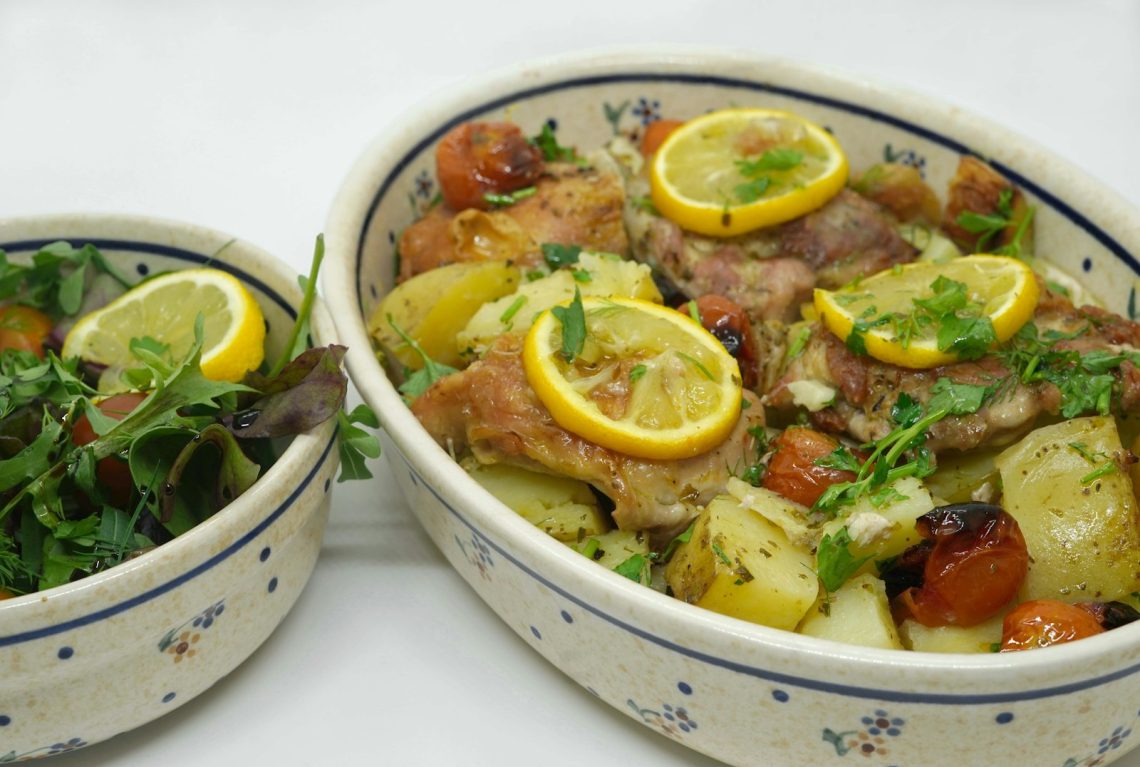
This lemon chicken and polenta for two combines thin chicken cutlets with a small saucepan of creamy cornmeal. The chicken leaves browned flavor in the skillet for a light lemon sauce, while the polenta supplies a soft base that catches every spoonful. The meal feels complete without a heavy cream sauce, and its two-portion size keeps both the ingredient list and cleanup manageable.
Jump to the recipe. Start the polenta first, then cook the chicken while it simmers. Use the grain package to judge timing because quick polenta and coarse traditional polenta are not interchangeable minute for minute.
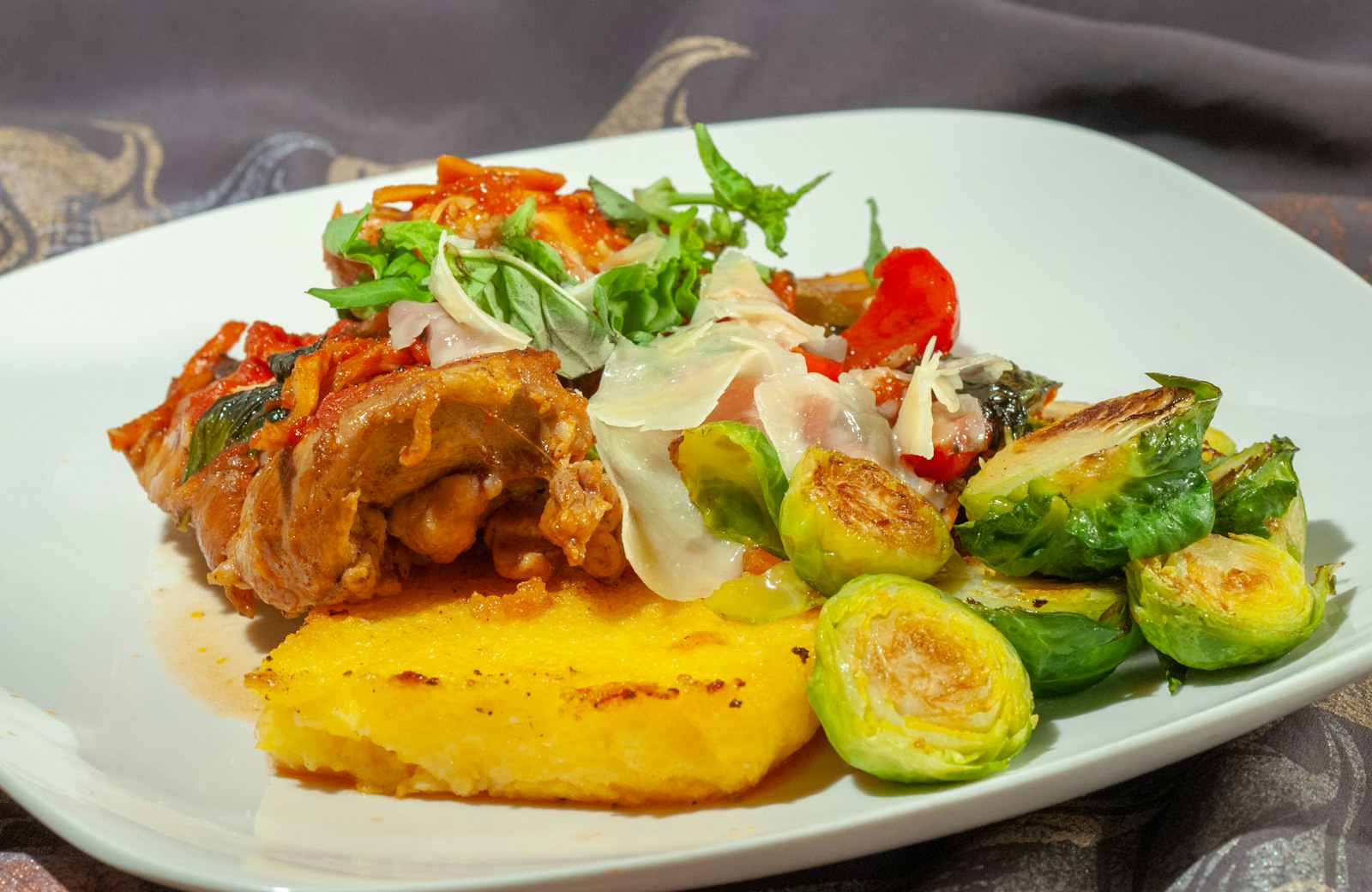
Tip: Time the chicken around the polenta’s final whisk
| Polenta | Keep it at a gentle simmer and whisk often enough to prevent settling and lumps. |
| Chicken | Use even pieces, brown them separately, and rest them while the pan sauce is finished. |
| Lemon | Add zest for aroma and juice after reducing the sauce so the acidity remains clear. |
Polenta thickens while waiting, so hold it slightly looser than the desired serving texture. Restore it with hot liquid before plating rather than adding extra fat.
Plan the two pans around the polenta
The recipe assumes a medium or coarse cornmeal intended for polenta, with roughly 25–35 minutes of gentle cooking. Its texture should become creamy while retaining a little grain character. Instant polenta cooks much faster; if using that, prepare it near the end according to the package instead.
Begin with 2 cups water for 1/2 cup dry polenta and keep a little more hot water ready. Different grinds thicken differently. The aim is a spoonable base, not firm slices. Add liquid gradually as it cooks rather than deciding it must be done as soon as the first water is absorbed.
Manufacturer guidance from Bob’s Red Mill also describes frequent stirring and a gentle simmer for traditional polenta. The exact water amount and time in your kitchen should be checked against the product and the texture you want.
Lemon chicken and polenta for two
Affiliate disclosure: As an Amazon Associate I earn from qualifying purchases. Paid links open Amazon search results.
Yield: 2 servings. Preparation: about 10 minutes. Cooking: about 35 minutes, with pans working at the same time. Total: about 45 minutes. Equipment: medium saucepan (paid link), whisk (paid link), long-handled spoon, 10-inch skillet, tongs, cutting board, and instant-read thermometer (paid link).
For the polenta
- 2 cups water, plus 1/4–1/2 cup hot water as needed
- 1/2 cup medium or coarse polenta cornmeal
- 1/4 teaspoon fine salt
- 1 tablespoon unsalted butter
- 2 tablespoons finely grated Parmesan, optional
For the lemon chicken
- 2 boneless skinless chicken breast cutlets, about 6 ounces each and 1/2 inch thick
- 1/4 teaspoon fine salt
- 1/4 teaspoon black pepper
- 1 tablespoon olive oil
- 1 small garlic clove, minced
- 1/3 cup reduced-sodium chicken broth
- 1 tablespoon lemon juice, plus 1 teaspoon only if needed
- 1/2 teaspoon finely grated lemon zest
- 1 tablespoon chopped parsley
Step-by-step dinner sequence
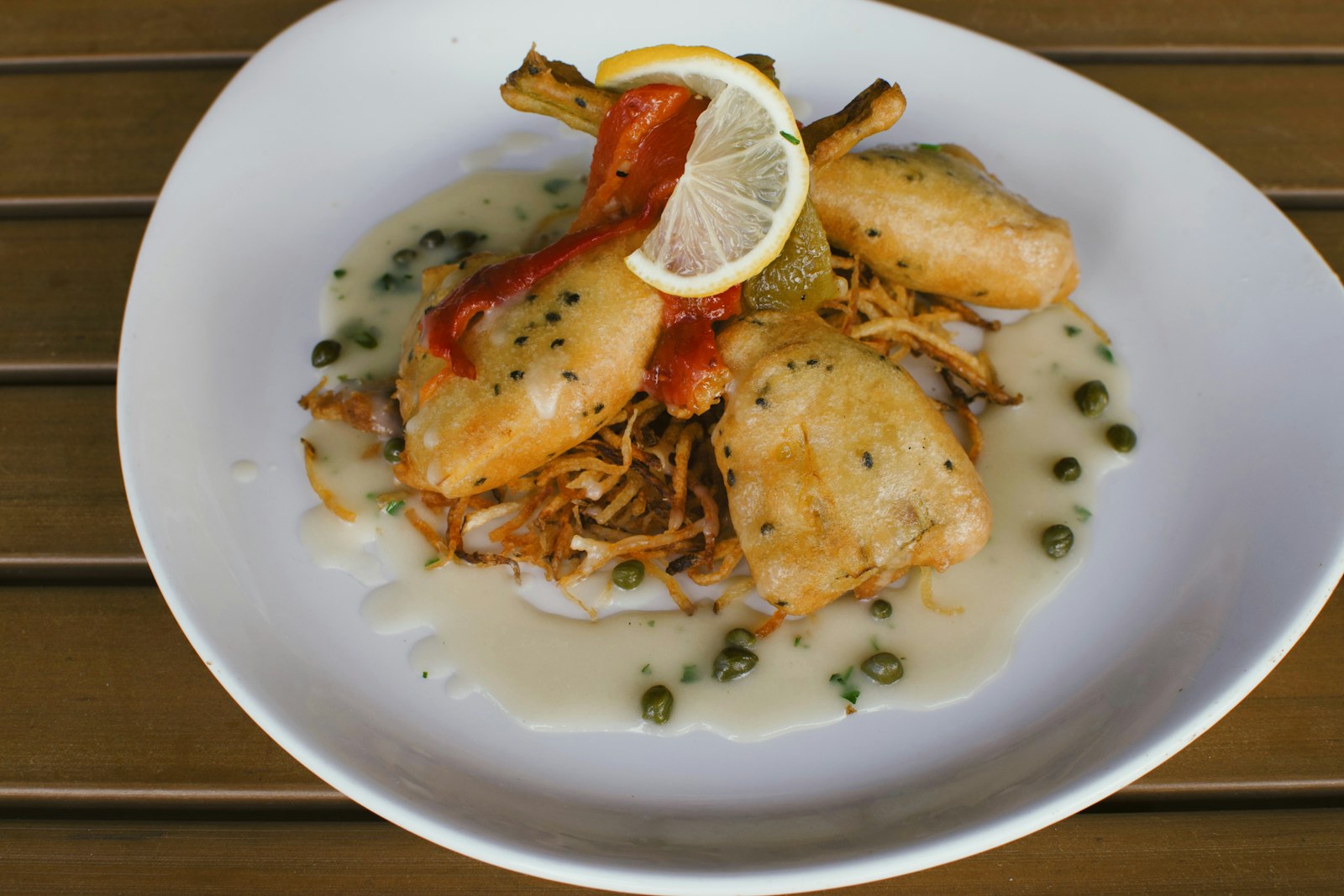
- Start the polenta. Bring the 2 cups water and salt to a boil in the saucepan. Slowly pour in the cornmeal while whisking. Reduce the heat to low as soon as it begins to thicken. Simmer gently for about 25–35 minutes, stirring frequently with a long-handled spoon and scraping the bottom. Add hot water in small amounts if it becomes too stiff before the grains soften.
- Prepare even cutlets. Pat the chicken dry and check its thickness. If one end is much thicker, place it between pieces of food-safe wrapping and gently flatten that area. Season both sides with salt and pepper. Set out a clean plate for the cooked chicken, separate from any plate that held raw meat.
- Brown and cook the chicken. When the polenta has about 10–15 minutes left, heat the oil in the skillet over medium-high heat. Add the cutlets and cook for about 3–5 minutes per side, adjusting the heat to prevent burning. Insert a thermometer sideways into the thickest part. Continue until each cutlet reaches 165°F, then transfer to the clean plate.
- Make a brief pan sauce. Lower the skillet heat to medium-low. Add the garlic and stir for about 20 seconds. Pour in the broth, scrape up brown bits, and simmer for 1–2 minutes. Add the tablespoon lemon juice and zest. The sauce should be light and fluid. If it reduces too quickly, add a spoonful of water.
- Finish the cornmeal. Taste a cooled spoonful of polenta. When the grains are tender, remove it from the heat and stir in the butter and optional Parmesan. Add enough hot water to make it slowly spread when spooned onto a plate. Taste before adding extra salt, especially if using cheese.
- Assemble while everything is warm. Divide the polenta between two shallow bowls. Add a chicken cutlet to each. Stir any clean resting juices into the hot sauce, add parsley, and spoon over the chicken. Taste the sauce before using the optional extra teaspoon lemon juice. Serve promptly.
Check chicken by thickness and temperature
Thin cutlets are useful because they cook quickly while the polenta finishes. A large unsliced chicken breast is not a direct replacement at the same cooking time. Either cut it horizontally into even pieces or use a method suited to its thickness.
Insert the thermometer from the side so the sensing area reaches the center. A top-down reading in a thin cutlet can accidentally touch the hot pan or pass through the meat. Check both cutlets, since a small thickness difference can change when they are ready.
The USDA safe-temperature chart lists 165°F for poultry. Golden color is a useful cooking cue, but it does not replace that measurement. The site’s pan-seared chicken breast guide offers more detail on controlling heat and browning.
Give the polenta the texture you want
Polenta thickens noticeably as it stands. A mixture that looks slightly loose in the saucepan often becomes ideal once it reaches a bowl. Keep some hot water nearby until serving, especially if the chicken needs an extra few minutes.
If it is lumpy: whisk firmly while the mixture is still fairly loose. Small lumps may soften with continued cooking. Pouring all the dry cornmeal into still water at once makes large clumps more likely; a gradual stream into boiling water is easier to control.
If it tastes gritty: add a little water and continue cooking gently. Thickness is not proof of tenderness. A coarse grind may need longer than a fine one, and cooking over high heat can evaporate the water before the grains soften.
If it sticks: reduce the heat and stir along the base more often. Do not scrape burned material into the rest of the pot. Transfer the unburned polenta to a clean saucepan if necessary and continue over gentler heat.
Swaps and simple sides
Olive oil can replace the butter in the polenta. Omit Parmesan if you prefer, then taste for salt. The result will be less rich but still creamy from the cooked cornmeal itself. This is also why heavy cream is unnecessary for the intended texture.
Boneless chicken thighs can accompany the polenta, but their cooking time and shape differ. Cook them separately to 165°F and build the same sauce afterward. Do not assume they will finish in the cutlets’ short window.
Serve with roasted asparagus with lemon zest, sautéed zucchini, or a green salad. Start any longer-cooking vegetable before searing the chicken. If you add a lemony side, taste the entire plate before making the pan sauce more acidic.
Store the components separately
Refrigerate the chicken and polenta in shallow containers within 2 hours, or within 1 hour above 90°F. Keep at 40°F or below and use within 3–4 days. Save the sauce with the chicken to help during reheating. These limits follow USDA leftover guidance.
Cold polenta becomes firm. Reheat it with water or broth, stirring and breaking up the mass until smooth enough to spoon. Cover chicken with its sauce and reheat gently. Both leftovers should reach 165°F; check several areas rather than stopping when the surface is steaming.
Frequently Asked Questions
Can I use a tube of prepared polenta?
Yes, as a different preparation. Slice and warm it according to the package, then serve the chicken and sauce over the slices. It will not behave like the dry cornmeal used for this creamy base.
Can I use grits instead?
Grits can make a pleasant base, but follow the instructions for the specific product. Quick grits may cook in several minutes, while other grinds need longer. Keep the chicken method the same and coordinate the timing accordingly.
Why is my lemon sauce bitter?
Possible causes include scorched garlic, blackened pan residue, or too much white pith in the zest. Add garlic only briefly before the broth and grate only the yellow surface of the lemon. Extra sugar will not remove a burnt flavor.
Can I double the meal?
Double the polenta in a larger saucepan and cook the chicken in batches or use two skillets. Crowded cutlets release moisture and brown unevenly. Keep the sauce loose until all portions are ready to serve.
Can the chicken be cut into strips first?
Yes, but smaller pieces cook faster and need earlier temperature checks. Slicing after cooking usually keeps the process simpler. If serving strips, spoon sauce over the exposed surfaces so they stay pleasant to eat.
Can lemon chicken and polenta for two be prepared ahead?
Measure the dry ingredients, grate the zest, and prepare the vegetables ahead, keeping chicken refrigerated separately. The meal is best cooked close to serving because polenta firms as it stands. If fully cooked ahead, chill promptly and follow the reheating directions.
Lemon Chicken and Polenta for Two
Ingredients
Equipment
Method
- Start the polenta. Bring the 2 cups water and salt to a boil in the saucepan. Slowly pour in the cornmeal while whisking. Reduce the heat to low as soon as it begins to thicken. Simmer gently for about 25–35 minutes, stirring frequently with a long-handled spoon and scraping the bottom. Add hot water in small amounts if it becomes too stiff before the grains soften.
- Prepare even cutlets. Pat the chicken dry and check its thickness. If one end is much thicker, place it between pieces of food-safe wrapping and gently flatten that area. Season both sides with salt and pepper. Set out a clean plate for the cooked chicken, separate from any plate that held raw meat.
- Brown and cook the chicken. When the polenta has about 10–15 minutes left, heat the oil in the skillet over medium-high heat. Add the cutlets and cook for about 3–5 minutes per side, adjusting the heat to prevent burning. Insert a thermometer sideways into the thickest part. Continue until each cutlet reaches 165°F, then transfer to the clean plate.
- Make a brief pan sauce. Lower the skillet heat to medium-low. Add the garlic and stir for about 20 seconds. Pour in the broth, scrape up brown bits, and simmer for 1–2 minutes. Add the tablespoon lemon juice and zest. The sauce should be light and fluid. If it reduces too quickly, add a spoonful of water.
- Finish the cornmeal. Taste a cooled spoonful of polenta. When the grains are tender, remove it from the heat and stir in the butter and optional Parmesan. Add enough hot water to make it slowly spread when spooned onto a plate. Taste before adding extra salt, especially if using cheese.
- Assemble while everything is warm. Divide the polenta between two shallow bowls. Add a chicken cutlet to each. Stir any clean resting juices into the hot sauce, add parsley, and spoon over the chicken. Taste the sauce before using the optional extra teaspoon lemon juice. Serve promptly.