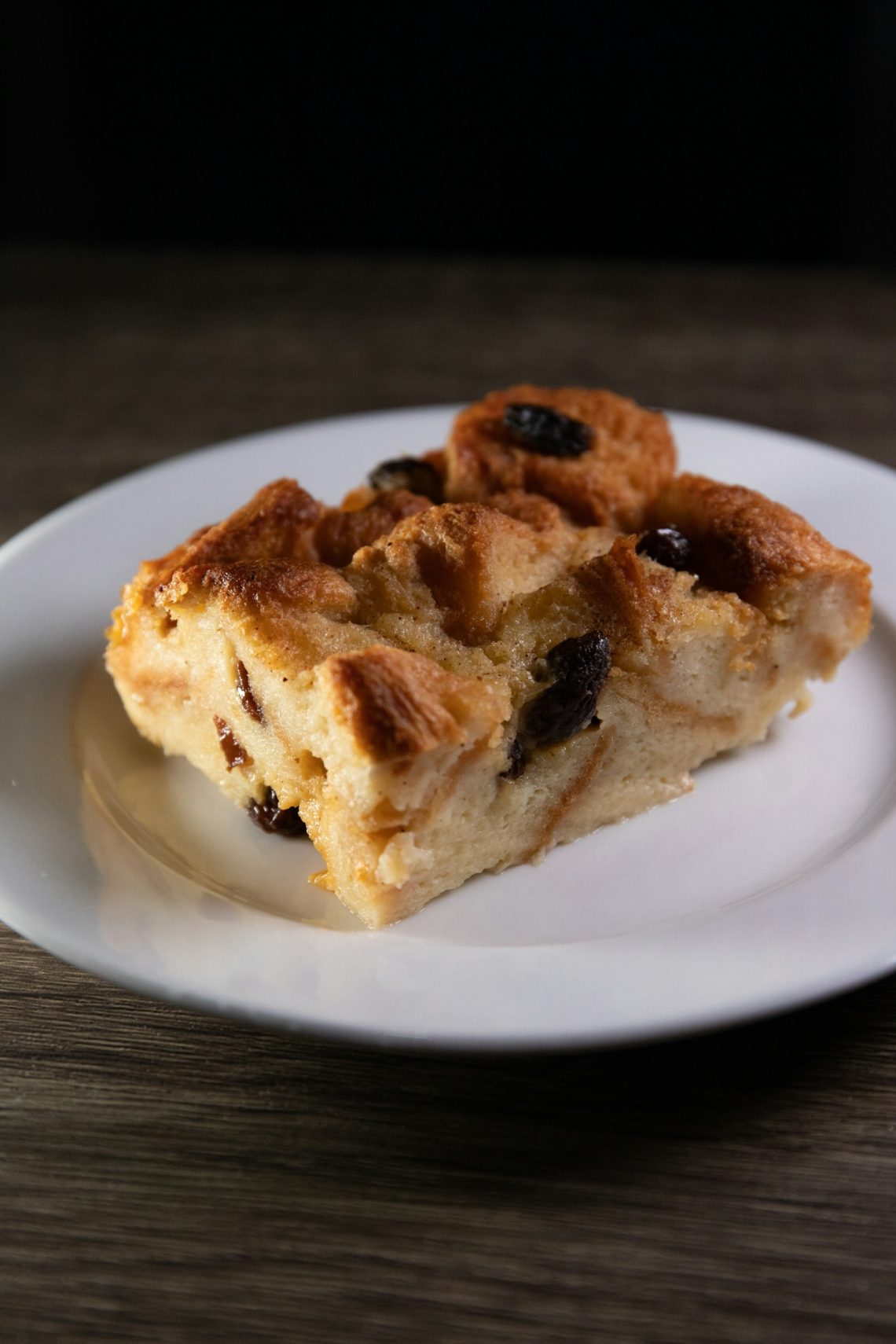
Small batch hamburger bun bread pudding gives two leftover plain buns a useful second purpose: a warm vanilla dessert with a lightly crisp top and soft custard underneath. The small baking dish makes two generous portions, and one whole egg keeps the custard easy to measure.
The method begins by checking the bread’s weight and dryness. Soft buns need a brief oven drying so they can absorb the custard without collapsing immediately. Then the mixture rests before baking, giving the liquid time to reach the centers of the cubes.
Jump to the two-portion bread pudding
Match custard quantity to the leftover bun weight
- Tear plain buns into even pieces and dry them briefly if they are very fresh.
- Pour custard gradually, turning the bread so dry centers absorb before more is added.
- Let the small batch rest until the pieces are moist but not floating.
- Bake until the center is set with a slight softness rather than waiting for the whole top to become dark.
Cool before portioning so the custard finishes setting. If the buns are especially dense, extend the soaking time instead of increasing liquid immediately.
Use plain buns and measure by weight
Two hamburger buns can vary widely in size. Use approximately 100 g of plain buns before drying, rather than relying entirely on the count. This is usually two medium buns, but very large bakery rolls may need trimming and small buns may require an extra piece.
Plain white or lightly sweet buns work well. Onion, garlic, or strongly savory rolls are better used elsewhere. Brioche buns produce a richer, softer pudding, while whole-wheat buns have a more noticeable grain flavor and may absorb the liquid differently.
The bread should be suitable to eat and properly stored. This recipe is a way to use extra bread, not to repair spoiled bread. If you have more sound buns than the pudding needs, the oven breadcrumb guide gives another practical use.
Small batch hamburger bun bread pudding
Yield: 2 generous dessert portions. Preparation: 15 minutes, including briefly drying the buns. Soaking: 15 minutes. Baking: 28–35 minutes. Cooling: 10 minutes. Total: about 70–75 minutes.
Affiliate disclosure: As an Amazon Associate I earn from qualifying purchases. Paid links open Amazon search results.
Equipment: a shallow oven-safe 1-quart baking dish (paid link), approximately 7 by 5 inches, a baking sheet, mixing bowl, whisk, spatula, and food thermometer (paid link). A much deeper bowl changes the cooking time and is not the intended shape.
Ingredients
- 100 g plain hamburger buns, usually 2 medium buns, cut into approximately 3/4-inch cubes
- 3/4 cup whole milk, 180 ml, plus 1–2 tablespoons only if needed for very dry bread
- 1 large egg
- 2 tablespoons granulated sugar, approximately 25 g
- 1 tablespoon unsalted butter, 14 g, melted and cooled slightly, plus a little for the dish
- 1/2 teaspoon vanilla extract
- 1/4 teaspoon ground cinnamon
- 1 small pinch fine salt
- 1 tablespoon raisins, optional
Dry, soak, and bake
- Dry soft buns lightly. Heat the oven to 300°F (150°C). Spread the bun cubes on the sheet and bake for 8–10 minutes, turning once, until the surfaces feel dry but the pieces are not deeply toasted. If the buns are already dry, shorten this step. Let the cubes cool for about 5 minutes.
- Prepare the final baking setup. Raise the oven temperature to 350°F (175°C). Butter the shallow baking dish lightly and keep the rack in the center. The small cubes will give a more even pudding than large torn halves.
- Whisk the custard thoroughly. Beat the egg and sugar together in the bowl. Whisk in the measured milk, melted cooled butter, vanilla, cinnamon, and salt until no distinct egg-white streaks remain.
- Soak the bread. Fold in the cooled bun cubes and optional raisins. Let stand for 15 minutes, turning gently once or twice. Press a few cubes below the surface so all sides contact the custard without mashing the bread into a paste.
- Check for dry centers. Break one cube apart. It should be moistened inside. If very dry bread has absorbed all the liquid but still has a hard dry core, add extra milk 1 tablespoon at a time, up to 2 tablespoons, and wait a few more minutes.
- Fill the dish evenly. Transfer the soaked mixture and any remaining custard to the buttered dish. Spread the cubes evenly and press lightly so they make contact, leaving a few edges above the surface for a crisp top.
- Bake to a set center. Bake for 28–35 minutes, until the top is golden and the middle is set without pools of liquid custard. Check the center with a thermometer; aim for at least 165°F (74°C). If the top browns early, cover loosely with foil while the center finishes.
- Rest before serving. Cool on a rack for 10 minutes, then spoon into two portions. The rest lets the custard settle and makes the hot bread easier to eat. Serve plain or with a topping added at the table.
Dry bread absorbs more predictably
Fresh buns are soft and springy, which can make them collapse quickly in milk. Brief drying firms their surfaces and gives you more control over the soaking stage. The goal is lightly dried bread, not hard brown croutons.
Very dry buns behave differently too. They can absorb the liquid before the center of each cube softens. That is why the recipe includes a small, measured extra milk allowance instead of an instruction to pour in an unlimited splash.
Keep the cubes roughly equal in size. Large pieces can remain dry in the middle, while tiny crumbs dissolve into the custard. A mix of small cubes and a few natural crumbs gives a more balanced spoonful.
Give the custard time to reach the bread
The 15-minute soak is useful even though the recipe is small. Turn the cubes gently once or twice so pieces on top do not stay dry. Pressing lightly helps them absorb, while vigorous stirring can erase the cube structure.
The egg needs to be fully blended before bread enters the bowl. Visible egg-white streaks can set into rubbery patches. Whisk the egg and sugar first, then add milk and flavorings before folding in the cubes.
Melted butter should be warm or cool, not very hot, when added to the custard. Pouring hot fat directly onto egg can create small cooked bits. If the butter has begun to firm into tiny specks after mixing with cold milk, gentle whisking will distribute them.
Check the center instead of relying on color
The bun tops may already contain sugar, which helps them brown. A golden surface can therefore appear before the egg mixture in the center has fully set. Use the center’s texture and a thermometer together.
The FDA’s egg safety guidance explains the importance of thoroughly cooking egg dishes and refrigerating them promptly. The recipe uses a fully set center and a 165°F target to make that check straightforward.
A shallow dish helps the center cook without requiring an extremely long bake. If you use a deep narrow bowl, the top and edges can become overdone while the middle lags. Keep the specified shape for the clearest relationship between the amounts and timing.
Small flavor changes
Raisins: the optional tablespoon adds a few sweet bites without dominating the bread. Very hard raisins can be soaked separately in hot water, drained, and patted dry before being added.
Chocolate: substitute a tablespoon of small chocolate chips for the raisins if desired. Larger amounts melt into the custard and make the result much sweeter. Small chips spread more evenly through two portions.
Citrus: add 1/2 teaspoon finely grated orange zest to the custard for another flavor direction. Keep citrus juice out of the milk mixture; zest supplies aroma without changing the measured liquid.
Different bread: plain hot dog buns can replace hamburger buns at the same weight. For a breakfast bake with fruit and a different format, see small batch apple cinnamon French toast casserole.
Serving and leftover handling
This pudding is sweet enough to serve plain. A spoonful of yogurt, a little cream, or a small scoop of ice cream can be added after the hot pudding rests. Put toppings on individual servings rather than the entire dish if you expect leftovers.
Refrigerate within 2 hours, or within 1 hour above 90°F, in shallow covered portions. Keep at 40°F or below and use within 3–4 days. Reheat to 165°F, checking the center and adding a small splash of milk if needed to prevent dryness. These steps follow USDA leftover guidance.
Freeze individual portions for up to a month for best quality. Thaw in the refrigerator and reheat thoroughly. The custard may be softer after freezing, so serve thawed portions with a spoon rather than expecting a neat firm slice.
Frequently asked questions
Can I use fresh buns?
Yes, use the brief drying step first. Fresh soft bread absorbs differently from stale bread, so the oven drying gives you a more manageable starting texture without needing to wait several days.
Can I use whole-wheat buns?
They can be used at the same weight, but the flavor is stronger and the crumb may be denser. Check the bread after soaking and use the small extra milk allowance only if the centers remain dry.
Can I prepare it the night before?
Refrigerate the mixed bread and custard in a covered bowl, then transfer to the prepared baking dish before baking. Keep it cold until assembly and expect additional baking time. Use the set-center and temperature checks.
Why is the center watery?
It may need more cooking, the bread may have been undermeasured, or extra milk may have been added too freely. Continue gently if undercooked, covering the top if needed. Follow the bread weight on the next batch.
Can I bake it in individual ramekins?
That changes the depth and cooking time. Use oven-safe dishes with enough capacity and leave headroom, then begin checking earlier. The shallow single dish is the reference method for this recipe.
Can I double the recipe in the same dish?
No. Use a larger shallow dish or two of the original size so the depth stays similar. Small batch hamburger bun bread pudding is designed around a defined bread-to-custard balance and a shallow bake.
Small Batch Hamburger Bun Bread Pudding
Ingredients
Equipment
Method
- Dry soft buns lightly. Heat the oven to 300°F (150°C). Spread the bun cubes on the sheet and bake for 8–10 minutes, turning once, until the surfaces feel dry but the pieces are not deeply toasted. If the buns are already dry, shorten this step. Let the cubes cool for about 5 minutes.
- Prepare the final baking setup. Raise the oven temperature to 350°F (175°C). Butter the shallow baking dish lightly and keep the rack in the center. The small cubes will give a more even pudding than large torn halves.
- Whisk the custard thoroughly. Beat the egg and sugar together in the bowl. Whisk in the measured milk, melted cooled butter, vanilla, cinnamon, and salt until no distinct egg-white streaks remain.
- Soak the bread. Fold in the cooled bun cubes and optional raisins. Let stand for 15 minutes, turning gently once or twice. Press a few cubes below the surface so all sides contact the custard without mashing the bread into a paste.
- Check for dry centers. Break one cube apart. It should be moistened inside. If very dry bread has absorbed all the liquid but still has a hard dry core, add extra milk 1 tablespoon at a time, up to 2 tablespoons, and wait a few more minutes.
- Fill the dish evenly. Transfer the soaked mixture and any remaining custard to the buttered dish. Spread the cubes evenly and press lightly so they make contact, leaving a few edges above the surface for a crisp top.
- Bake to a set center. Bake for 28–35 minutes, until the top is golden and the middle is set without pools of liquid custard. Check the center with a thermometer; aim for at least 165°F (74°C). If the top browns early, cover loosely with foil while the center finishes.
- Rest before serving. Cool on a rack for 10 minutes, then spoon into two portions. The rest lets the custard settle and makes the hot bread easier to eat. Serve plain or with a topping added at the table.