THE SMALL-BATCH BAKING JOURNAL
One yolk. Eight cookies.
A spare egg yolk is a good reason to turn on the oven. These small batch egg yolk sugar cookies with oil bring together vanilla, ordinary pantry ingredients, and a manageable eight-cookie yield. There is no butter to soften and no mixer to wash. The dough is stirred by hand, rested briefly, and pressed into small rounds before baking.
This guide puts the measurements first, then walks through the decisions that matter: choosing an oil, recognizing workable dough, shaping even portions, and knowing when to stop baking. Expect a simple vanilla cookie with lightly colored edges; the exact texture depends on your measurements, cookie thickness, and oven.
Measure carefully
In a small batch, an extra spoonful matters. Weigh the flour and measure the oil before either reaches the mixing bowl.
Mix by hand
A fork, small whisk, and spatula are enough. Look for an evenly combined mixture, then stop folding when the flour disappears.
Shape before baking
Press matching disks instead of leaving tall balls. Similar thickness helps all eight cookies finish baking at approximately the same time.

FROM MIXING BOWL TO COOLING RACK
The six-step baking method
Prepare the oven and measure everything
Heat the oven to 350°F (175°C) with a rack in the center. Line a cool baking sheet with parchment. Measure the flour into a separate small bowl and stir in the baking powder and salt. This distributes the tiny quantities before they enter the wet mixture. Measure the oil over a separate container so an accidental spill cannot change the recipe. Have the milk and vanilla ready.
Whisk a smooth, evenly mixed base
Put the yolk, sugar, oil, milk, and vanilla in your mixing bowl. Whisk for about 45 seconds, scraping around the edges if needed. Look for a consistent, glossy mixture without a separate ring of oil. The sugar may still feel grainy; you are combining the ingredients, not trying to dissolve every crystal. A large stand mixer is awkward for this small quantity, and prolonged beating is unnecessary.
Fold in the flour, then pause
Add the flour mixture and fold with a spatula, reaching underneath the dough to catch dry pockets. Stop once no loose flour remains. Let the dough rest for 10 minutes. After resting, a pinched piece should hold together when gently pressed. Do not immediately correct a freshly mixed dough with a large splash of liquid or a handful of flour; check the texture after the pause first.
Make eight matching disks
Divide the dough into eight portions, approximately 23 g each. Gently round them and place them at least 2 inches apart. Press each portion to roughly 1¾ inches across and ⅜ inch thick. Matching thickness matters more than drawing perfect circles. Press through a small piece of parchment if the dough sticks to your fingertips. Divide the optional teaspoon of sugar over the tops.

Shape the portions into even disks and leave space around each one before baking. Bake until the edges and surface set
Bake for an estimated 10–12 minutes, beginning your checks at 10 minutes. The edges should look set, the surface should no longer look wet, and a little golden color should appear at the rim or underneath. If the center still looks wet, continue baking and check again shortly. The whole top does not need to turn brown. Rotate the tray only if you know your oven browns unevenly.
Give the cookies time to firm
Set the baking sheet on a heatproof surface and leave the cookies there for 5 minutes. Slide a thin spatula underneath and transfer them to a rack for at least another 5 minutes. Freshly baked cookies can break when lifted too soon. Let them cool completely before packing, and judge the final texture after cooling rather than while the centers are still warm.


UNDERSTAND THE INGREDIENTS
Why oil, one yolk, and careful measuring matter
Oil changes the mixing method
Oil does not trap air with sugar the way softened butter does during creaming. Serious Eats’ comparison of butter and oil demonstrates why a direct substitution can change cookie texture. Here, follow the measured oil formula and simple stirring method. Do not keep whisking in search of a fluffy butter-and-sugar mixture, or assume that extra oil will make the finished cookies softer.
A yolk is different from a whole egg
Yolks supply fat and emulsifiers. Stella Parks’ cookie experiments show that changing egg composition can change results, depending on the recipe and mixing method. Use the specified single yolk here.
The flour measurement deserves attention
Set an empty bowl on your scale, zero it, and add 75 g flour. Without a scale, loosen the flour in its container, spoon it gently into the half-cup measure, level it, then add two separately leveled tablespoons. Do not tap or pack the cup. King Arthur Baking’s flour-measuring guide explains why packed cups can contain substantially more flour than lightly filled ones. In this recipe, the gram amount is the clearest reference when cup measurements disagree.
Choose an oil that suits a plain vanilla cookie
| Oil | What to consider |
|---|---|
| Canola or sunflower | A mild choice when you want vanilla to lead. Use fresh oil with no stale or unpleasant aroma. |
| Mild olive oil | Choose it when a little olive flavor sounds appealing; finely grated citrus zest is a possible companion. |
| Strong extra-virgin olive oil | Its flavor can be prominent in a small, plain cookie. Make this an intentional variation. |
| Coconut oil | It changes firmness with temperature. This recipe does not offer a direct coconut-oil conversion. |
Small flavor changes, plus a sixteen-cookie batch
Begin with the plain vanilla version so you have a useful reference. For another batch, try ¼ teaspoon finely grated lemon or orange zest, or ⅛ teaspoon cinnamon mixed into the flour. Keep the zest fine and avoid the bitter white pith. These are modest variation ideas; they have not been verified as identical in texture to the base recipe.
For a little chocolate, use no more than a tablespoon of finely chopped chocolate across the batch. Large chunks make small disks harder to shape evenly. Do not substitute cocoa powder for part of the flour without using a recipe designed for cocoa. A generous drizzle or frosting also changes how the cookies should be packed and stored.
To double the recipe
Use 2 yolks, 100 g sugar, 4 tablespoons (60 ml) oil, 4 teaspoons (20 ml) milk, 1 teaspoon vanilla, 150 g flour, ½ teaspoon baking powder, and ¼ teaspoon fine salt. Use up to 2 teaspoons extra sugar for topping. Divide into sixteen approximately 23 g portions and keep the original thickness.
Do not double the baking time. Bake one tray at a time if sixteen cookies cannot fit with adequate spacing, refrigerating the waiting portions. Start checking each tray at the original time and allow the pan to cool between rounds. This method increases the total session time, even though each cookie is the same size.
Store the cookies and handle the spare egg safely
For the best texture, keep fully cooled, plain cookies in an airtight container at room temperature and enjoy within three days. Separate stacked layers with parchment. For longer storage, freeze the cooled cookies in a sealed container for up to one month for best quality. Thaw the amount you want; the rims may be less crisp after storage.
For a make-ahead batch, cover the portioned dough and refrigerate until the following day, provided its ingredients are still within their storage windows. FoodSafety.gov lists raw yolks and whites for 2–4 days at 40°F (4°C) or below. Label the leftover yolk or white with the separation date; mixing a yolk into dough does not start a new storage period.
Skip the raw-dough taste: Flour and raw eggs can carry harmful bacteria. Follow FDA’s guidance on handling flour safely: bake the dough before eating, keep it away from ready-to-eat food, and wash hands, utensils, and work surfaces after mixing.
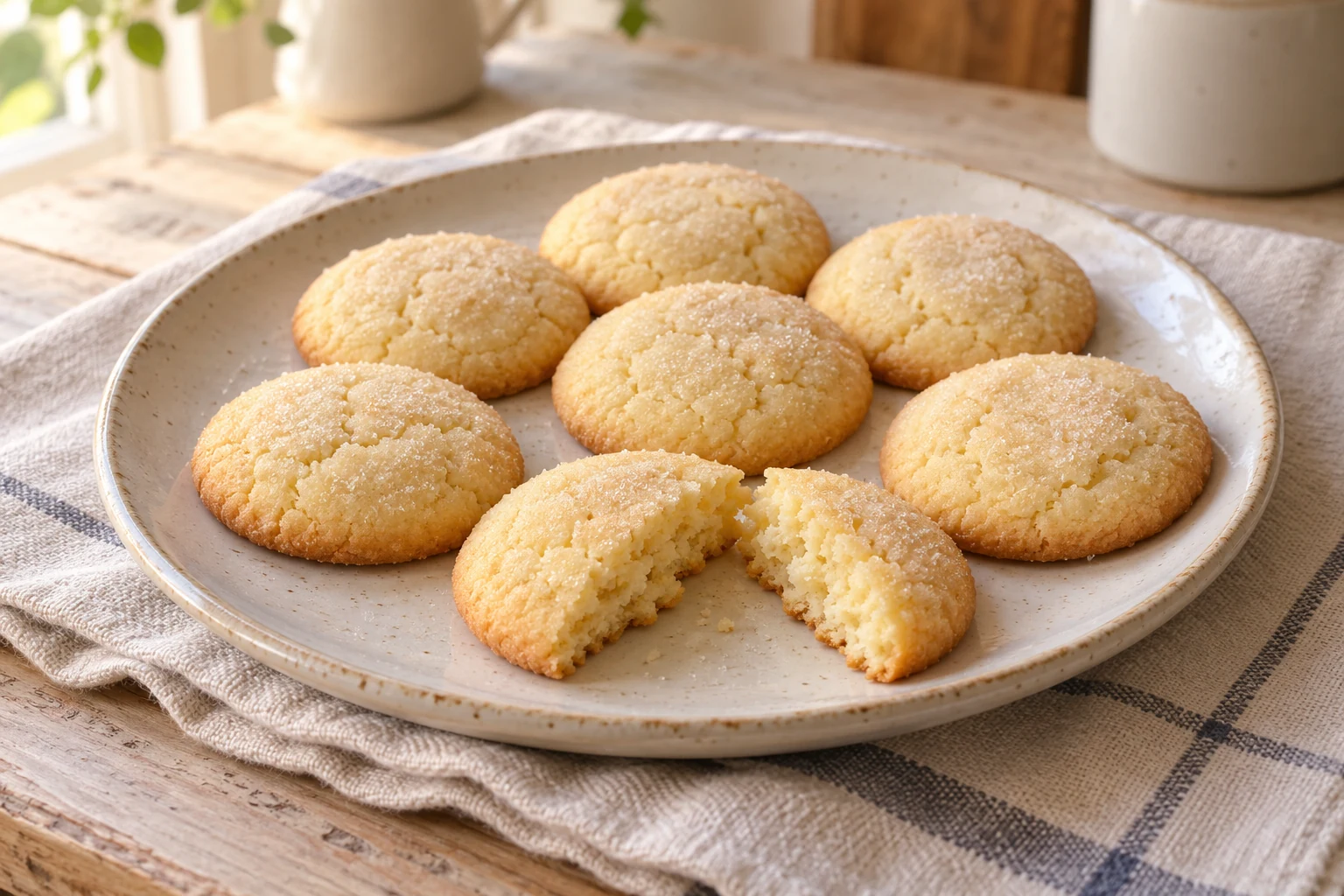
Images are recipe illustrations of the ingredients, shaping, and serving ideas. Use the written measurements and doneness checks for your own batch.
THE COMPLETE RECIPE
Small Batch Egg Yolk Sugar Cookies with Oil
- Prep time
- 15 minutes includes 10-minute rest
- Cook time
- 12 minutes estimated: 10–12 minutes
- Cooling time
- 10 minutes before serving
- Total time
- 37 minutes about 35–37 min with cooling
Ingredients
- 1 large egg yolk approximately 18 g
- 50 g granulated sugar ¼ cup
- 2 tablespoons neutral oil 30 ml; canola or sunflower oil
- 2 teaspoons milk 10 ml
- 1/2 teaspoon vanilla extract
- 75 g all-purpose flour ½ cup plus 2 tablespoons, spooned and leveled
- 1/4 teaspoon baking powder
- 1/8 teaspoon fine salt
- 1 teaspoon additional granulated sugar optional; for topping all eight cookies
Instructions
- Prepare Heat the oven to 350°F (175°C) with a rack in the center. Line a cool baking sheet with parchment. In a small bowl, stir together the flour, baking powder, and salt.
- Mix the wet ingredients In a medium bowl, whisk the egg yolk, sugar, oil, milk, and vanilla for about 45 seconds, until evenly combined and glossy with no separate ring of oil. The sugar may remain slightly grainy.
- Add the dry ingredients and rest Fold in the flour mixture with a spatula until no dry flour remains. Let the dough rest for 10 minutes. A small piece should hold together when gently pressed.
- Shape Divide into eight portions, approximately 23 g each. Round gently and arrange at least 2 inches apart. Flatten each portion to about 1¾ inches across and ⅜ inch thick. Divide the optional teaspoon of sugar over the tops.
- Bake Bake for approximately 10–12 minutes, checking at 10 minutes. Look for set edges, a surface that no longer looks wet, and light golden color around the rim or underneath. If the center still looks wet, continue baking and check again shortly.
- Cool Leave the cookies on the baking sheet for 5 minutes. Transfer carefully to a rack with a thin spatula and cool for at least another 5 minutes. Cool completely before storing.
Notes
Rate This Recipe
Made these cookies? Choose a star rating in the comment form and tell us how your batch turned out. Your pan, baking time, and any changes you tried can help the next reader.
Rate This Recipe