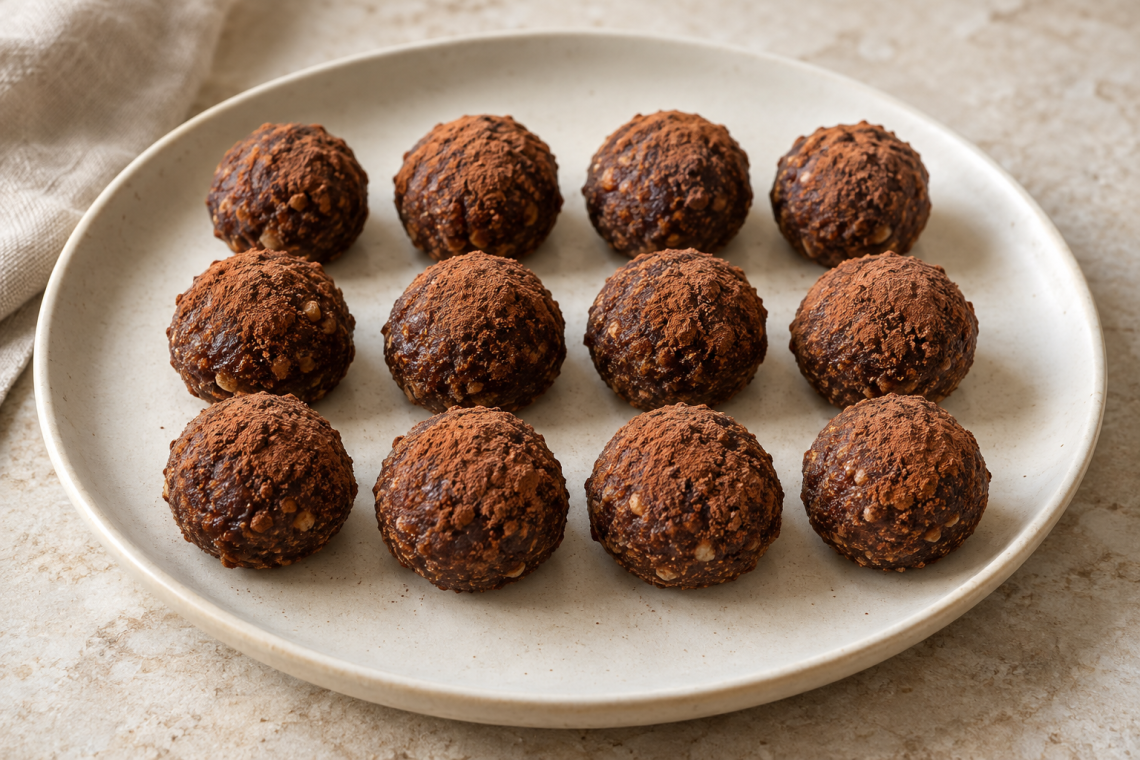
Black olive cocoa date truffles bring a small savory surprise to a familiar date-and-nut bite. Dates supply the sweetness, cocoa gives the mixture a dark finish, and a modest amount of mild black olive adds saltiness without becoming the main ingredient. The texture is dense and chewy, with a fine almond crumb.
These are not cream-filled ganache chocolates. They are small refrigerated fruit truffles, made in a food processor and rolled by hand. That distinction helps set the right expectation: you should taste dates and almonds as well as cocoa, with the olive appearing as a background note.
Choose the mild olive on purpose
Use ordinary ripe black olives packed in water or a mild brine. Intensely salty, winey Kalamata olives produce a different result. Garlic-stuffed, chili-marinated or herb-seasoned olives also bring flavors that do not belong in this particular mixture.
Rinse the olives in a small strainer, let the water drain, then blot them thoroughly on a clean towel. Measure the prepared olives after this step. Surface water makes the mixture softer, while leftover brine changes the seasoning. The target is twenty-five grams of dry-to-the-touch olive flesh.
Check for pit fragments even when the label says pitted. A quick inspection is easy before the ingredients go into the processor and much harder after they become a dark paste. Chop large olives roughly so they distribute without requiring excessive processing.
The ingredient balance in black olive cocoa date truffles
| Ingredient | Its job | What changes the result |
|---|---|---|
| Soft dates | Sweetness and the sticky binder | Dry dates can leave a crumbly mixture. |
| Roasted almonds | Body and a fine nutty texture | Overprocessing releases oil and makes a greasy paste. |
| Black olives | A restrained salty, savory note | Strong brine or excess moisture can overwhelm the small batch. |
| Cocoa | Dark flavor inside and a light coating outside | A thick dusting tastes dry and bitter. |
| Almond butter | A little richness and help with binding | Sweetened or salted versions change the balance. |
Soft Medjool dates are the easiest starting point. They should bend and flatten between your fingers. A very firm date may remain in small leathery pieces even after the rest of the mixture is ready. Use the prepared weight after removing pits rather than counting individual dates, which vary considerably in size.
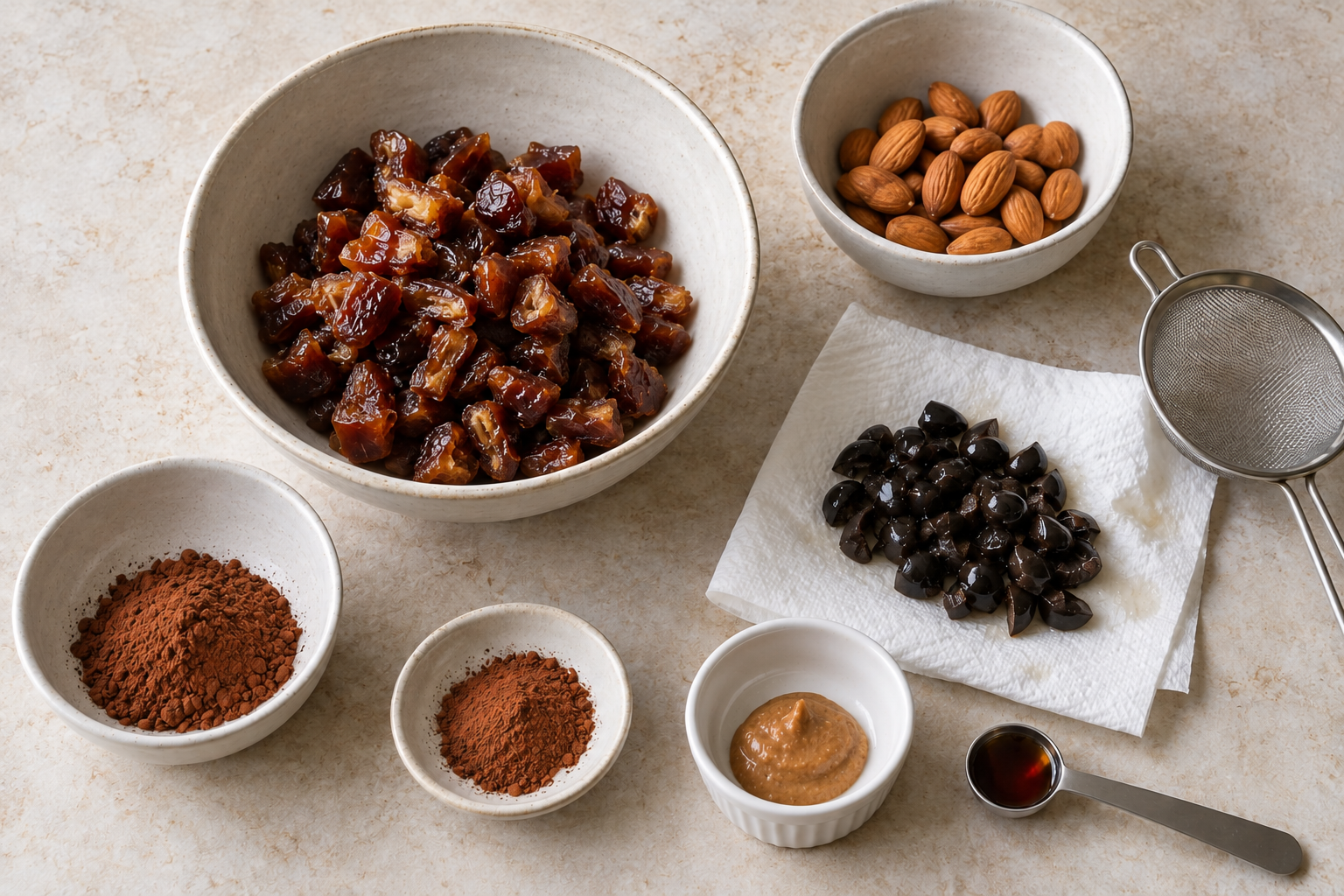
Process in two stages, then use the squeeze test
Make a fine almond meal first
Pulse the almonds by themselves. Stop when most pieces resemble coarse sand, with only tiny flecks remaining. Starting with the nuts alone gives you control over their texture; adding dates immediately can trap large almond pieces inside a sticky clump.
Do not keep the machine running until the nuts look wet or begin smearing around the bowl. At that point you are moving toward almond butter. A few visible flecks are preferable to an oily mixture.
Add the sticky ingredients in short bursts
Add the dates, prepared olives, cocoa, almond butter and vanilla. Pulse a few times, stop the machine, and scrape the sides and base. Continue in short bursts until the color is even. There should be no obvious pocket of dry cocoa or isolated olive chunk.
Squeeze a spoonful between your fingers. If it holds as one piece, the mixture is ready to portion, even if loose crumbs remain in the processor. More processing is not automatically better. If it falls apart, scrape again and give it a few more pulses before changing the ingredient balance.
Portion the whole batch before rolling
Divide the mixture into twelve equal pieces, approximately twenty grams each. A scale makes this straightforward and prevents the final truffle from becoming much smaller than the others. Arrange all the portions on a tray before shaping so you can compare them.
Roll with clean hands using gentle pressure. If the mixture is very soft, pause and refrigerate it for ten minutes rather than repeatedly adding cocoa. Extra cocoa can solve stickiness while creating a bitter, dry finish. This handling pause is additional to the final thirty-minute chilling period.
Use a light dusting of cocoa, not a thick jacket. Roll one truffle in the shallow bowl, then lift it and tap off the excess. A little powder will settle onto the tray; that is normal. Heavy loose cocoa can make the first bite seem much more bitter than the center.
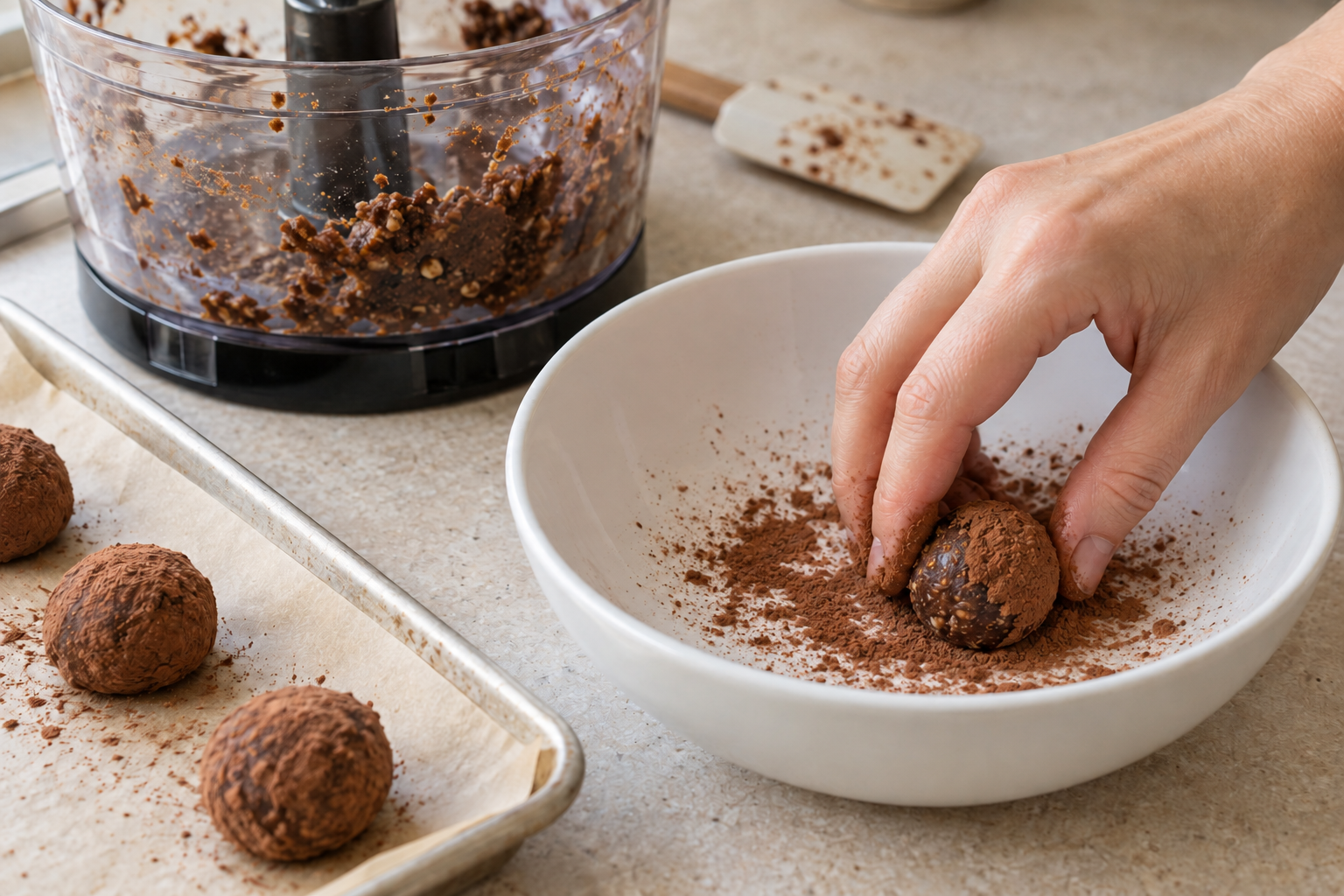
Troubleshooting before changing the flavor
- The mixture is crumbly.
- Check whether the dates were genuinely soft and whether all the almond butter was incorporated. Scrape and pulse again. Do not immediately pour in olive brine or water.
- The surface looks oily.
- The nuts may have been processed too long or the mixture may have warmed. Refrigerate it briefly and avoid further blending.
- One bite tastes sharply salty.
- An olive piece may not be distributed evenly. Check the consistency before adding more sweet ingredients.
- The coating tastes dusty.
- Shake off loose cocoa and use less on the remaining portions. The coating should support the center, not dominate it.
Serving and sensible substitutions
Serve one or two truffles with coffee or plain tea. A small plate makes it easy to keep the rest chilled. They can also sit beside fresh orange segments, but keep the juicy fruit separate so the cocoa coating stays dry.
Almonds can be replaced only with attention to texture and allergens. Walnuts make a softer, more assertive mixture; peanut butter introduces a flavor that may compete with the olive. Start with the listed ingredients if you want to judge this combination clearly.
Skipping the olives produces a conventional cocoa-date bite, but the mixture may become slightly firmer because the moisture changes. Adding a large extra handful is not recommended: the measured olive portion is intentionally small.
Four questions before making them ahead
Can I use dates straight from a dry baking-date block?
Not without checking their softness. Firm cooking dates may need soaking and careful draining, which adds time and changes moisture. Soft pitted dates are the specified starting ingredient.
Can I add a chocolate shell?
A shell would require a separate coating and chilling step. Keep the cocoa-dusted version for this method; dipping changes both the handling and the final portion size.
Do the olives make them shelf-stable?
No. The added moist ingredient means these should be treated as a refrigerated prepared dessert. Their small size does not remove the need for cold storage.
How long should they stay in the refrigerator?
Keep them covered at 40°F or below and use within three days. Follow USDA leftover handling guidance: refrigerate promptly and limit time at room temperature to two hours, or one hour above 90°F.
The useful balance in black olive cocoa date truffles comes from a small amount of olive, evenly mixed dates and a thin cocoa finish. Make the portions modest so the savory note stays interesting through the last bite.
A practical guide to texture before you roll
These truffles depend on a mixture that holds under light pressure. It does not have to form a perfectly smooth ball around the food-processor blade. Waiting for that visual cue can mean processing well beyond the point when the ingredients have combined, especially with soft dates and oily nuts.
Make the date check before adding anything else
Open each date and look for pit fragments, even when the package says pitted. Press a piece between your fingers. It should flatten without a hard leathery center. Weigh the usable flesh after this check so the batch contains the stated amount of fruit rather than fruit plus discarded pits.
If the dates are too dry, the simplest way to keep this recipe’s moisture predictable is to use softer dates. Soaking can soften a dry batch, but the absorbed water changes the mixture. If you do soak them, drain and blot carefully, allow for extra preparation time, and assess the squeeze test before adding any further liquid.
Use the processor bowl as a mixing tool
Begin with the almonds alone so their size is reasonably even before sticky fruit enters the bowl. Stop the motor to inspect the meal. Some fine flecks are welcome; large hard chunks can make the finished bite unpleasant. Do not put fingers or a spatula near a moving blade.
After adding the other ingredients, use short bursts and scrape both the wall and the area around the blade while the machine is off. A dark paste stuck on one side and pale nut meal on the other means the mixture needs redistribution, not necessarily a long continuous run. Work within your processor’s recommended capacity.
Diagnose a sample before correcting the whole batch
- It holds when squeezed but looks crumbly in the bowl.
Portion it. Pressure from rolling can bring those crumbs together, and more processing may only warm the nuts.
- It feels slick or leaves a greasy smear.
Stop processing and chill briefly. Check whether the nuts were ground too far or the almond butter was measured from an oily, unstirred jar.
- It feels wet and sticks heavily to clean fingers.
Review the olive drying step and any water used to soften dates. Give the mixture its short handling chill before changing the dry ingredients.
- It breaks apart after squeezing.
Look for dry date pieces or unmixed nut meal. Scrape and pulse again before deciding the formula needs an adjustment.
Do not use olive brine as a quick binding liquid. It adds both moisture and an unpredictable amount of salt. Similarly, spooning in all the dusting cocoa may make a sticky mixture easier to handle but can leave the finished truffles much drier and more bitter than intended.
Portion without leaving the last piece undersized
Scrape the finished mixture into a bowl and divide its actual weight by twelve. The approximate twenty-gram target accounts for a modest amount of mixture left behind in the processor, but using your actual yield is more consistent. Portion all twelve pieces before rolling, then move small amounts between them if necessary.
If you do not have a scale, divide the mixture into three roughly equal groups, then divide each group into four. Compare the portions on the tray before shaping them. Use gentle pressure and a brief roll rather than repeatedly working each piece until warm.
Dust, chill and pack with care
Place the dusting cocoa in a separate shallow bowl. Coat one piece lightly and tap off loose powder before continuing. The finished coating should be a thin layer, with no heap of dry cocoa left underneath each truffle. A small amount remaining in the dusting bowl is expected.
Chill the pieces in a single layer, then put them in a covered container with parchment between layers if needed. Keep the container refrigerated and take out only the portion being served. For transport, use an insulated bag with a cold pack and keep the truffles chilled; a decorative box by itself does not provide refrigeration.
Label the container with the preparation date and the presence of almonds. If serving to someone with an allergy, retain the ingredient labels rather than relying on the finished dessert’s appearance. Cocoa hides the individual ingredients, so a clear description is useful even for guests without dietary restrictions.
More FAQs about black olive cocoa date truffles
Can I make them in a blender?
A processor is the specified tool for this thick mixture. Some blenders need more liquid than the recipe provides and may leave a paste around stationary blades. Do not add water just to make an unsuitable appliance run; use equipment designed for processing a dense fruit-and-nut mixture.
Can I use green olives?
Green olives vary widely in firmness, bitterness, and brine. They are not an equivalent substitution for the mild ripe black olives described here. If you experiment, use a separate small batch rather than changing the whole recipe after the dates and cocoa are already mixed.
Can I use sweetened cocoa drink powder?
No direct swap is provided. Drinking chocolate can contain sugar, milk powder, and other ingredients that change the sweetness and binding. Use unsweetened cocoa for both the mixture and light coating, and keep their measured amounts separate.
Black olive cocoa date truffles should remain small, chewy, and clearly refrigerated. A restrained olive measure and an even mixture give the unusual pairing its best chance to work without turning the dessert into a salty mouthful.
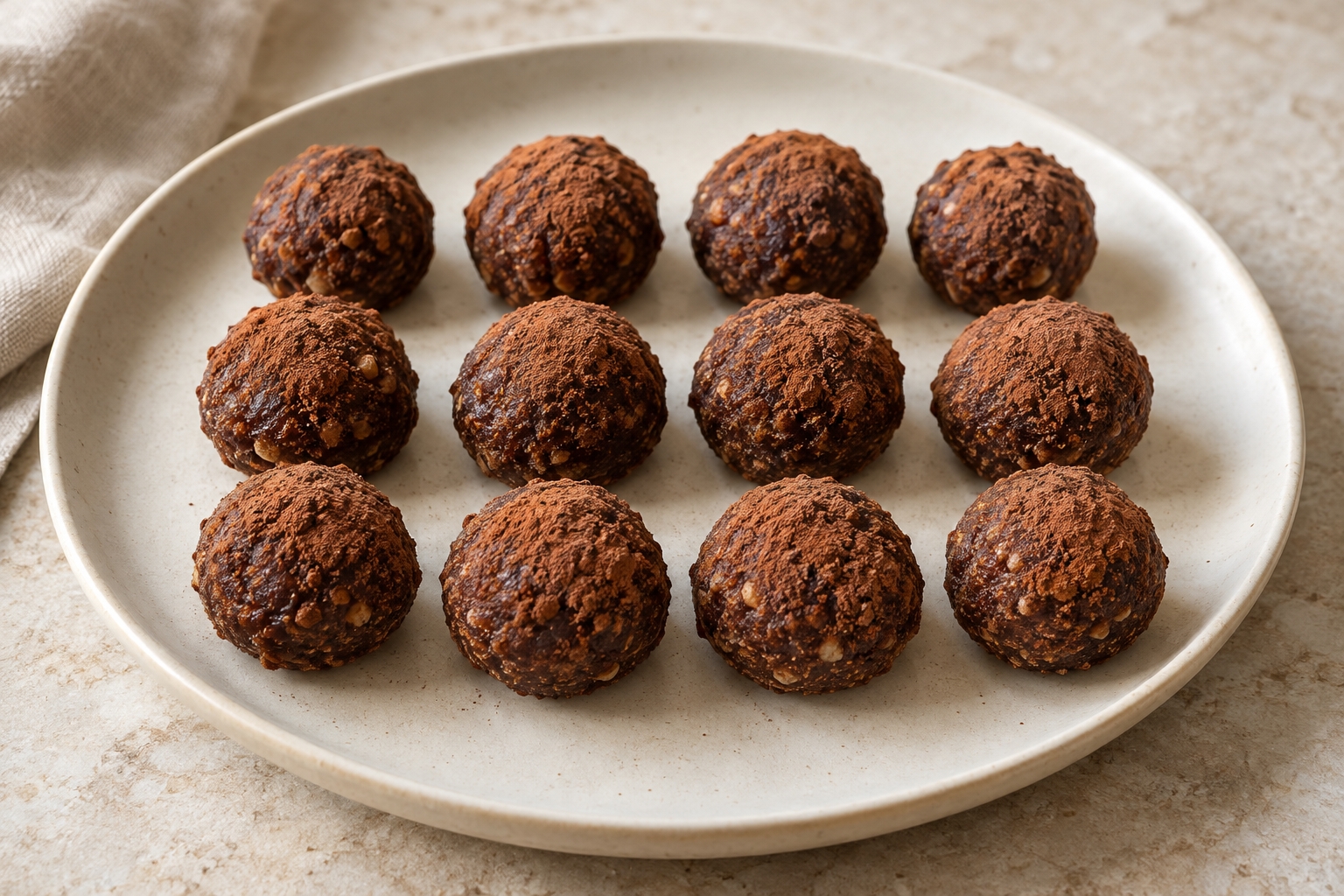
Black Olive Cocoa Date Truffles
Ingredients
Equipment
Method
- Rinse the pitted olives in a strainer, drain and blot them thoroughly dry. Weigh 25 g after blotting. Chop the dates and check for remaining pit fragments.
- Pulse the roasted almonds in a food processor until they form a fine meal with a few tiny flecks. Stop before they turn into almond butter.
- Add the dates, olives, 2 tablespoons cocoa, almond butter and vanilla. Pulse, scrape down the bowl, then process in short bursts until evenly mixed and a squeezed spoonful holds together. Avoid prolonged processing that makes the mixture oily.
- Divide the whole mixture into 12 equal portions, about 20 g each. Roll each portion between clean hands into a compact ball. If too soft to handle, chill for 10 minutes before rolling; this is additional to the planned finishing chill.
- Put the dusting cocoa in a shallow bowl. Roll each truffle lightly in it, then shake off loose powder. Arrange on a parchment-lined tray and refrigerate for at least 30 minutes, until firm enough to pick up cleanly.
- Serve chilled or let only the portion being served stand for about 5 minutes. Keep the remaining truffles refrigerated.