Skillet + oven · A family dinner
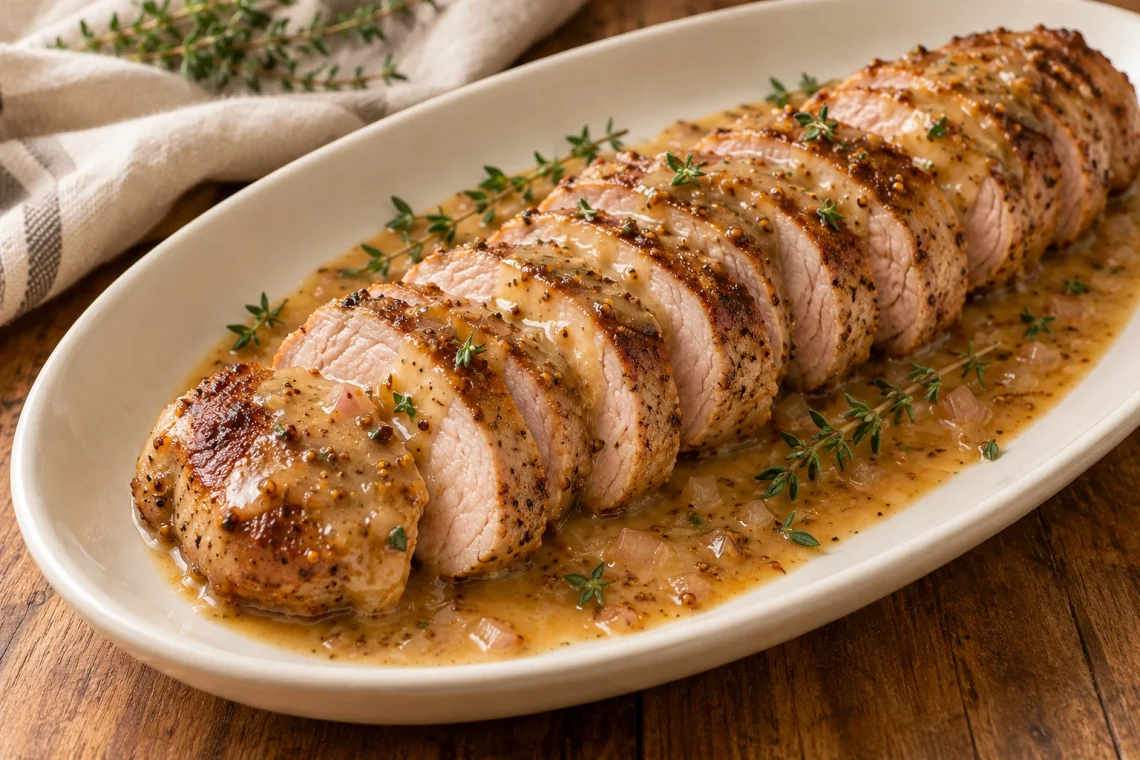
Pork Tenderloin with Maple Mustard Sauce
A golden sear, a bright pan sauce, and a calmer path to dinner.
- Total time
- About 45 min
- At the table
- 4 servings
- Oven
- 400°F / 200°C
- Flavor
- Sweet + tangy
A good pan sauce makes a simple dinner feel considered. This pork tenderloin with maple mustard sauce pairs browned, thinly sliced pork with a glossy sauce that tastes sweet at first, then pleasantly sharp. Two mustards give it body and texture; cider vinegar keeps the maple from taking over.
The pork cooks first, and the sauce comes together while it rests. That sequence leaves room to adjust the seasoning without overcooking the meat. Read the three checkpoints below, gather a thermometer and an oven-safe skillet, then follow the cooking notes or jump to the printable recipe.
Three checkpoints before you start
01 · Buy the slender cut
Choose one plain pork tenderloin weighing about 1¼ pounds. Tenderloin is a lean cut, commonly sold between ¾ and 1½ pounds. A thicker pork loin roast needs different cooking times. Check the package carefully, especially when two tenderloins are packed together.3
02 · Keep the pan brown, not black
The brown deposits left after searing become the base of the sauce. Watch the heat, particularly with a heavy skillet. If those deposits turn black and smell scorched, use a clean pan for the sauce. More syrup cannot repair a burned flavor.
03 · Let the thermometer decide
Cook the thickest part to at least 145°F before removing the pork from the heat, then rest for at least 3 minutes. Plan on 5–8 minutes of resting while you finish the sauce. The clock tells you when to check, not when dinner is safe.1
What each ingredient brings to dinner
The full quantities are in the recipe card. Here is what to look for when choosing the sauce ingredients.
| Ingredient | Its job | Practical choice |
|---|---|---|
| Pure maple syrup | Sweetness and maple flavor | Use pure maple syrup; pancake syrup changes the flavor and sweetness. |
| Dijon mustard | Sharpness and a smooth base | Start with the measured amount, then taste the finished sauce. |
| Whole-grain mustard | Small bursts of texture | Keep it alongside Dijon, rather than replacing all the smooth mustard. |
| Unsalted broth | Loosens the pan deposits and carries the sauce | Unsalted broth leaves room for the salt already in the mustard. |
| Cider vinegar | Balances the sweetness | Measure it; a generous splash can overwhelm this small batch. |
| Shallot, garlic and thyme | A savory background | Chop finely so the shallot softens during the pork’s rest. |
| Optional butter | A softer finish and extra gloss | Whisk it in after taking the sauce off the heat. |
A clear method for pork tenderloin with maple mustard sauce
1. Set up before the skillet gets hot
Heat the oven to 400°F (200°C). Use a heavy, oven-safe skillet large enough to hold the tenderloin without bending it sharply. Check that the handle is oven-safe too. Measure the sauce ingredients, mince the shallot and garlic, and set out a clean board for the cooked meat.
Trim the shiny silver membrane from the pork. Slip a knife just underneath it, hold the loosened end, and angle the blade slightly toward the membrane as you cut. Pat the meat dry and season with the fine salt and pepper. Leave the syrup and mustard off the meat at this stage.
2. Build a browned exterior
Heat the tablespoon of oil over medium-high heat until shimmering. Add the pork carefully and let the first broad side brown before turning. Rotate with tongs, giving the remaining surfaces time against the pan. Allow about 6–8 minutes total.
If the oil smokes heavily or the deposits darken quickly, lower the heat. A good sear adds flavor; it does not mean the center is cooked. Avoid pressing down on the tenderloin or repeatedly moving it around.
3. Roast, then check the center
Transfer the skillet to the oven. Begin checking after 12 minutes; about 15–22 minutes after searing is a useful estimate for this size, but thickness and pan heat can change that window. Insert the thermometer into the thickest section, with its sensing tip in the center.
Continue roasting until it reads at least 145°F. Move the pork to the clean board and cover loosely. Rest at least 3 minutes before slicing; usually 5–8 minutes works well while the sauce cooks.1 Remember that the skillet handle stays dangerously hot after leaving the oven.
4. Soften the aromatics gently
Set the skillet over medium-low heat, allowing its fierce oven heat to settle first. Leave about 1 teaspoon fat in the pan; add the extra teaspoon of oil if the surface is dry. Cook the minced shallot for 2–3 minutes, stirring, until softened. Add the garlic and stir for about 30 seconds.
5. Make a sauce you can taste and adjust
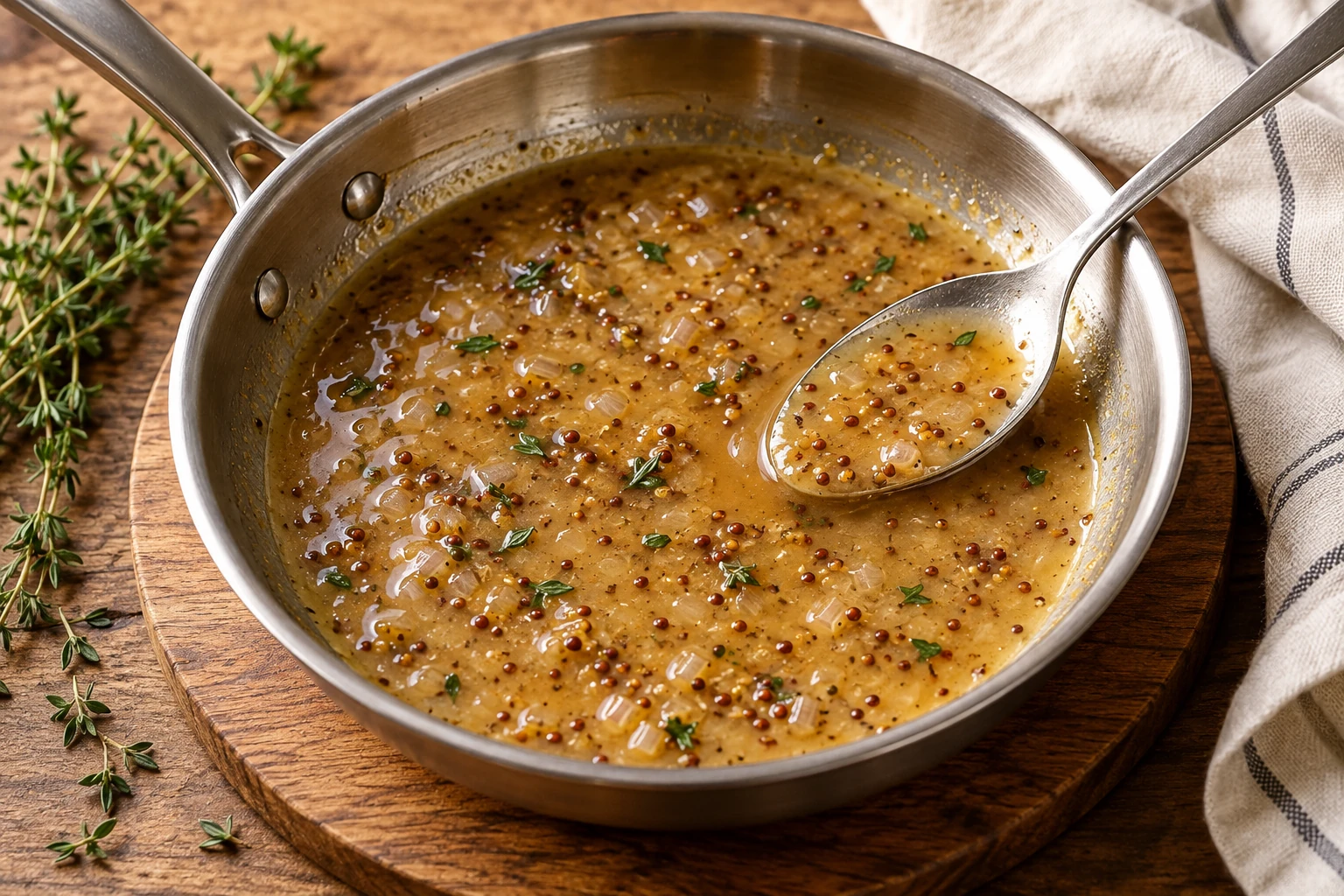
Pour in the broth and scrape up the brown deposits with a wooden spoon. Whisk in the maple syrup, both mustards, vinegar and thyme. Simmer gently for 3–5 minutes, stirring, until the sauce lightly coats a spoon. Reduce the heat if it bubbles aggressively or catches at the edges.
Take the pan off the heat and whisk in the optional butter. Stir in the juices collected beneath the resting pork, then taste. Expect a spoonable sauce, not a thick gravy. The yield is roughly ⅔–¾ cup, depending on how much liquid evaporates.
6. Slice and finish at the table
Cut across the tenderloin into slices about ½ inch thick. Arrange them on a warm platter or divide among four plates. Spoon a little sauce over the top and offer the remainder separately. Keeping some sauce at the table lets everyone choose their balance of pork and mustard.
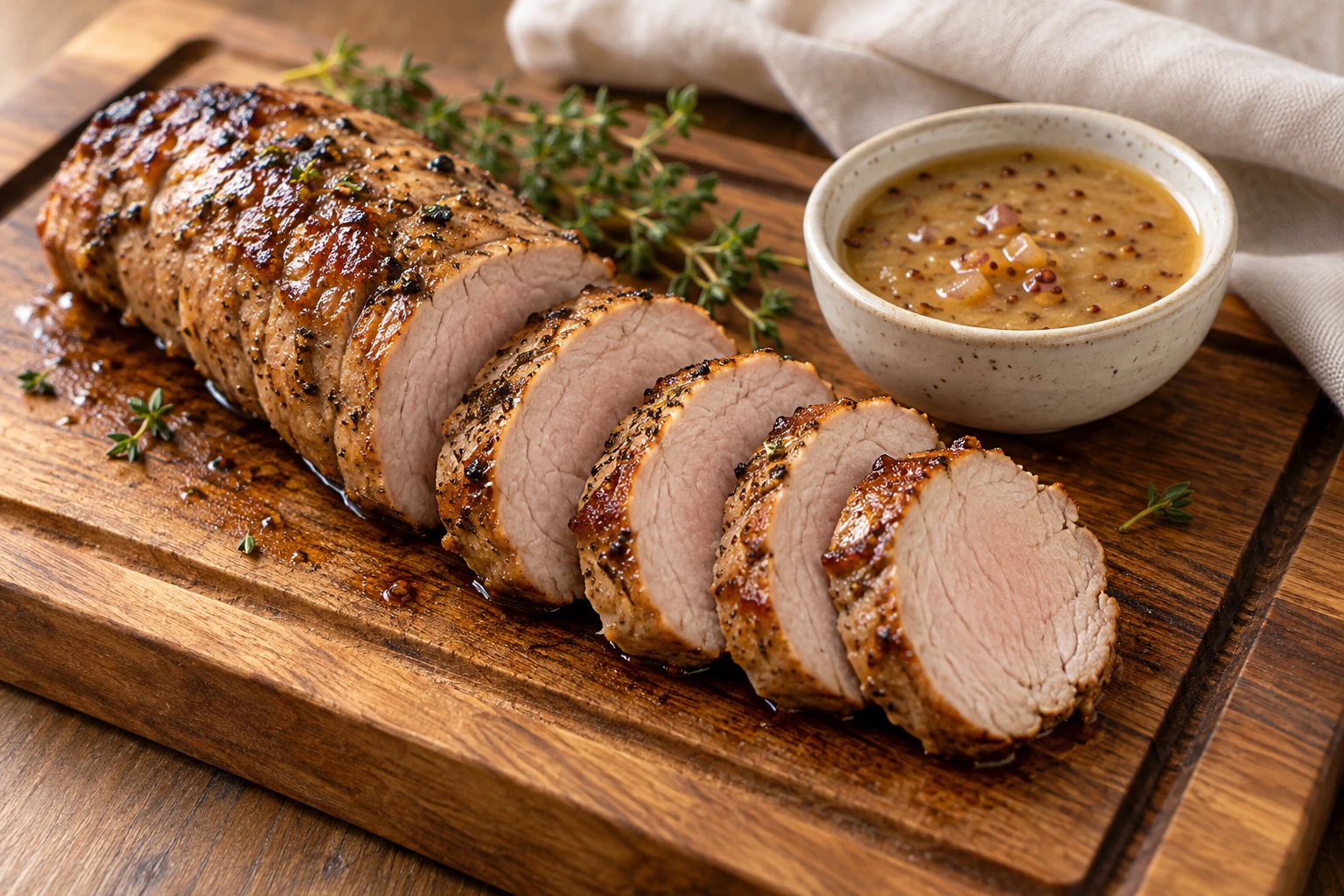
The last spoonful: adjust before serving
Taste the sauce with a small piece of cooked pork. Mustard brands vary, and a sauce that seems strong by itself may taste balanced with the meat.
| What you notice | What to do |
|---|---|
| Too thick or sticky | Whisk in warm broth or water, 1 tablespoon at a time. |
| Too thin | Simmer briefly without the pork, checking often. Stop when it lightly coats a spoon. |
| Too sweet | Add cider vinegar ½ teaspoon at a time, tasting between additions. |
| Too sharp | Add maple syrup ½ teaspoon at a time, or try the optional butter. |
| Too salty | Add unsalted broth and serve a lighter coating. Reducing it further will concentrate the salt. |
A dinner plan that uses the waiting time
Budget about 45 minutes, typically 40–50, including roughly 10 minutes of preparation, 25 minutes of searing and roasting, and 10 minutes for resting and sauce work. The sauce happens during the rest; those are overlapping jobs.
- Before searing: Start potatoes or rice if you are serving them. Chop any vegetables and measure the sauce.
- While the pork roasts: Steam green beans, toss a salad or finish a quick cabbage sauté. Keep the thermometer nearby.
- While it rests: Make the sauce, drain or season the sides, and warm the serving platter.
Choose one mild side to catch the sauce and one fresh or green side for contrast. Mashed potatoes and green beans make a comforting plate. Rice and sautéed cabbage keep dinner straightforward; our guide to choosing and cooking rice helps you plan the side dish. For an autumn meal, serve roasted squash with a crisp apple-and-cabbage salad, keeping the salad dressing sharp rather than sweet.
Four ways to make the sauce your own
Once you know the basic method, pork tenderloin with maple mustard sauce is easy to personalize. Change one element at a time so you can judge its effect.
- A little heat: Add a pinch of cayenne or crushed red pepper to the sauce, then taste before adding more.
- Rosemary instead of thyme: Use ½ teaspoon finely chopped fresh rosemary. Its stronger flavor benefits from a lighter hand.
- A smooth mustard finish: Replace the tablespoon of whole-grain mustard with another tablespoon of Dijon. Taste before adding extra vinegar.
- A dairy-free version: Omit the finishing butter and check the broth and mustard labels if you are avoiding specific ingredients.
Cooking for more people? Double the ingredients and use two similar tenderloins. Sear in batches if necessary, then roast with space between them. Check each piece independently and remove each when ready. Doubling the meat does not mean doubling the oven time. Reduce a larger sauce batch by appearance rather than forcing it into the smaller batch’s timing.
Prepare ahead, then handle leftovers well
Trim the pork and measure the ingredients earlier in the day, keeping the raw meat covered and refrigerated separately from ready-to-eat foods. Mix the broth, syrup, mustards and vinegar in a covered container; refrigerate until cooking. The fresh sauce still starts with shallot and garlic in the skillet.
Refrigerate leftovers in shallow covered containers within 2 hours of cooking, or within 1 hour when the surroundings exceed 90°F. Keep the refrigerator at 40°F or below and use the pork within 3–4 days. Freeze promptly if you need longer storage.2
Reheat a portion with a little broth in a covered pan or microwave-safe dish. Check that the meat reaches 165°F; heat gently enough to avoid boiling the slices in sauce for longer than necessary.1
Questions before dinner
Can I use pork loin instead?
The sauce works with other cuts, but this cooking schedule is for tenderloin. A thicker loin roast needs its own roasting plan. Do not use the short tenderloin timing for a large roast.
Do I need to marinate the pork?
No marinade is needed for this method. Salt and pepper season the meat, browning builds flavor, and the sauce supplies the maple and mustard. Preparing everything first is more useful than adding a last-minute marinade.
Can the pork still look slightly pink?
Judge doneness with a thermometer, not color. The required checkpoint is at least 145°F before removal from heat, followed by a minimum 3-minute rest.1
Can I use yellow mustard?
It will make a different sauce, with a more familiar yellow-mustard flavor. If that is what you have, start with less, taste, and add gradually. Avoid replacing both mustards automatically with the full combined amount.
Why did the sauce become sticky?
Too much water probably evaporated. Take the pan off the heat and whisk in warm broth a tablespoon at a time. Keep the pork out while adjusting so that fixing the sauce does not overcook the meat.
Choose, trim and portion pork tenderloin with maple mustard sauce
The weight on the package is useful for planning servings, but thickness is what helps you choose where to check the meat. A narrow tail can cook sooner than the thick middle. Compare the shape of two pieces if your package contains more than one tenderloin; each one needs its own temperature check.
Trim with the blade pointed away from the meat
The shiny silver membrane is different from soft surface fat. Lift one loose end, slide a sharp knife just underneath, and angle the cutting edge slightly toward the membrane as you move along it. Work in short controlled cuts. The aim is to remove the tough strip while leaving as much meat as possible intact.
Put the trimmed pork on a clean working surface and pat it dry. Wash the knife, board, and any utensils that contacted raw meat before using them for the finished tenderloin. Set aside a separate clean board for the resting stage so you do not need to solve that problem while holding a hot skillet.
Keep the sauce job separate from the temperature job
Measure the broth, maple syrup, mustards, and vinegar before searing. Finely mince the shallot so it can soften during the pork’s rest. If the roast takes longer than expected, leave those sauce ingredients ready rather than beginning to reduce them in another pan and changing the sauce concentration.
Once the thickest part reaches at least 145°F, move the pork to its clean board and begin the required rest of at least three minutes. Usually the sauce work occupies five to eight minutes. The hot skillet handle needs an oven mitt even after the pan returns to the stovetop.
Slice for four balanced servings
After resting, cut across the tenderloin into approximately half-inch medallions using smooth strokes. Divide the narrow end pieces among the plates rather than giving one person only small slices. A warm platter helps the pork stay pleasant while you spoon the sauce, but it does not replace safe holding or prompt refrigeration.
Keep some sauce in a small jug and cover only part of the browned surface. If the sauce has tightened while waiting, loosen it with a little warm unsalted broth before serving. Do not simmer the sliced pork again merely to make the sauce flow.
FAQ: Can I use a pre-marinated tenderloin?
A pre-seasoned product may contain salt and sugar that change both seasoning and browning. Follow its package guidance and do not automatically add all the recipe’s salt. The plain tenderloin specified here gives more control over the separate maple-mustard sauce.
FAQ: Why is my sauce oily around the edge?
Check whether too much searing fat remained in the skillet or the finishing butter was added over high heat. The recipe leaves about a teaspoon of fat for the shallot and adds optional butter off the heat. Whisk gently and assess a small spoonful before adding more butter or reducing further.
Bring the platter to the table
The pleasure of pork tenderloin with maple mustard sauce is in the contrast: a browned edge, tender slices and a spoonful of bright, savory sweetness. Keep the thermometer close, give the pork its rest, and taste the sauce before serving. A simple side and something green are all the plate needs.
Sources and further reading
Food-safety guidance was checked against the government resources below. The recipe publications provided comparison reading on maple, mustard and searing methods;4, 5, 6 this article’s composition, quantities and dinner guidance are original.
Made this recipe? Leave a star rating and share how it turned out.
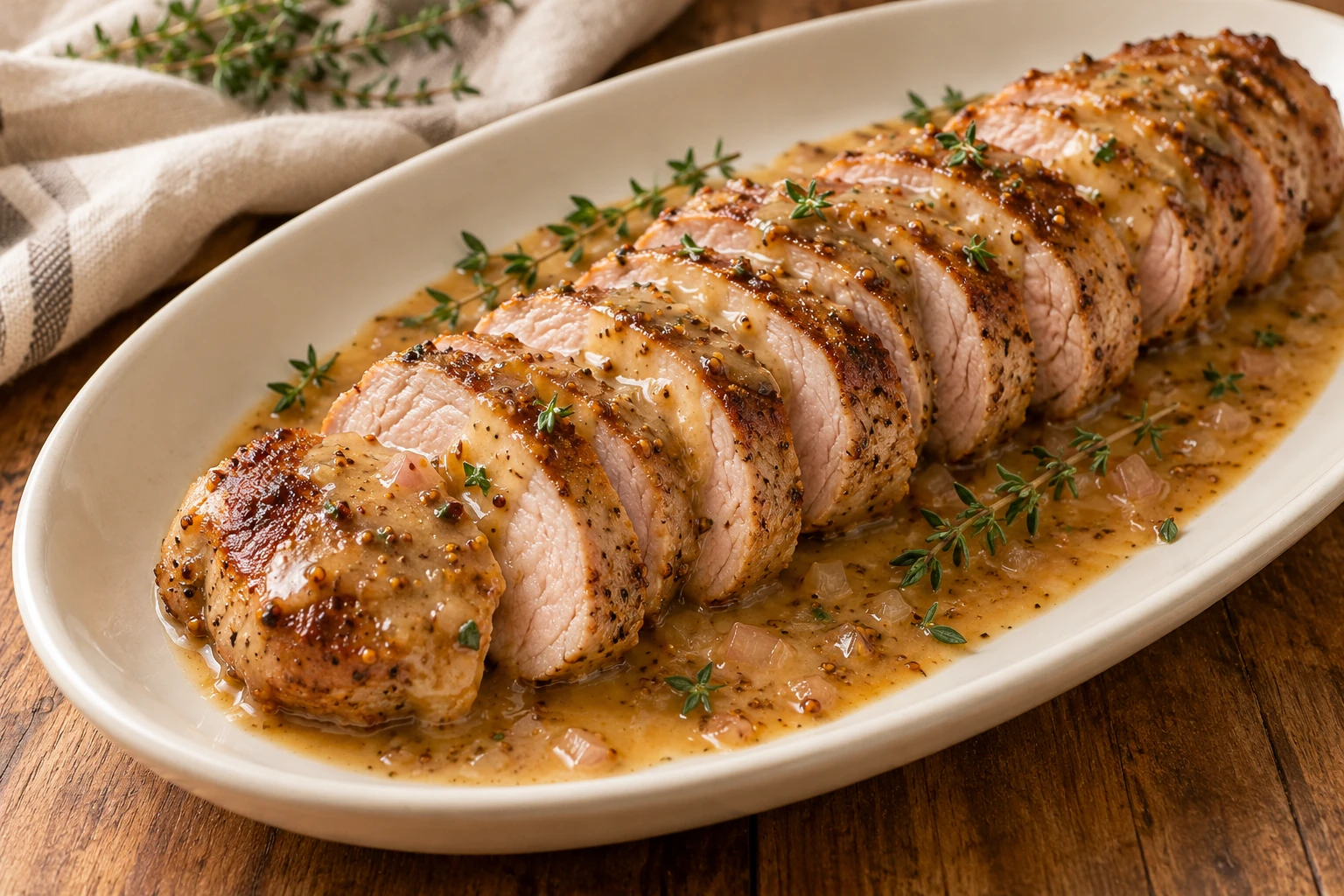
Pork Tenderloin with Maple Mustard Sauce
Ingredients
Equipment
Method
- Heat oven to 400°F (200°C). Trim silver skin, pat pork dry, and season with salt and pepper. Measure sauce ingredients.
- Heat 1 tablespoon oil in an oven-safe skillet over medium-high heat. Brown pork on all sides, 6–8 minutes total, reducing heat if deposits start to burn.
- Transfer skillet to oven. Start checking at 12 minutes; 15–22 minutes is an estimate. Cook to at least 145°F in the thickest part before removing. Transfer to a clean board. Rest at least 3 minutes, usually 5–8, while making sauce. Handle the hot skillet carefully.
- Let skillet heat settle. Leave about 1 teaspoon fat; add extra oil if dry. Over medium-low heat, soften shallot 2–3 minutes. Stir in garlic for 30 seconds.
- Add broth and scrape up brown deposits. Whisk in syrup, mustards, vinegar and thyme. Simmer gently 3–5 minutes until lightly coating a spoon.
- Off heat, whisk in optional butter and pork’s resting juices. Thin with broth if needed. Slice pork across into ½-inch pieces and serve with sauce.