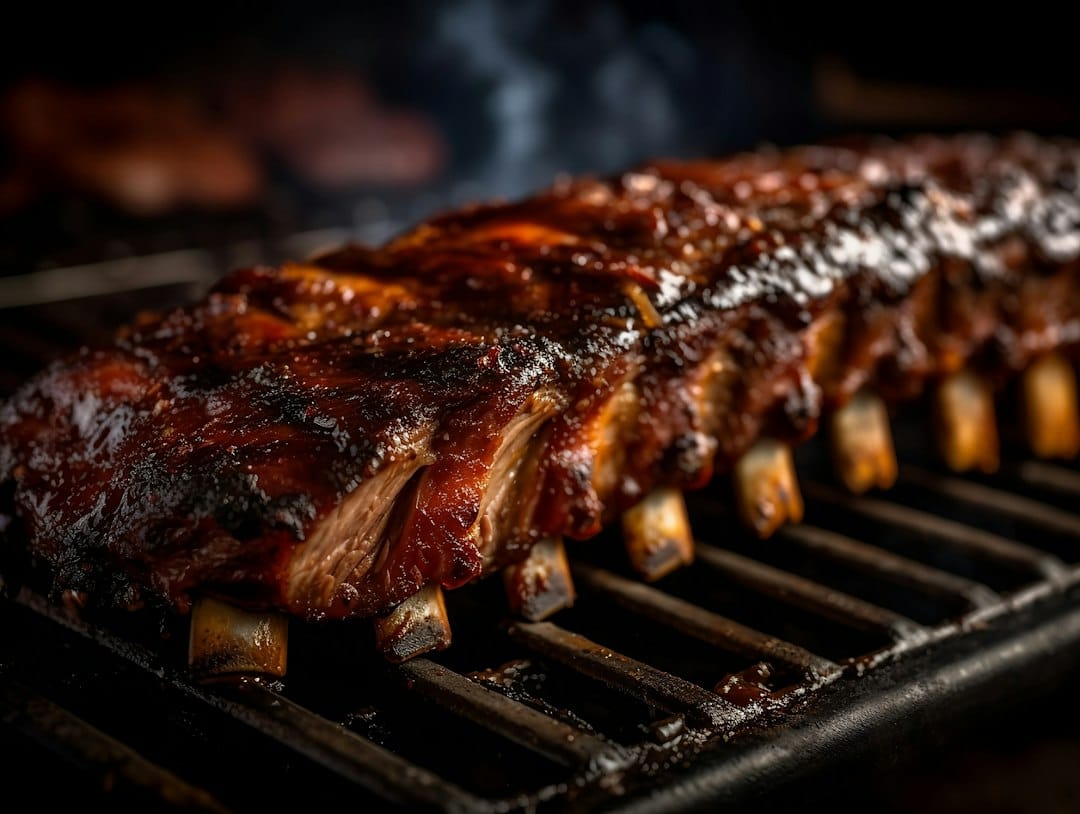
This sweet sauce for ribs is a rich, molasses-forward glaze made with ketchup, dark brown sugar, honey, and molasses. Use a thin coating at the end of cooking and keep extra sauce on the side. The formula is intentionally sweet; added vinegar changes the balance but does not remove its sugar.
About 2½–3 cups · 5 minutes prep · 15–20 minutes simmering
The sweet sauce formula
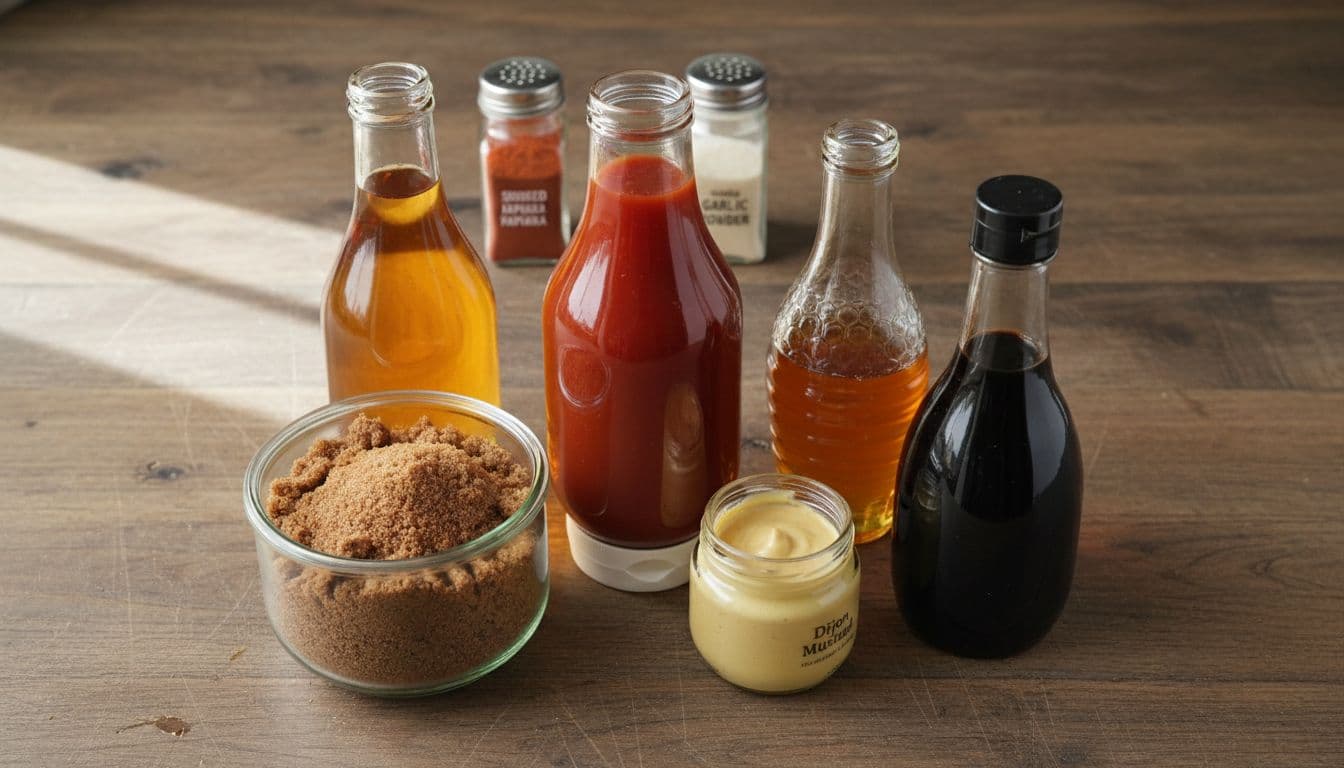
- 1½ cups ketchup
- 1 tablespoon apple cider vinegar
- ¾ cup packed dark brown sugar
- 2 tablespoons honey
- ¼ cup molasses
- 1 tablespoon Worcestershire sauce
- 1 teaspoon Dijon mustard
- ½ teaspoon smoked paprika
- ½ teaspoon garlic powder
- ¼ cup water
- ½ teaspoon salt, or less to taste
- ¼ teaspoon black pepper
This makes about 2½–3 cups after simmering. Start with less than the listed salt if the ketchup or Worcestershire is salty, and taste before adding the rest. Yellow mustard can replace Dijon; white vinegar gives a sharper flavor than cider vinegar.
Cook until glossy, then check a cooled sample
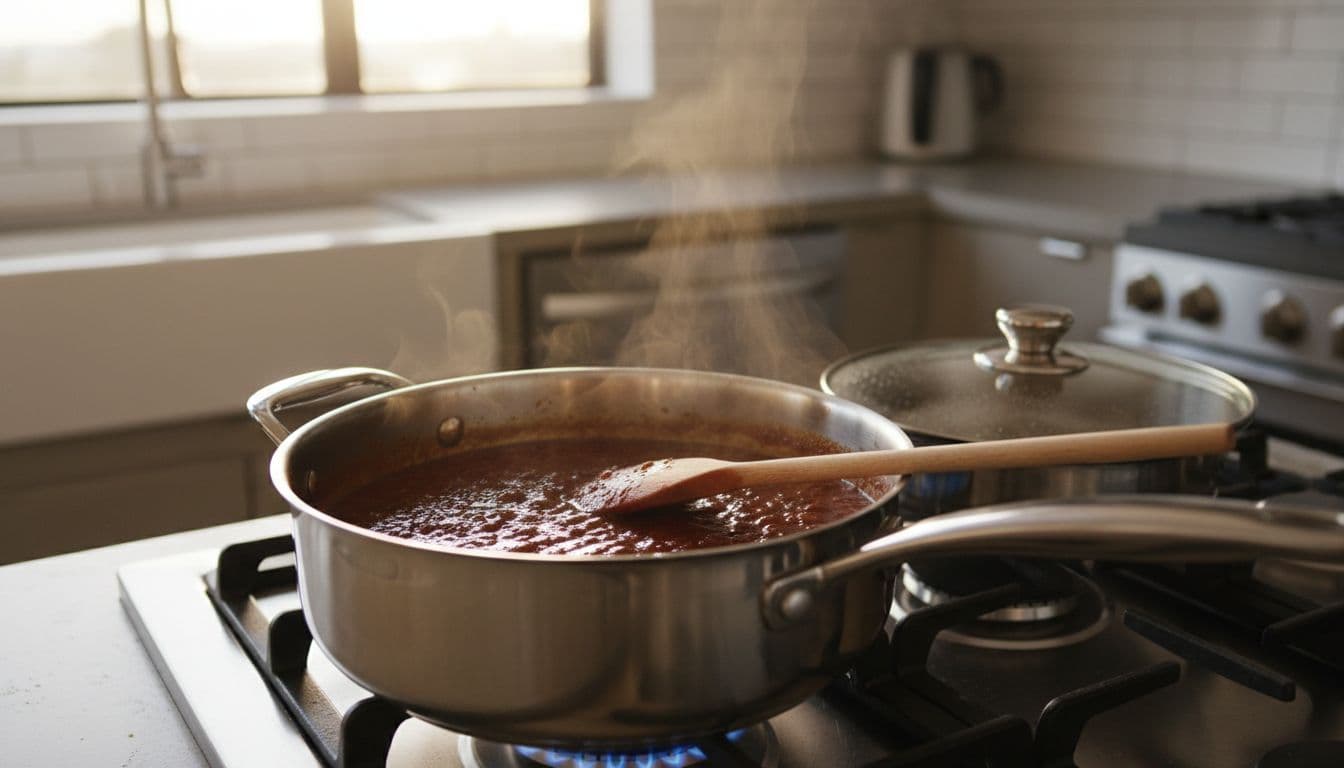
- Whisk all ingredients in a small heavy-bottomed saucepan. Bring to a gentle boil over medium heat.
- Lower the heat and simmer for 15–20 minutes, stirring and scraping the bottom frequently. Avoid a hard boil while reducing the freshly made sauce.
- Cool a teaspoon on a clean saucer before tasting. The sauce should cling to a spoon and still spread easily with a brush.
- Stop simmering while slightly looser than you want; it thickens as it cools. Whisk in water 1 tablespoon at a time if it becomes stiff.
Divide the batch before you glaze
| Container | Purpose | Keep it clean |
|---|---|---|
| Small basting bowl | Only the sauce needed at the cooker | Do not return used sauce to the main batch. |
| Serving bowl | Extra sauce for fully cooked ribs | Use a clean spoon, not the brush. |
| Storage container | Untouched remainder | Refrigerate promptly and label the date. |
About ½ cup is a manageable starting amount for a basting bowl, not a fixed requirement for every rack. Refill with a clean spoon only as needed. This sweet sauce for ribs usually works best in two thin coats rather than one heavy layer.
Build a glaze without burning the sugar
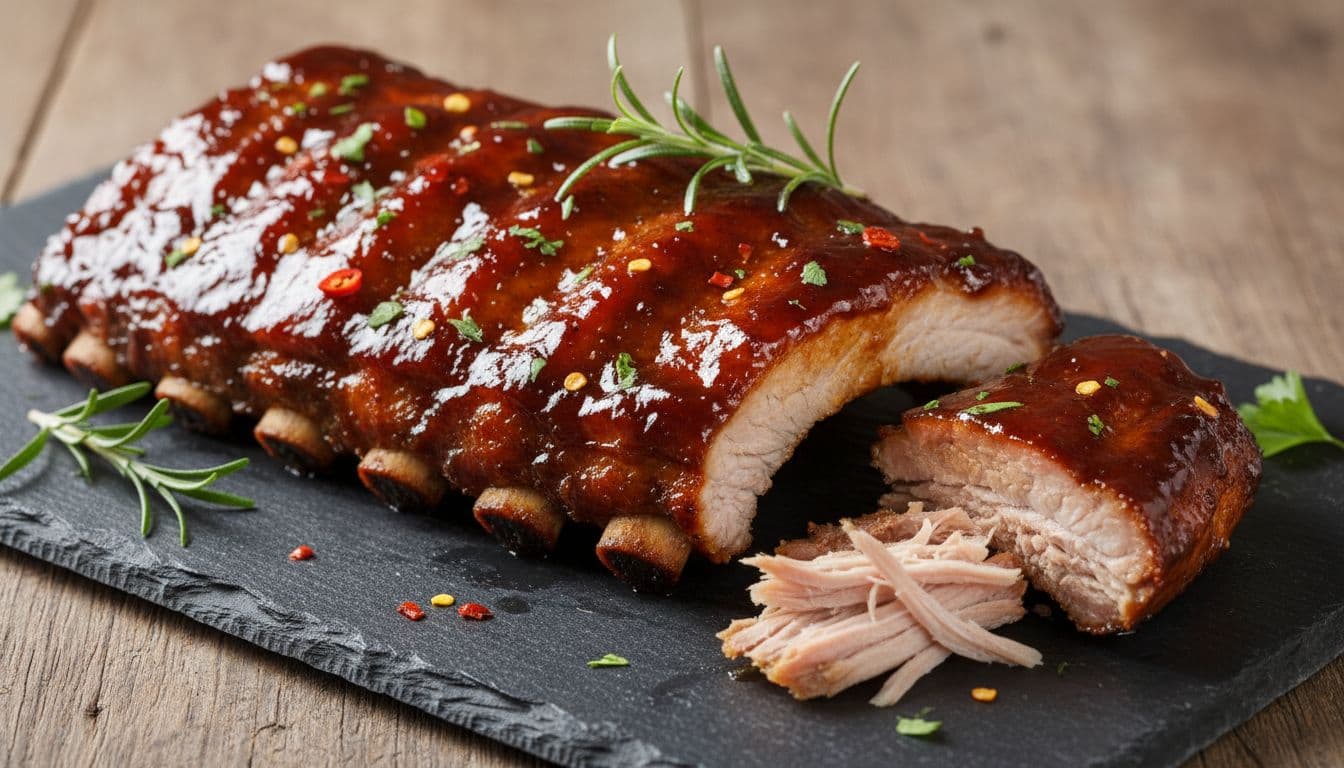
Cook the meat separately until it meets the safety minimum and is nearly tender. Whole pork needs 145°F followed by a 3-minute rest; ribs usually require longer for barbecue texture. Read our rib doneness guide or baby back ribs temperature guide before saucing.
- Brush a thin first coat onto nearly tender ribs during the final stretch of cooking. At moderate oven or smoker heat, the original recipe’s planning window is the last 10–15 minutes.
- Let the coating become tacky before adding another light layer. Do not keep cooking the ribs just to correct sauce that was too thin in the saucepan.
- On a grill, avoid direct flame and move the rack if the glaze darkens quickly. Under a broiler, use a broiler-safe pan and watch continuously from the start.
- Remove before black patches or an acrid smell develop. Finish at the table with the reserved clean sauce.
Adjust flavor in a small portion first
| Goal | Small change |
|---|---|
| Less sweet on the palate | Add a few drops of vinegar or a little mustard to a sample. This does not lower the sugar already present. |
| Sweet heat | Start with ⅛ teaspoon cayenne or 1 teaspoon minced chipotle in the full batch. |
| More savory | Add Worcestershire ¼ teaspoon at a time, then check saltiness. |
| Looser consistency | Add water 1 tablespoon at a time. |
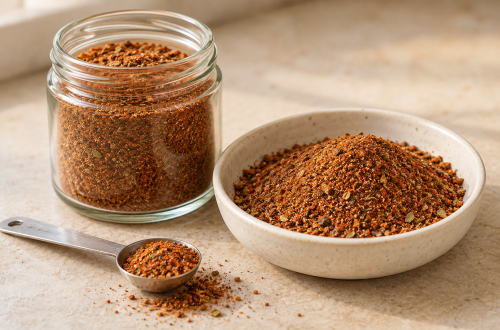
Taste the sample with fully cooked pork. If you want a less sweet starting formula, use homemade baby back and spare rib sauce; for a sharper mustard profile, try baby back rib sauce. A lightly applied BBQ rub can season the meat without competing with the glaze.
Store and reheat
Refrigerate untouched sauce in a shallow covered container within 2 hours, or 1 hour above 90°F. Keep it at 40°F or below and use within 3–4 days. Freeze small portions for longer storage and thaw in the refrigerator. Keep the serving portion separate from the basting bowl; never return used sauce or a used brush to the clean batch.
For reheating, USDA recommends bringing sauces to a rolling boil. Stir frequently and add a little water if needed to prevent scorching. These are refrigerated recipes, not tested canning formulas; sweetness or vinegar does not make them shelf stable.
Food-safety references: safe minimum cooking temperatures and leftover storage and reheating.