SLOW-COOKER PLAN
Slow cooker split pea soup without ham is a practical answer when you want the thick, spoon-coating comfort of classic split pea soup without using a ham bone, bacon, or condensed soup. Green split peas break down during the long cook and make the broth creamy without dairy or a blender. Carrots, celery, onion, garlic, potato, thyme, and smoked paprika build a savory base, while lemon juice added at the end keeps the finished soup from tasting flat.
This recipe is designed for a 5- to 6-quart slow cooker. The preparation is mostly chopping and measuring. Once the ingredients are in the crock, the soup cooks on LOW for 7 to 8 hours, with a HIGH option for days when dinner needs to be ready sooner.
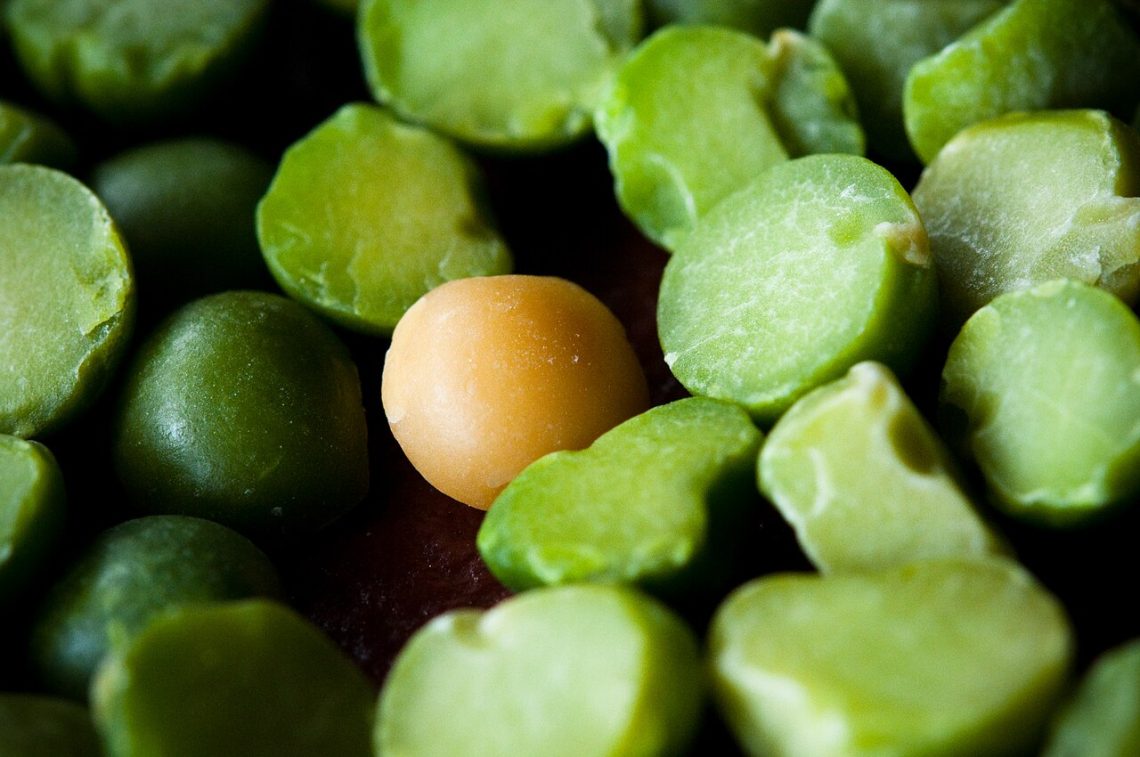
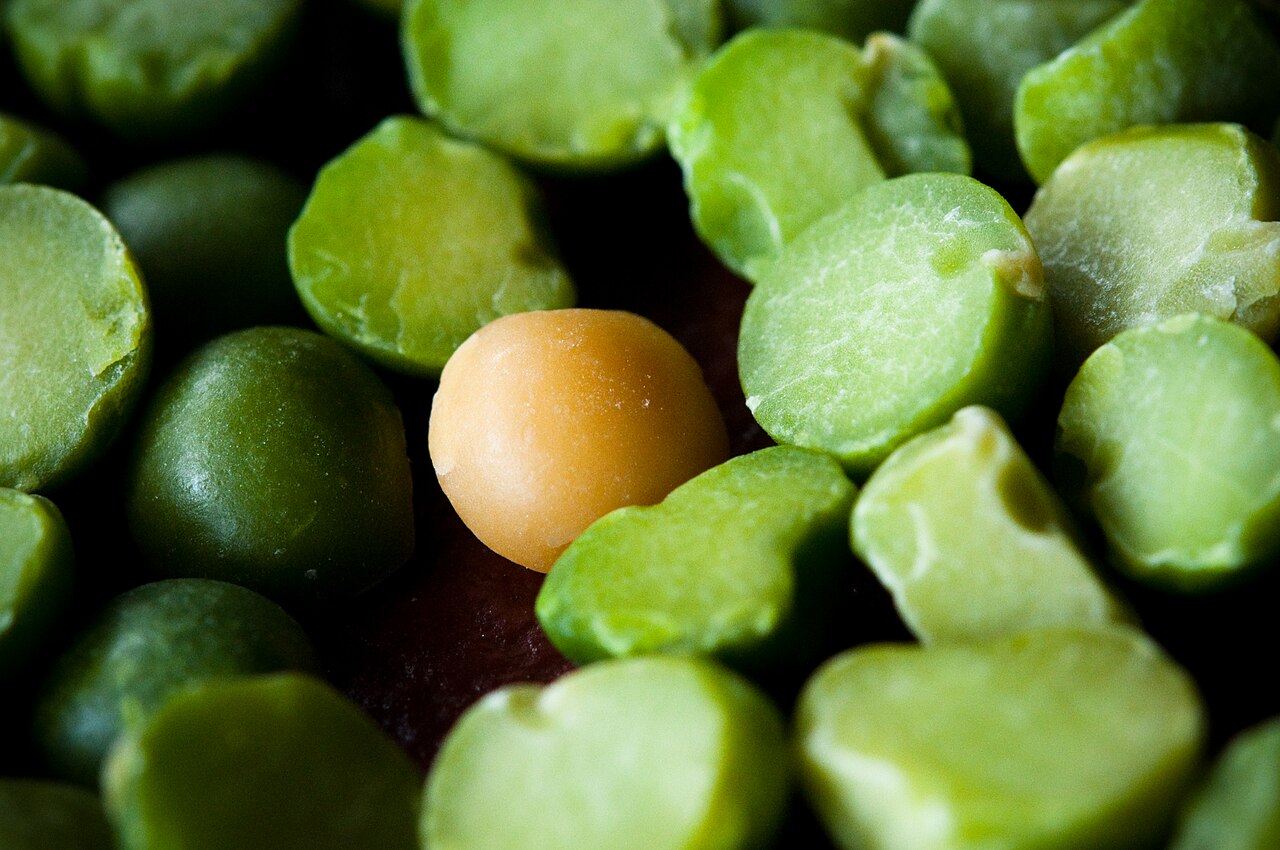
The featured image shows dried split peas, the main ingredient; it is not a photograph of finished soup.
Recipe at a Glance
Batch and portions: This uses one pound of dried split peas in a 5- to 6-quart slow cooker. The finished volume varies with evaporation and any added thinning liquid; a fixed serving yield has not been confirmed. For portioning, allow about 1 cup as a side or 1½ cups as a main with bread, and measure the finished soup to count your portions.
- Prep time: 20 minutes
- Cook time: 7 to 8 hours on LOW, or 4 to 5 hours on HIGH
- Finishing time: 10 minutes
- Total time: About 7 hours 30 minutes to 8 hours 30 minutes on LOW
- Slow cooker size: 5 to 6 quarts
- Dietary notes: Vegetarian and dairy-free when the broth and Dijon are labeled accordingly
The timing is a range because slow cookers vary in how quickly they heat and how firmly they hold a simmer. Older split peas may also take longer to soften than a recently packaged bag. Judge the soup by the tenderness cues below rather than stopping only because a timer rings.
Start promptly: Keep chopped ingredients refrigerated until cooking. Switch the slow cooker on as soon as it is filled; do not use a delayed start or the WARM setting to cook the soup. See FoodSafety.gov slow-cooker guidance.
Equipment
- 5- to 6-quart slow cooker with a well-fitting lid
- Fine-mesh sieve or colander
- Cutting board and chef’s knife
- Vegetable peeler
- Dry and liquid measuring cups
- Measuring spoons
- Long-handled spoon or heatproof spatula
- Potato masher, optional
- Instant-read thermometer for reheating leftovers
- Shallow storage containers
Avoid using a very large cooker for this quantity. A shallow layer can cook faster around the edges and lose the gentle, even heat this formula expects. Do not fill a small cooker beyond the manufacturer’s safe capacity.
Ingredients
- 1 pound (454 g) dried green split peas
- 1 medium yellow onion, cut into 1/4-inch dice, about 1 1/2 cups
- 3 medium carrots, peeled and cut into 1/4-inch coins or half-moons, about 1 1/2 cups
- 3 medium celery ribs, cut into 1/4-inch slices, about 1 cup
- 1 small Yukon Gold potato, peeled and cut into 1/2-inch cubes, about 6 ounces or 170 g
- 4 medium garlic cloves, minced
- 1 teaspoon smoked paprika
- 1 teaspoon dried thyme
- 1/2 teaspoon dried marjoram
- 1/2 teaspoon ground black pepper
- 1 dried bay leaf
- 7 cups low-sodium vegetable broth
- 1 teaspoon Dijon mustard
- 1 to 1 1/2 teaspoons kosher salt, divided and adjusted to the broth
- 1 tablespoon fresh lemon juice, plus more to taste
- 2 tablespoons chopped flat-leaf parsley, optional
- Hot water or additional low-sodium broth, for thinning if needed
Choosing the split peas
Use dried green split peas, not frozen green peas, lentils, or whole dried peas. Split peas have had their outer coating removed and have been divided in half, which helps them soften and thicken soup. Yellow split peas may be substituted by weight, but expect a golden color and a slightly different flavor. Begin checking at the same times and keep cooking until the peas collapse easily.
The peas do not need an overnight soak. They do need to be picked over and rinsed. Spread them on a light-colored plate or baking sheet, remove any small stones or damaged material, then rinse in a fine-mesh sieve until the water runs mostly clear.
Choosing the broth and salt
Broths vary widely in sodium. Start with low-sodium vegetable broth and add only 1 teaspoon salt before cooking. Taste after the peas are fully tender, then add up to another 1/2 teaspoon if needed. A standard-sodium broth may require less added salt or none at all.
Check the vegetable-broth label if the meal needs to be strictly vegetarian, vegan, gluten-free, or free from a particular allergen. Dijon mustard can also contain ingredients that vary by brand.
How to Make Slow Cooker Split Pea Soup Without Ham
The easiest way to keep this slow cooker split pea soup without ham consistent is to measure the peas and liquid, cut the vegetables evenly, and wait until the peas are truly soft before adjusting the thickness.
- Sort and rinse the peas.
Measure the entire 1-pound bag of split peas. Spread them out briefly, remove any stones or debris, and rinse them thoroughly in a fine-mesh sieve. Drain well. Do not soak them; the liquid measurement and timing are designed for unsoaked split peas.
- Prepare the vegetables.
Dice the onion into roughly 1/4-inch pieces. Cut the carrots and celery to a similar thickness so they soften at about the same rate. Keep the potato cubes close to 1/2 inch. Large potato chunks may stay firm after the peas have broken down, while very small pieces disappear into the soup.
- Load the slow cooker.
Put the rinsed peas in the crock. Add the onion, carrots, celery, potato, garlic, smoked paprika, thyme, marjoram, pepper, and bay leaf. Whisk the Dijon mustard into one cup of the broth so it disperses evenly, then pour it into the crock with the remaining six cups of broth. Add 1 teaspoon kosher salt.
Stir once to distribute the seasonings and make sure no dry peas cling high on the sides. The ingredients should be submerged, but the vegetables may float at first.
- Cook with the lid closed.
Cover and cook on LOW for 7 to 8 hours. For a faster option, cook on HIGH for 4 to 5 hours. Keep the lid closed during the first three-quarters of the cooking time. Every lifted lid releases heat and can extend the time needed for the peas and potato to soften.
Begin checking at 7 hours on LOW or 4 hours on HIGH. The soup is ready for finishing when the split peas collapse easily against the side of the crock, the potato cubes mash with light pressure, and the carrots are tender all the way through. There should be no hard center in the peas.
- Remove the bay leaf and adjust the texture.
Find and discard the bay leaf. Stir the soup vigorously for 30 to 60 seconds. The softened peas and potato should thicken the broth naturally.
For a more uniform texture, use a potato masher for five or six gentle presses directly in the crock. An immersion blender is optional, but blending the entire batch can make the soup pasty. If using one, blend only a small section for a few seconds, then stir it back into the rest.
If the soup is thicker than you want, add hot water or warm broth 1/4 cup at a time. Stir after each addition and wait a minute before adding more. If it seems thin, leave the lid off on HIGH for 10 to 20 minutes, stirring every five minutes. Thickness increases as the soup cools, so stop while it is slightly looser than the final texture you want.
- Finish the seasoning.
Stir in 1 tablespoon lemon juice. Taste only after the lemon is mixed in. Add the remaining 1/2 teaspoon salt if the soup needs it, or another teaspoon of lemon juice if the flavor feels heavy but already salty. Stir in the parsley, if using.
Let the soup stand for 5 minutes before serving. This brief rest lets the heat and thickness settle and makes the final seasoning easier to judge.
Doneness Cues That Matter More Than the Clock
A finished split pea soup should be creamy enough to coat a spoon but still flow when ladled. The peas should no longer look like separate firm discs. A pea pressed between the spoon and crock should smear without resistance. The thickest carrot and potato pieces should be tender in the center.
If the peas remain firm after the vegetables are tender, add 1/2 cup hot water or broth, cover, and continue cooking on HIGH in 30-minute increments. Very old dried peas sometimes resist softening. Hard water and strongly acidic ingredients can also slow legumes, which is why the lemon juice is added only after the peas are tender.
Do not add tomatoes, vinegar, or a large amount of lemon at the beginning. Those substitutions change the softening environment and require a separate timing test.
Troubleshooting
| What you notice | What to do |
|---|---|
| The soup is too thick | Split pea soup thickens substantially after the cooker is turned off and again in the refrigerator. Stir in hot water or warm broth, beginning with 1/4 cup. Add only enough to restore a spoonable consistency. For the next batch, note how much extra liquid gave you the consistency you prefer. |
| The soup is watery | First confirm that the peas are fully soft. Firm peas cannot thicken the broth. Continue cooking, covered, until they collapse. If they are tender, uncover and cook on HIGH for 10 to 20 minutes, stirring often. The soup will also thicken during the five-minute rest. |
| The peas are still firm | Check the package age if possible and confirm that no acidic ingredient was added early. Continue cooking with enough liquid to keep the peas submerged. If they remain gritty after the extended time, the peas may be old enough that the finished quality will not be reliable. |
| The bottom edge is browning | Some cookers run hot. Stir the soup, reduce from HIGH to LOW if applicable, and confirm there is enough liquid. Do not scrape a burned layer into the soup; transfer the unburned portion to a clean pot if necessary. |
| The flavor is flat | Flat does not always mean undersalted. Add lemon juice 1 teaspoon at a time first. If the acidity is balanced but the soup still tastes dull, add salt in small pinches. Extra smoked paprika can become bitter or dusty, so do not use it as the main correction at the end. |
| The soup tastes too smoky | Different smoked paprikas vary in intensity. Dilute with plain broth or hot water and add more lemon at serving. Because smoked paprika varies by brand, do not increase the one-teaspoon amount until you have tasted the finished soup. |
Substitutions and Their Limits
Yellow split peas may replace green split peas by weight, but expect a different appearance and confirm the cooking time. Brown or green lentils will not break down the same way and should not be used as a direct substitute.
Sweet potato can replace the Yukon Gold potato, but it will make the soup sweeter and more orange. Russet potato thickens strongly and can make the soup pastier if overmashed. Either variation can change the final thickness, so add hot broth as needed and stop mashing once the soup is spoonable.
Vegetable broth can be replaced with six cups broth plus one cup water if the broth is assertive or salty. Plain water produces a less savory soup and may require more salt and herbs. Do not use seven cups of full-sodium broth without reducing the added salt.
Fresh thyme may replace dried thyme; use about 1 tablespoon of leaves. Regular paprika can replace smoked paprika, but the soup will lose its subtle smoky note. A pinch of ground cumin can add warmth, although it moves the flavor away from a traditional family-style split pea soup.
Do not add uncooked pasta, rice, or quick-cooking grains without changing the liquid and timing. Those ingredients absorb broth and can turn the soup into a dense casserole.
Serving Ideas
Serve the soup with toasted whole-grain bread, a crisp green salad, or sliced apples. For a more substantial lunch, pair it with Family Recipe HQ’s toaster-oven grilled cheese. Keep garnishes simple so the soup remains the focus: chopped parsley, black pepper, a small spoonful of plain yogurt, or crunchy homemade croutons all work.
For family service, put the lemon wedges and pepper on the table. Adults can brighten individual bowls without making the entire batch too sharp for children.
Storage, Freezing, and Reheating
Keep the finished soup at 140°F or above if it remains in the slow cooker for serving. Otherwise, transfer it to shallow containers and refrigerate within 2 hours, or within 1 hour when the surrounding temperature is above 90°F. Use refrigerated leftovers within 3 to 4 days.
The soup becomes much thicker when cold. Do not reheat cold leftovers in a slow cooker. Before reheating, add 1 to 3 tablespoons water or broth per serving. Reheat on the stovetop over medium-low heat, stirring often, or microwave in a covered, vented container in short intervals. Bring the reheated soup to 165°F, checked in more than one spot, before serving.
For freezing, cool the soup promptly in shallow containers, then portion it into freezer-safe containers with headspace. Freeze within the refrigerator-storage window, and use frozen soup within 2 to 3 months for best quality. Thaw in the refrigerator or reheat from frozen in a saucepan over low heat with a splash of broth, stirring as the edges loosen. The carrots and potato may soften more after freezing, but the pea base should remain pleasantly thick.
Food-safety reference: USDA guidance for cooling, storing and reheating leftovers. Use the earlier deadline when an ingredient was prepared before this meal.
Sources and Safety Notes
- Mississippi State University Extension’s split pea soup recipe supports using 1 pound dry split peas with 7 cups low-sodium broth. The vegetables and seasonings on this page are specific to this Family Recipe HQ formula.
- USDA FSIS slow-cooker guidance supports transferring leftovers to shallow containers within 2 hours and reheating leftovers on the stove or in the microwave to 165°F rather than reheating them in a slow cooker.