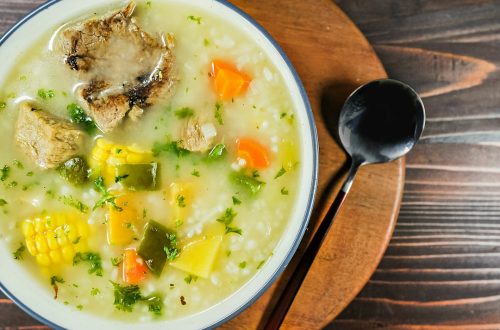
Use fully cooked canned hominy; its chewy texture remains distinct while the chicken warms through. Plan on about 55 minutes from starting the prep to serving. Use the texture and temperature checks in the method to account for differences in pan size, ingredient temperature and your stove or oven.
Jump to the recipe method · Recipe summary
Recipe at a glance
| Yield | Prep | Cook | Additional time | Total |
|---|---|---|---|---|
| 4 servings | 15 min | 40 min | 0 min | 55 min |
Why this combination works
Cooking the vegetables before adding the already-cooked components keeps the tender ingredients from breaking down while the firmer pieces soften. A controlled simmer and a final seasoning check create a balanced soup; boiling harder is not a substitute for letting the vegetables become tender.
Ingredients for white chicken chili with hominy
The quantities below make 4 servings. The ingredient’s preparation matters as well as its amount: use the stated cooked or raw form and the specified cut size. If an ingredient is already salted, taste the safely prepared dish before adding extra seasoning.
- 2 tablespoons olive oil
- 1 medium onion, finely diced
- 2 garlic cloves, minced
- 2 cups diced celery
- 2 cups fully cooked shredded chicken mixed with 1 1/2 cups canned hominy, drained
- 4 cups low-sodium vegetable broth
- 1 teaspoon ground cumin
- 1/2 cup canned mild diced green chiles
- 1/2 teaspoon fine salt, plus more to taste
- 1/4 teaspoon black pepper
- Water as needed, added 1/4 cup at a time
Equipment and preparation
Use a 4-quart pot, a wooden spoon and a ladle. Read through the measured ingredients and numbered method before starting. Prepare each component in the condition specified—such as cooked, drained or finely chopped—so it is ready when the method calls for it. Keep ingredients for the finishing stage separate from those used at the beginning.
How to make white chicken chili with hominy
- Prepare the diced celery in the size stated and set it beside the stove. Prepare the fully cooked shredded chicken mixed with 1 1/2 cups canned hominy separately. If the ingredient list specifies cooked grain, beans or meat, complete that cooking before beginning or use a safely stored ready-cooked ingredient; this soup’s timing starts with those components ready.
- Heat the olive oil in a 4-quart pot over medium heat. Add the onion and half the salt. Cook for 5–6 minutes, stirring occasionally, until softened but not heavily browned. Add the garlic and stir for 30 seconds, taking care that it does not scorch against the bottom.
- Add the diced celery and 1 teaspoon ground cumin. Stir for 1 minute to coat with the onion mixture, then pour in the broth. Scrape any light browned bits from the base. Bring to a simmer, then reduce the heat so small bubbles rise steadily rather than violently.
- Partially cover and simmer for 15–20 minutes, stirring occasionally, until the vegetables are easily pierced with a fork. Check dense pieces rather than judging from the broth alone. If the liquid drops too low, add water 1/4 cup at a time, keeping enough liquid around the vegetables to cook them evenly.
- Add the fully cooked shredded chicken mixed with 1 1/2 cups canned hominy and simmer for 5–8 minutes, until thoroughly hot. The cooked ingredients should hold their shape unless a blended soup is intended. If the recipe contains refrigerated cooked meat or another reheated component, check that the soup reaches 165°F throughout.
- Check the balance of broth to solids. For a thicker bowl, press a few soft vegetable or bean pieces against the side of the pot and stir them back in. For a more brothy soup, add a little hot water; do not reduce it aggressively after the tender ingredients are added.
- Stir in the canned mild diced green chiles, remaining salt and pepper. Warm gently if needed, avoiding a hard boil after adding a delicate dairy or fresh-herb finish. Taste a cooled spoonful and adjust salt gradually. Divide between four bowls, distributing the solids as evenly as the broth.
Texture checks and troubleshooting
- Use fully cooked canned hominy; its chewy texture remains distinct while the chicken warms through.
- A bland broth may need a small amount of salt or the recipe’s acidic finishing ingredient. Adjust only after the vegetables are cooked and the broth has reached its final volume.
- If the soup becomes too thick after standing, loosen individual portions with a little hot water. Grains and beans continue absorbing liquid, so a slightly brothy fresh pot can be useful.
Substitutions and practical changes
Use a similarly prepared vegetable with comparable cooking time, keeping the total quantity close to the recipe. Canned beans should be drained and rinsed unless the list says otherwise. Raw dried beans or raw whole grains cannot directly replace cooked ones in this short simmer. Choose a lower-sodium broth when possible so you control the final salt rather than inheriting a heavily seasoned base.
What to serve with it
Serve with crusty bread or a crisp salad, and keep any crunchy garnish out of the pot until the bowls are filled.
Make-ahead and storage
Refrigerate soup promptly in shallow containers rather than leaving a large pot to cool on the counter. Get it into refrigeration within 2 hours, or within 1 hour above 90°F, and keep at 40°F or below for 3–4 days. Reheat a portion to a boil, stir well and check that it reaches at least 165°F. Add water if starches have absorbed broth. Freeze portions for longer storage if desired, understanding that soft vegetables and dairy finishes may change texture.
Refrigeration limits are safety guidance, while the texture advice is a quality recommendation; the two are different. Do not taste questionable leftovers to decide whether they are safe.
Frequently asked questions
Can I prepare this ahead?
Measure and prepare the components in advance where practical, keeping perishables refrigerated in separate covered containers. Finish the recipe close to serving for the best texture. If you complete it ahead, follow the technique-specific storage advice below; preparation in advance does not extend the safe time that perishable food can stand at room temperature.
Can I double the recipe?
Double the ingredient amounts, but do not assume the cooking time stays exactly the same. Use two of the specified pans or a suitably larger vessel that preserves the depth and spacing of the original. Crowding slows browning and traps steam. Begin checking at the original time, then continue only as needed to reach the stated texture and safe temperature.
What should I check before serving?
Cooking the vegetables before adding the already-cooked components keeps the tender ingredients from breaking down while the firmer pieces soften. Check the texture described in the numbered method and distribute the finishing ingredients evenly. If you adjust seasoning, do so in small increments after the dish is safely prepared; a small correction is easier to control than a large addition.
Recipe summary
This white chicken chili with hominy makes 4 servings. Allow 15 minutes for preparation and about 40 minutes for cooking, for an estimated total of 55 minutes. A controlled simmer and a final seasoning check create a balanced soup; boiling harder is not a substitute for letting the vegetables become tender. Keep the measured ingredient list and numbered method together when saving the recipe; changing only one of them can produce a different result.
- 2 tablespoons olive oil
- 1 medium onion, finely diced
- 2 garlic cloves, minced
- 2 cups diced celery
- 2 cups fully cooked shredded chicken mixed with 1 1/2 cups canned hominy, drained
- 4 cups low-sodium vegetable broth
- 1 teaspoon ground cumin
- 1/2 cup canned mild diced green chiles
- 1/2 teaspoon fine salt, plus more to taste
- 1/4 teaspoon black pepper
- Water as needed, added 1/4 cup at a time
Follow the numbered preparation and cooking instructions above. Use fully cooked canned hominy; its chewy texture remains distinct while the chicken warms through.
Food safety references: USDA leftover handling and FoodSafety.gov minimum cooking temperatures.