
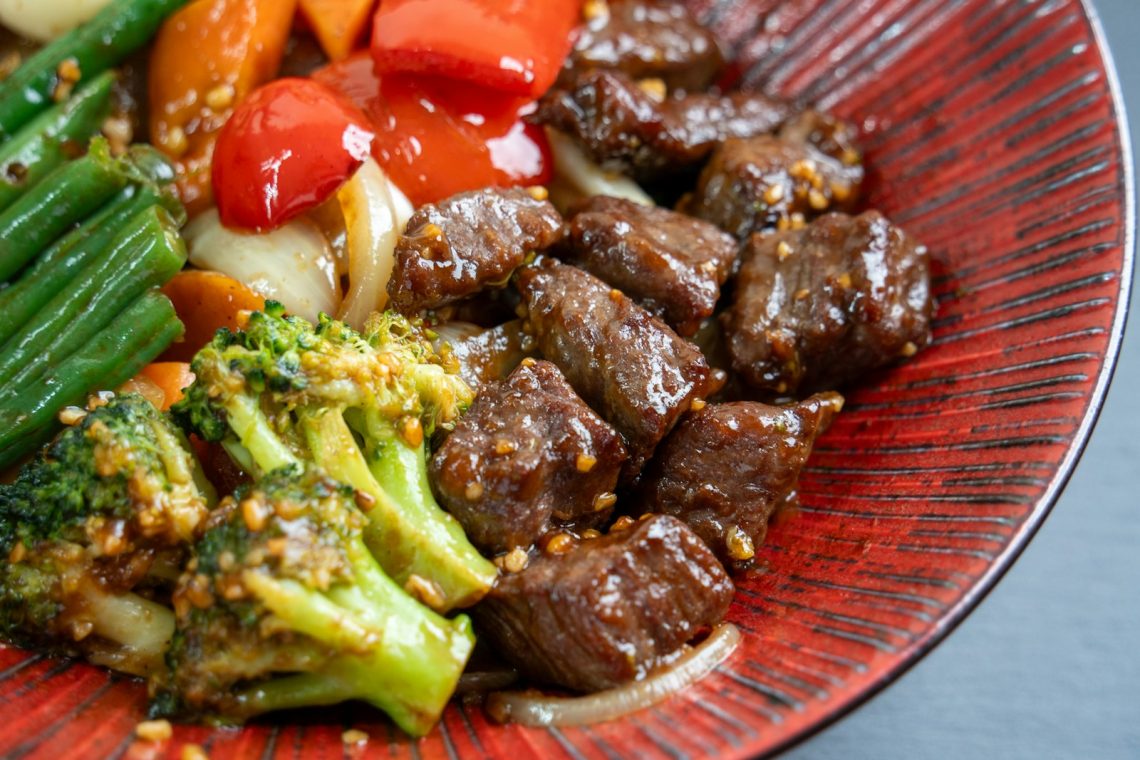
A quick skillet with separate textures
Ginger beef and broccoli stir fry works best when the beef, broccoli, and sauce are treated as separate parts until the final minute. The broccoli gets a short steam so its stems become tender, the beef browns in uncrowded batches, and a measured sauce brings them together. Cooking everything in one crowded pile tends to produce a watery pan and gray meat.
This version uses flank steak sliced thinly across the grain. Ginger gives the sauce its main aromatic note, while rice vinegar and a little brown sugar balance the soy sauce. The sauce should coat the ingredients lightly rather than form a deep pool beneath them.
Slicing beef and preparing broccoli
Find the long muscle fibers running along the flank steak before you begin cutting. Slice across those lines, not parallel to them, to shorten the fibers in each bite. A sharp knife and a firm piece of cold meat make thin slicing easier. If needed, chill the steak briefly in the freezer until firmer, without freezing it solid.
Aim for strips of similar thickness. Very thin shavings cook much faster than thick chunks, so mixing the two makes doneness harder to control. Pat away excess surface moisture before adding the soy and starch coating. The coating should cling lightly, not become a thick batter.
Cut broccoli florets fairly small and slice peeled stems thinly. The stems are useful, but their dense texture means they need smaller pieces than the florets. Wash and drain the broccoli well so you control the amount of water entering the skillet rather than carrying in a large puddle.
Organizing ginger beef and broccoli stir fry
Mix the sauce before heating the pan. Stir-frying moves quickly, and stopping to measure vinegar while garlic is cooking can lead to scorched aromatics. Keep the sauce bowl, beef, broccoli, and serving plate close to the stove, with separate utensils for raw and cooked ingredients.
Cook the broccoli first. A brief stir-fry adds flavor, while a measured splash of water and a lid soften the stems. The broccoli should still have some bite because it will return to the pan later. Remove it rather than leaving it in the skillet while the beef cooks.
Brown the beef in two batches. Spread each batch in one layer and allow short contact with the hot surface before turning. A crowded pan cools quickly and traps steam. The beef does not need to be fully cooked at this stage, but it must return to the sauce and reach the safe endpoint before serving.
Finishing the sauce and judging doneness
Ginger and garlic need only a short cook in the cleared pan. Lower the heat slightly if the skillet is extremely hot so the small pieces do not burn. Stir the sauce bowl again just before pouring because cornstarch settles at the bottom.
The sauce thickens as it simmers. Once glossy, return the beef with its juices and the broccoli. Toss so the coating reaches all surfaces. If it becomes too thick, add water a tablespoon at a time. If too thin, let it bubble briefly while stirring, taking care not to overcook the beef.
Check a thicker beef strip with a thin thermometer probe inserted from the side. Whole-cut beef should reach at least 145°F, followed by a three-minute rest. Turn off the heat for that rest rather than continuing to fry the thin strips. The sauce remains hot while the sesame oil is stirred in and the rice is portioned.
Adjustments and ingredient substitutions
Low-sodium soy sauce makes the sauce easier to balance. Regular soy sauce is stronger, so reduce its amount and replace some volume with water if using it. Taste the finished sauce before adding any salt; the recipe does not require extra salt beyond the soy.
Sirloin can replace flank steak if sliced thinly across its grain. Stewing beef is not suitable for the same short cook because it needs a different method to become tender. Frozen broccoli is usable, but thaw and drain it first and expect a softer texture. It may not need the same covered steaming step.
Serve over rice cooked separately, or use noodles if you prefer. Keep any additional sauce on the mild side so the ginger remains noticeable. For gluten-free needs, choose a labeled gluten-free soy sauce and verify all other packaged ingredients. Sesame oil contributes flavor and is an allergen consideration, even though the amount is small.
Meal prep and leftover handling
You can slice the beef, cut broccoli, and mix sauce earlier in the day, keeping each in its own refrigerated container. Stir the sauce again before cooking. This preparation makes the final skillet sequence much easier, especially if you are also cooking rice.
Refrigerate leftovers within two hours, or one hour above 90°F, in shallow containers at 40°F or below. Use within three to four days. Reheat to 165°F, stirring and adding a little water to loosen the sauce. Expect broccoli to become softer and thin beef to become more cooked after reheating.
Ginger beef and broccoli stir fry is at its best immediately after the short final rest. Good preparation and uncrowded batches give you more control than simply turning the burner to its highest setting.
Frequently Asked Questions
Why is my beef chewy?
It may have been sliced with the grain, cut too thick, or cooked for too long. Flank steak needs thin cross-grain slices. A quick method cannot make an unsuitable stewing cut tender, regardless of how much sauce is added.
Can I skip the cornstarch?
The sauce will be thinner and less glossy. You can still make a flavorful skillet, but it will not cling in the same way. If using another starch, follow its thickening guidance and add gradually rather than assuming every starch behaves identically.
Why did the sauce turn into a gel?
It may have reduced too far or contained too much starch. Add water in small amounts while stirring over gentle heat. Measure the divided starch carefully: one teaspoon coats the beef, and two teaspoons thicken the sauce.
Can I use a wok?
Yes, if your burner can heat it effectively and you are comfortable with it. A wide skillet often works better on a standard home burner because more of its base contacts the heat. Either way, cook the beef in manageable batches.
More ideas for the table
Our steak temperature guide explains safe whole-cut beef temperatures and resting. Rice texture troubleshooting helps you prepare a fluffy base for the glossy sauce.
Ginger Beef and Broccoli Stir Fry Recipe
Thin flank steak and crisp-tender broccoli meet a glossy ginger sauce in a wide skillet. Cooking the components in stages keeps the vegetables and beef distinct.
Yield: 4 servings. Prep: 20 minutes. Cook: 15 minutes. Total: 35 minutes.
Equipment
wide heavy skillet with lid, mixing bowls, sharp knife, instant-read thermometer
Ingredients
- 1 lb flank steak; thinly sliced across the grain
- 3 tbsp low-sodium soy sauce; divided
- 1 tbsp cornstarch; divided
- 1 lb broccoli; cut into small florets, stems sliced thin
- 0.5 cup water; for sauce
- 2 tbsp water; for steaming broccoli
- 1 tbsp unseasoned rice vinegar
- 2 tsp brown sugar
- 2 tbsp neutral oil; divided
- 1 tbsp finely grated fresh ginger
- 2 cloves garlic; minced
- 1 tsp toasted sesame oil
- 3 cups cooked rice; for serving
Instructions
- Toss sliced beef with 1 tablespoon soy sauce and 1 teaspoon cornstarch. In another bowl, whisk remaining 2 tablespoons soy sauce, remaining 2 teaspoons cornstarch, 1/2 cup water, vinegar, and sugar.
- Heat 1 tablespoon oil in a wide skillet over medium-high heat. Add broccoli and stir-fry 2 minutes. Add 2 tablespoons water, cover for 2 minutes, then transfer broccoli to a plate.
- Add remaining tablespoon oil. Cook beef in two batches in a single layer, about 1–2 minutes per side, transferring each batch to a plate after browning. It will finish in the sauce.
- Lower heat slightly. Add ginger and garlic and stir for 20–30 seconds. Stir the sauce again to lift settled starch, pour into the skillet, and simmer until glossy.
- Return beef, its juices, and broccoli. Toss and cook until beef reaches at least 145°F and broccoli is tender to your preference. Turn off heat, stir in sesame oil, and let stand at least 3 minutes before serving over rice.
Recipe Notes
Thin slicing across the grain is essential for flank steak. Check a thick strip from the side with a thin thermometer probe. Whole-cut beef requires 145°F followed by a three-minute rest.
Food safety references
Cooking temperatures follow FoodSafety.gov guidance. For storage and reheating, see the USDA guidance on handling leftovers and safe reheating methods.




