
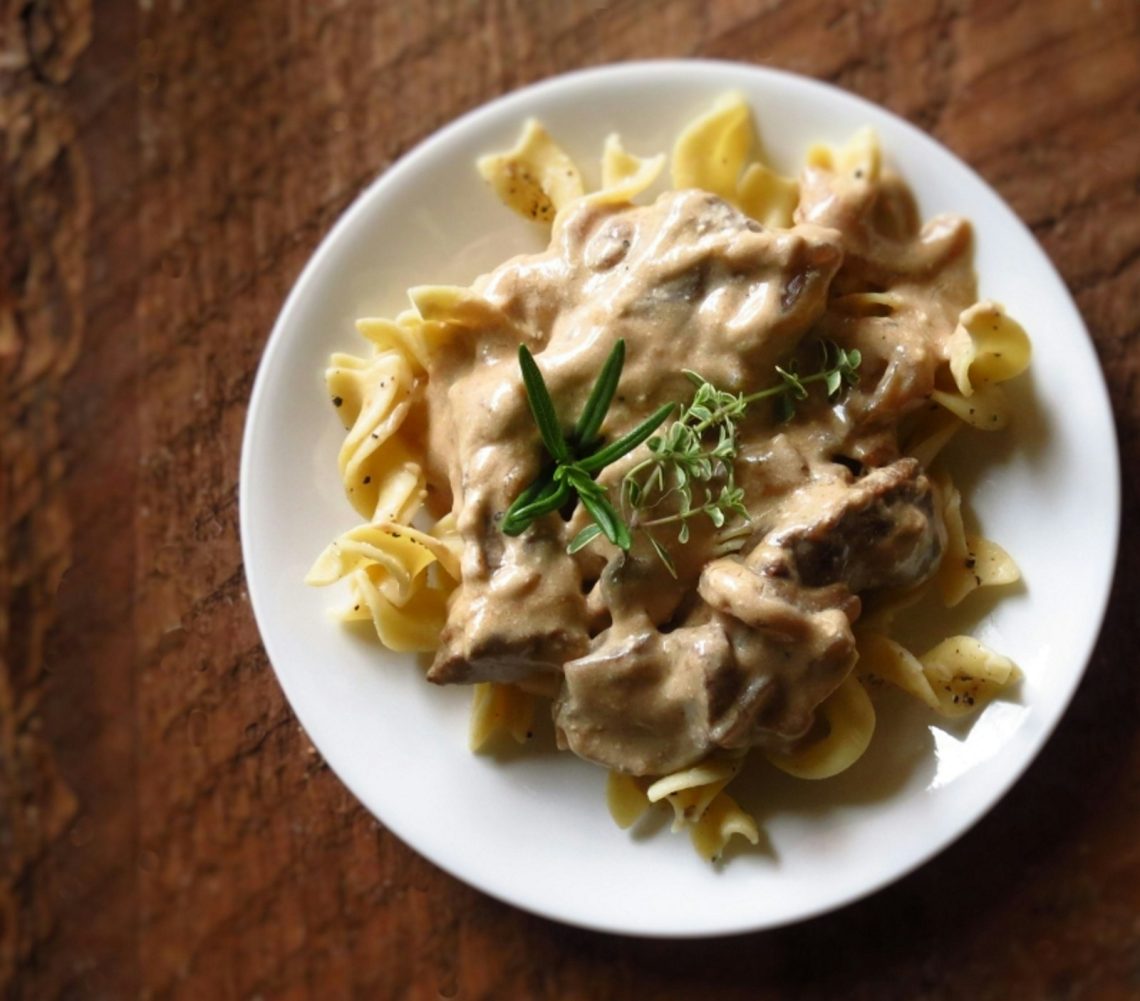
A tangy sauce with carefully cooked beef
Beef stroganoff with Greek yogurt replaces the familiar sour cream finish with plain Greek yogurt while keeping mushrooms, tender beef, and noodles at the center of the meal. The sauce is tangy and creamy, but it needs gentler handling than a sauce made only from broth. Adding yogurt off the heat is the step that protects its texture.
This version sears whole sirloin steaks and slices them after a proper rest. That makes it easier to check a safe center temperature than trying to probe a pan of tiny raw strips. The sliced beef joins the sauce at the end so it does not spend an unnecessary extra ten minutes simmering.
Choosing steak, mushrooms, and yogurt
Sirloin offers a useful balance of flavor and tenderness for this recipe. Choose steaks of similar thickness so they cook at a comparable rate. Stewing beef is not a substitute for a quick stroganoff; it needs a longer moist-cooking method to soften its connective tissue.
Cremini mushrooms bring a deeper flavor than very mild white mushrooms, though either can work. Slice them evenly and avoid washing them so far ahead that they sit wet in a container. A damp towel or a quick rinse followed by thorough drying is sufficient for ordinary surface dirt.
Use plain, unsweetened Greek yogurt. Full-fat yogurt generally handles gentle warming more comfortably than a very lean version, but any yogurt can become grainy if boiled hard. Vanilla yogurt is not appropriate even if it is the only tub in the refrigerator. Check the label carefully before adding it to a savory sauce.
Cooking beef stroganoff with Greek yogurt
Pat the steaks dry and season just before searing. A hot skillet and a lightly oiled surface encourage browning, while a wet steak steams first. Leave each side in contact with the pan long enough to develop color, then check the center with a thermometer.
Whole-cut beef should reach at least 145°F and rest for at least three minutes. Move it to a clean board while the mushrooms cook. This pause serves two purposes: it satisfies the rest requirement and keeps the beef out of the pan while the sauce develops. Slice across the grain only after resting.
Cook mushrooms and onion in the same skillet, using the butter to loosen browned bits. The mushrooms release water before they brown. Let that moisture evaporate instead of immediately adding broth. If the skillet is too crowded, use a larger pan or cook the mushrooms in batches for better flavor.
Thickening the sauce and tempering yogurt
Stir flour into the cooked mushrooms for a minute before adding broth. This removes dry pockets and distributes the thickener. Add broth gradually while stirring, then simmer until the sauce lightly coats a spoon. Mustard and Worcestershire add depth, so avoid heavy extra seasoning before tasting.
Remove the pan from the heat and allow the strongest bubbling to stop. Whisk a few spoonfuls of warm sauce into the yogurt in a separate bowl, adding them gradually. This step, called tempering, narrows the temperature difference before the yogurt enters the skillet.
Stir the tempered yogurt back into the sauce, then add sliced beef and its juices. Warm gently if necessary, but do not bring the yogurt sauce to a rolling boil. If it is too thick, use a little noodle cooking water or broth. If it is thin, remember that extended boiling after yogurt is added may damage the texture; thicken the broth stage properly beforehand.
Noodles, variations, and serving
Egg noodles are a classic soft base, but cook them separately so you can control their texture. Drain just before serving and reserve a little cooking water. Spoon the stroganoff over the noodles rather than leaving them submerged in sauce for a long time, which can make them swollen and heavy.
For a different base, use rice or mashed potatoes. The sauce works with either, although the overall meal changes. Parsley adds a fresh finish; chives are another option. A simple green vegetable beside the bowl helps balance the rich texture.
If using sour cream instead of yogurt, the same gentle off-heat approach remains useful. For gluten-free needs, replace flour with an appropriate thickener and choose suitable noodles, broth, mustard, and Worcestershire sauce. Checking only the noodles would miss other possible sources of wheat.
Leftovers and the limits of reheating yogurt sauce
Refrigerate leftovers within two hours, or one hour above 90°F, in shallow containers at 40°F or below. Use within three to four days. Storing noodles separately from sauce helps them retain their shape. The sauce may thicken and become slightly less smooth after chilling.
Reheat gently with a little broth or water, stirring frequently, and bring the leftovers to 165°F. Safety takes priority over keeping yogurt below every possible curdling temperature, so accept that reheated sauce can be less silky. Heating small portions carefully gives better results than aggressively boiling a large pan.
Beef stroganoff with Greek yogurt is especially good freshly finished. Brown the mushrooms, cook the steak accurately, and add the yogurt with patience; those three steps give the dish its best texture without requiring a complicated ingredient list.
Frequently Asked Questions
Why did the sauce become grainy?
The yogurt may have been added to a boiling pan or heated too aggressively afterward. Temper it with warm sauce and stir it in off the heat. Very low-fat yogurt can be less forgiving, so plain full-fat yogurt is a useful choice.
Can I use pre-sliced beef strips?
Yes, but cook them in small batches and check the thickest strips for safe doneness. They cook quickly and can toughen during a long simmer. The whole-steak method in this recipe is designed to make temperature measurement easier.
Can I freeze stroganoff?
The beef-and-mushroom broth base freezes better before yogurt is added. Freeze that cooled base, thaw in the refrigerator, reheat thoroughly, and add fresh tempered yogurt when serving. A fully finished yogurt sauce may separate after freezing.
What if my mushrooms never brown?
They may be too wet or crowded. Continue cooking until their liquid evaporates, or divide them between batches. Adding flour while the pan is still watery traps you at the sauce stage before browning has developed.
More ideas for the table
The steak temperature guide explains thermometer placement and resting. Our steak reheating guide offers additional ways to protect cooked beef texture.
Beef Stroganoff with Greek Yogurt Recipe
Seared sirloin slices join browned mushrooms and a tangy Greek yogurt sauce, served over egg noodles. Tempering the yogurt keeps the sauce smooth.
Yield: 4 servings. Prep: 20 minutes. Cook: 25 minutes. Total: 45 minutes.
Equipment
large skillet, saucepan, mixing bowl, whisk, instant-read thermometer
Ingredients
- 1.25 lb boneless sirloin steaks; about 1 inch thick
- 0.5 tsp fine salt
- 0.25 tsp black pepper
- 1 tbsp neutral oil
- 1 tbsp butter
- 12 oz cremini mushrooms; sliced
- 1 small yellow onion; thinly sliced
- 2 cloves garlic; minced
- 1 tbsp all-purpose flour
- 1 cup low-sodium beef broth
- 1 tsp Dijon mustard
- 1 tsp Worcestershire sauce
- 0.75 cup plain full-fat Greek yogurt
- 8 oz dry egg noodles
- 2 tbsp chopped parsley
Instructions
- Season steaks with salt and pepper. Heat oil in a large skillet over medium-high heat. Sear 4–6 minutes per side, adjusting for thickness, until centers reach at least 145°F. Transfer to a clean board and rest at least 3 minutes while making the sauce.
- Cook egg noodles according to the package and drain, reserving a little cooking water.
- Add butter, mushrooms, and onion to the skillet. Cook 8–10 minutes until mushrooms release moisture and begin to brown. Add garlic for 30 seconds.
- Stir in flour for 1 minute, then gradually add broth, mustard, and Worcestershire sauce. Simmer 3–4 minutes until lightly thickened. Remove from heat for 2 minutes.
- Put yogurt in a bowl and whisk in several spoonfuls of warm sauce gradually. Stir the tempered yogurt back into the skillet. Slice rested steak thinly across the grain and add it with any board juices.
- Warm gently without boiling if needed. Serve over noodles with parsley, loosening the sauce with a little reserved noodle water if it is too thick.
Recipe Notes
Cook and rest the steaks before slicing, making temperature checks easier than with tiny raw strips. Full-fat plain yogurt is less prone to a grainy texture than very lean yogurt, but it still should not boil.
Food safety references
Cooking temperatures follow FoodSafety.gov guidance. For storage and reheating, see the USDA guidance on handling leftovers and safe reheating methods.




