TWO-STAGE ROAST
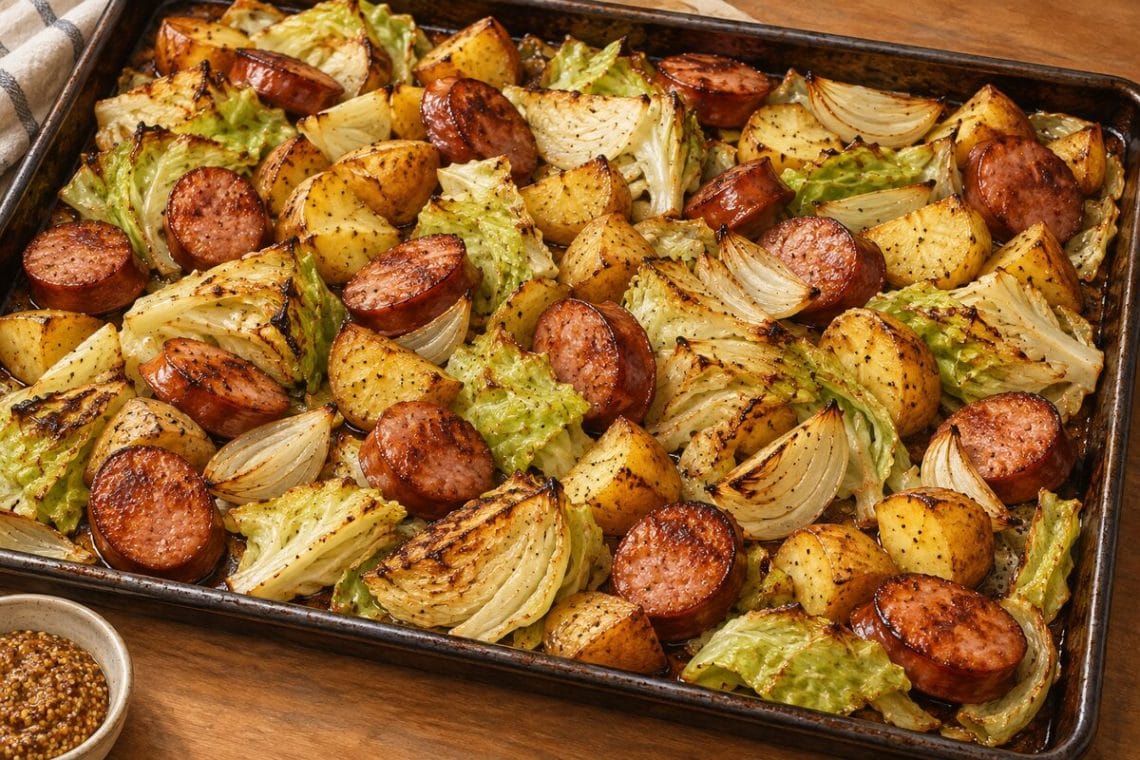
Sheet pan kielbasa with cabbage and potatoes is a practical one-pan supper for nights when you want smoky sausage, tender potatoes, and browned cabbage without juggling several skillets. The method gives the potatoes a 15-minute head start, then adds the faster-cooking cabbage and fully cooked kielbasa. That simple sequence keeps the sausage juicy, lets the cabbage caramelize at the edges, and gives the potatoes enough time to turn creamy inside.
This recipe makes four generous servings on one standard 18-by-13-inch rimmed sheet pan. It uses inexpensive, easy-to-find ingredients and takes about an hour from the first cut to the final vinegar-brightened bite. It is written for fully cooked smoked kielbasa; raw or “cook before eating” sausage needs a different timing plan and must reach the safe temperature listed on its package.
This recipe has not been kitchen-tested by Family Recipe HQ; follow the measurements and doneness checks.
Sheet Pan Kielbasa with Cabbage and Potatoes Recipe
Yield: 4 generous servings
Prep time: 20 minutes
Cook time: 35 to 40 minutes
Total time: 55 to 60 minutes
Equipment
- 18-by-13-inch rimmed half-sheet pan
- Large mixing bowl
- Chef’s knife and cutting board
- Measuring spoons
- Flexible spatula or sturdy tongs
- Instant-read thermometer if adapting the recipe or checking reheated leftovers
Ingredients
- 1 1/2 pounds Yukon Gold or baby gold potatoes, scrubbed and cut into 3/4-inch pieces
- 1 medium yellow onion, peeled and cut into 8 wedges
- 3 tablespoons olive oil, divided
- 1 tablespoon Dijon or whole-grain mustard
- 1 teaspoon smoked paprika
- 1 teaspoon garlic powder
- 3/4 teaspoon kosher salt, divided, plus more only after tasting
- 1/2 teaspoon black pepper, divided
- 1 pound prepared green cabbage, cored and cut into 1- to 1 1/2-inch pieces
- 12 to 14 ounces fully cooked smoked kielbasa, cut on a slight diagonal into 1/2-inch coins
- 1 tablespoon apple cider vinegar
- 2 tablespoons chopped flat-leaf parsley, optional
- Whole-grain mustard for serving, optional
Roast the potatoes, then add the kielbasa
- Heat the oven and pan. Set a rack in the center of the oven and heat to 425°F. Lightly coat the rimmed sheet pan with 1 teaspoon of the measured olive oil. Preheating the empty pan is unnecessary; a room-temperature pan makes the first toss safer.
- Season the potatoes and onion. In the large bowl, combine the potatoes, onion wedges, 1 tablespoon plus 2 teaspoons olive oil, mustard, smoked paprika, garlic powder, 1/2 teaspoon kosher salt, and 1/4 teaspoon black pepper. Toss until the seasonings form a thin, even coating.
- Start the dense vegetables. Spread the potato mixture across the pan with cut surfaces touching the metal where possible. Roast for 15 minutes. The potatoes will not be tender yet, but their undersides should begin to color.
- Prepare the second-stage ingredients. While the potatoes roast, place the cabbage and kielbasa in the same bowl. Add the remaining 1 tablespoon olive oil, 1/4 teaspoon salt, and 1/4 teaspoon pepper. Toss gently so the cabbage is lightly glossy rather than drenched.
- Combine without crowding. Remove the pan from the oven. Turn the potatoes and onion with a spatula, then add the cabbage and kielbasa. Spread everything into one loose layer. Let some cabbage touch the metal. If your pan is smaller than 18 by 13 inches or the food sits more than one piece deep, divide it between two pans and rotate their positions halfway through roasting.
- Finish roasting. Return the pan to the oven for 18 to 22 minutes. Stir once after about 10 minutes, exposing new cut surfaces to the pan. The meal is ready when a paring knife or fork slides into the center of the largest potato without resistance, the cabbage has tender centers and browned edges, and the fully cooked kielbasa is hot with caramelized spots. If the potatoes need more time, move deeply browned sausage pieces to a plate and roast the vegetables for another 3 to 5 minutes.
- Brighten and serve. Drizzle the hot pan with the apple cider vinegar and toss once. Taste before adding more salt because kielbasa can be quite salty. Sprinkle with parsley if using and serve with extra mustard at the table.
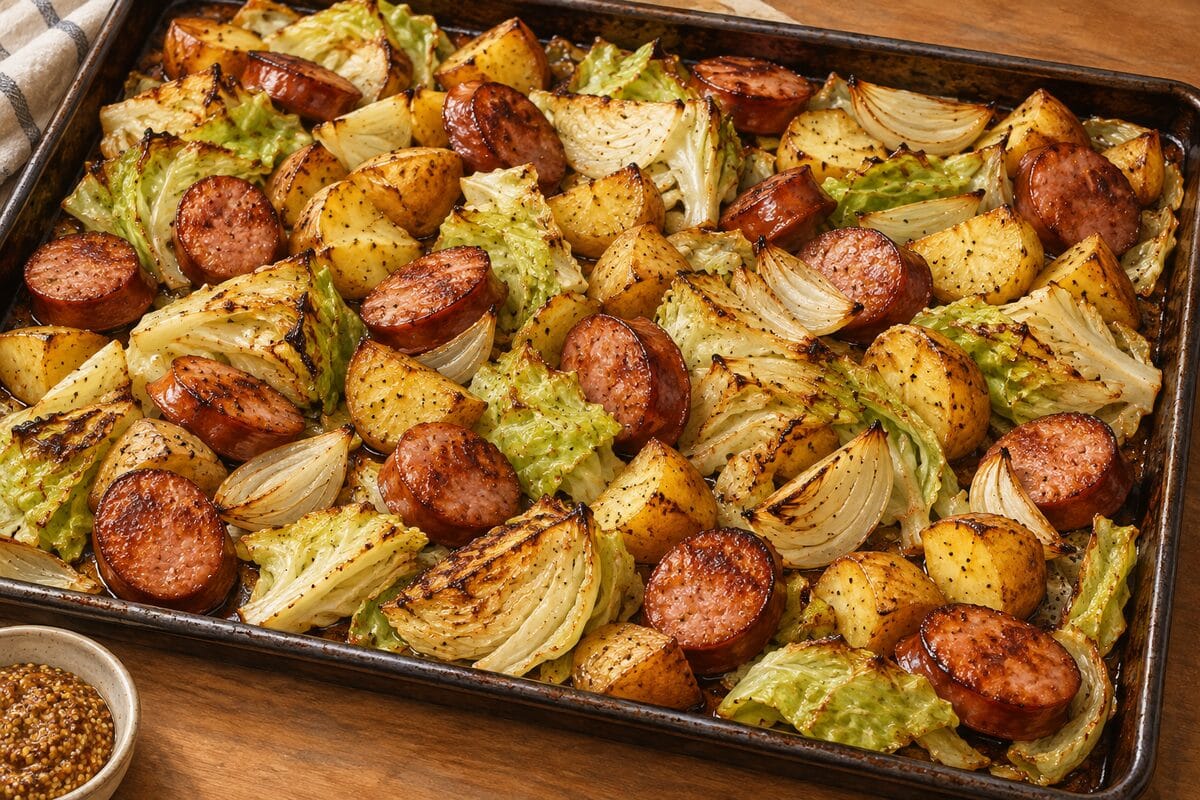
Ingredients that make the biggest difference
Choose fully cooked kielbasa
Look for a 12- to 14-ounce ring labeled “fully cooked,” “ready to eat,” or similar language. Pork-and-beef kielbasa gives the deepest smoky flavor, but fully cooked turkey or chicken kielbasa also works. Lean poultry kielbasa releases less fat, so do not reduce the olive oil. Sodium varies widely among brands; the recipe starts with a restrained amount of salt so you can adjust after roasting.
Do not quietly substitute raw sausage. USDA guidance says uncooked sausage made from ground beef, pork, lamb, or veal must reach 160°F, while uncooked poultry sausage must reach 165°F. The method below is designed around fully cooked sausage, so use a separate recipe or alter the process only if you can verify doneness with a food thermometer.
Use waxy or all-purpose potatoes
Yukon Gold or baby gold potatoes hold their shape and develop creamy centers. Cut them into pieces no larger than 3/4 inch across. That measurement matters more than the potato variety: large wedges can remain firm long after the sausage and cabbage are ready. Leave thin, clean skins on for texture and less prep.
For more detail on spacing potatoes for better browning, see our guide to crispy oven fries. The same principle applies here: a hot metal pan and a little breathing room help moisture escape.
Cut the cabbage for tenderness and browned edges
Green cabbage is sturdy enough for a high-heat roast. Remove the tough core, then cut the leaves into irregular 1- to 1 1/2-inch pieces. A few thicker folded pieces are fine; paper-thin shreds can scorch. About 1 pound of prepared cabbage—roughly half a medium head—fills the pan without overwhelming it.
Balance smoke with mustard and vinegar
Dijon or whole-grain mustard gives the potatoes a savory coating, smoked paprika reinforces the kielbasa, and apple cider vinegar added after roasting wakes up the whole pan. The vinegar is a finish, not a marinade: adding it before roasting introduces water and can slow browning.
Divide the oil before the first roast
The three tablespoons of olive oil cover both roasting stages and the pan itself. Measuring those portions before starting avoids using the entire amount on the potatoes and then adding an unplanned second coating to the cabbage.
| Where it goes | Measured amount |
|---|---|
| Coating the sheet pan | 1 teaspoon |
| Potatoes and onion | 1 tablespoon plus 2 teaspoons |
| Cabbage and fully cooked kielbasa | 1 tablespoon |
| Total for the recipe | 3 tablespoons, or 9 teaspoons |
Mix the mustard and dry seasonings through the first portion thoroughly so the potatoes receive a thin coating rather than isolated patches of mustard. For the cabbage, lift and turn the leaves in the bowl to reach the folded surfaces. Do not press the cabbage into a dense mound.
Judge space after the second-stage ingredients arrive
A tray that looks spacious with only potatoes and onion can become crowded once the cabbage and sausage are added. Have a second rimmed pan available before opening the oven. Moving half the mixture is easier while the food is spread out than after it has begun to steam in a heap.
Spread the cabbage among the potatoes rather than laying it over them like a blanket. Keep sausage coins visible so they can be turned and removed individually if they brown first. Use the final potato tenderness check to decide when the vegetables are ready, while continuing to follow the fully cooked sausage’s package directions.
How to prevent common sheet-pan problems
The potatoes are still firm
The usual cause is oversized pieces. Keep them to 3/4 inch, and measure one or two until your eye is calibrated. An overcrowded pan also slows cooking because the vegetables steam. Give the potatoes another 3 to 5 minutes after removing any kielbasa that is already well browned. Next time, use two pans if necessary.
The cabbage is pale and watery
Surface moisture and crowding are the likely culprits. Dry the cabbage after rinsing, use the full-size pan, and make sure some pieces touch the metal. Do not add vinegar until the food leaves the oven. A pan lined with parchment is convenient, but bare metal usually gives stronger browning; lightly oil it and loosen stuck edges with a thin spatula.
The sausage browned too quickly
Thin slices dry faster, especially lean poultry kielbasa. Cut coins about 1/2 inch thick, add them only after the potatoes’ head start, and stir at the 10-minute mark. If a few pieces are ready early, transfer them to a plate and return them to the pan after the potatoes finish.
The finished dish tastes too salty
Salt levels differ by sausage brand. Start with the listed 3/4 teaspoon for the entire pan, choose no-salt-added mustard if that is available, and wait until after the vinegar finish to adjust. Serve with unsalted applesauce or a simple green salad if the sausage itself is especially salty.
Substitutions and variations that preserve the method
- Turkey or chicken kielbasa: Use only fully cooked sausage and keep all 3 tablespoons of oil. Lean links do not provide as much rendered fat.
- Red cabbage: It can replace green cabbage, but it often remains firmer and may stain the potatoes purple. Slice it slightly smaller and judge tenderness, not color.
- Caraway variation: Add 1/2 teaspoon caraway seeds with the smoked paprika for a classic cabbage-friendly flavor.
- Garlic-herb variation: Replace smoked paprika with 1 teaspoon dried thyme. Add fresh minced garlic only for the last 10 minutes so it does not burn.
- Bacon-fat variation: Replace 1 tablespoon of the olive oil with strained bacon fat for deeper smoke. Our guide to cooking with bacon grease explains how to store and use it safely.
- Spicier finish: Add 1/4 teaspoon crushed red pepper with the dry seasonings or serve a sharp mustard alongside. For a customizable seasoning framework, use the proportions in our simple BBQ rub ratio as inspiration, but keep sugary rubs light because sugar can scorch at 425°F.
Sweet potatoes are not a direct one-for-one swap in this timing plan: they soften sooner and their sugars brown quickly. Raw bratwurst, fresh Italian sausage, and other uncooked links are also outside the method below. If you use them, you must account for cross-contamination during prep and verify the appropriate safe internal temperature.
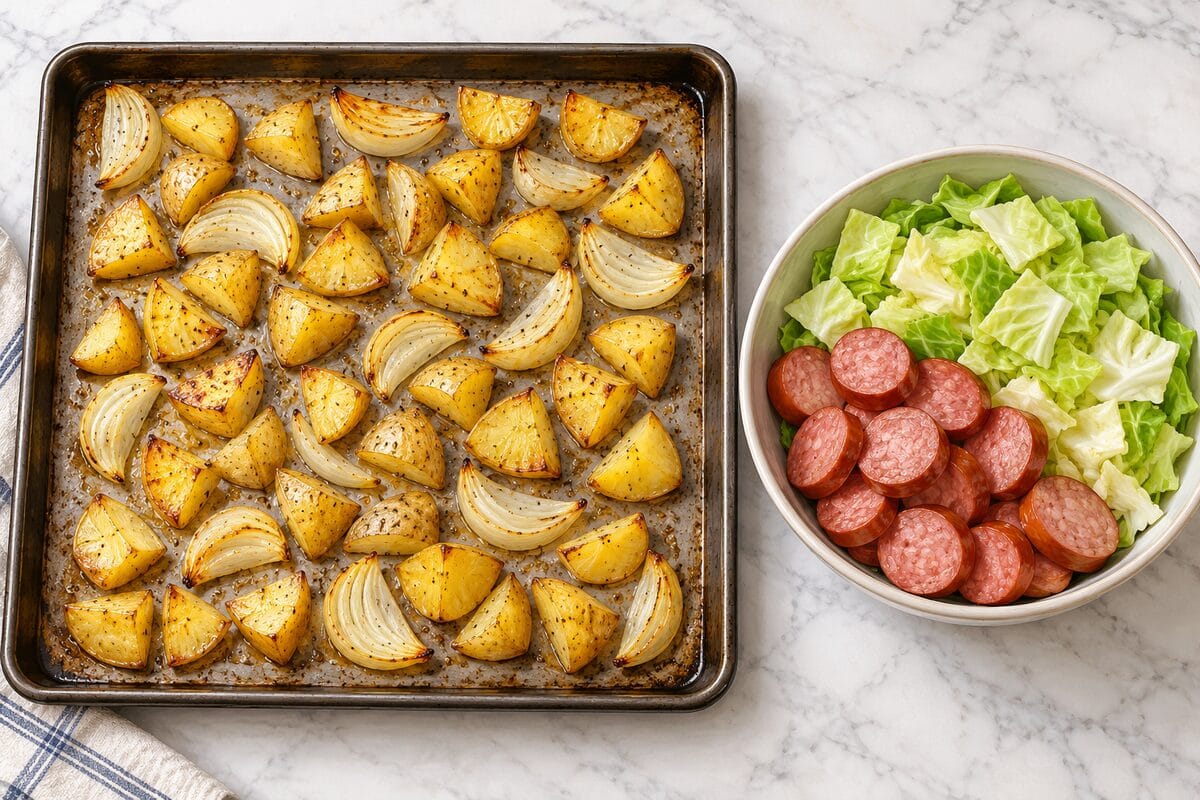
What to serve with this family supper
The pan already includes protein, a starchy vegetable, and cabbage, so it can stand alone. For contrast, add a crisp apple salad, unsweetened applesauce, rye bread, or a cucumber-dill salad. At the table, offer whole-grain mustard and vinegar separately so each person can adjust sharpness.
For a young child, avoid serving round sausage coins or half-moons. The CDC recommends cutting cylindrical foods such as sausage into short, thin strips. Adapt the size and texture to the child’s eating abilities and supervise the meal.
Storage, freezing, and reheating
Transfer leftovers to shallow covered containers and refrigerate within 2 hours of cooking. USDA guidance recommends using cooked leftovers within 3 to 4 days. For longer storage, freeze portions for up to 2 months for best texture. The food may remain safe longer when continuously frozen, but cabbage and potatoes gradually soften and lose quality.
Reheat on a lightly oiled sheet pan at 375°F for 10 to 15 minutes, stirring once, until the food reaches 165°F. An air fryer also restores crisp edges: heat a single layer at 350°F for about 5 to 8 minutes, checking early. For a microwave, cover loosely, add a teaspoon of water, and heat in short intervals, stirring between each interval and verifying 165°F in several spots.
Thaw frozen portions overnight in the refrigerator for the most even reheating. The potatoes will be softer after freezing, so oven or air-fryer reheating gives a better texture than the microwave.
Food-safety reference: USDA guidance for cooling, storing and reheating leftovers. Use the earlier deadline when an ingredient was prepared before this meal.
Plan-ahead notes for busy evenings
Up to one day ahead, wash and cut the potatoes, submerge them in cold water, cover, and refrigerate. Drain and dry them very thoroughly before adding oil or they will steam. You can also core and cut the cabbage, slice the fully cooked kielbasa, and store each in a separate covered container.
For the best browning, do not toss the vegetables with salt and oil hours ahead. Salt draws out moisture from cabbage, while oil on water-soaked potatoes prevents an even coating. Mix the seasonings in a tiny jar, then toss everything immediately before it goes onto the pan.
Frequently asked questions
Can I line the pan with foil or parchment?
Yes, if the liner is suitable for the 425°F oven temperature. Check the parchment package’s maximum temperature and keep it away from heating elements; use bare metal or foil if its rating is lower. Lightly oiled bare metal generally gives the deepest browning. Oil foil well so the potatoes and cabbage do not tear when turned.
Can I double the recipe?
Yes, but use two half-sheet pans. Putting twice the food on one pan traps moisture and makes the cooking time unpredictable. Rotate the pans from top to bottom and front to back when you stir them.
Is the recipe gluten-free?
The vegetables and seasonings are naturally gluten-free, but sausage and mustard formulations vary. Check both labels and avoid products with ingredients or cross-contact warnings that do not fit your needs.
Can I make it vegetarian?
A fully cooked plant-based smoked sausage can be used if its package permits oven heating. Add it during the second stage and follow its label because browning and heating times vary. Do not assume the same nutrition, allergens, or cook time as meat kielbasa.
With its staggered timing, measured potato size, and bright vinegar finish, this sheet-pan supper is designed to be repeatable rather than fussy. Keep the pan uncrowded, trust the potato tenderness test, and let the fully cooked kielbasa join only for the final roast.
Temperature reference: FoodSafety.gov safe minimum internal temperature chart. A thermometer confirms the safe endpoint; recipe times are estimates.