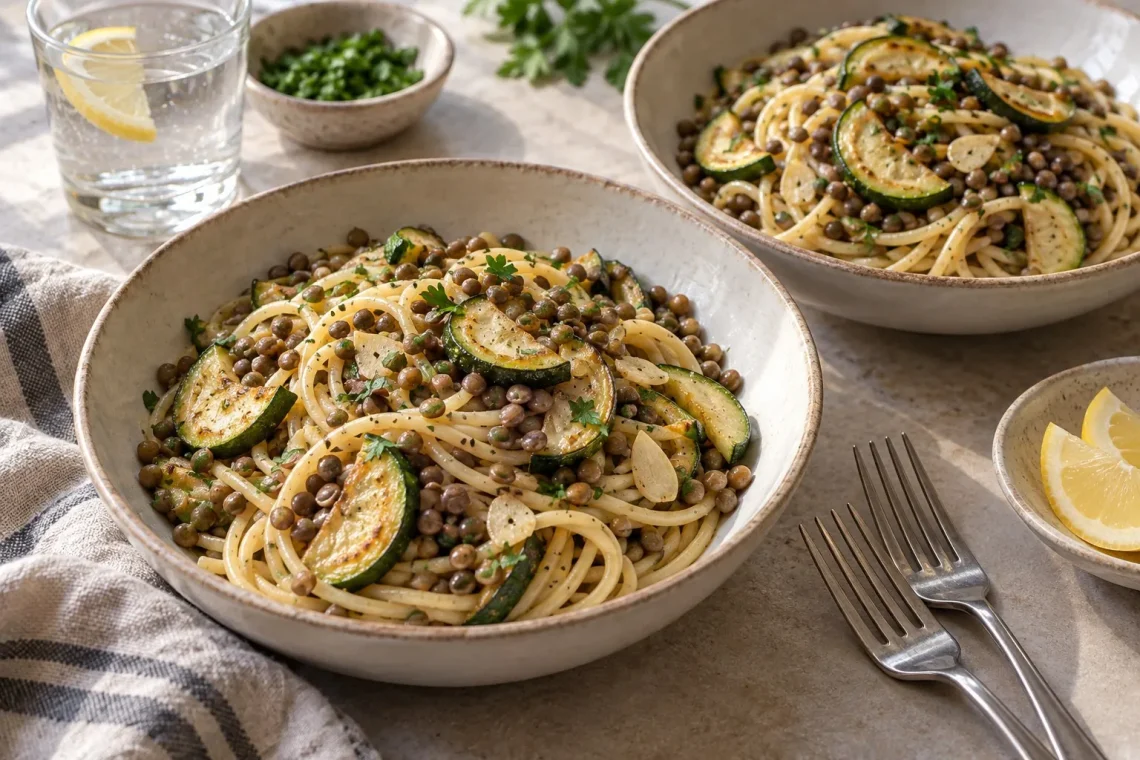
The best forkful of this zucchini pasta without tomatoes has a golden slice of squash, a few brown lentils and spaghetti slick with lemon and garlic. Two tablespoons of olive oil and a splash of starchy pasta water make enough sauce for the strands. Save the lemon zest and juice for the end so you can smell the citrus as you bring the bowls to the table.
Jump to: printable recipe · ingredients · preparation · method · double the recipe · FAQs.
This is spaghetti with canned lentils, so there’s no second pot of legumes to simmer. While the spaghetti cooks, brown the zucchini in a skillet and warm the lentils with the sliced garlic. Six ounces of dry spaghetti and a 15-ounce can of lentils make dinner for two, or three smaller bowls if you’re serving a salad alongside.
Turn pasta water into the missing sauce
Cook zucchini separately
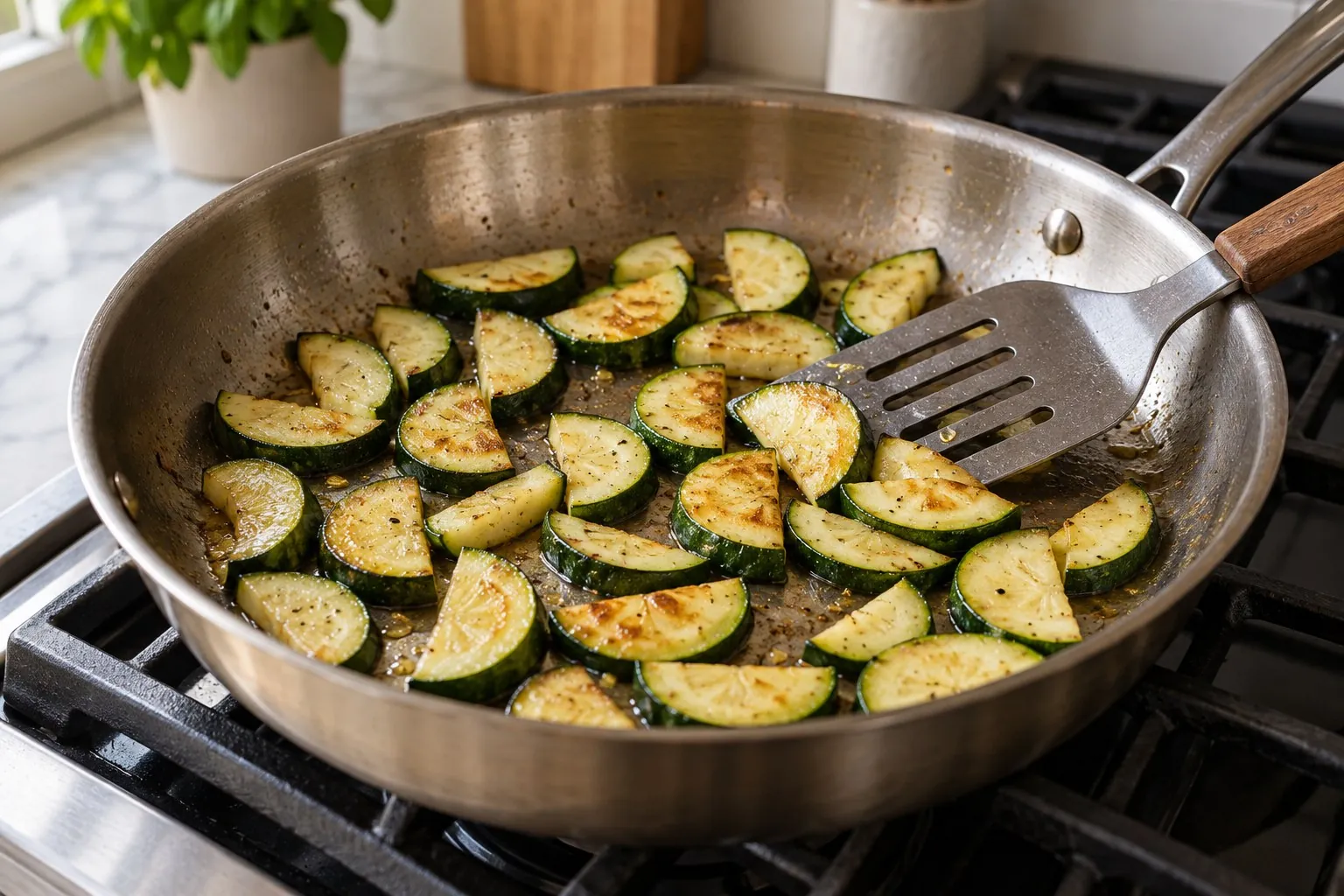
Give the slices room to lose moisture and develop color. Adding them directly to a full pasta pot can dilute the garlic and leave the vegetables soft.
Reserve water early
Scoop out pasta water before draining. Its starch helps garlic oil, softened zucchini and lentils cling to the spaghetti without tomatoes or cream.
Protect the garlic
Cook it only until fragrant. Dark garlic becomes bitter and is difficult to hide in a light, tomato-free finish.
Fold in the cooked lentils
They are already cooked. Fold them into the garlicky zucchini just before the spaghetti goes in. A broad spoon keeps the lentils whole.
Stop adding pasta water when the strands look glossy and a thin coating remains at the bottom of the pan. The sauce tightens as it cools, so serve while it still moves freely.
Two pans, one short finish
Serves: approximately 2–3. Preparation: about 10–12 minutes. Cooking: about 15–25 minutes, depending on the spaghetti and the time needed to boil water. Estimated total: about 25–37 minutes. Use a pasta pot, colander, wide skillet, broad spoon or tongs, knife, cutting board, fine grater, small bowl and measuring utensils.
Affiliate disclosure: As an Amazon Associate I earn from qualifying purchases. Paid links open Amazon search results.
Have the colander (paid link) and a heatproof measuring cup (paid link) together before starting. Saving the water is easy to forget when the pasta timer ends. Set out two fuller bowls or three smaller bowls with an accompaniment so the final toss leads straight to serving.
Ingredients for zucchini pasta without tomatoes
- 6 ounces dry spaghetti
- 1 medium zucchini, sliced into thin half-moons
- 1 can (15 ounces) cooked lentils, rinsed and drained
- 2 tablespoons olive oil
- 2 garlic cloves, thinly sliced
- 1/4 teaspoon chili flakes, optional
- 1 teaspoon lemon zest
- 1 tablespoon lemon juice
- Up to 1/3 cup pasta cooking water for the coating; reserve 1/2 cup before draining
- Salt and pepper
Prepare the zucchini, garlic and lemon
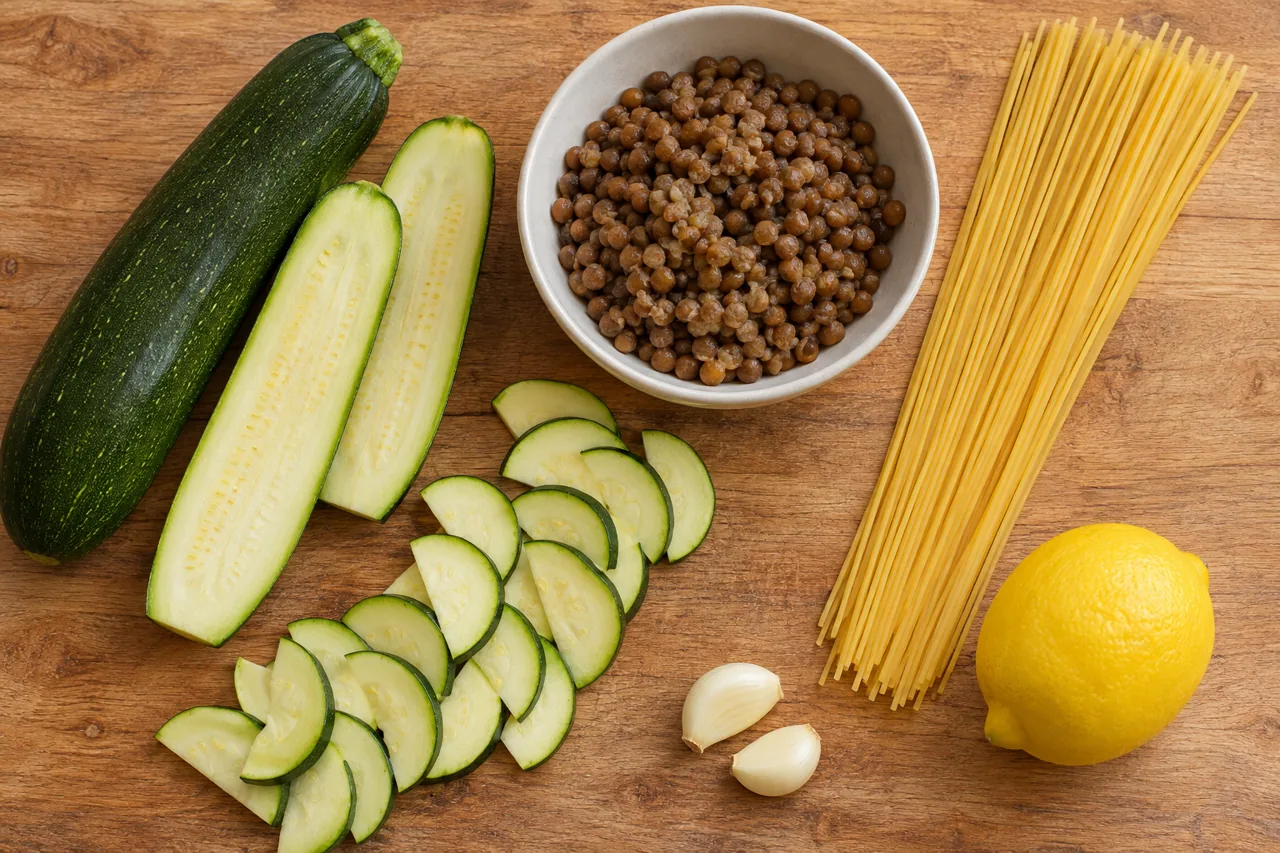
Wash the zucchini, trim the ends and halve it lengthwise. Lay each half flat, then cut across it into quarter-inch half-moons. A flat cut face gives the zucchini somewhere to brown. Pat the slices dry, especially if you rinsed them after cutting.
What if my garden zucchini is large?
Cut through the middle and look at the seeds. Small, tender seeds can stay. If the center is spongy or full of large seeds, run the tip of a spoon down each half to lift out that strip. Quarter the remaining flesh lengthwise, then slice it crosswise. The smaller arcs are easier to pick up with spaghetti and have two flat sides you can brown.
For this small batch, cut roughly the amount of squash you’d get from one medium zucchini and save the rest for another meal. If even that amount crowds the skillet, lift the first batch onto a plate as soon as the undersides are golden and the centers yield to a fork. Brown the rest, then return the first batch just before adding the garlic. Wait to add the garlic until all the squash has had its turn in the hot pan.
Peel the garlic and slice it thinly so the pieces can soften during their short late stage. Keep those slices away from the zucchini bowl. Adding them together would leave the garlic in the hot skillet for the entire browning period.
Wash and dry the lemon, then grate the measured teaspoon of zest before squeezing the juice. Take only the colored outer skin rather than repeatedly grating into the white layer. Measure the tablespoon of juice separately. The zest and juice serve different jobs, so do not assume a whole lemon equals both listed amounts.
Choose plain, cooked lentils
Choose plain canned brown or green lentils. Tip them into a fine-mesh strainer, rinse gently, then leave the strainer over a bowl while you slice the garlic. Taste one. If the lentils are already well salted, save the final pinch of salt for the table. If the lentils give way when you press one between two fingers, they’ll need only a gentle fold in the skillet.
When to start the skillet
Read the cooking time on your spaghetti box before heating the skillet. For strands that take about ten minutes, have the squash cut and the lentils drained before the pasta goes into the pot. For fast-cooking thin spaghetti, give the zucchini a head start. If the squash browns first, slide the skillet off the heat. Resume with the garlic when the spaghetti is nearly ready. The zucchini will keep its browned edges while you wait.
How much pasta water makes a glossy garlic sauce?
| Measure | Purpose |
|---|---|
| Reserve 1/2 cup before draining | Keep this cup by the skillet while you drain the spaghetti. |
| Use up to 1/3 cup for the sauce | Add a splash, toss, then check the bottom of the pan before adding more. |
| Keep the remainder nearby | Use only if the pasta needs a little more moisture; the full reserve is not an automatic addition. |
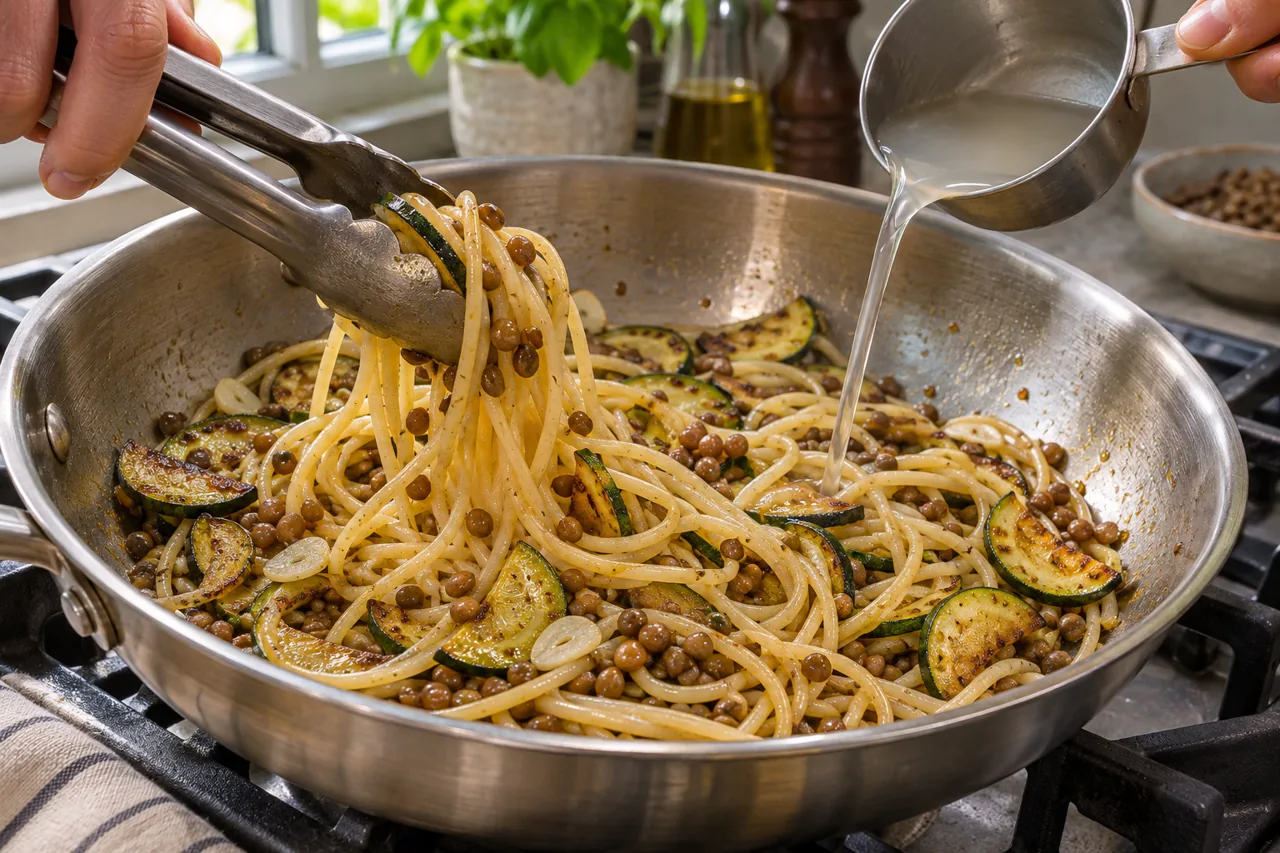
Dip a heatproof measuring cup into the pot near the end of cooking, when the water looks cloudy. Start with a couple of tablespoons in the skillet. Lift the strands with tongs while tilting the pan slightly. If clear beads of oil collect at the low edge and the spaghetti still sticks together, add another spoonful of water and toss again. Stop when the strands slide over each other and carry a thin sheen all the way to their tips.
How to make garlic zucchini spaghetti with canned lentils
- Start the pasta pot. Bring water to a boil, salt it to your preference and add the dry spaghetti. Stir to separate the strands, then cook according to the package, beginning to check near its suggested time. The pasta should be tender with a little bite rather than limp.
- Brown the zucchini while pasta cooks. Warm the oil in the wide skillet over medium-high heat. Spread the half-moons broadly and cook for about 3–4 minutes, turning to color some surfaces. Let pieces rest against the pan between turns. If the skillet is crowded, allow more time for moisture to evaporate.
- Add the short-cooking aromatics. Reduce the heat. Stir in the sliced garlic and optional chili flakes for about 30 seconds. The garlic should smell aromatic without turning dark. If it colors quickly, take the skillet briefly off the burner to moderate the heat.
- Warm the lentils gently. Fold in the drained cooked lentils and let them heat with the zucchini. Use broad lifts so the lentils remain recognizable. Keep the heat moderate and avoid cooking the mixture dry while the pasta finishes.
- Reserve water, then drain. Scoop out 1/2 cup of the hot pasta cooking water before draining the spaghetti. Keep the reserved liquid beside the skillet. Do not rinse the cooked spaghetti; transfer it directly toward the final combination.
- Make the light coating. Add the spaghetti to the skillet with part of the listed 1/3 cup of pasta water. Lift and fold the strands gently, adding the remaining allowance as needed. The liquid should help carry lentils among the strands without collecting in a deep pool. Use a little extra from the reserve only if the pan is still dry.

Add the hot pasta water a splash at a time, lifting the strands with tongs until the garlic oil coats them. - Finish with lemon. Remove from the heat and fold in the teaspoon of zest and tablespoon of juice. Taste before adding salt and pepper. Divide spaghetti between the bowls, then spoon any lentils and zucchini left in the skillet over the portions.
Keep lentils distributed instead of hidden at the bottom
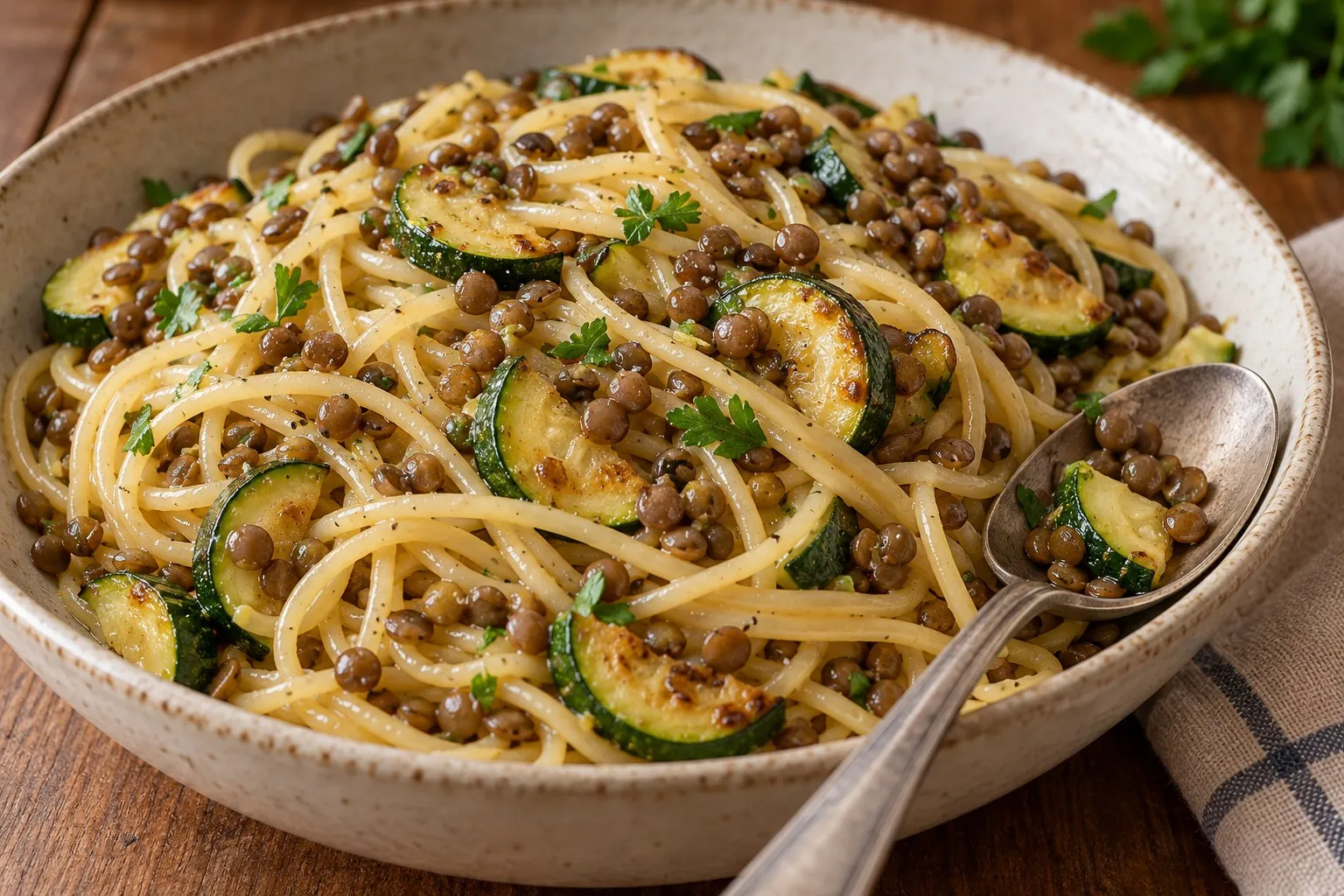
Long strands can lift out of a pan while the smaller lentils stay behind. Use tongs for a modest bundle of spaghetti, then a broad spoon for the lentils and zucchini beneath it. Alternate between the bowls so each portion gets a similar mixture rather than a plain pasta first serving and a lentil-heavy last one.
A few folded turns are enough once the coating reaches the strands. Repeated fast tossing may look dramatic but can break softened zucchini and lentils. Keep enough moisture for the spoon to slide beneath the ingredients, and serve while the pasta is still loose.
Fix the coating before adding extra flavor
If zucchini releases a puddle, let it cook away before adding the lentils whenever possible. If the finished pasta is dry or sticky, add a spoonful of warm reserved water and fold again. Extra oil is not always the first answer to a coating that simply lacks liquid.
If the pasta tastes sharp, check whether more than the measured lemon went in. Additions should be small and considered, because this is only six ounces of dry spaghetti. If the dish tastes flat, finish distributing the zest and juice before adding salt in small pinches.
How to double the recipe for four
For four generous bowls, use 12 ounces of spaghetti, two medium zucchini, two 15-ounce cans of lentils, four garlic cloves and four tablespoons of olive oil. Zest and juice the lemons until you have two teaspoons of zest and two tablespoons of juice. Set aside a cup of pasta water. You may use only part of it, especially if your squash gave off a lot of moisture.
Boil the spaghetti in one pot and brown the zucchini in two batches, dividing the oil between them. If your skillet can’t comfortably hold the cooked spaghetti as well as the vegetables, use the empty pasta pot for the final toss. Set it over low heat, scrape in the garlic oil, zucchini and lentils, then add the drained strands and a splash of cooking water. A spoon in one hand and tongs in the other make it easier to bring the lentils up from the bottom.
A crisp breadcrumb topping for the lemon-garlic spaghetti
For a little crunch with the soft lentils, toast two tablespoons of coarse breadcrumbs in a teaspoon of olive oil in a small skillet over medium heat. Stir frequently and tip the crumbs onto a plate as soon as they are golden. A hot skillet can take them from golden to burnt even after the burner is off. These amounts will top the original two-person batch.
Scatter the crumbs over each bowl just before eating. If someone is saving a portion for later, pack their crumbs separately so they stay crisp. A little torn basil or chopped parsley also works well with the lemon. Add fresh herbs at the table, where their aroma comes through most clearly.
Serve and store with the pasta in mind
Crisp greens make a useful side, and chopped parsley can be offered as an optional garnish. Keep the first plate simple enough that the garlic, zucchini and lemon remain distinct. For a separate cool lentil meal, the site has canned lentil and cucumber wraps.
Refrigerate leftovers in shallow covered containers within 2 hours, or within 1 hour above 90°F. Keep at 40°F or below and use within 3–4 days. Reheat to 165°F with a spoonful of water as needed, stirring gently so the center warms evenly. The pasta will soften and its coating thicken during storage.
Questions about zucchini pasta without tomatoes
Can I use dried lentils?
Yes. Whole brown or green lentils make the closest swap. Simmer them in a separate pot until you can bite through one easily and the skins still hold together. Drain well and add the cooked lentils at the same point as the canned ones. Split red lentils soften into a purée and give this spaghetti a much thicker coating.
Can yellow squash replace zucchini?
Yes. Choose a small yellow summer squash with a firm center. If the bulb end is wide, quarter that end lengthwise so the slices are close in size to the zucchini half-moons. Start checking the squash as soon as the undersides turn golden.
Can I use white beans instead of lentils?
They create a larger, softer legume component. Drain and rinse a comparable can, keep the late addition and handle gently. The long spaghetti strands will distribute around beans differently from small lentils, so portion with a spoon as well as tongs.
What if I forgot to reserve pasta water?
Spoon warm water into the skillet a tablespoon at a time. For a little extra body, press a spoonful of the cooked lentils against the side of the pan and stir them into the garlic oil with the water before tossing the spaghetti. Keep the remaining lentils whole for texture.
Can I use another pasta shape?
Use the same six ounces of dry pasta. Fusilli catch small lentils in their spirals, and shells scoop them up with the zucchini. Follow the cooking time on the box and reserve water before draining, just as you would for spaghetti.
What can I prepare ahead for this zucchini pasta?
Rinse the lentils and cut the zucchini in advance, refrigerating them in separate covered containers. Blot the cut squash before it goes into the hot pan. The part worth saving for dinner time is tossing the hot strands with garlic oil and cooking water. That coating is at its glossiest as it comes off the stove.
Food handling references: USDA leftovers guidance, FDA refrigerated storage advice and FoodSafety.gov reheating temperatures.
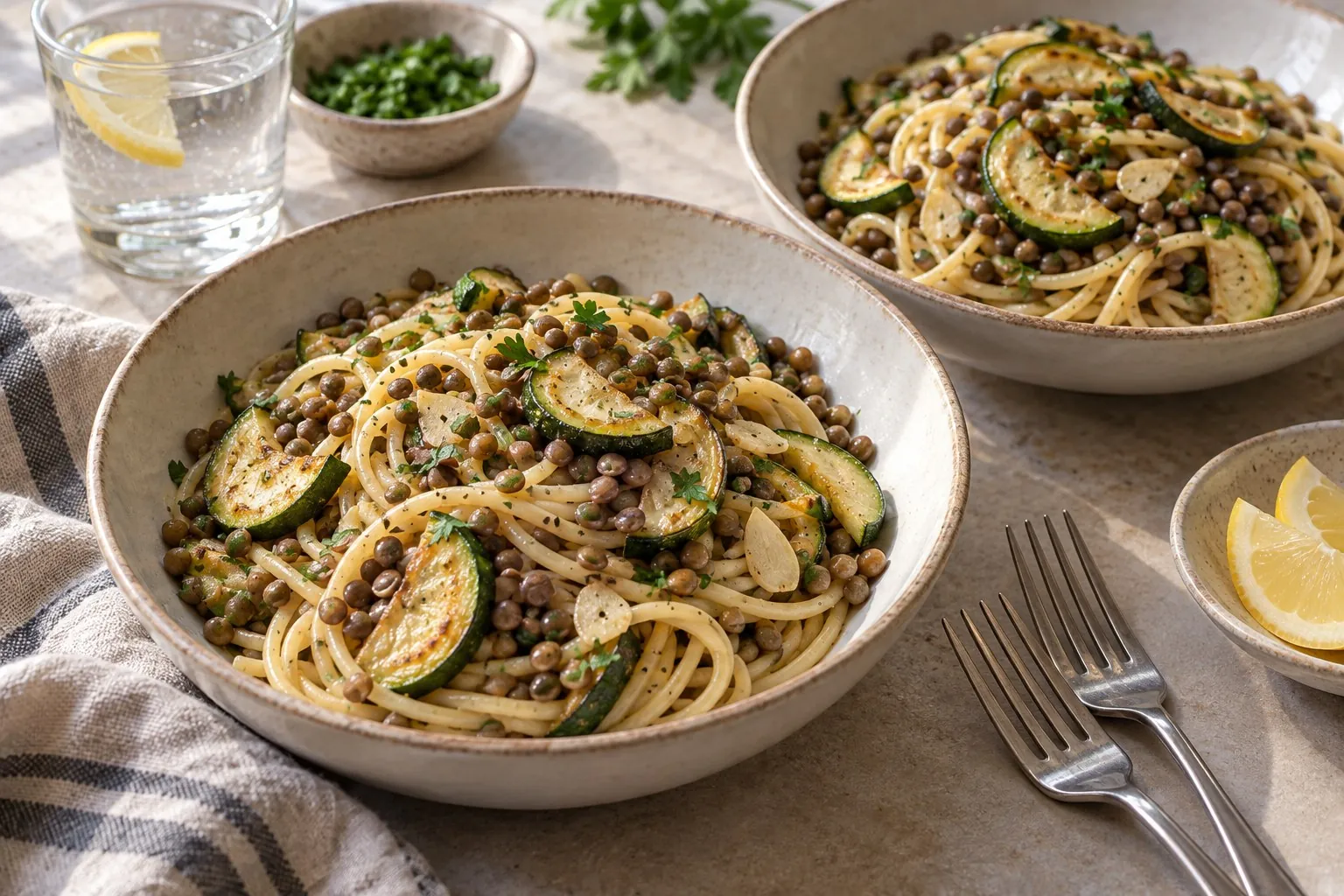
Garlic Zucchini Canned Lentil Spaghetti Without Tomatoes
Ingredients
Equipment
Method
- Start the pasta pot. Bring water to a boil, salt it to your preference and add the dry spaghetti. Stir to separate the strands, then cook according to the package, beginning to check near its suggested time. The pasta should be tender with a little bite rather than limp.
- Brown the zucchini while pasta cooks. Warm the oil in the wide skillet over medium-high heat. Spread the half-moons broadly and cook for about 3–4 minutes, turning to color some surfaces. Let pieces rest against the pan between turns. If the skillet is crowded, allow more time for moisture to evaporate.
- Add the short-cooking aromatics. Reduce the heat. Stir in the sliced garlic and optional chili flakes for about 30 seconds. The garlic should smell aromatic without turning dark. If it colors quickly, take the skillet briefly off the burner to moderate the heat.
- Warm the lentils gently. Fold in the drained cooked lentils and let them heat with the zucchini. Use broad lifts so the lentils remain recognizable. Keep the heat moderate and avoid cooking the mixture dry while the pasta finishes.
- Reserve water, then drain. Scoop out 1/2 cup of the hot pasta cooking water before draining the spaghetti. Keep the reserved liquid beside the skillet. Do not rinse the cooked spaghetti; transfer it directly toward the final combination.
- Make the light coating. Add the spaghetti to the skillet with part of the listed 1/3 cup of pasta water. Lift and fold the strands gently, adding the remaining allowance as needed. The liquid should help carry lentils among the strands without collecting in a deep pool. Use a little extra from the reserve only if the pan is still dry.
- Finish with lemon. Remove from the heat and fold in the teaspoon of zest and tablespoon of juice. Taste before adding salt and pepper. Divide spaghetti between the bowls, then spoon any lentils and zucchini left in the skillet over the portions.
Notes
- Yield and timing: One batch makes 2 fuller portions or 3 smaller servings. Allow about 10–12 minutes to prepare and 15–25 minutes to cook, depending on the pasta and time needed to boil water.
- Water: Reserve ½ cup of pasta cooking water before draining. Use up to ⅓ cup gradually for the coating and add a little more from the reserve only if still dry; the full reserve is not an automatic addition.
- Texture: Cut zucchini into ¼-inch half-moons and brown before adding sliced garlic. Use cooked canned lentils, fold gently, and add zest and juice off heat. Parsley is an optional garnish.
- Leftovers: Refrigerate in shallow containers within 2 hours, or 1 hour above 90°F (32°C), at 40°F (4°C) or below. Use within 3–4 days and reheat to 165°F (74°C). FoodSafety.gov storage guidance.