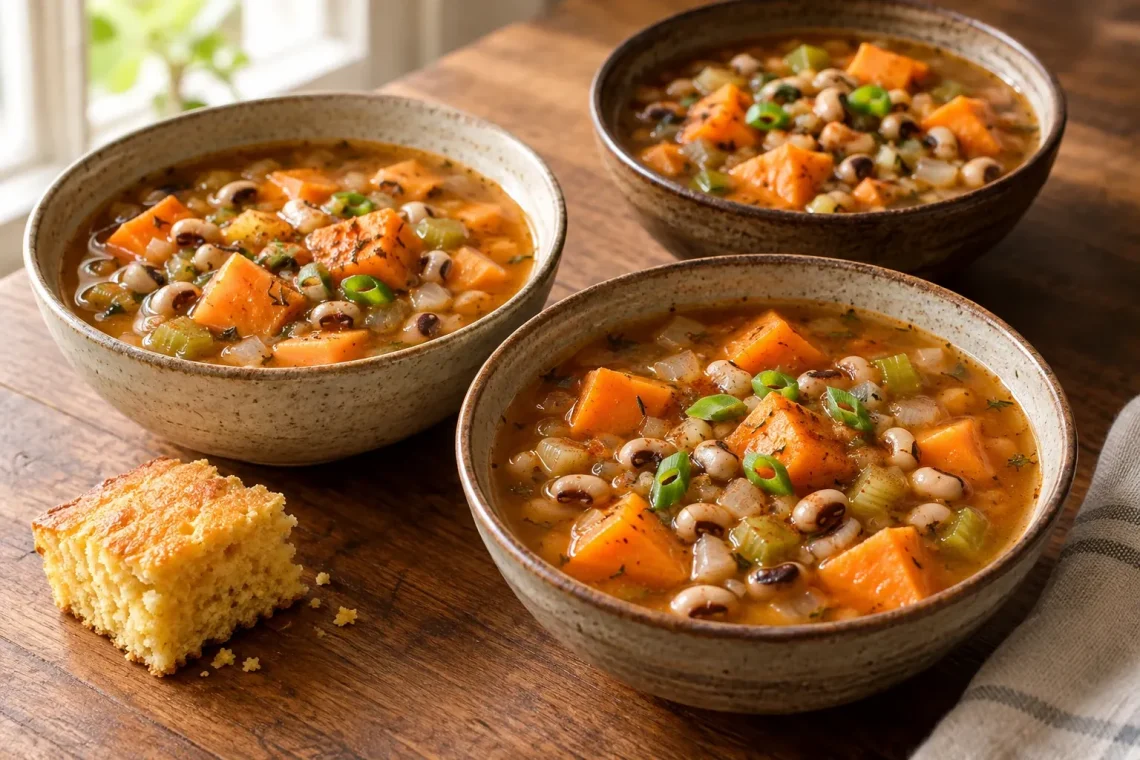
Canned black-eyed pea sweet potato soup without tomatoes is a small-batch stovetop soup built around pantry beans, a clearly measured sweet potato, and a bright vinegar finish. The sweet potato gives the broth body without cream, while smoked paprika and thyme keep the bowl savory rather than sugary.
Affiliate disclosure: As an Amazon Associate I earn from qualifying purchases. These paid links open Amazon search results for comparing equipment.
Set out a 3-quart saucepan with a lid (paid link) for the soup and a chef’s knife (paid link) for cutting the sweet potato into evenly sized pieces.
The pot stays chunky and brothy. Cook the sweet potato before warming the canned peas, then taste the vinegar finish in a spoonful containing both ingredients.
Jump to: printable recipe · ingredients · method · finishing check · FAQs.
Balance sweet potato when tomatoes are not in the pot
- Build a savory base first. Cook the aromatics and spices until fragrant before adding liquid. That prevents the finished bowl from tasting sweet even though sweet potato is the largest vegetable.
- Add the canned peas late. They are already cooked and only need time to heat and absorb broth. Long boiling can split them and make the soup cloudy.
- Correct the finish, not the whole pot. Once the sweet potato is tender, taste a spoonful containing broth, potato and a pea. Add acid or pepper in small amounts so the soup stays rounded rather than sharp.
Doneness cue: a fork should enter the largest sweet-potato cube without resistance, while most black-eyed peas remain whole. If the broth is thinner than you prefer, mash a few potato cubes against the side of the pot instead of extending the cooking time for every ingredient.
Black-eyed pea sweet potato soup at a glance
- Expected yield: about 4 1/2 to 5 cups, or 3 generous bowls
- Preparation: about 12 minutes
- Estimated cooking time: 26 to 34 minutes
- Estimated total time: 41 to 49 minutes, including the 3-minute rest
- Equipment: 3-quart or larger saucepan with a lid, cutting board, chef’s knife, wooden spoon, measuring cups and measuring spoons
The timing includes softening the aromatics, bringing the broth to a simmer, cooking the sweet potato until tender, and warming the canned peas. A wider pan, larger potato cubes, a cold burner, or very cold broth can shift the schedule, so the largest sweet-potato cube is the final doneness test.
Measured ingredients and preparation notes
- 1 tablespoon olive oil
- 1/2 medium yellow onion, cut into 1/4-inch dice, about 1/2 cup
- 1 medium celery stalk, cut into 1/4-inch dice, about 1/2 cup
- 8 ounces orange sweet potato after peeling, cut into 1/2-inch cubes, about 1 1/2 cups
- 1/2 teaspoon smoked paprika
- 1/4 teaspoon dried thyme, crushed between your fingers
- 3 cups low-sodium vegetable broth, plus up to 1/2 cup for thinning
- 1 can (15 ounces) black-eyed peas, rinsed and drained, about 1 1/2 cups
- 2 teaspoons apple cider vinegar, plus more only after tasting
- 1/4 teaspoon black pepper
- 1/4 teaspoon fine salt to start, only if the broth needs it, plus more to taste
- Optional for serving: 2 tablespoons thinly sliced scallions
Why the sweet-potato cube size matters
Keep the pieces close to 1/2 inch. Larger cubes can still have a firm center when the rest of the soup is ready, while very small pieces can dissolve and make the broth unexpectedly thick. Measure the potato after peeling so the intended amount is not inflated by skin and trimmed ends.
Why canned black-eyed peas go in late
Canned black-eyed peas are already cooked. They need to heat through and absorb some seasoning, not simmer for the full vegetable-cooking time. Adding them after the sweet potato is nearly tender helps the peas keep their shape. Rinsing also removes the packing liquid, which varies in salt and thickness among brands.
Choose the broth before adding salt
Vegetable broths range from mild to strongly seasoned. Start with low-sodium broth when possible, then taste near the end. If the broth already tastes salty, omit the initial 1/4 teaspoon and adjust only after the vinegar is mixed in. Acidity can sharpen flavor enough that less salt is needed.
Prepare a weighed root and a drained can
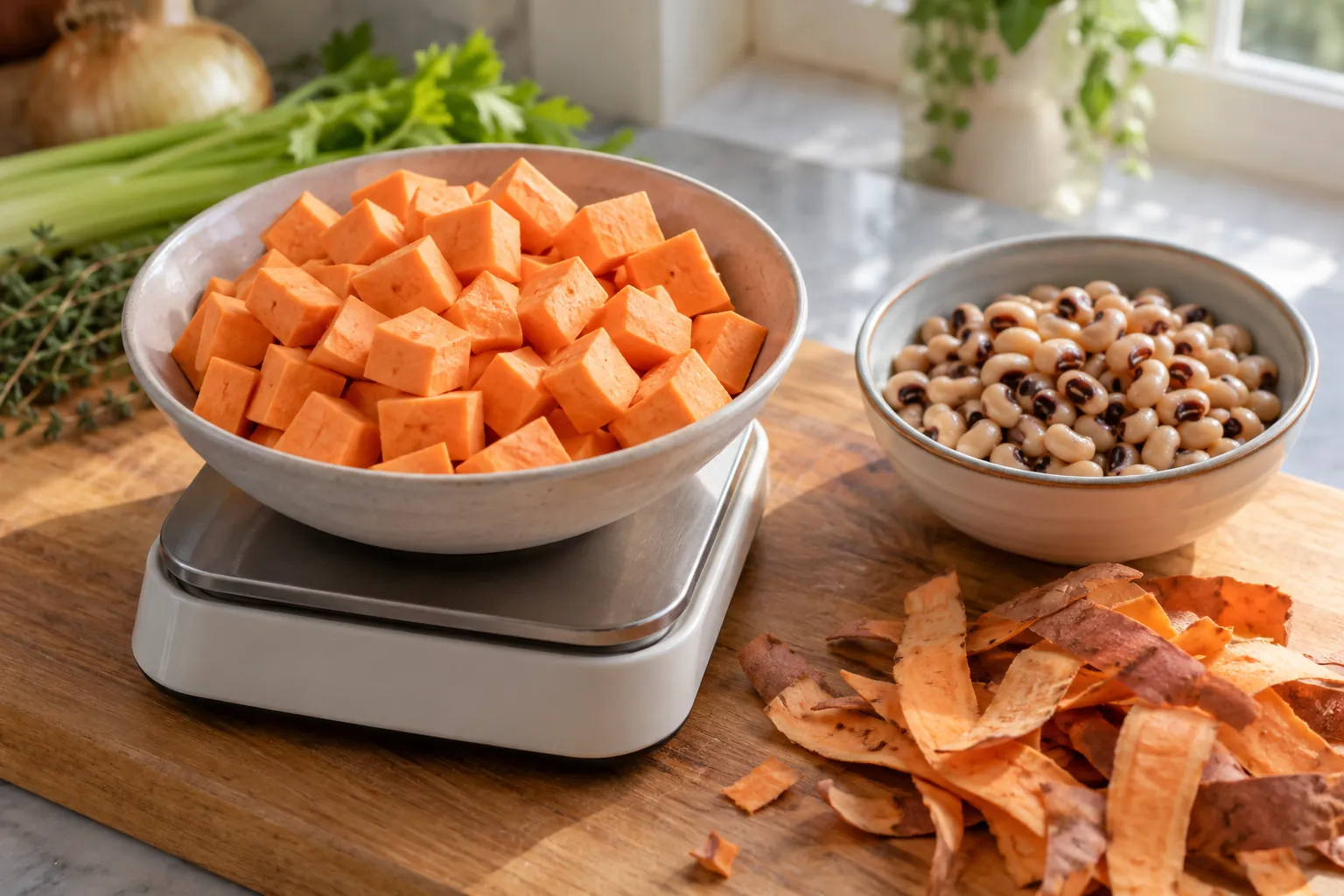
Weigh the sweet potato after peeling and trimming: the usable orange flesh should provide the stated eight ounces. Cut half-inch slabs, then sticks, then cubes. Spread the cubes out briefly to spot larger pieces, and recut those before cooking. This is easier than finding hard centers after the peas have already joined the pot.
Keep the onion and celery together because they enter the pan at the same time. The sweet potato belongs in a separate bowl for its later addition. Drain the rinsed black-eyed peas in a colander while you prepare the vegetables, then set them apart from the raw root. Their late warming step should not become part of the entire sweet-potato simmer.
Measure the optional half cup of thinning broth separately from the three-cup starting amount. Keep it out until the finished consistency is known. A brothier-looking pot at the beginning does not tell you how much moisture will remain after tenderizing and the short final rest.
Cook canned black-eyed pea sweet potato soup without tomatoes
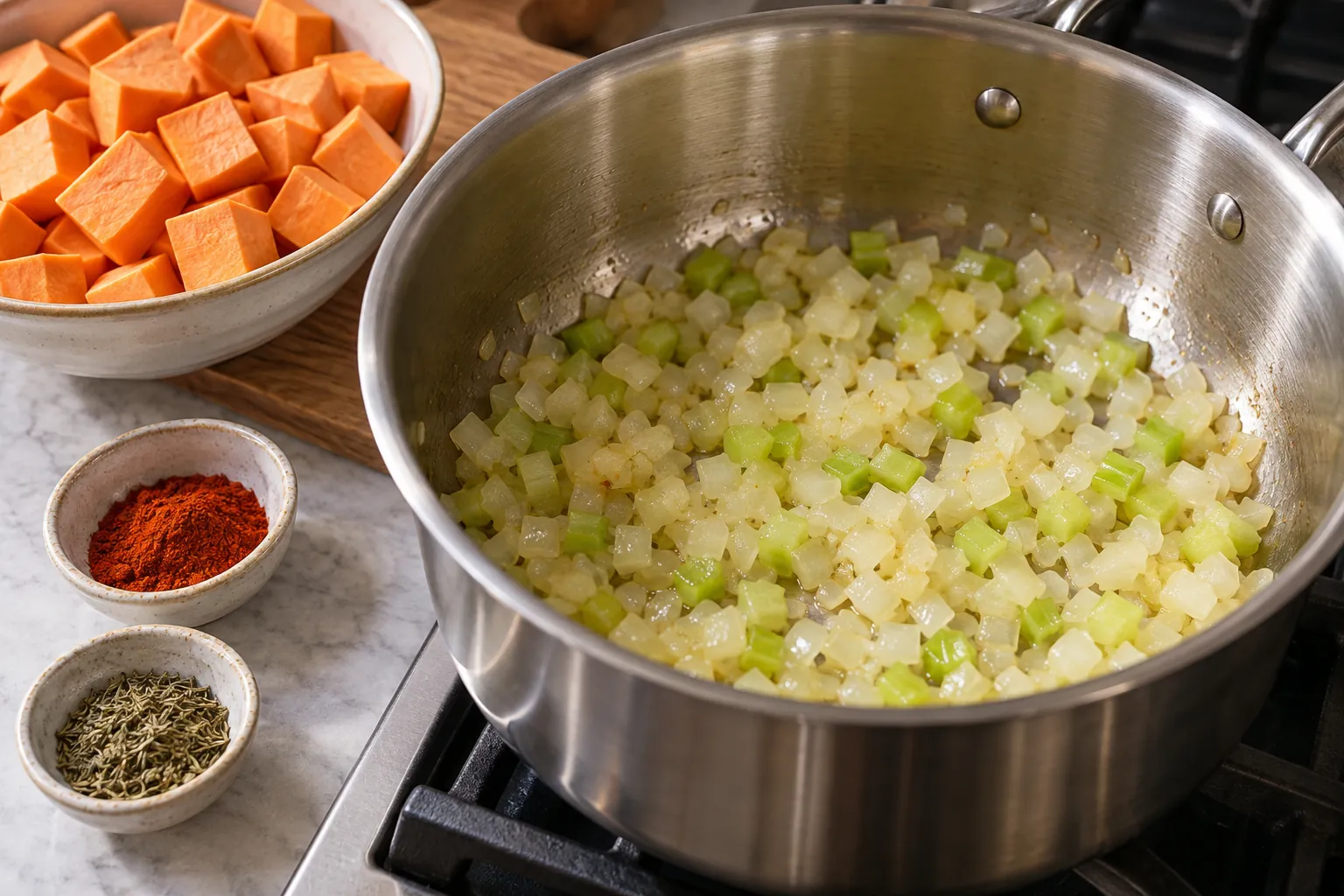
- Prepare before heating. Dice the onion and celery. Peel the sweet potato and cut it into even 1/2-inch cubes. Rinse the black-eyed peas in a fine-mesh strainer until the draining water runs mostly clear, then let them drain well.
- Soften the aromatics. Heat the olive oil in a 3-quart saucepan over medium heat. Add the onion and celery. Cook for 5 to 6 minutes, stirring every minute or so, until the onion looks translucent and the celery begins to soften. Reduce the heat if the onion browns quickly.
- Bloom the seasonings. Add the smoked paprika and thyme. Stir for about 30 seconds, just until fragrant. Do not leave the paprika against the dry bottom of the pan because it can scorch and turn bitter.
- Add the sweet potato and broth. Stir in the sweet-potato cubes and 3 cups broth. Scrape the bottom of the pan with the spoon so no spices remain stuck. Increase the heat to medium-high and bring the liquid to a steady simmer, which may take 5 to 7 minutes.
- Cook the sweet potato. Reduce the heat to maintain a gentle simmer and partially cover the pan. Cook for 12 to 16 minutes, stirring twice. Begin checking the largest cube at 12 minutes. It should accept the tip of a paring knife or fork without a hard, chalky center but should still hold its shape.
- Warm the black-eyed peas. Stir in the drained peas. Simmer uncovered for 3 to 4 minutes, until the peas are hot throughout. Stir gently so the softened sweet potato does not break apart unnecessarily.
- Finish the flavor. Remove the pan from the heat. Stir in 2 teaspoons apple cider vinegar and the black pepper. Taste a spoonful containing broth, sweet potato, and peas. Add salt only as needed. If the soup tastes flat, add vinegar 1/2 teaspoon at a time rather than pouring in a large unmeasured splash.
- Adjust and serve. Let the soup stand for 3 minutes. If it is thicker than desired, stir in hot broth 2 tablespoons at a time, up to 1/2 cup. Divide among bowls and add scallions if using.
Three checkpoints before serving
1. Check the largest sweet-potato cube
A fork should slide through the center without crunching, but the cube should not collapse as soon as it is lifted. Test the largest visible piece, not a small cube from the edge of the pan. If it is still firm, simmer 2 minutes more and check again before adding extra liquid.
2. Check the broth around the solids
The broth should remain spoonable rather than turning into a mash. Some starch from the sweet potato will naturally give it a little body. If several cubes broke apart, thin the soup gradually instead of adding the entire optional 1/2 cup at once. For other measured approaches, see the guide to thickening soup without flour or cornstarch.
3. Balance smoke, sweetness, and acidity
Taste after the vinegar has been added. The goal is a savory broth with a gentle sweet-potato note, not a sharply sour soup. If smoke dominates, dilution with a little broth is safer than adding sugar. If sweetness dominates, another 1/2 teaspoon vinegar and a pinch of pepper may restore balance.
Give the final spoonful three questions
Use a ladle that can collect broth and solids together. Gently stir from the bottom before portioning so the peas and sweet potato are distributed among all three bowls.
The two teaspoons of vinegar are the starting finish. If another half teaspoon is needed after tasting, measure it rather than pouring directly from the bottle. Stir, let the addition disperse and taste again. When dividing three portions, share the larger sweet-potato cubes first, then ladle peas and broth into each bowl. This keeps the third serving from becoming mostly liquid.
Troubleshooting by symptom
| Symptom | Likely cause | Measured correction |
|---|---|---|
| Sweet potato is firm | Cubes are larger than 1/2 inch or the simmer was too quiet | Cover partially and simmer 2 minutes at a time, checking the largest cube |
| Soup is too thick | Potato pieces broke down or liquid evaporated quickly | Add hot broth 2 tablespoons at a time, then recheck seasoning |
| Soup is watery | Extra liquid was added before the potato softened | Simmer uncovered for 2 to 4 minutes, or mash only 2 tablespoons of sweet potato against the pan |
| Peas are splitting | They simmered too long or were stirred aggressively | Stop cooking once they are hot; fold gently rather than beating the soup |
| Flavor is flat | Salt or acidity is too low | Add vinegar 1/2 teaspoon at a time, then add salt by small pinches only if needed |
| Paprika tastes bitter | The spice scorched before broth was added | Do not hide a strongly burned flavor; begin again and shorten the blooming step |
Bounded substitutions and allergen notes
- Regular paprika: It removes the smoky note but keeps the color. Do not compensate with a large amount of cumin; start with 1/8 teaspoon if using it.
- Fresh thyme: Use 3/4 teaspoon finely chopped fresh leaves in place of 1/4 teaspoon dried thyme.
- Canned chickpeas: They stay firmer than black-eyed peas and make a noticeably different soup. Use the same drained volume, but treat it as a variation that requires a separate taste and yield check.
- White potato: It is less sweet and often more starchy. Keep the cube size the same and begin checking at 10 minutes, but do not assume the same final texture.
- Vinegar: Fresh lemon juice can provide acidity, though its flavor is brighter and less mellow. Add it only after the pan leaves the heat.
The ingredient list is dairy-free and vegan when the broth is vegetable-based. It can be gluten-free if the broth, spices, and canned peas are labeled or verified for that need. Broth may contain celery, soy, yeast extract, or other ingredients that matter to individual diners, so check the package rather than relying on the recipe title.
Serving ideas and related pantry meals
Serve the soup with toast, cornbread, or a simple green salad. Scallions add a fresh contrast without changing the tomato-free character. If you want a thicker meal built around similar pantry ingredients, the sweet potato black bean skillet without tomatoes uses a different dry-skillet format and should not be treated as interchangeable with this soup.
For even portions, stir from the bottom before ladling so the beans and sweet potato are distributed instead of settling in the final bowl. Use a heat-safe ladle and place the pot on a stable surface; the broth and heavy solids can shift quickly if the saucepan is carried while full.
Cooling, storage, freezing, and reheating
Transfer leftovers to shallow covered containers and refrigerate within 2 hours of cooking, or within 1 hour when the surrounding temperature is above 90°F. Keep the refrigerator at 40°F or below and use the soup within 3 to 4 days. Reheat leftovers to 165°F, stirring so the center and edges warm evenly. These limits follow USDA food-safety guidance.
For longer storage, freeze promptly in a freezer-safe container with room for expansion. Label with the cooking date and thaw in the refrigerator. Sweet potato and canned peas may be softer after freezing, so reheat gently in a saucepan and stir only as needed. Add a little broth if the soup thickens, and heat the entire portion to 165°F before serving.
Questions about the sweet-potato and black-eyed-pea soup
Can I start with dried black-eyed peas?
Cook them fully in a separate pot before using a drained quantity comparable to the can, about 1 1/2 cups. Dry peas cannot soften during the short late warming stage. Their cooking liquid and schedule need their own method and should not be added to the three-cup soup formula without adjustment.
Can I cut the sweet potato earlier?
You can prepare the measured cubes ahead and keep them covered in the refrigerator until cooking. Keep them separate from the canned peas so the recipe sequence stays clear. Recheck that the pieces are similar in size; early preparation is most useful when it also makes the later tenderness check straightforward.
Should I mash the sweet potato to thicken the soup?
The reference method keeps it chunky. If the finished soup is unexpectedly thin, the original correction suggests mashing only a small two-tablespoon portion. Stir that through before doing more. Mashing the whole root produces a different soup and makes the can of peas feel like an addition to a purée.
Can canned black-eyed pea sweet potato soup without tomatoes be made a day ahead?
Yes, after prompt refrigeration. The sweet potato can soften further and the broth may thicken during storage. Reheat to 165°F throughout with gentle stirring and add broth gradually if needed. Keep any fresh scallions separate until serving, and include earlier storage time for previously opened peas.
What if my broth already tastes salty?
Follow the ingredient list’s instruction to omit the initial salt when it is unnecessary. Taste after the peas and vinegar are incorporated before adding any more. Extra vinegar may change the flavor balance, but it does not remove salt already in the pot; use gradual broth adjustments if dilution is needed.
Can I serve this as two large bowls instead?
You can divide the same pot into two larger portions, but that changes the serving plan rather than increasing the recipe yield. The stated estimate is three generous bowls. For a three-person meal needing more food, offer toast, cornbread or another side instead of enlarging only one ingredient in the soup.
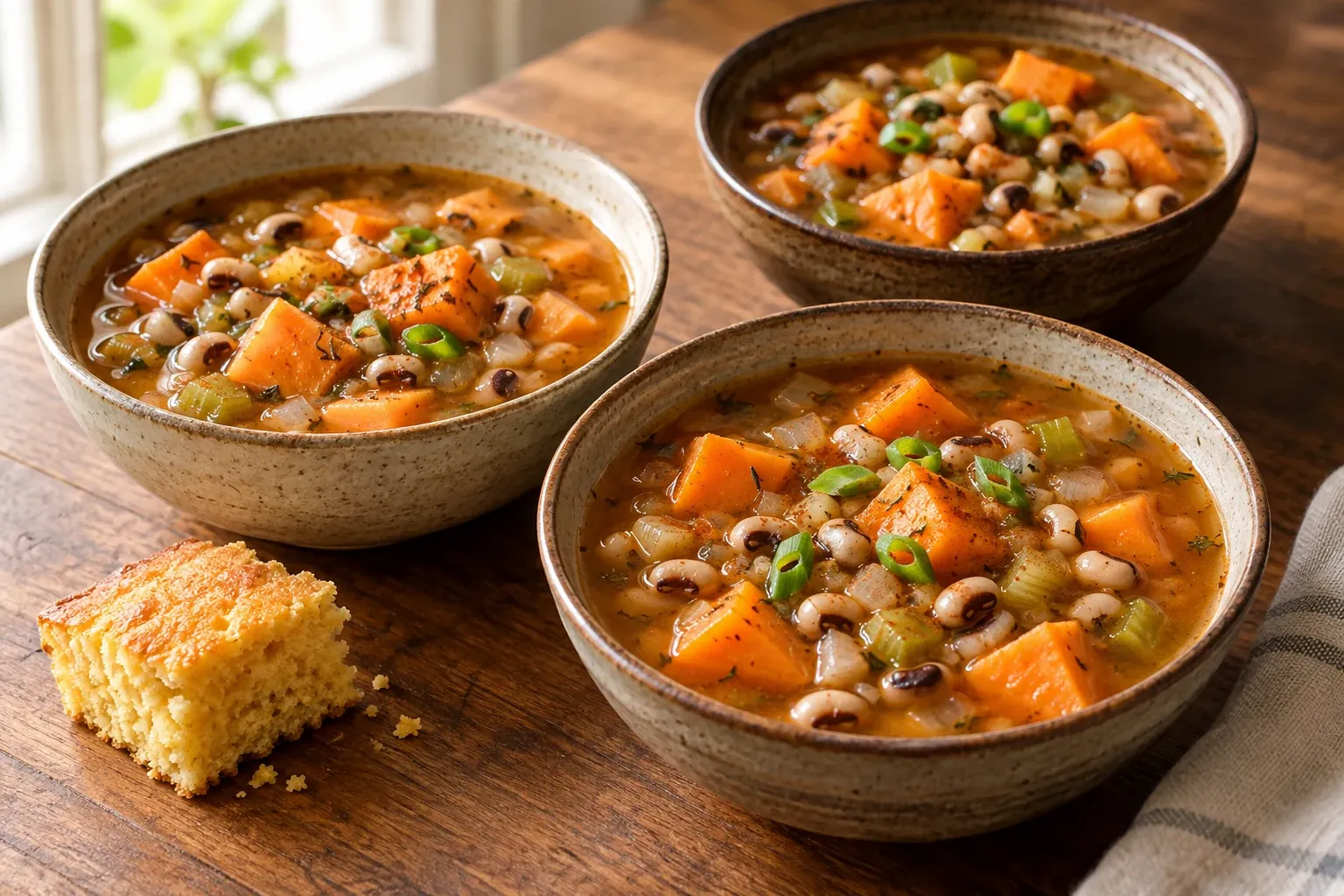
Canned Black-Eyed Pea Sweet Potato Soup Without Tomatoes
Ingredients
Equipment
Method
- Prepare before heating. Dice the onion and celery. Peel the sweet potato and cut it into even 1/2-inch cubes. Rinse the black-eyed peas in a fine-mesh strainer until the draining water runs mostly clear, then let them drain well.
- Soften the aromatics. Heat the olive oil in a 3-quart saucepan over medium heat. Add the onion and celery. Cook for 5 to 6 minutes, stirring every minute or so, until the onion looks translucent and the celery begins to soften. Reduce the heat if the onion browns quickly.
- Bloom the seasonings. Add the smoked paprika and thyme. Stir for about 30 seconds, just until fragrant. Do not leave the paprika against the dry bottom of the pan because it can scorch and turn bitter.
- Add the sweet potato and broth. Stir in the sweet-potato cubes and 3 cups broth. Scrape the bottom of the pan with the spoon so no spices remain stuck. Increase the heat to medium-high and bring the liquid to a steady simmer, which may take 5 to 7 minutes.
- Cook the sweet potato. Reduce the heat to maintain a gentle simmer and partially cover the pan. Cook for 12 to 16 minutes, stirring twice. Begin checking the largest cube at 12 minutes. It should accept the tip of a paring knife or fork without a hard, chalky center but should still hold its shape.
- Warm the black-eyed peas. Stir in the drained peas. Simmer uncovered for 3 to 4 minutes, until the peas are hot throughout. Stir gently so the softened sweet potato does not break apart unnecessarily.
- Finish the flavor. Remove the pan from the heat. Stir in 2 teaspoons apple cider vinegar and the black pepper. Taste a spoonful containing broth, sweet potato, and peas. Add salt only as needed. If the soup tastes flat, add vinegar 1/2 teaspoon at a time rather than pouring in a large unmeasured splash.
- Adjust and serve. Let the soup stand for 3 minutes. If it is thicker than desired, stir in hot broth 2 tablespoons at a time, up to 1/2 cup. Divide among bowls and add scallions if using.
Notes
- Yield and timing: About 4½–5 cups, divided into 3 bowls. Allow about 12 minutes to prepare, 26–34 minutes to cook and 3 minutes to rest, for roughly 41–49 minutes total. The card uses a 45-minute planning estimate; test the largest sweet-potato cube for tenderness.
- Texture: Weigh 8 ounces of sweet potato after peeling and cut into even ½-inch cubes. Add the cooked canned peas after the potato is tender. Keep the pot at a gentle simmer so the peas stay mostly whole.
- Finish: Add the measured vinegar off heat, taste, then adjust gradually. Thin with hot broth only as needed. Frozen leftovers may have softer potato and peas; thaw in the refrigerator and reheat gently.
- Leftovers: Refrigerate in shallow containers within 2 hours, or 1 hour above 90°F (32°C), at 40°F (4°C) or below. Use within 3–4 days and reheat to 165°F (74°C). FoodSafety.gov storage guidance.