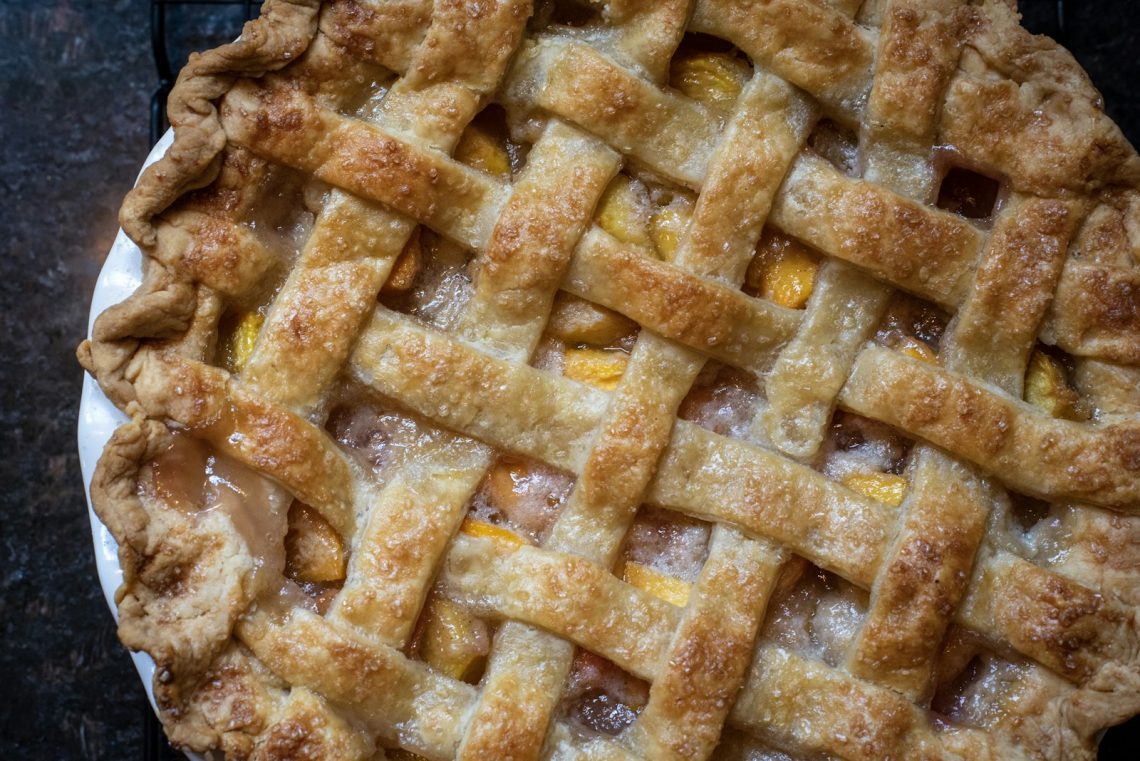
Canned peach biscuit cobbler for two makes a small dessert with juicy fruit underneath four tender biscuit dollops. The peaches are already soft, so the key tasks are controlling their liquid and making sure the biscuit topping cooks through. A brief stovetop step thickens the filling before it goes into the oven.
Affiliate disclosure: As an Amazon Associate I earn from qualifying purchases. These paid links open Amazon search results for comparing equipment.
Thicken the peach filling in a small saucepan (paid link), then set the filled baking dish on a rimmed baking sheet (paid link) to catch any fruit juices that bubble over.
This is the biscuit-topped style of cobbler. If you want a pourable batter that rises around the fruit, the site’s peach cobbler with self-rising flour is a different method. Here the topping starts as a soft dough and stays in separate mounds, leaving gaps for steam to escape.
Control canned-peach liquid before adding biscuits
| Drain and measure | Use the stated fruit amount and only the syrup or juice called for, since can sizes and packing liquids vary. |
| Heat the filling | A bubbling base starts cooking the biscuit bottoms immediately and reduces the chance of a gummy layer. |
| Space the topping | Small gaps let steam escape and help the biscuit portions bake through. |
Let the cobbler stand before serving. The fruit thickens as it cools, while cutting too soon releases a thin sauce and can tear the tender biscuit topping.
Why the filling is heated first
Cold fruit can keep the underside of a biscuit wet while the top browns. Starting with warm, lightly thickened peaches reduces that temperature gap. It also lets you see how much syrup surrounds the fruit before you cover part of it with dough.
Do not use all the liquid from the can automatically. Different brands and can sizes contain different amounts. Measure ¼ cup of the packing juice for the filling and save any excess separately. The fruit should be coated in a light sauce, not floating in a deep pool.
Tip: Measure ¼ cup of the packing juice for the filling and save any excess separately. The fruit should be coated in a light sauce, not floating in a deep pool.
Recipe details
- Serves: 2 generous dessert portions.
- Prep: 15 minutes.
- Cooking: about 5 minutes on the stove and 25 minutes in the oven.
- Rest: 10 minutes; approximately 55 minutes total.
- Oven: 375°F / 190°C, conventional.
- Dish: a shallow 3-cup oven-safe baking dish, about 6 inches square.
Have a small saucepan, two bowls, fork, spatula and baking sheet ready. Set the baking dish on the sheet to catch possible fruit bubbles. Two wide oven-safe ramekins can be investigated as an alternative, but they must have sufficient headroom and may bake on a different schedule.
Ingredients
Peach filling
- 1 can peaches in juice, about 15 ounces / 425 g, drained to give approximately 250 g fruit
- ¼ cup (60 ml) reserved peach juice from the can
- 1 tablespoon (12 g) granulated sugar
- 1 teaspoon cornstarch
- 1 teaspoon lemon juice
- ¼ teaspoon ground cinnamon
- A small pinch of fine salt
Four biscuit dollops
- ½ cup (60 g) all-purpose flour
- 1 tablespoon (12 g) granulated sugar
- ½ teaspoon baking powder
- A small pinch of fine salt
- 1 tablespoon (14 g) cold unsalted butter, cubed, plus 1 teaspoon for greasing the dish
- 3 tablespoons (45 ml) cold milk
The prepared peach weight is the reference amount. If your can provides noticeably less fruit, use part of a second can rather than increasing the juice to compensate. Peaches in heavy syrup are sweeter; drain them well and reconsider the tablespoon of sugar, but keep the measured liquid quantity consistent.
Make the filling
- Heat the oven to 375°F / 190°C. Lightly grease the baking dish and place it on a baking sheet.
- Cut large peach slices into smaller pieces, keeping enough shape to recognize the fruit. Put them into the saucepan.
- In a small bowl, stir cornstarch and sugar together. Whisk in the measured peach juice until smooth, then add it to the saucepan with lemon juice, cinnamon and salt.
- Heat over medium-low, stirring gently, until the sauce bubbles and becomes lightly glossy, about 4–5 minutes. Let it bubble for about a minute while stirring. It should coat the peaches without becoming a stiff gel.
- Transfer the hot filling to the prepared dish. Make the biscuit dough promptly so the filling stays warm.
Top and bake canned peach biscuit cobbler for two
- Combine the dry ingredients. Stir flour, sugar, baking powder and salt in a bowl. Use a scale or spoon and level the flour; an overfilled half-cup measure can make a small biscuit dough quite dry.
- Cut in butter. Rub the cold butter into the flour with your fingertips or use a fork. Leave a few small visible pieces rather than working it into a paste.
- Add milk. Pour in the milk and stir gently until a soft, slightly sticky dough forms. Do not knead or beat it smooth. Stop when no loose flour remains.
- Portion with gaps. Drop four similar mounds of dough onto the warm filling. Leave space between them and a little exposed fruit around the edges. Each mound should be modest rather than one large central biscuit.
- Bake. Bake for about 22–28 minutes, until the tops are golden and the fruit bubbles around the biscuits. Lift the edge of a central biscuit carefully with a spoon; its underside should be cooked and bread-like, not shiny raw dough.
- Rest. Cool for 10 minutes before serving. This lets the filling thicken slightly and reduces the risk of burning your mouth on hot fruit syrup.
Check the biscuit underside
A golden top alone does not prove the topping is done. The lower surface rests against moist fruit, so it stays softer than the top, but it should still have a cooked crumb. If you see pale, sticky dough, return the dish to the oven. Cover loosely with foil if the tops are already dark enough.
Large mounds take longer to cook through. Four smaller dollops give this small dessert a more manageable balance of fruit and topping. Resist spreading them into a continuous lid; steam gaps make it easier for moisture to escape and let you see the filling bubble.
Ingredient choices and honest substitutions
All-purpose flour plus measured baking powder is the reference topping. Self-rising flour contains added leavening and salt, so it should not be used without adjusting those ingredients. The King Arthur Baking weight reference is useful for checking the small flour and butter quantities.
Fresh or frozen peaches need a different preliminary assessment. Firm fresh fruit may require a longer stovetop cook; frozen fruit should be thawed and drained so the added liquid is measurable. Those versions are not assumed in the stated cooking time.
A plant drink and suitable dairy-free baking fat are possible directions for adaptation, but the biscuit texture needs its own check. Replacing flour with almond flour or using a large spoonful of yogurt instead of milk is not a simple equivalent substitution.
Troubleshooting
| Problem | Likely cause | Practical response |
|---|---|---|
| Runny filling | Extra canning liquid or incomplete thickening | Measure liquid and bring the starch mixture to a gentle bubble. |
| Gummy biscuit bottoms | Cold filling, large dollops or insufficient baking | Use warm filling and check underneath before serving. |
| Hard biscuit tops | Too much flour or prolonged baking | Measure carefully and protect browned tops with foil. |
| Overflow | Dish too small or filled too high | Leave headroom and use a baking sheet underneath. |
Serving and saving a portion
Serve warm on its own or with a small scoop of vanilla ice cream. The biscuit tops are best before they spend a long time against the fruit. If you enjoy a crumbly oat topping on another evening, the site’s small canned pear crisp explains a different dessert structure.
Refrigerate leftovers covered within two hours and use within 3–4 days. Reheat until thoroughly hot, covering loosely to avoid drying the biscuits, then uncover briefly if you want a crisper top. For refrigerated leftovers, aim for 165°F / 74°C in the center, following USDA reheating guidance. Freezing softens the topping, so this small batch is best enjoyed fresh or refrigerated.
Frequently Asked Questions
Can I use canned biscuits?
Packaged dough has its own thickness and baking instructions. It is not the same topping as the small homemade dollops here, so follow a recipe designed for that product.
Do I need to peel canned peaches?
Most canned peaches are already peeled. Check the product and simply cut the drained fruit into manageable pieces.
Can I leave out the lemon?
Yes, but the filling may taste sweeter and less bright. The small amount is a flavor adjustment rather than a preserving step.
Why use cornstarch?
It gives the measured juice a light sauce. More is not automatically better; excess can make the filling gluey after cooling.
Can I assemble it hours ahead?
Keep prepared components separate and chilled. Warm the fruit again and mix the biscuit dough shortly before baking so the reference method remains consistent.
Can I double it?
Double canned peach biscuit cobbler for two in a larger shallow dish, keeping the biscuit dollops a similar size and the fruit layer a similar depth. Check doneness rather than doubling the oven time.
Canned Peach Biscuit Cobbler for Two
Ingredients
Equipment
Method
- Heat the oven to 375°F / 190°C. Lightly grease the baking dish and place it on a baking sheet.
- Cut large peach slices into smaller pieces, keeping enough shape to recognize the fruit. Put them into the saucepan.
- In a small bowl, stir cornstarch and sugar together. Whisk in the measured peach juice until smooth, then add it to the saucepan with lemon juice, cinnamon and salt.
- Heat over medium-low, stirring gently, until the sauce bubbles and becomes lightly glossy, about 4–5 minutes. Let it bubble for about a minute while stirring. It should coat the peaches without becoming a stiff gel.
- Transfer the hot filling to the prepared dish. Make the biscuit dough promptly so the filling stays warm.
- Combine the dry ingredients. Stir flour, sugar, baking powder and salt in a bowl. Use a scale or spoon and level the flour; an overfilled half-cup measure can make a small biscuit dough quite dry.
- Cut in butter. Rub the cold butter into the flour with your fingertips or use a fork. Leave a few small visible pieces rather than working it into a paste.
- Add milk. Pour in the milk and stir gently until a soft, slightly sticky dough forms. Do not knead or beat it smooth. Stop when no loose flour remains.
- Portion with gaps. Drop four similar mounds of dough onto the warm filling. Leave space between them and a little exposed fruit around the edges. Each mound should be modest rather than one large central biscuit.
- Bake. Bake for about 22–28 minutes, until the tops are golden and the fruit bubbles around the biscuits. Lift the edge of a central biscuit carefully with a spoon; its underside should be cooked and bread-like, not shiny raw dough.
- Rest. Cool for 10 minutes before serving. This lets the filling thicken slightly and reduces the risk of burning your mouth on hot fruit syrup.
Notes
| Problem | Likely cause | Practical response |
|---|---|---|
| Runny filling | Extra canning liquid or incomplete thickening | Measure liquid and bring the starch mixture to a gentle bubble. |
| Gummy biscuit bottoms | Cold filling, large dollops or insufficient baking | Use warm filling and check underneath before serving. |
| Hard biscuit tops | Too much flour or prolonged baking | Measure carefully and protect browned tops with foil. |
| Overflow | Dish too small or filled too high | Leave headroom and use a baking sheet underneath. |