
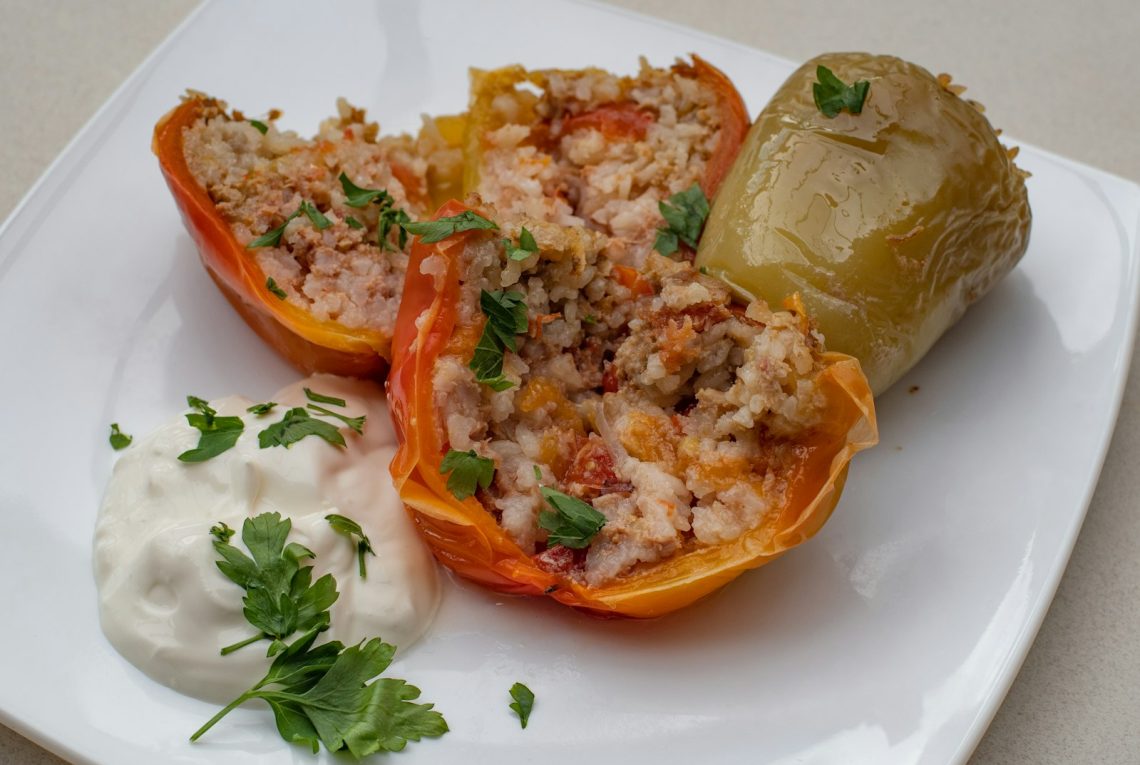
A complete filling inside tender peppers
Chicken and wild rice stuffed bell peppers turn cooked chicken and rice into a dinner with distinct textures. The pepper becomes tender, the rice retains a little chew, and a modest amount of homemade sauce binds the filling without making it soupy. Mushrooms and spinach add vegetables inside the shell, while cheddar browns lightly across the top.
This is a useful recipe for planned leftovers, but it starts with cooked ingredients. The stated timing does not include cooking dry wild rice or roasting chicken. If you are beginning from scratch, prepare those first and build the peppers afterward. That distinction prevents an unexpectedly long dinner and keeps the filling proportions reliable.
Choosing peppers, rice, and chicken
Large peppers with fairly broad sides are easiest to fill. Cut them lengthwise so each half forms a shallow boat; this cooks more evenly than stuffing a deep upright pepper. Red, yellow, and orange peppers taste sweeter than green ones, which have a slightly grassy edge. You can mix colors without changing the method.
Use a cooked wild rice blend rather than measuring dry rice into the filling. Blends vary widely, so follow the package for the cooking water and time. Drain any excess cooking liquid before measuring two cups. The grains should be tender enough to eat before they go into the pepper; the final bake is not designed to finish hard rice.
Cooked chicken can be shredded or chopped into small pieces. Remove skin, bones, and tough cartilage. If you are using leftovers, keep their original cooking date in mind. Baking them into peppers does not create a new three-to-four-day storage window. Plan the meal around ingredients that are still comfortably within their safe refrigerated life.
Building chicken and wild rice stuffed bell peppers
Par-baking the pepper halves gives them a head start. Without it, the filling can be hot while the peppers remain stiff and difficult to cut. A small amount of water and a foil cover create gentle steam in the baking dish. Take care when removing the cover, since steam escapes quickly.
Cook the mushrooms until their released moisture has mostly evaporated. If you add flour and broth while the skillet is full of mushroom water, the filling can become thin and the mushrooms stay pale. Let the onion soften alongside them, then add garlic only near the end so it does not scorch.
Sprinkle flour over the vegetables and stir before adding liquid. This distributes the thickener and prevents dry clumps. Pour broth and milk gradually while stirring. The sauce should lightly coat the vegetables; it will also cling to the rice. If it becomes very thick before the chicken goes in, add a small splash of broth rather than forcing a stiff paste into the peppers.
Filling, baking, and knowing when they are ready
Fold the chicken and rice gently through the sauce so the grains do not break down. Fresh spinach wilts quickly in the warm skillet. If using frozen spinach, thaw it and squeeze out excess water first; otherwise it can loosen the mixture considerably. Taste the filling before assembly, since the salt level depends partly on the chicken and broth.
Divide the filling evenly rather than packing one pepper very tightly and leaving another almost empty. A loose mound allows heat to move through the center. Sprinkle cheddar over the tops and cover for the first part of the final bake so the filling warms before the cheese becomes dark.
Check the center of a large mound for 165°F. That temperature applies to casseroles and reheated cooked ingredients. Tenderness is a separate check: a small knife should enter the pepper easily. If the filling is hot but the peppers are still too firm, cover the dish and bake longer. If the top is already browned, keep the foil in place.
Practical variations and serving choices
Brown rice can replace the wild rice blend if it is already cooked and well drained. The result will have a softer, more uniform texture. Quinoa is another possibility, but its smaller grains absorb sauce differently, so start with a little less sauce and add as needed. Do not swap in uncooked grains.
For a different cheese, choose Monterey Jack or a mild Swiss-style cheese that melts smoothly. A strongly flavored cheese is best used in a smaller amount. If avoiding dairy, use a suitable unsweetened milk alternative and omit the cheese or choose a melting alternative, checking that its flavor suits a savory filling.
Two halves make a satisfying main dish, with a crisp salad alongside if desired. The peppers already contain chicken, rice, and vegetables, so they do not need a heavy additional starch. Serve from the dish with a wide spatula to keep the softened shells intact. Any liquid at the bottom is mostly steaming water and pepper juices, not a sauce that needs to be poured onto the plate.
Making a second meal safely
Cool leftovers in shallow containers and refrigerate within two hours, or one hour above 90°F. Keep them at 40°F or below and use within three to four days, counting from the oldest cooked ingredient. You can portion one or two halves into individual containers for easier lunches.
Reheat in a covered baking dish at 350°F with a small splash of water around the peppers, checking for 165°F in the filling. A microwave also works; cover, rotate the container, and check more than one place because dense rice fillings can heat unevenly. Avoid judging by melted cheese alone.
Chicken and wild rice stuffed bell peppers are especially convenient when you deliberately cook extra rice and chicken for a later meal. Keeping the filling moist, the pepper halves shallow, and the final temperature verified makes the method much more dependable.
Frequently Asked Questions
Can I assemble them the night before?
Yes, using promptly cooled ingredients. Cover and refrigerate the filled peppers, then bake until the center reaches 165°F. A cold dish needs extra oven time; use bakeware approved for the temperature change and avoid moving fragile cold glass directly into a hot oven.
Can I use frozen spinach?
Use about half a cup of thawed, well-squeezed frozen spinach in place of the fresh spinach. Break it apart before mixing so it does not remain in dense clumps. Removing the excess liquid is the most important part of the substitution.
Why is the filling watery?
Mushrooms may not have cooked dry, rice may have carried excess water, or frozen spinach may not have been squeezed. Let the filling simmer briefly before stuffing if necessary. Do not add extra flour directly to the finished mixture, where it may clump.
Can I freeze the peppers?
Yes, although the pepper shells soften after thawing. Freeze cooled portions in suitable containers, thaw overnight in the refrigerator, and reheat to 165°F. For firmer peppers, freeze the filling separately and stuff freshly par-baked halves later.
More ideas for the table
The rice guide helps explain why different grains need different cooking times. Our chicken breast doneness guide is useful when cooking chicken specifically for the filling.
Chicken and Wild Rice Stuffed Bell Peppers
Ingredients
Equipment
Method
- Heat oven to 400°F. Arrange pepper halves cut-side up in a large baking dish, add 1/4 cup water around them, and cover with foil. Bake 15 minutes while making the filling.
- Heat oil in a large skillet over medium-high heat. Cook mushrooms and onion 8–10 minutes until the moisture evaporates and the onion softens. Stir in garlic for 30 seconds.
- Sprinkle flour over the vegetables and stir for 1 minute. Gradually stir in broth and milk. Simmer 2–3 minutes until lightly thickened.
- Fold in cooked rice, cooked chicken, spinach, thyme, salt, and pepper. Stir until the spinach wilts and the filling is evenly combined. Taste a cooled spoonful and adjust seasoning.
- Remove the dish carefully and uncover. Divide filling among the eight pepper halves, then sprinkle with cheddar. Cover and bake 15 minutes; uncover and bake 10–15 minutes more until peppers are tender and the filling reaches 165°F.
- Rest 5 minutes before serving, allowing two pepper halves per person. Spoon away excess water from the dish rather than pouring it over the filling.
Notes
Food safety references
Cooking temperatures follow FoodSafety.gov guidance. For storage and reheating, see the USDA guidance on handling leftovers and safe reheating methods.




