Quick Recipe Overview: This fig honey walnut galette layers 3 cups of quartered fresh figs, tossed with 3 tablespoons of sugar, 1 tablespoon of cornstarch and lemon zest, in a 12-inch round of pie dough. Two tablespoons of chopped walnuts toast on top while it bakes at 400°F (200°C) for 35–45 minutes, and 1 tablespoon of honey is drizzled over the warm tart. Serves 6.
Best method: Use ripe but intact figs, arrange them cut side up, and add the honey after baking so it stays fragrant instead of scorching.
| Prep | Bake | Cool | Total | Serves | Oven |
|---|---|---|---|---|---|
| 25 min | 35–45 min | 20 min | about 1 hr 25 min | 6 | 400°F / 200°C |
A fig honey walnut galette is the kind of dessert that looks far fancier than the effort involved. Three cups of quartered fresh figs, a handful of walnuts and a spoonful of honey go into a single round of pie dough, which you fold by hand and bake on a tray at 400°F for about 40 minutes.
Figs are made for baking: their soft, seedy centers turn jammy in the oven while their skins hold the shape of each wedge. Walnuts add a toasty, slightly bitter crunch, and honey brings everything together. It’s an ideal dessert for late summer and early fall dinners, and it’s simple enough for a first-time galette baker.
Equipment
- Rimmed baking sheet lined with parchment.
- Paring knife for trimming stems and quartering the figs.
- Rolling pin and mixing bowl.
- Pastry brush for the egg wash.
- Small skillet (optional) for toasting the walnuts first.
- Wire rack and a sharp knife for serving.
Ingredients & substitutions
| Ingredient | Amount | Notes & swaps |
|---|---|---|
| Chilled pie dough | 250 g (about 9 oz) or one 9-inch refrigerated crust | Store-bought or homemade. |
| Fresh figs, quartered | 3 cups (roughly 12–16 small or medium figs) | Any variety: Black Mission, Brown Turkey or green Calimyrna. |
| Granulated sugar | 3 tablespoons | Very ripe, sweet figs can take 2 tablespoons, since honey is added later. |
| Cornstarch | 1 tablespoon | Sets the fig juices. Tapioca starch works too. |
| Lemon juice | 1 tablespoon | Figs are low in acid; lemon keeps the filling from tasting one-note sweet. |
| Lemon zest | 1 teaspoon | Orange zest is a nice swap with figs. |
| Chopped walnuts | 2 tablespoons | Pecans or sliced almonds also pair well. |
| Honey | 1 tablespoon | For drizzling after baking. Maple syrup works for a honey-free version. |
| Large egg, beaten | 1 | For brushing. Use milk or cream for egg-free. |
Allergens: Contains tree nuts (walnuts), wheat/gluten and egg; most pie doughs contain milk. Leave out the walnuts for a nut-free version and check the crust label. Honey should not be given to babies under 12 months old.
Choosing & prepping fresh figs
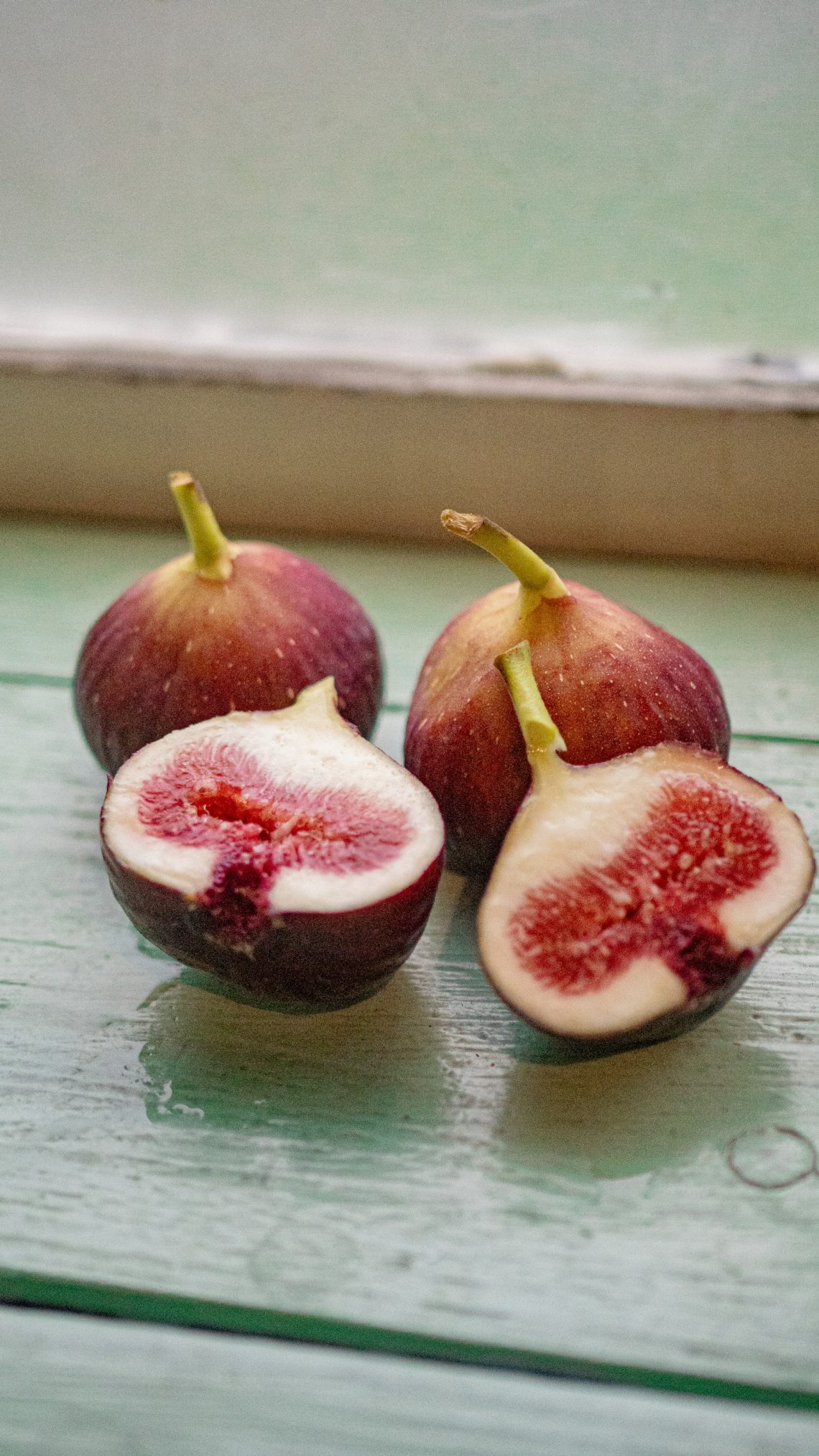
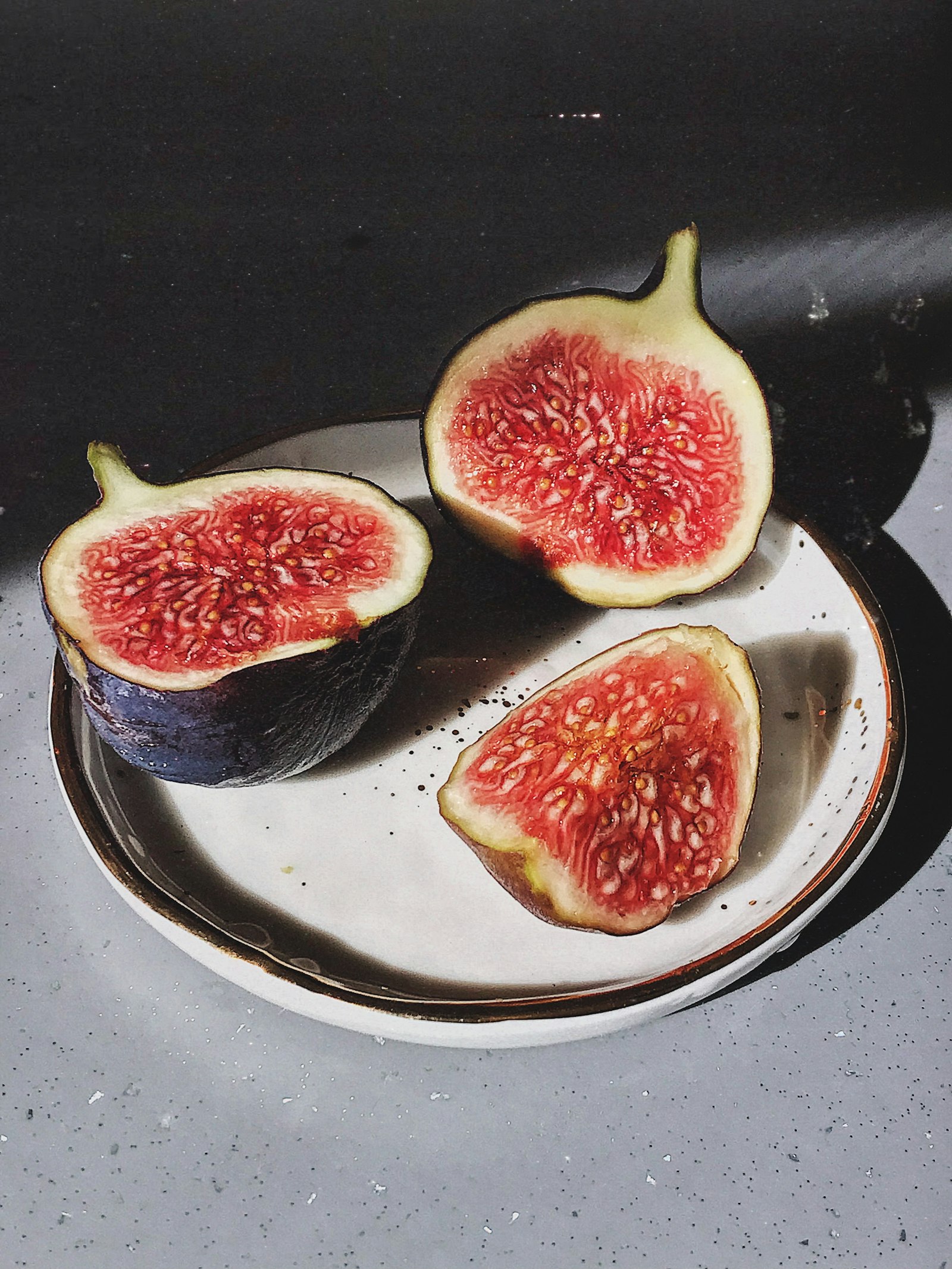
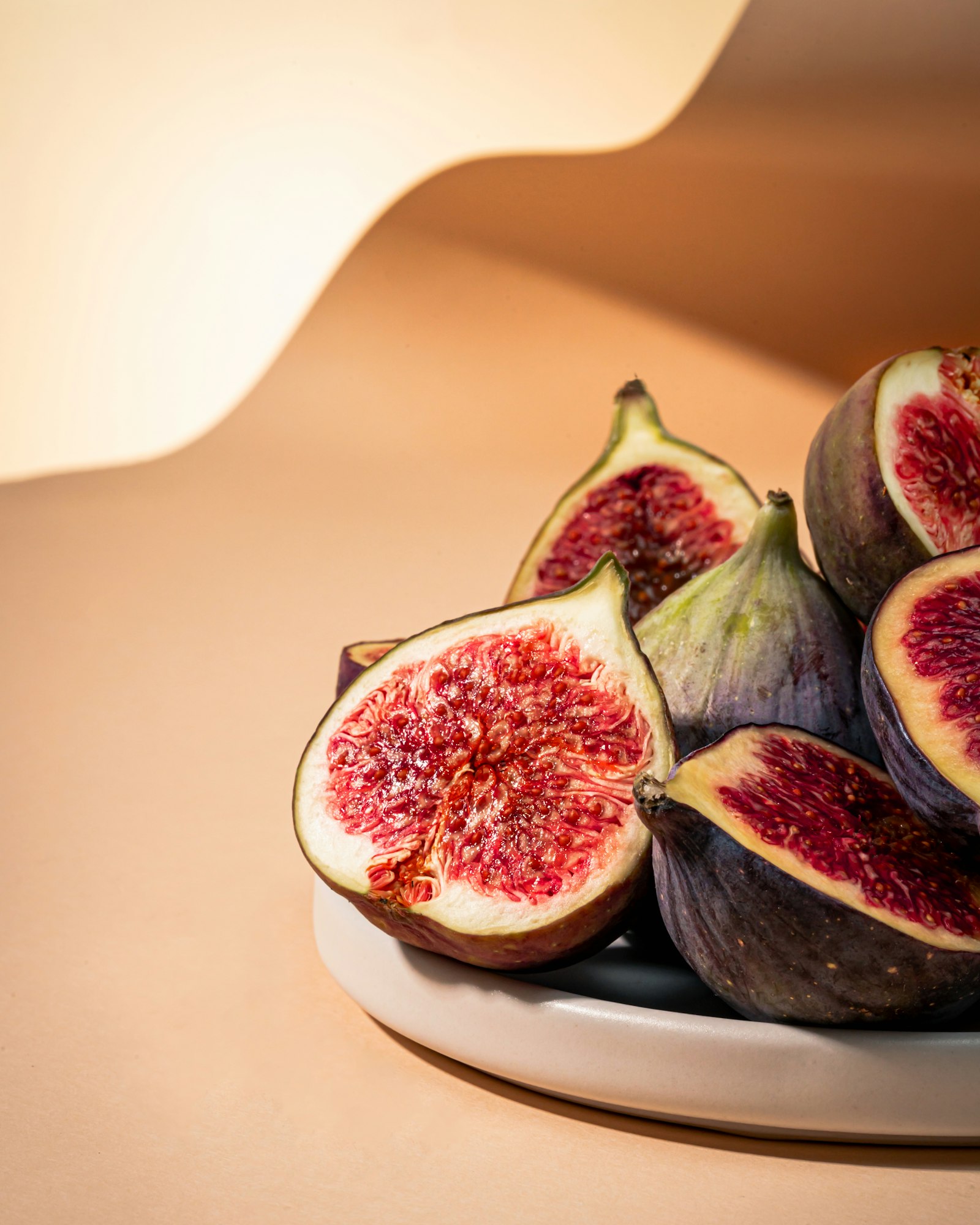
Fresh figs have a short season. Many US markets see a small early crop in early summer and the main crop from late summer into fall. Because they don’t continue to ripen much after picking, buy figs that are already ripe: they should feel soft (but not mushy) when gently squeezed, smell sweet, and often bend slightly at the neck. Small cracks in the skin are fine; sour smells, mold or leaking are not.
Figs are very perishable. Keep them in a single layer in the refrigerator and plan to bake within a day or two. Rinse gently just before using and pat dry.
Variety changes the look and taste. Black Mission figs are deep purple and rich; Brown Turkey figs are milder with a coppery skin; green Calimyrna figs are nutty with amber flesh. Mixing two varieties makes a beautiful galette. To prep, snip off the hard stem tip and quarter the figs lengthwise. There’s no need to peel them.
Why it works
Figs turn jammy, not watery. Unlike berries or stone fruits, figs release only a modest amount of juice. Their seedy centers soften into a thick, jam-like filling, so a single tablespoon of cornstarch is plenty.
Cut sides up concentrate the flavor. With the cut side facing up, moisture evaporates from the exposed flesh in the hot oven, and the edges caramelize slightly.
Honey goes on after baking. Honey browns faster than sugar and can turn bitter at 400°F. Drizzled over the warm galette, it melts into the figs and keeps its floral aroma.
Walnuts toast on top. Two tablespoons scattered over the exposed fruit toast during baking. Toasting them in a dry skillet for a few minutes first deepens their flavor even more; just watch them, because nuts go from golden to burnt quickly.
Step-by-step method
- Preheat (15 minutes). Heat the oven to 400°F (200°C) with a rack in the lower third. Trim and quarter the figs.
- Roll (5 minutes). Roll the chilled dough on parchment into a 12-inch round about 1/8 inch thick; slide it onto the rimmed tray. Cue: the dough still feels cold.
- Toss (2 minutes). Gently toss the figs with sugar, cornstarch, lemon juice and lemon zest. Cue: the figs are evenly coated; stop before they break apart.
- Arrange (4 minutes). Place the fig wedges cut side up in a snug single layer, leaving a 2-inch border.
- Fold (3 minutes). Fold the border over the outer figs, pleating as you go, and pinch any tears. Brush the pastry with beaten egg.
- Add walnuts (1 minute). Scatter the walnuts over the exposed figs. Set the honey aside.
- Bake (35–45 minutes). Bake until the crust is deep golden on top and underneath and the fig juices bubble thickly. Cue: the fig edges look slightly caramelized and the walnuts are fragrant and golden.
- Finish (20 minutes). Drizzle the honey over the warm figs, then cool on the tray for 20 minutes before slicing.
Make-ahead timeline: Toast the walnuts and roll the dough onto parchment up to 1 day ahead (cover and refrigerate the dough). Cut the figs just before assembling, as they soften quickly once cut.
Food safety notes
- Raw dough isn’t safe to taste because flour is a raw ingredient; see the FDA’s Handling Flour Safely.
- Don’t serve honey to infants under 1 year old.
- Refrigerate leftovers within 2 hours at 40°F (4°C) or below and reheat leftovers to 165°F. See USDA FSIS on leftovers and FoodSafety.gov.
Troubleshooting
| Problem | Likely cause | Fix |
|---|---|---|
| Figs collapsed into mush | Overripe figs or over-tossed | Use soft-but-intact figs and toss gently just before arranging. |
| Filling tastes flat | Figs are low in acid | Don’t skip the lemon; add a pinch of flaky salt with the honey. |
| Burnt walnuts | Pre-toasted too dark or on the crust | Toast lightly; keep nuts on the fruit; tent with foil if needed. |
| Bitter, dark honey | Honey added before baking | Drizzle honey on after baking. |
| Pale, soft bottom | Rack too high | Bake in the lower third; check the underside before pulling. |
| Dough cracked when folding | Dough too cold and stiff | Let it sit 5 minutes to become pliable, then fold. |
What to serve with it
Serve warm slices with vanilla ice cream, mascarpone or plain Greek yogurt and an extra thread of honey. For more fig desserts, try our Fig Walnut Crumble Bars. If you have figs left over, they’re lovely in the Quick Couscous Breakfast Bowl with Figs and Yogurt. For another fall galette, see the Pear Almond Galette.
Make-ahead, storage & reheating
- Best eaten: the day it’s baked, slightly warm.
- Refrigerate: cover and chill within 2 hours; eat within 3–4 days, following USDA leftovers guidance.
- Reheat: warm slices in a 350°F oven for about 10 minutes so the crust re-crisps.
- Freeze: wrap cooled slices individually; thaw in the fridge and re-crisp in the oven.
Frequently asked questions
Can I use dried figs?
Not as a direct swap. Dried figs are dense and dry and won’t become jammy the same way. This recipe is designed for fresh figs.
Do I need to peel figs?
No. Fig skins are edible and soften in the oven. Just trim the stem tip.
Which figs are best for a galette?
Any ripe fresh fig works. Black Mission and Brown Turkey are the most common; green varieties give a lighter color.
Can I add cheese?
Yes. A few small spoonfuls of goat cheese or ricotta tucked between the figs before baking is a classic pairing.
Why add the honey after baking?
Honey browns quickly at high heat. Added at the end, it stays golden and fragrant.
How do I know it’s done?
The crust is deep golden underneath and on the rim, and the fig juices bubble thickly, usually at 35–45 minutes.
Recommended tools
As an Amazon Associate I earn from qualifying purchases.
The bottom line
Pick ripe, intact figs, arrange them cut side up, and save the honey for the end. That’s the secret to a fig honey walnut galette with a crisp crust, a jammy filling and plenty of toasty crunch.
Fig Honey Walnut Galette
Serves: 6 | Prep: 25 min | Bake: 35–45 min | Cool: 20 min | Oven: 400°F (200°C)
Ingredients
- 250 g (about 9 oz) chilled pie dough
- 3 cups quartered fresh figs
- 3 tablespoons granulated sugar
- 1 tablespoon cornstarch
- 1 tablespoon lemon juice
- 1 teaspoon lemon zest
- 2 tablespoons chopped walnuts
- 1 tablespoon honey, for drizzling
- 1 large egg, beaten, for brushing
Instructions
- Heat the oven to 400°F (200°C) with a rack in the lower third.
- Roll the dough on parchment into a 12-inch round; slide onto a rimmed tray.
- Gently toss figs with sugar, cornstarch, lemon juice and zest.
- Arrange figs cut side up in one layer, leaving a 2-inch border.
- Fold the border over the fruit, pleating; brush pastry with egg.
- Scatter walnuts over the figs.
- Bake 35–45 minutes, until golden underneath and the juices bubble.
- Drizzle with honey; cool 20 minutes before slicing.
Notes
Use ripe but intact fresh figs. Add honey only after baking. Contains tree nuts. Refrigerate leftovers within 2 hours; eat within 3–4 days.