Quick Recipe Overview
Pear Almond Galette
Three cups of thinly sliced firm pears tossed with sugar, cornstarch, lemon and 1/2 teaspoon almond extract, folded into a single 12-inch round of pie dough and topped with sliced almonds. Bake at 400°F for 35–45 minutes for 6 generous wedges.
Best method: Choose firm-ripe pears, slice them evenly, and bake until the crust is browned underneath and the juices bubble in the center.
| Prep 25 min | Bake 35–45 min | Cool 20 min | Oven 400°F / 200°C | Yield 6 servings |
A pear almond galette is a free-form tart that tastes like a bakery pastry but needs only one pie crust, 3 cups of sliced pears and a sheet pan. A little almond extract in the filling and a scatter of sliced almonds on top give it that warm, marzipan-like flavor that pairs so well with pears. It bakes at 400°F in 35 to 45 minutes and serves 6.
It’s a relaxed dessert for weeknights or a holiday table, and it’s forgiving for new bakers: there’s no crimping, no pie plate and no blind baking. The only real decisions are picking the right pears and slicing them evenly, and this guide walks you through both.
Equipment
- Rimmed baking sheet lined with parchment: you roll the dough on the parchment and slide it straight onto the pan.
- Rolling pin for a roughly 12-inch circle.
- Sharp chef’s knife or mandoline for 1/8- to 1/4-inch pear slices.
- Vegetable peeler and melon baller or teaspoon for peeling and coring.
- Mixing bowl, pastry brush and thin spatula for tossing, glazing and checking the underside.
Ingredients
- About 250 g chilled pie dough (one 9-inch crust): store-bought or homemade; cold dough bakes up flakier.
- 3 cups thinly sliced firm pears (about 3 medium): the star of the galette.
- 3 tablespoons granulated sugar: pears are already sweet, so the filling needs only a little.
- 1 tablespoon cornstarch: pears are juicy, and the starch turns that juice into a glossy glaze.
- 1 tablespoon lemon juice: brightens the mild pear flavor and slows browning.
- 1/2 teaspoon almond extract: concentrated, so measure carefully; a little goes a long way.
- 1 large egg, beaten: brushed on the crust for color and shine.
- 2 tablespoons sliced almonds: scattered over the fruit to toast as it bakes.
Substitutions
- No almond extract? Use 1 teaspoon vanilla extract instead. The galette will taste softer and less nutty.
- Nut-free: skip the extract and sliced almonds; sprinkle 1 tablespoon coarse sugar on the crust for crunch instead.
- Spice it up: add 1/4 teaspoon ground ginger or cardamom to the filling. Both pair well with pears.
- Thickener: tapioca starch can replace cornstarch 1:1.
- Egg-free wash: brush with milk or cream.
Allergens: Contains tree nuts (sliced almonds and almond extract), wheat/gluten (pie dough) and egg (egg wash). Most pie doughs also contain milk from butter; check store-bought labels.
Choosing Pears and Why the Method Works
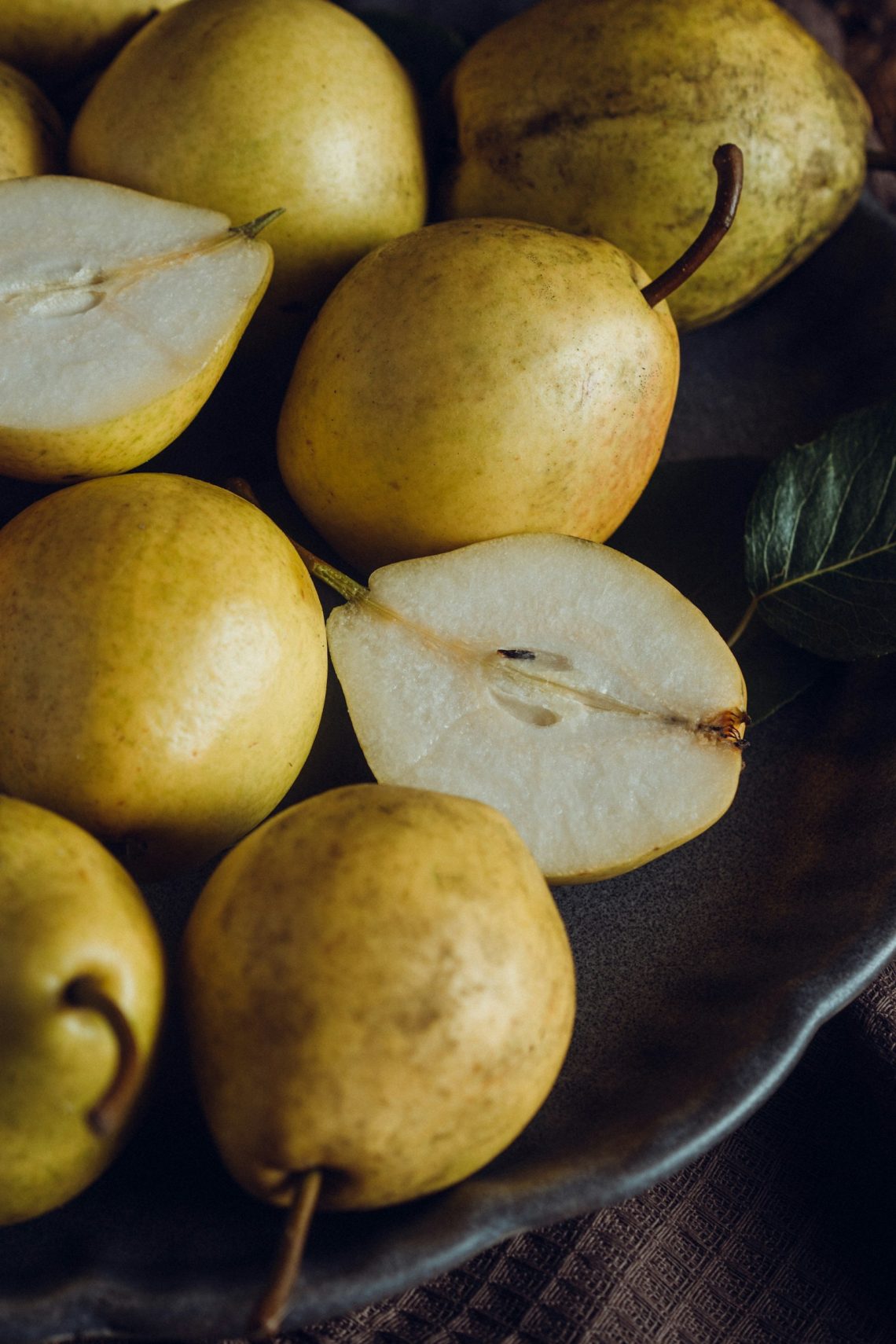
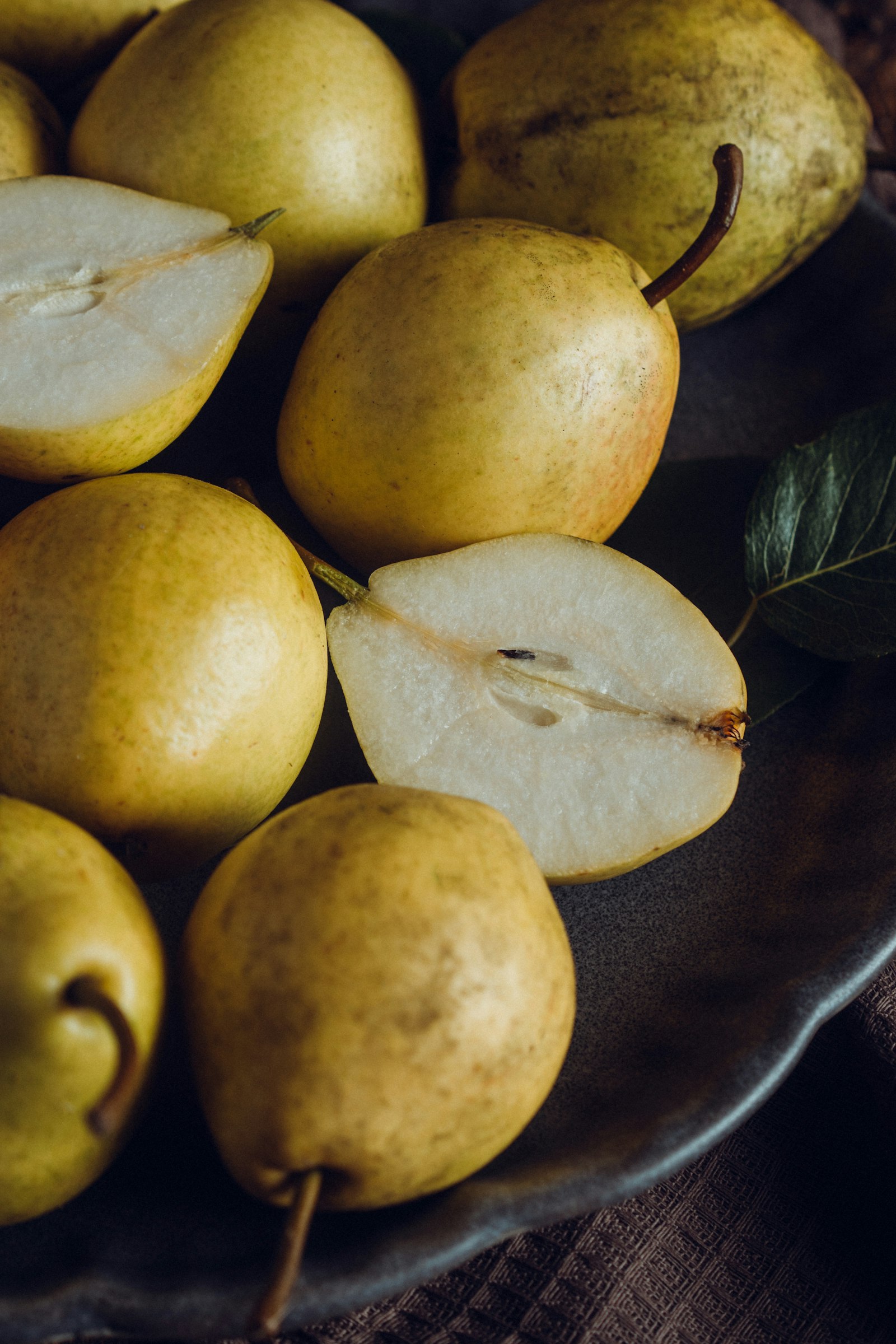
The pear you pick makes the biggest difference. Firm-ripe pears hold their shape and slice cleanly; very ripe, soft pears collapse into mush and release a lot of liquid. Bosc and Anjou are good baking choices because their flesh stays fairly dense. Bartlett pears are very aromatic but soften quickly once ripe, so use them while they’re still a bit firm.
To check ripeness, press gently near the stem. For baking you want just a slight give, not a soft spot. If your pears are rock hard, leave them on the counter for a day or two.
The free-form shape works because the fruit layer is shallow and the center is open. Steam escapes, so the pear juices reduce instead of pooling, and the cornstarch thickens once the filling reaches a full bubble. Slicing the pears thin means they turn tender in the same 35 to 45 minutes the crust needs to brown. Thick wedges can stay crunchy.
Pears release more juice than apples as they bake, which is why leaving the liquid behind in the bowl matters here. Spoon the slices onto the dough and leave the syrupy juices behind; otherwise the extra liquid can soak the bottom crust. The sliced almonds go on top of the fruit, not the crust, so they toast gently instead of scorching on the outer edge.
Step-by-Step Method
- Preheat (15 minutes). Heat the oven to 400°F (200°C) with a rack in the lower-middle position so the bottom crust browns well.
- Roll the dough (5 minutes). Roll the chilled dough on parchment into a rough 12-inch circle about 1/8 inch thick. Slide the parchment onto the baking sheet. Cue: dough is cool and firm, not tacky. If it softens, chill the pan 10 minutes.
- Prep the pears (8 minutes). Peel, core and slice the pears 1/8 to 1/4 inch thick. Cue: slices are even so they cook at the same rate.
- Toss the filling (2 minutes). Toss the pears with the sugar, cornstarch, lemon juice and almond extract. Cue: no white streaks of cornstarch remain.
- Arrange (5 minutes). Overlap the pear slices in a shallow layer or concentric circles, leaving a 2-inch border. Leave the juices in the bowl. Cue: filling is about 1 inch deep at most.
- Fold and glaze (3 minutes). Fold the border over the fruit, pleating as you go and pinching any tears closed. Brush the crust with beaten egg. Scatter the sliced almonds over the fruit.
- Bake (35–45 minutes). Bake until the pastry is golden around the rim and underneath and the juices bubble in the center. Cue: pears are tender when poked with a knife; lift an edge with a spatula to confirm the bottom is browned. If the almonds darken too fast, tent loosely with foil.
- Cool (20 minutes). Rest on the pan so the juices set, then slide onto a board and cut into 6 wedges.
Timeline tip: Roll the dough onto parchment up to a day ahead, cover and chill. Slice and toss the pears right before assembling, because cut pears release juice quickly once sugared.
Food Safety
- Don’t taste raw dough or the raw egg wash. The FDA advises against eating raw flour, and raw eggs can carry Salmonella.
- Refrigerate leftovers within 2 hours and keep at 40°F (4°C) or below. See USDA FSIS leftovers guidance and FoodSafety.gov’s chart.
Troubleshooting
| Problem | Likely cause | Fix |
|---|---|---|
| Watery filling | Very ripe pears or bowl juices added | Use firm-ripe pears and leave the juices in the bowl. |
| Mushy pears | Pears too soft or sliced very thin | Choose Bosc or Anjou; slice 1/8–1/4 inch. |
| Pale, soft bottom | Rack too high, underbaked | Bake on the lower-middle rack until the underside is golden. |
| Burnt almonds | Almonds on the exposed crust edge | Keep them on the fruit; tent with foil late in baking. |
| Overpowering almond flavor | Extract over-measured | Use a level 1/2 teaspoon, or swap half for vanilla. |
| Juice leaking at the edge | Tear in a fold | Pinch tears closed and keep the dough cold while folding. |
What to Serve With It
Pear and almond pair nicely with vanilla ice cream, softly whipped cream, crème fraîche or a drizzle of honey. For a dessert spread, bake a second fruit galette or a crumble alongside.
- Apple Cranberry Free-Form Tart: the same easy folding method with a tart-sweet filling.
- Pear Chocolate Hazelnut Crumble: another way to bake pears, no pastry required.
- Peach Almond Crumble: almonds again, with summer fruit.
Make-Ahead, Storage and Reheating
- Same day: Galettes are best the day they’re baked. Bake a few hours ahead and serve at room temperature.
- Fridge: Cover and refrigerate leftovers within 2 hours; eat within 3–4 days (USDA leftovers guidance).
- Reheat: Warm wedges on a sheet pan at 350°F for about 10 minutes to re-crisp the pastry.
- Freeze: Wrap cooled wedges individually and freeze; reheat in the oven until warmed through.
FAQ
What are the best pears for a galette?
Firm-ripe Bosc or Anjou pears hold their shape best. Bartlett pears work if they’re still firm.
Do I need to peel the pears?
Peeling gives the most tender filling. You can leave the skins on for a more rustic look, but they stay slightly chewy.
Can I use canned pears?
Canned pears are already soft and very wet. If you try them, drain and blot them well; expect a softer filling than with fresh pears.
Can I make a pear almond galette ahead of time?
Bake it the same day for the crispest crust. You can roll the dough a day ahead and keep it chilled on its parchment.
Why did my galette leak?
Usually there’s a tear in a pleat or extra juice went in with the fruit. A rimmed pan keeps leaks contained.
Can I add frangipane?
A thin layer of almond cream under the pears is a classic variation, but it changes the bake; this recipe keeps it simpler with extract and sliced almonds.
How do I keep the almonds from burning?
Scatter them over the fruit, not on the crust, and tent loosely with foil if they darken before the crust is done.
Can I make it gluten-free?
Yes, with a gluten-free pie dough. Roll it between two sheets of parchment and fold gently, patching cracks.
Recommended Tools
As an Amazon Associate I earn from qualifying purchases.
Final Thoughts
This pear almond galette proves that a beautiful dessert doesn’t need a pie plate. Choose firm pears, slice them evenly, leave the extra juice behind and bake until the crust is golden all the way underneath. The recipe card below has everything ready to print.
Pear Almond Galette
Yield: 6 servings · Prep: 25 min · Bake: 35–45 min · Cool: 20 min · Oven: 400°F (200°C)
Ingredients
- About 250 g chilled pie dough (one 9-inch crust)
- 3 cups thinly sliced firm pears
- 3 tablespoons granulated sugar
- 1 tablespoon cornstarch
- 1 tablespoon lemon juice
- 1/2 teaspoon almond extract
- 1 large egg, beaten, for brushing
- 2 tablespoons sliced almonds
Instructions
- Heat the oven to 400°F (200°C). Roll the dough on parchment into a 12-inch circle; slide onto a rimmed baking sheet.
- Toss the pears with the sugar, cornstarch, lemon juice and almond extract.
- Arrange the pears in a shallow layer, leaving a 2-inch border; leave the bowl juices behind.
- Fold the border over the fruit, pleating and pinching tears closed. Brush the crust with egg.
- Scatter the sliced almonds over the fruit.
- Bake 35–45 minutes, until golden underneath and around the rim and the filling bubbles.
- Cool 20 minutes before slicing. Serve warm or at room temperature.
Notes
- Use firm-ripe Bosc or Anjou pears.
- Keep the dough cold; chill 10 minutes if it softens.
- Refrigerate leftovers within 2 hours; eat within 3–4 days.