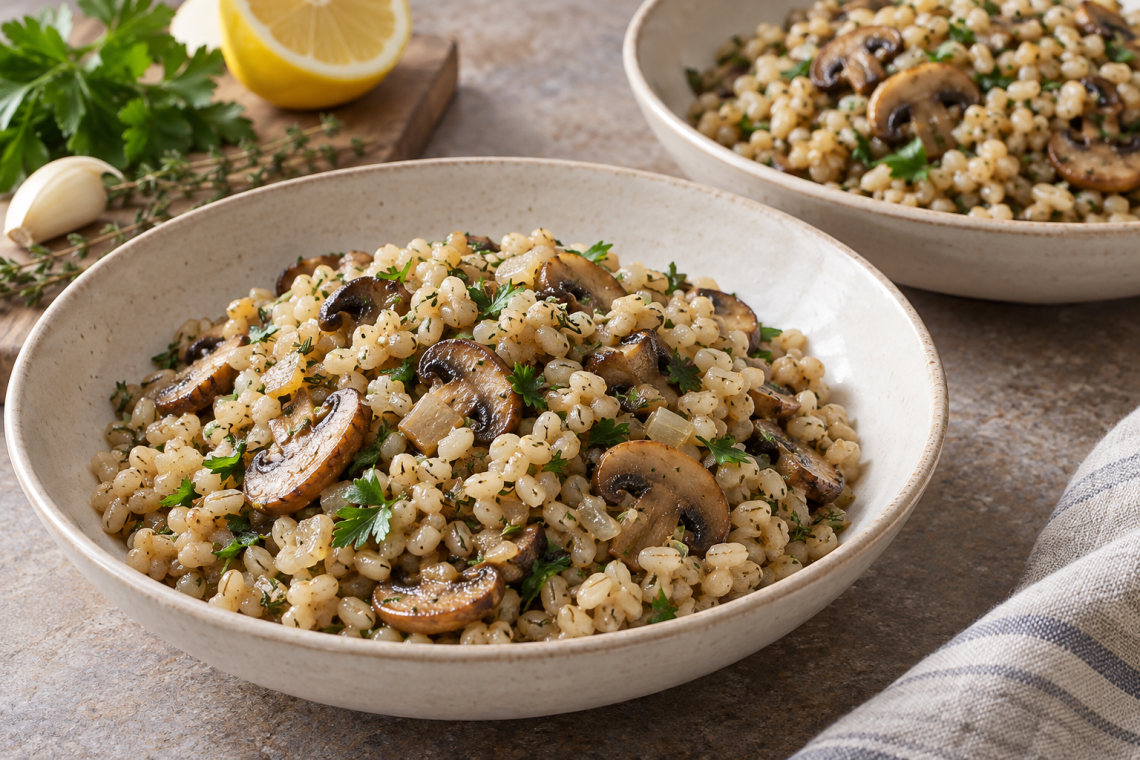
A mushroom barley pilaf for two should have tender, pleasantly chewy grains and mushrooms that taste browned rather than boiled. This version cooks the barley by absorption while the mushrooms brown in a separate skillet. Combining them near the end preserves the mushrooms’ flavor and lets you judge the barley without extra vegetable liquid complicating the pot.
The result is a moist grain dish that holds a loose mound on a plate. It is not intended to be soupy or as creamy as a stirred risotto. A little thyme seasons the barley, while parsley and lemon added at the end keep the finished bowl from tasting heavy. Serve two substantial portions or divide it into four smaller sides.
Brown mushrooms separately while the barley simmers
Dry mushroom stage
Cook until released water evaporates and the slices develop browned edges.
Measured simmer
Simmer pearled barley with the onion base and measured broth in a separate saucepan; fold in the browned mushrooms after the grains are tender.
Covered rest
Let the pilaf finish absorbing moisture off the heat before fluffing.
If the grains remain firm after the liquid is gone, add hot water in small amounts. Finish with herbs or acid after the final texture is correct.
Check that your barley is pearled
Buy regular pearl barley for this formula. Hulled barley retains more of its outer layer and generally takes longer to soften. Quick-cooking barley has already been processed for a short cooking time and needs a different quantity of liquid. These differences matter more than the shape of the package or whether the barley is sold beside rice or soup ingredients.
Oregon State University Extension’s stovetop barley method uses 3 cups water per cup of pearl barley and gives a 45–60 minute simmer range. This small pilaf starts with that practical ratio, then adjusts by tenderness and evaporation. The onion adds some moisture, but the browned mushrooms are kept out until the grain is nearly finished.
Mushroom barley pilaf for two
Yield: 2 substantial main-course bowls or 4 side portions. Preparation: 10 minutes. Cooking: about 60 minutes. Rest: 5 minutes. Total: approximately 75 minutes.
Equipment: a 2-quart heavy saucepan with a close-fitting lid, 10- to 12-inch skillet, strainer, knife, cutting board, measuring cup, and fork.
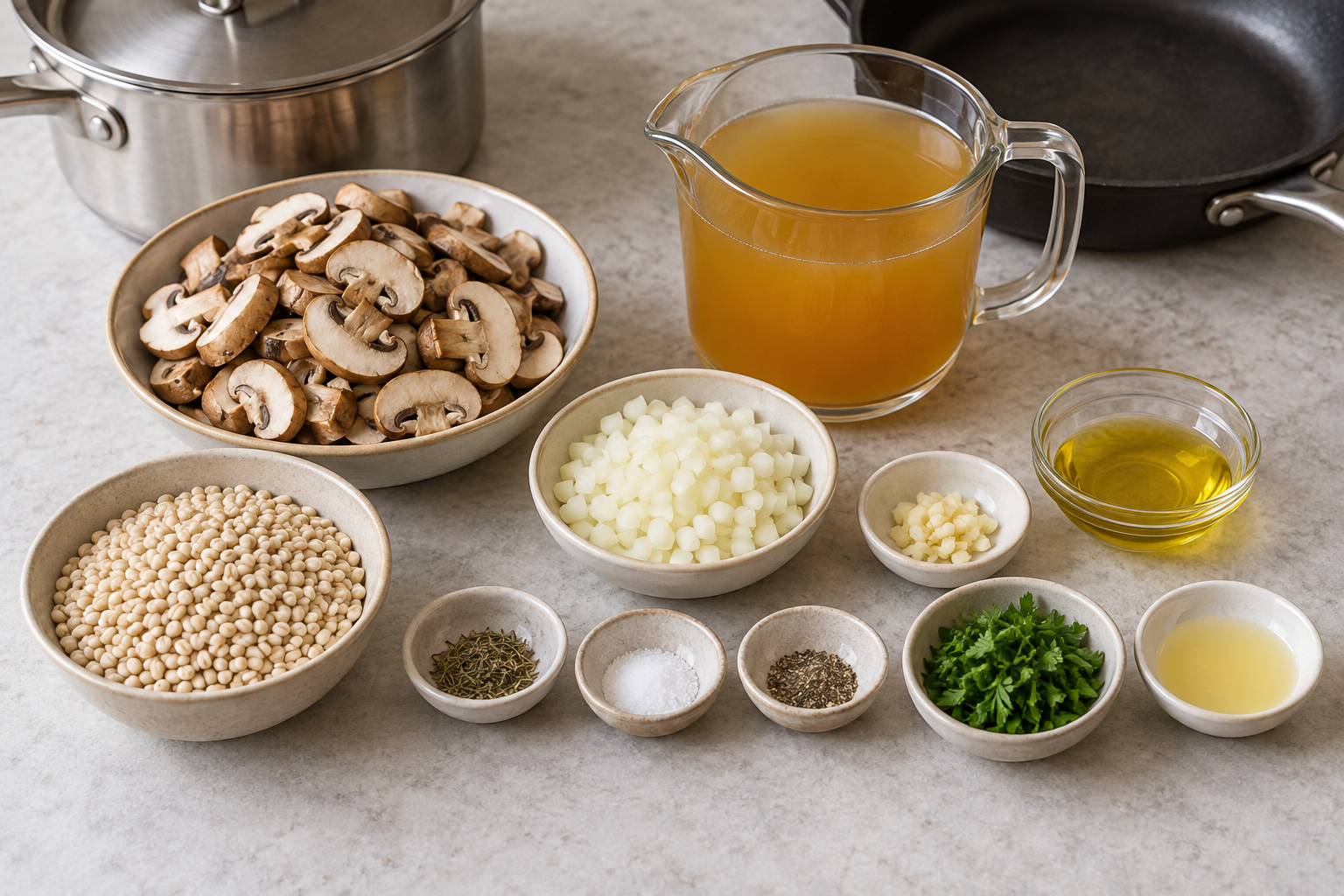
Ingredients
- 3/4 cup regular pearl barley, rinsed and drained
- 1 1/2 tablespoons olive oil, divided
- 1/2 cup finely diced yellow onion
- 1 garlic clove, minced
- 1/4 teaspoon dried thyme
- 2 1/4 cups low-sodium vegetable broth, plus up to 1/2 cup hot water if needed
- 8 ounces cremini or white button mushrooms, trimmed and sliced about 1/4 inch thick
- 1/4 teaspoon fine salt, divided, then adjust to taste
- 1/4 teaspoon ground black pepper
- 2 tablespoons chopped flat-leaf parsley
- 2 teaspoons fresh lemon juice
Cook the grain and mushrooms
- Start the onion base. Warm 2 teaspoons olive oil in the saucepan over medium heat. Add the onion and a small pinch of the measured salt. Cook for 5–6 minutes, stirring, until softened. Add the garlic and thyme and stir for 30 seconds.
- Coat the barley. Add the drained barley and stir for 1–2 minutes until the grains are coated and the pan smells lightly toasted. Because the barley was rinsed, some surface moisture may evaporate before it begins to toast. Do not wait for deep browning.
- Add broth and simmer. Pour in the broth, scrape the bottom, and bring to a boil. Reduce to low, cover, and simmer gently. Begin checking at 40 minutes, then continue until the barley is tender, commonly 45–60 minutes total. Keep the lid on between checks.
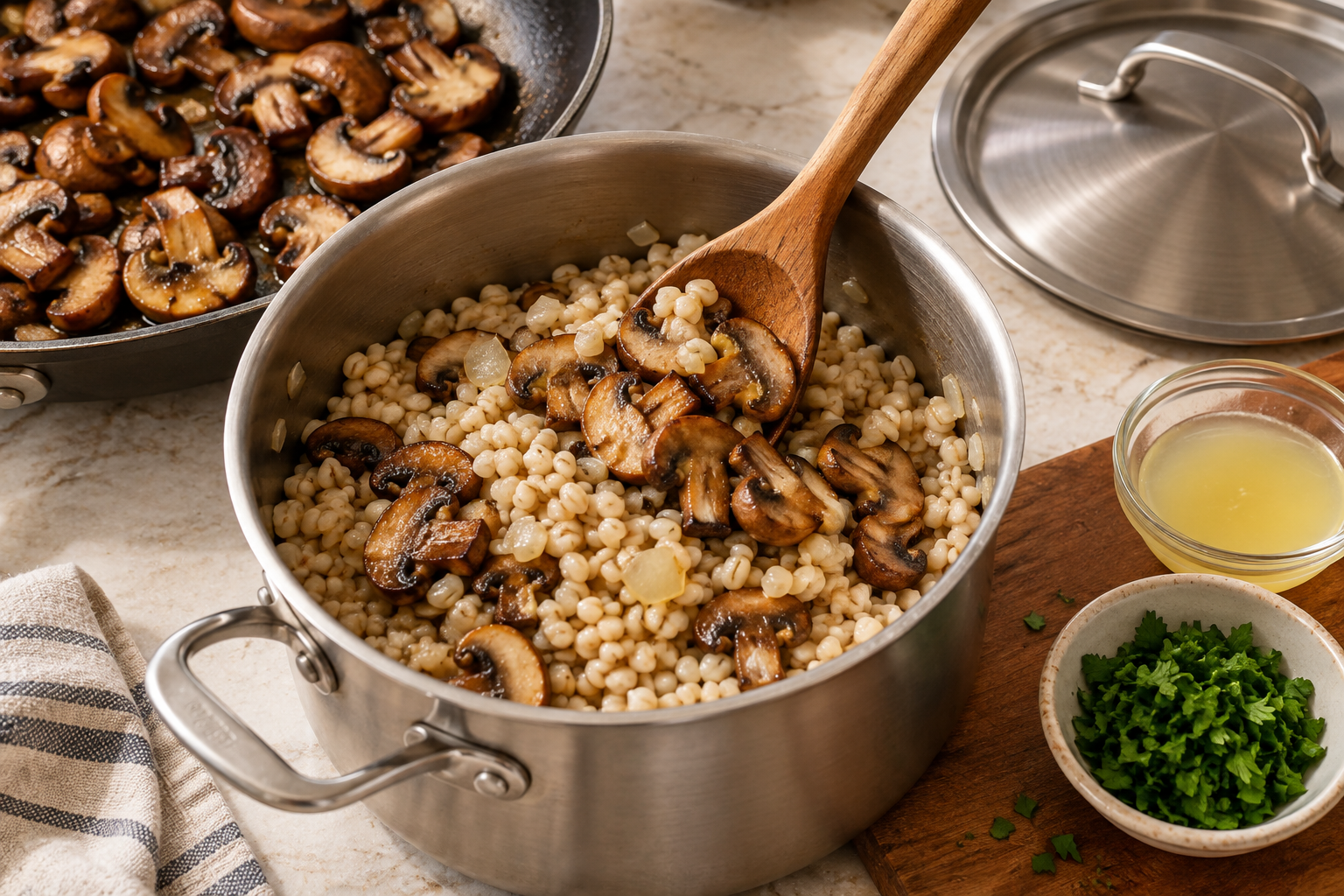
- Brown the mushrooms separately. While the barley simmers, heat the remaining 2 1/2 teaspoons oil in the skillet over medium-high heat. Add the mushrooms in a broad layer. Leave undisturbed for 2 minutes, then cook for another 6–8 minutes, turning occasionally, until their released liquid evaporates and the edges brown. Season with the remaining measured salt and pepper.
- Check the barley’s center and moisture. Taste a few grains. They should have a gentle chew without a hard white center. If firm and dry, add 1/4 cup hot water, cover, and continue for 5–10 minutes. If tender with loose liquid remaining, uncover briefly to evaporate it or drain carefully.
- Combine and rest. Fold the mushrooms into the tender barley. Cover, remove from the heat, and rest for 5 minutes. This gives surface moisture time to settle and helps the dish hold a loose mound rather than run across the plate.
- Finish lightly. Fluff with a fork and fold in the parsley and lemon juice. Taste before adding more salt because the broth’s seasoning varies. Divide into bowls or serve as a side while warm.
What the absorption method changes
The barley cooks in a measured amount of seasoned liquid, so its flavor comes from the onion, thyme, and broth throughout the grain. Keeping a gentle simmer and a close-fitting lid reduces unpredictable evaporation. Opening the lid every few minutes releases heat and moisture, making the finishing time harder to judge.
Barley naturally releases some starch, so the finished grains may cling lightly. You are looking for individual grains in a cohesive pilaf, not completely dry rice-like separation. Excessive stirring during simmering can make the dish creamier. Stir when necessary to prevent sticking, but do not constantly work the grain as if making risotto.
A wide, shallow pan usually needs more attention to liquid than a small, heavy saucepan. If you change the pan, keep extra hot water ready. Adding water gradually does not mean the recipe failed; it lets you accommodate your barley and burner while preserving the intended texture.
Get browning from ordinary mushrooms
Cremini mushrooms bring a somewhat deeper flavor, but white button mushrooms work well when browned properly. Wipe or rinse away soil and dry the mushrooms before slicing. Wet surfaces delay browning. Remove tough or dried stem ends, but the tender remaining stems can go into the pan with the caps.
Do not cover the mushroom skillet. They release water as they cook, and that liquid needs a route to evaporate. Crowded mushrooms may require another few minutes before browning begins. Wait for the pan to sound more like a gentle sizzle than a wet simmer, then turn the pieces to expose new surfaces.
If using portobello mushrooms, cut them into small pieces after removing any tough stem. Dark gills can tint the barley but are not a problem for flavor. Dried mushrooms are more concentrated and require rehydration and careful liquid handling, so they are not a simple ounce-for-ounce swap for fresh mushrooms.
Variations that still behave like pilaf
Different herbs: Use 1 teaspoon chopped fresh thyme instead of the dried amount, or finish with chopped chives in place of some parsley. Rosemary is stronger; start with only a small pinch of finely chopped leaves. A heavily seasoned broth may need less additional herb.
A little green vegetable: Fold in a cup of chopped fresh spinach with the mushrooms and cover until wilted. If adding frozen vegetables, cook them according to their package instructions first and drain thoroughly. Pouring frozen vegetables into the final pilaf can add unmeasured water and cool the whole dish.
Richer finish: A teaspoon of butter can replace the final lemon’s role as a finishing choice, but it creates a richer and less bright result. You can use both in small amounts if desired. Keep the base recipe’s balance in mind instead of adding several rich toppings at once.
Serving the two portions
For a meatless dinner, serve the pilaf with a crisp green salad or cooked green vegetables. A small spoonful of plain yogurt can add contrast if dairy suits your meal. For a side dish, divide the batch into four smaller portions so its chewy texture complements the rest of the plate rather than dominating it.
Barley also works in chilled meals. The site’s barley, white bean, and cucumber bowls show that different serving style. If you want a broth-based dish on another day, mushroom barley soup without wine uses the same general ingredients with a deliberately different liquid balance.
Fix the grain before adding the finish
- Firm grains with no liquid left: Add 1/4 cup hot water, cover, and simmer longer. Do not stir in lemon and serve while the center is still hard.
- Tender grains in a puddle: Drain carefully or cook uncovered briefly. A small amount of glossy moisture is fine; standing broth is not the target.
- Very sticky barley: Fluff gently and let it rest. Next time reduce stirring and check whether quick-cooking barley was used by mistake.
- Muted mushroom flavor: Brown the mushrooms more fully before combining, and check salt and lemon at the end. Simply adding more broth will dilute the dish.
Cooling and reheating
Move leftover pilaf into shallow containers and refrigerate within 2 hours, or 1 hour when the temperature is above 90°F. Keep the refrigerator at 40°F or below and use within 3–4 days. USDA guidance for leftovers also recommends reheating to 165°F throughout.
Add a tablespoon of water per portion, cover, and reheat gently in a saucepan or microwave. Stir partway through to distribute heat and check several spots with a thermometer. For freezing, divide into meal-size containers and aim to use within 3 months for quality. Thaw in the refrigerator; add fresh parsley after reheating if available.
Frequently asked questions
Can I use hulled barley instead?
It can make a good dish, but it usually needs more cooking time and may need additional water. Treat the written timing as specific to pearl barley. Continue until the center is tender rather than serving on a fixed schedule.
Is pearl barley a whole grain?
Pearl barley has had its bran layer removed, so it is not a whole grain. Hulled barley is the whole-grain form, as Oregon State Extension explains. Both contain gluten and are unsuitable when barley must be avoided.
Can I make the pilaf with water?
Yes. Use the same starting quantity of water and season at the end. The onion, mushrooms, and herbs still provide flavor, but you may need a little more salt than when using broth.
Can I brown the mushrooms in advance?
Yes. Refrigerate promptly and use within the normal leftover window. Reheat the refrigerated mushrooms to 165°F before folding into the finished barley, or heat the combined dish until it reaches 165°F throughout.
Can I double mushroom barley pilaf for two?
Double the ingredients, use a larger saucepan, and brown the mushrooms in batches. The grain’s cooking time may remain similar, but judge both tenderness and moisture. A crowded mushroom pan needs more time to shed its liquid.
Choose broth that suits mushroom barley pilaf for two
The broth is an ingredient in the finished pilaf, so its concentration matters as much as its volume. Start with 2 1/4 cups of ready-to-use vegetable broth. When using a paste, powder, or cube, first dilute it according to its package directions, then measure the prepared liquid. Adding the concentrate intended for a much larger pot can overwhelm this small batch.
Read the amount behind the label
Compare cartons using the same serving size. The FDA’s serving-size guide explains that the nutrition numbers usually describe one labelled serving, which may be smaller than the amount used in a recipe. A carton can also contain several servings even though it looks like one convenient package.
For illustration, if a broth lists 400 mg sodium per cup, 2 1/4 cups contribute 900 mg to the batch before the recipe’s salt or other ingredients are counted. Divided into two bowls, that is 450 mg per bowl from the broth alone. This is an example of label arithmetic, not a nutrition calculation for this recipe; substitute the number on your own carton. A four-side-portion serving plan would divide the same batch contribution by four.
A strongly salted broth also leaves less room to adjust the finished dish. If you choose one, hold back the added salt until the barley and mushrooms are combined. Taste a small cooled spoonful before seasoning further. Broth seasoned heavily with rosemary, smoke, or sweet roasted vegetables can also change the result, even when its sodium number looks suitable.
Keep the liquid adjustment separate from seasoning
The extra liquid listed for a stubbornly firm batch is hot water. Keep it separate from the measured broth. Adding more concentrated stock every time evaporation requires an adjustment would increase seasoning along with moisture. Water gives the barley more time to soften without repeatedly adding the broth’s salt and herbs.
Similarly, lemon is a finishing ingredient rather than a way to correct insufficient cooking. First establish that the grain is tender and the liquid is appropriate, then add the measured lemon and parsley. If the finished dish seems flat, taste before making a second adjustment: it may need a small pinch of salt, a little fresh herb, or simply the lemon that has not yet been added.
Shop and portion for the meal you intend
An 8-ounce package of fresh mushrooms supplies the recipe’s full amount. If buying a larger package, weigh the portion before trimming and slicing rather than substituting an uncertain number of cups: whole mushrooms and thin slices occupy very different amounts of space. Use the remaining mushrooms for another dish instead of crowding this skillet with extra pieces.
For two dinner bowls, divide the mushrooms as evenly as the barley. For four side portions, use smaller serving dishes so the amount looks intentional beside the main course. Mushroom barley pilaf for two describes the recipe’s generous serving plan; the same finished batch can accompany four meals without changing its cooking liquid or method.
More recipes for your table
Choose a companion dish or another recipe for the ingredients you have. Each link opens its own instructions and printable recipe.
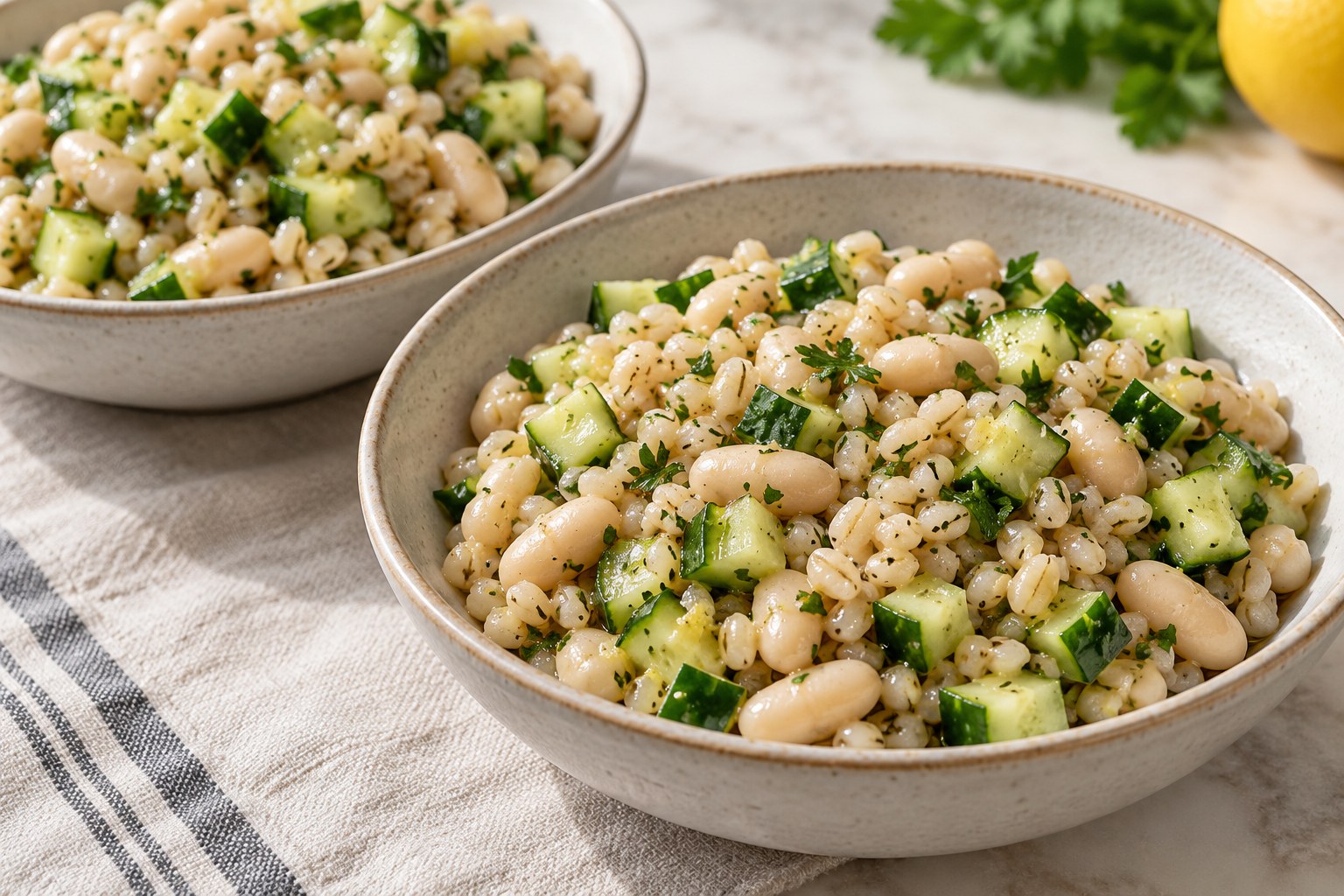
A barley bowl with a cool cucumber contrast.
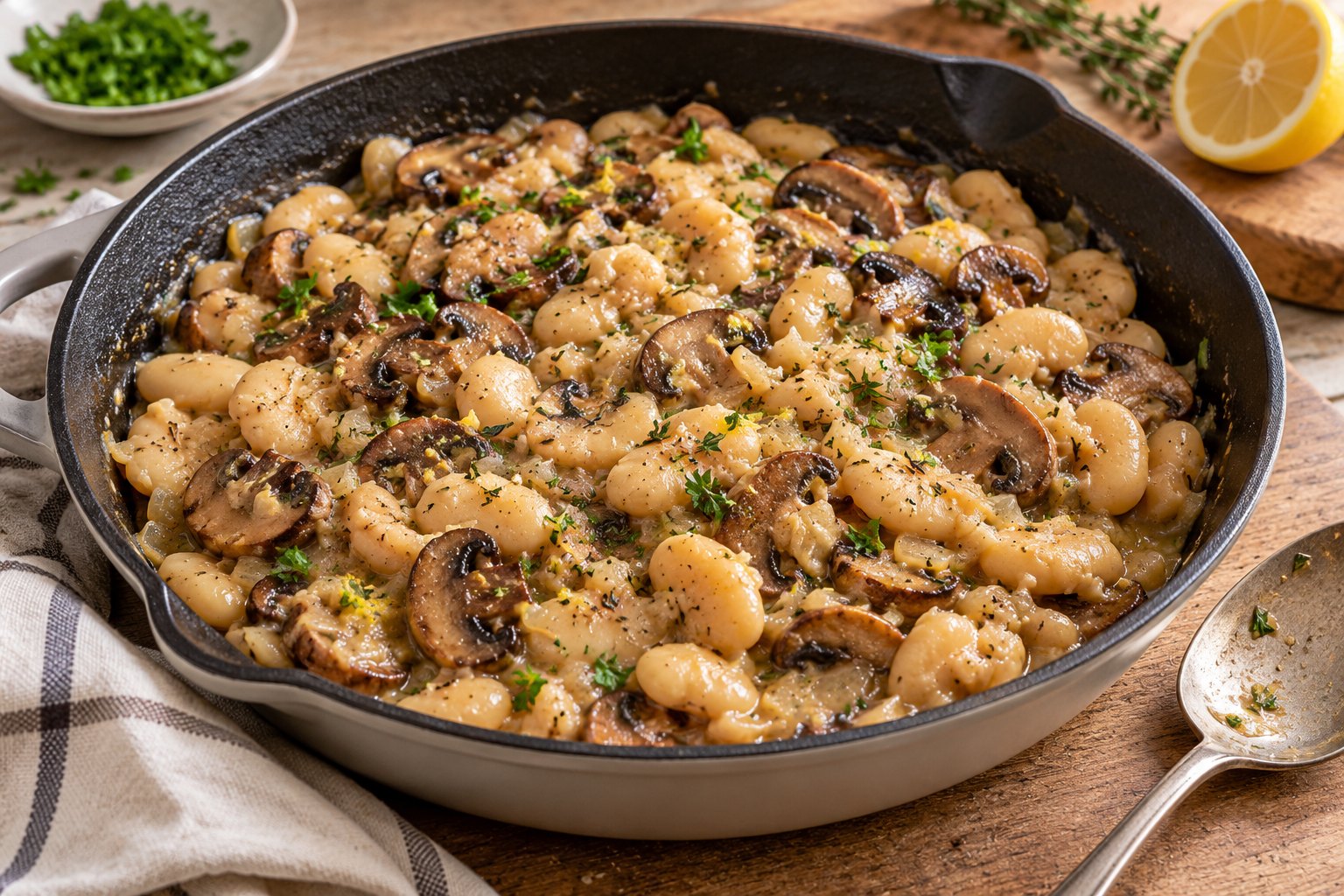
A bean skillet that makes useful use of mushrooms.
Equipment for this recipe
Affiliate disclosure: As an Amazon Associate I earn from qualifying purchases.
Use the tools you already have when they match the method. If you need an item, these links open matching Amazon search results.
- Heavy 2-quart saucepan on Amazon — Match the recipe’s small-batch saucepan size and use the lid where directed.
- 12-inch skillet on Amazon — Match the recipe’s pan width and use a lid when the method calls for one.
Check the size, material, and manufacturer’s use instructions against the recipe before choosing.
Useful kitchen references
- FoodSafety.gov leftover guidance — A practical reference for chilling and reheating.
Printable recipe
Use the recipe card’s Print control for a kitchen copy. Follow the ingredient quantities and cooking checks in the card when preparing the dish.
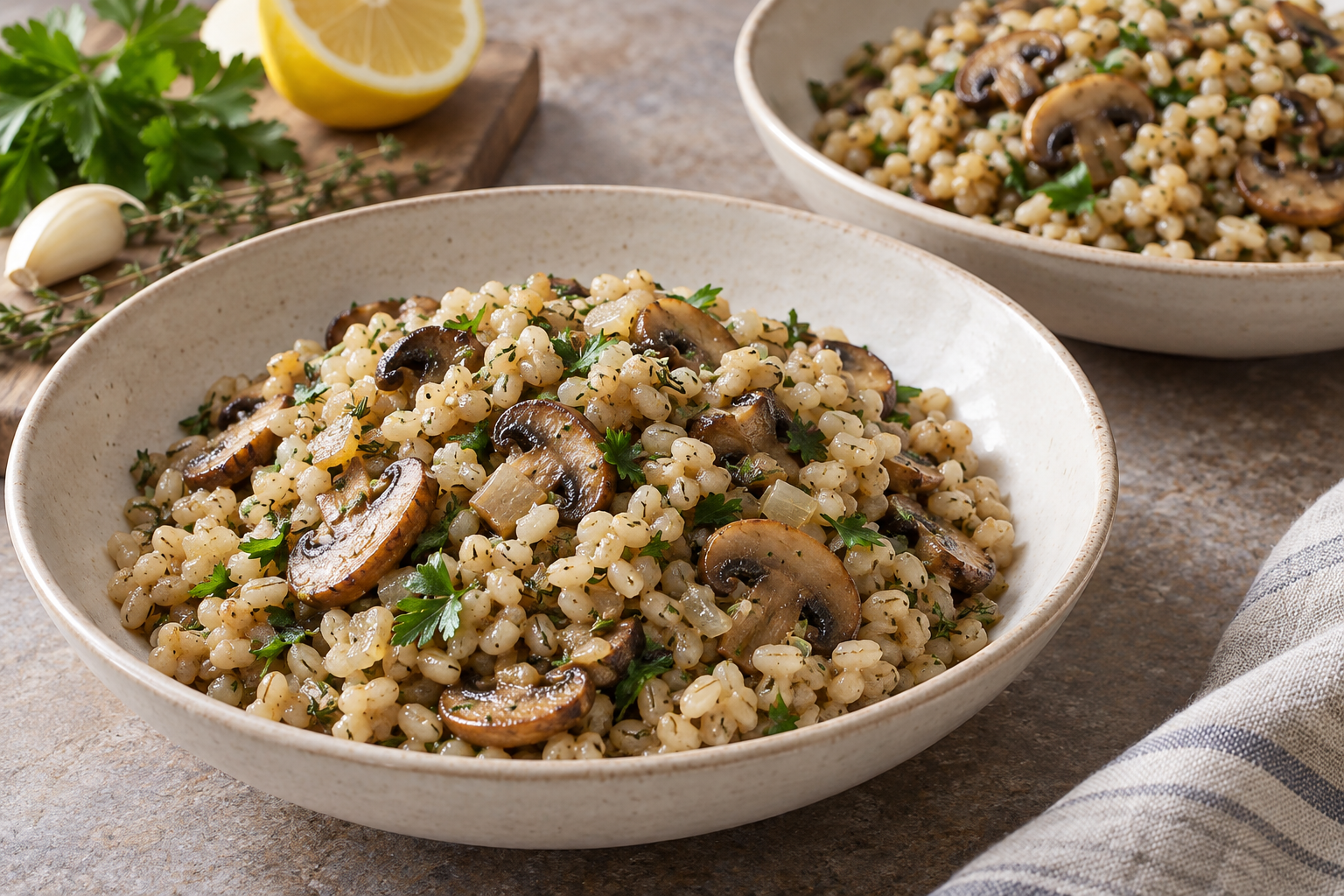
Mushroom Barley Pilaf for Two
Ingredients
Equipment
Method
- Start the onion base. Warm 2 teaspoons olive oil in the saucepan over medium heat. Add the onion and a small pinch of the measured salt. Cook for 5–6 minutes, stirring, until softened. Add the garlic and thyme and stir for 30 seconds.
- Coat the barley. Add the drained barley and stir for 1–2 minutes until the grains are coated and the pan smells lightly toasted. Because the barley was rinsed, some surface moisture may evaporate before it begins to toast. Do not wait for deep browning.
- Add broth and simmer. Pour in the broth, scrape the bottom, and bring to a boil. Reduce to low, cover, and simmer gently. Begin checking at 40 minutes, then continue until the barley is tender, commonly 45–60 minutes total. Keep the lid on between checks.
- Brown the mushrooms separately. While the barley simmers, heat the remaining 2 1/2 teaspoons oil in the skillet over medium-high heat. Add the mushrooms in a broad layer. Leave undisturbed for 2 minutes, then cook for another 6–8 minutes, turning occasionally, until their released liquid evaporates and the edges brown. Season with the remaining measured salt and pepper.
- Check the barley's center and moisture. Taste a few grains. They should have a gentle chew without a hard white center. If firm and dry, add 1/4 cup hot water, cover, and continue for 5–10 minutes. If tender with loose liquid remaining, uncover briefly to evaporate it or drain carefully.
- Combine and rest. Fold the mushrooms into the tender barley. Cover, remove from the heat, and rest for 5 minutes. This gives surface moisture time to settle and helps the dish hold a loose mound rather than run across the plate.
- Finish lightly. Fluff with a fork and fold in the parsley and lemon juice. Taste before adding more salt because the broth's seasoning varies. Divide into bowls or serve as a side while warm.
Notes
- Firm grains with no liquid left: Add 1/4 cup hot water, cover, and simmer longer. Do not stir in lemon and serve while the center is still hard.
- Tender grains in a puddle: Drain carefully or cook uncovered briefly. A small amount of glossy moisture is fine; standing broth is not the target.
- Very sticky barley: Fluff gently and let it rest. Next time reduce stirring and check whether quick-cooking barley was used by mistake.
- Muted mushroom flavor: Brown the mushrooms more fully before combining, and check salt and lemon at the end. Simply adding more broth will dilute the dish.