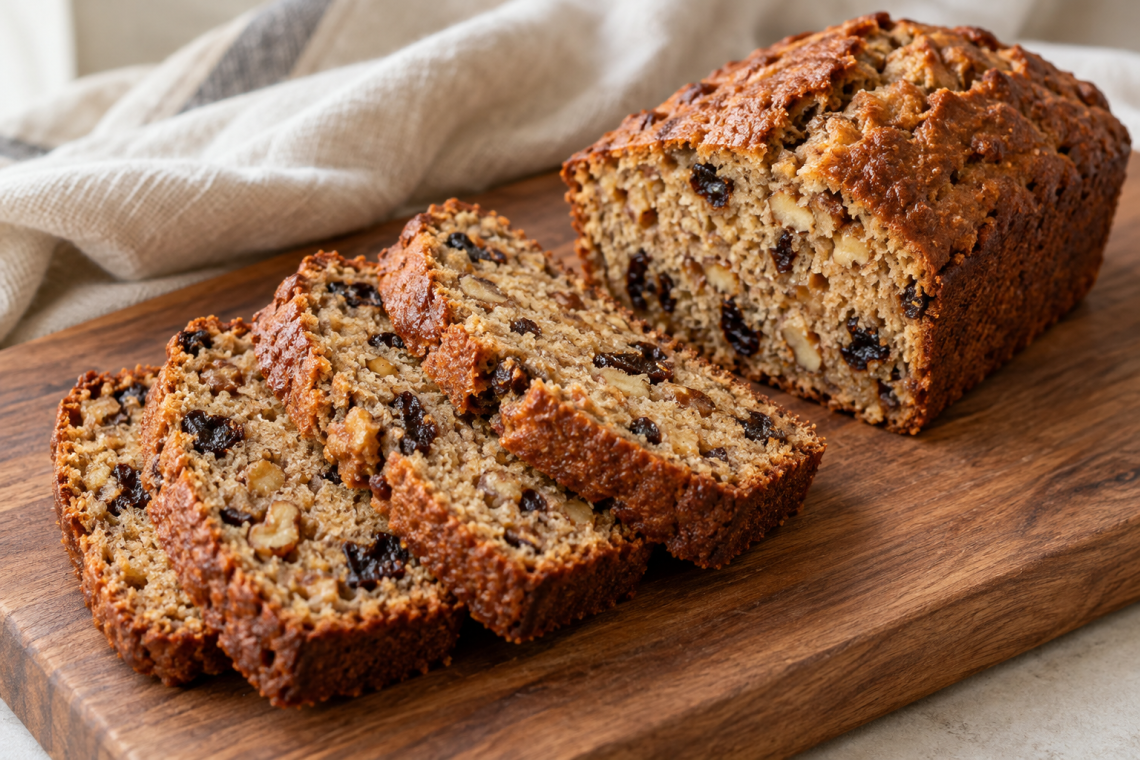
Small batch prune walnut quick bread makes a compact loaf with soft pieces of dried plum, chopped walnuts and a little cinnamon. It is mixed by hand and baked in a small loaf pan, so there is no yeast to activate or dough to knead. The result is useful for breakfast slices or a simple afternoon snack.
The prunes are chopped and softened in a measured amount of hot water. That water stays in the recipe, so there is no guesswork about how much drained fruit moisture enters the batter. Cooling the fruit mixture before adding the egg is just as important as the soaking step itself.
Balance prune moisture with walnut texture
- Chop prunes evenly so no slice contains a large sticky pocket that appears underbaked.
- Toast or inspect walnuts before mixing, then cool them so they do not soften the batter.
- Soften the chopped prunes in the measured hot water and retain that liquid for the batter; fold the chopped walnuts in at the end.
- Mix only until no dry streaks remain; a small loaf becomes tough quickly when overworked.
Test the center away from a prune piece and allow the loaf to cool before slicing. The crumb continues setting as steam escapes, which is especially important in a fruit-rich quick bread.
Match the small pan and prepare its lining
Use a small loaf pan about 6 by 3 inches with sides at least 2½ inches high, holding approximately 3 cups to the rim. Mini-loaf pans vary considerably. Measure yours before starting rather than assuming every pan labeled mini has the same capacity.
The finished batter should fill the pan no more than about two-thirds to three-quarters full. An ordinary 9-by-5-inch loaf pan spreads this quantity too thin and makes a shallow loaf. Two very small gift pans may work with shorter baking, but that variation needs its own timing check.
- Yield: one small loaf, about eight slices.
- Prep: 20 minutes, including softening and cooling the prunes.
- Bake: approximately 35–45 minutes.
- Cool before slicing: at least 30 minutes; about 90 minutes total.
- Oven: 350°F / 175°C, conventional.
Fit the parchment before the batter is ready
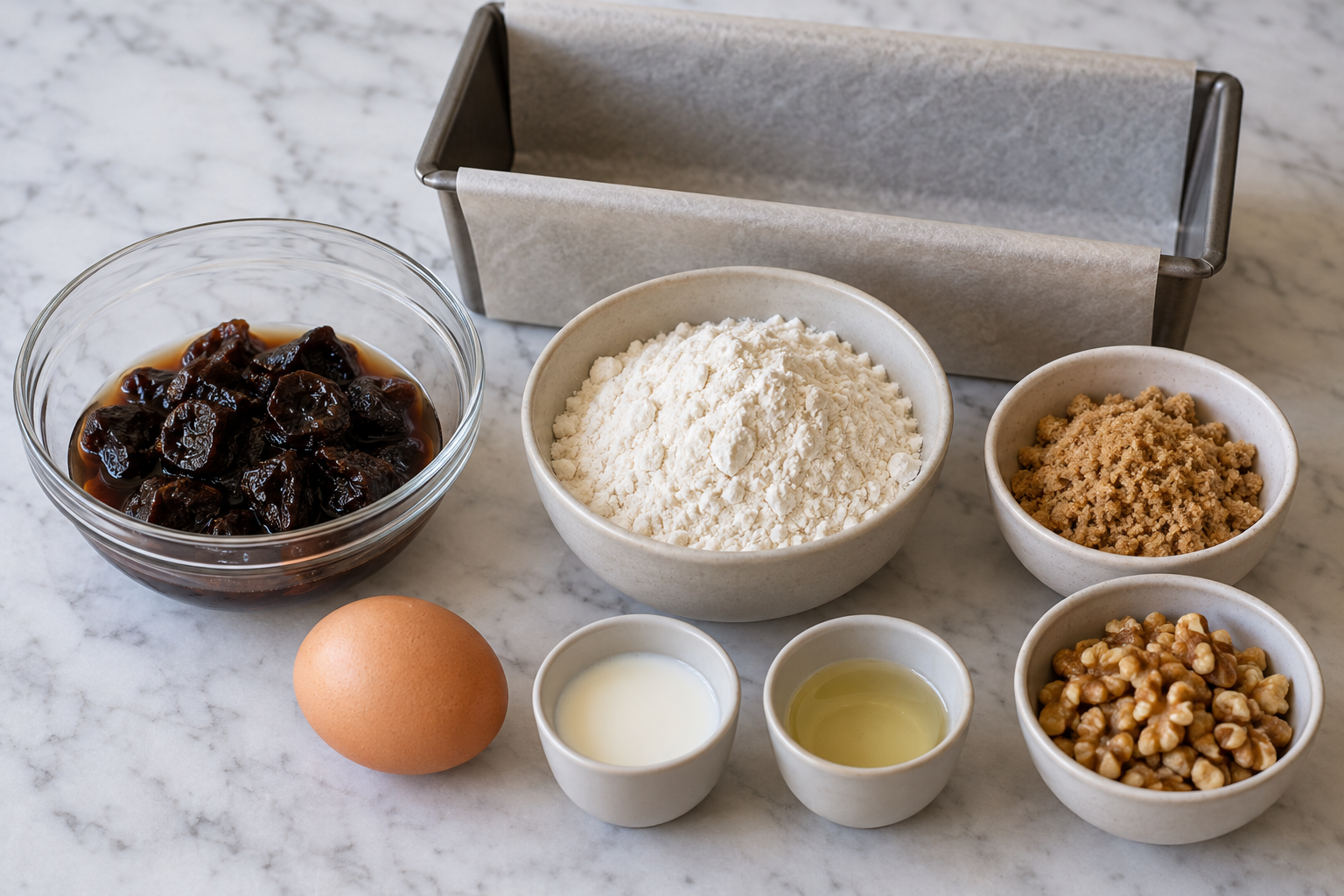
Press the parchment strip into the empty pan and crease it where the base meets each long side. Keep the strip close to the metal rather than leaving a large fold that takes up batter space. The short ends still need greasing because the strip does not cover them. Check that the overhang is useful for lifting without extending loosely toward an oven wall or heating element, then set the prepared pan aside.
The soaked fruit, batter and walnuts
Measured prune soak
- ½ cup (90 g) pitted prunes, chopped into small pieces
- 6 tablespoons (90 ml) hot water
Dry mixture
- 1 cup (120 g) all-purpose flour
- ¼ cup packed (50 g) light brown sugar
- 1 teaspoon baking powder
- ½ teaspoon ground cinnamon
- ¼ teaspoon fine salt
Wet mixture and nuts
- 1 large egg
- 2 tablespoons (30 ml) neutral oil, plus 1 teaspoon for greasing the pan
- 2 tablespoons (30 ml) milk
- ½ teaspoon vanilla extract
- ¼ cup (30 g) walnuts, chopped
Measure flour by weight or spoon it into the cup and level it. Brown sugar should be lightly packed. The King Arthur Baking weight reference is useful for checking small-batch measurements. Prepared fruit weights are more consistent than counting prunes, which vary in size.
Soften the fruit and check the walnuts
Check each prune for a remaining pit fragment before chopping. Even packages labeled pitted can occasionally contain fragments. Cut the fruit into small pieces rather than adding whole prunes, which would create very large wet pockets in a small loaf.
Put the chopped prunes into a heatproof bowl and pour over the measured hot water. Let stand for 10 minutes, stirring once. The fruit should soften and the water may darken. Keep both together. If the mixture is still hot, spread it in a wider bowl briefly until it is lukewarm before using it.
Walnuts should smell mild and pleasantly nutty. Nuts that smell stale, paint-like or bitter will affect the whole loaf. Chop them into pea-size pieces so they distribute evenly and are easier to slice through. Toasting is optional: if you toast them, cool them before adding and avoid darkening them heavily.
Keep chopped prunes separate until they soften
Sticky pieces can cling together after cutting. Separate obvious clusters in the heatproof bowl before adding the hot water, then stir from the bottom during the soak. This exposes more cut surfaces to the measured water and makes the fruit easier to distribute later. Scrape the darkened liquid and softened pieces from the bowl together; leaving the last sticky spoonful behind changes more than just the number of fruit pieces in the loaf.
Make small batch prune walnut quick bread
- Prepare the pan and oven. Heat the oven to 350°F / 175°C. Grease the small loaf pan and line it with a strip of parchment across the bottom and long sides, leaving a little overhang for lifting.
- Soften the prunes. Combine the chopped fruit and measured hot water as described above. Let the mixture cool to lukewarm. Do not drain away the water.
- Combine dry ingredients. Whisk flour, brown sugar, baking powder, cinnamon and salt in a bowl. Break apart brown-sugar lumps with your fingertips.
- Combine wet ingredients. In another bowl, whisk egg, oil, milk and vanilla. Stir in the cooled prune mixture and all its remaining liquid.
- Fold the batter. Add the wet ingredients to the dry mixture. Fold gently until only a few flour streaks remain, then add the walnuts. Finish folding just until the flour disappears. The batter should be thick but spreadable.
- Fill and bake. Scrape into the prepared pan and level the top. Bake for 35–45 minutes, checking from 35 minutes. A skewer inserted into the crumb near the center should emerge without wet batter. Avoid testing directly through a prune piece.
- Cool in stages. Rest in the pan for 10 minutes, then lift carefully to a rack. Cool at least another 20 minutes before slicing, and preferably longer for the cleanest pieces.
Fill the ends of the small pan deliberately
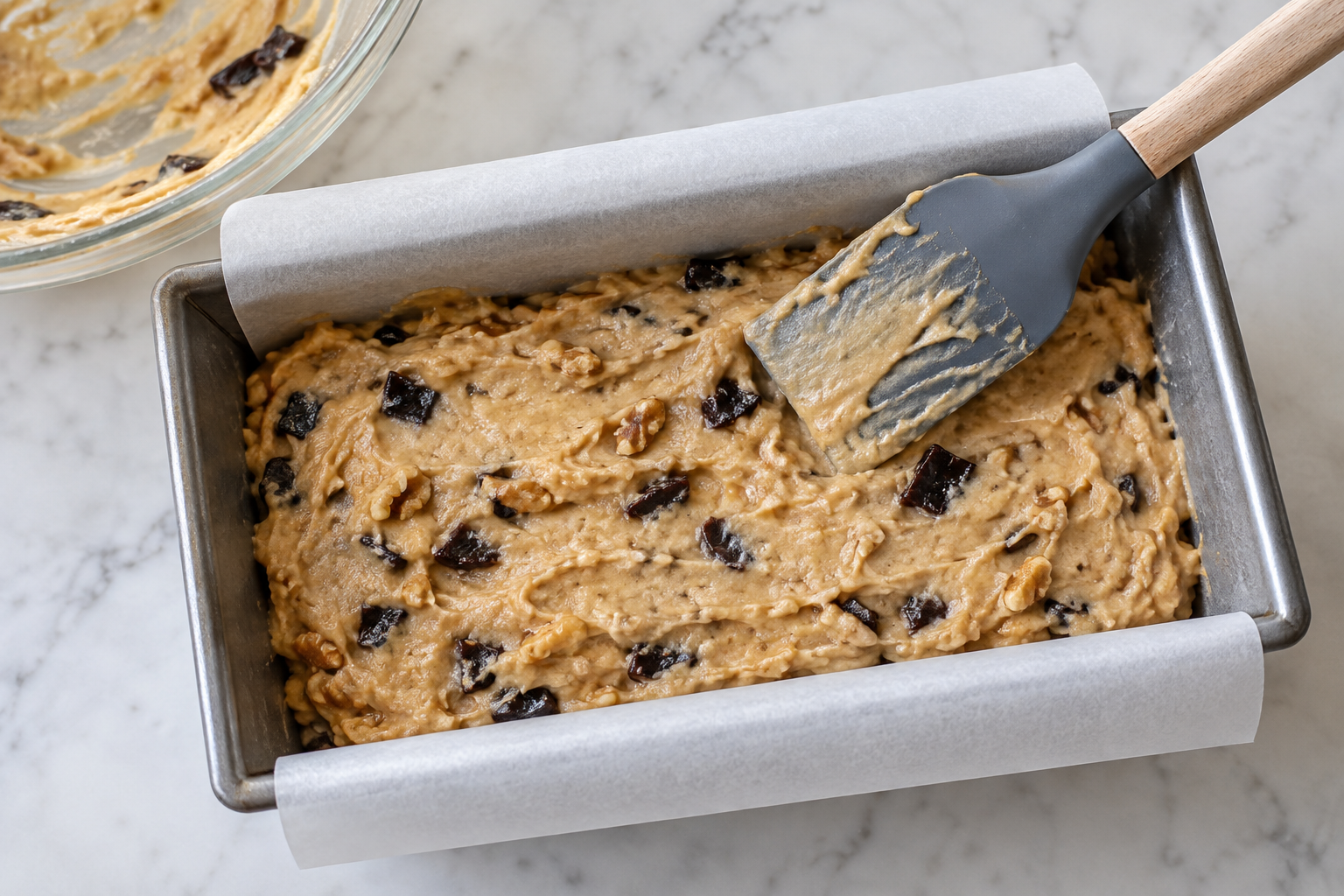
Add the batter in a few spoonfuls along the length of the pan, then use the spatula to ease it into the short-end corners. A thick fruit batter may bridge over a parchment fold if it is dropped in one heavy mound. Level the surface with light strokes without packing the mixture down. Look for a reasonably even height from one end to the other so the loaf does not start with a thin tail and a deep center.
Check beneath the crack in the loaf
A crack along the top is normal for a quick bread. The outside sets while the middle continues expanding, and the surface opens as it rises. A crack does not mean the loaf failed. What matters is whether the crumb beneath it is cooked rather than wet.
Prunes can leave a sticky streak on a skewer even when the bread is ready. Test in a second location, looking for actual flour batter. If the top is deeply colored but the center still needs time, cover loosely with foil and continue in short intervals.
The small pan can change timing noticeably. Dark metal often browns the outside faster, while a thicker or differently shaped pan can slow the center. Keep the oven setting stable and use the doneness cues rather than cutting the loaf open while it is still baking.
Cut clean slices and choose a pairing
Use a serrated knife with gentle sawing motions after the loaf has cooled. Pressing hard with a straight knife can compress the soft fruit and tear the crumb. Thin slices are easier to toast; thicker slices stay softer in the middle.
Serve plain, with a small amount of butter or alongside yogurt. A strongly flavored spread can cover the prune flavor, so start simply. For another small fruit bake, see the cranberry orange muffins. If you have applesauce rather than dried fruit, the applesauce muffin recipe uses a different moisture balance.
Plan the slices after the loaf has settled
For approximately eight slices, first judge the middle of the cooled loaf, then divide each half into four similar pieces. Cut only what you need if the rest will be stored whole. If a softened prune drags along the knife, wipe the blade before the next cut rather than pressing harder. Let the serrations work through walnut pieces with short strokes; forcing through a large piece can pull the surrounding crumb apart.
Wrap the loaf or freeze individual slices
Let the loaf cool before wrapping so condensation does not collect against the crust. Because it contains moist fruit, refrigerate it covered after cooling and use within 3–4 days. Do not leave it cooling for hours in a warm kitchen; refrigerate within two hours. Slice before freezing if you want to remove individual portions.
Freeze wrapped slices for up to two months for best quality. Thaw in the refrigerator, then warm gently. A toaster oven can crisp the edges, while a microwave keeps the slice softer. Avoid repeated long heating, which dries the crumb around the fruit.
Ingredient roles and useful limits
The chopped prunes contribute sweetness and moist pieces of fruit; they are not a complete substitute for the recipe’s oil or sugar. The egg helps bind the batter, while flour provides the structure around the fruit and nuts. Baking powder supplies lift without needing a yeast rise.
Milk makes a small adjustment to the batter’s liquid. A suitable unsweetened plant drink is a reasonable variation to investigate, but the reference version uses dairy milk. Applesauce in place of the oil, or a flax mixture in place of the egg, changes enough of the formula to require a separate kitchen check.
You can leave out the walnuts if you prefer a fruit-only loaf, though the texture and total loaf weight will differ slightly. Do not replace them with a large extra handful of prunes; that adds moisture instead of crunch. Pecans are a closer textural alternative when appropriate for your household.
Frequently asked questions
Are prunes and dried plums the same ingredient?
For this recipe, packages labeled prunes or dried plums are suitable when they contain soft, pitted dried fruit. Do not use prune juice in place of the chopped fruit.
Can I use dates?
Dates differ in sweetness, texture and moisture. They need a separately checked version rather than a promise that every amount and time will be identical.
Should I drain the soaked prunes?
No. The measured soaking water is part of the batter. Draining it away can make the loaf too dry.
Can I bake it in muffin cups?
The batter could be portioned differently, but muffin size and timing need checking. The stated yield and time are for the small loaf pan.
Why does the warm loaf crumble?
The crumb is still settling and the fruit is soft. Allow more cooling time and use a serrated knife rather than compressing the loaf.
Can I make a full-size loaf?
Doubling small batch prune walnut quick bread needs a suitable larger pan and a new baking-time check. Pan capacity and depth matter more than the label on the pan.
A measurement check for small batch prune walnut bread
In this small loaf, an extra splash of soaking water or an overfilled flour cup has a noticeable effect. Before mixing, use the following checkpoints to keep the written formula intact. They are especially useful when a previous loaf browned at the edges but stayed wet in the center, or seemed dry despite containing plenty of fruit.
Keep the three measured liquids separate
| Ingredient | Amount and destination |
|---|---|
| Hot water | 6 tablespoons / 90 ml, poured over the chopped prunes; all remaining liquid enters the batter. |
| Milk | 2 tablespoons / 30 ml, whisked with the egg, oil and vanilla. |
| Neutral oil | 2 tablespoons / 30 ml in the batter; the separate teaspoon for greasing belongs in the pan. |
Use the measured water even if it does not completely cover every prune piece at first. Stir during the soak to expose the fruit evenly. Adding enough water to submerge the fruit in a very wide bowl changes the recipe. If you accidentally add too much, correct the measurement before mixing rather than trying to compensate later with extra flour.
Check the bowl before filling the pan
The 120 g flour amount is the recipe’s reference. If using a cup, spoon in the flour and level it without pressing it down. Loosen the brown sugar’s lumps before adding the wet mixture so they do not need vigorous beating later. Cool the soaked fruit to lukewarm, then scrape both the fruit and darkened liquid into the wet ingredients.
After folding, the batter should be thick enough to move into the pan with a spatula, yet soft enough to spread into the corners. It need not look perfectly smooth: chopped prunes and walnuts create unevenness. Check the bottom of the bowl for a hidden pocket of dry flour. Fold just enough to incorporate that pocket instead of beating the whole mixture until every surface looks uniform.
Read the baked center, not one sticky skewer
Begin the stated doneness checks at 35 minutes. A dark smear can come from a prune; pale, paste-like batter on the skewer means the surrounding crumb needs more baking. Check another spot near the center without pushing through the same fruit pocket. If the crust is already well browned, tent it loosely with foil and continue checking in short intervals.
Never taste raw batter to judge its texture or sweetness. It contains uncooked flour and egg; the FDA advises against tasting raw dough or batter. Judge this loaf after baking and cooling.
Keep one useful note for the next loaf
Record the pan’s inside dimensions, its material, and when the center first passed the skewer check. Those details are more useful than automatically changing the oven temperature after one batch. Let the loaf complete the cooling steps before deciding whether it needs a different texture. Small batch prune walnut bread slices most cleanly when the fruit and crumb have had time to settle together.
More recipes for your table
Choose a companion dish or another recipe for the ingredients you have. Each link opens its own instructions and printable recipe.
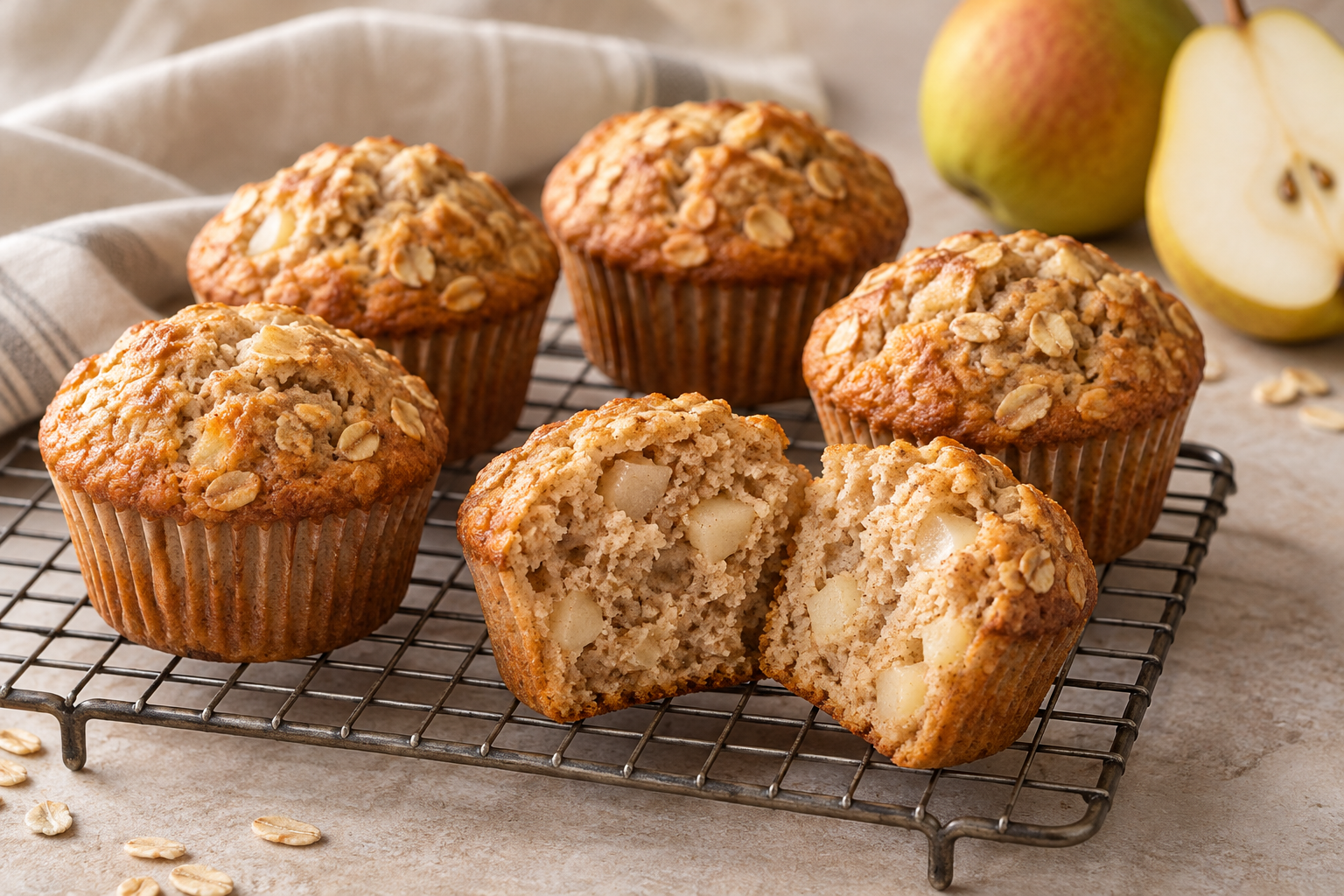
A small fruit muffin batch for another morning.
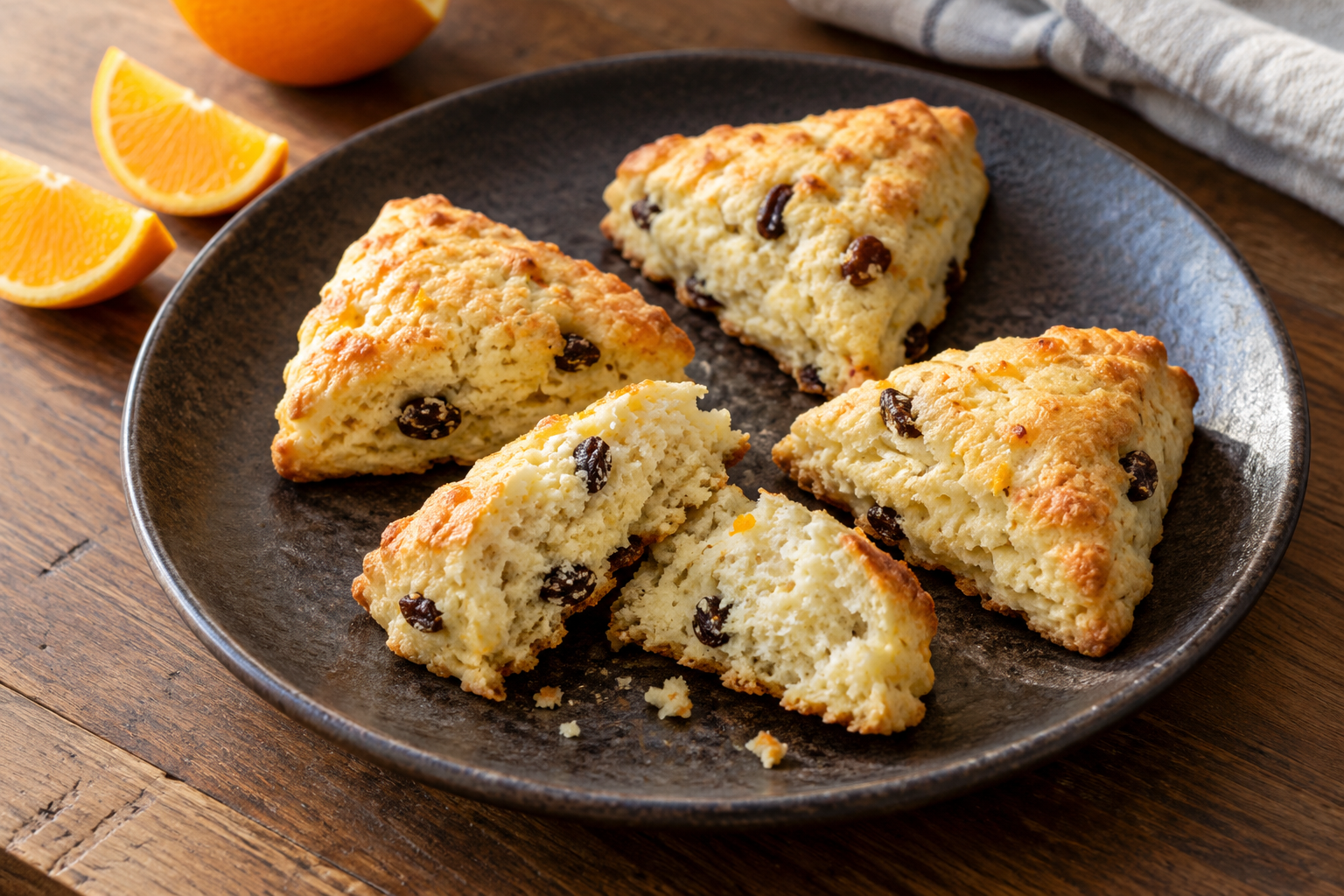
A small citrus bake for another breakfast or snack.
Equipment for this recipe
Affiliate disclosure: As an Amazon Associate I earn from qualifying purchases.
Use the tools you already have when they match the method. If you need an item, these links open matching Amazon search results.
- Small loaf pan on Amazon — Check for roughly 6 × 3-inch inside dimensions, sides at least 2½ inches high, and about 3 cups capacity.
- Digital kitchen scale on Amazon — Measure small ingredient amounts or divide portions evenly.
Check the size, material, and manufacturer’s use instructions against the recipe before choosing.
Useful kitchen references
- Ingredient weight chart — A reference for common baking measurements.
Printable recipe
Use the recipe card’s Print control for a kitchen copy. Follow the ingredient quantities and cooking checks in the card when preparing the dish.
Small-Batch Prune Walnut Quick Bread
Ingredients
Equipment
Method
- Prepare the pan and oven. Heat the oven to 350°F / 175°C. Grease the small loaf pan and line it with a strip of parchment across the bottom and long sides, leaving a little overhang for lifting.
- Soften the prunes. Combine the chopped fruit and measured hot water as described above. Let the mixture cool to lukewarm. Do not drain away the water.
- Combine dry ingredients. Whisk flour, brown sugar, baking powder, cinnamon and salt in a bowl. Break apart brown-sugar lumps with your fingertips.
- Combine wet ingredients. In another bowl, whisk egg, oil, milk and vanilla. Stir in the cooled prune mixture and all its remaining liquid.
- Fold the batter. Add the wet ingredients to the dry mixture. Fold gently until only a few flour streaks remain, then add the walnuts. Finish folding just until the flour disappears. The batter should be thick but spreadable.
- Fill and bake. Scrape into the prepared pan and level the top. Bake for 35–45 minutes, checking from 35 minutes. A skewer inserted into the crumb near the center should emerge without wet batter. Avoid testing directly through a prune piece.
- Cool in stages. Rest in the pan for 10 minutes, then lift carefully to a rack. Cool at least another 20 minutes before slicing, and preferably longer for the cleanest pieces.