QUINOA / BUTTER BEANS / COOKED BEETS
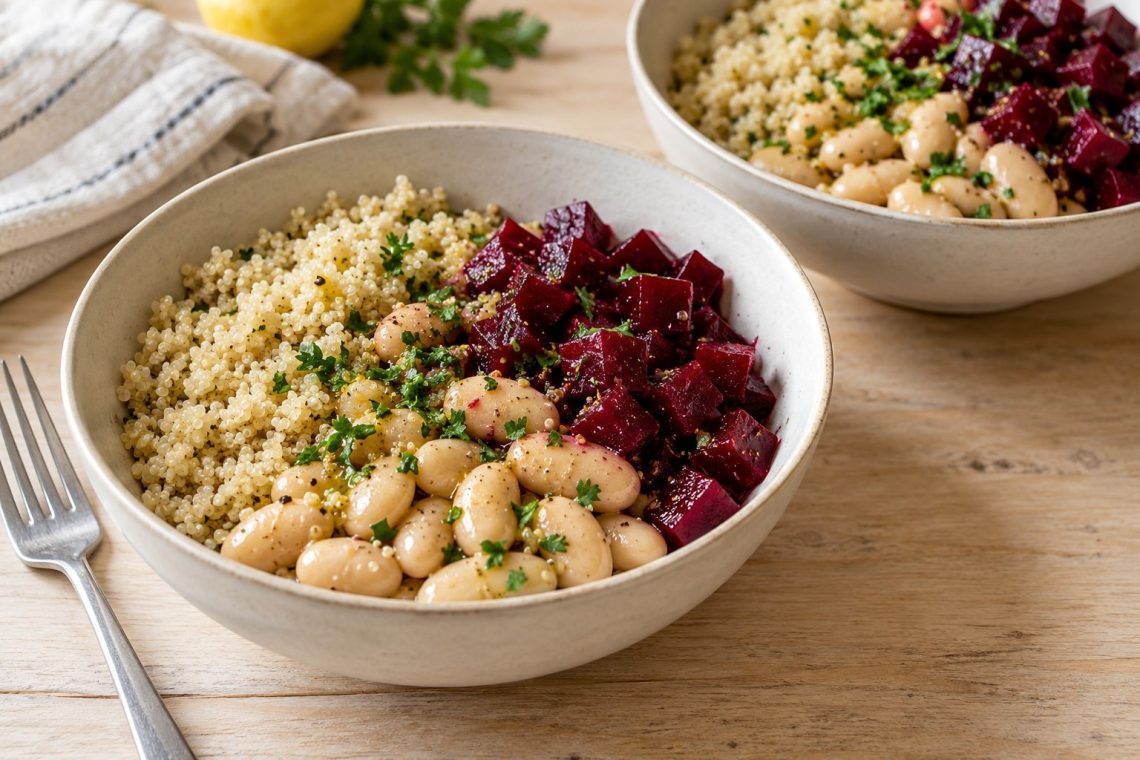
These quinoa butter bean bowls bring together fluffy quinoa, soft white beans, and sweet, earthy cooked beets. A small lemon-Dijon dressing adds brightness without a tomato sauce, and parsley gives each bowl a fresh finish. Using plain ready-cooked beets keeps the work manageable: while the quinoa simmers, you can drain the beans, dice the beets, and whisk the dressing.
The most useful detail is to keep the components separate until serving. Quinoa needs a chance to release steam, butter beans need gentle handling, and beet juice belongs on the beets until you are ready for it to tint the bowl. You get distinct textures and colors without a complicated ingredient list.
Quinoa butter bean bowls: recipe at a glance
- Prep
- 10 minutes
- Cook
- 20 minutes
- Covered quinoa rest
- 15 minutes
- Total
- About 45 minutes
- Yield
- 2 generous main-course bowls
Allow about 20 minutes of hands-on work overall; much of the cooking and resting time is unattended. The schedule assumes plain white quinoa and fully cooked packaged beets. A different quinoa product may need a different simmer or rest, so check its directions before starting.
Equipment: a 1½–2-quart saucepan with a close-fitting lid, a second small saucepan, a fine-mesh strainer or suitable rinsing setup, a fork, a small bowl and whisk, a knife, and a cutting board.
Measured ingredients for two bowls
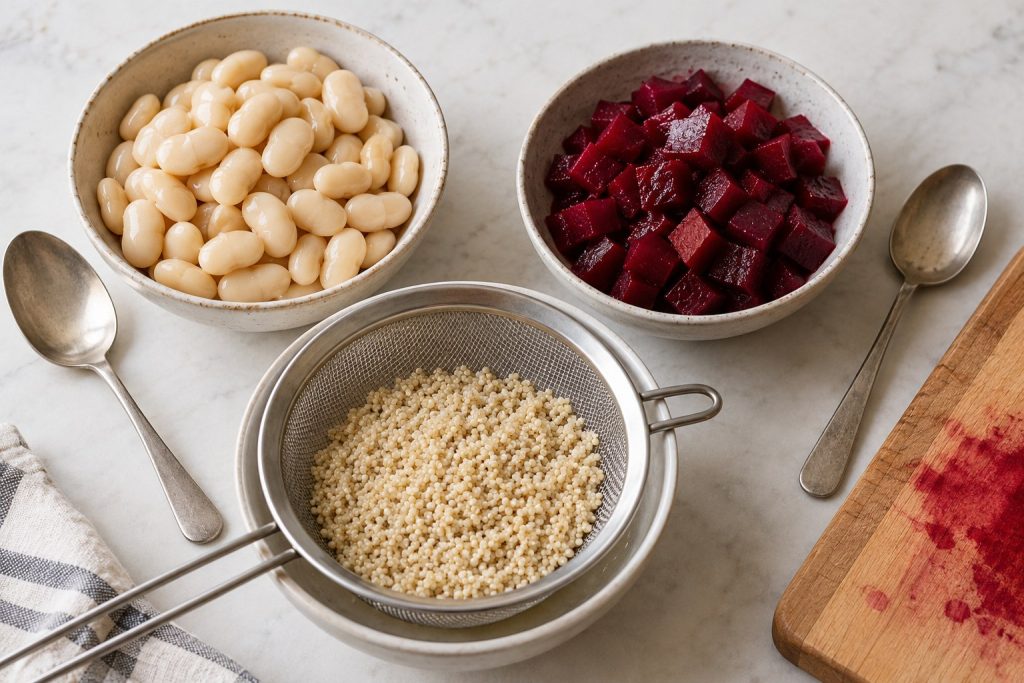
- ¾ cup dry white quinoa, rinsed and drained unless its package says rinsing is unnecessary
- 1½ cups water for the quinoa, plus 1 tablespoon for warming the beans; adjust the grain water if your package specifies a different ratio
- 1 cup plain fully cooked beets, cut into ½-inch cubes, drained of packing liquid
- 1 can butter beans, 15 ounces net weight, rinsed and drained; about 1½ cups drained beans
- 1 tablespoon olive oil
- 1 tablespoon fresh lemon juice
- ½ teaspoon Dijon mustard
- 1 tablespoon finely chopped fresh parsley
- ¼ teaspoon fine salt to start, divided, with more to taste
- ⅛ teaspoon ground black pepper, or to taste
Choose whole quinoa and check the water ratio
Use whole white quinoa for a mild flavor and a pale base that contrasts with the beets. Quinoa flakes, flour, and seasoned microwave pouches are different products. The measured water here uses two parts water to one part dry quinoa, consistent with Bob’s Red Mill’s stovetop quinoa guidance. Your package takes priority if its method differs.
Drain rinsed quinoa well before it goes into the saucepan. A strainer dripping with rinse water adds unmeasured liquid. If you do not have the usual equipment, our guide to rinsing quinoa without a fine mesh strainer explains workable alternatives.
Buy plain cooked beets and ready-to-eat beans
Vacuum-packed cooked beets or plain canned beets work well. Check for added vinegar, sugar, or a marinade: pickled beets change the balance substantially. Drain the beets and blot very wet surfaces before dicing. Cut large canned slices into pieces close to the same size so each forkful is manageable.
The butter beans in this recipe are already cooked. A 15-ounce can includes liquid, so its net weight is not the weight of the drained beans. About 1½ cups is a useful guide, but a small difference between brands is fine. Dried butter beans need a separate cooking process and cannot go straight into the brief warming step.
Three small details that improve the texture
Let quinoa rest covered, then fluff gently
Look for tender grains with a little spring, rather than a wet layer at the bottom of the pan. A fork can lift and separate the grain without compressing it. If you stir vigorously with a spoon, particularly while the quinoa is very hot and damp, the bowl can become dense. The rest also gives you a convenient window to warm the beans.
Drain without crushing
Butter beans are large and delicate. Use a gentle stream of water for rinsing and avoid shaking a colander hard enough to split their skins. A few broken beans are harmless and can help carry the dressing, but keeping most whole gives the bowl a pleasing contrast with the tiny quinoa grains.
Season the whole forkful
The dressing tastes sharper by itself than it does spread over quinoa and beans. Taste it with a small spoonful of the bowl before adjusting it. If it needs more coating, add a teaspoon each of olive oil and lemon juice, mix, and taste again. Adding only lemon can make the beets taste overly sharp; adding only oil can mute the freshness.
How to make the quinoa beet bowls
- Start the quinoa. Bring 1½ cups water to a boil in the lidded saucepan. Add the drained quinoa and half the salt, return to a gentle boil, then cover and reduce the heat to a low simmer. Cook for about 12–15 minutes, or according to the package, until the water is absorbed and a tasted grain is tender.
- Let the grain rest. Remove the pan from the heat. Gently loosen the surface with a fork, cover again, and leave for 15 minutes. Follow a different resting instruction if your quinoa package calls for it. Before assembly, fluff gently and let any obvious excess steam escape.
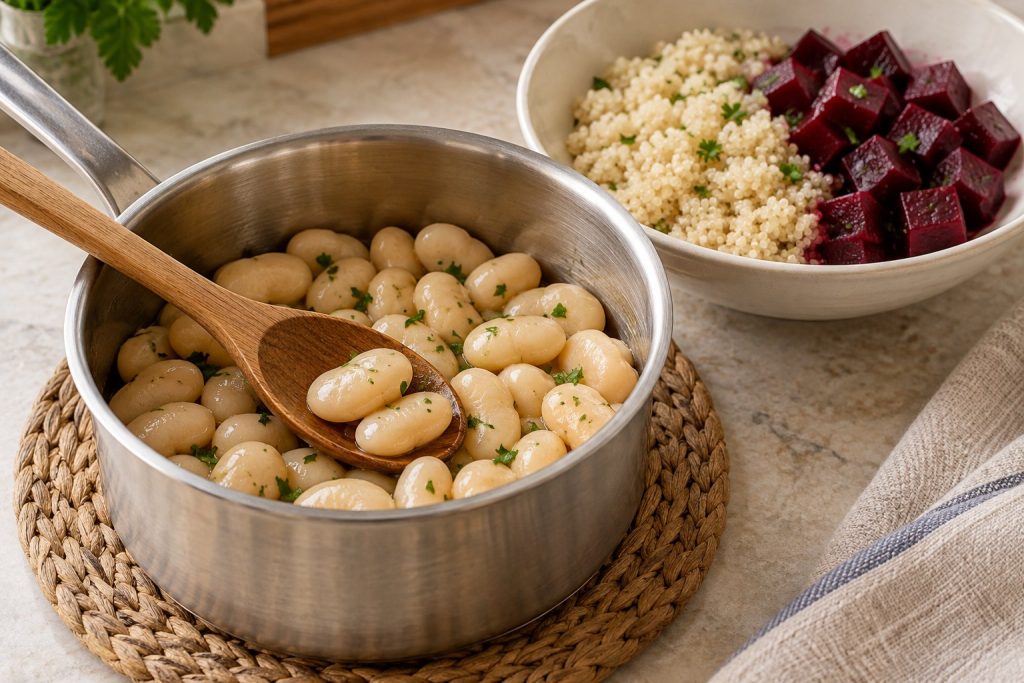
- Prepare the beets and beans. While the quinoa cooks, drain and dice the fully cooked beets into ½-inch pieces. Rinse the butter beans gently and let them drain thoroughly. Keep the two ingredients in separate bowls, with separate spoons if you want to preserve the beans’ pale color.
- Whisk the dressing. Combine the olive oil, lemon juice, Dijon, remaining salt, and pepper in a small bowl. Whisk until the mixture looks evenly blended. This makes a light dressing, so scrape it all out of the bowl when serving.
- Warm the beans gently. During the quinoa rest, put the beans and 1 tablespoon water in the second saucepan. Cover and warm over low heat for about 3–5 minutes, shaking the pan once or turning the beans carefully, until hot throughout. Drain any water left in the pan. Keep the ready-to-eat beets separate; serve them as they are, or warm them separately according to their package.
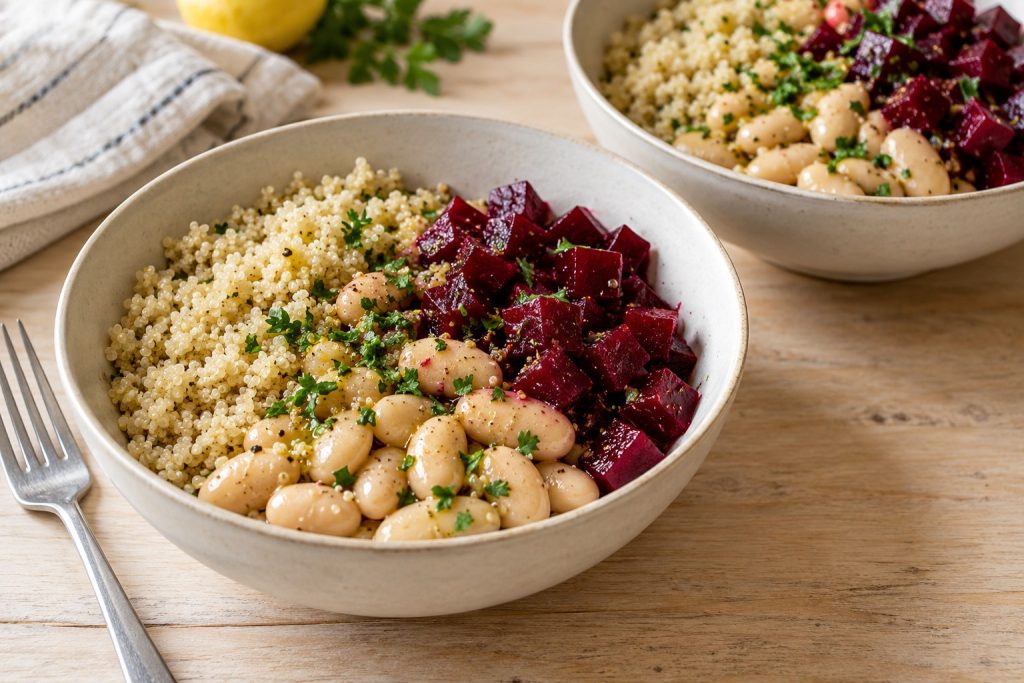
- Assemble and taste. Divide the quinoa between two bowls. Arrange half the beans and half the beets over each portion, spoon the dressing across all three components, and add the parsley. Taste a forkful containing quinoa, bean, and beet before deciding whether it needs another pinch of salt or a little more lemon.
Fix wet quinoa, bland beans, or an overly sharp bowl
| What you notice | What to do |
|---|---|
| Quinoa is tender but wet | Uncover and let steam escape. If liquid is actually pooling, drain it carefully through a fine-mesh strainer before fluffing. |
| Grains are crunchy and the pan is dry | Add 1–2 tablespoons hot water, cover, and simmer gently for a few more minutes. Check tenderness again. |
| Beans taste flat | Taste them with dressing and a little salt. More cooking will not replace seasoning and may break them apart. |
| Dressing tastes too acidic | Add a teaspoon of olive oil and taste with the grain. If pickled beets were used, omit further lemon. |
| Everything has turned pink | Serve it as a tossed beet bowl. Keep the beets separate until the last moment next time if color contrast matters to you. |
On a small screen, scroll the table sideways to see every column.
Tomato-free variations that keep the bowl balanced
Different beans: cannellini or great northern beans can replace the butter beans in the same drained volume. Handle them gently and warm only as needed. Chickpeas also work, with a firmer bite and less creamy texture.
Different vegetables: substitute 1 cup fully cooked, diced carrots for a sweeter bowl without beet color. If adding arugula, place a small handful beside the grain just before serving. It supplies a peppery note but wilts if packed underneath steaming quinoa.
Different mustard or herbs: a little whole-grain mustard gives the dressing more texture. Chopped dill can replace parsley for a stronger herbal finish. Start with less if its flavor is unfamiliar to your household. Neither change requires adding tomato, cheese, or a heavy sauce.
Serve now or pack the components separately
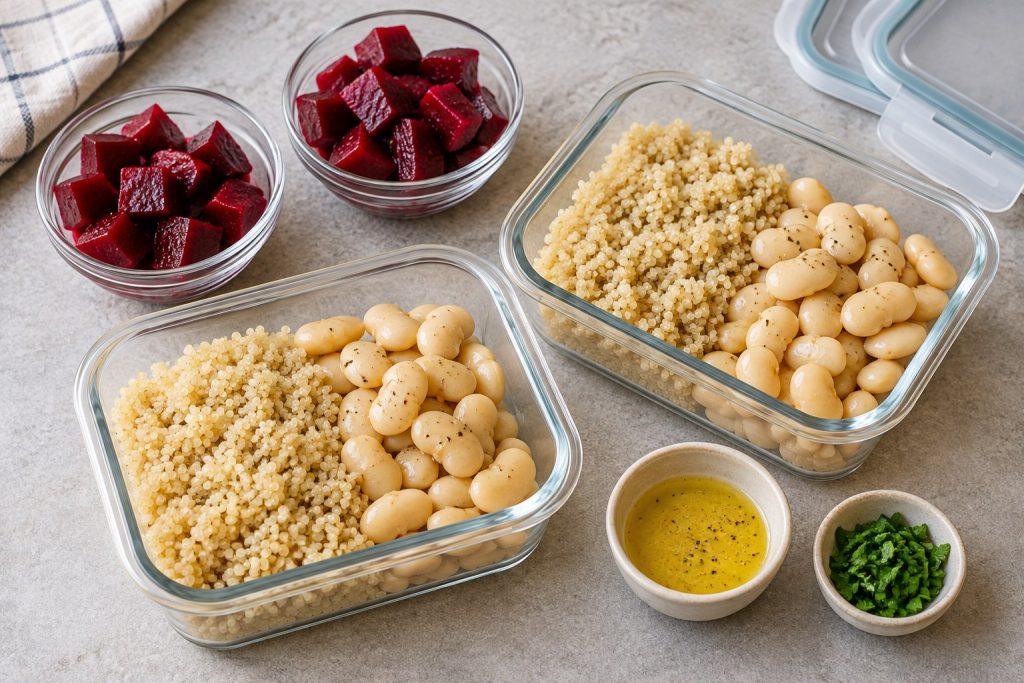
For warm quinoa butter bean bowls, pair freshly fluffed grain and gently heated beans with the prepared beets. For a chilled lunch, cool and refrigerate the cooked components promptly before packing. Keep dressing in a small sealed container, and separate the beets if you want the quinoa to stay pale until lunchtime.
For a smaller lunch portion, share the recipe between three people alongside soup or bread; the main recipe yield remains two generous bowls. If you enjoy simple bean meals with lemon, try our chickpea lemon soup with celery on another day.
Storage and reheating
Refrigerate promptly in shallow containers, within 2 hours, or 1 hour above 90°F. Keep at 40°F or below and use within 3–4 days. Reheat leftovers to 165°F. These limits follow USDA leftover guidance; follow any shorter opened-beet storage instruction too.
Store dressing separately for the freshest flavor. To warm a portion, add a small splash of water to the quinoa and beans, cover loosely in a microwave-safe container, and stir between heating intervals. Add the beets separately if you prefer their texture cold. Finish with reserved dressing and parsley after heating.
Questions about quinoa, butter beans, and beets
Can I use pickled beets?
Yes, as a variation. Drain them well and taste their liquid first: some are very sweet or vinegary. Start with the oil and mustard, then add lemon only if the assembled bowl needs it. Plain cooked beets give the balance described in the measured recipe.
Can I use leftover cooked quinoa?
Yes. Divide a generous cooked-quinoa base between two bowls instead of cooking the dry grain. Because cooked yields vary, use your appetite and bowl size as a guide. Use properly refrigerated quinoa within its remaining storage window, and reheat it thoroughly if serving hot.
Do the beets need roasting first?
Only if you start with raw beets. The 45-minute schedule uses beets that are already fully cooked. Raw beets need their own cooking and cooling time before peeling and dicing; a brief warming step will not cook them through.
Can I leave out the mustard?
Yes. Whisk the lemon and oil thoroughly just before serving because they will separate readily. Taste the bowl for salt and pepper. The dressing will be simpler and a little less rounded, but the quinoa, beans, and beets still work together.
How do I double the recipe?
Double the beans, beets, dressing, and dry quinoa. Scale the cooking water according to the grain package and use a larger saucepan with room for expansion. Do not double the simmering time; judge the quinoa by tenderness and water absorption.
THE COMPLETE RECIPE
Quinoa Butter Bean Bowls with Cooked Beets (No Tomatoes)
Yield: 2 generous main-course bowls
Ingredients
- 3/4 cup dry white quinoa rinsed and drained unless the package says otherwise
- 1 1/2 cups water for the quinoa, plus 1 tablespoon for warming the beans; follow a different grain-water ratio if the package requires it
- 1 cup plain fully cooked beets drained and cut into 1/2-inch cubes
- 1 15-ounce can butter beans rinsed and thoroughly drained; about 1 1/2 cups drained
- 1 tablespoon olive oil
- 1 tablespoon fresh lemon juice
- 1/2 teaspoon Dijon mustard
- 1 tablespoon fresh parsley finely chopped
- 1/4 teaspoon fine salt divided; start with this amount and adjust after tasting
- 1/8 teaspoon ground black pepper or to taste
Equipment
- 1 1/2- to 2-quart saucepan with lid
- Second small saucepan with lid
- Fine-mesh strainer
- Fork
- Small bowl and whisk
- Cutting board and knife
- Measuring cups and spoons
Instructions
- Start the quinoa Bring 1½ cups water to a boil in the lidded saucepan. Add the drained quinoa and half the salt, return to a gentle boil, then cover and reduce the heat to a low simmer. Cook for about 12–15 minutes, or according to the package, until the water is absorbed and a tasted grain is tender.
- Let the grain rest Remove the pan from the heat. Gently loosen the surface with a fork, cover again, and leave for 15 minutes. Follow a different resting instruction if your quinoa package calls for it. Before assembly, fluff gently and let any obvious excess steam escape.
- Prepare the beets and beans While the quinoa cooks, drain and dice the fully cooked beets into ½-inch pieces. Rinse the butter beans gently and let them drain thoroughly. Keep the two ingredients in separate bowls, with separate spoons if you want to preserve the beans’ pale color.
- Whisk the dressing Combine the olive oil, lemon juice, Dijon, remaining salt, and pepper in a small bowl. Whisk until the mixture looks evenly blended. This makes a light dressing, so scrape it all out of the bowl when serving.
- Warm the beans gently During the quinoa rest, put the beans and 1 tablespoon water in the second saucepan. Cover and warm over low heat for about 3–5 minutes, shaking the pan once or turning the beans carefully, until hot throughout. Drain any water left in the pan. Keep the ready-to-eat beets separate; serve them as they are, or warm them separately according to their package.
- Assemble and taste Divide the quinoa between two bowls. Arrange half the beans and half the beets over each portion, spoon the dressing across all three components, and add the parsley. Taste a forkful containing quinoa, bean, and beet before deciding whether it needs another pinch of salt or a little more lemon.
Notes
Rate This Recipe
Made this recipe? Choose a star rating in the comment form and share how it turned out. Your cooking time and any ingredient changes can help the next reader.
Rate This Recipe