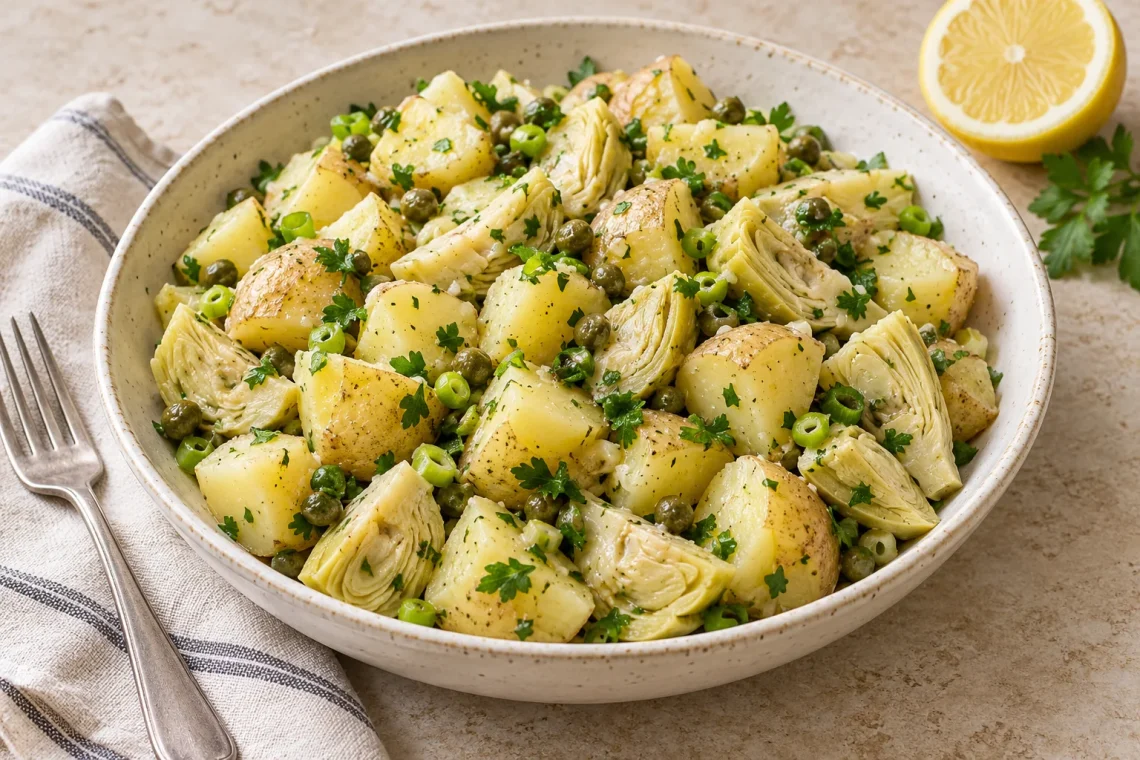
This canned artichoke potato salad without mayo combines tender yellow potatoes, quartered artichoke hearts, scallions, parsley, and capers in a bright lemon-Dijon dressing. Serve it slightly warm beside dinner or prepare it ahead for a chilled lunch spread.
The method comes down to three details: cut the potatoes evenly, drain the artichokes thoroughly, and dress the potatoes before gently folding in the remaining ingredients. The recipe makes four side portions and takes approximately 35 minutes.
The important shopping detail is the artichoke packing liquid. Plain canned hearts in water or brine give you a predictable starting point. Marinated hearts bring their own oil, acid, salt, and herbs, so they require a different dressing adjustment. The method below explains both the base version and how to recognize when a substitution changes the balance.
Choose potatoes that hold their shape
Yellow potatoes or small red potatoes work well because their cooked pieces usually remain intact during folding. Scrub them under running water and remove any damaged areas. Peeling is optional for thin-skinned potatoes; leaving the skin on provides a little structure and saves preparation time.
Cut the potatoes into approximately 3/4-inch chunks before boiling. Consistent size matters more than exact shape. A bowl of tiny fragments and oversized pieces is difficult to cook evenly, and stirring dressing through unevenly cooked potatoes can turn the soft pieces into mash.
Canned artichoke potato salad without mayo
Yield: 4 side portions. Preparation: 15 minutes. Cooking: about 15 minutes. Brief cooling: 5 minutes. Total: approximately 35 minutes.
Equipment: a saucepan, colander, large mixing bowl, small bowl or jar for dressing, whisk, cutting board, and knife.
Helpful equipment
A roomy bowl and a broad utensil make gentle folding easier. Use the tools you already have, or compare these practical options:
Affiliate disclosure: As an Amazon Associate I earn from qualifying purchases. These paid links open Amazon search results for comparing equipment.
- Colander (paid link): drain the cooked potatoes and artichokes thoroughly before dressing.
- Wide mixing bowl (paid link): leave room to fold the salad without pressing the potato pieces against the sides.
- Broad silicone spatula (paid link): lift and turn the vegetables gently; a broad serving spoon also works.
- Small whisk (paid link): combine the lemon juice, oil, and Dijon evenly. A tightly closed jar can also be shaken.
Ingredients
For the potatoes
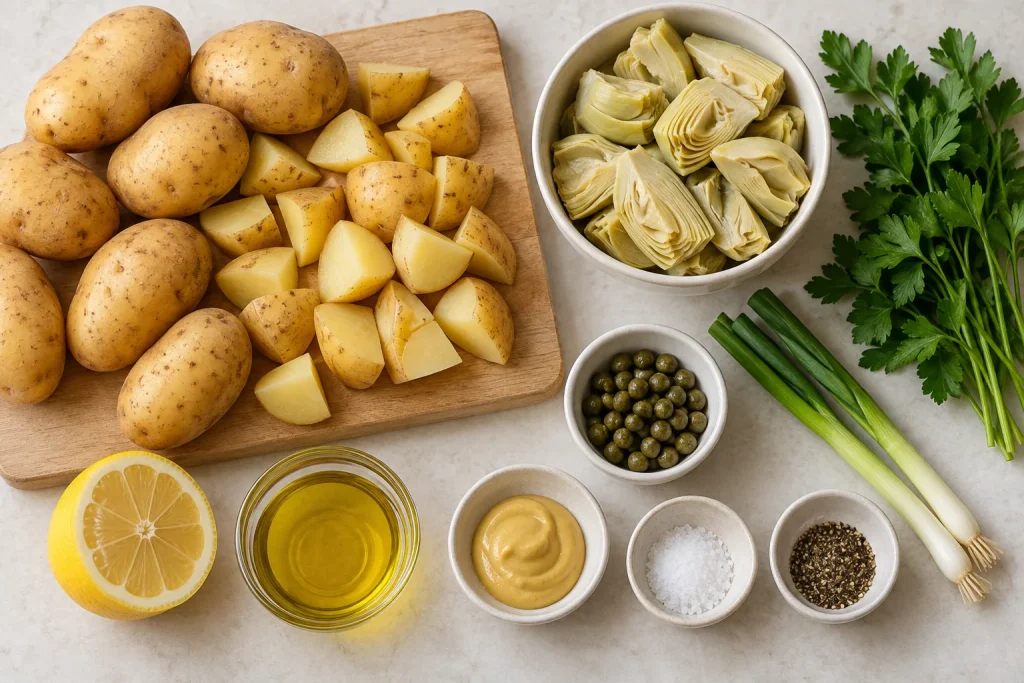
- 1 pound yellow or red potatoes, scrubbed and cut into 3/4-inch pieces
- Water to cover the potatoes by about 1 inch
- 1 teaspoon fine salt for the cooking water
For the salad
- 1 can artichoke hearts in water or brine, 14–15 ounces, thoroughly drained
- 2 scallions, thinly sliced
- 2 tablespoons chopped flat-leaf parsley
- 1 tablespoon capers, drained and roughly chopped
For the lemon-Dijon dressing
- 3 tablespoons extra-virgin olive oil
- 2 tablespoons fresh lemon juice
- 2 teaspoons Dijon mustard
- 1/4 teaspoon ground black pepper
- Fine salt for finishing, only if needed
Step-by-step instructions
Use the texture cues as well as the clock: the 10–15-minute simmer below starts after the water comes to a boil.
- Start the potatoes in cool water. Put the cut potatoes in the saucepan and add enough cool water to cover by about 1 inch. Add the teaspoon salt. Bring to a boil, then reduce to a steady gentle simmer.
- Cook until tender, not crumbling. Simmer for about 10–15 minutes after the water reaches a boil, checking a large piece with a knife. It should slide in easily without a hard center, while the potato still holds its shape. Drain immediately once tender.
- Prepare the artichokes. While the potatoes cook, drain the artichoke hearts and pat away excess packing liquid. Cut whole hearts into quarters and oversized quarters in half. Remove any unusually tough outer leaf or fibrous stem piece that is unpleasant to bite.
- Whisk the dressing. Combine olive oil, lemon juice, Dijon, and pepper in the small bowl or jar. Whisk or shake until evenly mixed. The artichokes and capers supply salt, so wait before adding finishing salt.
- Dress warm potatoes. Let the drained potatoes release steam for about 3 minutes. Transfer to the large bowl and fold with roughly two-thirds of the dressing. Let stand for 2 minutes, then check whether the surface looks lightly coated or dry.
- Fold in the other ingredients. Add the prepared artichokes, scallions, parsley, and capers. Fold gently with a broad spoon, lifting from underneath instead of stirring in circles. Add the remaining dressing as needed to coat without creating a pool.
- Taste and serve. Taste potato and artichoke together, then add salt only if needed. Serve slightly warm, or refrigerate promptly for a chilled salad. If chilling, taste again before serving and refresh with a small squeeze of lemon if necessary.
Check the canned artichokes before mixing
A can’s listed weight includes packing liquid, so the drained yield is smaller than the number on the label. Use one standard 14- to 15-ounce can rather than measuring that entire weight as drained hearts. After draining, the hearts should not drip continuously when lifted with a fork.
Some canned hearts contain outer leaves that remain fibrous even though the inner portions are tender. Pull away any piece that feels leathery as you cut. This is a texture issue worth handling before the salad is dressed; discovering a tough leaf in a mouthful is much less pleasant than trimming it at the board.
Artichokes packed in brine can be salty. Rinse briefly if necessary, then drain and blot again. Taste one piece before adding the capers and final salt. Briny ingredients can vary enough that a fixed finishing salt measurement would be less useful than a final taste.
Dress the potatoes warm, fold the hearts gently
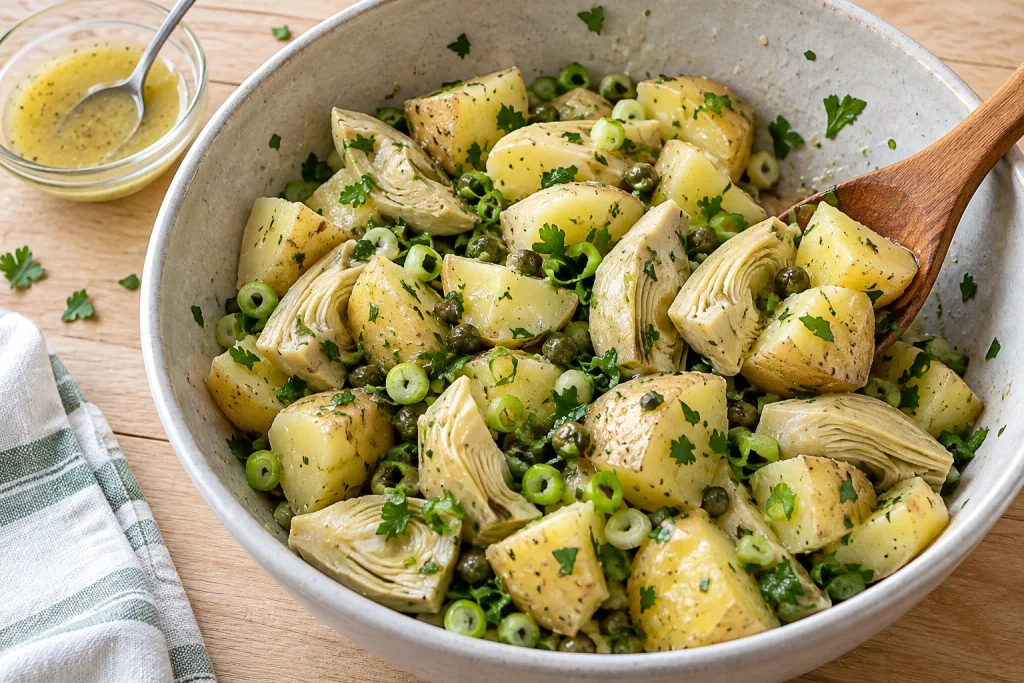
Warm potatoes take on the dressing readily, but steaming-hot potatoes can break when handled. A brief pause after draining allows the surface to dry slightly and makes folding easier. Do not leave them on the counter for a long cooling period; this is just a short preparation step before serving or prompt refrigeration.
Adding most of the dressing to the potatoes first gives them flavor before the artichokes enter the bowl. The remaining spoonfuls let you adjust the completed salad without overmixing. Some potatoes absorb more dressing than others, so reserve a little instead of pouring everything in at once.
Use a broad spoon or spatula and lift the potatoes from the bottom. Gentle folds protect both potato edges and artichoke layers. A whisk or vigorous circular stirring can turn a lightly dressed salad into a broken, starchy mixture.
Substitutions that change the dressing
Marinated artichokes: Drain them thoroughly and taste their marinade. Start with half the olive oil and half the lemon juice in the written dressing, then adjust after mixing. Their existing seasoning can already provide much of the acid and oil needed.
Capers: Finely chopped olives can replace the tablespoon of capers, but they bring a different flavor and salt level. If omitting both, you may need a little more salt or mustard. Do not add a large handful without considering how it changes each bite.
Herbs: Dill makes a good alternative to some or all of the parsley. Basil gives a softer, sweeter herbal note and is best added near serving. Dried herbs need time to hydrate and taste more concentrated, so use much smaller amounts.
Potatoes: Floury russet potatoes can work, but their edges break more easily. Cook gently, check early, and fold as little as possible. They produce a softer salad rather than the neat pieces described in the base method.
What to serve with artichoke potato salad
Serve the salad alongside a simple main, grilled vegetables, or a platter of sandwiches. Its lemon dressing is bright enough to balance richer foods. If packing it for lunch, add any leafy greens just before eating so they do not sit beneath the moist potatoes.
For another potato salad variation, see potato, green bean, and white bean salad. If you have a separate package of frozen artichokes and want a cooked side on another day, air fryer artichoke hearts without breading use a different starting ingredient and method. Do not treat frozen hearts as ready-to-mix canned hearts.
Correct the texture or seasoning
- The potatoes have hard centers: Return them to simmering water before dressing. Acidic dressing will not make an undercooked center pleasant to eat.
- The salad looks watery: Drain artichokes more thoroughly next time and let potato steam escape briefly. Lift servings with a slotted spoon if necessary.
- The salad tastes too sharp: Add a small splash of olive oil and fold gently. Taste with a full potato piece before adjusting again.
- The salad is salty: Fold in additional plain cooked potatoes if available. Extra lemon changes the flavor but does not remove salt.
- The potatoes break apart: Stop stirring and serve the softer version as it is. Use firmer potatoes and gentler handling next time.
How to make the salad ahead
For a next-day meal, prepare the salad through the final gentle fold, transfer it to shallow covered containers, and refrigerate promptly. Reserve some of the measured parsley and any unused dressing separately for finishing; the reserved dressing is part of the recipe’s original amount.
Before serving, taste a potato piece together with an artichoke. If the salad seems dry, fold in a little reserved dressing. If it needs brightness, add a small squeeze of lemon, taste again, and stop once the balance is right. Add the reserved parsley last and fold only enough to combine.
Pack lunch portions separately from leafy greens or bread. Add greens just before eating so they keep their texture, and keep the salad chilled during transport. When doubling the recipe, use a wider bowl and check potato tenderness rather than automatically doubling the cooking time.
How to store and transport the salad
This cooked-potato salad still needs refrigeration even though it contains no mayonnaise. Divide it into shallow food-storage containers (paid link) for prompt chilling and convenient portions.
- Refrigerate promptly: Within 2 hours of preparation, or within 1 hour if the temperature is above 90°F (32°C). Small portions can go into the refrigerator while still warm.
- Keep cold: Store at 40°F (4°C) or below and use within 3–4 days. If you started with leftover potatoes, follow their earlier storage deadline.
- For a picnic: Transport the salad in a cooler with ice packs. Keep the reserve chilled and put out small portions at a time.
- If reheating: Heat properly stored leftovers to 165°F (74°C) throughout. Discard salad that has been out beyond the time limits above.
These storage limits follow USDA leftover guidance and the CDC’s cooling and reheating guidance.
Frequently asked questions
Which potatoes work best, and do I need to peel them?
Yellow potatoes and small red potatoes are good starting choices because their cooked pieces generally hold together during gentle folding. Scrub thin skins well and leave them on, or peel if you prefer. Cut similar 3/4-inch pieces and check for tenderness. Russets produce softer edges and need especially gentle handling.
Do canned artichoke hearts need to be cooked or rinsed?
Ready-to-eat canned hearts are already cooked; check the label, drain them, and quarter any whole hearts. Rinsing is optional if the brine tastes too salty, but drain and blot again afterward. Remove any unusually tough outer leaves. Fresh or frozen artichokes need their own preparation and cooking steps.
Can I use marinated artichoke hearts instead?
Yes, but their oil, vinegar, salt, and herbs change the dressing balance. Drain them and taste one first. Begin with half the olive oil and half the lemon juice listed in the recipe, then adjust after tasting the assembled salad. Wait until the end to decide whether it needs salt.
Can canned artichoke potato salad without mayo be made a day ahead?
Yes. Refrigerate the finished salad promptly in shallow covered containers. Reserve a little of the measured parsley and any unused dressing separately, then gently fold them in before serving if needed. See the make-ahead instructions for the finishing sequence.
Can I use leftover cooked potatoes?
Yes, if they were stored safely and remain within their original storage period. Cut and dress them chilled for a cold salad. For a warm version, reheat the potatoes to 165°F throughout before briefly cooling and mixing. Adding new dressing and artichokes does not restart the potatoes’ storage clock.
Why does my potato salad look watery?
Artichoke packing liquid or water clinging to the potatoes can thin the dressing. Drain the hearts thoroughly and let the cooked potatoes release steam for the brief time in the method. Add the remaining dressing gradually. If liquid has already collected, lift out portions with a slotted spoon instead of repeatedly stirring.
Can I leave out the Dijon mustard?
Yes. The flavor will change and the oil and lemon may separate more readily. Whisk them thoroughly immediately before adding them to the potatoes. Taste the completed salad before adding more lemon or salt; the capers and artichokes already contribute sharpness and seasoning.
How do I stop the potatoes and artichokes from falling apart?
Cut the potatoes evenly, simmer gently, and drain as soon as they are tender. Dress the potatoes before adding the artichokes so the delicate hearts need less handling. Use a broad spoon or spatula to lift from the bottom, and stop folding once everything is lightly coated.
How long does it keep, and can I take it to a picnic?
Use properly refrigerated salad within 3–4 days, keeping it at 40°F (4°C) or below; older leftover potatoes shorten that window. For a picnic, use a cooler with ice packs. Discard portions left out for more than 2 hours, or more than 1 hour above 90°F (32°C). See the storage guidance above.
Can I freeze the finished salad?
Freezing is not ideal for the intended texture: potato pieces and artichoke layers can soften after thawing. For the best texture, make the amount you expect to use during the refrigerated storage period. Prepare a smaller batch if you are cooking for one or two.
For a satisfying canned artichoke potato salad without mayo, focus on tender potatoes, well-drained hearts, and a light coating of dressing. Taste the vegetables together, make small seasoning adjustments, and serve alongside your favorite main dish.
Canned Artichoke Potato Salad Without Mayo
Ingredients
Equipment
Method
- Start the potatoes in cool water. Put the cut potatoes in the saucepan and add enough cool water to cover by about 1 inch. Add the teaspoon salt. Bring to a boil, then reduce to a steady gentle simmer.
- Cook until tender, not crumbling. Simmer for about 10–15 minutes after the water reaches a boil, checking a large piece with a knife. It should slide in easily without a hard center, while the potato still holds its shape. Drain immediately once tender.
- Prepare the artichokes. While the potatoes cook, drain the artichoke hearts and pat away excess packing liquid. Cut whole hearts into quarters and oversized quarters in half. Remove any unusually tough outer leaf or fibrous stem piece that is unpleasant to bite.
- Whisk the dressing. Combine olive oil, lemon juice, Dijon, and pepper in the small bowl or jar. Whisk or shake until evenly mixed. The artichokes and capers supply salt, so wait before adding finishing salt.
- Dress warm potatoes. Let the drained potatoes release steam for about 3 minutes. Transfer to the large bowl and fold with roughly two-thirds of the dressing. Let stand for 2 minutes, then check whether the surface looks lightly coated or dry.
- Fold in the other ingredients. Add the prepared artichokes, scallions, parsley, and capers. Fold gently with a broad spoon, lifting from underneath instead of stirring in circles. Add the remaining dressing as needed to coat without creating a pool.
- Taste and serve. Taste potato and artichoke together, then add salt only if needed. Serve slightly warm, or refrigerate promptly for a chilled salad. If chilling, taste again before serving and refresh with a small squeeze of lemon if necessary.
Notes
- The potatoes have hard centers: Return them to simmering water before dressing. Acidic dressing will not make an undercooked center pleasant to eat.
- The salad looks watery: Drain artichokes more thoroughly next time and let potato steam escape briefly. Lift servings with a slotted spoon if necessary.
- The salad tastes too sharp: Add a small splash of olive oil and fold gently. Taste with a full potato piece before adjusting again.
- The salad is salty: Fold in additional plain cooked potatoes if available. Extra lemon changes the flavor but does not remove salt.
- The potatoes break apart: Stop stirring and serve the softer version as it is. Use firmer potatoes and gentler handling next time.