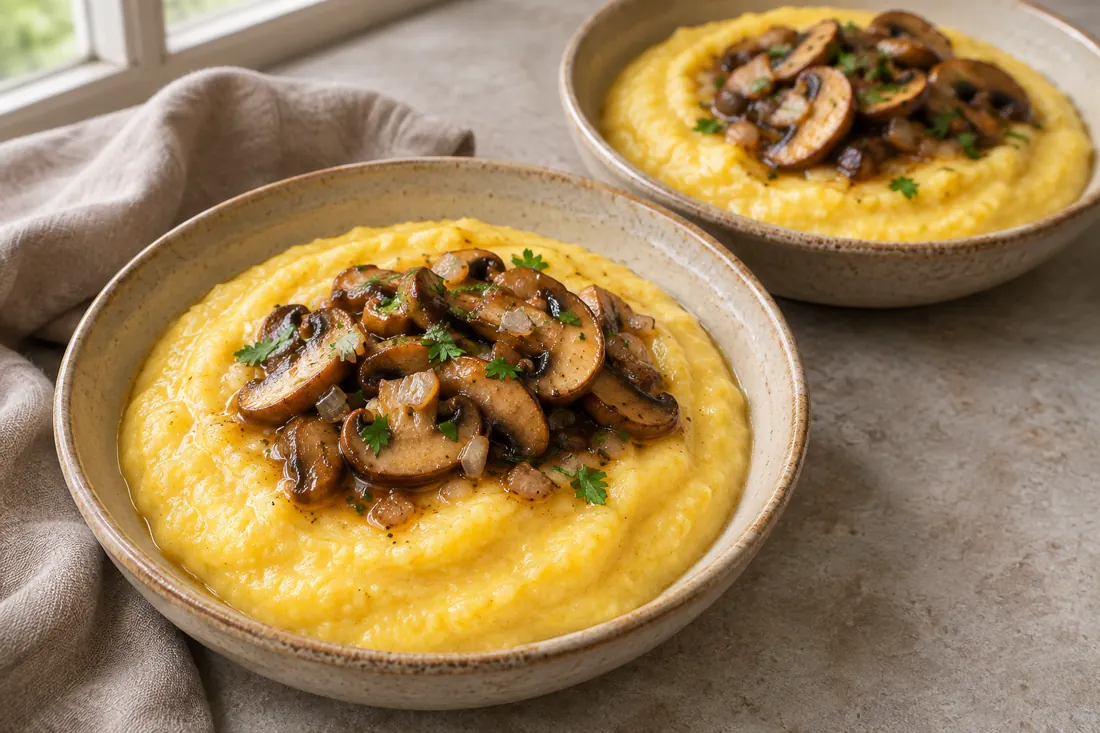
A small covered baking dish lets polenta cook while you prepare a savory mushroom topping on the stove. This small batch baked polenta with mushrooms makes two light main portions or three side portions, using half a cup of dry polenta rather than a large pot. The finished base is soft and spoonable, with mushrooms and a little pan liquid over the top.
Jump to Recipe · Rate this recipe
Affiliate disclosure: As an Amazon Associate I earn from qualifying purchases. These paid links open Amazon search results for comparing equipment.
The polenta needs a 1-quart oven-safe casserole (paid link) with a tight lid or tightly crimped foil. Use a whisk (paid link) for the initial mixing, then follow the mid-cook stirring instructions.
The oven method still needs attention at a few useful moments: an initial whisk, a mid-cook stir, and a texture check before serving. It does not require constant stovetop stirring. The mushrooms are cooked separately so their released moisture can evaporate and their flavor can deepen before they meet the polenta.
Separate mushroom browning from polenta hydration
| Mushrooms | Cook in a wide pan until released water evaporates and browned edges develop. |
| Polenta | Whisk into the measured liquid gradually, then bake until the grains are tender and the center is soft enough to spoon. |
| Assembly | Spread mushrooms over the top rather than stirring all their moisture into the polenta. |
Spoon the soft polenta into warm bowls while the mushrooms still have a little pan sauce. It firms up as it cools.
Choose the grain and the dish first
Use medium or coarse ground polenta that requires cooking. Do not substitute instant polenta, a ready-cooked polenta tube, or fine cornmeal without changing the method. Those products absorb liquid or cook on different schedules. Check the package for any unusually long cooking requirement and be prepared to extend the covered stage.
Yield: 2 light main servings or 3 side servings. Prep: 10 minutes. Cook: 45–55 minutes. Total: about 65 minutes. Oven: 375°F / 190°C. Use a 1-quart oven-safe casserole with a tight lid or tightly crimped foil, a 10-inch skillet, a whisk, and a wooden spoon.
Give this small bake a clear starting point
Read the polenta package before measuring the half cup. Grind descriptions are not perfectly interchangeable between producers: Bob’s Red Mill explains that its medium and coarse labels use its own standards. That helps explain why the recipe pairs an oven-time estimate with a cooled-spoonful texture check. It does not make an instant product suitable for this longer bake.
Place the casserole where you can reach the bottom corners with the whisk before filling it. A decorative dish that is awkward to stir is less useful here than a plain vessel with a secure cover. With the initial two cups of water, the mixture looks loose; do not add extra dry grain to correct its appearance before the first covered stage.
Ingredients for the base and topping
Polenta
- ½ cup medium or coarse ground polenta, about 80 grams
- 2 cups water
- ¼ teaspoon fine salt
- ⅛ teaspoon black pepper
- 1 teaspoon olive oil for the dish
- 2 tablespoons finely grated Parmesan
- 1 tablespoon butter or olive oil
- 2–4 tablespoons hot water, only if needed at the finish
Mushrooms
- 8 ounces cremini mushrooms, trimmed and sliced ¼ inch thick
- 1 tablespoon olive oil
- 1 small shallot, finely chopped
- 1 small garlic clove, finely chopped
- ½ teaspoon fresh thyme leaves or ¼ teaspoon dried thyme
- ¼ cup low-sodium vegetable broth
- 1 teaspoon balsamic vinegar
- ⅛ teaspoon fine salt, plus more to taste
- ⅛ teaspoon black pepper
- 1 tablespoon chopped parsley, optional
The polenta starts at a four-to-one water-to-grain ratio by volume. The additional hot water is an adjustment, not an ingredient you must add automatically. A tightly covered dish reduces evaporation; a very wide uncovered dish can lose water before the grains soften.
Cremini mushrooms offer a useful savory flavor, but ordinary white mushrooms work too. Brush away dirt or rinse briefly and dry well before slicing. Broth loosens the browned bits in the skillet and creates a small amount of sauce. The measured vinegar adds depth without making the topping distinctly sour.
How to cook small batch baked polenta with mushrooms
- Heat the oven and prepare the casserole. Heat to 375°F with a rack in the center. Lightly coat the inside of the 1-quart dish with 1 teaspoon oil. Make sure the dish and its lid are oven-safe at this temperature. Set it on a small rimmed sheet for easier handling if desired.
- Disperse the polenta. Add water, polenta, salt, and pepper to the dish. Whisk thoroughly so no dry clumps remain on the bottom or corners. Cover tightly. The mixture will look very thin at first; the grain needs time to hydrate.
- Bake, then stir. Bake for 25 minutes. Carefully remove the lid or peel foil away from your face to release steam. Whisk through the bottom and sides, breaking up any thickened areas. Cover again and return to the oven for another 20 minutes.
- Start the mushrooms during the second stage. Heat the skillet over medium-high heat and add 1 tablespoon oil. Add mushrooms in a broad layer. Cook for 4–5 minutes before stirring frequently, then continue until released liquid mostly evaporates and some surfaces brown, usually another 4–6 minutes.
- Build the topping. Reduce heat to medium, add shallot, and cook for 2 minutes. Stir in garlic and thyme for about 30 seconds. Add broth, vinegar, salt, and pepper, scraping the pan with a wooden spoon. Simmer for 2–3 minutes until the topping has a little spoonable liquid.
- Test the grain. At approximately 45 minutes, taste a small cooled spoonful of polenta. The grains should be tender, with no hard or gritty center. If still firm, add 2 tablespoons hot water, stir, cover, and bake another 5–10 minutes before checking again.
- Adjust the consistency. Stir Parmesan and butter or olive oil into the tender polenta. Add hot water a tablespoon at a time only if it is too stiff to spoon easily. If it is unusually thin but the grains are tender, return it uncovered to the oven for a few minutes and stir again.
- Serve while it is soft. Spoon polenta into warm shallow bowls. Add mushrooms and their small amount of pan sauce. Sprinkle with optional parsley and a little extra pepper. Bring the bowls to the table promptly because polenta thickens as it stands.
Make the midpoint stir do its job
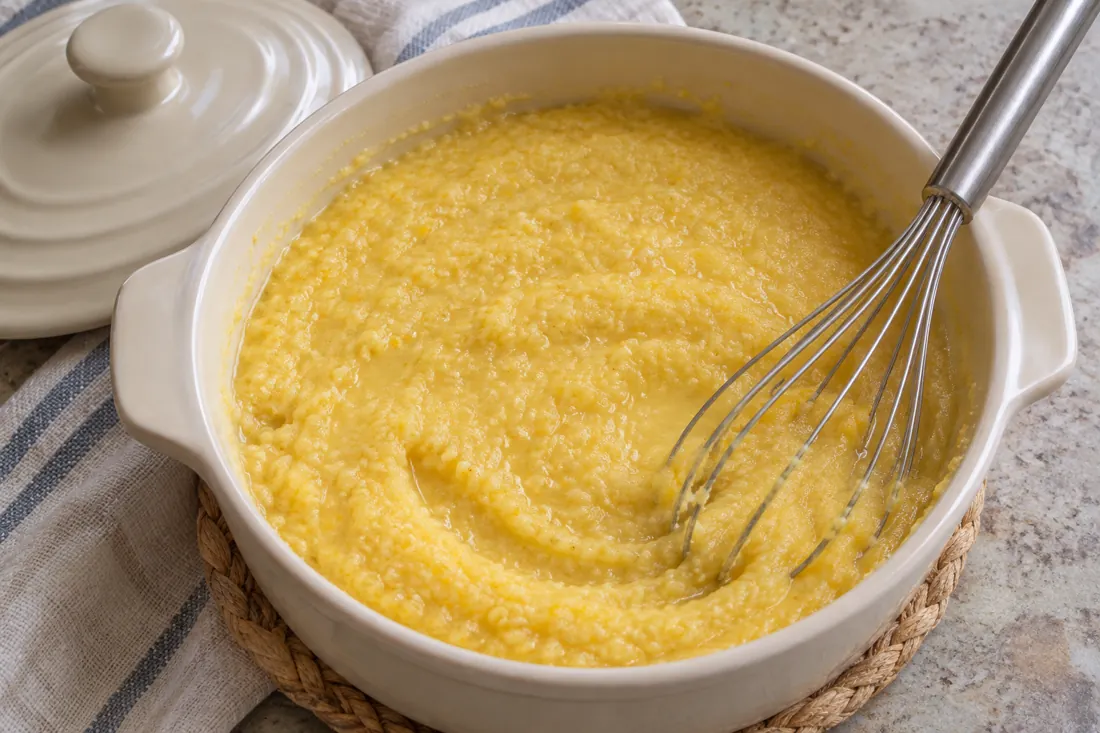
At the twenty-five-minute check, set the hot dish on a stable heat-resistant surface before stirring. Run the whisk through the corners and along the bottom, then draw the thickened mixture back into the center. You are redistributing grain and water, not trying to whip in air. Replace the cover securely before returning the dish to the oven.
Use the second stage to finish the mushrooms and have the Parmesan, butter or oil, and optional adjustment water ready. Once the grains are tender, these additions can be stirred in without leaving the casserole uncovered while you search for ingredients. Keep the topping’s small amount of pan liquid with the mushrooms so it can be divided between the bowls.
Texture checks that solve common problems
| Polenta condition | Useful next step |
|---|---|
| Gritty but thick | The grain needs more water and cooking time. Add hot water in small increments, cover, and keep cooking. Cheese and butter add richness but cannot make an undercooked grain tender. |
| Tender but loose | Stir well and let it stand briefly. If it still looks soupy, a few uncovered minutes can reduce extra water. Remember that the mixture continues to thicken as it cools, so avoid turning it into a stiff paste while it is still in the oven. |
| Clumps around the sides | Scrape and whisk the edges during the mid-cook stir. A tight lid and an appropriately sized dish help keep the outer layer from drying too rapidly. The initial whisk should disperse all the dry grain before the dish goes into the oven. |
Check a spoonful before filling the bowls
Scoop from the stirred center rather than testing only the softer surface. Let that sample cool briefly, then check for a hard grain. After the final consistency adjustment, the polenta should spread under the spoon instead of holding a rigid mound. Portion it while warm, leaving a shallow depression for mushrooms so their pan liquid stays with the topping rather than running to one side.
Mushroom flavor without a heavy sauce
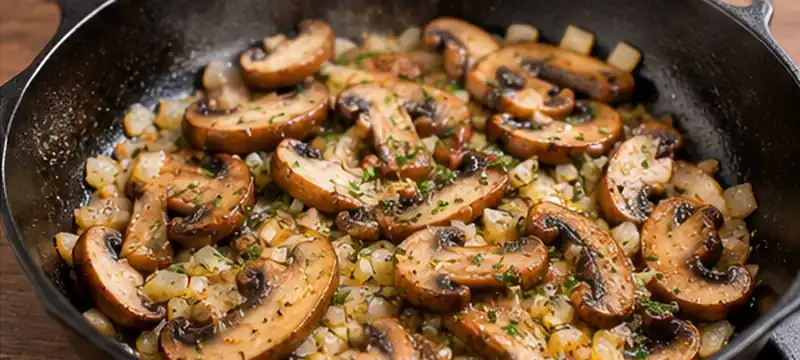
Give sliced mushrooms a little uninterrupted contact with the hot skillet before stirring. If the skillet is small enough that the mushrooms form a deep pile, cook half at a time. Their released water must reduce before substantial browning occurs; increasing the oil alone does not solve crowding.
Add garlic after the mushrooms have done most of their cooking. Garlic can scorch during the longer evaporation stage. Keep the final broth quantity modest: the aim is enough liquid to moisten the top of the polenta, not a bowl of soup that overwhelms the corn flavor.
Serving changes and substitution limits
For a more substantial dinner, add a cooked egg with a firm yolk and white, a portion of cooked chicken, or warm beans prepared separately. The recipe as written is a light main course. A side salad with a lemon dressing gives contrast to the soft polenta and mushrooms.
To make a dairy-free variation, use olive oil instead of butter and omit Parmesan. Taste the base carefully and add a little extra seasoning if needed. A dairy-free cheese substitute may melt differently, so begin with a small amount. Check broth and other packaged ingredients for the dietary requirements of your household.
Shiitake mushrooms can replace part of the cremini quantity, but remove their tough stems. A mushroom mix may include pieces with different cooking times; slice them to reasonably similar thickness. Dried mushrooms need a separate soaking and straining method, so they are not a one-for-one replacement by weight.
Storage changes the polenta
Polenta naturally sets as it cools. Refrigerated leftovers may be firm enough to cut, which does not mean the original batch failed. To restore a spoonable texture, break up a portion in a saucepan with a splash of water or broth and heat gently, stirring and adding small amounts of liquid as needed.
Refrigerate polenta and mushrooms in shallow containers within 2 hours, or within 1 hour above 90°F. Store at 40°F or below and use within 3–4 days following USDA leftover guidance. Reheat to 165°F. Keep containers shallow because a deep, dense mass of cooked grain cools more slowly.
If you want a different mushroom dinner another night, the butter bean and mushroom skillet without cream uses beans as its main base instead of polenta.
Frequently asked questions
Can I use instant polenta?
Not with the written schedule. Instant polenta is processed to cook quickly and can become too thick or dry during this long covered bake. Prepare it by its package directions and make the mushroom topping separately.
Can I bake it in an 8-inch square dish?
That dish is wider than the recommended 1-quart casserole. It may work if tightly covered, but the mixture is shallower and may need more water. A smaller, deeper vessel provides better control for this quantity.
Can I double the recipe?
Use a 2-quart covered casserole and double the ingredients. The grain still needs texture checks; a deeper batch may take longer. Cook mushrooms in batches or use a larger skillet so they have enough surface area.
Why is the polenta firm after serving?
It thickens as it loses heat. Warm bowls and prompt serving help. If dinner is delayed, stir in a little hot water just before portioning and keep the food safely hot rather than leaving it lukewarm.
Can I omit the vinegar?
Yes. The topping will taste slightly rounder and less bright. A few drops of lemon juice after cooking can provide a different acidic finish. Avoid adding enough acid to make the mushrooms sharply sour.
What should I check before calling it done?
With small batch baked polenta with mushrooms, taste a cooled spoonful of the grain for tenderness and check the topping for balanced seasoning. The printed time is a starting point; the polenta grind and evaporation determine the final texture.
Coordinate the casserole and skillet for small batch baked polenta with mushrooms
Small batch baked polenta with mushrooms has two cooking areas but only a few moments when both need attention. Keep the mushroom ingredients prepared before the polenta’s second oven stage begins, and set out the serving bowls before the grain is tender. This prevents finished polenta from sitting uncovered while you chop garlic or search for the Parmesan, which can make the base firmer before it reaches the table.
Check the cover before filling the dish
Fit the lid onto the empty casserole first and confirm that it sits level. If using foil, cut a piece large enough to crimp securely around the rim without resting it directly on the thin mixture. Position the dish on its optional rimmed sheet before filling if that makes handling easier. Once water and grain are added, whisk around the bottom perimeter as well as the center. Look for a dry cluster hiding behind the whisk or against a corner rather than assuming that a uniformly cloudy surface means the grain is dispersed.
Prepare an orderly midpoint workspace
Before the twenty-five-minute check, clear a heat-resistant landing space and have the whisk ready. Remove the hot cover carefully and place it somewhere stable where condensation can collect without wetting the floor. Stir with the dish supported on the counter rather than balancing it partly on an oven rack. Work any thicker edge material back through the center, then replace the cover securely. Check that foil has not torn during removal. The next covered stage depends on retaining moisture while the grains finish softening, not simply on returning the dish to the oven.
Keep mushroom slices comparable
Trim the mushrooms before weighing the usable quantity if needed, then slice them to the stated thickness. Quarter a very large cap before slicing if its pieces would otherwise dominate the topping. Keep the chopped shallot, garlic, and thyme in separate small piles because their entry points differ. Once mushrooms are in the skillet, spread them across the available surface and let them cook through the first uninterrupted interval. When you begin turning, move less-colored pieces toward exposed pan space instead of pressing down on the entire batch.
Preserve the topping’s small amount of liquid
After the shallot, garlic, and thyme stages, pour in the measured broth and vinegar and scrape the browned coating into the liquid. Watch the sauce as it simmers: it should remain spoonable around the mushrooms rather than disappear into a dry pan. If the polenta needs another covered interval, keep track of the skillet too instead of allowing the topping to reduce unattended. The mushrooms do not need to be boiled for the full extended grain-cooking time. Reassess both components before the final assembly so their textures remain distinct.
Portion the soft base before adding the topping
Once the grain is tender and the cheese and butter or oil are incorporated, stir through the polenta before dividing it. Spoon the base into each warm bowl and let it spread into a shallow layer. Share the mushrooms first, then divide their remaining pan liquid so one bowl does not receive a dry topping while another receives all the sauce. Add the optional parsley at the end. If serving three side portions instead of two light mains, use smaller bowls and keep the same balanced distribution of grain, mushrooms, and the modest amount of liquid.
Small Batch Baked Polenta with Mushrooms
Ingredients
Equipment
Method
- Heat the oven and prepare the casserole. Heat to 375°F with a rack in the center. Lightly coat the inside of the 1-quart dish with 1 teaspoon oil. Make sure the dish and its lid are oven-safe at this temperature. Set it on a small rimmed sheet for easier handling if desired.
- Disperse the polenta. Add water, polenta, salt, and pepper to the dish. Whisk thoroughly so no dry clumps remain on the bottom or corners. Cover tightly. The mixture will look very thin at first; the grain needs time to hydrate.
- Bake, then stir. Bake for 25 minutes. Carefully remove the lid or peel foil away from your face to release steam. Whisk through the bottom and sides, breaking up any thickened areas. Cover again and return to the oven for another 20 minutes.
- Start the mushrooms during the second stage. Heat the skillet over medium-high heat and add 1 tablespoon oil. Add mushrooms in a broad layer. Cook for 4–5 minutes before stirring frequently, then continue until released liquid mostly evaporates and some surfaces brown, usually another 4–6 minutes.
- Build the topping. Reduce heat to medium, add shallot, and cook for 2 minutes. Stir in garlic and thyme for about 30 seconds. Add broth, vinegar, salt, and pepper, scraping the pan with a wooden spoon. Simmer for 2–3 minutes until the topping has a little spoonable liquid.
- Test the grain. At approximately 45 minutes, taste a small cooled spoonful of polenta. The grains should be tender, with no hard or gritty center. If still firm, add 2 tablespoons hot water, stir, cover, and bake another 5–10 minutes before checking again.
- Adjust the consistency. Stir Parmesan and butter or olive oil into the tender polenta. Add hot water a tablespoon at a time only if it is too stiff to spoon easily. If it is unusually thin but the grains are tender, return it uncovered to the oven for a few minutes and stir again.
- Serve while it is soft. Spoon polenta into warm shallow bowls. Add mushrooms and their small amount of pan sauce. Sprinkle with optional parsley and a little extra pepper. Bring the bowls to the table promptly because polenta thickens as it stands.
Notes
- Yield and timing: Makes 2 light main servings or 3 side servings. Allow about 10 minutes prep and 45–55 minutes oven cooking; total roughly 65 minutes, depending on the grain and dish.
- Dish and texture: Use a tightly covered 1-quart oven-safe casserole at 375°F. Stir after 25 minutes and check a cooled spoonful at about 45 minutes. Tender polenta should be soft and spoonable, not gritty; if needed, add 2 tablespoons hot water, re-cover and bake 5–10 minutes longer before retesting.
- Measured liquid: Begin with ½ cup cooking-grade polenta and 2 cups water. The optional 2–4 tablespoons of hot water are a finishing adjustment, not an automatic addition. Instant or precooked polenta needs a different method.
- Mushroom topping: Sauté the sliced cremini separately so excess moisture evaporates. Add shallot, garlic and thyme later, then reduce the broth and vinegar briefly; spoon the mushrooms and their small amount of pan sauce over the polenta just before serving.
- Storage: Refrigerate leftovers in shallow containers within 2 hours (within 1 hour if above 90°F), use refrigerated leftovers within 3–4 days and reheat to 165°F. Rewarm set polenta with a splash of water or broth, stirring until spoonable.