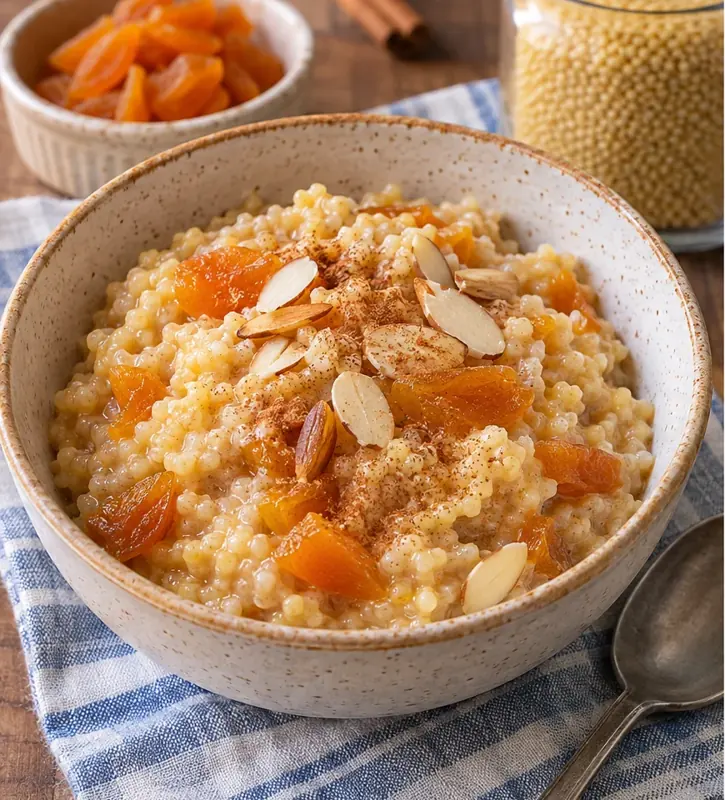
A bowl of toasted millet apricot porridge for two offers a pleasantly different breakfast: small, tender grains, softened pieces of dried fruit, and a gentle toasted flavor. The millet cooks first in water, then finishes with milk so you can adjust the creaminess without scorching a pan of milk during the longer cooking stage.
Affiliate disclosure: As an Amazon Associate I earn from qualifying purchases. These paid links open Amazon search results for comparing equipment.
Rinse the millet in a fine mesh sieve (paid link), drain it well, and use a 2-quart saucepan with a lid (paid link) for the toasting and simmering stages.
This is a spoonable cereal with some texture, rather than a completely smooth porridge. It makes two generous bowls from half a cup of dry millet. The instructions explain which millet to buy, how to recognize a fully cooked grain, and what to do if the mixture thickens before breakfast reaches the table.
Jump to the measured recipe and cooking steps · Rate this recipe
Toast millet for flavor, then cook it gently
Watch the toast
Stir until the grains smell nutty but remain pale enough to avoid bitterness.
Soften apricots
Dice dried fruit evenly and add early enough to plump without letting it stick to the bottom.
Millet thickens during the covered rest. Stop cooking while the porridge still moves, then loosen with hot milk or water if needed. Taste after the apricots soften because their sweetness becomes more noticeable as they hydrate.
Toasted millet apricot porridge for two: the recipe
Yield: 2 generous breakfast bowls, approximately 2 1/2 cups total. Preparation: 10 minutes. Cooking: 30–35 minutes. Standing: 3 minutes. Total: about 45–50 minutes.
Equipment: a heavy 2-quart saucepan with a lid, fine mesh sieve, spatula or wooden spoon, cutting board, and measuring cups. Use a dry measuring cup for the millet and apricots and a liquid measuring jug for water and milk.
Ingredients
- 1/2 cup dry hulled millet, about 100 g
- 1 1/2 cups water, plus up to 1/2 cup hot water if needed while cooking
- 1/4 cup finely chopped dried apricots, about 32 g
- 1/8 teaspoon fine salt
- 1/4 teaspoon ground cinnamon
- 1 cup whole or 2% milk, plus 2–4 tablespoons for adjusting the finished porridge
- 2 teaspoons maple syrup, plus more at the table if desired
- 1/4 teaspoon vanilla extract
- 2 tablespoons sliced almonds, optional, for serving
Prepare whole millet and small apricot pieces
Look for food-grade hulled millet: small, pale yellow grains sold beside other dry grains. Millet flour, puffed millet, and millet flakes behave differently and cannot replace the whole grains in this method. You do not need to grind the millet. Leaving it whole produces a porridge with recognizable grains and a mild chew.
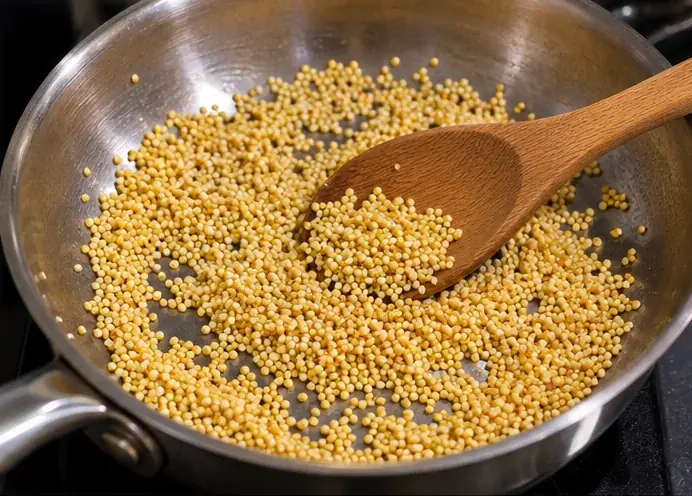
Rinse the millet in a fine mesh sieve and drain thoroughly. Then toast it in the cooking pot, stirring until surface moisture evaporates and the grains smell lightly nutty. Stop before they become dark brown. Toasting adds flavor; it does not shorten the simmer enough to replace checking for tenderness.
Dried apricots should bend when pressed. Very leathery fruit can remain chewy even when the cereal is ready. Chop it into small pieces, which soften more evenly and distribute through each spoonful. Orange and darker unsulfured apricots can both work; expect their color and sweetness to differ.
Drying the rinsed grain comes before toasting
At first, damp millet may give off steam and look unchanged in the dry saucepan. Keep stirring so the grains move across the base rather than sitting in one wet patch. Once that surface moisture has gone, the aroma is the useful signal; the whole batch does not need a deep golden color. Look especially at grains near the pan edge, where a few may darken before those in the center.
Have the measured water beside the stove before starting this stage. When the grain reaches the light toast you want, there should be no delay while you search for a jug. Add the water carefully as directed, with your face and hands clear of the first steam, then stir across the base to free the grains.
Toast, simmer in water and finish with milk
Cook it step by step
- Prepare the fruit and grain. Check the apricots for hard stem pieces, then chop into roughly 1/4-inch pieces. Rinse the millet in the sieve and let it drain for a minute. Keep the milk measured and ready, but do not add it yet.
- Toast gently. Put the damp millet in the dry saucepan over medium heat. Stir for 3–4 minutes, first allowing the moisture to evaporate and then lightly toasting the grains. A mild nutty aroma is the cue to continue. If grains stick or brown rapidly, lower the heat.
- Start the water simmer. Carefully pour in the 1 1/2 cups water; the hot pot may release steam. Add apricots, salt, and cinnamon. Bring to a gentle boil, stir once to free anything on the bottom, then reduce the heat to low and cover.
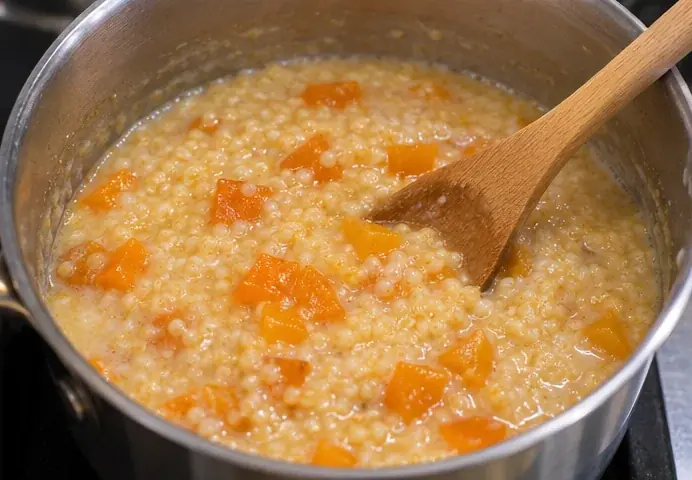
- Cook until the centers soften. Simmer for 20–25 minutes. Check after about 15 minutes and stir across the bottom. If the pot is nearly dry while the grains still feel hard, add hot water 2 tablespoons at a time and continue covered. Taste a cooled grain: it should crush easily between your teeth without a chalky center.
- Make it creamy. Stir in the cup of milk. Bring back to a gentle simmer, uncovered, and cook for 5–7 minutes, stirring frequently. Press a few grains against the side of the pot with the spoon if you prefer a creamier body, while leaving most intact.
- Finish off the heat. Add maple syrup and vanilla. Let stand for 3 minutes, then stir again. The cereal should fall slowly from the spoon and settle in the bowl. Add the reserved extra milk by the tablespoon if it sits in a stiff mound.
- Serve two bowls. Divide evenly and scatter the optional almonds on top. Taste before adding more syrup; the apricots already sweeten the mixture. Serve promptly while the grains are creamy and the topping still has its crunch.
Use a small sample to judge the center
Lift a little cereal onto a separate spoon and allow it to cool before tasting. Test a grain rather than only the surrounding creamy liquid. A soft exterior can hide a firmer center, especially when the pot has lost water quickly. Let that result decide whether to continue the covered stage; the milk finish should enrich an already tender grain rather than conceal a hard one.
Why the liquid goes in twice
Cooking the millet in water first gives the grains time to soften without requiring constant stirring. Milk then adds a fuller taste during the shorter finishing stage. A low flame still matters after the milk enters the pot: scrape the bottom gently and keep the bubbles small.
The manufacturer’s basic hulled millet directions provide a useful starting point for cooking the grain until tender. This porridge uses more liquid and an additional milk finish because its intended texture is looser than millet prepared as a side dish.
Pot width also changes evaporation. A wide skillet loses water faster than a covered saucepan, even with identical ingredient amounts. If your millet needs additional water, that does not automatically mean you measured incorrectly. Use tenderness to decide when to move on, and use the final splash of milk to decide how the cereal should feel.
Diagnose the grain and surrounding liquid
Thick but tender: add warm milk a tablespoon or two at a time. Stir, wait briefly, and check again. Millet continues absorbing liquid as it stands, so a bowl that looked right on the stove may need another splash at the table.
Watery but tender: simmer uncovered over low heat for several more minutes, stirring. Do not add extra dry millet to absorb the liquid; that introduces uncooked grains into finished cereal. A short rest off the heat will also thicken it.
Soft outside but hard in the center: the grain needs more cooking. Add hot water, cover, and continue gently. Sweetener or extra milk cannot fix an undercooked core. If the pot smells burned, transfer the unburned upper portion to a clean saucepan without scraping the bottom.
Share two bowls and plan leftovers
For a simpler morning, measure the dry millet and chop the apricots the night before; keep the measured milk refrigerated. Another option is to cook the full two-serving water stage in advance, then finish only the portion you need with milk.
Optional: one bowl now, one bowl later
Wait until the millet is completely tender and the apricots are soft before dividing the water-cooked base. Stir to distribute the fruit and split the base evenly between two bowls or shallow containers. The cooked volume varies with evaporation, so do not assume that each portion measures an exact number of cups. This is a serving plan, not a shortcut for cooking dry millet.
| Finishing ingredient | For one half of the cooked base |
|---|---|
| Milk | 1/2 cup, plus 1–2 tablespoons as needed |
| Maple syrup | 1 teaspoon, adjusted to taste |
| Vanilla extract | 1/8 teaspoon |
| Optional sliced almonds | 1 tablespoon, added just before eating |
To serve the first half, add its milk and use the same gentle uncovered milk-finishing method in the main recipe. Stir in its syrup and vanilla, allow the three-minute stand, then adjust thickness with extra milk. Refrigerate the other half promptly in a shallow container and label it with the original cooking date; adding fresh milk later does not reset its storage time. To serve the chilled half, reheat it with its milk to 165°F throughout, stirring and loosening clumps before the stand. Add the almonds only when serving. The leftover-storage limits immediately below apply to the cooked base as well as fully finished porridge.
Refrigerate leftovers in shallow covered containers within 2 hours, or within 1 hour if the room is above 90°F. Keep the refrigerator at 40°F or colder and use within 3–4 days. Reheat the portion you need with extra liquid, stirring until it reaches 165°F. These handling points follow USDA leftover guidance.
For another breakfast that uses pantry fruit, try small batch canned peach baked oatmeal. If you are exploring whole grains more generally, the quinoa rinsing guide discusses a different grain and useful rinsing options; use millet-specific cooking times for this bowl.
Serve the grain and fruit together
Stir from the bottom before filling the bowls because apricot pieces can settle while you set the table. Divide the thicker cereal first, then share any looser milk around it. Keep the optional almond topping separate until both bowls are ready so it does not soften in the saucepan. If one person prefers a smoother bowl, press a few grains in that serving rather than mashing the entire batch.
Adjustments that preserve the texture
For a plant milk version: replace the dairy milk with an unsweetened plant beverage you enjoy drinking. Oat or soy beverages tend to produce a fuller result than very thin almond beverages. Keep the initial water stage the same, and taste before adding syrup if your beverage is sweetened.
For different dried fruit: replace the chopped apricots with the same measured amount of chopped dates or raisins. Dates can soften into the cereal and taste substantially sweeter, so begin without maple syrup. Large dried fruit pieces need more chewing and make the bowl feel less evenly mixed.
For extra crunch: use pumpkin seeds instead of almonds, keeping them on top until serving. Stirring nuts into the pot makes them softer. A teaspoon of seed butter stirred into each bowl gives richness without a separate crunchy topping.
Questions about millet breakfast porridge
Does millet turn completely smooth?
Whole millet retains small grains even after it softens. Longer cooking and a little mashing create a creamier mixture, but they will not make it identical to farina. If a smooth cereal is your goal, choose a recipe developed for millet flakes or a finely milled cereal.
Can I skip toasting?
Yes. Add rinsed, drained millet directly to the water with the apricots and seasonings. The porridge will have a milder flavor. Check tenderness in the same way; omitting the toast does not eliminate the covered simmer.
What if the apricots are extremely dry?
Soak them in hot water for 10 minutes, drain, and chop before starting. Measure the fruit before soaking. This extra preparation softens leathery edges and makes chopping easier without adding an uncontrolled amount of soaking liquid to the pot.
Can I cook one serving?
Halve the ingredients and use a smaller heavy saucepan. Begin checking sooner for evaporation, but expect the grain itself to need a similar cooking time. A tiny uncovered pan can dry out quickly, so keep additional hot water nearby.
Can the porridge be frozen?
Freeze cooled portions promptly in suitable containers for up to a month for best texture. Thaw in the refrigerator and reheat with extra milk. The grains will be softer and the cereal thicker than when freshly cooked, so adjust the consistency gradually.
When should I add fresh fruit?
Add sliced banana, fresh berries, or diced ripe pear at serving time. Fresh fruit gives a different texture from simmered apricots. For a bowl of toasted millet apricot porridge for two, keep the cooked apricot amount unchanged and use fresh fruit as a topping.
Balance texture in toasted millet apricot porridge for two
Toasted millet apricot porridge for two has two kinds of tenderness to check: the small grain and the dried fruit. Creamy liquid around them can make the pot look finished before either has reached the texture you enjoy. Keep a clean tasting spoon nearby and sample both components during their appropriate stages. That gives more useful information than judging the porridge only by how thick it looks.
Prepare apricot pieces that distribute evenly
Lay the dried apricots flat and cut them into narrow strips, then cut across those strips to approach the stated quarter-inch pieces. If they stick together, separate the clusters before adding them to the saucepan. A single thick knot of chopped fruit behaves more like one large piece and can remain chewy while the loose pieces soften around it.
Inspect the fruit as you cut rather than relying only on its color. Darker unsulfured apricots need not be treated as spoiled simply because they differ from bright orange fruit, while any hard stem fragment should be removed. Use the bend and texture checks already described in the recipe to decide whether unusually leathery fruit needs the optional preliminary soak.
Observe the millet through the water stage
After toasting and adding water, stir across the base once to release grains that remained in contact with the hot saucepan. Settle the lid securely and reduce the heat to the gentle simmer in the method. The pot should have enough activity to cook the grain without a forceful boil pushing fruit and cereal onto the lid or rapidly driving off the measured water.
At the scheduled check, take the lid off carefully and look below the surface. A dry-looking upper layer can hide liquid underneath, while a creamy surface may cover grain that is beginning to catch at the base. Use the spatula to lift from the bottom and then test a cooled grain. Add hot water only when the combination of available liquid and tenderness shows that it is needed.
Use mashing as a small texture adjustment
The milk stage offers a chance to press a few tender grains against the side of the pan. Start with a small portion and stir it back through before deciding whether to press more. This lets you change the surrounding body without eliminating all the individual grains. Avoid trying to mash a hard center into submission; that grain belongs in the continued cooking stage instead.
If the two diners prefer different textures, finish the shared pot with most grains intact and make the smaller mashing adjustment in one serving. Add only enough of the reserved milk to keep that portion spoonable. The other bowl can retain the more distinct grain texture. This is a serving adjustment to cooked cereal, not a reason to use a different dry-grain quantity in the saucepan.
Divide the fruit before adding crunch
Stir gently from the bottom immediately before portioning so the apricot pieces are not all left in the last ladleful. Alternate spoonfuls between the two bowls, then check that each has a visible share of fruit. Add the optional almonds after that division. Keeping them on top gives you a contrast between soft cereal and a separate crisp element.
Taste the completed spoonful before adding more maple syrup. Include apricot as well as millet, since the fruit supplies sweetness in concentrated pieces. If serving another fresh fruit alongside, keep it as a distinct topping or side rather than stirring a large amount into the pot. The measured apricot and milk finish can remain the reference while each diner chooses a personal final garnish.
Toasted Millet Apricot Porridge for Two
Ingredients
Equipment
Method
- Prepare the fruit and grain. Check the apricots for hard stem pieces, then chop into roughly 1/4-inch pieces. Rinse the millet in the sieve and let it drain for a minute. Keep the milk measured and ready, but do not add it yet.
- Toast gently. Put the damp millet in the dry saucepan over medium heat. Stir for 3–4 minutes, first allowing the moisture to evaporate and then lightly toasting the grains. A mild nutty aroma is the cue to continue. If grains stick or brown rapidly, lower the heat.
- Start the water simmer. Carefully pour in the 1 1/2 cups water; the hot pot may release steam. Add apricots, salt, and cinnamon. Bring to a gentle boil, stir once to free anything on the bottom, then reduce the heat to low and cover.
- Cook until the centers soften. Simmer for 20–25 minutes. Check after about 15 minutes and stir across the bottom. If the pot is nearly dry while the grains still feel hard, add hot water 2 tablespoons at a time and continue covered. Taste a cooled grain: it should crush easily between your teeth without a chalky center.
- Make it creamy. Stir in the cup of milk. Bring back to a gentle simmer, uncovered, and cook for 5–7 minutes, stirring frequently. Press a few grains against the side of the pot with the spoon if you prefer a creamier body, while leaving most intact.
- Finish off the heat. Add maple syrup and vanilla. Let stand for 3 minutes, then stir again. The cereal should fall slowly from the spoon and settle in the bowl. Add the reserved extra milk by the tablespoon if it sits in a stiff mound.
- Serve two bowls. Divide evenly and scatter the optional almonds on top. Taste before adding more syrup; the apricots already sweeten the mixture. Serve promptly while the grains are creamy and the topping still has its crunch.