
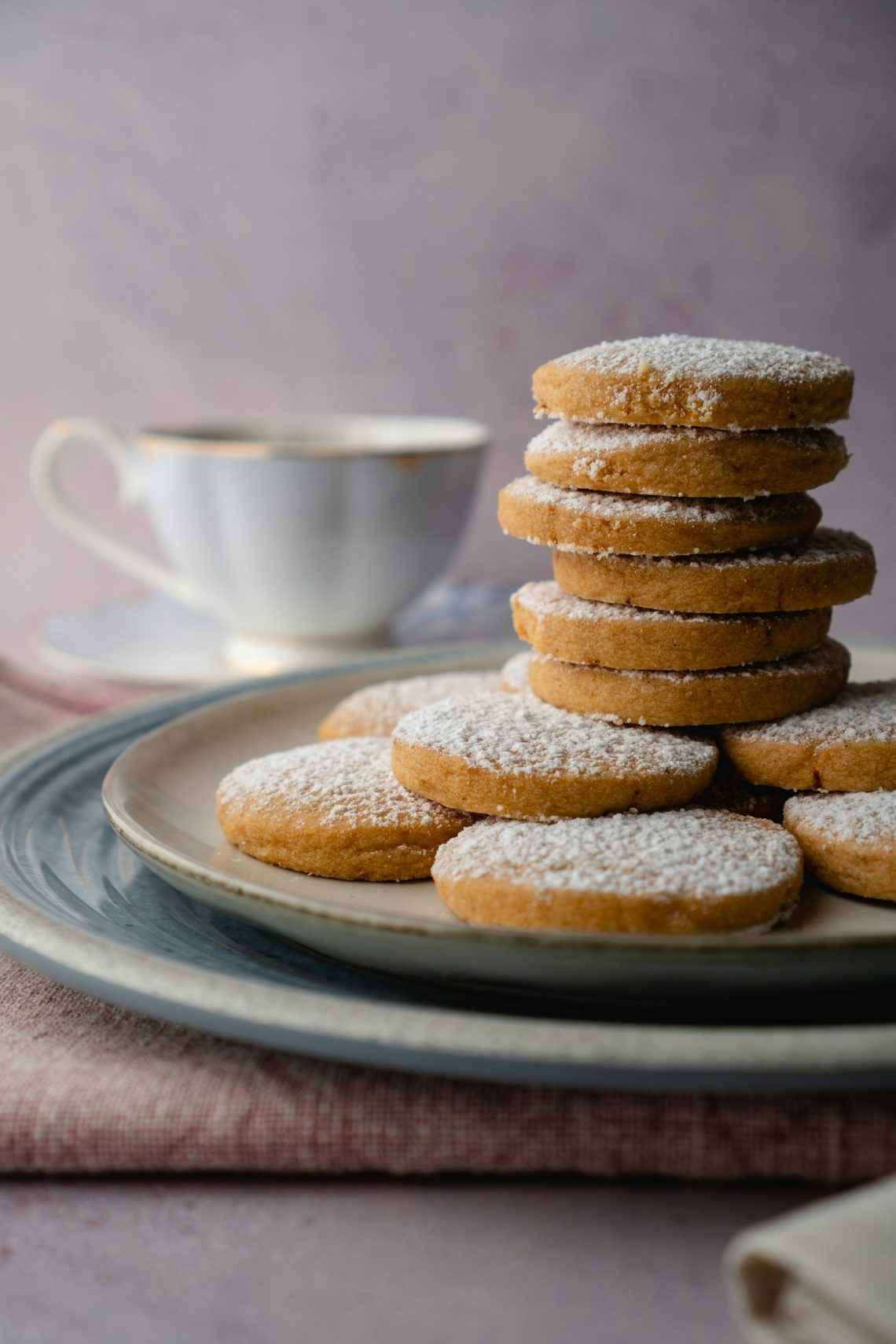
Sweet corn belongs comfortably beside butter, so the leap into a cookie is smaller than it first sounds. Sweet corn black pepper shortbread takes that familiar pairing in a dessert direction: a sandy butter cookie, a warm corn flavor and a small peppery finish. It is meant to taste gently sweet, with enough salt to keep the corn from disappearing.
Affiliate disclosure: As an Amazon Associate I earn from qualifying purchases. These paid links open Amazon search results for comparing equipment.
Use a 6-inch metal baking pan (paid link) to keep the shortbread at the intended thickness, and mix the butter and sugar with a sturdy spatula (paid link) rather than whipping the mixture.

This is a small pan of eight wedges. There is no rolling pin, no individual scooping and no egg to divide. The unusual ingredient is freeze-dried sweet corn, which becomes a dry powder. That detail matters: wet kernels would turn this into a different kind of cookie and require a different formula.
Jump to the recipe when your ingredients are ready, or read the texture checkpoints first if shortbread dough is unfamiliar.
The flavor map: corn first, pepper last
Think of the pepper as a finishing seasoning rather than the main flavor. A quarter teaspoon spread through eight wedges should supply a quiet warmth. Finely ground pepper distributes that warmth; coarse pieces create concentrated, sometimes harsh bites. Someone new to pepper in desserts can begin with an eighth teaspoon, recording that change before judging the final balance.
Vanilla connects the corn to the sweet side of the recipe. It is deliberately restrained so the cookie does not simply taste like vanilla shortbread. Granulated sugar supplies sweetness and a little crunch. Butter carries the aromas and gives the cooled dough its tender, breakable structure.
What to buy before making sweet corn black pepper shortbread
- Freeze-dried sweet corn: choose plain kernels with no added seasonings. They should be light and brittle. Ordinary dried field corn, popcorn kernels and cornmeal are different ingredients.
- All-purpose flour: the recipe uses 100 grams. Weighing is especially helpful in a small batch, where an extra spoonful can make the dough noticeably drier.
- Unsalted butter: it should yield to a fingertip while still holding its shape. Melted butter changes how easily the dough spreads and how the crumb sets.
- Fine salt and black pepper: measure both rather than shaking them over the bowl. Small seasoning changes are easy to taste in a short ingredient list.
Grind the corn shortly before mixing and keep the powder covered. Work in short pulses, pause for the dust to settle, and keep the grinder closed until the motor stops. Weigh the powder after grinding so crumbs left in the machine do not quietly reduce the amount going into the dough.
A three-checkpoint mixing method
Checkpoint one: smooth butter, little air
Stir the butter and sugar with a sturdy spatula for about a minute. You want an even paste, not a bowl of pale whipped butter. Shortbread benefits from a compact crumb. Aggressive whipping introduces a variable that makes a small pan harder to judge.
Checkpoint two: crumbs that hold when squeezed
The dough can look unfinished after the flour goes in. Squeeze a tablespoon of it in your hand. If it holds together, stop mixing and press it into the pan. If it falls apart immediately, scrape the bowl thoroughly and work the mixture a few more strokes. Butter that is still cold may need a few minutes to soften; adding water should not be the first response.
Checkpoint three: an even surface
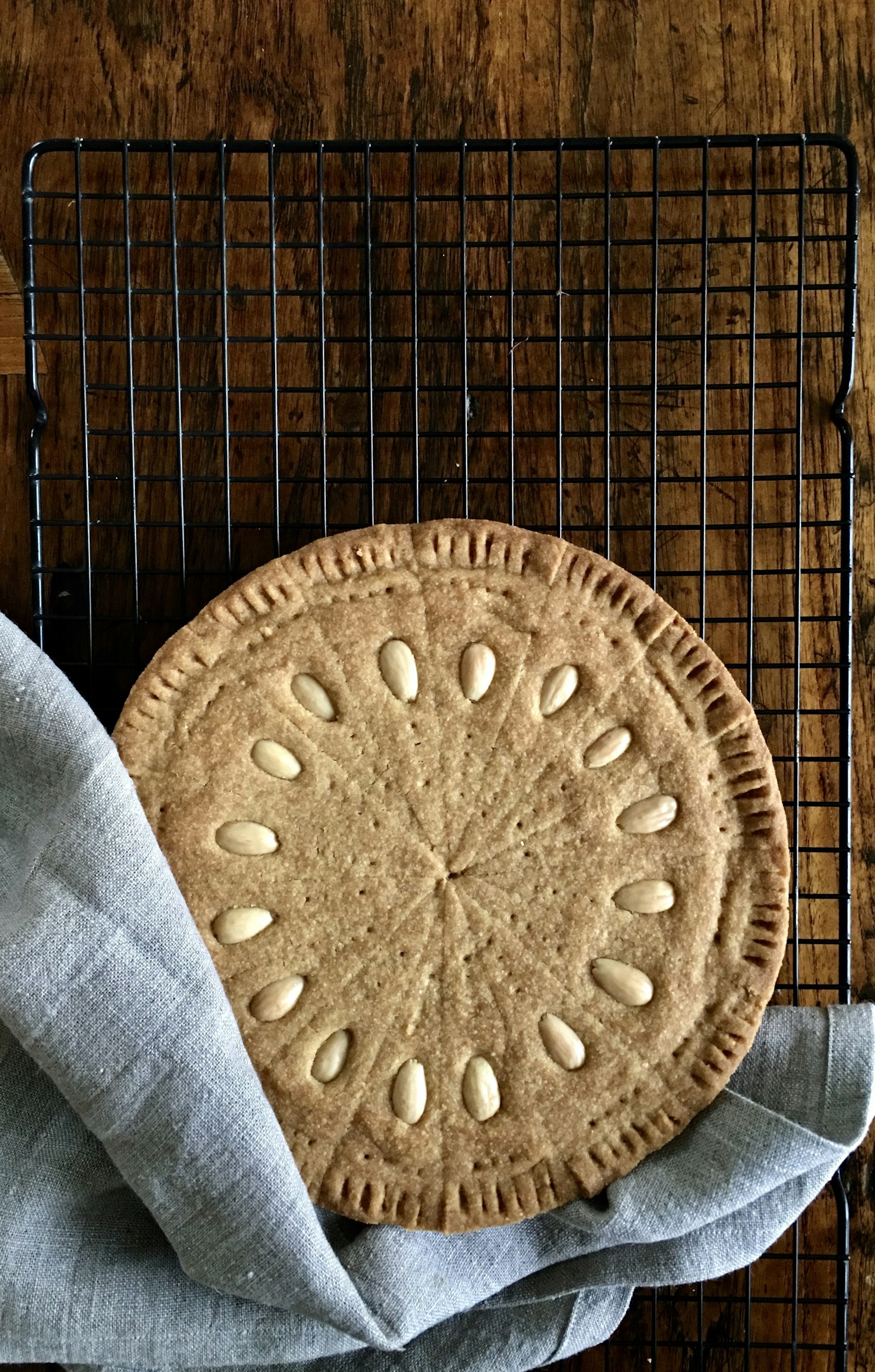
Press gently across the entire pan, then pay attention to the outer edge. A thick ridge will bake differently from a thin center. A piece of parchment between your fingers and the dough prevents sticking without dusting extra flour over the surface. Score eight wedges and prick them with a fork before chilling.
Baking cues are more useful than a dark golden color
Use a six-inch metal pan and the center oven rack. A much wider pan makes the layer thinner and shortens baking time; a smaller one gives a thick center that may stay soft. The proposed bake is 28–32 minutes at 325°F. Begin looking near the early end of that range rather than waiting for the darkest possible color.
The edge should be pale gold. The center should lose its glossy, butter-wet appearance and look matte. The cookie remains delicate while hot, so do not judge the finished crispness immediately. Cut through the scored lines after five minutes, then let the pieces firm in the pan. Trying to lift a warm wedge is a common cause of breakage.
Tip: Weigh the flour and the ground corn powder on a digital kitchen scale (paid link). In a small batch, a few grams either way changes how the dough presses together.
Small problems, targeted fixes
| What you notice | Likely explanation | What to change |
|---|---|---|
| Dough crumbles and will not press together | Butter is too cool or dry ingredients were overmeasured | Let the bowl stand briefly, scrape well and confirm the weighed amounts before adding anything. |
| Strong gritty texture | Corn was not finely powdered or coarse cornmeal was substituted | Grind finer for the next batch; cornmeal is not a direct replacement. |
| Greasy surface | Butter was too warm or the dough skipped chilling | Chill the pressed dough and use softened butter that still holds its shape. |
| Overpowering pepper | Coarse pepper creates large bursts of heat | Use a fine grind and begin with half the measured amount if preferred. |
Serving and keeping the wedges crisp
Serve one or two small wedges with black tea, coffee or a plain glass of milk. A few fresh berries on the side provide contrast without hiding the corn. Keep wet toppings off the cookies until serving; juice, whipped cream and melting ice cream gradually soften the surface.
Pack only fully cooled shortbread into an airtight container. Warm cookies release moisture that can condense under a lid. For best texture, plan to eat this small batch within three days. If freezing, separate the wedges with parchment, wrap well and thaw them while still wrapped so room moisture collects on the wrapping.
Questions before the first batch
Can canned corn replace the freeze-dried corn?
No. Draining does not remove enough of the water inside the kernels. Fresh, canned and thawed corn would need a separately developed recipe. The dry ingredient here is doing two jobs: carrying corn flavor and contributing to the dough’s solids.
Is this the same as a cornmeal cookie?
No. Cornmeal brings the flavor and texture of ground mature corn. Freeze-dried sweet corn preserves a different sweetness and becomes a lighter powder. The ingredient names may sound similar, but substituting them changes the cookie.
Can I make the dough ahead?
Press and cover the unbaked dough, then refrigerate it until the following day. Bake directly from the refrigerator and use the visual cues rather than assuming the same minute count. Keep notes on the starting temperature when comparing batches.
Can I cut circles instead of wedges?
That changes the dough thickness and exposes more edges, so the pan timing will no longer apply. The wedge format is the simpler starting point. Cutout circles need a separate thickness and baking-time adjustment; the pan timing given here does not apply to them.
Why do the wedges need to cool in the pan?
Shortbread is fragile while the butter is still warm. Leaving the scored wedges in the pan until they firm up lets the butter set and helps them lift out without breaking.
For an adventurous cookie plate, sweet corn black pepper shortbread earns its place through a focused flavor combination and a clear method. Keep the first batch small, let it cool fully, and judge the corn and pepper together before increasing either.
Sweet Corn and Black Pepper Shortbread
Ingredients
Equipment
Method
- Line the bottom and sides of a 6-inch round metal pan with parchment. Grind the freeze-dried sweet corn finely, then weigh 20 g of the powder.
- Mix the softened butter and sugar with a spatula until smooth, about 1 minute. Stir in the vanilla. Do not whip until fluffy.
- In a separate bowl, mix the flour, corn powder, black pepper and salt. Stir into the butter until damp crumbs form. Squeeze a small portion: it should hold together. Press evenly into the pan, including the edges.
- Score the surface into eight wedges and prick each wedge twice with a fork. Refrigerate for 20 minutes. Meanwhile, heat a conventional oven to 325°F (165°C).
- Bake on the center rack for 28–32 minutes, using 30 minutes as a planning estimate. The edges should be pale gold and the center should look matte and feel set when gently touched with a spatula.
- Cool in the pan for 5 minutes. Carefully cut through the scored lines while the shortbread is still warm, then leave in the pan for another 25 minutes. Lift out only when firm enough to handle. Serve at room temperature.



