
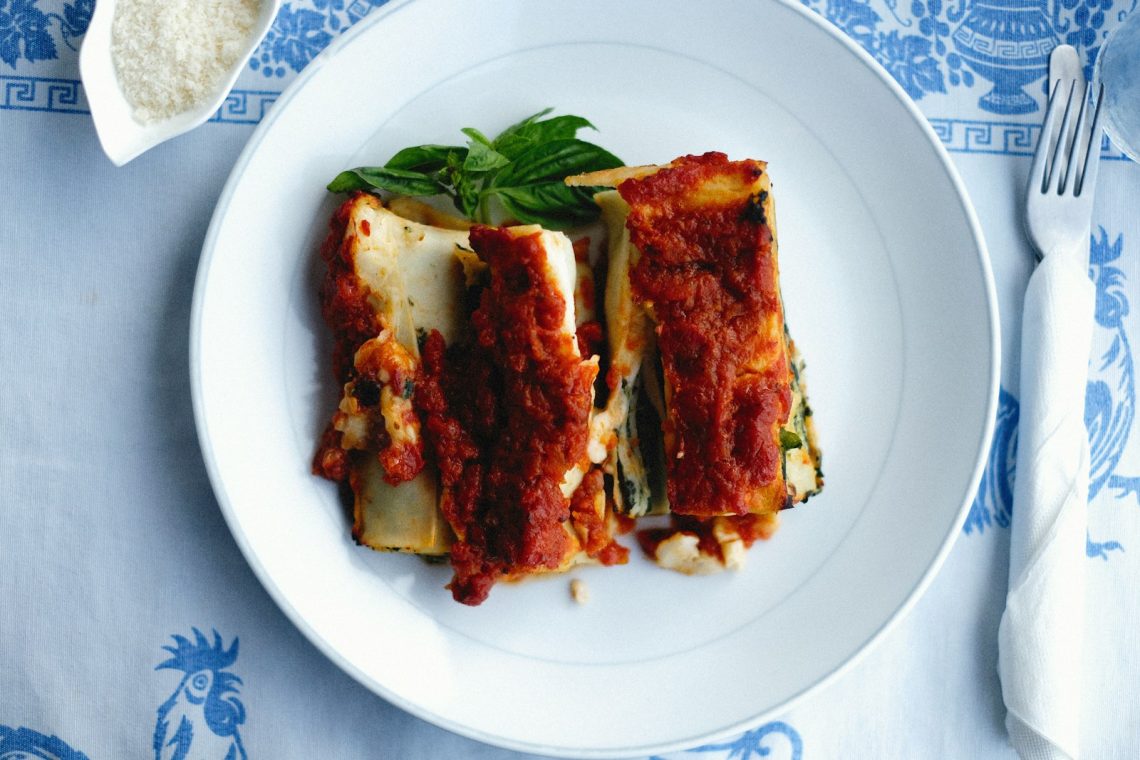
Individual lasagna rolls are useful when you want the comfort of a baked pasta dish with portions that are easy to serve. These zucchini ricotta lasagna rolls use ordinary lasagna noodles, a creamy cheese filling, and grated zucchini that is cooked before it is mixed in. That extra skillet step keeps the finished dish from turning watery.
The rolls bake in tomato sauce with a modest layer of mozzarella. They are not meant to be dry pasta spirals; the sauce protects the noodles and gives every portion a soft finish. Eight rolls make four main-course servings, with two rolls per person. A crisp salad or simply cooked vegetable is enough alongside.
Remove zucchini moisture before mixing
Zucchini holds a surprising amount of water. If it goes raw into ricotta, that water is released inside the rolled noodles and can dilute the sauce. Coarsely grate the zucchini, then cook it in a wide skillet until the visible liquid evaporates. Stir occasionally so the shreds soften evenly without forming one wet mound.
There is no need to brown the zucchini deeply. You want tender shreds and a drier mixture, not crisp vegetables. Add garlic near the end so it does not scorch during the moisture-removal stage. Spread the cooked zucchini on a plate to cool quickly before combining it with ricotta and egg. Hot zucchini can warm the cheese unevenly and make the filling harder to spread.
Prepare noodles for zucchini ricotta lasagna rolls
Use regular dried lasagna noodles rather than no-boil sheets. The noodles need to be flexible before rolling, and no-boil products do not all soften the same way outside a layered casserole. Cook them just shy of their usual serving texture because they continue cooking in the sauce.
Lift the noodles carefully and lay them flat on a lightly oiled tray. Stacking hot noodles makes them stick together and tear when separated. A spare noodle is helpful in case one breaks, but the filling is measured for eight rolls. If a noodle has a small split, overlap the edges while spreading filling and roll gently. A badly torn noodle can be cut into pieces and baked in a separate small dish with any extra sauce.
Make a filling that spreads cleanly
Whole-milk ricotta gives a creamy result without needing a large quantity. If the container has a puddle of liquid, drain that off before measuring. Very wet ricotta can sit briefly in a fine sieve in the refrigerator. The egg helps the filling set during baking, while grated hard cheese and mozzarella add flavor and structure.
Mix the cheese, egg, and seasonings first, then fold in the cooled zucchini. The filling should be soft enough to spread but not run off the spoon. If it is loose, check whether the zucchini or ricotta brought excess moisture before adding random spoonfuls of flour. A short rest in the refrigerator can help firm it for rolling. Choose hard cheese made with vegetarian rennet when serving the dish as vegetarian.
Roll evenly and protect the pasta with sauce
Divide the filling visually into eight portions before spreading it. This avoids filling the first few noodles generously and leaving the last ones bare. Spread a thin layer over most of each noodle, leaving a small clear margin at the far end. Roll without squeezing, which can push the filling out at the sides.
Place the rolls seam-side down on a layer of sauce. A snug dish helps them stay upright and keeps sauce around the edges. Spoon the remaining sauce over exposed pasta, then add mozzarella. Covering for the first part of baking traps enough moisture to soften the noodles evenly. The uncovered finish melts and lightly colors the cheese, but the center temperature is the more useful doneness check.
Make-ahead and serving decisions
The assembled dish can be covered and refrigerated a day ahead. Add extra oven time when baking from cold, and use a dish that is safe for the temperature change. Do not put a cold glass dish into a hot oven unless its manufacturer says that is safe. Keep the foil on until the rolls are hot through, then uncover for the final cheese finish.
Let the baked dish rest for five minutes before lifting the rolls with a wide spatula. The filling settles slightly, making the portions neater. Basil is a fresh finishing option rather than a required ingredient. If your pasta sauce is strongly seasoned, taste it before adding any extra salt to the dish. A simple tomato sauce lets the zucchini and ricotta remain noticeable instead of disappearing under a heavy spice blend.
Cool and reheat leftovers
Divide remaining rolls into shallow containers with sauce so they cool promptly and remain moist. Refrigerate leftovers in shallow containers within two hours, or one hour when the surrounding temperature is above 90°F. Keep the refrigerator at 40°F or colder and use cooked leftovers within three to four days. These limits follow USDA leftover guidance. Reheat cooked leftovers to 165°F, as advised by FoodSafety.gov. Reheat covered, adding a spoonful of water if the sauce has thickened; check the center of a roll, not just the bubbling sauce.
A final look before serving
The sauce should bubble around the rolls, the cheese should be melted, and the filling should be fully set and hot. If the top browns before the center reaches 165°F, cover again and continue baking. With that balance, zucchini ricotta lasagna rolls lift neatly while staying tender inside.
Frequently asked questions
Can I leave out the egg?
Yes, but the filling will be softer and may spread more when served. Drain the ricotta and zucchini especially well, and let the dish rest before lifting portions. The egg-free version still needs to be heated thoroughly in the oven.
Can I replace zucchini with spinach?
Use cooked, chopped spinach that has been squeezed very dry. About three-quarters of a cup packed can replace the cooked zucchini. Because spinach holds water differently, do not substitute the same raw weight without preparing and draining it first.
Can I freeze the rolls?
Freeze cooked, cooled portions with sauce for up to two months for best quality. Thaw in the refrigerator and reheat covered to 165°F at the center. The ricotta may become slightly grainier, but sauce helps keep the noodles moist.
Why are the noodle edges dry?
They may have been exposed above the sauce or baked uncovered too long. Spoon sauce over the edges before baking and keep the dish covered during the first stage. If reheating, add a little water and cover again rather than adding more cheese.
More useful recipes and cooking guides
- For another baked pasta dinner, try Baked Ziti with Cottage Cheese and Frozen Spinach.
- Add a simple side such as Roasted Asparagus with Lemon Zest.
Zucchini Ricotta Lasagna Rolls
Ingredients
Equipment
Method
- Heat oven to 375°F. Bring a large pot of salted water to a boil. Cook lasagna noodles until flexible but about 1 minute short of the package's usual doneness. Drain and lay them flat on a lightly oiled tray, without stacking.
- Heat olive oil in a skillet over medium-high heat. Add grated zucchini and cook for 5–7 minutes, stirring, until most liquid evaporates. Add garlic and cook for 30 seconds. Spread the mixture on a plate and let it cool for 5 minutes.
- Mix ricotta, egg, hard cheese, 1/2 cup mozzarella, oregano, salt, and pepper. Fold in cooled zucchini. Spread 1 cup tomato sauce in an 8-by-12-inch or similar 2-quart baking dish.
- Divide filling evenly among the noodles, spreading a thin layer along each and leaving a small margin at the far end. Roll gently from one short end. Place seam-side down in the dish.
- Spoon remaining sauce over the rolls and sprinkle with remaining mozzarella. Cover with foil and bake for 25 minutes. Uncover and bake 10–15 minutes more, until bubbling and the center of the filling reaches 165°F. Rest for 5 minutes and finish with optional basil.




