Kitchen guide / Temperature and tenderness
When are meatballs done? Measure the center with an instant-read thermometer: ground beef, pork, veal, or lamb needs 160°F (71°C); chicken, turkey, or any mixture containing poultry needs 165°F (74°C). Check several meatballs, including the largest and those in different parts of the pan.
Those temperatures answer the safety question, but they do not require cooking meatballs until they are hard and dry. Even sizing, gentle mixing, a moist binder, and checking early can help the centers reach the correct temperature while they remain tender. The practical goal is to cook every meatball to its safe minimum without leaving it over the heat long after that point.
When are meatballs done? Safe center temperatures
The correct endpoint depends on the meat in the mixture.
These endpoints follow the FoodSafety.gov safe minimum temperature chart.
| Meatball mixture | Minimum center temperature |
|---|---|
| Ground beef, pork, veal, lamb, or a mixture containing only these meats | 160°F (71°C) |
| Ground chicken, ground turkey, or any mixture containing poultry | 165°F (74°C) |
| Previously cooked meatballs being reheated | 165°F (74°C) |
USDA and FoodSafety.gov list 160°F for ground beef, pork, veal, and lamb and 165°F for poultry, including ground poultry. The higher poultry temperature applies even when chicken or turkey is only one part of a mixed-meat recipe. A beef-and-turkey meatball therefore needs to reach 165°F, not 160°F.
Do not apply the 145°F whole-cut rule for beef or pork to meatballs. Grinding can distribute bacteria through the mixture, so ground meat has a different minimum from an intact steak, chop, or roast. The thermometer reading at the center is what establishes that the meatball has reached the recommended minimum.
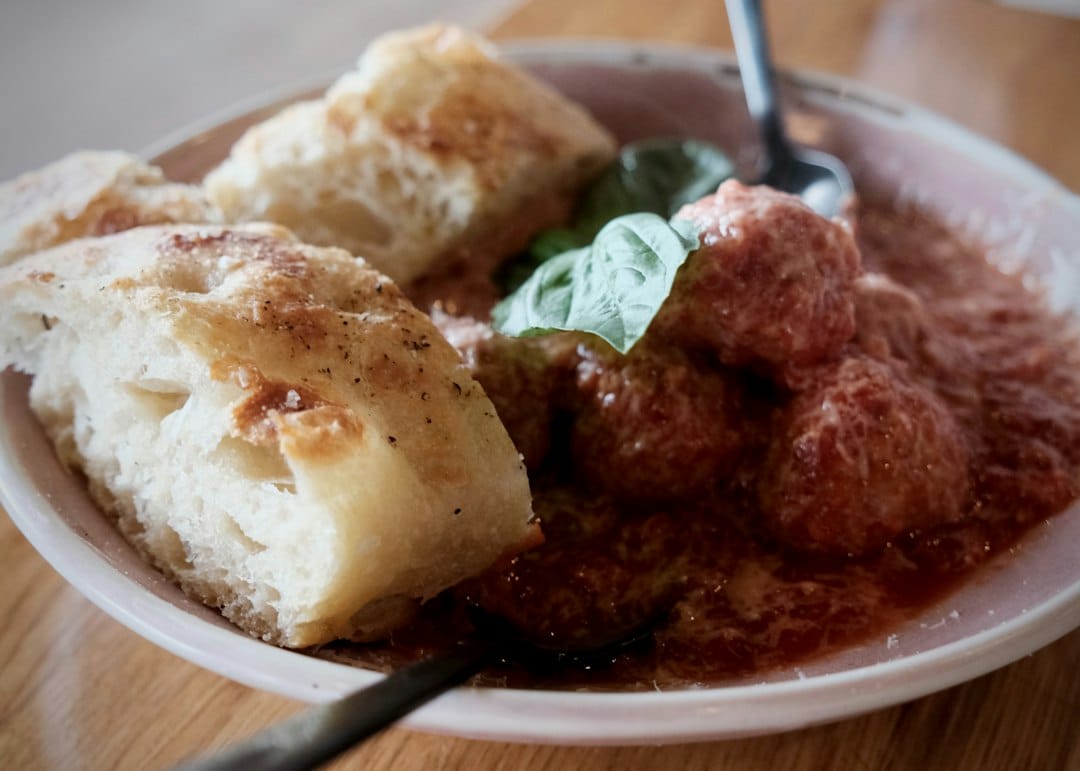
How to Check a Meatball with a Thermometer
A thermometer is most useful when its sensing area actually reaches the coolest center. Small round foods make that more difficult than checking a roast, but the technique is straightforward.
- Choose a representative meatball. Start with one of the largest pieces. In an oven, choose from the center of the pan and an edge or corner. In a skillet, choose a piece that browned less quickly. In sauce, check meatballs from several positions, including the center of the pot; appearance cannot identify the coolest piece.
- Lift it away from the hot pan. Move the meatball to a clean plate with clean tongs or a spoon. This makes it easier to aim without touching the baking sheet or skillet.
- Insert the thermometer from the side. Slide a thin instant-read probe horizontally toward the center. Side entry gives the tip more room inside a small meatball than inserting straight down from the top.
- Aim for the geometric center. Stop when the sensing area reaches the middle. Avoid letting the probe touch the pan, because hot metal can create a falsely high reading.
- Wait for the reading to stabilize. Follow the thermometer manufacturer’s instructions. If the number is below the required minimum, return the meatball to the heat with clean utensils.
- Check at least one more. Test several pieces when meatballs are uneven, the pan is crowded, or some sit closer to a burner or heating element.
For very small meatballs, a thin-tip digital thermometer is easier to position than a thick dial probe. If the sensing area is long, it may extend through the center and give a misleading average. Consult the thermometer manual so you know where the sensor sits.
Visual Cues Help with Quality, Not Safety
The outside should look set and browned for baked, air-fried, or skillet meatballs. A cut center should look cooked rather than raw and pasty. The texture should feel resilient but not hard. Those clues can tell you when to begin checking, but none replaces a thermometer.
Color is especially unreliable in ground meat. A safely cooked beef meatball can remain pink because of its ingredients, meat chemistry, or cooking conditions. Another meatball can brown before its center reaches 160°F. Tomato sauce, paprika, herbs, cheese, and cured meat can also change the appearance.
Clear juices are not proof either. Juice color is difficult to evaluate in a small meatball and can be altered by onions, cheese, sauce, or the meat mixture. Use appearance to judge browning and texture, then use temperature to confirm safety.
For equal portions, weigh the finished mixture
The meat package’s weight is not the weight of the complete meatball mixture. Breadcrumbs, milk, onion, egg, and other ingredients add to the total. When using a scale to divide a batch, measure the mixed ingredients after combining them according to your recipe.
A simple arithmetic example: 600 grams of finished mixture divided into 20 meatballs gives a target of 30 grams per piece. That is an illustration of portioning, not a new meatball formula or a guaranteed cooking time. Use the yield and ingredient balance of your chosen recipe.
Make one sample portion before rolling the rest
Weigh a portion, shape it gently, and compare it with the size specified by the cooking method. A scoop can then help repeat that portion, but level it consistently. Packing one scoop firmly and leaving the next loosely filled defeats the purpose of using the same utensil.
Do not add extra crumbs simply to force the mixture into a different shape. A soft mixture may need the resting or chilling step in its own recipe, while an overly dry mixture needs a recipe-specific correction. Portioning is a way to improve consistency, not a substitute for the correct binder ratio.
Keep the raw tray separate from the checking plate
After shaping, wash hands and utensils that touched raw meat. Use a separate plate when checking a meatball outside the pan. If that meatball proves under-temperature, treat the checking plate as having contacted undercooked meat and wash it before placing finished food there. Keep a clean serving plate available rather than assuming every plate used during a temperature check remains clean.
When are meatballs done? Checks by cooking method
Time depends on diameter, meat composition, starting temperature, pan material, oven calibration, crowding, and whether the meatballs are cooked in sauce. Treat the ranges below as checkpoints for meatballs about 1 1/2 inches across, not guarantees. Begin checking early and continue only until the coolest tested center reaches the correct temperature.
Oven-baked meatballs
At 400°F, 1 1/2-inch meatballs commonly need about 15 to 20 minutes. Arrange them in a single layer with space between pieces. Start checking around 13 to 15 minutes if the meatballs are small, lean, or spread on a dark pan. Larger two-inch meatballs may take longer.
An oven gives steady, hands-off heat and makes it easy to cook a large batch. Rotate the pan halfway through when the oven browns unevenly. Do not keep baking solely to deepen the color after the centers have reached 160°F or 165°F; use a short broil before the final temperature is reached if the recipe needs more surface browning, watching carefully.
Skillet meatballs
Skillet meatballs often need roughly 10 to 15 minutes over medium or medium-low heat, depending on size and whether the pan is covered. Brown several sides, lower the heat, and turn the meatballs gently so one surface does not burn while the middle remains undercooked.
A small splash of sauce or broth followed by a lid can help the center cook, but steam does not remove the need for a temperature check. If the outsides darken too quickly, reduce the heat rather than assuming the centers are finished.
Meatballs simmered in sauce
Fully submerged or partially covered meatballs may need approximately 15 to 25 minutes at a gentle simmer. The sauce should bubble lazily rather than boil hard. Vigorous boiling can break delicate meatballs and reduce the sauce before the centers finish.
Lift one meatball out to check it. Wipe the probe between readings and avoid dragging raw-meat residue through a cooked sauce. If meatballs went into the sauce raw, the sauce and every meatball need to finish safely; do not treat the surrounding liquid as automatically ready before the meat reaches temperature.
Air-fryer meatballs
At 375°F, small 1 1/2-inch meatballs may reach temperature in about 8 to 12 minutes. Basket design and fan strength vary, so begin checking early. Leave space for air circulation and cook in batches rather than stacking pieces. Turn or shake only if the appliance directions and meatball structure allow it.
Slow-cooker meatballs
For slow cooking, thaw raw meatballs first and follow a recipe written for the appliance, quantity, and heat setting. USDA advises thawing meat and poultry before adding them to a slow cooker. Reheat cooked leftovers on the stove, in a microwave, or in the oven to 165°F before transferring to a preheated slow cooker for hot holding. USDA slow-cooker guidance
How to Keep Meatballs Juicy While Cooking Them Safely
Make every meatball the same size
Use a portion scoop or weigh the mixture. When some pieces are twice as large as others, the small meatballs can dry out while the larger ones reach temperature. A level two-tablespoon portion generally produces a medium meatball, but the actual diameter depends on the mixture and how firmly it is rolled.
Mix only until the ingredients are combined
Overworking the mixture can create a dense, springy texture. Mix the binder and seasonings before adding the meat when the recipe allows, then fold gently until no large streaks remain. Do not repeatedly compress the mixture or pack the meatballs tightly.
Use a properly hydrated binder
Breadcrumbs mixed with milk or another suitable liquid form a panade that can hold moisture and improve tenderness. The correct amount belongs to the specific recipe; adding an arbitrary volume can make meatballs mushy or cause them to break. If making crumbs at home, see Family Recipe HQ’s guide to making breadcrumbs from stale bread in the oven. Homemade crumbs vary in density, so weighing them is more repeatable than packing a measuring cup.
Avoid starting with meat that is warm
Keep ground meat refrigerated until mixing. Warm fat smears more easily, and long room-temperature preparation increases food-safety risk. Portion efficiently, wash hands and tools that touched raw meat, and never place cooked meatballs back on the unwashed raw-meat tray.
Check early instead of adding a fixed cushion
Do not cook to 175°F merely because a recipe says meatballs should be “well done.” Start checking near the low end of the expected time. Once the centers reach 160°F for non-poultry ground meat or 165°F for poultry mixtures, remove them from the heat unless the recipe has another validated requirement.
Let them rest briefly for serving quality
A three- to five-minute rest can let juices settle and makes meatballs easier to move, but resting is not a substitute for reaching the safe temperature over the heat. Confirm the minimum first, then rest on a clean plate or in the finished hot sauce.
For another example of thermometer technique with ground meat, compare the instructions in Family Recipe HQ’s brown-gravy meatloaf recipe. The shape and timing differ, but the need to measure the center is the same.
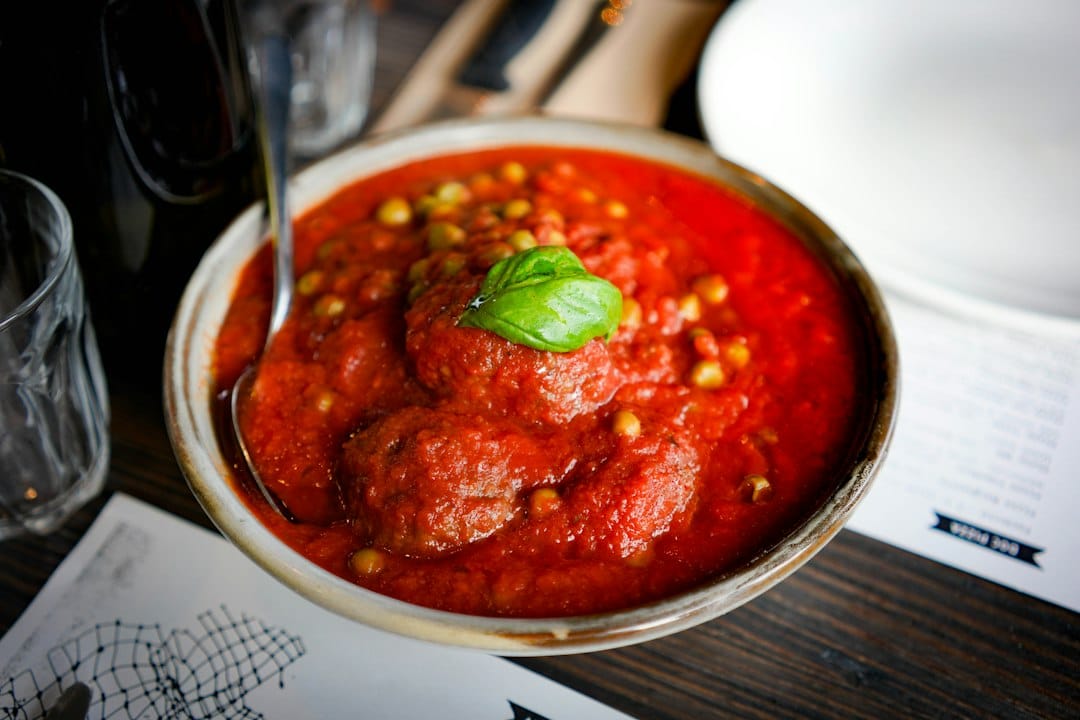
Troubleshooting Meatball Doneness
The outside is dark but the center is under temperature
Lower the heat and continue cooking more gently. In a skillet, add a small amount of sauce or water and cover briefly. In the oven, reduce the temperature by 25°F if the surfaces are browning aggressively. For future batches, make smaller, more even portions.
The meatballs reached temperature but taste dry
Temperature may not be the only cause. Very lean meat, too many dry crumbs, an unhydrated binder, overmixing, small portions, or extended holding in a hot pan can all reduce tenderness. Record the meat type, fat percentage, size, cooking method, and actual endpoint. Change one variable in the next batch instead of lowering the safe minimum.
The meatballs fall apart when checked
Let delicate meatballs set before turning them. Use a thin spatula or spoon rather than squeezing with tongs. The recipe may also need a better binder ratio or a short chill before cooking. If one breaks during a temperature check, test another intact piece and return under-temperature portions to the heat.
Different meatballs show different temperatures
Continue cooking the cooler pieces and remove any finished ones to a clean plate if the method allows. On the next batch, portion with a scoop or scale, leave more space between pieces, and rotate the pan. Always base the final decision on the coolest representative center, not the highest reading.
Storing and Reheating Cooked Meatballs
Refrigerate cooked meatballs within two hours of cooking, or within one hour when the surrounding temperature is above 90°F. Divide a large batch among shallow covered containers so it cools more efficiently. Keep the refrigerator at 40°F or below.
Use refrigerated cooked meatballs within three to four days. Reheat leftovers to 165°F, checking the center of more than one meatball. Sauce can warm faster than the meat, so bubbling sauce does not guarantee the centers are hot enough.
For freezing, cool promptly, package in meal-size portions, label the date, and protect against freezer air. Thaw in the refrigerator or use another safe thawing method rather than leaving meatballs on the counter. Texture is usually best when reheated gently in sauce or covered with a small amount of moisture.
See USDA leftover handling guidance for cooling and reheating.
Frequently Asked Questions
Can I cut a meatball open to see whether it is done?
Cutting reveals texture but does not prove safety. Use it as a quality check after a thermometer confirms the center temperature. Cutting the largest meatball can help you learn how a properly cooked center looks in that specific recipe.
Can meatballs be slightly pink and still be safe?
Yes, safely cooked ground meat can sometimes remain pink. The reverse is also possible: a brown center can still be under temperature. Confirm 160°F for beef, pork, veal, or lamb mixtures and 165°F for poultry mixtures.
Should I remove meatballs early and rely on carryover cooking?
No. For this home-cooking guide, measure the required minimum before the meatballs leave the heat. A brief rest can improve serving texture, but predicted carryover should not be used to complete the safety step.
Do frozen meatballs use the same temperatures?
Follow the package directions for a commercially cooked product and heat previously cooked meatballs to 165°F. For raw frozen meatballs, follow a validated recipe or manufacturer instructions and confirm the temperature appropriate to the meat. Do not assume the outside being hot means the frozen center has caught up.