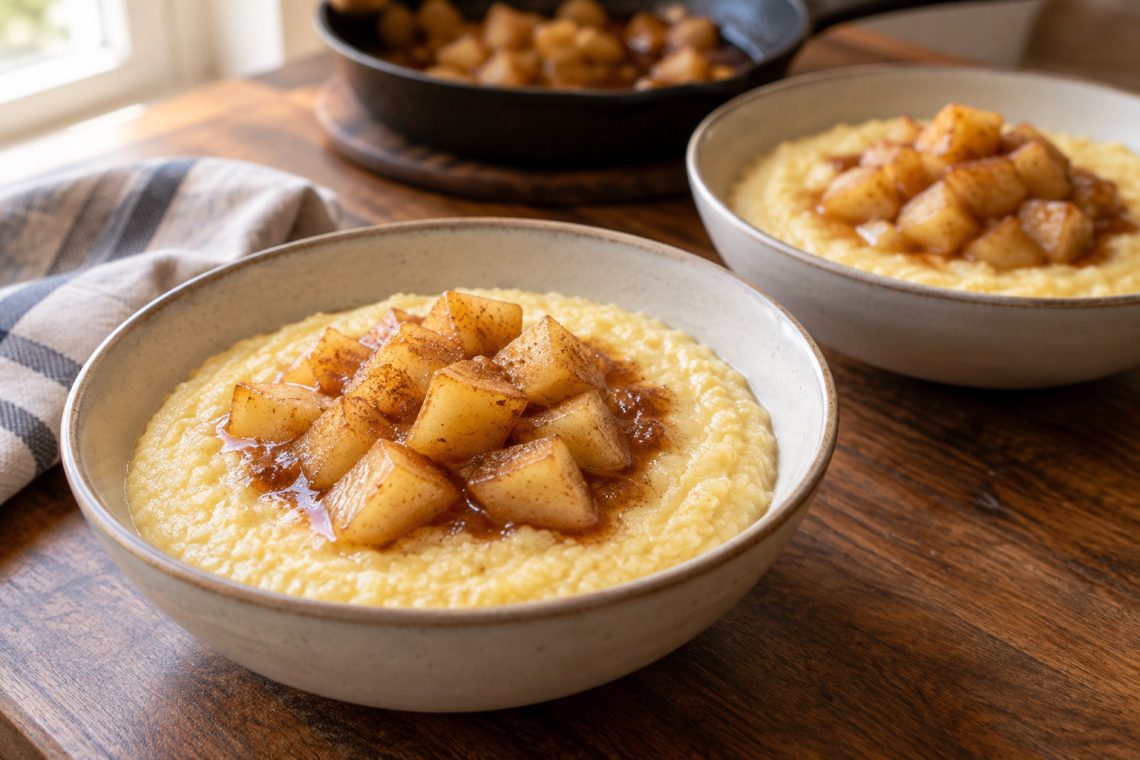
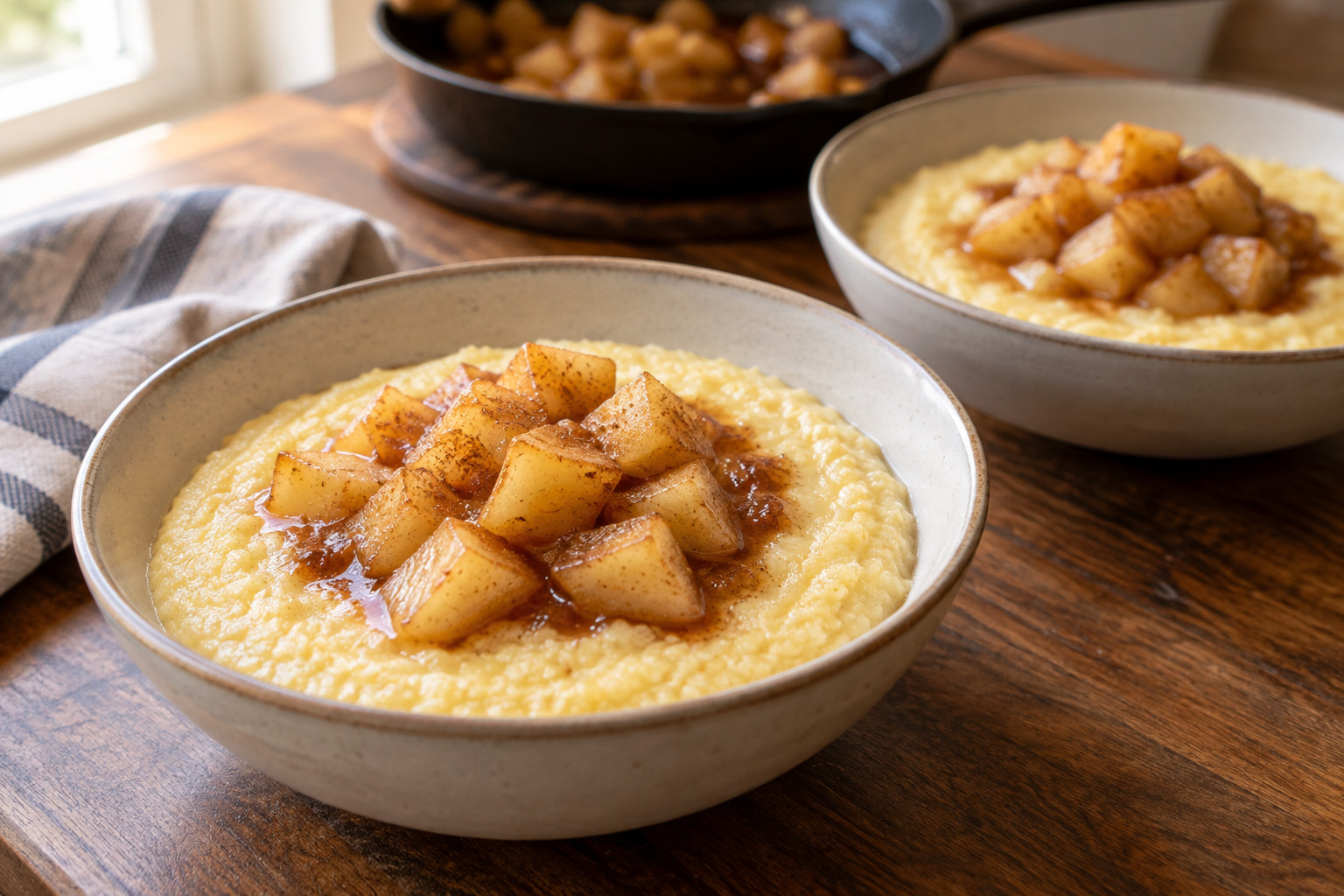
A bowl of stovetop apple cornmeal porridge for two brings a different texture to breakfast: creamy, softly grainy cereal underneath warm cinnamon apples. Fine cornmeal cooks into the milk and water, while a separate quick apple topping keeps the fruit recognizable instead of disappearing into the pot.
This version uses everyday ingredients and a gentle stovetop simmer. It is not an instant-cereal method, and the cornmeal grind matters. The instructions explain how to make a cool slurry, how to prevent scorching, and how to adjust the porridge after it thickens. Those details are more reliable than expecting every brand of cornmeal to finish at exactly the same minute.
Control cornmeal thickness before adding the apples
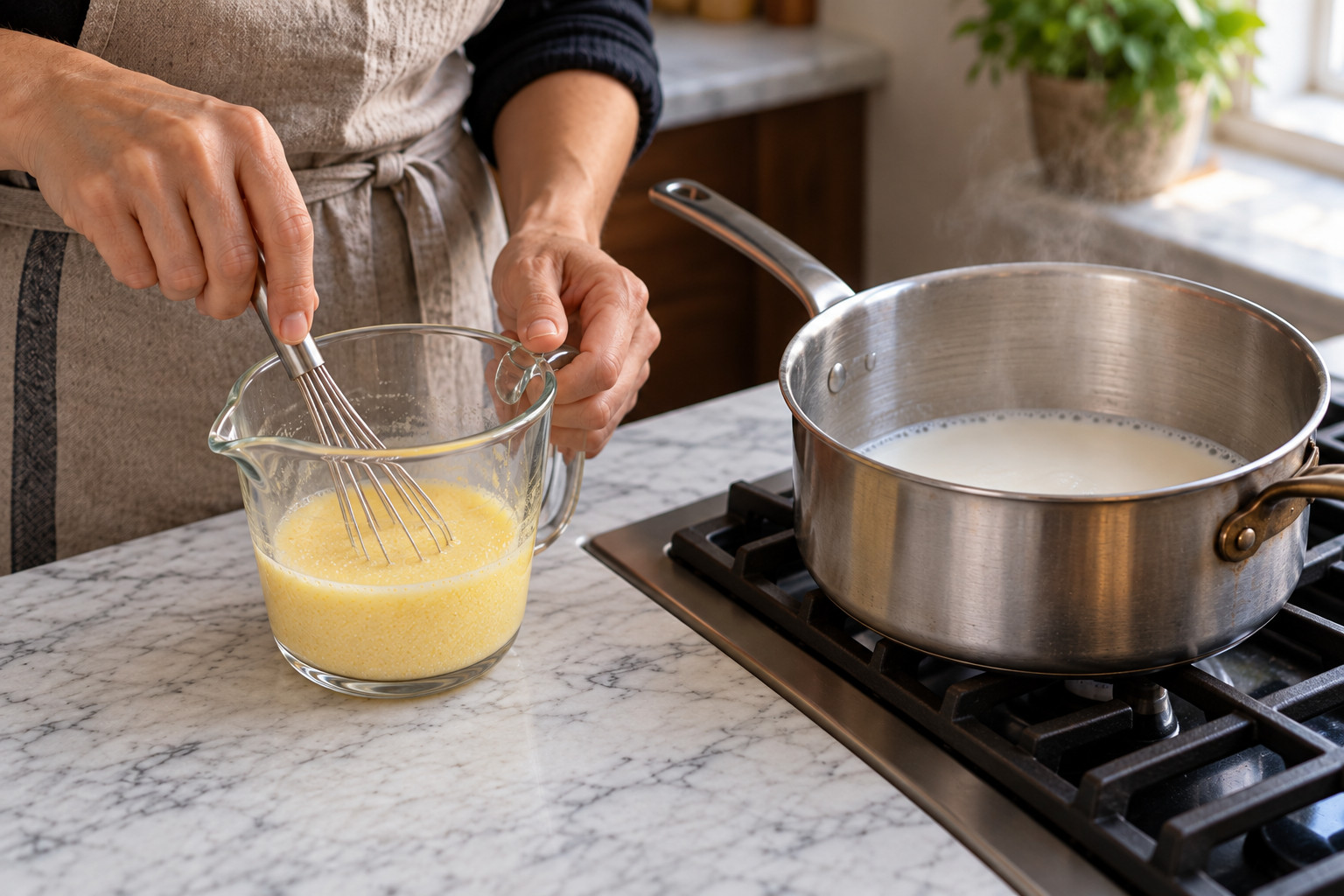
- Make a cool slurry first: whisk the cornmeal with the measured cool water, then pour the stirred slurry gradually into the hot milk while whisking.
- Keep the simmer gentle: strong boiling spits and thickens the bottom faster than the center of the pot.
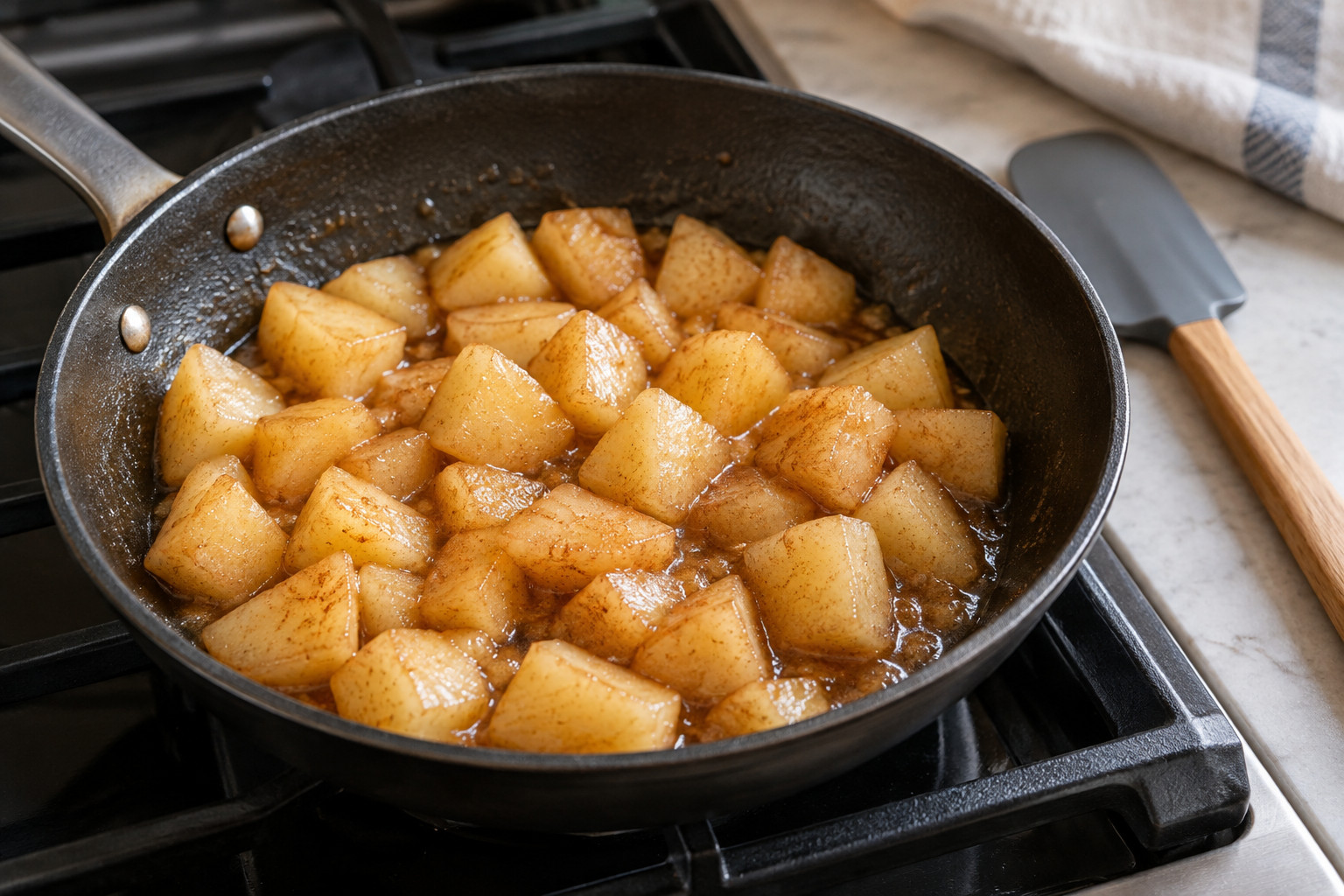
- Cook apples separately: this lets you soften and brown them without diluting the porridge.
- Rest before serving: cornmeal continues absorbing liquid for several minutes, so stop while it is slightly looser than the final bowl.
Correction guide: whisk in hot milk or water if the porridge becomes stiff. If it is thin, continue cooking over low heat rather than adding a large amount of dry cornmeal late, which can leave a gritty texture.
Two bowls and a two-pan cooking plan
- Serves: 2 generous breakfast bowls.
- Prep: 10 minutes.
- Cooking: about 25 minutes, with the apples cooked alongside the porridge.
- Rest: 2 minutes; approximately 37 minutes overall.
- Equipment: heavy 2-quart saucepan, small skillet, whisk, silicone spatula and measuring jug.
A heavy saucepan reduces the chance of milk catching on a thin hot spot. Use a burner that fits underneath the pan instead of one whose flame or heat extends up the sides. Keep a little extra water nearby for adjustments, but measure the starting ingredients so you can see how your chosen cornmeal behaves.
Coordinate the saucepan and skillet
| When | Porridge pan | Apple skillet |
|---|---|---|
| Before heating | Measure the liquid and make the slurry. | Cut the apple and measure its separate syrup and water. |
| During the gentle simmer | Keep checking and scraping the bottom. | Cook the topping on the neighboring burner. |
| When the apples are tender | Continue until the grain is tender as well. | Turn off the heat and retain the light syrup. |
Read both short methods before turning on the burners. Set the saucepan on the easiest burner to reach, since it needs the more frequent attention, and angle both handles away from the stove edge. If managing two pans feels awkward, prepare the apples first and briefly warm them again as the cereal finishes. Keeping the components separate still lets you correct each one’s texture.
Choose the cornmeal before measuring
Use fine-ground yellow cornmeal labeled for cooking or baking. It should feel sandy and fine, without large pieces of cracked corn. Do not use cornstarch, masa harina, corn flour intended as a very fine flour substitute, or a prepared cornbread mix. Those products behave differently and cannot be swapped directly into this liquid ratio.
Some packages call coarse cornmeal polenta, while others use the word for the finished dish. Read the grind and cooking instructions instead of relying on the name alone. Coarse meal can need substantially longer cooking and more liquid. This recipe’s time range assumes a fine grind; if your package specifies a much longer cooking time, follow that guidance and adjust the liquid as needed.
Measure the porridge and topping separately
For the porridge
- ½ cup (75 g) fine yellow cornmeal
- 1 cup (240 ml) water, divided
- 1½ cups (360 ml) whole or 2% milk
- ¼ teaspoon fine salt
- 1 tablespoon (15 ml) maple syrup
- ½ teaspoon vanilla extract
For the cinnamon apples
- 1 medium apple, peeled, cored and cut into ½-inch cubes, about 160 g prepared
- 1 tablespoon (14 g) butter
- 1 tablespoon (15 ml) maple syrup
- ½ teaspoon ground cinnamon
- 2 tablespoons water, plus a little more if needed
- 1 teaspoon lemon juice, optional
Use an apple with enough firmness to hold its shape, such as Braeburn, Pink Lady or a firm Gala. A very tart apple may need a little extra syrup at the table, while a soft apple may break down into a rough sauce. Both can be enjoyable, but the resulting topping will look different.
Milk rounds out the flavor, water keeps the mixture from becoming overly rich, and salt makes the corn flavor clearer. The syrup is split between the cereal and topping so neither component is aggressively sweet. Taste the cooked porridge before adding more; fruit and toppings contribute their own sweetness.
Make stovetop apple cornmeal porridge for two
- Make a cool slurry. Whisk the cornmeal with ½ cup of the measured water in a jug or bowl. Stir until all of the meal is wet. This helps the grains enter the hot liquid individually instead of forming dry-centered lumps.
- Warm the liquid. Put the milk, remaining ½ cup water and salt into the saucepan. Heat over medium until steaming with small bubbles around the edges. Do not let the milk boil up the sides.
- Add gradually. Stir the slurry again because the meal settles quickly. Pour it into the hot milk in a thin stream while whisking continuously. Continue whisking for about a minute as the mixture begins to thicken.
- Simmer gently. Reduce the heat to low. Cook for about 15–20 minutes, stirring and scraping the bottom frequently. Use a spatula as the mixture thickens so you can reach the corners. Keep the bubbles gentle; thick porridge can sputter.
- Check the grains. Cool a small spoonful briefly before tasting. The meal should feel tender, without a raw, gritty crunch. If it needs longer, add a splash of water and continue cooking gently. The package’s instructions take priority for a slower-cooking grind.
- Finish and portion. Stir in the maple syrup and vanilla. Rest off the heat for 2 minutes, then divide between bowls and spoon the apples and their light syrup over the top.
Give the bottom of the pan a full pass
As the mixture thickens, sweep the spatula around the wall of the saucepan, across the base and through the center. Stirring only in a small circle can leave cereal sitting undisturbed around the outer edge. Lift the spatula occasionally to see whether the cereal flows back into the track it leaves. This is a consistency check; tasting a cooled spoonful remains the separate check for tender grains.
While the porridge simmers: cinnamon apples
- Melt the butter in the small skillet over medium heat. Add the diced apple and stir to coat.
- Add the cinnamon, maple syrup and 2 tablespoons water. Lower the heat to medium-low and cook for 7–10 minutes, stirring occasionally.
- Check a piece with the tip of a knife. It should be tender through the center while still holding its edges. If the skillet becomes dry before the apple softens, add water a tablespoon at a time.
- Turn off the heat. Add the optional lemon juice if the topping tastes very sweet or flat. Keep the apples in the skillet while the porridge finishes.
The apples should sit in a light coating of syrup rather than a large pool of liquid. A little caramel color is pleasant, but dark, smoking sugar tastes bitter. Lower the heat if the syrup begins reducing faster than the fruit softens.
Adjust the texture while it is still in the pan
| What you see | What to do |
|---|---|
| A stiff mound that barely moves | Add warm water or milk 1 tablespoon at a time, stirring well. |
| A thin mixture but tender grains | Simmer uncovered briefly, stirring, before adding more cornmeal. |
| Thick mixture with hard grains | Add liquid and cook longer; thickness alone does not prove doneness. |
| Brown bits catching on the bottom | Transfer the unburned portion to a clean pan without scraping up the scorched layer. |
Fresh porridge should flow slowly from a spoon and settle into the bowl. It thickens as it stands, so leave it slightly looser than your final preference. Adding dry cornmeal near the end can create gritty pockets; reducing excess liquid is usually a better correction.
Bring the two components to the table
An unsweetened oat or soy drink can be investigated in place of dairy milk. Different drinks contain different thickeners, so watch the consistency and start with the listed amount. Use an appropriate plant-based fat for the apples if avoiding dairy. These substitutions have not been kitchen validated for this draft.
You can swap the cinnamon for a smaller amount of ground ginger or add a pinch of nutmeg. Keep strong spices modest so they do not bury the corn flavor. A spoonful of plain yogurt on the side offers a cool contrast if dairy suits your table. Toast or a separately cooked egg can make breakfast more substantial.
Keep the two textures distinct in the bowl
Spoon the porridge into both bowls before adding the apples. Divide the pieces first, then share the light syrup left in the skillet so one serving does not receive most of the sweet liquid. Set out any extra milk separately for someone who prefers a looser cereal. A thin surface film may develop while a bowl waits; stir it gently into the porridge instead of interpreting the film alone as a sign that more cooking is required.
Cooling and reheating leftovers
Transfer leftover porridge to a shallow container and refrigerate promptly, within two hours, at 40°F / 4°C or below. Store the apples separately if convenient and use both within 3–4 days. Do not leave a deep saucepan on the counter waiting for the center to become completely cold. The FoodSafety.gov chilling guidance explains why prompt refrigeration matters.
The chilled cereal will set firmly. Break a portion into a saucepan with a splash of milk or water, warm gently and stir until smooth. Add liquid gradually until it is spoonable again, then heat thoroughly to 165°F / 74°C. Microwave portions also need stirring during reheating because the edges warm before the center. For best texture, enjoy it fresh or refrigerated rather than planning to freeze a large batch.
For another quick warm bowl, see apple peanut butter oatmeal. A savory breakfast can start with the pea and cheddar oatmeal.
Frequently asked questions
Is this the same as oatmeal?
No. It uses ground corn rather than oats, so its flavor and texture are different. The apple topping is familiar, but the cereal underneath is smoother and gently sandy.
Can I cook the apples in the porridge?
You can explore that variation, but the fruit may release liquid and become less distinct. Cooking it separately makes the cereal’s thickness easier to manage and the apple tenderness easier to check.
Why does my porridge taste gritty?
The cornmeal may be coarser than expected or insufficiently cooked. Add liquid and continue simmering rather than increasing the heat sharply, which can scorch the milk.
Can I use instant polenta?
Follow the instant product’s package ratio and timing. It is processed to cook quickly, so it should not be treated as a direct match for the simmering method here.
How do I make it less sweet?
Reduce the syrup at the table first. You can omit the tablespoon in the cereal and leave the apple topping as written, then taste before changing both components.
Can I prepare it ahead for two mornings?
Yes. Stovetop apple cornmeal porridge for two can become two individual breakfasts when promptly chilled. Add liquid during reheating because the starches firm up overnight.
Choose apples for the texture you want
A firm apple that holds its shape gives distinct pieces over the smooth cornmeal. A softer variety may break down more quickly and make a looser topping. Either can taste pleasant, but start checking the small cubes early and keep the heat gentle rather than trying to make every variety follow exactly the same minute count.
Peel, core, and dice the apple before heating the milk. Once the slurry goes into the saucepan, the porridge needs regular scraping and attention. Having the topping ready reduces the temptation to leave the thickening cereal unattended while you finish cutting fruit.
Keep the two cooking utensils separate. Use the spatula that reaches the saucepan's corners for the porridge and another spoon for the apples. When serving, share the fruit pieces first, then divide their light syrup. This keeps one bowl from receiving mostly sweet liquid while the other gets all the apple.
If breakfast is running late, loosen and finish the porridge as described rather than repeatedly adding syrup to a stiff bowl. Sweetness and consistency are separate adjustments. A little liquid changes texture; extra maple primarily changes flavor.
A steadier workflow for stovetop apple cornmeal porridge for two
Stovetop apple cornmeal porridge for two is easier to manage when the measuring area stays separate from the hot pans. A short arrangement of bowls and utensils gives the saucepan your attention during the minutes when the cereal thickens most quickly.
Keep the divided water visible
Use a measuring jug for the full starting water quantity, then pour the slurry portion into its own bowl. The water left in the jug belongs with the milk in the saucepan. Empty both completely at their intended steps before reaching for any adjustment water. This simple physical separation helps avoid using the slurry water twice or forgetting the remaining portion. Measure the dry cornmeal before handling milk or syrup so damp measuring tools do not collect extra meal. If using the gram amount, tare the empty bowl and check that the scale displays grams before pouring.
Prepare apple pieces with stable surfaces
Cut the peeled apple into quarters and remove the core from each quarter. Lay the flat faces against the board before cutting slabs, strips and finally cubes. Curved outer pieces will look less regular; cut the largest ones again rather than trimming every piece into a perfect square. Keep the prepared apple beside the skillet with its cinnamon, syrup and measured water. Set the porridge syrup and vanilla on the other side of the stove. The two syrup measures serve different components, so putting them in separate small cups makes their destinations obvious.
Choose the right stirring tool as thickness changes
A whisk reaches loose slurry efficiently but may begin dragging a thick mass around the pan once the cereal gains body. At that point a flexible spatula makes it easier to feel the saucepan base and sweep beneath the porridge. Keep the whisk nearby for the initial addition and the spatula nearby for the simmer. Scrape cereal from the whisk back into the saucepan before setting it down; otherwise a noticeable amount can remain caught between its wires in a small batch. Use a utensil rest so drips do not obscure the burner controls.
Respond to the burner as well as the porridge
On a stove that holds heat after the setting is lowered, turning the dial may not stop vigorous bubbling immediately. Lift the saucepan off the hot zone briefly while continuing to stir, then return it when the bubbling has settled. Use a dry potholder if the handle is hot and keep the heavy pan level. Do not try to calm an aggressively bubbling pot by pouring in all the adjustment liquid at once. First reduce the heat reaching the pan; then decide whether the cereal actually needs more moisture.
Distinguish a skin from a lump
A thin sheet on the surface of resting porridge can fold into the cereal when stirred. A dry-centered cornmeal lump feels different: it remains a distinct firm spot after gentle mixing. To investigate, lift a suspect piece onto a plate and open it with the spoon after it has cooled enough to handle. A visible dry center needs further gentle cooking and careful breaking apart in liquid. Do not assume that every small grain is a lump; fine cornmeal retains its own texture. The tenderness check in the method remains more useful than trying to make this cereal look exactly like a smooth custard.
Finish with the skillet off the active heat
Once the apples are tender, move their skillet to an unheated surface rather than leaving the syrup over a low flame while the porridge catches up. This limits additional reduction. Before serving, turn the apples once through their coating and scrape the flavorful film from the skillet with the serving spoon. Share that coating between the bowls without adding another unmeasured pour of maple syrup.
More recipes for your table
Choose a companion dish or another recipe for the ingredients you have. Each link opens its own instructions and printable recipe.
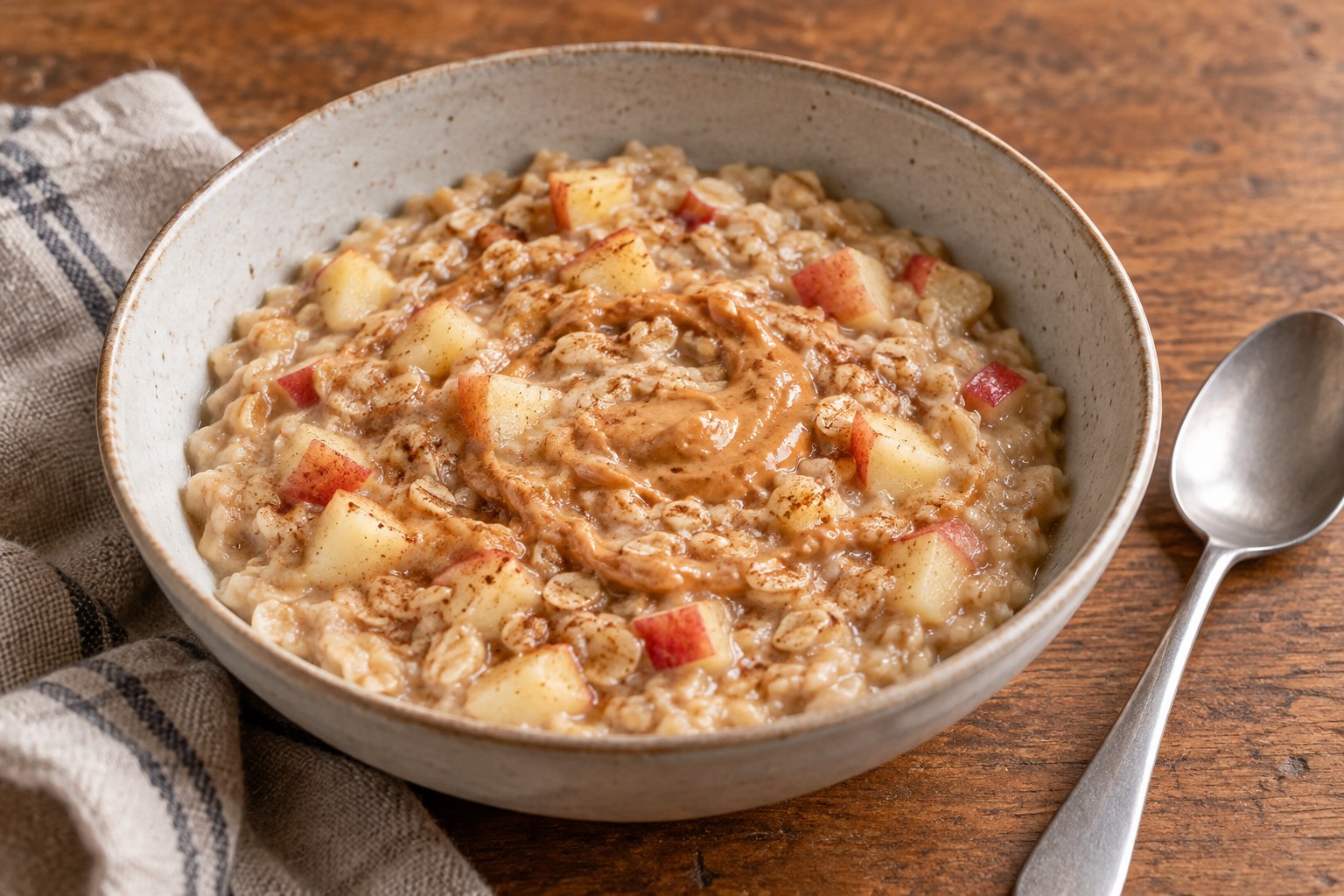
A different warm breakfast with apples and a creamy oat base.
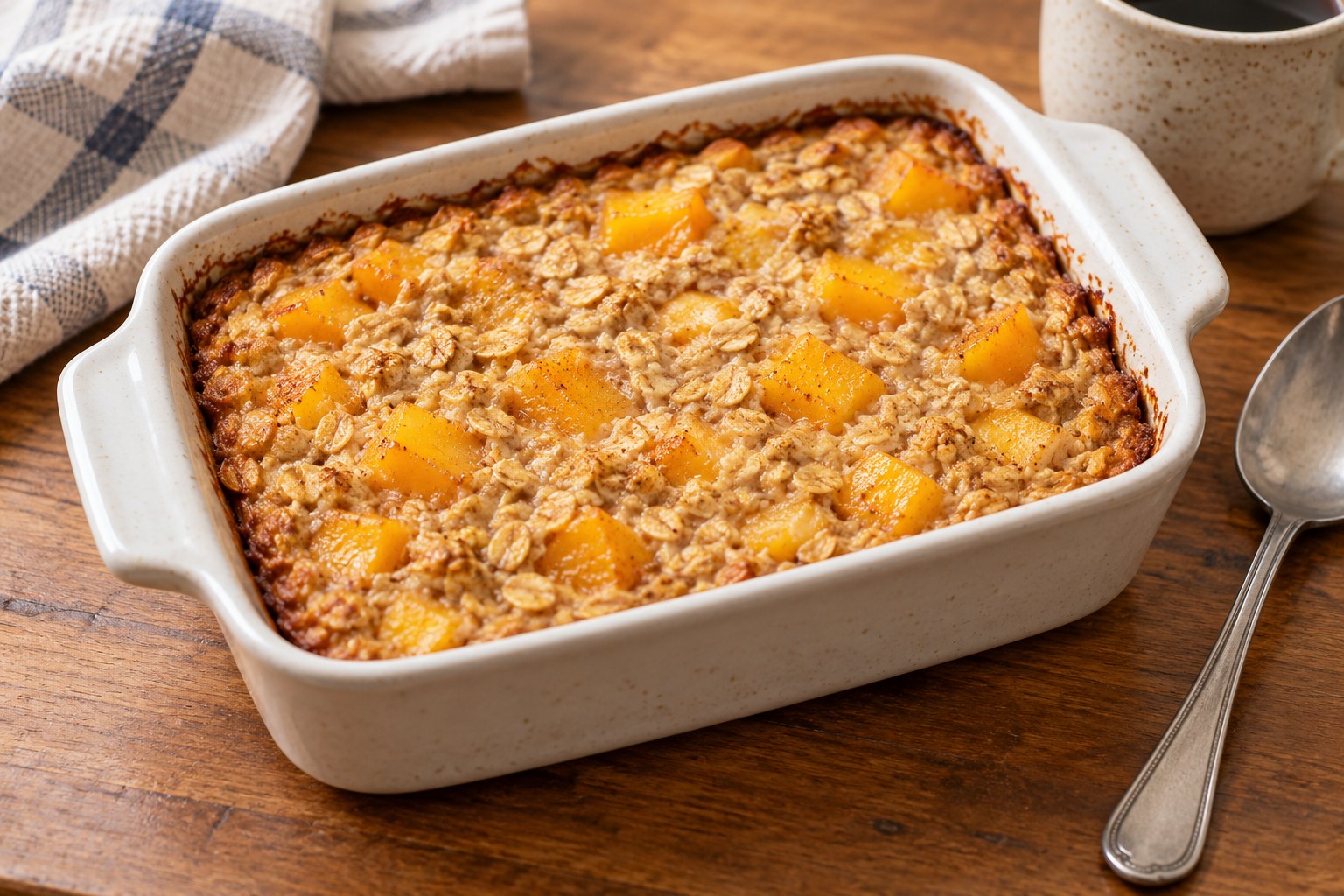
A baked oatmeal option for another breakfast.
Equipment for this recipe
Affiliate disclosure: As an Amazon Associate I earn from qualifying purchases.
Use the tools you already have when they match the method. If you need an item, these links open matching Amazon search results.
- Heavy 2-quart saucepan on Amazon — Match the recipe’s small-batch saucepan size and use the lid where directed.
- Small kitchen whisk on Amazon — Choose a whisk that moves comfortably around the saucepan.
Check the size, material, and manufacturer’s use instructions against the recipe before choosing.
Useful kitchen references
- FoodSafety.gov leftover guidance — A practical reference for chilling and reheating.
Stovetop apple cornmeal porridge recipe
Use the recipe card’s Print control for a kitchen copy. Follow the ingredient quantities and cooking checks in the card when preparing the dish.
Stovetop Apple Cornmeal Porridge for Two
Ingredients
Equipment
Method
- Whisk the cornmeal with ½ cup of the measured water in a jug or bowl. Stir until all of the meal is wet. This helps the grains enter the hot liquid individually instead of forming dry-centered lumps.
- Put the milk, remaining ½ cup water and salt into the saucepan. Heat over medium until steaming with small bubbles around the edges. Do not let the milk boil up the sides.
- Stir the slurry again because the meal settles quickly. Pour it into the hot milk in a thin stream while whisking continuously. Continue whisking for about a minute as the mixture begins to thicken.
- Reduce the heat to low. Cook for about 15–20 minutes, stirring and scraping the bottom frequently. Use a spatula as the mixture thickens so you can reach the corners. Keep the bubbles gentle; thick porridge can sputter. While it simmers, prepare the apples in the next group, continuing to stir and scrape the porridge frequently.
- Melt the butter in the small skillet over medium heat. Add the diced apple and stir to coat.
- Add the cinnamon, maple syrup and 2 tablespoons water. Lower the heat to medium-low and cook for 7–10 minutes, stirring occasionally.
- Check a piece with the tip of a knife. It should be tender through the center while still holding its edges. If the skillet becomes dry before the apple softens, add water a tablespoon at a time.
- Turn off the heat. Add the optional lemon juice if the topping tastes very sweet or flat. Keep the apples in the skillet while the porridge finishes.
- Cool a small spoonful briefly before tasting. The meal should feel tender, without a raw, gritty crunch. If it needs longer, add a splash of water and continue cooking gently. The package's instructions take priority for a slower-cooking grind.
- Stir in the maple syrup and vanilla. Rest off the heat for 2 minutes, then divide between bowls and spoon the apples and their light syrup over the top.
Notes
Rate this recipe
Made this apple cornmeal porridge? Choose a star rating in the comment form below and tell us how your cornmeal cooked and which apple you used.