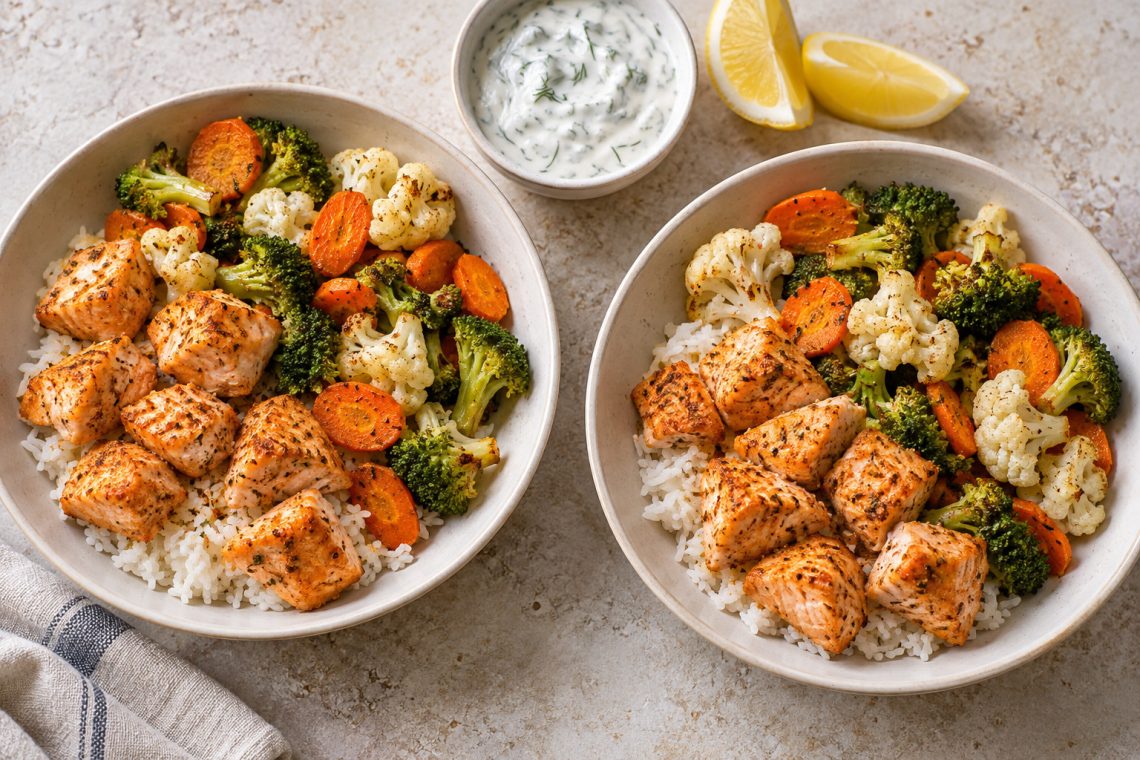
A small air fryer can handle a fish-and-vegetable dinner if you give each part its own cooking stage. These air fryer salmon bites with frozen vegetables start with a bag of plain mixed vegetables and finish with lemon-seasoned salmon cubes. Vegetables cook first, while the fish goes in later for a shorter, carefully checked session.
This approach avoids trying to make frozen carrots and small pieces of salmon finish at exactly the same moment. The recipe serves two generous fish portions and can be doubled by repeating batches. If you want rice underneath, cook it separately or heat a prepared portion according to its package while the vegetables are in the fryer.
Prepare the fish and vegetables separately
Know your basket before beginning
Serves: 2. Prep: 10 minutes. Air-frying: approximately 25–30 minutes. Total: about 40 minutes, excluding separately cooked rice. Use a 5–6-quart basket air fryer, a medium mixing bowl, tongs, a thin spatula, and a thin-tip instant-read thermometer.
Basket capacity labels do not tell you the usable surface area. The salmon must sit in a single uncrowded layer. If your basket cannot hold the measured quantity with small spaces between pieces, use a second batch and allow extra time. An oven-style air fryer may heat differently, so use the same visual and temperature checks rather than expecting identical minutes.
The cooking sequence: vegetables, then salmon
| While this cooks | Do this |
|---|---|
| First vegetable interval | Cut and season the salmon using a separate board and bowl. |
| Second vegetable interval | Prepare the yogurt sauce and arrange serving plates. |
| Salmon interval | Warm optional rice and make sure vegetables stay safely hot. |
| Final temperature checks | Remove finished salmon pieces individually and assemble the meal. |
The safe minimum for fish is listed as 145°F in the FoodSafety.gov cooking chart. Small pieces can pass from underdone to dry quickly, so begin checking at the first interval. Taking one sample from the smallest cube does not verify a larger piece elsewhere in the basket.
Ingredients, divided by cooking stage
For the vegetables
- 12 ounces plain frozen broccoli, cauliflower, and carrot blend
- 2 teaspoons olive oil
- ¼ teaspoon garlic powder
- ⅛ teaspoon fine salt
- ⅛ teaspoon black pepper
For the salmon and lemon yogurt
- 12 ounces skinless salmon fillet, thawed, pin bones removed
- 2 teaspoons olive oil
- ½ teaspoon sweet paprika
- ¼ teaspoon garlic powder
- ¼ teaspoon fine salt
- ⅛ teaspoon black pepper
- ½ teaspoon finely grated lemon zest
- ⅓ cup plain Greek yogurt
- 1 teaspoon lemon juice, plus lemon wedges for serving
- 1 tablespoon finely chopped dill or parsley
- 1–2 teaspoons water, if needed to thin the sauce
- 1 cup cooked rice, optional, for serving
Choose a vegetable blend without sauce, cheese, or a seasoned butter coating. Those additions alter the moisture and may drip or scorch. A mix with similar-sized florets and thin carrot slices cooks more evenly than a blend containing large carrot chunks or dense potatoes. Follow the frozen vegetable package’s cooking and safe-handling directions.
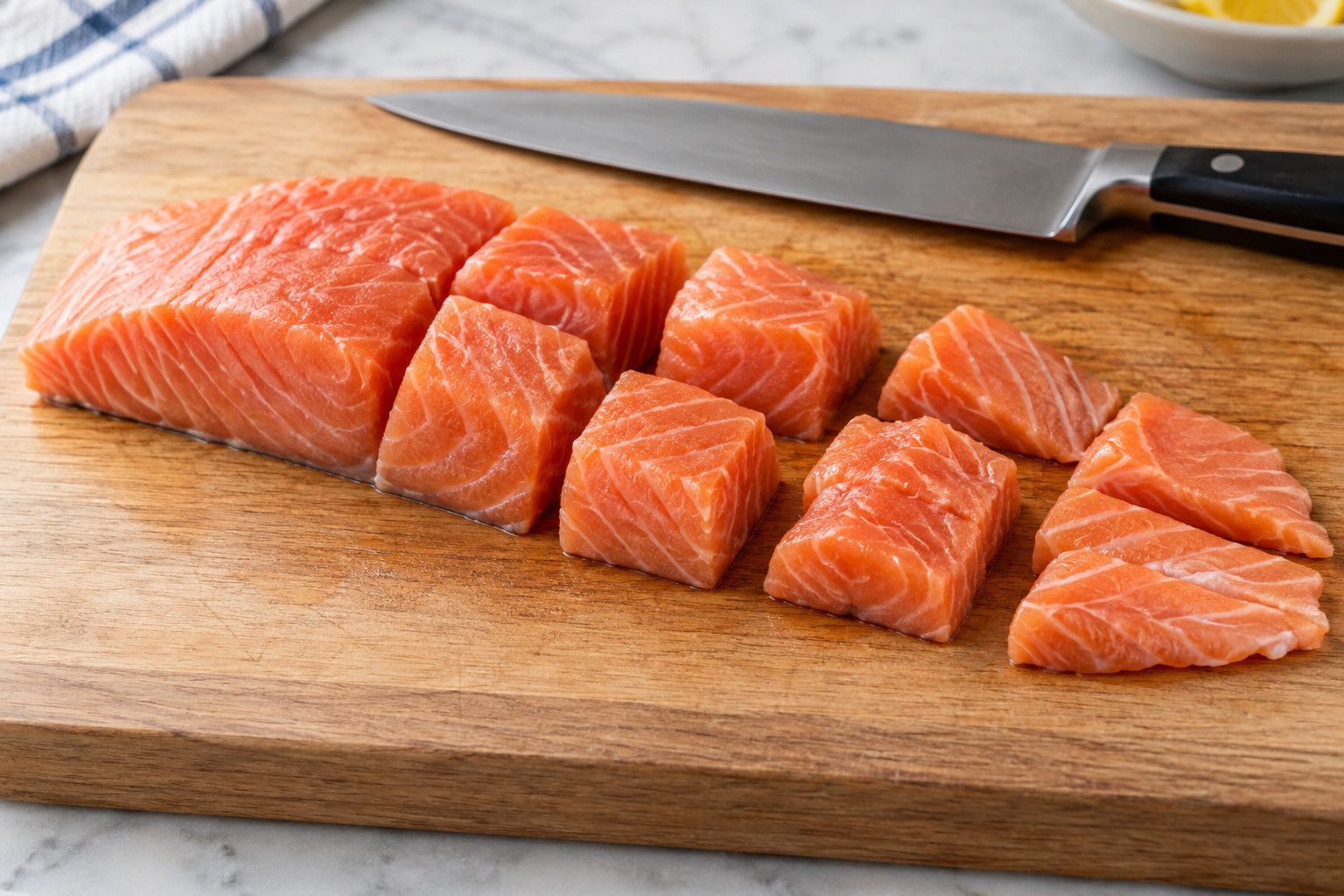
Salmon cubes approximately 1¼ inches across are easier to check than tiny scraps and have enough thickness to stay moist. Cut the thick part of the fillet first; keep thinner tail pieces a little wider so they are not dramatically smaller. Lemon zest flavors the fish before cooking, while juice stays in the sauce.
Shape the salmon for its basket
Before cutting, look at the fillet from the side. A thick center section and a thin tail will not become equal cubes simply because their top surfaces are cut into equal squares. Follow the approximately 1¼-inch guide for the thicker flesh, and make the thinner pieces wider as described below. The aim is manageable pieces with enough center for a useful thermometer reading.
Choose a stable face for each piece to rest on in the basket. A narrow, pointed scrap that balances on an edge is easier to knock over than a broad piece. Keep the pieces separated so you can slide the spatula underneath an individual bite without moving every piece around it.
Make air fryer salmon bites with frozen vegetables step by step
- Prepare the appliance safely. Check that the basket is clean and that the air fryer sits on a heat-resistant surface with the manufacturer’s required clearance. Preheat to 390°F / 200°C if your model calls for preheating. Do not place loose parchment in an empty operating basket.
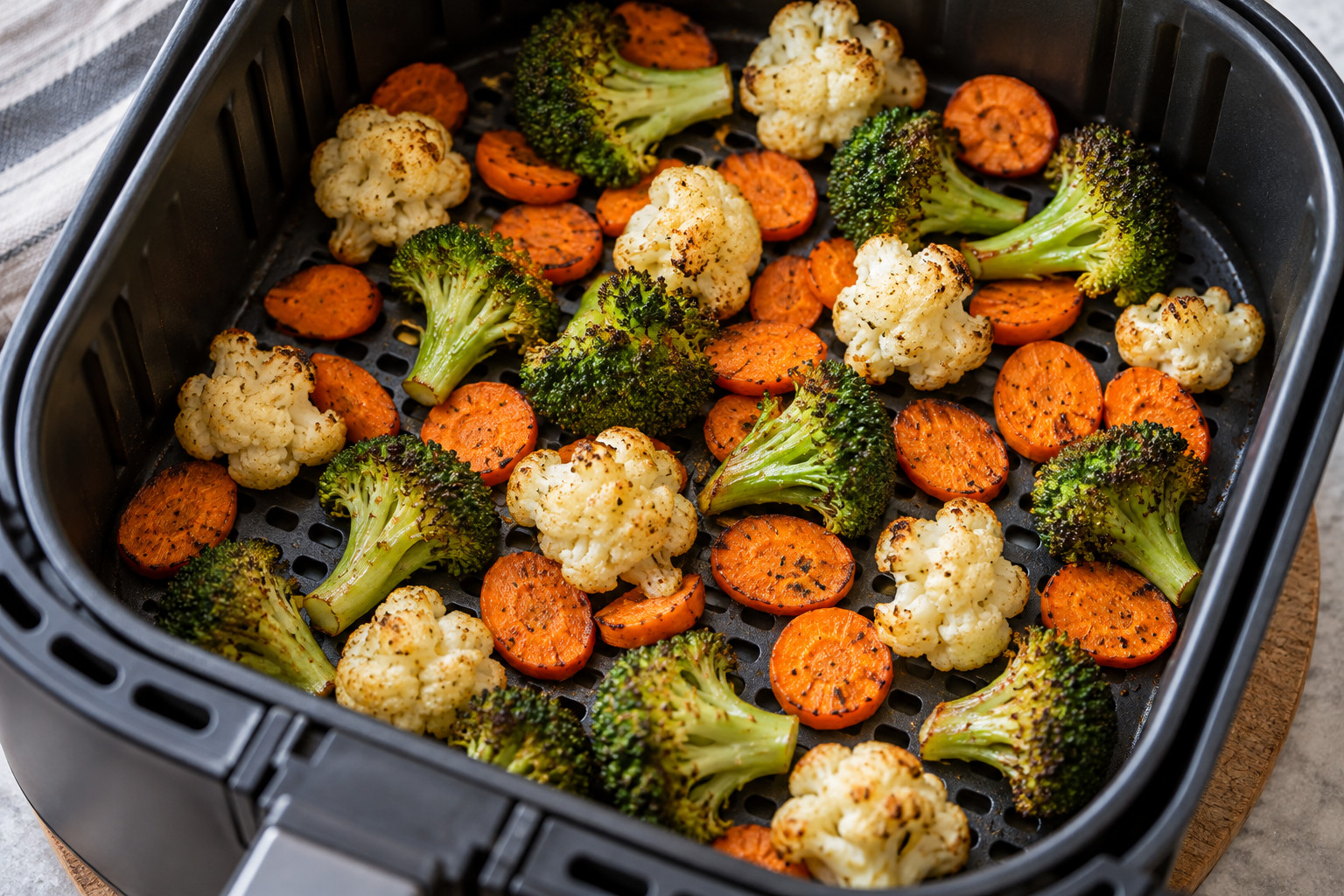
- Season the frozen vegetables. Break apart large frozen clusters. Toss vegetables with their measured oil, garlic powder, salt, and pepper. Place in the basket in a loose layer. A few overlapping florets are manageable, but a deep compact mound will cook more like steamed vegetables.
- Cook the vegetables first. Air-fry for 8 minutes, shake carefully, then continue for another 7–12 minutes, shaking once more if needed. Follow the package directions and check that stems and carrot centers are hot and tender. Browned tips are useful texture cues; do not stop while thick pieces remain cold.
- Prepare the salmon while they cook. Pat thawed salmon dry and cut into 1¼-inch pieces. Toss gently in a separate bowl with its oil, paprika, garlic powder, salt, pepper, and zest. Keep raw fish and its utensils separate from the finished vegetables and the cold sauce.
- Hold the vegetables briefly. Transfer cooked vegetables to a shallow oven-safe dish. If you have an oven available, hold them in a low oven and keep them at 140°F or above. Otherwise, cover loosely for the short fish-cooking stage; they may soften a little. Do not leave them sitting while you perform unrelated tasks.
- Air-fry the fish in one layer. Reduce or set the appliance to 390°F. Place salmon pieces with space around them. Cook for 5 minutes, then check carefully. If the pieces release easily, turn with a thin spatula; delicate pieces can remain unturned. Continue in 1–2-minute increments.
- Use the center temperature. Insert a thin thermometer from the side into the center of several of the largest pieces. Cook to at least 145°F / 63°C. The outside should look opaque and the flakes separate readily, but temperature is the most useful check. Depending on size and model, the salmon may take roughly 7–10 minutes.
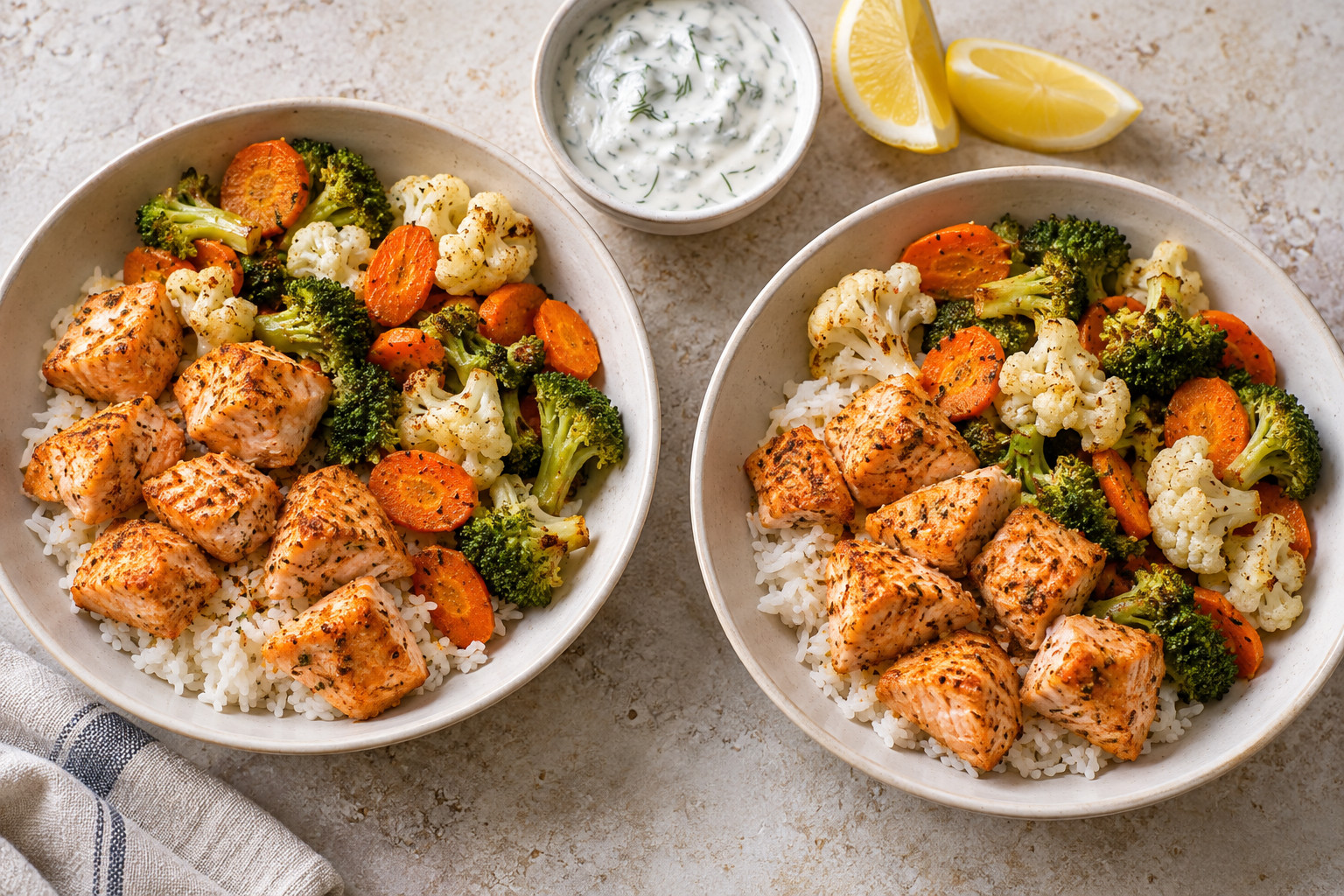
- Mix the sauce and assemble. Stir yogurt, lemon juice, herbs, and enough water for a spoonable sauce. Divide optional hot rice and the vegetables between two plates. Add salmon and spoon the sauce alongside rather than coating every browned surface. Offer lemon wedges at the table.
The important handoff between batches
Shake vegetables; lift the fish
During the vegetable stage, shaking helps turn exposed surfaces and separate florets. Once salmon enters the basket, change to the gentle spatula handling in the method. Cooked salmon separates into flakes; a vigorous shake that works for carrots can scatter small pieces of fish. If a bite does not release easily at the first check, avoid scraping repeatedly at its edges.
Keep the cold sauce ready for serving
Mix the yogurt sauce with clean utensils and keep it refrigerated until the plates are ready. Do not use the spoon or bowl that held raw salmon to stir the sauce. The FDA’s seafood-handling guidance explains the need to keep raw seafood and its utensils separate from ready-to-eat food.
Set the vegetable holding dish and two serving plates in place before starting the fish. This last cooking stage is short enough that searching for plates can distract from the temperature checks. Place the sauce beside the salmon at serving, where diners can add it to individual bites while the remaining browned surfaces stay uncovered.
Fixing soft vegetables or dry salmon
Vegetables are wet: Frozen vegetables release water as their ice melts. Shake the basket to expose new surfaces and avoid crowding it further. If liquid has accumulated in the drawer, stop the appliance and follow the manufacturer’s instructions before carefully emptying it. Do not tip a hot drawer over the basket or your hands.
Vegetable tips are dark but centers are hard: The blend may contain very uneven pieces. Remove tender small florets and continue cooking the larger pieces. For the next batch, choose a more uniform blend or cook thick carrots separately according to the package instructions.
Salmon tastes dry: The pieces may be too small, cooked too long, or packed around a particularly hot section of the basket. Make the next batch slightly larger and check the temperature earlier. A yogurt sauce can add moisture at the table, but it cannot reverse overcooking.
Storage and the next meal
Refrigerate cooked fish, vegetables, rice, and sauce promptly in separate shallow containers. Do so within 2 hours, or within 1 hour when the surrounding temperature exceeds 90°F. Keep the refrigerator at 40°F or below and use cooked leftovers within 3–4 days, following USDA leftover guidance. Fish texture is usually better sooner within that window.
Reheat the fish and vegetables gently in a covered oven-safe dish or microwave until they reach 165°F. The reheating endpoint is higher than the original fish cooking endpoint. Add the refrigerated yogurt sauce after reheating. If making rice, cool and refrigerate it promptly rather than leaving it in a warm serving bowl for hours.
For more help placing the probe and reading fish texture, see the guide to salmon doneness without drying it out. Use the 145°F endpoint given in this recipe when checking the salmon bites.
Flavor options and realistic swaps
Replace sweet paprika with smoked paprika for a warmer flavor. Use parsley instead of dill if that is what you have. To avoid a yogurt sauce, whisk 1 tablespoon olive oil with 1 teaspoon lemon juice and a spoonful of chopped herbs, then serve only a little over each plate.
Cod can replace salmon in similarly sized pieces, although it is more fragile and leaner; turn gently, or leave it undisturbed, and use the same 145°F endpoint. This method does not cover breaded frozen fish, frozen salmon cubes, or fish coated in a thick sugar-based sauce. Those need their own timing and handling instructions.
For four servings, double ingredients and plan separate vegetable and salmon batches. Hold cooked portions safely hot, or serve the first pair of plates while the next batch cooks. Piling twice as much fish into the basket creates uneven cooking and makes reliable temperature checks harder.
Frequently asked questions
Can everything cook together?
Not reliably with this combination. Frozen vegetables need longer to thaw and soften than small salmon cubes need to cook. Separate stages let you adjust each ingredient without overcooking the fish.
Do I thaw the salmon?
Yes. Thaw it safely in the refrigerator first. Follow package directions for vacuum-packed fish, including any instruction to remove it from its packaging before thawing. The recipe timing assumes thawed fish.
Must I remove the skin?
Skinless fish is easiest for uniformly shaped bites. You can ask the fish counter to remove the skin. Skin-on cubes behave differently when turned and may leave chewy sections underneath, so they are not the preferred choice here.
Can I use a silicone liner?
Use one only if approved for your appliance. A solid liner reduces airflow under the food and catches water, so vegetables may be softer. Watch texture and cooking progress rather than expecting the same result as the bare perforated basket.
How do I know if my basket is too full?
You should see space between salmon pieces, and each should touch the cooking surface. If they overlap or need to be stacked, split the fish into batches and account for the additional time.
Can I prepare the salmon ahead?
For air fryer salmon bites with frozen vegetables, cut the thawed salmon and refrigerate it covered until you are ready to cook. Keep it separate from the sauce and cooked vegetables. Add the oil and seasonings shortly before the fish goes into the basket, and cook within the product’s safe refrigerated storage period.
A more organized finish for air fryer salmon bites with frozen vegetables
The final few minutes of air fryer salmon bites with frozen vegetables involve several small decisions: where to put a hot basket, which piece to check first, and how to divide food without losing the contrast between browned fish and creamy sauce. Set up those decisions before the salmon cooks. A clear landing space and a clean serving utensil matter more here than adding another garnish or changing the seasoning.
Make a small seasoning station
Measure the vegetable seasonings and fish seasonings into separate small dishes before handling the salmon. The recipe deliberately gives each component its own oil and salt allowance. Keeping those portions apart prevents accidentally using all the oil on the first batch or seasoning the vegetables with a spoon that has touched raw fish. Put the yogurt, herb, and lemon ingredients on the clean side of the work surface.
Zest the lemon before cutting it for juice and wedges. Rotate it as you grate so you collect the colored outer peel without repeatedly scraping the same pale patch. Stir the measured zest through the fish seasoning bowl rather than dropping it onto just one cube. A broad bowl helps distribute this small amount without requiring vigorous tossing that could damage the edges of the salmon.
Give the thermometer an accessible piece
When arranging the salmon, place a few of the larger pieces where you can reach their sides with the probe. Do not assume the piece nearest the handle represents the whole basket. Check more than one area, especially if some pieces are noticeably thicker. Remove the basket to a stable, heat-resistant landing place according to the appliance instructions so you can work carefully without reaching into an operating fryer.
Support a piece gently with the spatula if it moves as the thermometer enters. Keep the sensing portion in the flesh rather than touching the metal basket or pointing through into empty space. Wait for the reading to settle before deciding whether the piece is finished. The safe minimum temperature chart gives fish a 145°F endpoint; a browned coating alone cannot establish the center temperature.
If one checked piece is ready and another is below that endpoint, transfer the finished piece to a clean plate and return the underdone fish for the next short interval. Avoid repeatedly putting cooked fish into the bowl that held it raw. Small differences between pieces are manageable when you treat the first temperature check as a chance to sort them, rather than a signal to empty the entire basket immediately.
Build two plates with deliberate contrast
Divide the vegetables before distributing the salmon so each plate gets a similar mixture of florets and carrots. If serving rice, spread it in a modest layer instead of a tall mound that makes the fish difficult to arrange. Leave the upper surfaces of the salmon exposed, and place the yogurt beside them. This lets someone dip a bite without covering every piece with a cool, wet topping.
Taste a forkful containing fish and vegetables before adding the lemon wedge. The zest, yogurt sauce, and final squeeze contribute different amounts of citrus, so the diner can decide how much brightness the plate needs. If serving without rice, use the same measured recipe portions and offer another separately prepared side if desired. The cooking order, basket spacing, and temperature checks stay the same regardless of what accompanies the meal.
Air Fryer Salmon Bites with Frozen Vegetables for Two
Ingredients
Equipment
Method
- Prepare the appliance safely. Check that the basket is clean and that the air fryer sits on a heat-resistant surface with the manufacturer's required clearance. Preheat to 390°F / 200°C if your model calls for preheating. Do not place loose parchment in an empty operating basket.
- Season the frozen vegetables. Break apart large frozen clusters. Toss vegetables with their measured oil, garlic powder, salt, and pepper. Place in the basket in a loose layer. A few overlapping florets are manageable, but a deep compact mound will cook more like steamed vegetables.
- Cook the vegetables first. Air-fry for 8 minutes, shake carefully, then continue for another 7–12 minutes, shaking once more if needed. Follow the package directions and check that stems and carrot centers are hot and tender. Browned tips are useful texture cues; do not stop while thick pieces remain cold.
- Prepare the salmon while they cook. Pat thawed salmon dry and cut into 1¼-inch pieces. Toss gently in a separate bowl with its oil, paprika, garlic powder, salt, pepper, and zest. Keep raw fish and its utensils separate from the finished vegetables and the cold sauce.
- Hold the vegetables briefly. Transfer cooked vegetables to a shallow oven-safe dish. If you have an oven available, hold them in a low oven and keep them at 140°F or above. Otherwise, cover loosely for the short fish-cooking stage; they may soften a little. Do not leave them sitting while you perform unrelated tasks.
- Air-fry the fish in one layer. Reduce or set the appliance to 390°F. Place salmon pieces with space around them. Cook for 5 minutes, then check carefully. If the pieces release easily, turn with a thin spatula; delicate pieces can remain unturned. Continue in 1–2-minute increments.
- Use the center temperature. Insert a thin thermometer from the side into the center of several of the largest pieces. Cook to at least 145°F / 63°C. The outside should look opaque and the flakes separate readily, but temperature is the most useful check. Depending on size and model, the salmon may take roughly 7–10 minutes.
- Mix the sauce and assemble. Stir yogurt, lemon juice, herbs, and enough water for a spoonable sauce. Divide optional hot rice and the vegetables between two plates. Add salmon and spoon the sauce alongside rather than coating every browned surface. Offer lemon wedges at the table.