The autumn pantry · Five ground spices
How to make your own pumpkin spice: combine cinnamon, ginger, nutmeg, allspice, and cloves, whisk until evenly blended, and spoon into a dry jar. In about five minutes, you have a small batch ready for oatmeal, autumn baking, and a gentle dusting over your favorite warm drink.
The recipe below keeps cinnamon at the center, with smaller amounts of the stronger spices supporting it. You do not need a grinder, a saucepan, or a long shopping list. The useful details are in the measuring, mixing, and knowing how much to add to another recipe. Start with this straightforward blend, then adjust a future batch to suit the way your family cooks.
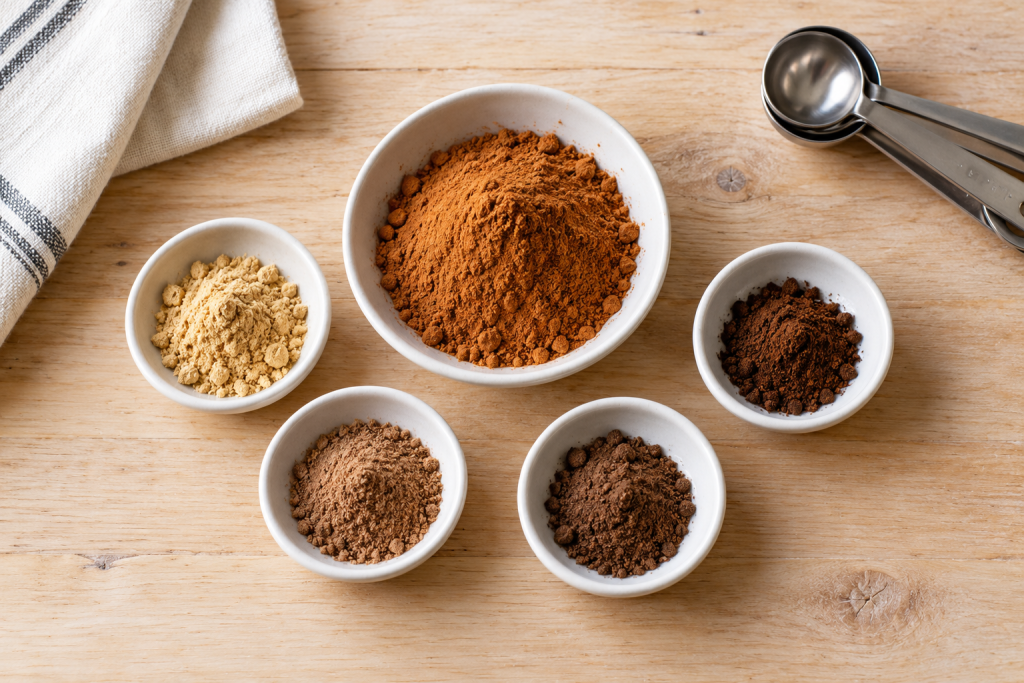
PREP 5 MINUTES · NO COOKING · MAKES ABOUT 5 TABLESPOONS
Your five-minute recipe
Whisk 3 tablespoons cinnamon, 2 teaspoons ginger, 2 teaspoons nutmeg, 1 teaspoon allspice, and 1 teaspoon cloves, all ground. Break up any clumps and transfer the mixture to an airtight jar. Use the quantity of pumpkin pie spice requested in your baking recipe.
This is an unsweetened dry seasoning made from five ground spices. It contains no pumpkin, added sugar, milk, or syrup.
Measure once. Bake all season.
Gather the ingredients
- 3 tablespoons ground cinnamon
- 2 teaspoons ground ginger
- 2 teaspoons ground nutmeg
- 1 teaspoon ground allspice
- 1 teaspoon ground cloves
You will also need measuring spoons, a small dry bowl, a whisk or fork, and a clean jar with a tight-fitting lid. A small funnel is helpful for a narrow jar; a folded piece of clean parchment can guide the powder, too.
If you only have a teaspoon measure, use nine level teaspoons of cinnamon. Use US measuring spoons rather than table cutlery, which can hold different amounts. There is no need to guess tiny spice weights on a kitchen scale.
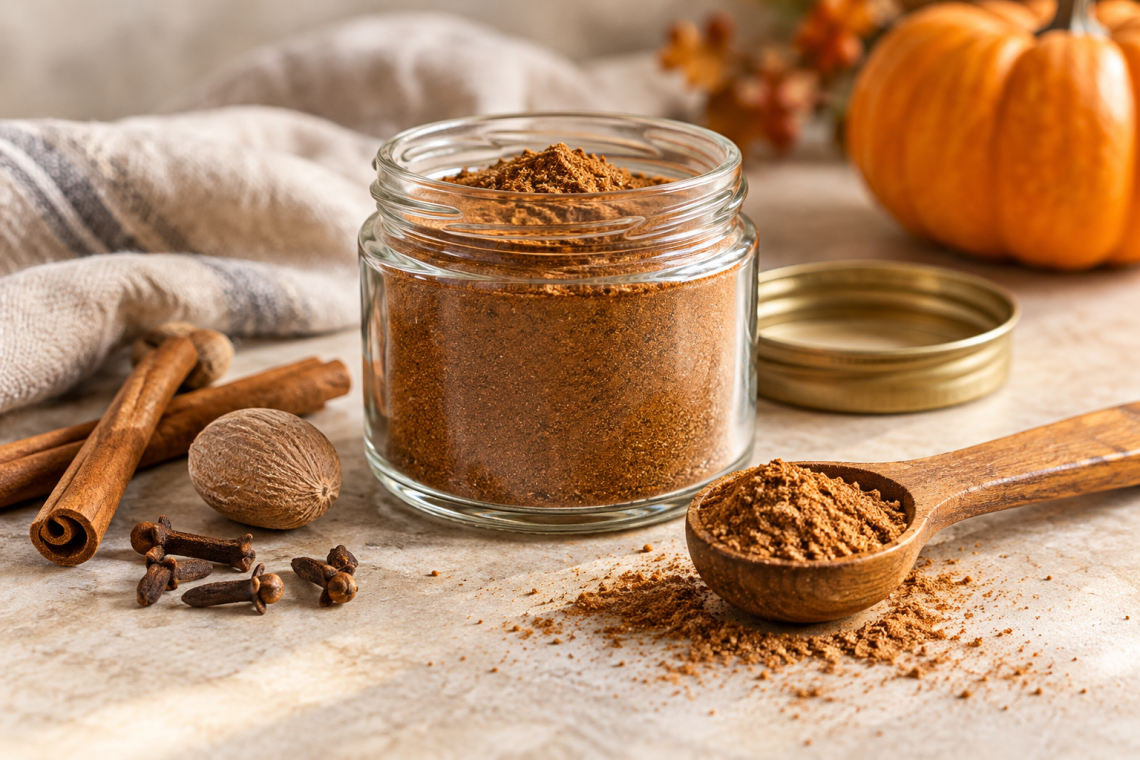
Use ground spices for this recipe. Cinnamon sticks, whole cloves, and whole nutmeg may look lovely beside a jar, but they need grinding before they can become part of the mixture.
The flavor of each spice
Pumpkin spice is a collection of warm baking spices, and recipes vary. King Arthur Baking explains that the blend contains no pumpkin. The name describes its familiar use with pumpkin dishes; the spice itself does not add the moisture or body of pumpkin purée.
- Cinnamon
- The largest part of this recipe gives the blend its familiar woody, sweet-smelling foundation. Its aroma may suggest sweetness, but the finished seasoning is still unsweetened.
- Ginger
- Ground ginger adds a sharper, warming edge. Mix it carefully because little compacted pieces can remain hidden among the darker spices.
- Nutmeg
- Nutmeg brings a rounded, aromatic note that works especially well with creamy foods. Here it supports the cinnamon instead of taking over the whole jar.
- Allspice
- Despite its name, allspice is one spice made from dried berries. It has a complex flavor reminiscent of several baking spices; it is not another name for pumpkin spice.
- Cloves
- Cloves add a deep, assertive finish. Measure this ingredient with particular care: a heaped spoon changes the character of the mixture more than you might expect.
For more background, see McCormick’s guide to pumpkin pie spice ingredients.
How to make your own pumpkin spice, step by step
There is no cooking stage to judge. Your goal is an evenly colored, loose powder with no stubborn lumps and no pale streaks of ginger hiding at the bottom.
Check the spices and dry your equipment
Open each spice jar and check that it still has a recognizable aroma. A nearly scentless jar will contribute little flavor to the blend. Make sure the mixing bowl, spoons, and storage jar are completely dry, including the inside of the lid. If you have just washed the jar, let it dry fully before you begin.
Measure carefully, starting with cinnamon
Measure the cinnamon into the bowl first, then add the ginger, nutmeg, allspice, and cloves. Level each spoon with a straight edge; do not pack the powder down. Pay particular attention to the units: cinnamon uses tablespoons, while every other ingredient uses teaspoons. One US tablespoon equals three teaspoons.
Break up lumps, then whisk thoroughly
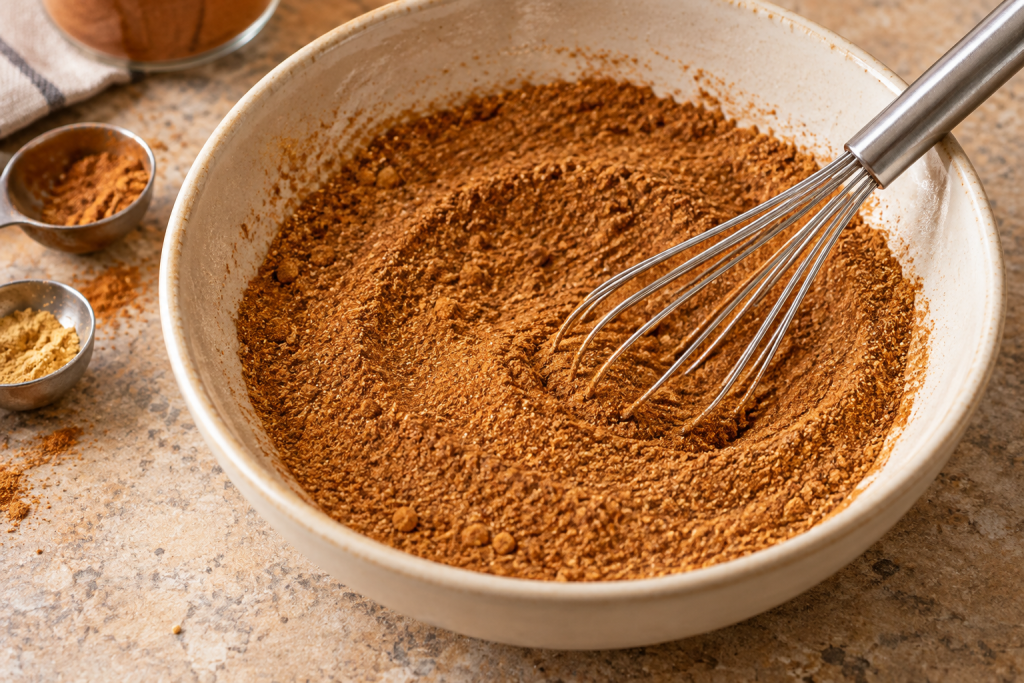
Press any small clumps against the bowl with the back of a spoon. Whisk slowly at first so the fine powder stays in the bowl. Work around the sides and across the bottom, then stir through the center. Continue until the mixture looks uniform. If a dry clump resists, press it through a fine sieve and stir it back in.
Fill, label, and put away
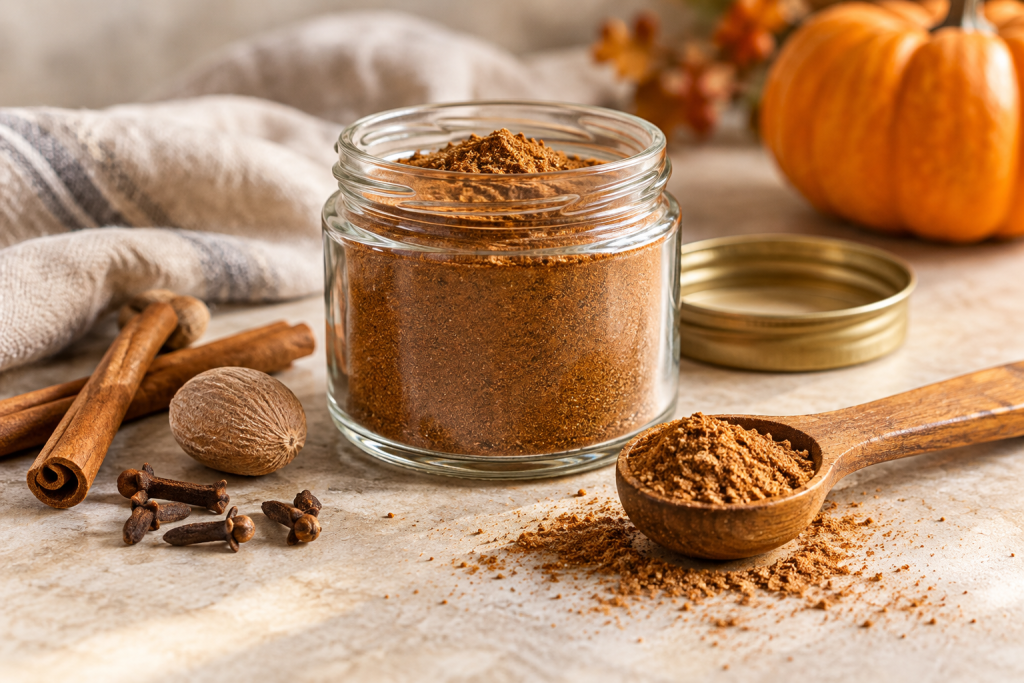
Transfer the blend to the jar, leaving enough headroom to give it a gentle shake. A jar with approximately 4 fluid ounces of capacity is a practical size for this batch. Close the lid, label it with the name and mixing date, and store it in a dry cupboard. If the mixture settles between uses, shake the closed jar before measuring.
A little jar or a bigger batch
Make the half batch if you only need seasoning for a few recipes. Choose the double batch if you bake frequently or want to divide it between two jars. Multiply every ingredient together; increasing only the cinnamon changes the blend.
| Ingredient | Half batch | Standard batch | Double batch |
|---|---|---|---|
| Cinnamon | 1 tbsp + 1½ tsp | 3 tbsp | 6 tbsp |
| Ginger | 1 tsp | 2 tsp | 4 tsp |
| Nutmeg | 1 tsp | 2 tsp | 4 tsp |
| Allspice | ½ tsp | 1 tsp | 2 tsp |
| Cloves | ½ tsp | 1 tsp | 2 tsp |
| Approximate yield | 2½ tbsp | 5 tbsp | 10 tbsp |
Measuring check: the standard batch totals 15 teaspoons, equivalent to 5 tablespoons or ¼ cup plus 1 tablespoon. The finished powder can settle, so its appearance in the jar may vary.
If you are dividing a double batch between jars, whisk everything together in one bowl first. Spoon a little into each jar in turn, then finish filling them. Label gift jars with all five ingredients as well as the mixing date, and include a reminder that the mixture is unsweetened. Keep a note of any flavor adjustment you made.
Make the jar suit your kitchen
For a gentler clove flavor: reduce the ground cloves to ½ teaspoon and add another ½ teaspoon cinnamon. The measured total stays the same. This gives you a clear, repeatable adjustment instead of trying to correct the jar with several unmeasured pinches.
If you are missing allspice or cloves: leave out the missing ingredient and make a simpler blend. Omitting either one reduces the batch to about 4 tablespoons plus 2 teaspoons. Do not replace an entire teaspoon of allspice with an extra teaspoon of cloves; the flavor will be much more clove-forward.
Keep wet ingredients separate. Fresh ginger, pumpkin purée, maple syrup, and liquid vanilla belong in the food you are making, not in this dry storage blend. Add those ingredients only when a separate recipe calls for them.
Accidentally measured 2 teaspoons of cloves? If you know that was the only measuring error, make another complete batch without its cloves, then combine both mixtures. You will have twice the intended amount of every spice and about 10 tablespoons of finished blend. Adding only more cinnamon would produce a different balance.
Use a little at a time
These are gentle starting amounts for prepared foods, not fixed serving rules. Stir well, taste, and increase gradually. For an existing baking recipe, follow its seasoning quantity instead.
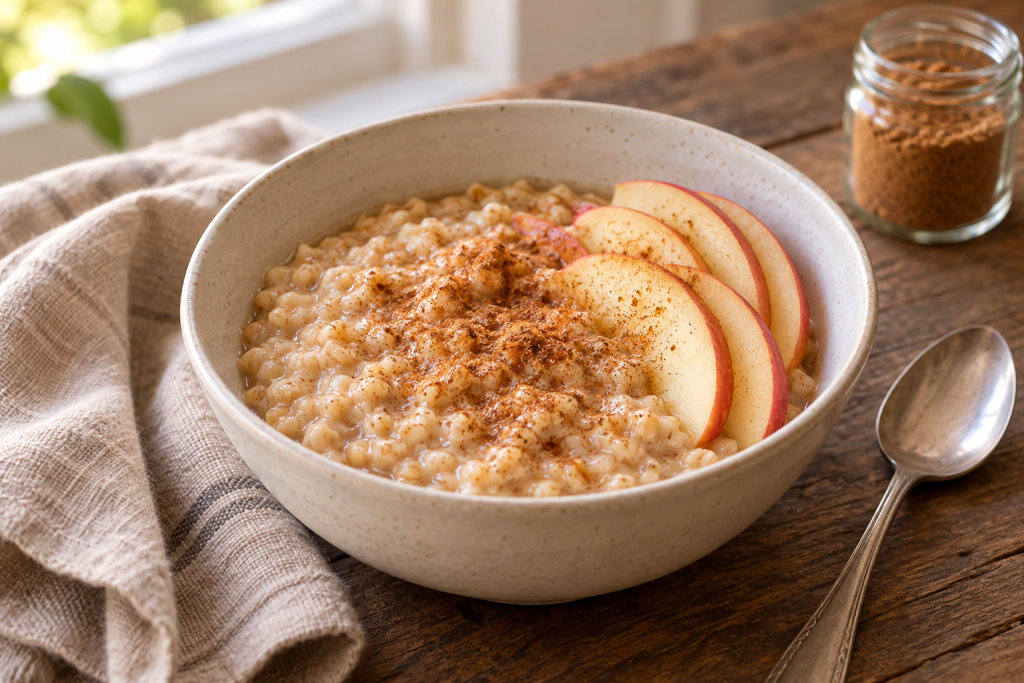
- Cooked oatmeal: start with ⅛ teaspoon per bowl. Stir it through the warm oats before adding more; try up to ¼ teaspoon if you want a stronger flavor.
- Plain yogurt: begin with ⅛ teaspoon for ¾ to 1 cup. Add your usual fruit or sweetener separately so you can adjust the two flavors independently.
- Smoothies: blend ⅛ to ¼ teaspoon into one serving, then taste. A banana or pumpkin base gives the spices something mellow to work with.
- Spiced sugar: mix ½ teaspoon into ¼ cup granulated sugar. Sprinkle a little over buttered toast, or use it as a topping where your recipe calls for cinnamon sugar.
- Warm drinks: try a light dusting over foamed milk. Ground spices can leave particles, so expect a different texture from a flavored syrup.
Adding it to a baking recipe
If your recipe requests 2 teaspoons of pumpkin pie spice, measure 2 teaspoons of this mixture. Add it at the stage specified, usually alongside the other dry ingredients. Do not add the full jar to one recipe: the batch is a pantry supply for several uses.
Replacing separately measured cinnamon, ginger, nutmeg, and cloves takes more judgment because their proportions may differ from this blend. If you choose to do that, total the original spice measurements and use that amount as a starting point; expect the flavor to change. Never count baking powder, baking soda, or salt in that total. Keep those ingredients exactly as the baking recipe directs.
For more breakfast inspiration, explore our small-batch pumpkin walnut breakfast cookies and banana oat pancakes without eggs or milk. Follow the ingredient directions in each recipe.
Keep the flavor in the jar
Store the blend tightly closed in a cool, dry cupboard away from the stove and direct sunlight. Use a dry spoon, and measure beside the cooking area rather than shaking the open jar directly over a steaming pan. Close the lid promptly after each use.
The age of your ingredients matters more than the day you mix them. Record the mixing date and the earliest best-before date from the original jars. Combining older spices does not give them a fresh shelf life. McCormick’s storage guidance emphasizes protecting spices from heat and light and watching their flavor over time.
Make an amount you expect to use regularly. Check the aroma before an important baking project, especially if the jar has been sitting for months. If the blend has become weak, start again with fresher spices instead of pouring large extra quantities into a carefully balanced recipe.
Questions from the pantry
A few useful answers
Is pumpkin spice the same as pumpkin pie spice?
When the words describe a dry baking-spice blend, generally yes. Check the package, because similarly named syrups, sweetened drink mixes, extracts, and finishing sugars are different products.
Can I use this instead of a store-bought blend?
Use the same quantity of dry pumpkin pie spice requested by the recipe. Sally’s Baking gives the same substitution guidance for homemade pumpkin pie spice. Expect some flavor variation because blends use different proportions. If the recipe also lists extra cinnamon, keep that separate cinnamon measurement.
Can I leave the sugar out?
There is no sugar to remove from this recipe. The spices smell sweet, but they do not sweeten oatmeal, coffee, or batter. Add sugar, honey, or another sweetener only as needed in the food you are preparing.
Can this replace canned pumpkin pie filling?
No. This blend supplies seasoning only. Canned pumpkin pie filling supplies pumpkin, sweetness, and other ingredients, while plain pumpkin purée supplies the pumpkin itself. Keep using the pumpkin product requested by your recipe and add this blend only for the spice portion.
Do I need to toast the spices?
No. This recipe simply combines ground spices. You can use the mixture as soon as it is evenly blended, without heating it or waiting overnight.
Why does my mixture look streaky?
The spices have not dispersed evenly, or a few clumps remain. Empty the jar into a dry bowl, break up the clumps, and whisk again. Pay attention to the bowl’s edges and bottom before returning the mixture to its container.
What if the flavor is too strong in my oatmeal?
Stir in more plain cooked oatmeal to dilute the seasoning. Adding sugar may make it sweeter without fixing the amount of spice. Next time, begin with a smaller pinch and taste before adding another.
Knowing how to make your own pumpkin spice turns a few familiar pantry ingredients into a convenient seasoning you can measure and adjust. Keep the jar dry, start lightly, and let the food you are making guide the final amount.
Yield: 15 teaspoons
MIX, MEASURE & KEEP
Homemade Pumpkin Spice
Ingredients
- 3 tablespoons ground cinnamon
- 2 teaspoons ground ginger
- 2 teaspoons ground nutmeg
- 1 teaspoon ground allspice
- 1 teaspoon ground cloves
Instructions
- Check the spices and dry the equipment Use fragrant ground spices. Make sure the mixing bowl, measuring spoons, storage jar, and inside of the lid are completely dry.
- Measure Measure 3 level tablespoons cinnamon into the bowl, then add the ginger, nutmeg, allspice, and cloves in their listed teaspoon amounts. Do not pack the spices into the spoons.
- Whisk evenly Break up small dry clumps with the back of a spoon, then whisk slowly until the mixture has an even color. Scrape the bottom and sides so no pockets of ginger or other spices remain.
- Transfer and label Spoon into an airtight jar, leaving room for a gentle shake. A jar with about 4 fluid ounces of capacity is a practical size. Label with the blend name, all five ingredients, mixing date, and earliest best-before date from the starting spices. Shake the closed jar before measuring; use the amount of dry pumpkin pie spice specified in the recipe you are making.
Equipment
- US measuring spoons
- Small dry mixing bowl
- Whisk or fork
- Clean, completely dry airtight jar, about 4 fluid ounces capacity
- Small funnel, optional
Notes
Rate This Recipe
Made this recipe? Choose a star rating in the comment form and share how it turned out. Your cooking time and any ingredient changes can help the next reader.
Rate This Recipe