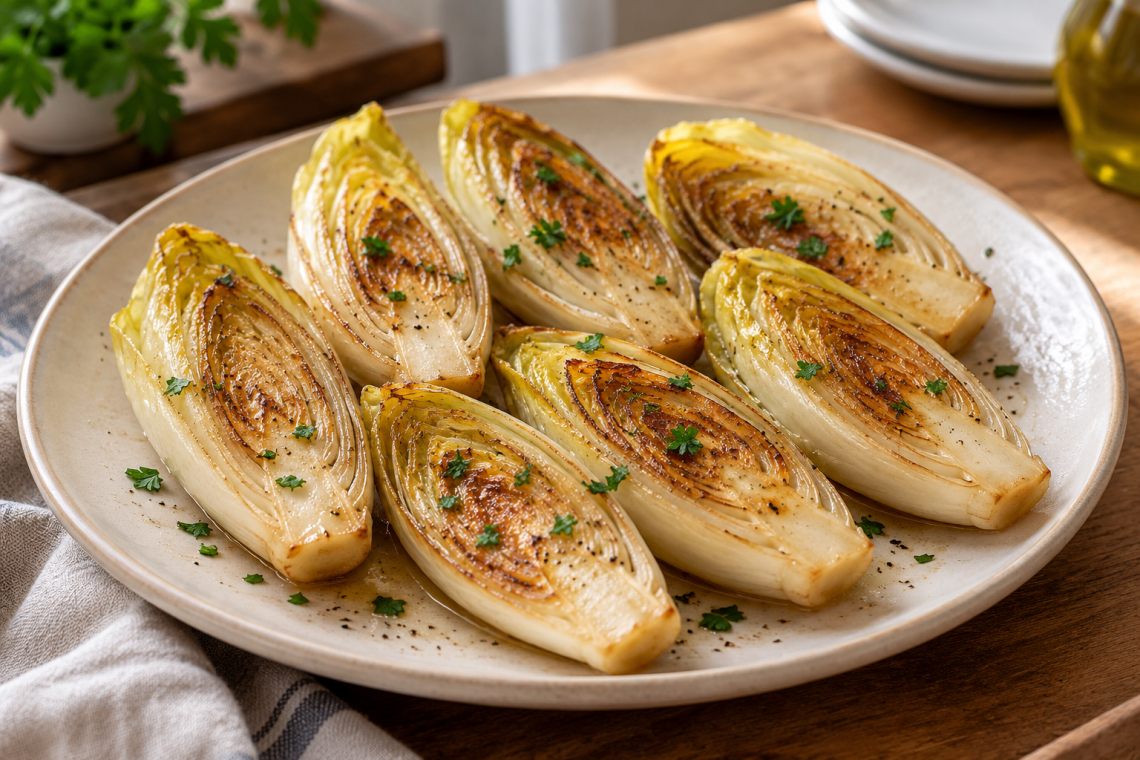
Pan seared Belgian endive without wine is an easy skillet side with golden cut surfaces, tender centers, and a bright lemon-parsley finish. A small splash of water helps the thick bases soften after searing. Allow about 20 minutes for one uncrowded batch, and serve two halves per person alongside your main dish.
Belgian endive has a pleasantly bitter edge. Browning adds a toasted note, while the lemon brings a fresh finish. If you prefer a little sweetness, mix the optional teaspoon of honey into the lemon juice. The guide below shows how to keep the halves intact, judge tenderness, and adjust for your pan.
Pan seared Belgian endive without wine: quick guide
Prep: 8 minutes · Cook: about 12 minutes · Serves: 4 as a side
- Dry and sear. Keep the base attached, dry the cut sides, and give each half flat contact with the skillet. Sear cut-side down for 4–5 minutes.
- Turn and soften. Add 2 tablespoons water around the edges, cover, and cook over medium-low for 3–5 minutes. Check the thick base with a small knife.
- Finish off the heat. Let excess water evaporate, then add the measured lemon juice, optional honey, parsley, pepper, and remaining salt to taste.
Use the cues as well as the clock: aim for golden to light-brown patches and a base that yields with a little resistance. Larger heads and separate batches need extra time.
Choose compact heads and keep the base intact
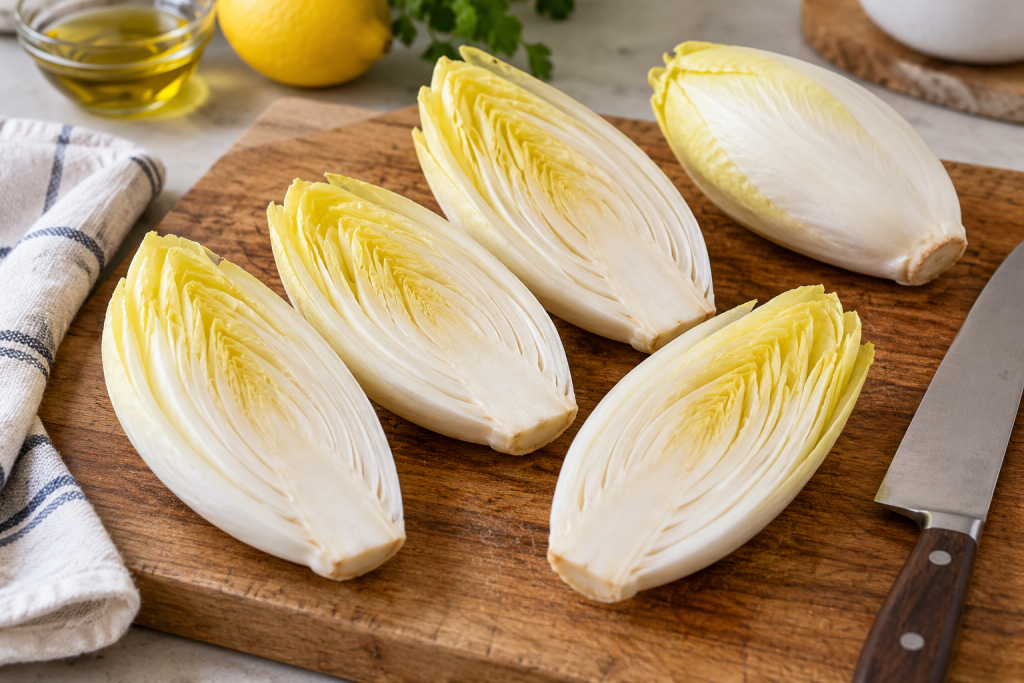
Use the pale, tightly packed, torpedo-shaped vegetable sold as Belgian endive. Curly green endive is a different form and will not make the same seared halves. Choose firm heads of similar thickness, with closed cream-yellow tips. Remove damaged outer leaves, then rinse and dry the heads before cutting.
For white Belgian endive, avoid heads with obvious greening or badly torn leaves. UC Davis describes compact, pale heads as a quality cue and notes that exposure to light causes greening. Keep unused heads refrigerated and protected from light. Red Belgian endive is a separate color form and can also be used here.
Slice each head lengthwise through the base so both halves retain a portion of it. Trim only a thin, dry slice from the very bottom when necessary. Removing a large cone of the core can release the leaves and make the halves difficult to turn. California Endive Farms notes that the core can stay in cooked dishes; it softens during cooking.
Best pan for pan seared Belgian endive without wine
Start with a 12-inch skillet and a lid. The usable flat surface matters more than the size printed on the pan: every half needs to rest cut-side down without overlapping. A heavy skillet or a nonstick skillet can work; watch the browning and adjust the heat to your pan. Have a thin spatula ready to support the halves as you turn them.
If four bulky heads will not fit, use two skillets or cook separate batches. Crowding traps moisture around the vegetables and makes browning harder. For a smaller batch, use a smaller lidded skillet so the modest amount of water can create useful steam. Keep the heat at medium for the sear, lowering it if the thin tips darken before the flat faces are golden.
Cooking for more people?
For eight side servings, use 8 medium heads and double the ingredients. Divide everything between two wide skillets, or cook two complete batches in one pan. With two batches of four heads, each batch gets 1 tablespoon oil and 2 tablespoons water for the covered stage. Divide the lemon finish and seasonings too. Allow extra time if using one skillet.
Measure the water and lemon mixture before you start, and keep the lid beside the stove. Once the endive is browned, you can move straight into the covered stage without leaving the pan unattended while you measure.
Pan seared Belgian endive without wine
Yield: 4 side servings, 2 halves each. Prep: 8 minutes. Cook: about 12 minutes. Total: about 20 minutes. Large heads may need a longer covered finish.
Ingredients
- 4 medium Belgian endive heads, about 1 pound (450 g) total
- 1 tablespoon olive oil
- 1/4 teaspoon fine salt, divided
- 1/8 teaspoon freshly ground black pepper
- 2 tablespoons water, plus 1 tablespoon more if needed
- 1 tablespoon lemon juice
- 1 teaspoon honey, optional
- 1 tablespoon finely chopped flat-leaf parsley
Equipment
- 12-inch skillet with a lid
- Cutting board and a sharp knife
- Thin spatula or tongs
- Small bowl and measuring spoons
Before you start
Pat the endive dry, measure the 2 tablespoons water, and mix the lemon juice with the optional honey. Reserve half the measured salt for the finish.
Portion guide: Four medium heads, about 1 pound (450 g) total, make eight halves. Head sizes vary, so the weight is approximate.
Method
- Prepare the halves. Remove any damaged outer leaves, rinse the endive, and dry it thoroughly. Halve lengthwise through the base. Pat the flat sides dry once more. Mix the lemon juice with the honey, if using, in a small bowl.
- Warm the skillet. Heat the skillet over medium heat for about 1 minute, then add the oil. Tilt the pan to spread it across the cooking surface. Let it warm until the oil moves readily without smoking.
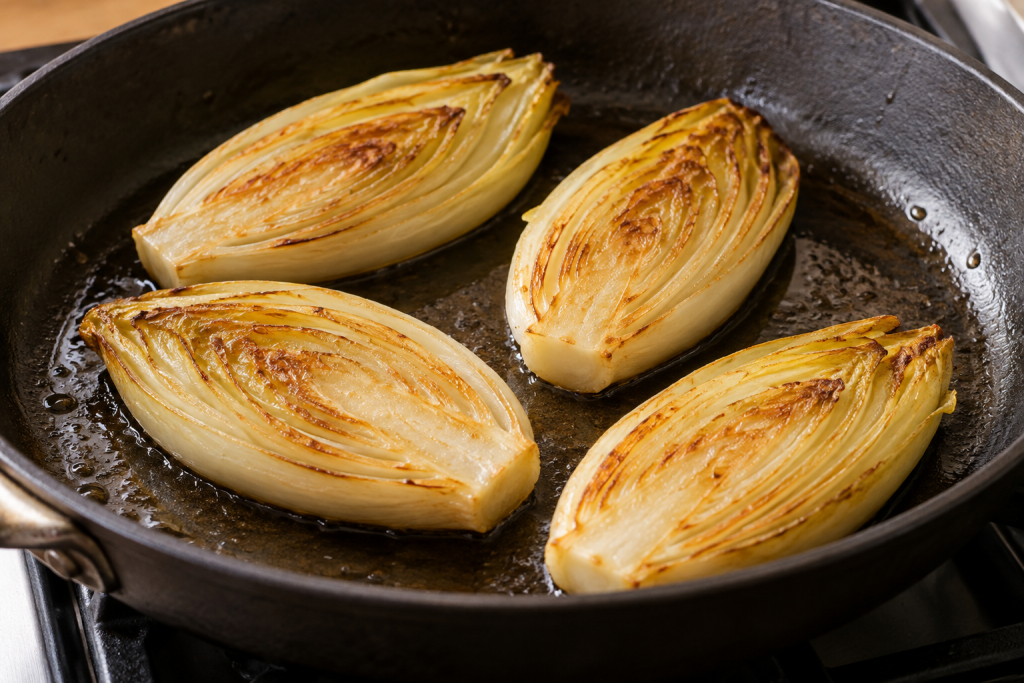
- Sear without shuffling. Place the endive cut-side down in a single layer. Sprinkle the exposed rounded sides with half the salt. Cook for 4–5 minutes, checking one half after 3 minutes. The flat sides should show golden to light brown patches; lower the heat if the thin tips darken too quickly.
- Turn and cover. Turn each half carefully, keeping its leaves together. Add 2 tablespoons water around the sides of the skillet, then cover immediately. Reduce the heat to medium-low and cook for 3–5 minutes. Keep the lid angled away from you when opening it.
- Check the base. Insert the tip of a small knife into the thick part near the base. It should enter easily with a little remaining resistance. For a softer center, add another tablespoon water if the pan is dry, cover, and cook for 2 minutes more.
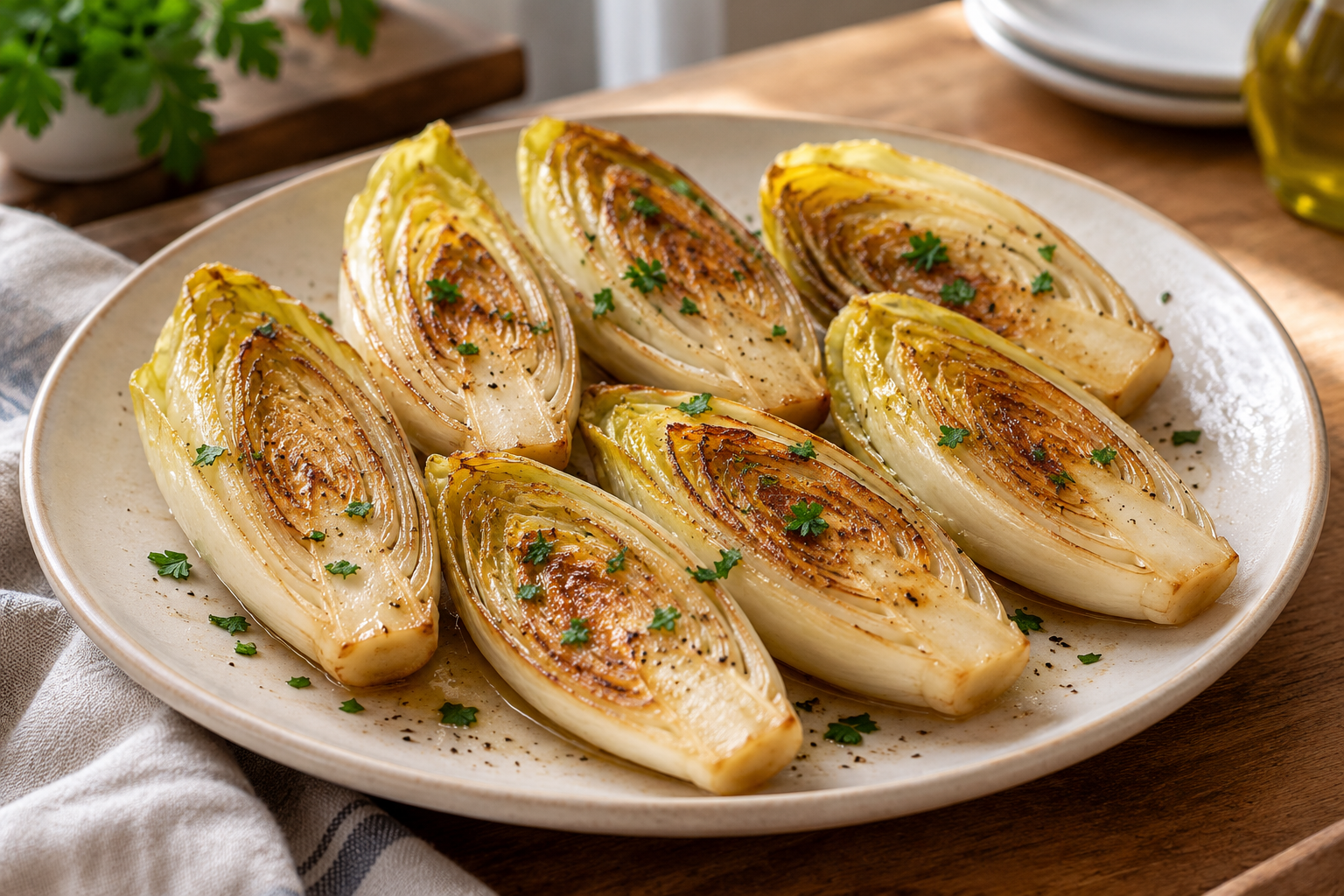
- Finish and serve. Uncover and let any excess water evaporate for 30–60 seconds. Remove the skillet from the heat. Spoon the lemon mixture over the halves, add the parsley, pepper, and remaining salt as needed, and transfer to a shallow serving plate.
A quick choice: tender or tender-crisp?
| Your preference | What to look for | How to finish |
|---|---|---|
| Tender-crisp center | Knife enters with a little resistance | Start checking after 3 minutes under the lid. |
| Softer center | Knife slides into the thick base easily | Add 1 tablespoon water if the pan is dry, cover, and check again after about 2 minutes. |
| Very soft loose leaves | Leaves slump away from the base | Remove from the heat; further cooking will not restore structure. |
The browning stage and the tenderness stage solve different problems. Leave the cut side still while it colors, then use a small amount of steam to reach the base. If you keep increasing the heat to soften a thick head, the outside can become too dark before the middle is ready.
A simple lemon finish, with room to taste
Start with the measured tablespoon of lemon rather than squeezing directly over the pan. Endive brings its own bitterness, and too much acid can make a small side seem more forceful than intended. Taste a small outer leaf with a little dressing before making any adjustment to the whole pan.
Honey is optional because sweetness is a preference here, not a requirement for the cooking method. If using it, stir it into the lemon so it distributes evenly. A sticky drizzle over one endive half can create a very sweet bite beside several undressed ones. For a version without honey, simply omit it rather than replacing it automatically.
The parsley should look like a light scattering. Wash and dry it before chopping, and wash the endive before cutting it. The FDA produce guidance recommends running water and clean preparation surfaces, not soap or detergent on vegetables. Drying afterward also helps the endive make useful contact with the skillet.
Why water works instead of wine
This version of pan seared Belgian endive without wine uses plain water to create steam and lemon juice to finish the dish. The first stage browns the dry cut surfaces; the covered stage helps the thick bases soften. Add only the measured splash of water. A large pour of broth or juice would turn this into a wetter dish and soften the browned surfaces further.
If you have unsalted vegetable broth and prefer its flavor, use 2 tablespoons in place of the water. Keep the lemon for the end and taste the pan juices before adding the last pinch of salt. Apple juice is a less neutral swap because it adds sweetness; use the water version first if you want the flavor of the endive to remain clear.
Substitutions and small variations
- No parsley: Use 2 teaspoons chopped chives, or leave out the herb. A large handful of a stronger herb can take over this small portion.
- Butter finish: Swirl 1 teaspoon unsalted butter into the warm pan after turning off the heat, before adding the lemon. Keep the searing oil as written.
- Red Belgian endive: Use the same method, checking the base rather than relying on color alone. Its leaves may look darker after searing.
- Extra crunch: Add 1 tablespoon chopped toasted walnuts at the table if desired. Keep them separate for anyone who does not eat nuts; they are not part of the base formula.
Troubleshooting the skillet
The endive sticks: Let the first side cook a little longer before attempting to turn it, then work a thin spatula under the surface. Pulling upward on the tips can separate the leaves. A properly oiled pan and dry cut sides make turning easier, but avoid forcing a piece that has not released.
The tips are dark while the base is hard: Reduce the heat and move directly to the covered-water stage. Very high heat is not necessary. On the next batch, use heads closer in size or place the thickest pieces over the warmer part of the pan.
The finished side is watery: Lift the endive to a plate and briefly evaporate the excess liquid before spooning a little over it. Do not keep cooking tender halves just to dry the pan. Use a shallow serving dish so the vegetables are not submerged.
The flavor is more bitter than expected: Add the optional honey to the lemon mixture or serve a smaller portion with a mild main dish. Endive naturally has this flavor; further browning until black would add another unpleasant note rather than removing it.
What to serve with the endive
The halves look tidy beside pork tenderloin cooked to the right temperature or cod cooked without drying it out. Spoon any pan juices under or beside the endive so the browned faces remain visible. A plain potato or rice side can balance a plate that already includes a sharp sauce.
Storage, make-ahead and reheating
Refrigerate leftovers in a shallow container within 2 hours of cooking, or within 1 hour in temperatures above 90°F. Keep the refrigerator at 40°F or below and use within 3–4 days. Reheat to 165°F throughout. These limits follow USDA leftover guidance.
A small covered skillet with a tablespoon of water reheats the halves more gently than a long uncovered sear. The leaves will be softer after storage, so treat leftovers as a tender vegetable side rather than expecting the original surface texture. Add fresh parsley after reheating if you have it.
Frequently asked questions
Do I have to remove the whole core?
No. Keep enough of the base to hold each half together. Trim only a dry bottom edge and remove damaged material. If you dislike the thickest part after cooking, leave that small portion on the plate.
Can I quarter very large heads?
Yes, cutting through the base so each quarter stays together. The smaller pieces may soften faster, so start checking early. Turn carefully because narrow quarters have less structure than halves.
Can pan seared Belgian endive without wine be made ahead?
It can, but the texture is best immediately after cooking. If making it ahead, refrigerate promptly and reheat thoroughly with a little water. Add the parsley after reheating for a cleaner-looking finish.
Is this the same vegetable as curly endive?
No. This method is written for compact Belgian endive heads that can be halved through a firm base. Loose, curly endive leaves cook differently and cannot sit cut-side down in the same way.
Can I leave out the lemon?
Yes. The endive will have a simpler savory finish. Try the cooked vegetable before adding another acidic ingredient, and leave out the honey too unless you specifically want a sweeter side.
Can I cook this for two?
Use two heads and halve the seasoning and oil. Keep enough water to create a little steam, about 1–2 tablespoons in a smaller lidded skillet, and use the knife check to decide when the bases are ready.
Can I make this vegan?
Yes. Use the olive oil and water as written, omit the optional honey, and skip the butter variation. Lemon and parsley give the finished endive plenty of flavor without another sweetener.
Bring it all together
Pan seared Belgian endive without wine comes down to three practical checks: dry cut surfaces, enough room in the skillet, and a knife-tender base. Let the halves brown before adding water, then finish with lemon and parsley off the heat. Use the optional honey to suit your taste and serve promptly, while the golden faces and tender centers are at their best.
Ready to cook? The printable card below keeps the quantities, six steps, and timing notes together beside the stove.
Printable recipe
Print the ingredients and numbered steps, or keep this card open while you cook.
Pan Seared Belgian Endive Without Wine
Ingredients
Equipment
Method
- Remove damaged outer leaves. Rinse and thoroughly dry four Belgian endive heads, then halve each lengthwise through the base. Pat the cut surfaces dry. In a small bowl mix one tablespoon lemon juice with the optional teaspoon honey.
- Heat a 12-inch skillet over medium for about one minute. Add one tablespoon olive oil and swirl to coat; let it warm until it moves easily without smoking.
- Arrange the endive cut-side down in a single layer. Sprinkle the rounded sides with half of the measured 1/4 teaspoon salt. Sear 4–5 minutes without shuffling, checking a half after 3 minutes for golden to light-brown patches. Reduce heat if the tips darken too quickly.
- Carefully turn the halves, keeping their leaves attached. Add two tablespoons water around the skillet edges and cover immediately. Reduce to medium-low and cook 3–5 minutes; open the lid away from your face.
- Insert the tip of a small knife into a thick base. It should enter easily with slight resistance. If the base is still too firm, add one extra tablespoon water only if the pan is dry, cover and cook up to two minutes more.
- Uncover and let excess water evaporate for 30–60 seconds. Remove from heat. Spoon over the lemon mixture, then add one tablespoon chopped parsley, 1/8 teaspoon pepper and the remaining measured salt to taste. Serve warm.