
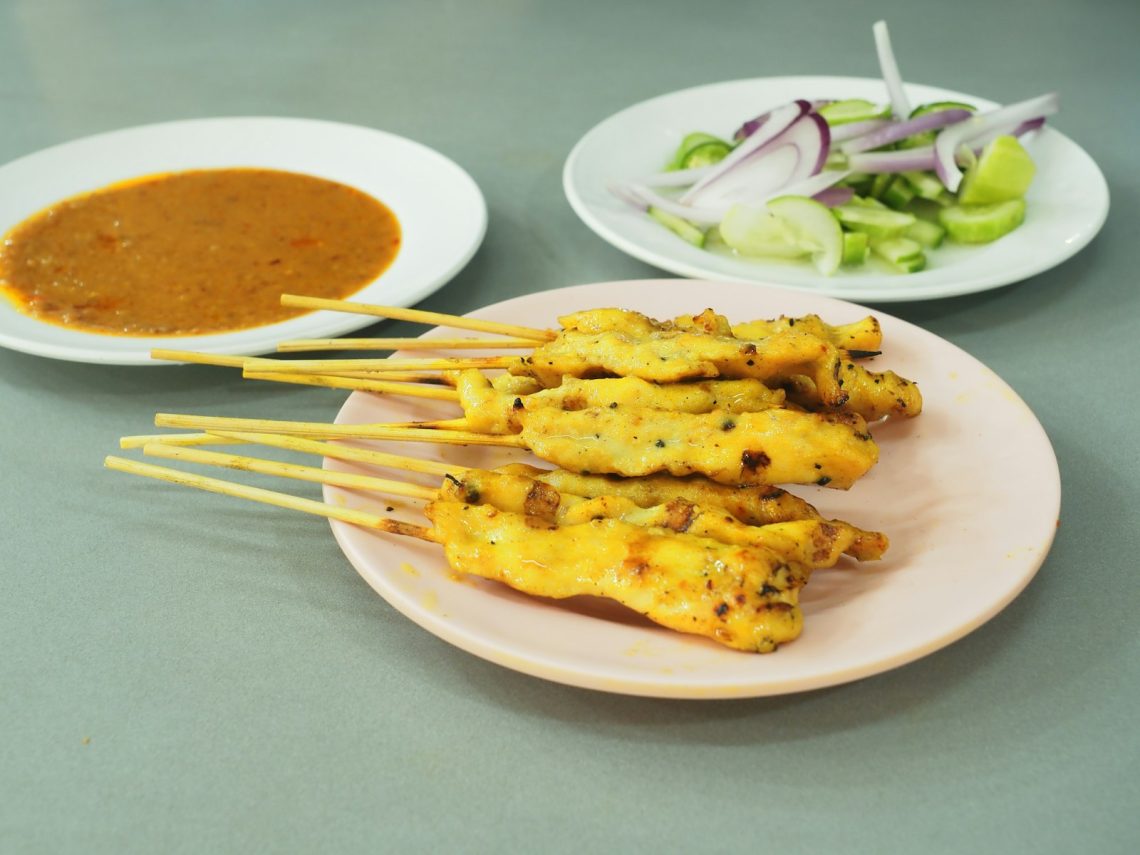
A home-broiler approach to chicken skewers
Broiled chicken satay skewers with peanut sauce give you a fragrant, warmly spiced dinner without lighting an outdoor grill. Satay has many regional forms, and this version is a home-kitchen adaptation using mild curry powder and a quick peanut butter sauce. It focuses on evenly cooked chicken and a sauce you can adjust to the consistency you like.
Chicken thighs are cut into long strips so they thread neatly onto skewers. A coconut milk marinade coats the meat, while the broiler browns the exposed edges. Rice and cucumber complete the plate without requiring another complicated recipe. Make the sauce while the chicken marinates, then keep your attention on the broiler during cooking.
Ingredient choices that make the method easier
Canned coconut milk should be unsweetened and stirred before measuring. The fat often separates into a thick layer in the can, so scooping only from the top changes the marinade. A shelf-stable coconut drink from the beverage aisle is much thinner and is not the same ingredient.
Use a mild curry powder if you want a family-friendly base. The blend varies by brand, so taste a pinch in a little yogurt or water if you are unsure about its heat. Ginger and garlic should be grated finely so they spread across the chicken instead of clinging in large pieces that can burn.
Smooth peanut butter gives the quickest sauce. Natural peanut butter is fine when thoroughly stirred; dry paste from the bottom of an unstirred jar is difficult to whisk. Start with the listed warm water, then add more in small increments. The sauce should fall from a spoon in a ribbon rather than sit as a stiff mound.
Threading broiled chicken satay skewers with peanut sauce
Cut the thighs into strips of similar width. Some pieces will be shorter because thighs have an irregular shape; thread those near each other without squeezing them into a solid ball. Uniform thickness matters more than identical length. A thick folded bundle can remain undercooked while its edges darken.
Metal skewers are the most straightforward choice under a broiler. They do not need soaking and are less likely to scorch than wood. Remember that they become very hot; use tongs or an oven mitt when turning. Leave a little space between skewers so the exposed surfaces receive heat evenly.
Let excess marinade drip back into the bowl before placing the chicken on the pan. A light coating is enough for flavor. Thick puddles of coconut marinade can smoke and burn below the meat, creating a bitter smell before the chicken is ready. Discard the raw marinade after threading; the peanut sauce is made separately and remains clean.
Managing broiler heat and checking doneness
Broilers differ more than ordinary baking temperatures. One oven browns food quickly at six inches, while another needs the pan slightly closer. Start at a moderate distance and check early. Use the appliance instructions for whether the oven door should remain open or closed; there is no universal rule for every broiler design.
Turn the skewers when the first side has colored, then check thick pieces with a thermometer inserted from the side. Poultry must reach 165°F. If the surface is already dark but the center is below that temperature, lower the rack or finish in a 400°F oven. More intense broiling is not the solution to an undercooked center.
A few browned spots are appealing; blackened sugar and garlic are not. The marinade contains a small amount of brown sugar, so watch closely during the final minutes. If one skewer cooks faster, remove it to a clean plate while the others finish. Avoid returning cooked chicken to a dish that held raw poultry.
Balancing the peanut sauce and serving it well
Lime keeps the sauce from tasting heavy, while soy sauce adds salt. Taste after all ingredients are combined before adding anything extra. If it is too strong, a little water can soften both the salt and the peanut intensity. If it tastes flat, a few more drops of lime may be more useful than another spoonful of sugar.
Peanut sauce thickens as it sits. Give it a stir just before serving and add warm water a teaspoon at a time if needed. Put it in small bowls for dipping, or drizzle a modest amount over the skewers. Keeping some sauce separate preserves the contrast between toasted chicken edges and the creamy dip.
Sliced cucumber provides a cool, crisp bite. Rice catches any extra sauce, while lettuce leaves make a lighter serving base. If you add a spicy condiment, offer it on the side so the whole batch does not become too hot. This recipe contains peanuts and soy, and many soy sauces also contain wheat; check every relevant label when allergies matter.
Advance preparation and leftovers
You can cut the chicken and mix the marinade earlier in the day, keeping everything covered in the refrigerator. Prepare the sauce in a separate container. Do not place raw skewers over ready-to-eat vegetables in the refrigerator, and use separate utensils for raw and cooked food.
Refrigerate cooked chicken in shallow containers within two hours, or one hour in temperatures above 90°F. Keep leftovers at 40°F or below and use within three to four days. Remove the meat from hot skewers before storing to make portioning easier. Reheat to 165°F, using a little water and gentle covered heat to limit drying.
Broiled chicken satay skewers with peanut sauce are easiest when the sauce, rice, and cucumber are ready before the skewers go under the heat. That leaves you free to turn the chicken, check its temperature, and serve while the edges are still freshly browned.
Frequently Asked Questions
Can I use chicken breast?
Yes, but cut it into evenly thick strips and begin checking sooner. Breast dries more quickly than thigh meat, so remove each skewer when its thickest part reaches 165°F. Do not rely only on the color of the marinade.
Can I use wooden skewers?
Metal is preferable under the broiler. If using wood, follow the package and oven guidance, soak as directed, and protect exposed ends from direct heat where practical. Soaking does not make wood fireproof, so watch continuously.
Can I replace peanut butter?
A smooth sunflower seed butter can make a different nut-free-style sauce, but check manufacturing and all other ingredients if an allergy is involved. Its flavor and thickness differ, so adjust lime, water, and salt to taste.
Can the sauce be heated?
Warm it gently in a small saucepan with a splash of water, stirring often. Avoid a hard boil, which can make the sauce thick and oily. If it separates slightly, whisk in a little warm water before serving.
More ideas for the table
Our chicken thigh temperature guide explains why a thermometer matters even for small pieces. Homemade peanut butter is an option when you want to control the sauce base.
Broiled Chicken Satay Skewers with Peanut Sauce
Ingredients
Equipment
Method
- Whisk coconut milk, 1 tablespoon soy sauce, 1 tablespoon brown sugar, curry powder, ginger, garlic, and oil. Add chicken, coat well, cover, and refrigerate for 30 minutes.
- Whisk peanut butter with 1 tablespoon soy sauce, lime juice, 1 teaspoon sugar, and warm water until smooth. Add water a teaspoon at a time until pourable. Keep separate from the raw chicken.
- Heat the broiler and line a broiler-safe rimmed pan with foil. Thread chicken loosely onto 8 metal skewers, folding long strips once rather than bunching them tightly. Arrange in one layer.
- Broil about 6 inches from the heat for 5–7 minutes, turn, and cook another 5–7 minutes, watching continuously near the end. Every thickest piece must reach at least 165°F. Move the pan lower or finish at 400°F if the coating browns too quickly.
- Rest skewers 3 minutes. Serve with peanut sauce, sliced cucumber, and cooked rice. Discard raw marinade; do not use it as a dipping sauce.
Notes
Food safety references
Cooking temperatures follow FoodSafety.gov guidance. For storage and reheating, see the USDA guidance on handling leftovers and safe reheating methods.




