Leftover steak
To reheat steak without drying it out, use gentle heat, a covered pan, and a little broth. Check the center for 165°F (74°C), the recommended reheating temperature for leftovers. This protects moisture, but a previously pink center will become more cooked.
Start with properly stored steak
Refrigerate cooked steak within 2 hours, or within 1 hour when the surrounding temperature exceeds 90°F. Keep it at 40°F or below and use refrigerated leftovers within 3 to 4 days. Reheating cannot make improperly stored meat safe. Smell and appearance cannot reliably rule out harmful bacteria.
Heat only the amount you plan to serve. If frozen, thaw it in the refrigerator. Keep the steak refrigerated while you prepare the pan and side dishes; there is no need for a long counter rest.

Covered skillet method
This method works well for one or two portions and makes it easier to keep the surface moist. Use a skillet just large enough to hold the steak without crowding. Have a lid, tongs, and an instant-read thermometer ready.
- Place the steak in the skillet and add 2 to 3 tablespoons of water or low-sodium broth per portion. You want a shallow pool, not enough liquid to submerge the meat.
- Cover and warm over medium-low heat. Turn the steak occasionally. Keep the liquid gently steaming; reduce the heat if it boils vigorously.
- Insert the thermometer from the side into the thickest part, away from bone and the pan. Check more than one location and continue until the center reaches 165°F (74°C).
- Remove promptly. Slice across the grain and spoon the warm pan juices over the meat. Serve immediately.
Cooking time depends on thickness, starting temperature, and pan heat. Check early rather than using a fixed timer. If the liquid evaporates before the steak is hot, add another tablespoon of broth and cover again.
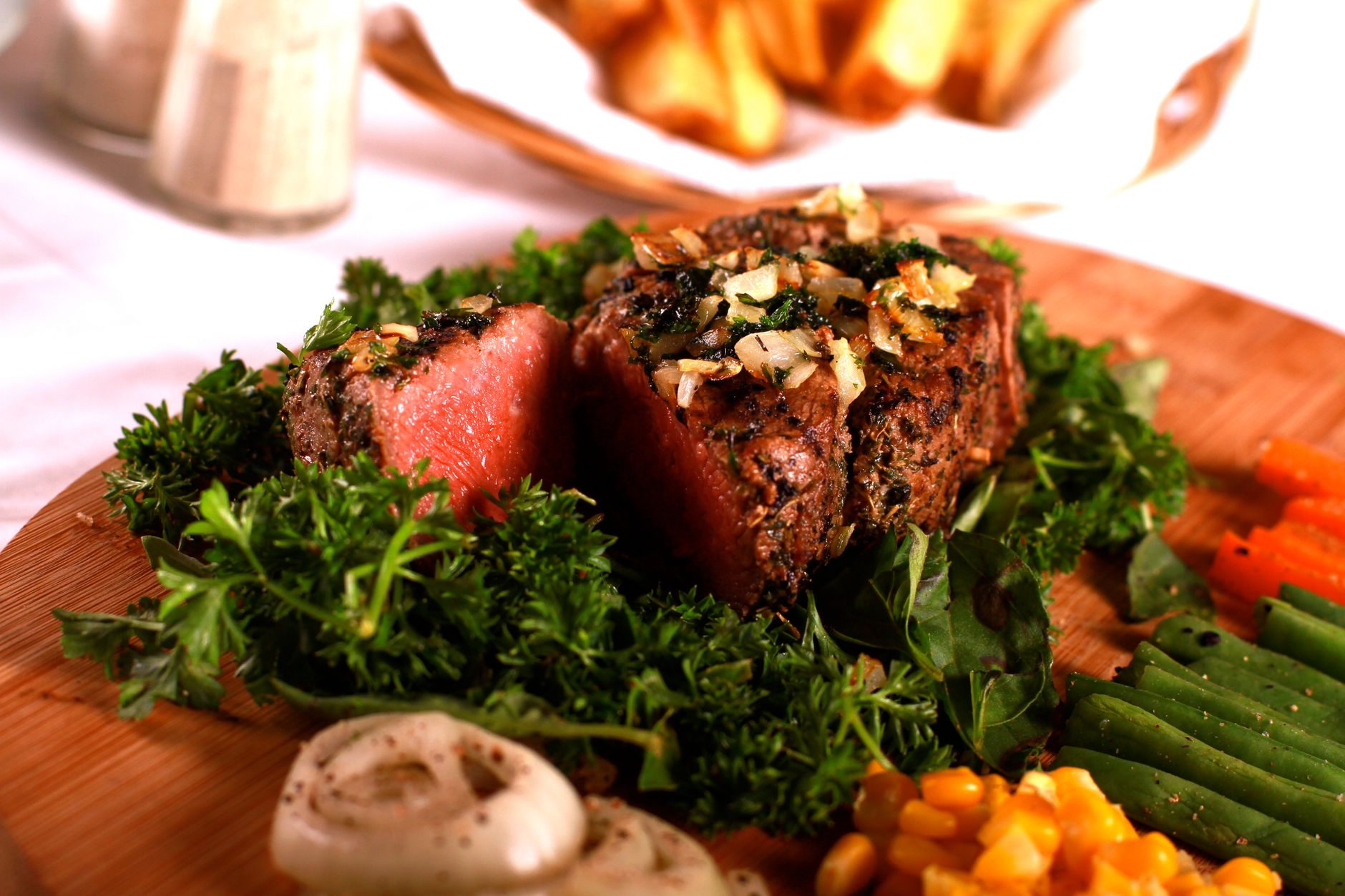
Steak serving illustration; reheating to the recommended leftover temperature will usually change a pink center.
For a larger portion, use the oven
Preheat the oven to 325°F. Put the steak in a shallow baking dish with a few tablespoons of broth and cover snugly with foil or a lid suitable for the oven. Heat until the thickest part measures 165°F (74°C), checking periodically. A probe thermometer helps you monitor the center without repeatedly opening the door.
A covered dish protects moisture, but it softens the original crust. If you want extra browning, dry the hot surface and give it a brief sear in a preheated skillet. Keep that finishing step short because the meat has already reached its reheating temperature.
Microwave method for sliced steak
Arrange similar-size slices in a shallow microwave-safe dish with a little broth. Cover with a vented lid and use reduced power in short intervals. Turn and rearrange the slices between intervals, then check several pieces for 165°F. Let the dish stand according to your microwave’s instructions to help the heat equalize.
Thin slices can dry at the edges before a thick piece warms. Reheat uniform slices together, and remove pieces that have reached the target while finishing the rest.
Why this guide does not promise a pink center
The doneness temperatures for freshly cooked steak include rare and medium-rare preferences below the recommended 165°F reheating temperature for leftovers. A quick sear does not verify that a cold center has heated sufficiently. A warm-to-the-touch test or a low-temperature water bath is also not a substitute for measuring the reheated meat.
Build the meal around the steak you actually have
Before reheating, decide whether the leftover is a thick, reasonably tender piece or a thin portion that was already well done. A thick piece can stay whole for the covered-pan method. An already firm piece is often more useful cut across the grain into manageable slices and served with sauce, vegetables, or a small amount of gravy. Changing the presentation can make the meal easier to eat; sauce does not reverse overcooking.
For a rice bowl, warm the rice and vegetables separately and reheat the steak using the measured endpoint in this guide. Assemble the bowl after the components are ready. Do not put refrigerator-cold steak on hot rice and assume that the rice will heat its center adequately. The same applies to a sandwich: toasted bread is a serving component, not a reheating method for cold meat.
Finish side dishes before starting a small steak portion, and keep any steak you are not reheating refrigerated. That sequencing reduces the temptation to keep a finished portion simmering while the rest of dinner catches up.
Make the leftovers a useful meal
Slice warmed steak into a sandwich, add it to a rice bowl, or serve it with roasted broccoli. A small spoonful of garlic butter sauce can add richness after reheating. Thin slices with sauce often eat more tenderly than a thick leftover steak served plain.
Troubleshooting
The edges are tough: lower the heat, cover the pan, and add a splash of broth. Measure the center frequently so you can stop promptly at the target.
The pan is dry: add liquid a tablespoon at a time. Avoid a large quantity that turns a quick reheat into a prolonged simmer.
The center is still cool: turn the steak, cover again, and continue warming. Exterior browning is not a reliable indicator of the center’s temperature.
Food-safety reference: USDA guidance on leftovers and reheating.