Family Recipe HQ • Kitchen guide
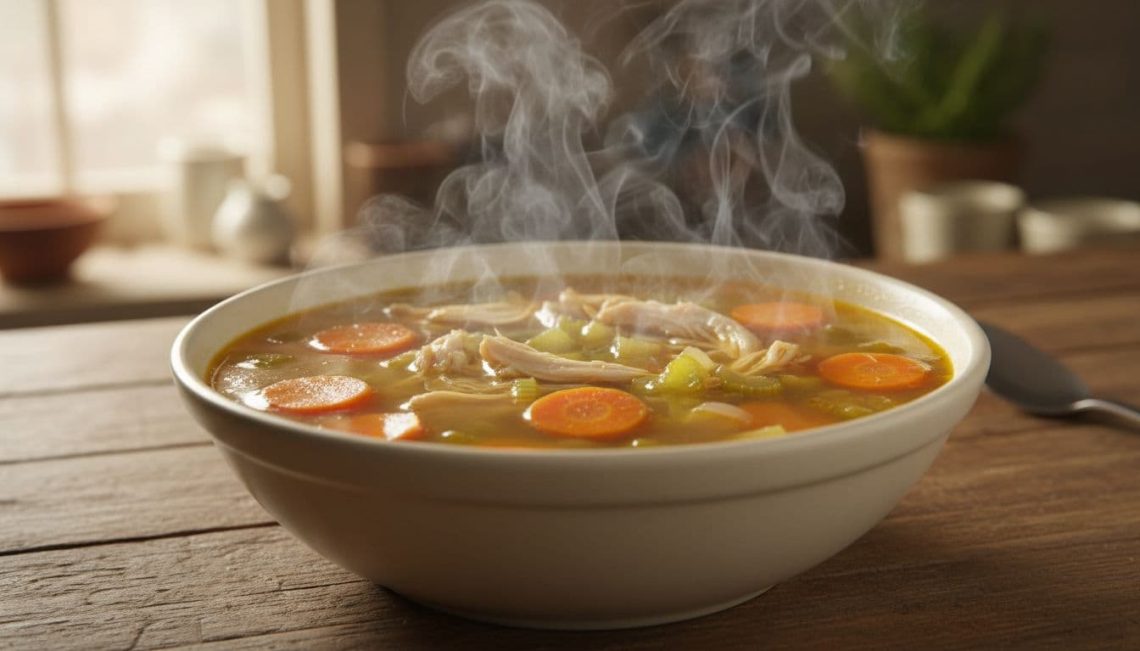
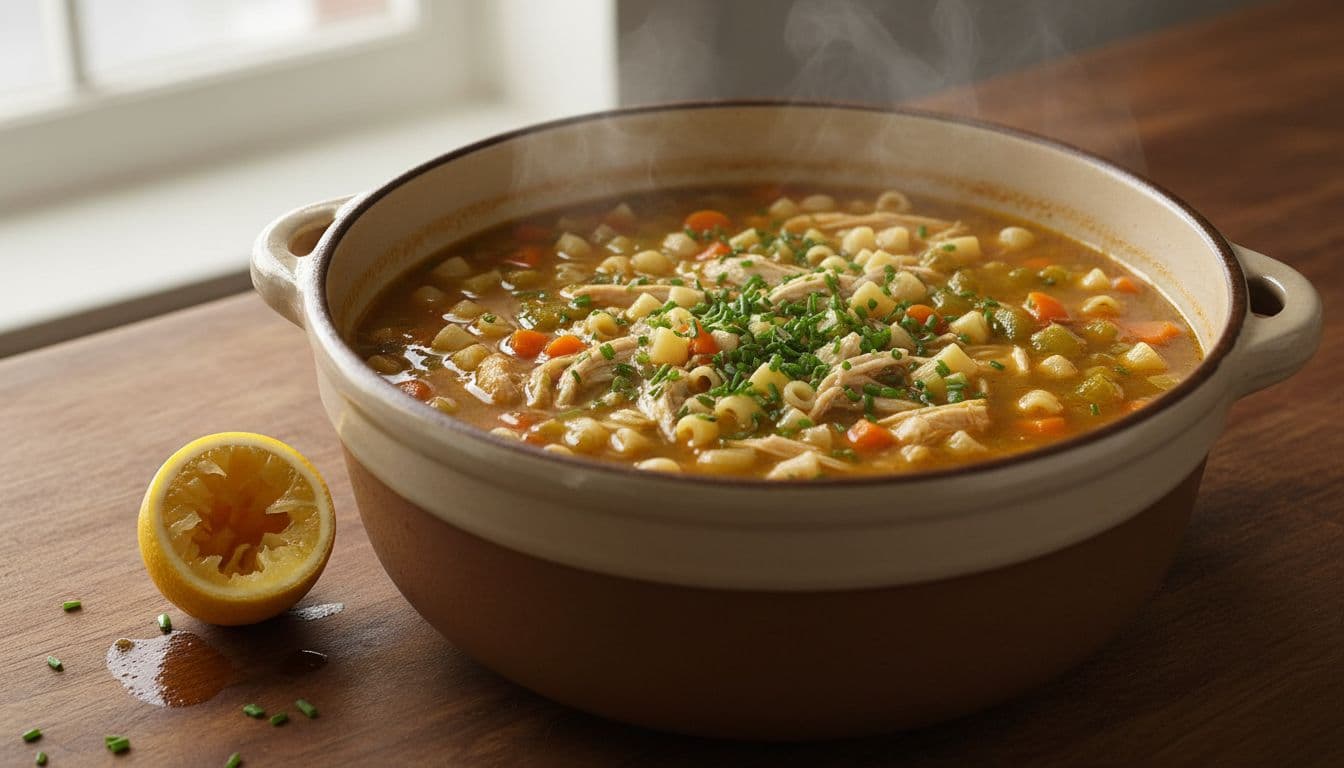
This chicken soup recipe for a cold combines chicken thighs, carrots, celery, ginger, and a lemon finish. It is a comforting meal when appetite is low; soup is not a cure for a cold. Keep the pasta separate when making most of the batch for later.
Measured chicken soup recipe
Estimated yield: 6 meal-size portions. Prep: about 20 minutes. Cook: about 30 to 40 minutes. Use a 5- to 6-quart pot and an instant-read food thermometer. This measured version has not been kitchen-tested by Family Recipe HQ; check the chicken temperature and pasta texture rather than treating the times as guarantees.
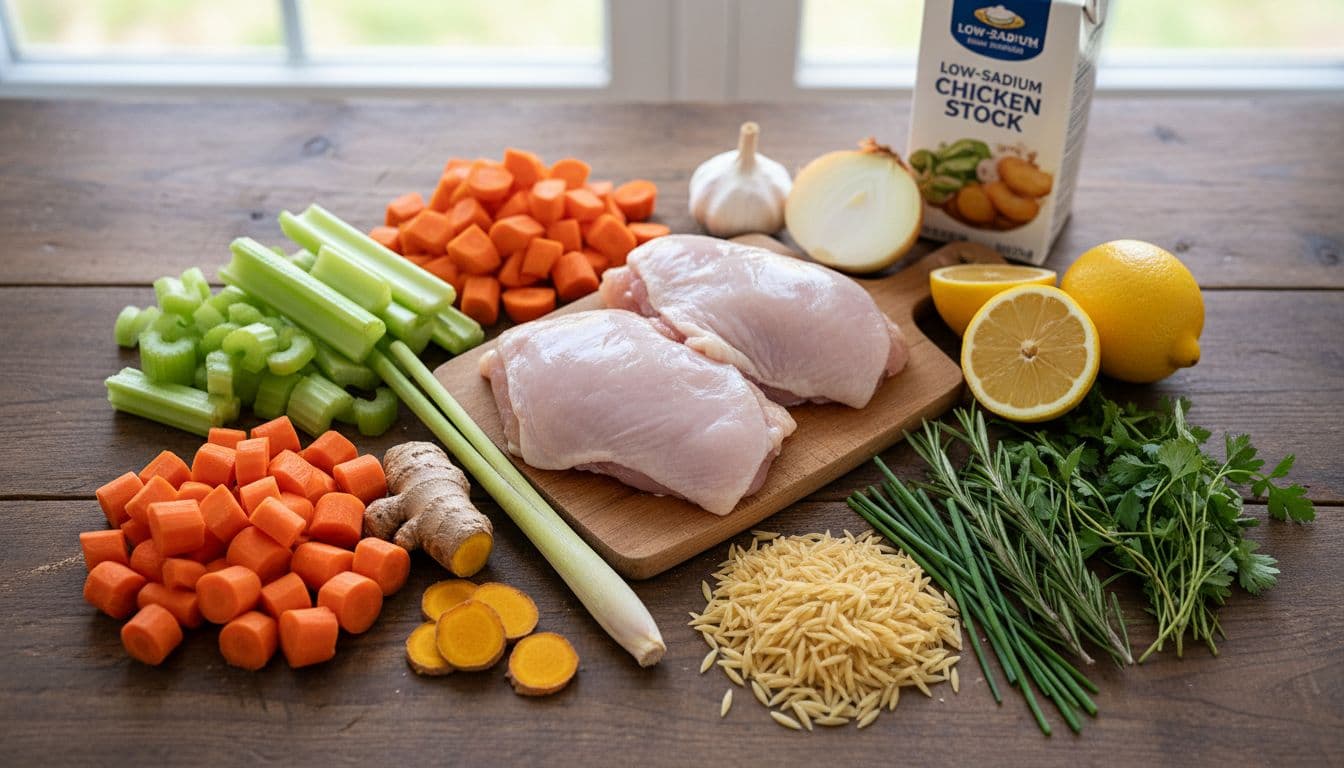
- 1 tablespoon olive oil
- 1 medium onion, diced
- 2 medium carrots, cut into 1/4-inch slices
- 2 celery stalks, cut into 1/4-inch slices
- 3 garlic cloves, minced
- 1 tablespoon finely grated fresh ginger
- 1 teaspoon lemongrass paste, optional
- 1/2 teaspoon dried thyme and 1/4 teaspoon dried rosemary
- 8 cups low-sodium chicken stock
- 1 bay leaf
- 1 1/2 pounds boneless, skinless chicken thighs
- 3/4 cup dry ditalini or another small pasta
- 1/8 teaspoon ground turmeric, optional
- 1 to 2 tablespoons fresh lemon juice, to taste
- Salt and black pepper, to taste
- 2 tablespoons chopped chives or parsley, for serving
The directions below use these amounts. Add the optional turmeric with the garlic and ginger. Remove the bay leaf before serving. For a batch intended mostly for leftovers, cook the pasta separately according to its package and add a small portion to each bowl; chill the remaining pasta and soup separately.
How to make the chicken soup
- Soften the vegetables. Heat the measured oil in a 5- to 6-quart pot over medium heat. Cook the onion, carrots, and celery for about 4 minutes, stirring, until they begin to soften.
- Add the aromatics. Stir in the garlic, ginger, optional lemongrass, thyme, rosemary, and optional turmeric. Cook 1–2 minutes, without scorching.
- Simmer the chicken. Add the stock, bay leaf, and thighs. Bring just to a boil, then reduce to a gentle simmer. Start checking the thickest thigh around 10–12 minutes; larger pieces may need longer. Each piece must reach at least 165°F before removal. Keep simmering gently if a softer shredding texture is wanted.
- Shred and cook the pasta. Lift the chicken onto a clean plate. Shred it with two forks when manageable. Add the pasta to the simmering broth and cook until tender according to the package, usually about 8–10 minutes for small shapes. For a make-ahead batch, cook pasta separately instead.
- Finish the pot. Return the chicken, remove the bay leaf, and stir in 1 tablespoon lemon juice. Taste before adding more lemon, salt, or pepper. Finish with the chives or parsley and serve at a comfortable temperature.
Check the meat itself, not just the hot broth: all poultry needs to reach 165°F. See chicken-thigh thermometer placement for help locating the thickest meat.
Adjust flavor without losing the broth
| If the soup is… | Try this |
|---|---|
| Flat | Add a little of the measured lemon juice, taste, then decide whether it needs salt. |
| Too salty | Add unsalted stock or water in small amounts. Lemon changes flavor but does not remove sodium. |
| Thick from swollen noodles | Add extra stock when reheating; store future batches with pasta separate. |
| Sharper than you like | Use the smaller lemon amount and keep ginger mild next time. |
Portion a pot that is easy to use later
The eight cups of stock are a starting ingredient, not the finished soup yield. Chicken, vegetables, noodles, and evaporation all affect what is in the pot at serving time. Stir gently and alternate ladles between containers so each portion receives chicken and vegetables as well as broth.
For someone with a small appetite, use smaller individual portions rather than one large container that has to be reheated repeatedly. Keep extra portions refrigerated or frozen according to the guidance below. The recipient can warm a second small serving when needed without heating the entire batch.
Pack noodles as a separate component
When using the separate-noodle method, cook the measured pasta according to its package, then divide it into portions once it is ready to store. Label it as cooked pasta so the person serving the soup knows it only needs reheating. Keep lemon wedges and fresh herbs in their own small containers rather than mixing every optional finish into the whole batch.
Write a label that answers the next cook’s questions
Include the preparation date, ingredients, whether the noodles are already included, and the reheating directions from this recipe. Note whether you used raw chicken cooked in the soup or a previously cooked rotisserie chicken. Adding that older chicken to a new pot does not make its storage history disappear; use the earlier applicable deadline.
For a meal prepared for another household, check ingredient needs before cooking. Pasta, stock, and prepared lemongrass paste can contain ingredients that are not obvious from the soup’s name. Keep their labels available instead of assuming that a homemade meal automatically meets a particular dietary requirement.
Swaps, storage, and a cooked-chicken shortcut
The chicken soup should fit real life, not an ideal shopping list. When you’re tired or congested, flexibility matters. A few smart swaps, plus good storage habits, can keep the soup comforting, bright, and easy to manage over the next few days.
Ingredient swaps if you need to use what you already have
This soup is forgiving, which is part of why it works so well on sick days. If you only have chicken breasts, use them. They are leaner than thighs, so they may not taste quite as rich, but they still make a clean, soothing soup if you simmer them gently and avoid overcooking.
Fresh herbs are great, but dried herbs are a solid backup. Because dried herbs taste stronger, use less. A simple rule helps here: use about 1 teaspoon dried herbs for every 1 tablespoon fresh. That keeps the broth balanced instead of woody or sharp.
Pasta is flexible too. If ditalini is nowhere to be found, use any small shape that fits easily on a spoon. Good options include:
- Orzo, for a softer, rice-like feel
- Elbow macaroni, for a classic pantry swap
- Small rotini, if that’s what you already have
You can also add extra greens if you want the bowl to feel more complete. A handful of kale or chopped bok choy works well near the end of cooking. Kale gives the soup a sturdier bite, while bok choy softens quickly and keeps the broth light.
The bottom line is simple: don’t let one missing ingredient stop you. This soup still turns out well when you work with what you have.
How to store, freeze, and reheat soup without losing texture
Divide the soup into shallow containers and refrigerate promptly, within 2 hours of cooking or 1 hour if the surroundings exceed 90°F. Warm food can go into the refrigerator; do not wait for a large pot to cool on the counter. Keep the refrigerator at 40°F or below and use the soup within 3 to 4 days, following USDA leftover guidance.
The biggest texture issue is almost always the pasta. Noodles keep absorbing broth as they sit, so they turn soft and heavy. For the best results, store the soup without pasta, or keep the pasta in a separate container if you already cooked it.
If you want to freeze it, this same rule matters even more. Freeze the broth, chicken, and vegetables on their own, then cook fresh pasta when you reheat. That one step helps the soup stay brothy instead of turning into a thick, swollen bowl of noodles. For longer storage, use freezer-safe containers or bags, leave a little room for expansion, and aim to use it within about 3 months for the best quality.
Thaw frozen soup in the refrigerator. Reheat in a saucepan, stirring to distribute heat; bring soup to a rolling boil and verify at least 165°F (74°C). Add freshly cooked pasta, then check that the combined soup reaches 165°F before serving.
If you remember only one storage tip, make it this one: freeze and reheat the soup without pasta whenever possible.
Shortcuts that save time when you feel too sick to cook much
Some days, even chopping an onion feels like too much. On those days, shortcuts are not a compromise. They are the reason dinner still happens.
For a cooked-chicken shortcut, use about 3 cups shredded, properly refrigerated rotisserie chicken. Simmer the broth and vegetables until the carrots are tender, then cook the pasta and stir in the chicken. Verify that the reheated chicken and soup reach 165°F; adding it near the end reduces unnecessary cooking.
A few other shortcuts work especially well here:
- Low-sodium store-bought stock: easier to control than a salty broth
- Pre-cut vegetables: less prep, less mess, faster soup
- Lemongrass paste: a very good stand-in for fresh lemongrass
These swaps keep the recipe practical for busy households and rough sick days alike. If you need a simple plan, use store-bought low-sodium stock, shredded rotisserie chicken, pre-cut onion-carrot-celery mix, and lemongrass paste. Then finish with lemon and a small pasta like orzo or elbow macaroni. You still get a bowl that feels homemade, which is often exactly what you need.
A comforting meal when appetite is low
Broth contributes fluid, chicken supplies protein, and soft vegetables make the bowl easy to eat. Keep the ginger mild and let the soup cool to a comfortable serving temperature. Choose low-sodium stock so you can adjust seasoning after the chicken and noodles are cooked.
Soup does not cure a cold. The CDC recommends rest and plenty of fluids as part of symptom care; the ingredients here are chosen for flavor rather than a medicinal effect.