
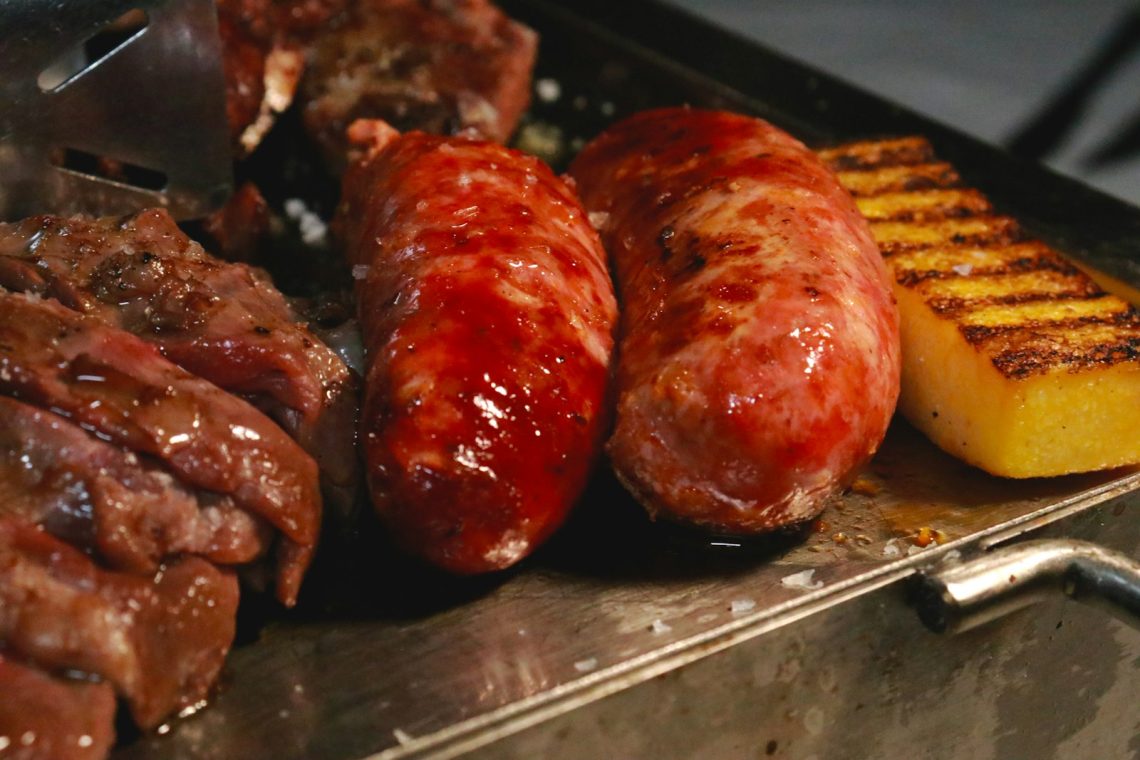
A creamy base for a lively tomato skillet
Italian sausage with burst tomatoes and creamy polenta is a dinner of contrasting textures: a softly spoonable cornmeal base, browned sausage, and tomatoes that release their juices into a light sauce. The tomatoes do not need to become a fully smooth marinara. Leaving some intact gives the bowl a fresher character.
Quick-cooking polenta makes the meal manageable on a weeknight. It cooks while the sausages finish, then butter and Parmesan give it a rounded flavor. The important planning choice is buying the correct type of polenta; a package of traditional coarse cornmeal cannot be expected to finish in the same short time.
Choosing sausage, tomatoes, and polenta
Use raw Italian pork sausage links, either mild or hot. Mild sausage allows the basil and tomatoes to stand out, while hot sausage adds chile heat without changing the method. The package should clearly indicate whether the sausage is raw or fully cooked. This recipe’s initial browning and simmering schedule is written for raw links.
Cherry tomatoes work because their thin skins soften quickly. Grape tomatoes can also be used, though they may be firmer and need a little longer. A mixture of colors is attractive but not necessary. If the tomatoes are very large, halve them so they release juice more readily.
Quick-cooking polenta is dry cornmeal processed to cook faster. Prepared polenta sold in a tube is already firm and requires a different method. Traditional polenta may need much longer stirring and additional liquid. Read the package before beginning, then use its time guidance while keeping the recipe’s creamy serving texture in mind.
Cooking Italian sausage with burst tomatoes and creamy polenta
Brown the sausage over medium heat rather than very high heat. The casing should color without splitting dramatically while the center is still raw. Turn the links several times so the browning is reasonably even. A little rendered sausage fat will season the onion and tomatoes.
Add the onion after the first browning period so it has time to soften without burning beneath the links. Garlic goes in with the tomatoes and water, where the moisture protects it from scorching. Cover the pan to help the sausage cook through while the tomatoes soften.
Check a link by inserting the thermometer into its thickest center, ideally from the end. Raw pork sausage must reach 160°F. Once it is cooked, uncover and press a few tomatoes with the back of a spoon. Their juices join the sausage drippings to form a sauce; leave some tomatoes whole for texture.
Making polenta smooth and spoonable
Bring the water and milk to a gentle boil, then whisk in the dry polenta slowly. Dumping it all at once can create lumps with dry centers. Reduce the heat after adding it because thick cornmeal can bubble and spit. A long-handled spoon helps keep your hands away from splashes.
Stir regularly, reaching the corners of the saucepan where the mixture can catch. Quick-cooking polenta should lose its raw graininess within the package’s stated range, but taste a cooled spoonful to judge texture. If it is stiff before the grains are tender, add hot water a little at a time.
Butter and Parmesan go in after the polenta has cooked. The cheese adds salt, so the initial seasoning is moderate. The finished mixture should slowly spread in the bowl rather than hold a rigid mound. Polenta thickens as it stands; keep a small amount of hot water nearby for a final adjustment just before serving.
Finishing the sauce and arranging the bowls
Add balsamic vinegar after the tomatoes have cooked so you can judge the balance. Some tomatoes are already sweet, while others need a small acidic lift. The measured teaspoon is a starting point rather than a reason to pour freely. Basil goes in off the heat to keep its aroma fresher.
If the skillet contains a watery pool, simmer briefly uncovered before serving. If it is nearly dry, add a spoonful of water and scrape up the flavorful browned bits. The sauce should be loose enough to spoon over polenta but concentrated enough to taste like tomatoes and sausage rather than plain broth.
Spoon polenta into shallow bowls first, then arrange a sausage link and tomatoes on top. Slice the links if that makes them easier to eat, but avoid cutting raw or partly cooked sausage just to inspect its color. A simple green salad makes a useful side because the bowl itself is rich and soft.
Adapting and saving the meal
Poultry sausage can replace pork sausage, but it needs to reach 165°F and may release less fat. Add a little oil if the pan becomes dry. For a dairy-free polenta, use water or an appropriate unsweetened alternative instead of milk and omit the cheese and butter, adjusting flavor with olive oil.
Refrigerate leftovers within two hours, or one hour above 90°F, at 40°F or below. Use within three to four days. Store polenta separately from sausage and tomatoes if possible. Reheat the sausage mixture to 165°F; warm polenta with added water or milk, stirring until smooth and thoroughly hot.
Italian sausage with burst tomatoes and creamy polenta is easiest when the polenta finishes just before serving. If it has thickened while you wait, loosen it gently rather than accepting a dense base that overwhelms the tomato sauce.
Frequently Asked Questions
Can I use canned tomatoes?
Yes, but the result becomes a more uniform sauce rather than burst tomatoes. Use drained diced tomatoes or a modest amount of crushed tomatoes, then simmer to the consistency you prefer. Check salt before adding extra seasoning.
Why is my polenta lumpy?
It may have been added too quickly or not whisked as it entered the liquid. Add gradually and whisk continuously at the start. Small lumps can sometimes be smoothed with vigorous whisking, but large dry clumps are easier to prevent than repair.
Can I use regular cornmeal?
You can make a similar base, but its cooking time and liquid needs may differ substantially. Follow the cornmeal package and allow more time. Do not serve it after five minutes merely because the quick-cooking version would be ready.
What can I do with firm leftover polenta?
Spread it in a shallow container before chilling, then slice and pan-fry it for a different meal. If reheating as creamy polenta, break it up with liquid and stir patiently. The leftover storage window still applies.
More ideas for the table
The sausage temperature guide helps you select the correct endpoint for pork or poultry links. Lemon roasted asparagus gives the meal a bright vegetable side.
Italian Sausage with Burst Tomatoes and Creamy Polenta
Ingredients
Equipment
Method
- Heat oil in a large skillet over medium heat. Brown sausage links 6–8 minutes, turning occasionally. Add onion and cook 3 minutes.
- Add tomatoes, garlic, and 1/4 cup water. Cover and simmer gently 10–15 minutes, turning links once, until pork sausage reaches 160°F. Uncover and press a few softened tomatoes with a spoon.
- Simmer uncovered 2–3 minutes if the sauce is watery. Stir in balsamic vinegar and basil after turning off the heat.
- Meanwhile, bring 3 cups water and milk to a gentle boil in a saucepan with salt. Whisk in quick-cooking polenta gradually. Reduce heat and cook according to the package, usually 5–8 minutes, stirring frequently.
- Stir butter, Parmesan, and pepper into the polenta. Add a little hot water if it is too thick. Spoon into bowls and top with sausage and tomato juices.
Notes
Food safety references
Cooking temperatures follow FoodSafety.gov guidance. For storage and reheating, see the USDA guidance on handling leftovers and safe reheating methods.




