
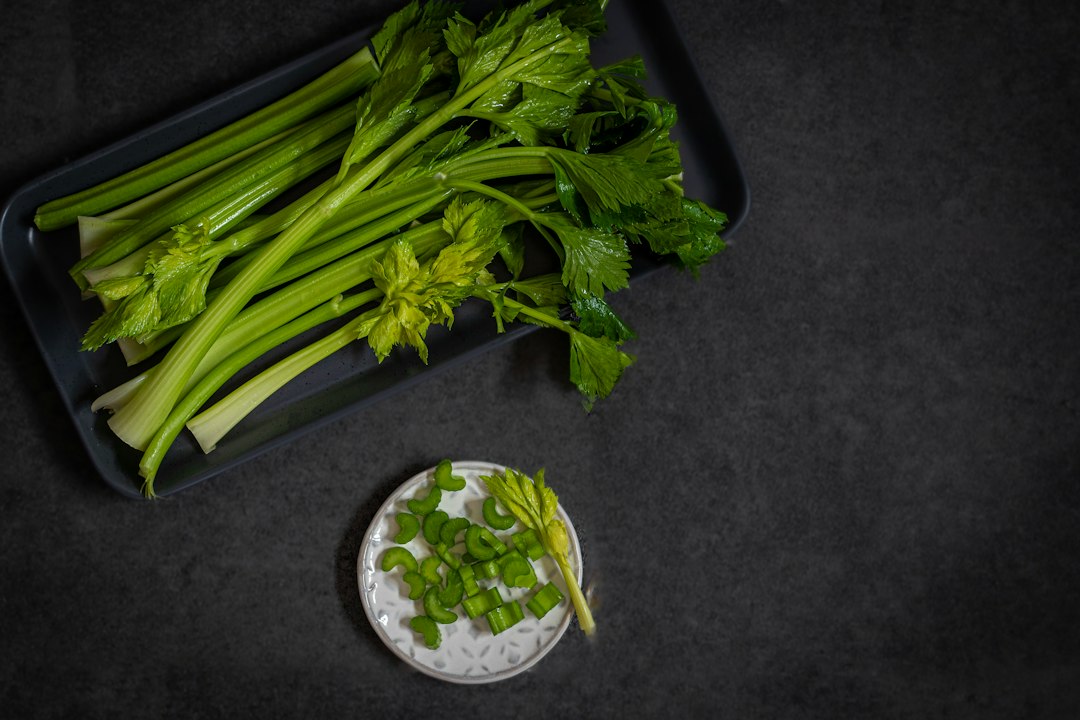
A few celery ribs can become a proper side dish when they spend a little time in a covered skillet. This lemon braised celery without broth uses water, olive oil and garlic to soften the stalks, then adds lemon at the end so the flavor stays fresh. The celery should bend easily and have a gentle bite, with just enough pan juices to coat it.
The recipe is useful when a bunch of celery outlasts the soup or salad it was bought for. It works with sound, firm outer ribs as well as tender inner stalks. Peeling the stringiest ribs, keeping the pieces reasonably even and checking the liquid are more important than buying a special variety.
Jump to the measured recipe · Check the texture · Store and reheat leftovers
Use lemon braised celery without broth for a concentrated pan glaze
| Pan | Choose one that holds the celery in a mostly single layer. |
| Liquid | Use the measured water and cover only long enough to tenderize the thicker pieces. |
| Reduction | Uncover and let the remaining liquid become a light glaze rather than a soup. |
| Lemon | Add juice near the finish and zest off heat for a fresher aroma. |
The celery should bend easily while retaining shape. If the pan dries before it is tender, add water a tablespoon at a time.
Choose your pan before you cut
Affiliate disclosure: As an Amazon Associate I earn from qualifying purchases. Paid links open Amazon search results.
Use a 10-inch skillet (paid link) or sauté pan with a close-fitting lid. A pan much wider than that loses the small amount of water quickly; a narrow saucepan stacks the celery and cooks it less evenly. Stainless steel, enamel or a sound nonstick surface all work. You want steady, gentle cooking, so use a burner that sits beneath the pan rather than sending flame around its sides.
Cut the celery into pieces about 2 inches long. Split very thick ribs lengthwise first, especially near the base. This gives the thicker and thinner pieces a similar cooking time. Set aside a tablespoon of clean, tender inner leaves for the finish if the bunch has them; dark, damaged or leathery leaves are not useful here.
Start with celery worth cooking
Look for ribs that feel firm and smell clean. Slightly curved stalks are fine; slimy patches, mold or a rotten smell are reasons to discard them. A limp but otherwise sound stalk can still cook, although it will not have the same fresh snap before it goes into the pan. Do not use this method to rescue spoiled produce.
Separate the ribs and rinse under running water, paying attention to the deep groove near the base. A vegetable peeler makes quick work of the thick strings on the rounded outside of mature ribs. The FDA produce guide recommends washing produce with running water, removing damaged areas and avoiding soap or detergent. Dry the celery enough that it does not drip when added to the oil.
Lemon braised celery without broth: the recipe
Yield: 4 small side servings. Prep: 10 minutes. Cook: about 35 minutes. Total: about 45 minutes. Thick or very mature ribs may need a few extra minutes; tenderness is the deciding check.
- 1 pound (450 g) celery ribs, weighed after trimming
- 2 tablespoons olive oil
- 1 medium garlic clove, peeled and lightly crushed
- 1/2 cup (120 ml) water, plus 1 tablespoon at a time if needed
- 1/4 teaspoon fine salt, plus more only after tasting
- 1/8 teaspoon freshly ground black pepper
- 1 teaspoon finely grated lemon zest
- 1 tablespoon fresh lemon juice, plus 1 teaspoon more if desired
- 1 tablespoon chopped tender celery leaves or flat-leaf parsley
Equipment: a 10-inch lidded skillet, knife, cutting board, vegetable peeler, measuring spoons, citrus grater and tongs. Have the measured water beside the stove before heating the pan.
Cook gently, then concentrate the juices
- Trim and size the ribs. Wash and dry the celery. Peel any tough strings, split unusually wide ribs lengthwise and cut into 2-inch lengths. Keep the small inner ribs separate so you can remove them early if they soften before the rest.
- Warm the aromatics. Put the skillet over medium heat. Add the olive oil and crushed garlic. Cook for about 30 seconds, just until the garlic smells fragrant. It should not turn dark brown.
- Coat the celery. Add the celery, salt and pepper. Turn the pieces in the oil for about 3 minutes. A little color on an edge is welcome, but deep browning is not the goal.
- Add water and cover. Pour in the measured 1/2 cup water carefully. Bring it to a gentle simmer, reduce the heat to medium-low and cover. Cook for 20 minutes, turning the celery once halfway through. If the pan sounds dry or the water disappears, add 1 tablespoon water and replace the lid.
- Test the thickest piece. Push a fork or small knife into the widest rib. It should enter with little resistance, and the piece should bend without snapping. Continue covered for up to 5 minutes if the center is still hard. Remove any already-tender thin pieces to a plate.
- Reduce and finish. Uncover and cook for 3–5 minutes, turning gently, until only a few spoonfuls of shiny liquid remain. Return any reserved cooked pieces. Remove the garlic if you prefer, take the skillet off the heat and add the lemon zest, juice and chopped leaves. Taste a piece before adding more salt or lemon. Serve with the remaining pan juices.
What the finished celery should look like
The color will be softer and less vivid than raw celery. That is normal for a vegetable cooked until tender. The ribs should still be recognizable, not collapsed into loose fibers. The cooking liquid should lightly coat a spoon; it will not become a thick sauce because this recipe contains no flour, cream or starch.
| What you notice | What to do |
|---|---|
| Firm center but a nearly dry pan | Add 1 tablespoon water, cover and cook for another 3 minutes before checking again. |
| Tender celery swimming in liquid | Lift the celery out and reduce the liquid alone, then return the pieces just long enough to coat them. |
| A browned edge but a crunchy middle | Lower the heat and use the covered braise; extra searing will not soften the center evenly. |
| Bitter garlic in the juices | Remove the dark garlic. If the oil tastes burned, start the aromatics again rather than trying to hide the flavor. |
Adjust the lemon without losing the balance
Zest gives a lemon aroma without adding much liquid. Juice supplies the sharper finish. Grate only the yellow skin and keep the bitter white layer out. Add the measured tablespoon of juice first, turn the celery and taste. Another teaspoon is often enough for someone who likes a brighter side; a large unmeasured squeeze can overwhelm a small pan.
Water keeps the celery flavor clear and makes the salt level easier to control. If you choose to use broth another time, begin with less salt and taste at the end. That is a separate variation; the measured recipe does not depend on stock for flavor. An extra teaspoon of olive oil stirred in after cooking can soften a finish that feels too sharp.
Small changes that still suit this method
For a buttery finish, replace 1 tablespoon of the olive oil with 1 tablespoon unsalted butter, stirring the butter in after the celery is tender. For a less garlicky version, leave the clove whole and remove it before serving. Chopped parsley is a straightforward alternative when the celery leaves are tough or scarce.
Do not add a handful of raw diced potatoes or other dense vegetables to the same timing. Their different size and cooking needs make the result less predictable. If you want a larger vegetable plate, cook a second side separately. The celery can wait, covered off the heat, for a few minutes while you finish the rest of dinner.
Storage and a gentle second heating
Transfer leftovers and their juices to a shallow covered container. Following USDA leftover guidance, refrigerate within 2 hours, or within 1 hour if the surroundings are above 90°F, and keep the refrigerator at 40°F or below. Use within 3–4 days. The small amount of lemon juice does not make the dish shelf-stable.
Reheat only the portion you need in a small covered skillet with 1 tablespoon water. Turn occasionally until it is hot throughout and reaches 165°F. Uncover briefly if excess liquid remains. A microwave-safe dish with a vented cover also works; stir or turn the pieces during heating. The celery will be softer after reheating, so use gentle handling.
Build a meal around the side
Serve this with air fryer steak without butter when you want a tender vegetable beside a browned main. The lemon also suits a simply cooked cod fillet. Spoon the celery beside the food rather than over a crisp coating, which would soften under the juices.
For a meatless plate, pair it with cooked beans and a piece of bread to catch the pan liquid. When making dinner for two, divide the recipe in half and use an 8-inch pan with 1/4 cup water. Watch that smaller quantity closely; it can evaporate before the ribs are tender.
Questions before you start
Can I make this with celery hearts?
Yes. Hearts tend to have thinner ribs, so begin checking them after about 15 minutes of covered cooking. Keep the starting water amount and reduce it at the end if necessary.
Do all celery ribs need peeling?
No. Tender inner ribs may need only trimming. Peel the thick outer ribs when their strings pull away easily or remain tough when you cut across them.
Why does the recipe add lemon at the end?
Finishing with lemon makes the final acidity easy to adjust after the cooking liquid has reduced. It also keeps the fresh zest aroma prominent.
Can I make it ahead for guests?
Yes, cook and refrigerate it safely, then reheat with a splash of water. Save a little freshly grated zest and the chopped leaves to add just before serving.
Will the celery become crisp?
No. This is a tender braise with a light glaze. A few browned edges are possible, but the covered cooking deliberately softens the stalks.
Can I freeze the leftovers?
You can freeze properly cooled leftovers, but the thawed celery will be softer. Freeze with its liquid and use it as a tender side or chop it into a cooked soup rather than expecting fresh-cooked texture.
Lemon-Braised Celery Without Broth
Ingredients
Equipment
Method
- Trim and size the ribs. Wash and dry the celery. Peel any tough strings, split unusually wide ribs lengthwise and cut into 2-inch lengths. Keep the small inner ribs separate so you can remove them early if they soften before the rest.
- Warm the aromatics. Put the skillet over medium heat. Add the olive oil and crushed garlic. Cook for about 30 seconds, just until the garlic smells fragrant. It should not turn dark brown.
- Coat the celery. Add the celery, salt and pepper. Turn the pieces in the oil for about 3 minutes. A little color on an edge is welcome, but deep browning is not the goal.
- Add water and cover. Pour in the measured 1/2 cup water carefully. Bring it to a gentle simmer, reduce the heat to medium-low and cover. Cook for 20 minutes, turning the celery once halfway through. If the pan sounds dry or the water disappears, add 1 tablespoon water and replace the lid.
- Test the thickest piece. Push a fork or small knife into the widest rib. It should enter with little resistance, and the piece should bend without snapping. Continue covered for up to 5 minutes if the center is still hard. Remove any already-tender thin pieces to a plate.
- Reduce and finish. Uncover and cook for 3–5 minutes, turning gently, until only a few spoonfuls of shiny liquid remain. Return any reserved cooked pieces. Remove the garlic if you prefer, take the skillet off the heat and add the lemon zest, juice and chopped leaves. Taste a piece before adding more salt or lemon. Serve with the remaining pan juices.
Notes
| What you notice | What to do |
|---|---|
| Firm center but a nearly dry pan | Add 1 tablespoon water, cover and cook for another 3 minutes before checking again. |
| Tender celery swimming in liquid | Lift the celery out and reduce the liquid alone, then return the pieces just long enough to coat them. |
| A browned edge but a crunchy middle | Lower the heat and use the covered braise; extra searing will not soften the center evenly. |
| Bitter garlic in the juices | Remove the dark garlic. If the oil tastes burned, start the aromatics again rather than trying to hide the flavor. |




