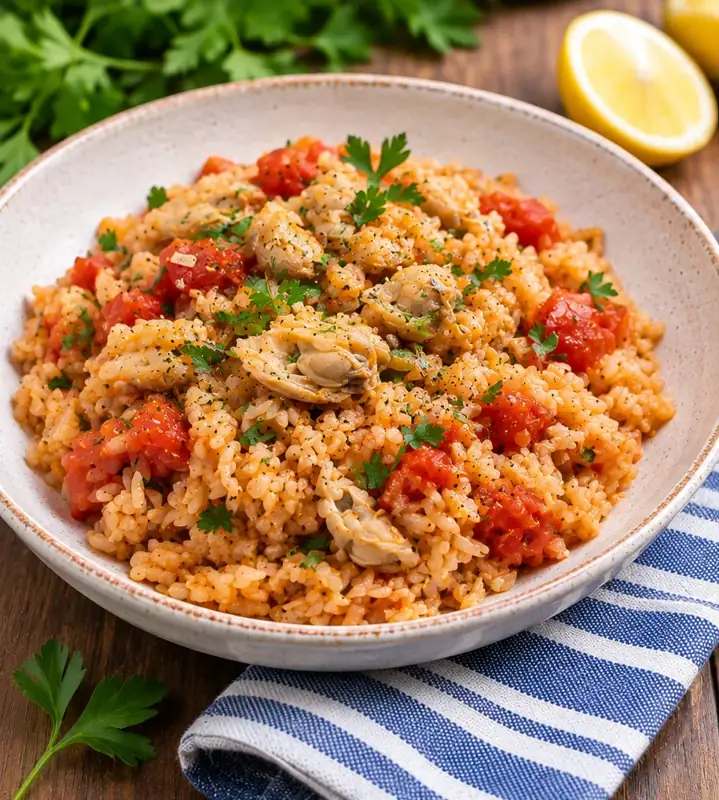
This one pot rice with canned clams and tomatoes turns a pantry seafood staple into a warm dinner with a short ingredient list. Long-grain white rice cooks in a measured mixture of clam juice, tomato juice and water, then the clams are folded in near the end. Parsley and lemon brighten the finished pot without covering the seafood flavor. If you enjoy shellfish dinners, try our coconut curry mussels with basil for a fragrant coconut-milk and red-curry broth.
The most useful part of the method is measuring the liquid instead of pouring every can into the saucepan. Different brands contain different amounts of juice. Combining the drained liquids in a jug, then adding water to a fixed total, gives the rice a more predictable starting point. Keep the clam meat separate until the grains are tender so it does not boil for the entire cooking time.
Start with the measurement: juice-and-water examples · ingredients · cooking steps · jump to recipe · rate this recipe or leave a comment.
Separate the rice cooking from the clam finish
- Choose a rice that matches the liquid ratio. Substituting a different grain length can change both timing and absorption.
- Measure canned liquid deliberately. Clam juice can be salty; count it as part of the cooking liquid rather than adding it on top.
- Cook tomatoes with the rice. Their moisture and acidity become part of the simmering environment.
- Fold in clams near the end. They are already cooked and become firm when boiled for the full rice time.
Rest the covered pot after the rice is tender, then fluff from the edges toward the center. Taste before adding salt and finish with herbs or lemon only after the clams are warm.
Three portions in about 45 minutes
Affiliate disclosure: As an Amazon Associate I earn from qualifying purchases. Paid links open Amazon search results.
Servings: 3 as a main dish. Preparation: 10 minutes. Cooking and rest: about 35 minutes. Total: about 45 minutes. Equipment: heavy 3-quart saucepan (paid link) with a tight lid, sieve, measuring jug (paid link) and fork.
Start with the rice and the can labels
Use ordinary long-grain white rice, not instant rice, brown rice or a seasoned boxed blend. Those products need different amounts of water and different cooking times. Rinse the rice in a fine sieve, then let it drain well while you prepare the onion. The recipe is intended to finish moist and lightly saucy, with separate grains rather than a dry pilaf or creamy risotto.
Choose plain chopped or whole baby clams in juice. Clams in a prepared sauce would change the seasoning and liquid. Check the can for damage, drain the clams into a measuring jug and inspect them for any firm shell fragments. If the juice appears gritty, strain it through a fine sieve lined with a clean paper filter, allowing time for it to pass through. Allergy note: Clams are molluscan shellfish. People with a known clam allergy should avoid this dish and read the full ingredient label: U.S. major-allergen “Contains” statements are required for crustacean shellfish, but not for mollusks such as clams. See the FDA food-allergen guidance.
The liquid jug does the arithmetic
Measure the juices after any grit has been strained out. Straining can leave a little liquid in the filter, so reading the jug first and filtering afterward changes what actually reaches the rice. Put the jug on a level counter and read the line at eye level. Keep the drained tomato pieces and clam meat in two separate bowls; neither belongs in the measuring jug.
| Combined drained juices | Adjustment |
|---|---|
| 1 cup | Add 3/4 cup water. |
| 1 1/2 cups | Add 1/4 cup water. |
| 2 cups | Reserve 1/4 cup of the combined juice; use 1 3/4 cups in the pot. |
These are arithmetic examples, not expected yields from particular brands. The tomato pieces still go into the saucepan separately at the original step. Leave the extra juice out of the reference pot even if you would prefer not to waste it; adding it all changes the rice’s starting liquid.
The pantry ingredient list
- 2 cans plain clams in juice, 6.5 ounces each
- 1 can no-salt-added diced tomatoes, 14.5 ounces
- 1 cup long-grain white rice, approximately 185 g, rinsed and drained
- 1 tablespoon olive oil
- 1 small yellow onion, approximately 100 g, finely diced
- 2 garlic cloves, minced
- 1/2 teaspoon sweet paprika
- 1 small bay leaf
- 1/4 teaspoon ground black pepper
- Water as needed to make 1 3/4 cups total cooking liquid with the reserved juices
- 1 tablespoon fresh lemon juice, plus extra wedges to serve
- 2 tablespoons chopped fresh parsley
- Fine salt, only if needed after tasting
There is no fixed added salt at the start because clam juice can be quite salty. Low-sodium tomatoes make it easier to control the finish. Use plain sweet paprika for warmth and color. Smoked paprika is a possible variation, but it can become the main flavor, so begin with a smaller pinch if that is what you have.
How to cook one pot rice with canned clams and tomatoes
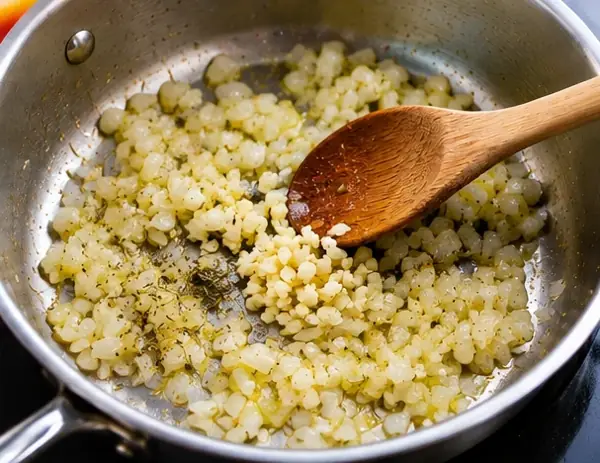
Measure and build the rice base
- Measure the liquids. Drain the clams into the jug and set the meat aside. Drain the tomatoes, adding their juice to the jug as well. Add water until you have 1 3/4 cups total liquid. If the juices already exceed that amount, reserve the extra rather than using it all. Keep the tomato pieces separate.
- Soften the onion. Heat the oil in the saucepan over medium heat. Add the onion and cook for about 5 minutes, stirring, until soft. Add the garlic and paprika and stir for 30 seconds. Do not let the garlic turn dark.
- Coat the rice. Add the drained rice and stir through the onion for 1 minute. Add the measured liquid, drained tomato pieces, bay leaf and pepper. Stir once, scraping the bottom, and bring to a gentle boil.
Cook and correct the grains
- Cover and simmer. Reduce the heat to low and cover tightly. Cook for 17 to 20 minutes without repeatedly lifting the lid. Check a few grains from the center. They should be tender with no hard core, and most of the liquid should be absorbed.
- Correct the rice if needed. If it is still firm and the pot looks dry, add 2 tablespoons hot water, cover and cook for another 3 to 5 minutes. If it is tender but very wet, leave it uncovered over low heat briefly. Make this adjustment before adding the clams.
Add the clams and finish
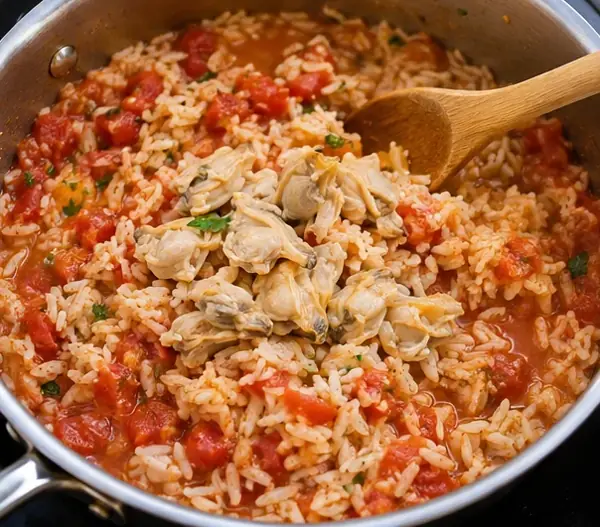
- Warm the clams gently. Fold the clam meat through the rice with a broad spoon. Cover and keep on low heat for 2 to 3 minutes until the clams are hot. Turn off the heat and let stand, covered, for 3 minutes.
- Finish the pot. Remove the bay leaf. Fluff gently with a fork, then fold in the lemon juice and parsley. Taste before adding salt. Serve immediately, with extra lemon wedges on the side.
Make one deliberate rice check
Before the first covered simmer ends, have a small spoon, hot water and the clam bowl ready. Lift the lid away from your face and take a few grains from the center, where the rice can behave differently from the outer edge. Let them cool enough to taste. Check both the grain and the visible liquid before deciding to follow the dry-rice or wet-rice correction.
If the grains need more cooking, keep the clams aside during that extension. Once the grains are ready, fold from the bottom of the pot toward the center rather than stirring in tight circles. This brings clam pieces into different parts of the rice without crushing many grains. Remove the bay leaf before dividing the finished pot into three portions, and share the visible clam pieces across the bowls before adding the last spoonfuls of rice.
Three places the method can change
The lid
A loose-fitting lid lets steam escape, which can leave the rice dry before the center softens. Use a pot with a lid that fits well and keep the burner low enough that the lid is not rattling. A vigorous boil does not cook the rice more evenly; it mainly drives off liquid and increases the chance of scorching.
The tomatoes
Diced tomatoes often hold their shape through cooking. That is fine here: the pieces should remain visible between the grains. If you prefer smaller pieces, chop them before adding them. Do not replace them with a thick tomato paste without reworking the recipe; paste has a different concentration and amount of water.
The clam texture
Canned clams are already processed and generally fully cooked; check the label. They only need a short warming stage for this meal. Prolonged boiling can make them chewy. A rice-first approach allows you to solve any grain issue before the seafood enters the pan.
Serving and storing the meal
Serve with a green salad or steamed green beans. The dish already contains rice, so bread is optional. Keep toppings simple: parsley and lemon are enough to brighten the seafood. A little chili at the table is better than making the entire pot hot if diners have different preferences.
Cool leftovers promptly in shallow containers and refrigerate within 2 hours, or within 1 hour above 90°F. Keep the refrigerator at 40°F or below. Plan to eat this seafood rice within 2 days. Reheat only the portion you need with a splash of water, covered loosely, until the center reaches 165°F. Stir gently during reheating to remove cold spots.
Do not leave the pot on the stove all evening to cool. A large mass of rice stays warm inside longer than a shallow portion. Freezing is possible after prompt cooling, but the clam texture may become firmer after thawing; the fresh meal is preferable. If you freeze a portion, use it within about 1 month for quality and thaw it in the refrigerator.
For another pantry meal that cooks the rice in a seasoned pot, see our one-pot salsa rice with black beans and frozen corn. Use that recipe’s own liquid proportions rather than transferring them to this clam rice.
Questions about canned clam rice
Can I use fresh clams instead?
That requires a different preparation: fresh clams must be checked, cleaned and cooked properly before their meat and strained liquid can be used. This recipe is written for plain canned clams. Do not add unopened fresh shells at the same point as the canned meat.
Can I make this with brown rice?
Brown rice needs more time and usually a different liquid amount. Cook it separately according to its package if you want to experiment with a brown-rice bowl, then combine it with a separately cooked tomato-and-clam mixture. The one-pot timing here will not transfer directly.
Why is there no broth in the ingredient list?
The reserved clam and tomato juices provide flavor, while water lets you control the salt level. Adding broth is unnecessary and can make the seafood flavor less clear. If your clam juice is especially mild, adjust the final seasoning rather than automatically adding a stock cube.
Can I use minced clams?
Yes, but the finished rice will have smaller seafood pieces and a more evenly distributed clam flavor. Whole baby clams or chopped clams provide more distinct bites. Use the same measured-liquid method regardless of the cut.
What if the rice burns on the bottom?
Take the pot off the heat. Spoon the unburned upper rice into a clean pan without scraping up the scorched layer. Add a small amount of hot water if the grains still need cooking. Next time, lower the heat and use a heavier pot.
Can one pot rice with canned clams and tomatoes be doubled?
Use a larger heavy pot with a similar depth of ingredients, and double the measured quantities. The larger pot takes longer to reach a simmer. Check the rice near the original time, then adjust for tenderness rather than automatically doubling the cooking time.
Food handling references: FDA storage guidance and FoodSafety.gov reheating temperatures.
One-Pot Rice With Canned Clams and Tomatoes Recipe Card
Arrange the ingredients for one pot rice with canned clams and tomatoes
One pot rice with canned clams and tomatoes is easier to follow when its three canned components have separate destinations: clam meat in one bowl, tomato pieces in another, and their measured juices in the jug. Set out those containers before opening the cans. Keep the rinsed rice draining in its sieve while preparing the onion so excess rinse water does not quietly join the carefully measured cooking liquid.
Finish straining before reading the final measure
If the clam juice needs filtering for grit, complete that step before checking the volume to use. Give the liquid time to pass through the fine sieve and any specified clean filter, then combine it with the drained tomato juice. Read the jug on a level counter at eye height. Add only enough water to reach the stated total, or reserve excess combined juice as instructed. Do not use the volume of the unopened cans as a shortcut; that number includes clam meat, tomato pieces, and liquid in proportions that differ between products.
Keep the finishing ingredients outside the rice setup
Measure the paprika and pepper separately, and place the bay leaf near the tomatoes because it enters during the rice stage. Put the lemon juice and chopped parsley elsewhere on the counter for the finish. This small separation helps prevent the bright finishing ingredients from being added with all the other seasonings at once. Keep the clam bowl distinct as well. The rice may need a brief correction after its first covered simmer, and leaving the clams aside allows that adjustment without extending their gentle warming stage unnecessarily.
Distribute the rice before closing the lid
After the onion has softened and the garlic and paprika have had their brief cooking, stir the drained rice through the mixture for the stated minute. Scrape around the bottom edge so the grains are coated without a dry pile in one corner. Add the measured liquid and tomato pieces, then stir once across the base as directed. Check that the rice is spread through the saucepan rather than mounded on one side. Fit the lid securely after the mixture reaches the required gentle boil and the heat is reduced.
Make a focused check rather than several interruptions
Have a tasting spoon and the small hot-water reserve ready near the end of the initial covered time. Open the pot, sample a few grains from the center, and look for moisture underneath the surface. A tomato piece can look wet even when the surrounding rice is short of liquid, so assess the grains and the base together. If using the dry-rice correction, pour the measured water across more than one area and cover again. If the grains are tender but excess liquid remains, follow the brief uncovered adjustment before bringing in the clam meat.
Fold seafood through without compacting the rice
Scatter the drained clams over several areas of the rice rather than dropping them into one pile. Use the broad spoon to lift rice from beneath and turn it gently over the seafood. Once the clams are distributed, carry out their short covered warming and the separate off-heat rest. Remove the bay leaf before fluffing and adding the measured lemon and parsley. For three portions, alternate spoonfuls among the bowls and share the larger clam pieces as you go. This avoids giving the first bowl most of the visible seafood and leaving the final one mostly tomato rice.
One-Pot Rice With Canned Clams and Tomatoes
Ingredients
Equipment
Method
- Drain the clams into a measuring jug and set the clam meat aside. Drain the tomatoes, adding their juice to the jug and keeping the tomato pieces separate. If the juice seems gritty, strain it before measuring. Add water until the jug contains exactly 1 3/4 cups total liquid; if the juices exceed that amount, reserve the extra.
- Heat the olive oil in the saucepan over medium heat. Add the onion and cook for about 5 minutes, stirring, until softened. Add the garlic and sweet paprika and stir for 30 seconds without letting the garlic darken.
- Add the drained rice and stir through the onion for 1 minute. Pour in the measured liquid, then add the drained tomato pieces, bay leaf and black pepper. Stir once while scraping the bottom and bring to a gentle boil.
- Reduce the heat to low, cover tightly and cook for 17–20 minutes without repeatedly lifting the lid. Check a few grains from the center. They should be tender with no hard core, and most of the liquid should be absorbed.
- If the rice is still firm and the pot looks dry, add 2 tablespoons hot water, cover and cook for another 3–5 minutes. If the rice is tender but very wet, leave it uncovered over low heat briefly. Make this adjustment before adding the clams.
- Fold the drained clam meat gently through the rice. Cover and keep over low heat for 2–3 minutes, until the clams are hot. Turn off the heat and let the covered pot stand for 3 minutes.
- Remove the bay leaf. Fluff gently with a fork, then fold in the lemon juice and parsley. Taste before adding salt. Divide into three portions and serve with lemon wedges if desired.