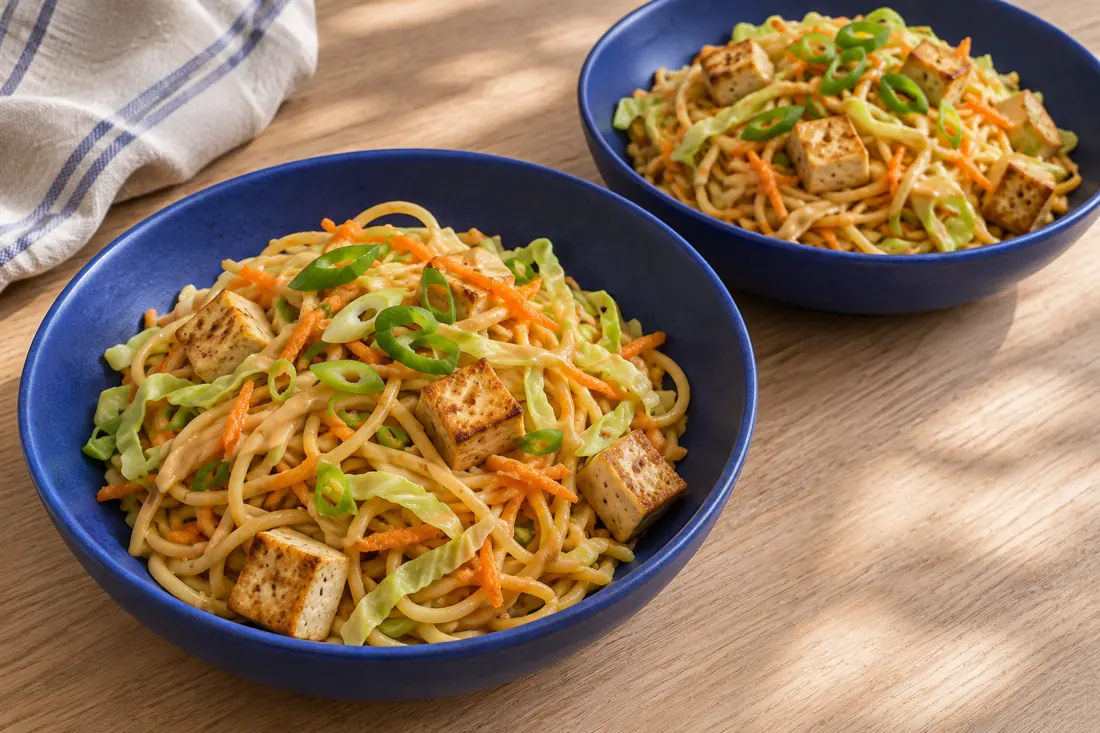
Peanut tofu cabbage noodles for two combine browned tofu, tender ribbons of cabbage, and a peanut-lime sauce in two generously vegetable-filled bowls. Ordinary dried spaghetti works well, so the recipe does not depend on finding a particular fresh noodle. The sauce is mixed separately, then loosened with water until it coats the noodles without becoming a heavy paste.
This small batch is useful when you have half a block of tofu or part of a cabbage to use. The vegetables are cooked briefly so they bend around the noodles while keeping a little bite. Browning the tofu first and returning it at the end gives its surface a chance to develop before the moist cabbage enters the pan.
Jump to Recipe · Rate this recipe
Keep the peanut sauce separate until the noodles are ready
Brown tofu first
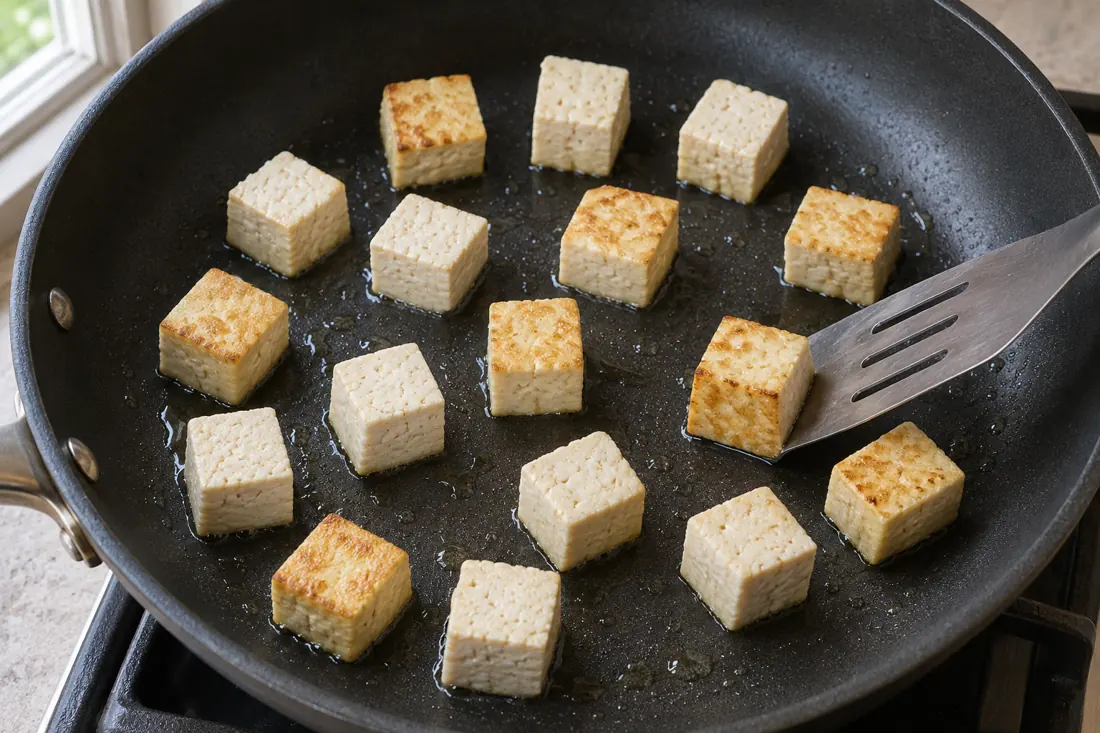
Dry the cubes and give them room to form a crust before the cabbage adds moisture.
Cook cabbage to preference
Thin shreds wilt quickly; thicker ribbons need a short covered stage followed by uncovered evaporation.
Thin sauce gradually
Use hot noodle water a spoonful at a time so the peanut mixture coats rather than floods the pan.
Toss only after the noodles, tofu and cabbage are hot. If the sauce tightens while standing, loosen it before adding more peanut butter or oil.
Set up the three parts before cooking
You will prepare tofu, sauce, and noodles, but the work can overlap. Press the tofu while cutting cabbage and measuring the sauce. Put the pasta water on while the skillet heats. Have everything within reach before cooking the garlic, which can burn quickly in an empty hot pan.
Choose extra-firm water-packed tofu or a firm, vacuum-packed tofu intended for frying. Silken tofu is too delicate for the turning and tossing used here. House Foods recommends pressing tofu for about 15–30 minutes to remove excess moisture and improve handling. Fifteen minutes is a practical starting point for this small portion; blot it again after cutting.
Peanut tofu cabbage noodles for two
Yield: 2 main-course bowls. Preparation: 15 minutes, including tofu pressing. Cooking: about 20 minutes. Total: about 35 minutes.
Affiliate disclosure: As an Amazon Associate I earn from qualifying purchases. Paid links open Amazon search results.
Equipment: a saucepan for pasta, colander (paid link), 10- to 12-inch nonstick skillet, bowl and whisk, tongs (paid link), cutting board, and a small plate for the tofu.
For the noodles and vegetables
- 7 ounces extra-firm tofu, drained and pressed, then cut into 3/4-inch cubes
- 4 ounces dried spaghetti
- 2 teaspoons neutral oil, divided
- 3 cups thinly sliced green cabbage, about 6 ounces
- 1/2 cup coarsely grated carrot
- 1 garlic clove, minced
- 1 teaspoon finely grated fresh ginger
- 1 tablespoon water for steaming the cabbage
- 1 scallion, thinly sliced, for finishing
For the peanut sauce
- 3 tablespoons smooth peanut butter, stirred well before measuring
- 1 tablespoon reduced-sodium soy sauce
- 1 tablespoon fresh lime juice
- 1 teaspoon packed brown sugar
- 1/4 cup warm water, plus 1–3 tablespoons for loosening if needed
- 1/4 teaspoon crushed red pepper flakes, optional
Step-by-step cooking guide
- Press, cut, and dry the tofu. Wrap the drained portion in a clean towel, place it between two plates, and weight the top plate lightly. After about 15 minutes, cut into cubes and blot the cut surfaces. Keep the pieces similar in size so they brown at a similar pace.
- Whisk the sauce. Combine peanut butter, soy sauce, lime juice, brown sugar, warm water, and optional pepper flakes. It may stiffen at first; keep whisking until smooth. It should pour from a spoon in a broad ribbon. Set aside.
- Boil the spaghetti. Cook in water according to the package directions, stopping when tender with a little firmness. Drain, reserving a small cup of the cooking water if desired. If the skillet is not ready, return the noodles to the warm pot and cover briefly.
- Brown the tofu. Meanwhile, warm 1 teaspoon oil in the nonstick skillet over medium heat. Add the tofu in one layer. Cook for 8–10 minutes, turning carefully to brown two or three sides. Transfer to the plate. A firm golden surface is enough; every cube does not need six browned faces.
- Cook the cabbage. Add the remaining teaspoon oil, cabbage, and carrot to the skillet. Cook over medium heat for 3 minutes, tossing occasionally. Add the tablespoon water and cook for another 1–2 minutes, until the cabbage bends but is not limp. Stir in garlic and ginger for the final 30 seconds.
- Coat the noodles. Lower the heat. Add the drained spaghetti and peanut sauce. Lift and turn with tongs for about 1 minute, adding a tablespoon of warm water at a time if the sauce clings in heavy patches. The noodles should separate easily as you toss.
- Return the tofu. Fold in the browned cubes and heat briefly until everything is hot. Avoid prolonged boiling, which thickens the sauce further. Divide into two bowls and scatter the sliced scallion over the top. Taste before adding extra soy sauce.
Get a coating sauce instead of a sticky paste
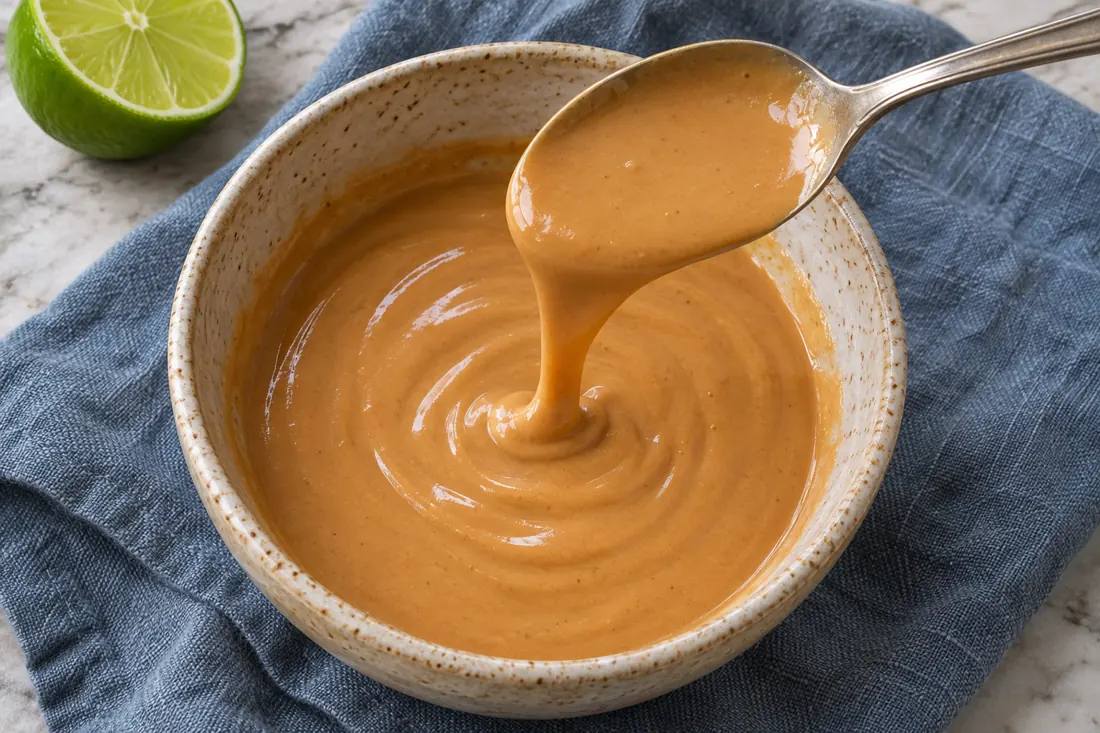
Peanut butter varies substantially between jars. A natural peanut butter may have oil separated on top and dense solids below. Stir the entire jar before measuring, otherwise one spoonful can be oily and another unusually dry. Sweetened commercial peanut butter also works, but reduce or omit the brown sugar until you taste the sauce.
Warm water helps the peanut butter combine with the other liquids. The mixture can look thicker for a moment after the first splash; that does not mean it has failed. Continue whisking and add the measured water gradually. Starting with a pourable sauce makes it easier to distribute across a small amount of noodles.
The sauce thickens again when it touches hot pasta. Use low heat and add more water in tablespoon amounts rather than adding more oil. The extra liquid is especially helpful if the noodles sat for a few minutes after draining. Stop heating once everything is coated and hot; a long simmer is not needed.
Cut cabbage for the way you want to eat it
Remove the tough central core, lay a wedge flat, and slice across it into thin ribbons. Long, very wide strips can pull an entire forkful out of the bowl. Cutting the ribbons once across the middle makes them easier to twirl with spaghetti while keeping visible pieces of vegetable.
Green cabbage gives a mild flavor and sturdy texture. Napa cabbage softens faster, so shorten the cooking stage and use very little steaming water. Red cabbage works but can tint the sauce. Regardless of type, avoid crowding the pan with a large unmeasured pile; excess vegetable moisture dilutes the sauce and makes the noodles harder to toss.
Swaps worth making carefully
Noodles: Use an equal dry weight of linguine or another wheat noodle with similar thickness. Rice noodles need their own package method and can break with rough handling; fold them gently with a broad spatula. Do not substitute the same weight of fresh noodles for dried noodles, because fresh noodles already contain substantial water.
Peanut butter: Smooth sunflower seed butter is a possible flavor variation, but it is not automatically a safe substitute for someone with an allergy; review labels and cross-contact information. Tahini produces a more bitter sesame sauce and may need different seasoning. Treat it as a separate variation rather than expecting the same peanut flavor.
Tofu: A firmer vacuum-packed product may require little pressing. Seasoned baked tofu can be warmed and folded in, but reduce the soy sauce initially because its existing seasoning varies. Keep any unused tofu according to its package storage directions and use the earlier applicable deadline.
If something goes wrong
- The tofu sticks: Let the first surface brown before turning and use a thin spatula. Repeated nudging can tear a crust that is still forming.
- The cabbage is watery: Cook it briefly uncovered before adding noodles. Do not pour all that liquid into the measured peanut sauce without reassessing consistency.
- The sauce is too salty: Add a little more plain cooked pasta or cabbage. Extra lime may sharpen it, but it does not remove salt.
- The noodles clump: Lower the heat, add warm water, and separate them gently with tongs. Forceful pulling can shred softened noodles.
Make the bowls suit your table
Serve the noodles as soon as they are finished, while the sauce is loose and the tofu surfaces still have some texture. Put lime wedges, additional sliced scallion, and chile flakes on the table. A few thin cucumber slices are enough for a cool side; the dish already includes a substantial amount of cabbage.
If you want to make peanut butter from scratch for another cooking project, see the homemade peanut butter guide. For a different noodle texture, the site’s sweet potato glass noodle recipe explains another family-style noodle dinner. Follow that noodle’s own cooking method rather than carrying over spaghetti timing.
Pack and reheat leftovers
Refrigerate noodles promptly in shallow containers within 2 hours, or 1 hour when temperatures exceed 90°F. Keep the refrigerator at 40°F or below and use the leftovers within 3–4 days, consistent with USDA guidance. The sauce will become firmer as it cools.
For reheating, add a tablespoon or two of water per portion and cover loosely in the microwave. Stir or turn the noodles partway through, then heat until 165°F throughout, checking more than one spot. A skillet also works over moderate heat with water and a brief covered stage. Freezing is possible, but tofu becomes more porous and cabbage softer; fresh preparation gives a better texture.
Frequently asked questions
Can I make the sauce in advance?
Yes. Refrigerate it in a covered container and stir in warm water when ready to use. It will usually thicken when chilled. Preparing the sauce ahead is more reliable than holding fully dressed noodles for a long time.
Do I have to use cornstarch on the tofu?
No. This version browns dried tofu directly in a nonstick pan. It gives a firm surface without an extra coating. The tofu will soften somewhat once folded into sauce.
Can I leave out the sugar?
Yes, especially with a sweetened peanut butter. Taste the sauce before it touches uncooked ingredients. The small amount of sugar balances lime and soy; it is not required for thickening.
Are peanut tofu cabbage noodles for two gluten-free?
The written recipe contains wheat spaghetti and may contain wheat in soy sauce. A gluten-free noodle and appropriately labeled tamari can change that, but check every ingredient and use the replacement noodle’s own cooking instructions.
Can I double the recipe?
Yes, but brown the tofu in batches and use a larger skillet or toss the finished components in the pasta pot. Overcrowding the tofu and cabbage stages produces more steaming and less browning.
Peanut Tofu Cabbage Noodles for Two
Ingredients
Equipment
Method
- Press, cut, and dry the tofu. Wrap the drained portion in a clean towel, place it between two plates, and weight the top plate lightly. After about 15 minutes, cut into cubes and blot the cut surfaces. Keep the pieces similar in size so they brown at a similar pace.
- Whisk the sauce. Combine peanut butter, soy sauce, lime juice, brown sugar, warm water, and optional pepper flakes. It may stiffen at first; keep whisking until smooth. It should pour from a spoon in a broad ribbon. Set aside.
- Boil the spaghetti. Cook in water according to the package directions, stopping when tender with a little firmness. Drain, reserving a small cup of the cooking water if desired. If the skillet is not ready, return the noodles to the warm pot and cover briefly.
- Brown the tofu. Meanwhile, warm 1 teaspoon oil in the nonstick skillet over medium heat. Add the tofu in one layer. Cook for 8–10 minutes, turning carefully to brown two or three sides. Transfer to the plate. A firm golden surface is enough; every cube does not need six browned faces.
- Cook the cabbage. Add the remaining teaspoon oil, cabbage, and carrot to the skillet. Cook over medium heat for 3 minutes, tossing occasionally. Add the tablespoon water and cook for another 1–2 minutes, until the cabbage bends but is not limp. Stir in garlic and ginger for the final 30 seconds.
- Coat the noodles. Lower the heat. Add the drained spaghetti and peanut sauce. Lift and turn with tongs for about 1 minute, adding a tablespoon of warm water at a time if the sauce clings in heavy patches. The noodles should separate easily as you toss.
- Return the tofu. Fold in the browned cubes and heat briefly until everything is hot. Avoid prolonged boiling, which thickens the sauce further. Divide into two bowls and scatter the sliced scallion over the top. Taste before adding extra soy sauce.