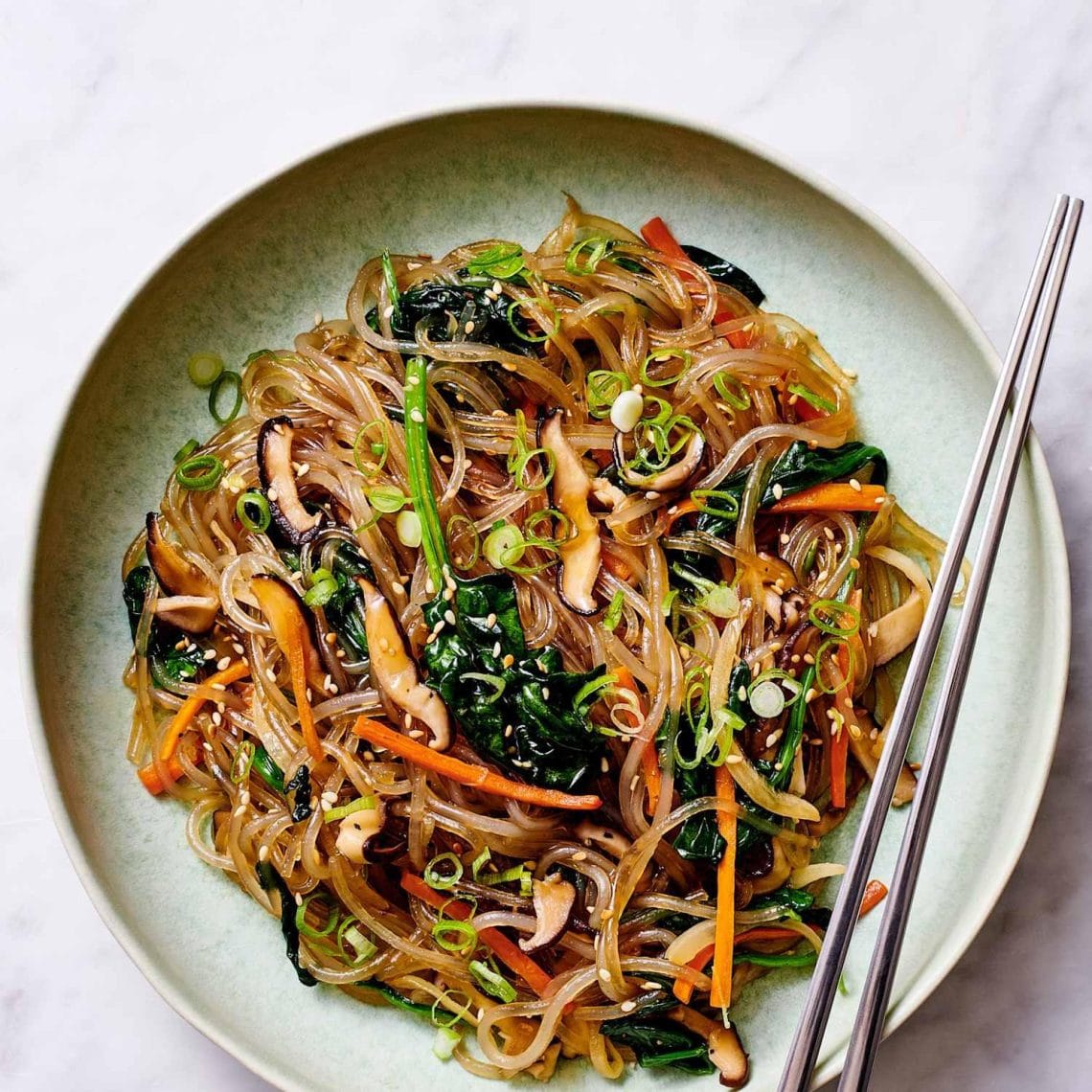
This sweet potato glass noodle recipe makes a colorful, vegetarian japchae-style dish with carrots, mushrooms, spinach, and a savory-sweet sauce.
The cooking order matters more than speed: soften the noodles properly, let mushroom moisture evaporate, then toss everything together briefly. The result should be glossy and springy, with vegetables that still have shape.
Start with the right noodle package
Look for Korean glass noodles labeled dangmyeon. They are starch noodles, not spiralized fresh sweet potato. Product formulas vary: Sempio’s glass-noodle information, for example, lists both sweet potato and tapioca starch. Check your package rather than assuming every product has the same ingredients or cooking instructions.
This version uses a simple vegetable skillet and a measured sauce inspired by japchae. It is not presented as the only traditional method. Preparing the vegetables together in stages makes it practical for a home dinner while still giving firmer ingredients a head start.
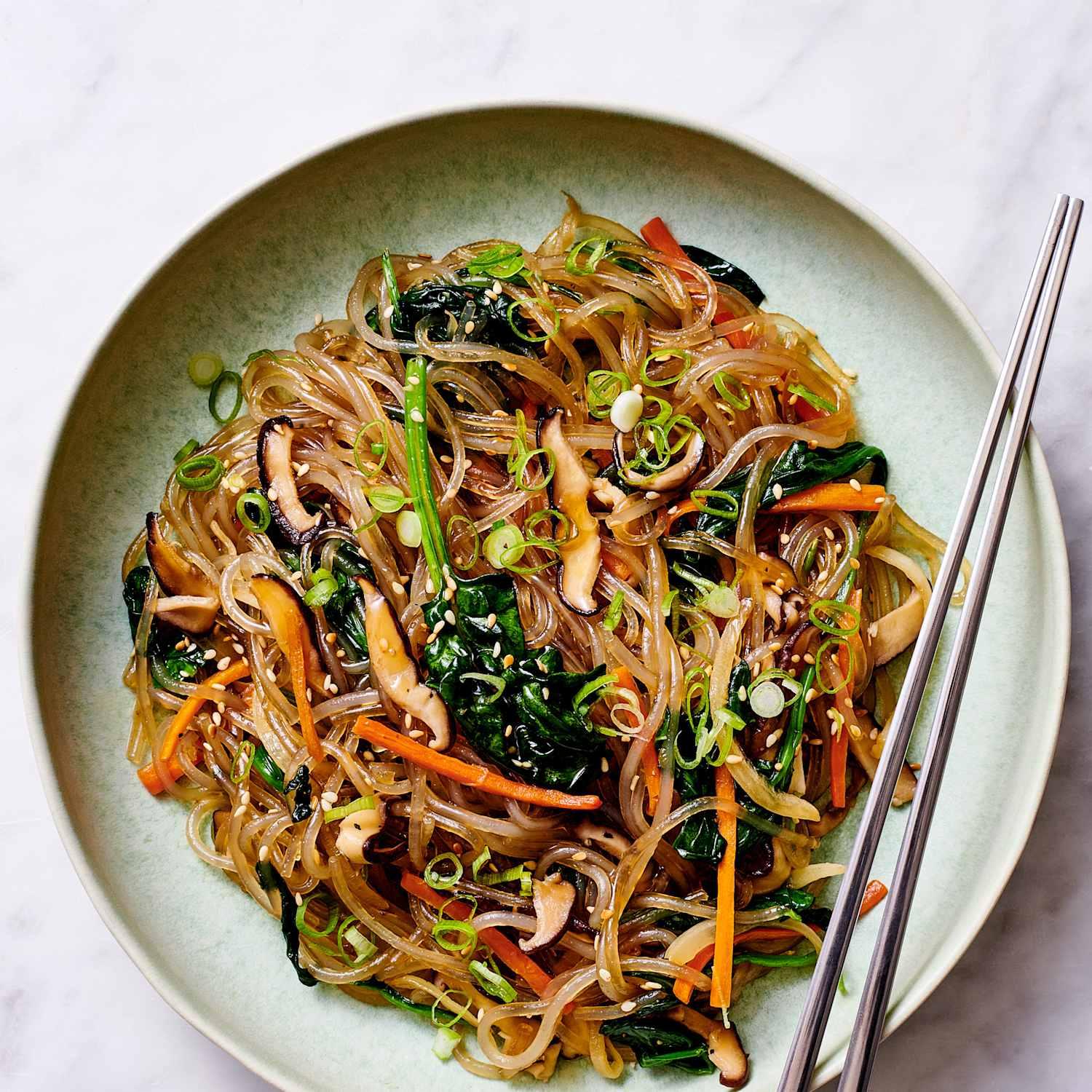
Set up two ingredient groups
Noodles and vegetables
- 8 ounces dry sweet potato glass noodles
- 1 teaspoon sesame oil for drained noodles
- 1 tablespoon neutral cooking oil
- 1 medium carrot, cut into thin strips
- 1 small bell pepper, thinly sliced
- 1 cup sliced mushrooms
- 2 cups fresh spinach
- ½ small yellow onion, thinly sliced
- 2 green onions, sliced
Sesame-soy sauce
- ¼ cup soy sauce, preferably reduced sodium
- 1 tablespoon sesame oil
- 1 tablespoon brown sugar
- 1 tablespoon rice vinegar
- 2 garlic cloves, finely minced
- 1 teaspoon grated fresh ginger
- 1 teaspoon toasted sesame seeds
- ¼ teaspoon black pepper
- Up to 2 tablespoons water, only if needed
The sesame oil is divided between two jobs: 1 teaspoon coats the drained noodles, and 1 tablespoon flavors the sauce. The neutral oil goes in the hot skillet. Measuring these separately prevents an accidental double pour.
Sweet potato glass noodle recipe: the cooking sequence
Step 1Mix the sauce before heating the skillet
Whisk soy sauce, the tablespoon of sesame oil, brown sugar, rice vinegar, garlic, ginger, sesame seeds, and pepper in a small bowl. Stir until the sugar begins to dissolve. Keep the optional water separate; it is a correction for a dry pan, not liquid that must automatically be added.
Step 2Cook the noodles by their package directions
Use a large pot and follow the stated soaking or boiling method. Brands and thicknesses differ, so there is no single reliable boiling time for every bag. Taste a cooled strand near the end: it should bend easily and feel elastic, with no hard center. Finish this cooking before combining the noodles with vegetables.
Step 3Drain and manage the long strands
Drain thoroughly in a colander. Rinse only if your package calls for it, then shake off excess water. Use clean kitchen scissors to shorten very long strands to an easier serving length. Toss gently with the measured teaspoon of sesame oil while you finish the vegetables.
Step 4Give the firm vegetables a head start
Heat the neutral oil in a wide skillet or wok over medium-high heat. Add onion and carrot and cook for 2–3 minutes, stirring, until the onion starts to soften. Add mushrooms and cook another 3–4 minutes, allowing much of their released moisture to evaporate. Lower the heat if the edges scorch.
Step 5Add pepper, then the leafy vegetables
Add bell pepper and cook for about 2 minutes so it softens slightly without collapsing. Fold in spinach and the sliced green onions, keeping the reserved tablespoon aside. Stir just until the spinach wilts. If water pools in the pan, let it evaporate before adding the noodles.
Step 6Toss briefly, taste, and serve
Add the cooked noodles and sauce. Lift and turn with tongs until coated, glossy, and hot, usually about 2–3 minutes. If they seem dry or tightly tangled, add water a teaspoon at a time, up to 2 tablespoons. Taste a cooled bite and finish with the reserved green onion; the sesame seeds are already in the sauce.
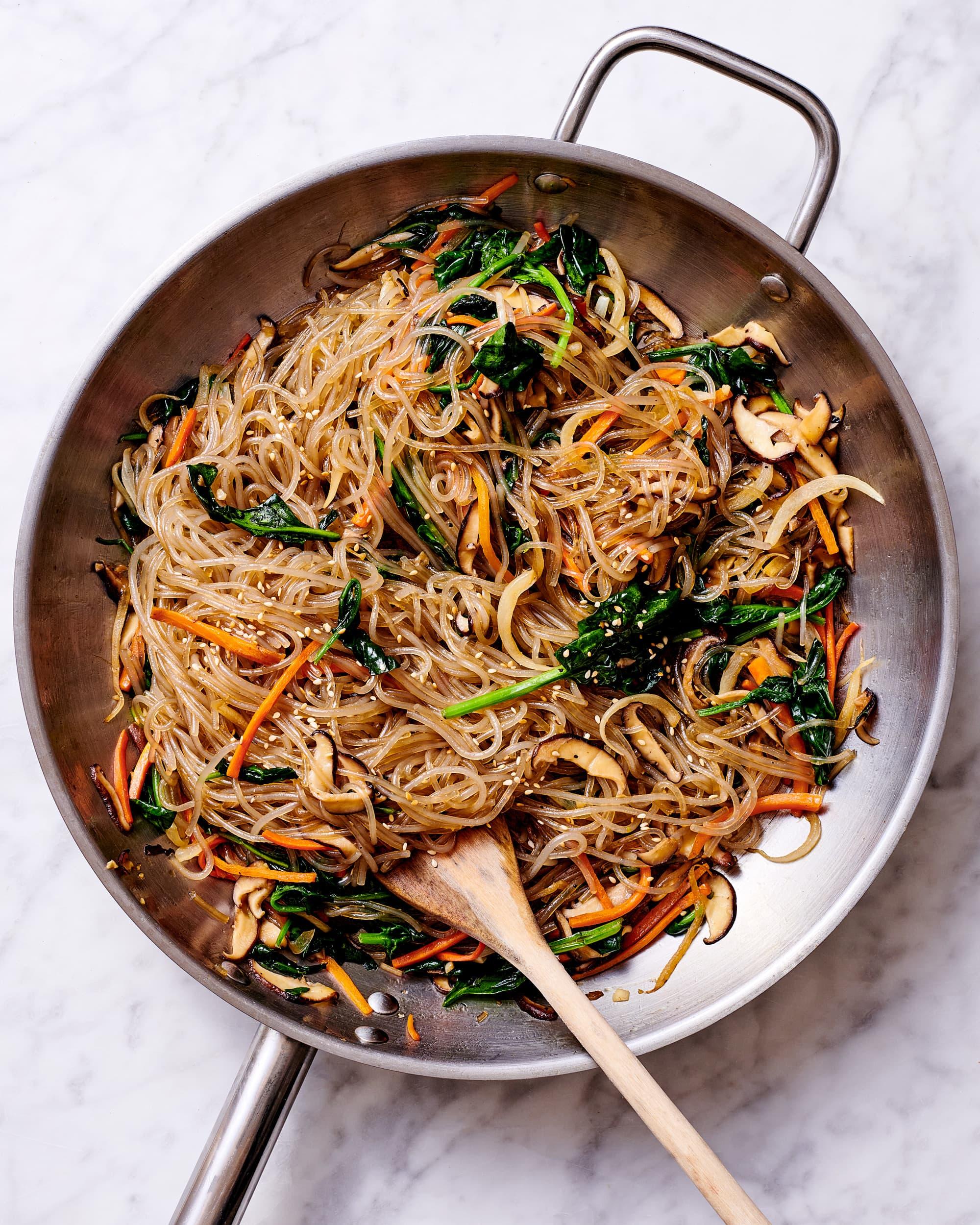
What the texture is telling you
| What you notice | How to respond |
|---|---|
| Hard or brittle center | Finish the package’s noodle-cooking step before tossing with vegetables. A quick sauce toss will not reliably cook a firm center. |
| A tight tangle | Shorten strands with clean scissors and lift gently. Use a little of the optional water if needed. |
| Watery skillet | Drain noodles well and cook off mushroom moisture before combining. Do not pour in all the optional water. |
| Soft, broken noodles | Shorten the final toss next time and handle them gently. Fully cooked noodles need coating and warming. |
| Too salty | Add no more soy sauce. Balance the meal with plain rice or additional separately cooked, unseasoned vegetables. |
More oil will not fix a hard noodle center, and more cooking will not reverse excess salt. Identify the problem first. For an especially crowded skillet, combine in two batches, dividing both vegetables and sauce so the seasoning stays even.
Keep the next batch flexible
Use similar amounts of vegetables that cook at similar speeds. Thinly sliced cabbage can replace part of the pepper; baby spinach is convenient because it wilts quickly. Add firmer vegetables early and tender leaves late. A large volume of watery vegetables needs more pan space or separate cooking.
Serve as a vegetable main with separately cooked tofu, or as a side with chicken. The rice cooking guide helps if you want a plain rice accompaniment. For the chicken, use the chicken thigh doneness guide and keep its cooking separate from the short noodle toss.
Check labels when serving anyone with an allergy or avoiding gluten. The recipe contains soy and sesame; many soy sauces also contain wheat. A gluten-free noodle does not make the entire finished dish gluten-free. Choose suitable labeled products throughout.
Store gently and reheat with a little moisture
Refrigerate in shallow containers within 2 hours, or 1 hour above 90°F. Keep at 40°F or below and use within 3–4 days. Reheat leftovers to 165°F, following USDA leftover guidance.
For one portion, begin with about a teaspoon of water and cover loosely while warming. Stir and check several places, then uncover briefly if excess moisture remains. Chilled starch noodles can feel firmer, so loosen them with gentle lifting instead of pulling hard. Frozen portions may soften after thawing; thaw in the refrigerator.
Before you open the noodles
Can I use rice noodles instead?
They need their own cooking method and have a different texture. This sweet potato glass noodle recipe is written for dangmyeon, so follow the new noodle package and expect a different result if substituting.
Does the noodle water need salt?
Follow the package. The sauce already supplies a substantial savory seasoning, so do not automatically treat these like pasta boiled in heavily salted water.
Can I double everything?
Double ingredients but work in batches for the skillet stage. A full pot may need longer to return to a boil; judge the noodles by their texture and package guidance rather than doubling the clock.
What else can I make with the pantry vegetables?
The salsa rice with black beans and corn is another practical pantry dinner with a different flavor profile. Keep its seasoning separate from this sesame-soy sauce.
Print the vegetable noodle recipe
The card lists every oil and sauce quantity separately. The 40-minute estimate assumes a typical boiling method; add any soaking time required by your noodle package.
THE COMPLETE RECIPE
Sweet Potato Glass Noodles With Vegetables
Yield: 4 main portions
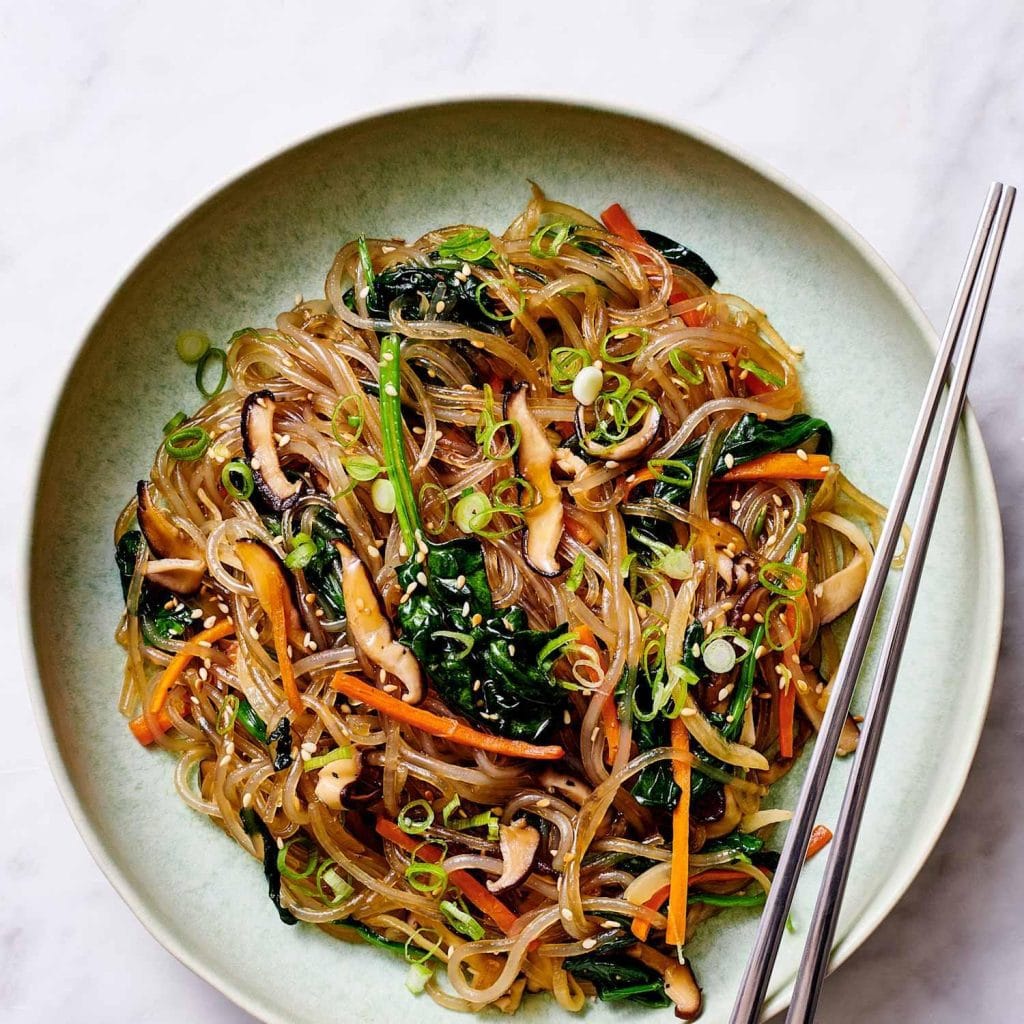
Ingredients
- 8 ounces dry sweet potato glass noodles Dangmyeon; follow package cooking instructions.
- 1 teaspoon sesame oil For the drained noodles; separate from the sauce oil.
- 1 tablespoon neutral cooking oil For the skillet.
- 1 medium carrot Cut into thin strips.
- 1 small bell pepper Thinly sliced.
- 1 cup sliced mushrooms
- 2 cups fresh spinach Washed and well drained.
- 1/2 small yellow onion Thinly sliced.
- 2 green onions Sliced; reserve 1 tablespoon for serving.
- 1/4 cup soy sauce Preferably reduced sodium; check labels if avoiding wheat.
- 1 tablespoon sesame oil For the sauce.
- 1 tablespoon brown sugar
- 1 tablespoon rice vinegar
- 2 garlic cloves Finely minced.
- 1 teaspoon grated fresh ginger
- 1 teaspoon toasted sesame seeds
- 1/4 teaspoon black pepper
- 2 tablespoons water Maximum; add only as needed during the final toss.
Equipment
- 1 large cooking pot
- 1 wide skillet or wok
- 1 Colander
- 1 tongs and clean kitchen scissors
Instructions
- Prepare sauce and vegetables. Slice all vegetables before cooking and reserve 1 tablespoon sliced green onion for serving. Whisk soy sauce, the tablespoon of sauce sesame oil, brown sugar, vinegar, garlic, ginger, sesame seeds, and pepper. Keep optional water separate.
- Cook the noodles. Follow the package soaking or boiling directions. Taste a cooled strand: it should be fully tender and elastic without a hard center. Package-required soaking can add to the estimated time.
- Drain and coat. Drain well, rinsing only if the package directs. Shorten long strands with clean kitchen scissors if desired, then gently toss with the separate teaspoon of sesame oil.
- Cook firm vegetables. Heat neutral oil in a wide skillet over medium-high heat. Cook onion and carrot 2–3 minutes, then add mushrooms and cook 3–4 minutes until much of their moisture evaporates. Reduce heat if edges scorch.
- Add pepper and greens. Cook bell pepper for about 2 minutes. Add spinach and the remaining green onions and stir until the spinach wilts. Let pooled water evaporate before adding noodles.
- Toss and serve. Add noodles and sauce. Lift and turn with tongs until glossy and heated through, usually 2–3 minutes. Add water a teaspoon at a time only if needed, up to 2 tablespoons total. Taste a cooled bite and finish with reserved green onion. The measured sesame seeds are already in the sauce.
Notes
Rate This Recipe
Made this recipe? Choose a star rating in the comment form and share how it turned out. Your cooking time and any ingredient changes can help the next reader.
Rate This RecipeHow was the noodle texture? Share your star rating, noodle brand, and any vegetable swaps.
Rate This Recipe & Leave a Review