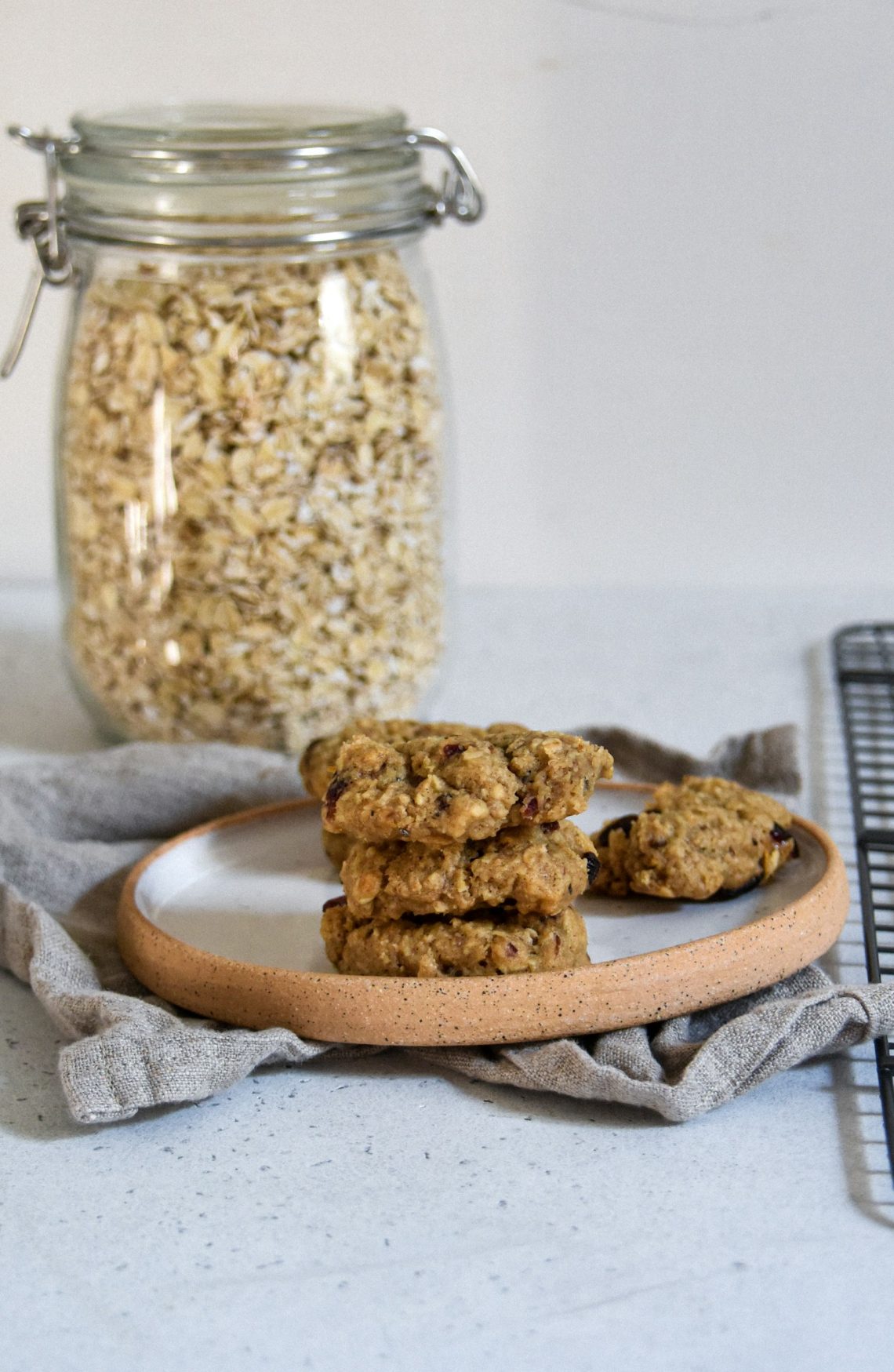
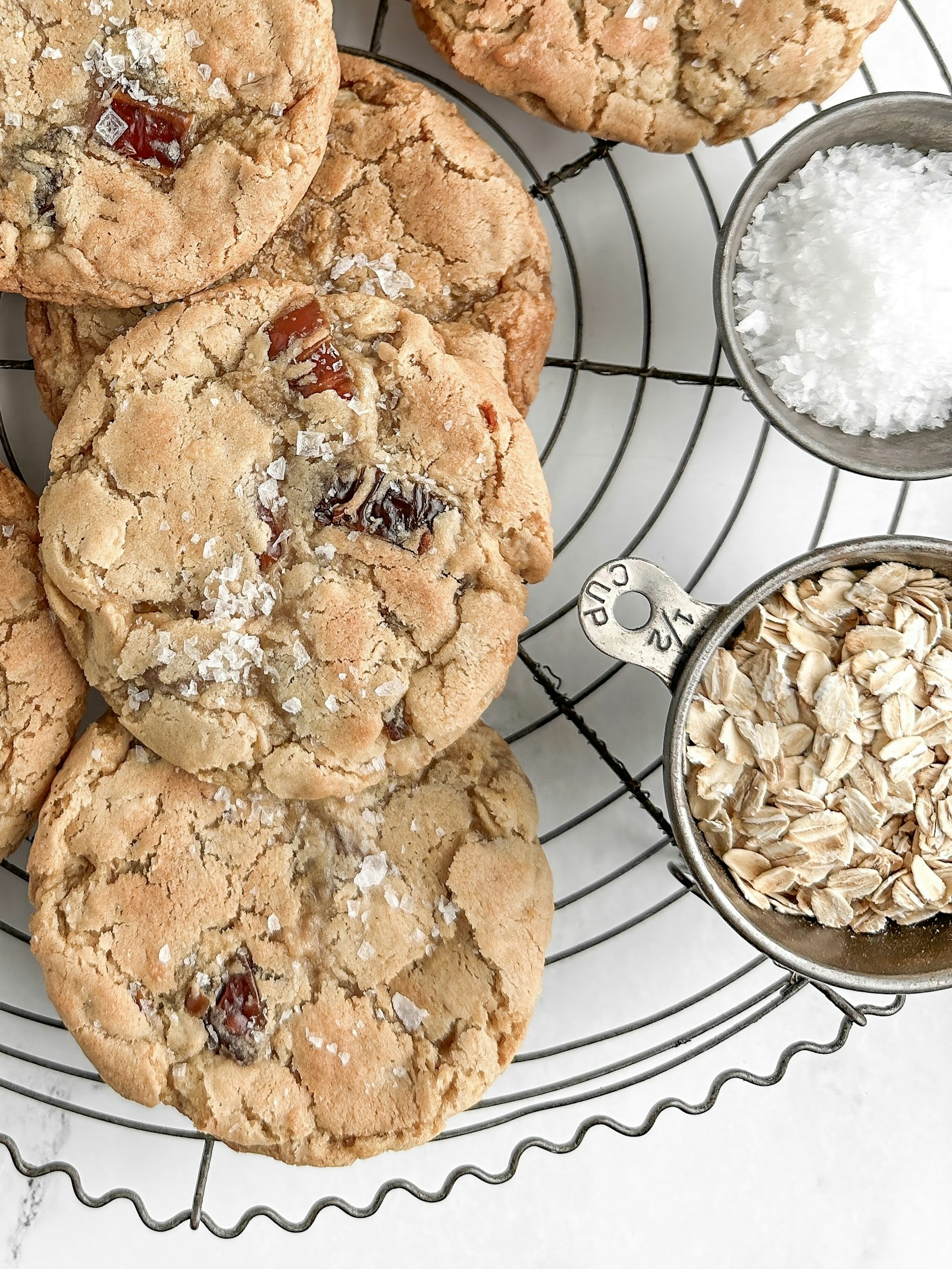
Small batch tahini oatmeal cookies without butter make ten cookies with a noticeable sesame flavor, softly chewy centers and firmer edges. Tahini supplies much of the fat, with a little neutral oil helping the dough come together. Rolled oats add texture, and ordinary all-purpose flour gives the cookies structure.
Affiliate disclosure: As an Amazon Associate I earn from qualifying purchases. These paid links open Amazon search results for comparing equipment.
Line a baking sheet (paid link) with parchment for the cookie dough, then have a cooling rack (paid link) ready for cooling the small batch after baking.
This recipe contains an egg and wheat flour. The absence of butter does not make it vegan or gluten-free. Tahini is sesame paste, so it is also important to consider sesame when choosing the recipe for your household. No special flour blend or mixer is needed.
Use dough consistency to control cookie spread
- Stir tahini until the oil and solids are completely recombined before measuring.
- Let oats hydrate for the stated rest so the dough thickens evenly.
- Portion equal cookies and leave enough space for the first batch to show the true spread.
- If the test cookie spreads too far, chill the remaining dough rather than adding a large amount of flour.
Remove the cookies when the edges are set and the centers still look slightly soft. They continue firming on the hot pan, which protects a small butter-free batch from becoming dry.
Stir the tahini before doing anything else
Tahini often separates into a thick layer and a pool of oil. Measuring only the oily top or the dry paste underneath changes the dough. Stir the entire container thoroughly until it is smooth and uniform, reaching the bottom with a sturdy spoon, then measure the amount for the cookies.
Use plain, pourable tahini made from sesame seeds. Very stiff, chalky paste can produce dry dough, while a product thinned into a prepared sauce is not suitable. If the jar is cold and difficult to stir, let it stand briefly at room temperature. Do not microwave the jar, particularly if it has any foil or metal parts.
Taste a little before baking. Tahini has a sesame bitterness that is part of its flavor, but rancid or harshly stale tahini will not improve in a cookie. Choose a jar you enjoy in a simple sauce or spread.
Recipe details
- Yield: 10 small cookies.
- Prep: 15 minutes.
- Chill: 15 minutes.
- Bake: about 10–13 minutes.
- Cool: 15 minutes; approximately 57 minutes total.
- Oven: 350°F / 175°C, conventional.
- Equipment: bowl, whisk, spatula, baking sheet, parchment and cooling rack.
Ingredients
- ¼ cup (60 g) well-stirred tahini
- ¼ cup packed (50 g) light brown sugar
- 1 tablespoon (15 ml) neutral oil
- 1 large egg
- ½ teaspoon vanilla extract
- ⅜ cup (45 g; 6 tablespoons) all-purpose flour
- ⅔ cup (60 g) old-fashioned rolled oats
- ⅛ teaspoon baking soda
- ¼ teaspoon fine salt
- ¼ teaspoon ground cinnamon, optional
Weighing the flour is easier than measuring an unusual fraction of a cup, and it prevents an overpacked measure from drying the dough. The oats should be ordinary rolled oats, not steel-cut. Brown sugar adds sweetness and moisture; replacing it with a liquid sweetener changes the dough rather than making an equivalent swap.
For the small flour measure, the King Arthur Baking ingredient weight chart lists 120 g per cup of all-purpose flour. Six level tablespoons correspond to 45 g using that reference; a scale removes the need to count individual spoonfuls.
Mix small batch tahini oatmeal cookies without butter
- Prepare the sheet. Line a baking sheet with parchment. Set the oven rack in the center. You can preheat the oven while the dough chills.
- Mix the tahini base. Whisk tahini, brown sugar and oil until evenly blended. Break apart any sugar lumps. Add the egg and vanilla and whisk until the mixture is uniform.
- Add dry ingredients. Stir flour, oats, baking soda, salt and optional cinnamon in a small bowl. Add to the tahini mixture and fold until no loose flour remains. The dough should be soft and slightly sticky, with visible oats.
- Chill briefly. Refrigerate for 15 minutes. This gives the oats time to absorb moisture and makes the portions easier to shape. Heat the oven to 350°F / 175°C during the chill.
- Divide evenly. Make ten portions, roughly 28 g each. Set them on the prepared sheet at least 2 inches apart. Flatten each gently to about ½ inch thick using slightly damp fingertips or the back of a spoon.
- Bake. Bake for 10–13 minutes, until the edges look set and lightly golden. The centers can remain soft but should no longer look wet. Avoid waiting for the whole surface to become deeply brown.
- Cool in stages. Leave cookies on the sheet for 5 minutes, then transfer to a rack for another 10 minutes. They firm as they cool, so moving them immediately can cause breakage.
How to judge this dough
After chilling, a portion should hold a rough mound and flatten without running across the parchment. If it is loose like batter, double-check that the tahini was properly stirred and the flour was measured. A refrigerator-cold egg is fine, but an unusually large egg can add more liquid than the intended large-egg amount.
If the dough is crumbly before chilling, the tahini may be very dry or the flour measure too heavy. Press a portion together before deciding it needs extra liquid. If it truly will not hold, a teaspoon of milk or water is a small corrective trial, but note the change because it is outside the reference formula.
Do not add several spoonfuls of flour to make the dough feel like a stiff butter-cookie dough. Tahini cookies behave differently. Too much added flour can hide the sesame flavor and leave a dry, cakey center.
Control spread with portioning and temperature
All ten portions should be similar in weight and thickness so they bake at the same pace. A tall mound can stay underdone in the center, while a very thin disc can become crisp before the others set. Flattening to a consistent thickness is part of the method, not just a decorative step.
Use a cool baking sheet. If making another batch immediately afterward, let the sheet cool before loading it, or the dough can start spreading before it reaches the oven. Parchment makes release easier and is more predictable here than a heavily greased bare tray.
A darker pan can brown the bottoms more quickly. Check one cookie’s underside carefully near the end, using a spatula. If the bottoms are dark while the tops are pale, move the rack up one level for a future batch and verify the oven temperature.
Flavor changes and their limits
A small amount of finely grated orange zest can complement sesame if you want a citrus note. Start with ½ teaspoon so it does not dominate. The optional cinnamon is similarly modest. This base version contains no raisins or chocolate, making it easier to judge the dough before adding extras.
You can investigate adding a small handful of chopped chocolate, but keep additions restrained. Large chunks make ten small cookies difficult to portion evenly. Quick oats will produce a finer texture; steel-cut oats will stay hard in this short bake and are not a direct substitute.
Peanut butter and sunflower seed butter have different consistencies and flavors, so neither is guaranteed to work as an equal replacement. For another seed-paste breakfast idea, see the site’s apple tahini overnight oats. The pumpkin walnut breakfast cookies use a separate egg-free formula.
Troubleshooting after baking
| Result | Likely reason | Next step |
|---|---|---|
| Cookies crumble when moved | Moved before cooling | Rest on the sheet for five minutes. |
| Dry or cakey centers | Too much flour or overbaking | Weigh flour and check early. |
| Excessive spread | Oily tahini, warm dough or hot tray | Stir the jar, chill dough and use a cool sheet. |
| Harsh sesame flavor | Unpleasant or stale tahini | Taste the tahini before mixing a new batch. |
Keeping the cookies
Cool completely before putting the cookies in an airtight container. Store at cool room temperature for up to three days for best quality, or freeze for up to two months. In a warm, humid kitchen, freezing is a better choice for portions you will not eat promptly.
Thaw covered at room temperature. If you warm one briefly, let it stand before eating because the inside can become hot while the outside feels only warm. Avoid long reheating: the small cookies lose moisture quickly.
Frequently Asked Questions
Can I make these without the egg?
The egg contributes structure and moisture. An egg substitute would need separate validation rather than a promise that the same dough and bake time will work.
Can I use maple syrup instead of brown sugar?
Liquid syrup changes both sweetness and moisture. Use a recipe developed for syrup if that is the ingredient you want to bake with.
Do I need to toast the oats?
No. Toasting is not included in the reference method, and it may change their moisture absorption. Use plain rolled oats from the package.
Why do the centers seem soft out of the oven?
The cookies finish firming as they cool. Set edges and a surface without wet dough are the useful signs before the cooling stage.
Are these nut-free?
The listed ingredients contain sesame rather than tree nuts, but check every product label and shared-equipment information if an allergy is relevant. Do not assume tahini is suitable for everyone avoiding nuts.
Can I double the batch?
Double small batch tahini oatmeal cookies without butter and keep the individual cookie size the same. Bake on separate cool sheets with adequate spacing.
Small-Batch Tahini Oatmeal Cookies Without Butter
Ingredients
Equipment
Method
- Prepare the sheet. Line a baking sheet with parchment. Set the oven rack in the center. You can preheat the oven while the dough chills.
- Mix the tahini base. Whisk tahini, brown sugar and oil until evenly blended. Break apart any sugar lumps. Add the egg and vanilla and whisk until the mixture is uniform.
- Add dry ingredients. Stir flour, oats, baking soda, salt and optional cinnamon in a small bowl. Add to the tahini mixture and fold until no loose flour remains. The dough should be soft and slightly sticky, with visible oats.
- Chill briefly. Refrigerate for 15 minutes. This gives the oats time to absorb moisture and makes the portions easier to shape. Heat the oven to 350°F / 175°C during the chill.
- Divide evenly. Make ten portions, roughly 28 g each. Set them on the prepared sheet at least 2 inches apart. Flatten each gently to about ½ inch thick using slightly damp fingertips or the back of a spoon.
- Bake. Bake for 10–13 minutes, until the edges look set and lightly golden. The centers can remain soft but should no longer look wet. Avoid waiting for the whole surface to become deeply brown.
- Cool in stages. Leave cookies on the sheet for 5 minutes, then transfer to a rack for another 10 minutes. They firm as they cool, so moving them immediately can cause breakage.
Notes
| Result | Likely reason | Next step |
|---|---|---|
| Cookies crumble when moved | Moved before cooling | Rest on the sheet for five minutes. |
| Dry or cakey centers | Too much flour or overbaking | Weigh flour and check early. |
| Excessive spread | Oily tahini, warm dough or hot tray | Stir the jar, chill dough and use a cool sheet. |
| Harsh sesame flavor | Unpleasant or stale tahini | Taste the tahini before mixing a new batch. |