
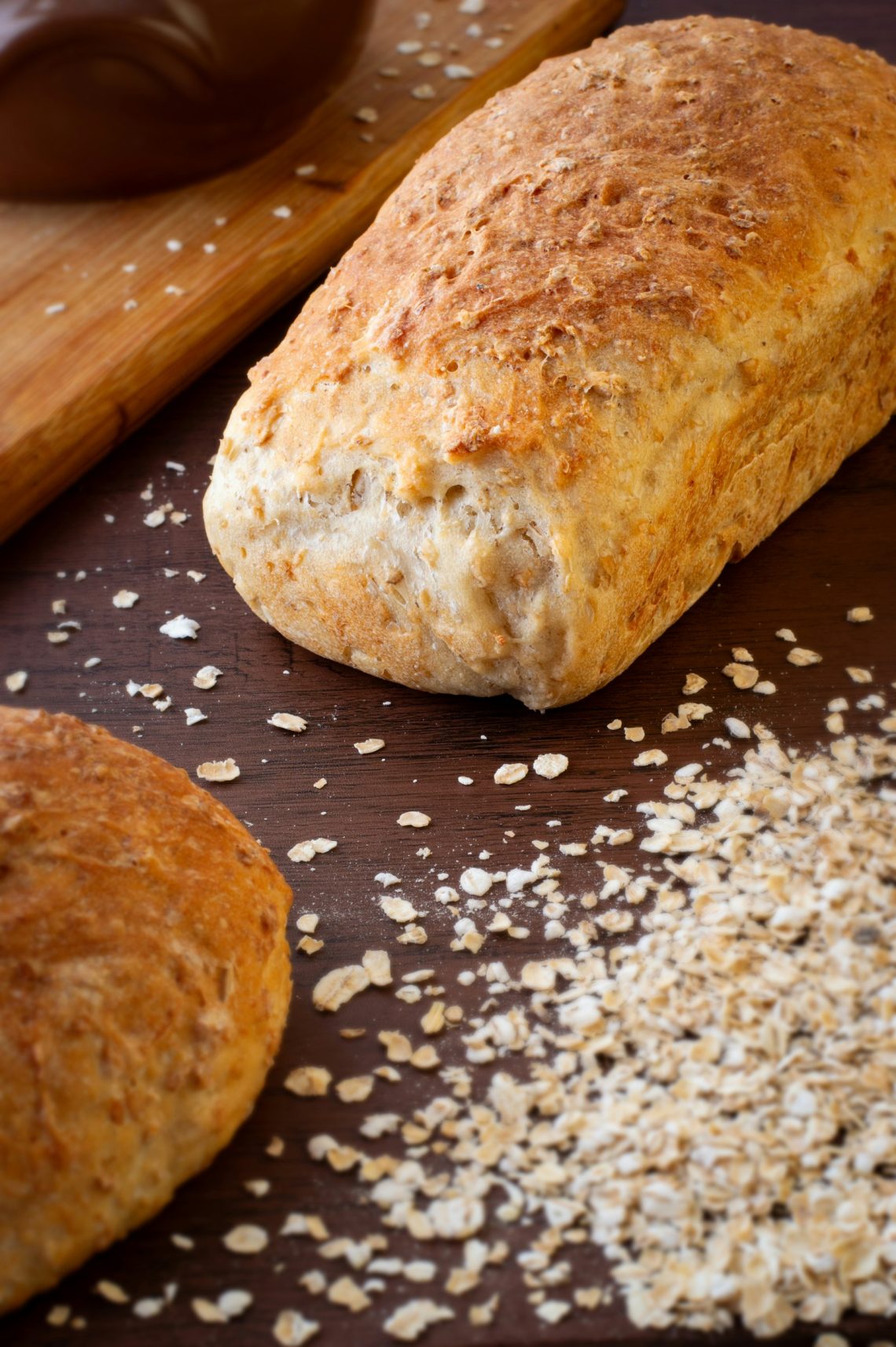
Soft honey oat sandwich bread makes a tender loaf with a mild sweetness and a fine crumb that works for toast, peanut butter sandwiches, or a simple slice with butter. Soaking rolled oats in hot water softens them before they meet the flour, preventing hard oat flakes from interrupting the texture. Honey adds flavor without turning the loaf into a sweet bread.
The recipe is sized for an 8½-by-4½-inch loaf pan. It uses regular bread flour alongside the oats, so the dough rises into a familiar sandwich shape. A little patience at the cooling stage matters: the loaf smells ready long before its crumb is firm enough to slice neatly.
Start by softening the oats
Old-fashioned rolled oats are a good choice because they soften without vanishing entirely. Pour the boiling water over them and stir, then let them stand for about 15 minutes. The mixture will become thick. Stir in the milk, honey, and butter, and check that the mixture is only warm before adding it to the yeast and flour.
Do not use steel-cut oats here. Their coarse pieces require a different cooking process and would stay unpleasantly firm in this loaf. Instant oats absorb differently and can make the dough pastier, so use rolled oats for the most predictable first attempt. The oat mixture should smell toasty and sweet, with no standing hot water that could injure the yeast.
Read the dough instead of adding flour automatically
The dough starts sticky because softened oats and honey hold moisture. Mix until no dry flour remains, pause for 10 minutes, then knead. A dough scraper is helpful when working by hand. After several minutes, the dough should become smoother and gather into a soft ball while still feeling a little tacky.
Add extra flour only a tablespoon at a time if it is impossible to handle. A dry, stiff dough may look tidy but usually produces a dry loaf. The oats interrupt a perfect windowpane test, so look for elasticity rather than a completely transparent sheet. The dough should stretch before tearing and spring back slowly when pressed.
Let the first rise finish properly
Place the dough in a lightly greased bowl, cover, and let it rise until roughly doubled. In a comfortably warm kitchen, that may take 60–90 minutes. Marking the original level on a straight-sided container makes the increase easier to judge. A cold countertop or draft can slow the process considerably.
If you want to prepare ahead, refrigerate the covered dough after mixing and let it rise slowly overnight. The next day, allow enough time for it to become pliable before shaping. Do not place dough in a hot oven to force speed; excessive warmth can melt the butter out and produce uneven fermentation. A sheltered room-temperature spot is usually enough.
Shape for even sandwich slices
Press the risen dough gently into a rectangle about as wide as the loaf pan. Fold one short end toward the center, then roll the dough into a snug log, pressing the seam closed with your fingertips. Set it seam-side down in the greased pan. This shaping gives the loaf an organized structure rather than a collection of loose folds.
Cover and let the loaf rise until the center crowns about an inch above the rim, usually 35–55 minutes. The dough should feel aerated and spring back slowly after a light press. If it springs back immediately, give it more time. If it collapses under a touch, it may have overproofed; bake promptly and expect a lower crown.
Bake and cool before slicing
Bake at 350°F until the top is deep golden and the center reaches approximately 190–195°F. That temperature is a useful bread-doneness cue, especially because honey can brown the crust before the middle is ready. If the top darkens too quickly, tent it loosely with foil for the remaining bake.
Remove the loaf from the pan after about 5 minutes and let it cool on a rack for at least an hour. Leaving it in the pan traps steam against the sides. Cutting while hot can compress the crumb and make an otherwise baked loaf seem gummy. Use a serrated knife and a gentle sawing motion once it has cooled.
Ways to use and store the loaf
Thin slices make good toast; thicker slices hold up to peanut butter or a warm sandwich. Because the loaf is gently sweet, it pairs well with sharp cheese as well as jam. If making French toast, let the slices sit uncovered briefly so their surfaces dry a little before dipping.
Keep the fully cooled loaf wrapped at room temperature for two to three days for best quality, or slice and freeze it. Place parchment between slices if you want to remove them individually. Refrigeration can make plain bread stale faster, so freezing is usually the better longer-term choice. Once you add perishable sandwich fillings, store the assembled food according to those ingredients. Do not sample raw dough; CDC guidance on raw dough explains the risks of uncooked flour and eggs.
Frequently asked questions
Can I use quick oats?
They can work, but the dough may feel softer because the smaller flakes break down more. Keep the oat weight at 60 grams and do not replace them cup for cup with a different grain. Rolled oats give the intended texture.
Can I replace honey with maple syrup?
Use the same weight, 40 grams, for a mild maple version. The flavor will change and the crust may color slightly differently. Do not omit the sweetener completely without expecting a less tender, differently balanced loaf.
Can I use a 9-by-5-inch pan?
Yes, but the loaf will be lower and may finish a little sooner because it spreads across a larger base. Begin checking around 30 minutes. Use the center temperature and crumb structure rather than waiting for the same tall crown.
Why did the loaf sink after baking?
Common causes are overproofing, an underbaked center, or too much extra liquid. Check the center temperature next time and bake while the shaped dough is puffy but still resilient. A collapsed crown cannot be restored, but fully baked slices can still be toasted.
More recipes for your table
Spread a toasted slice with How to Make Homemade Peanut Butter: Texture and Step-by-Step Guide Or use the loaf to make Toasted Peanut Butter and Jelly Sandwich: Skillet Guide
Soft honey oat sandwich bread depends on well-hydrated oats, a dough that stays supple, and enough cooling time. Make one loaf for the next few breakfasts, then freeze the extra slices while the crumb is still fresh.
Soft Honey Oat Sandwich Bread
Ingredients
Equipment
Method
- Combine oats and boiling water in a bowl. Rest 15 minutes. Stir in milk, honey, and butter. Cool to about 100–110°F before proceeding.
- Mix flour, yeast, and salt in a large bowl. Add the oat mixture and stir until combined. Rest 10 minutes, then knead 8–10 minutes until smooth, elastic, and slightly tacky.
- Cover in a lightly greased bowl and let rise until doubled, about 60–90 minutes. Grease an 8½-by-4½-inch loaf pan.
- Gently flatten the dough into a rectangle, roll into a snug log, and pinch the seam closed. Place seam-side down in the pan. Cover and let rise 35–55 minutes until the center is about 1 inch above the rim.
- Heat oven to 350°F. Bake 35–45 minutes until golden and the center registers about 190–195°F. Tent loosely with foil if the crust colors early.
- Rest in the pan 5 minutes, then transfer to a rack. Cool at least 1 hour before slicing. Wrap once fully cool, or freeze sliced portions.




