ONE POT · NO SOAKING · LEMON AND HERBS
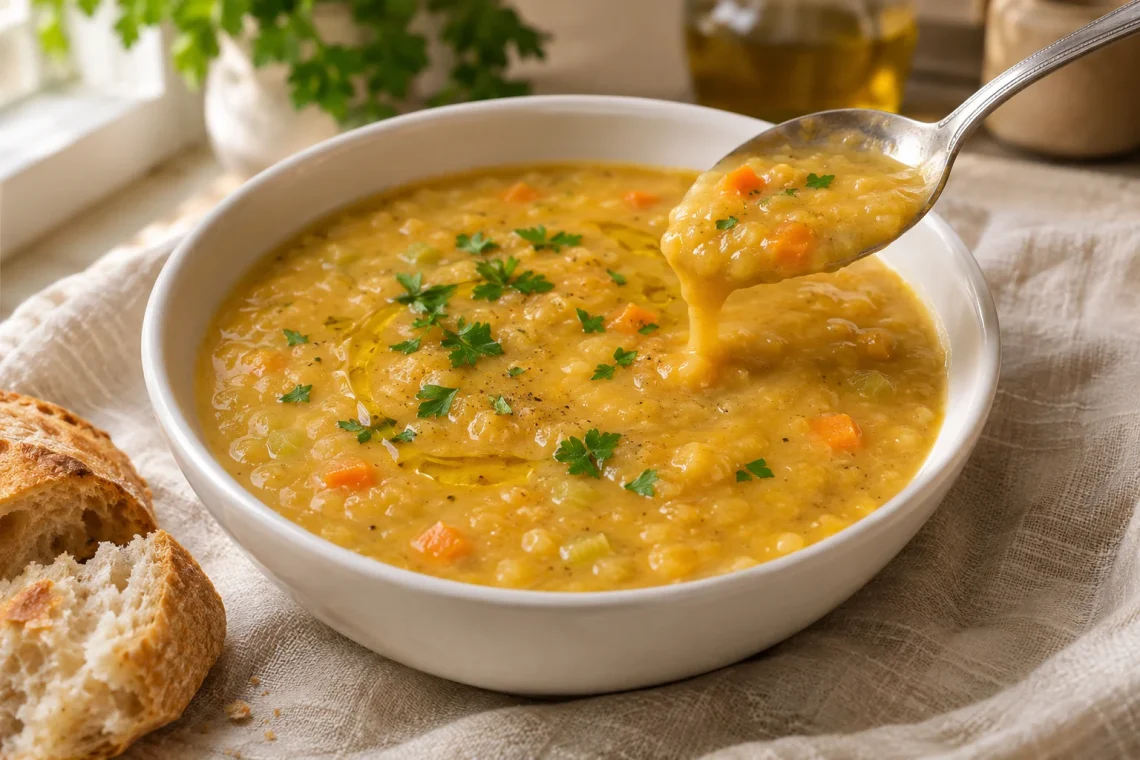
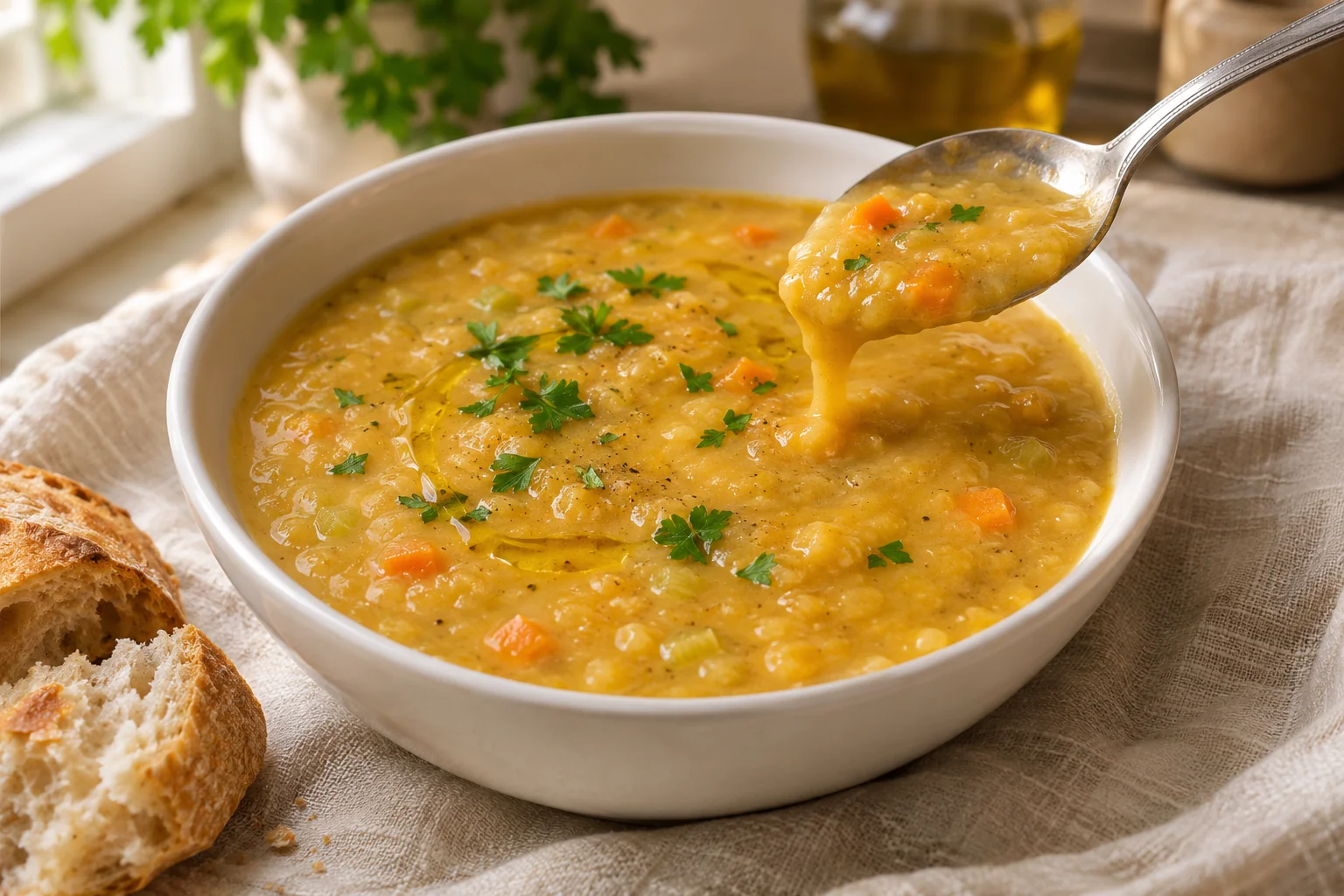
A warm bowl of this yellow split pea soup recipe brings together soft golden peas, sweet carrots, garlic, and herbs, finished with a squeeze of lemon. The peas give the soup its creamy body as they cook, so the base needs neither cream nor flour. Serve it thick and rustic, with parsley and a slice of crusty bread.
The method is straightforward: build flavor in one pot, simmer until the peas lose their firm centers, and adjust the consistency before serving. You can leave the soup rustic or blend it briefly for a smoother finish. The base recipe uses vegetable broth and olive oil, so it is suitable for a vegan meal.
Ingredients · Cooking steps · Storage · Recipe questions
6 generous bowls
Servings
15 minutes
Preparation
60–90 minutes
Gentle simmer
1 hour 40 minutes–2 hours 15 minutes
Total estimated time
Cooking time: About 1 hour 25 minutes to 2 hours, including softening the vegetables and bringing the soup to a boil.
Times are estimates. Begin checking the peas early and continue cooking until fully soft; some batches take longer. Finished yield varies with evaporation and the extra liquid you add.
Before You Begin
No soaking is needed. Sort and rinse the split peas, prepare the vegetables, and keep extra hot water nearby. Use a heavy 5- to 6-quart pot, and save the lemon juice for the end, once the peas are completely tender. [1, 2]
Why This Soup Has So Much Flavor
- A gently cooked vegetable base. Onion, carrot, and celery soften before the broth goes in, giving each spoonful a rounded, savory flavor. Small, even pieces also make the finished soup easier to eat.
- Herbs and spice in balance. Thyme and bay leaf lead, with just a little cumin underneath. Smoked paprika is optional, so you can choose a clean herb flavor or a light smoky finish.
- A bright finish. Add the lemon a tablespoon at a time after cooking. The aim is to lift the flavor of the peas and vegetables, then stop before the soup becomes sharply sour.
Ingredients for This Yellow Split Pea Soup Recipe
Use the weight of the dried peas for the most consistent starting point. Vegetable weights are approximate and refer to the prepared vegetables. Measurements use US cups and tablespoons.
Soup base
- Dried yellow split peas: 1 pound (454 g), about 2¼ cups; sorted and rinsed
- Olive oil: 2 tablespoons (30 ml), plus a little extra for serving, optional
- Yellow onion: 1 large (about 200 g), finely diced
- Carrots: 2 medium (about 150 g), cut into ¼-inch dice
- Celery: 2 medium stalks (about 100 g), cut into ¼-inch dice
- Garlic: 4 medium cloves, minced
Broth and seasonings
- Dried thyme: 1 teaspoon
- Ground cumin: ½ teaspoon
- Smoked paprika: ½ teaspoon, optional
- Bay leaf: 1
- Low-sodium vegetable broth: 6 cups (about 1.42 liters)
- Water: 2 cups (about 475 ml), plus more hot water as needed
- Fine salt: ½ teaspoon to start, plus more to taste
- Ground black pepper: ½ teaspoon, plus more to taste
Finishing touches
- Fresh lemon juice: 1 tablespoon initially, plus up to 1 more tablespoon to taste
- Fresh parsley: 2 tablespoons chopped, optional, for serving
Equipment: Use a heavy 5- to 6-quart pot with a lid, a fine-mesh strainer, a cutting board, a knife, and a wooden spoon. An immersion blender is optional.
Choose Ingredients That Build Flavor
Buy a bag labeled yellow split peas. Yellow lentils and split chickpeas can look similar, but they are different ingredients and should not be treated as direct substitutes for this method. Start with peas from a recently purchased bag when possible; very old dried pulses can be difficult to soften. [2]
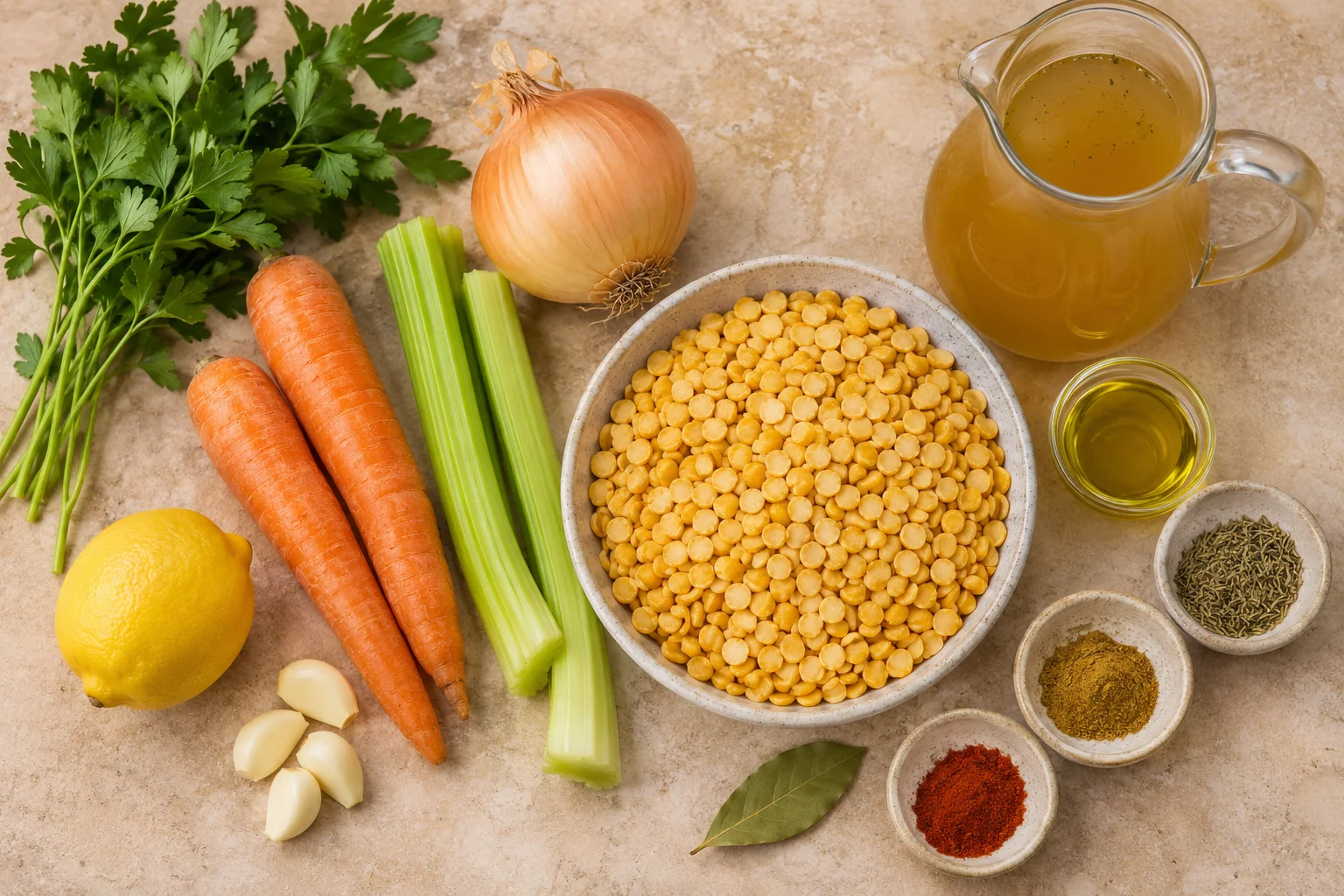
Onion, carrot, and celery give the broth sweetness and savory depth. Cut the carrots and celery small enough to fit comfortably on a soup spoon. Give the vegetables time to soften in the oil before adding liquid; a brief stir over the heat will leave the onion sharper and the flavor less rounded.
Thyme and bay leaf keep the soup herb-forward. Cumin adds warmth at a modest amount, and the optional smoked paprika provides a gentle smoky note. Choose a vegetable broth you enjoy on its own. A heavily tomato-based or vinegar-containing broth can complicate softening, so a mild vegetable broth is a better fit here. Add the lemon only after the peas are tender. [2]
How to Make This Yellow Split Pea Soup Recipe
1. Sort and rinse the peas
Spread the peas on a light-colored plate or tray and remove any stones or other debris. Transfer them to a fine-mesh strainer and rinse under cool running water. Drain well. Split peas do not require soaking before cooking, so you can begin the recipe immediately. [1]
2. Soften the vegetables
Heat the olive oil in the pot over medium heat. Add the onion, carrots, and celery. Cook for 10–12 minutes, stirring often, until the onion is translucent and the vegetables have begun to soften. Lower the heat if the onion starts to brown deeply. If the bottom becomes dry, add a tablespoon of water and scrape up any light golden residue.
3. Add the garlic and seasonings
Stir in the garlic, thyme, cumin, and smoked paprika, if using. Cook for 30–60 seconds, just until fragrant. Keep stirring; the garlic and ground spices can catch quickly on the hot bottom of the pot.
4. Add the peas and liquid
Add the rinsed peas, vegetable broth, 2 cups of water, bay leaf, ½ teaspoon fine salt, and black pepper. Stir well, scraping the bottom of the pot. Increase the heat and bring just to a boil, which may take 10–15 minutes. Immediately reduce the heat to maintain a gentle simmer with small bubbles breaking the surface.
5. Simmer until the peas are fully soft
Set the lid slightly ajar and simmer for about 60–90 minutes, beginning to check the peas after 45 minutes. Stir across the bottom every 10–15 minutes at first, then every few minutes as the soup thickens. If foam rises toward the rim, lower the heat and skim some off if needed.
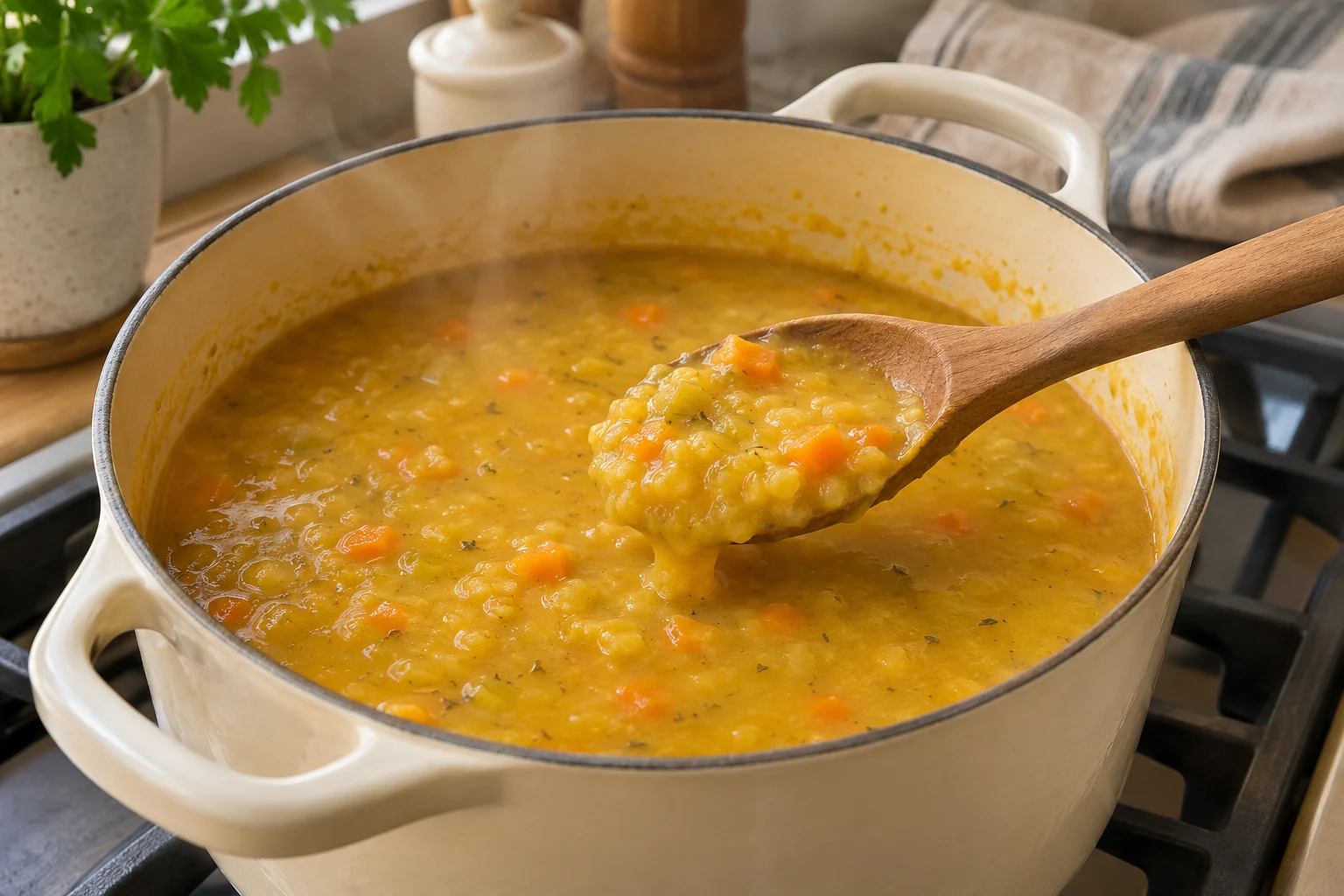
Add hot water ½ cup at a time whenever the mixture gets very thick before the peas soften. The soup should remain loose enough to stir easily. Test several peas: each should crush readily against the side of the pot, with no firm, chalky, or gritty center. Cook longer if necessary. Age, hard water, and elevation can affect the cooking time. [2]
6. Adjust the texture
Remove and discard the bay leaf. Stir vigorously to break down some of the tender peas. For a smoother soup, take the pot off the heat and use an immersion blender in short bursts, keeping the blade submerged to limit splashing. Leave some vegetables intact if you prefer texture. Blending should follow complete cooking; it will not correct firm, undercooked peas.
If the soup is too thick, stir in hot water or broth ¼–½ cup at a time. If it is thin, return it to a gentle simmer uncovered for 5–15 minutes, stirring frequently. Aim for a thick soup that pours from the ladle; it will become firmer as it stands.
7. Finish with lemon and serve
Turn off the heat and stir in 1 tablespoon of lemon juice. Taste before adding the second tablespoon. Adjust salt and pepper, then ladle into bowls and add parsley if using. A small drizzle of olive oil is optional. Serve with crusty bread or a crisp green salad.
Small Details That Make Better Soup
Keep the simmer gentle and stir the entire bottom of the pot. The thickened soup can stick around the edges even when the center still looks loose. A heavy pot helps distribute heat, but stirring remains necessary.
Season after adjusting the final thickness. Extra water dilutes the seasoning, while uncovered simmering concentrates it. If the soup tastes flat, add a small pinch of salt, stir, and taste again. Then decide whether it needs another teaspoon of lemon. This keeps the finish bright without making the soup sour.
For the best texture in this yellow split pea soup recipe, use the tenderness of the peas as your guide. Start tasting them before the full simmering time has elapsed, and give a stubborn batch extra time and liquid. Finishing to a texture cue is more useful than forcing every bag of peas to match the same timer.
Troubleshooting the Texture and Flavor
- Peas are still firm. Keep gently simmering, adding hot water as needed. Confirm the pot is actually simmering and wait to add lemon. Very old peas or hard water can prolong cooking. [2]
- Soup is thick but gritty. The peas need more cooking. Loosen with hot water and continue simmering before blending.
- Soup is too thick. Add hot water or broth ¼–½ cup at a time, stir thoroughly, and adjust seasoning.
- Soup is too thin. Once the peas are soft, simmer uncovered and stir often. Brief blending can also give a more uniform texture.
- Flavor seems flat. Check salt first, then add lemon a teaspoon at a time. Add parsley just before serving.
- Soup has caught on the bottom. Stop stirring and carefully transfer the unburned upper soup to a clean pot. Leave the stuck layer behind; a strongly scorched flavor may not be fixable.
Easy Variations and Serving Ideas
For a simple herb version, omit the cumin and smoked paprika and keep the thyme and bay leaf. For a warmer spiced version, replace the cumin and smoked paprika with 1½ teaspoons of mild curry powder, adding it with the garlic. Taste the curry powder first if you are unsure of its heat level.
For a coconut finish, stir ½ cup of unsweetened coconut milk into the fully cooked soup and heat gently. Treat it as extra finishing liquid, then adjust the lemon and salt. It changes both the flavor and the final thickness, so add it before deciding whether more water is needed.
Top individual bowls with parsley, homemade croutons, or toasted pumpkin seeds. Keep crunchy toppings separate until serving. Bread makes a practical side for a hearty bowl, while a salad with a sharp dressing adds contrast to the soft, savory soup.
How to Store and Reheat Yellow Split Pea Soup
Divide leftovers into shallow containers and refrigerate promptly, within 2 hours of cooking, or within 1 hour if the surrounding temperature is above 90°F (32°C). Do not leave a large pot on the counter until completely cool. Keep the refrigerator at 40°F (4°C) or below. [3]
Use refrigerated soup within 3–4 days. For longer storage, freeze portions in suitable containers, leaving room for expansion. Aim to use frozen soup within 2–3 months for best quality. Thaw overnight in the refrigerator. [3, 4]
The chilled soup will be considerably thicker. Add a splash of water or broth and reheat in a saucepan, stirring frequently so the bottom does not catch. Bring the soup to a boil and ensure it reaches at least 165°F (74°C) throughout. Add fresh parsley and check the seasoning after reheating. [3]
Yellow Split Pea Soup Recipe Questions
Do I need to soak the peas overnight?
No. This recipe is designed for unsoaked yellow split peas. Sort and rinse them, then add them directly to the pot. USA Pulses also advises that split peas do not need soaking. [1]
Should I blend all of the soup?
That is a texture choice. Fully softened peas will naturally break down as you stir. A few bursts with an immersion blender create a smoother broth while keeping some vegetables intact. Remove the bay leaf first.
Is this recipe vegan and gluten free?
The base recipe uses plant ingredients and can be vegan and gluten free. Check the broth and packaged seasonings for animal ingredients, gluten, and relevant allergen statements. For a gluten-free meal, serve with suitable bread or skip the bread.
Can I make a smaller batch?
Yes. Halve every ingredient and use a 3- to 4-quart pot. Begin checking tenderness after 40–45 minutes, but do not halve the simmering time; the peas still need to soften fully. Keep extra hot water nearby for adjustments.
Can I prepare the vegetables ahead?
Dice the onion, carrots, and celery the day before and refrigerate them in a covered container. Keep the measured dried peas separate until you are ready to rinse and cook them. Squeeze the lemon shortly before finishing for the freshest flavor.
This yellow split pea soup recipe is ready for the table when the peas are completely tender, the soup is easy to ladle, and the seasoning tastes balanced. Finish each bowl with parsley and serve it warm, with extra lemon on the side for anyone who wants a brighter spoonful.
Printable Yellow Split Pea Soup Recipe
Yellow Split Pea Soup Recipe with Lemon and Herbs
Ingredients
Equipment
Method
- Spread the peas on a light-colored plate or tray and remove any stones or other debris. Transfer them to a fine-mesh strainer and rinse under cool running water. Drain well. Split peas do not require soaking before cooking, so you can begin the recipe immediately.
- Heat the olive oil in the pot over medium heat. Add the onion, carrots, and celery. Cook for 10–12 minutes, stirring often, until the onion is translucent and the vegetables have begun to soften. Lower the heat if the onion starts to brown deeply. If the bottom becomes dry, add a tablespoon of water and scrape up any light golden residue.
- Stir in the garlic, thyme, cumin, and smoked paprika, if using. Cook for 30–60 seconds, just until fragrant. Keep stirring; the garlic and ground spices can catch quickly on the hot bottom of the pot.
- Add the rinsed peas, vegetable broth, 2 cups of water, bay leaf, ½ teaspoon fine salt, and black pepper. Stir well, scraping the bottom of the pot. Increase the heat and bring just to a boil, which may take 10–15 minutes. Immediately reduce the heat to maintain a gentle simmer with small bubbles breaking the surface.
- Set the lid slightly ajar and simmer for about 60–90 minutes, beginning to check the peas after 45 minutes. Stir across the bottom every 10–15 minutes at first, then every few minutes as the soup thickens. If foam rises toward the rim, lower the heat and skim some off if needed.Add hot water ½ cup at a time whenever the mixture gets very thick before the peas soften. The soup should remain loose enough to stir easily. Test several peas: each should crush readily against the side of the pot, with no firm, chalky, or gritty center. Cook longer if necessary. Age, hard water, and elevation can affect the cooking time.
- Remove and discard the bay leaf. Stir vigorously to break down some of the tender peas. For a smoother soup, take the pot off the heat and use an immersion blender in short bursts, keeping the blade submerged to limit splashing. Leave some vegetables intact if you prefer texture. Blending should follow complete cooking; it will not correct firm, undercooked peas.If the soup is too thick, stir in hot water or broth ¼–½ cup at a time. If it is thin, return it to a gentle simmer uncovered for 5–15 minutes, stirring frequently. Aim for a thick soup that pours from the ladle; it will become firmer as it stands.
- Turn off the heat and stir in 1 tablespoon of lemon juice. Taste before adding the second tablespoon. Adjust salt and pepper, then ladle into bowls and add parsley if using. A small drizzle of olive oil is optional. Serve with crusty bread or a crisp green salad.
Notes
Rate this recipe and share how you served your soup.
More Recipes to Try
For another way to use yellow split peas, try our Yellow Split Pea Dip Without a Blender. For another pantry dinner, see our Garlic Zucchini Canned Lentil Spaghetti Without Tomatoes.